-
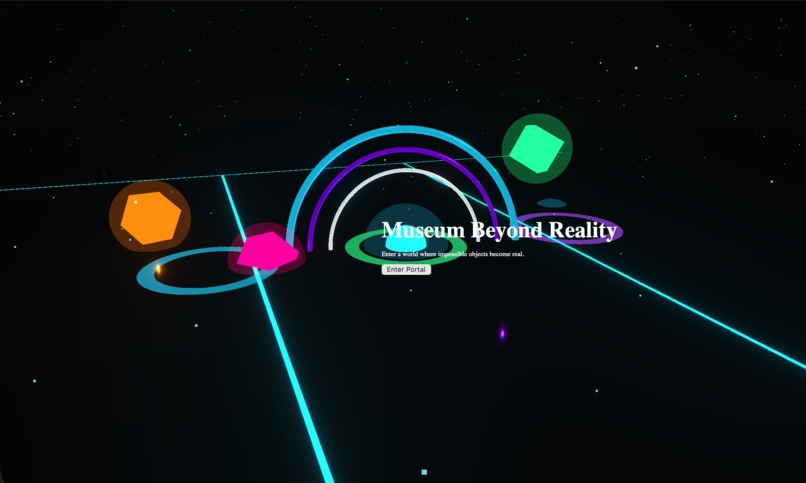
Step into a museum where reality bends, imagination comes alive, and impossible artifacts await discovery.
-
-
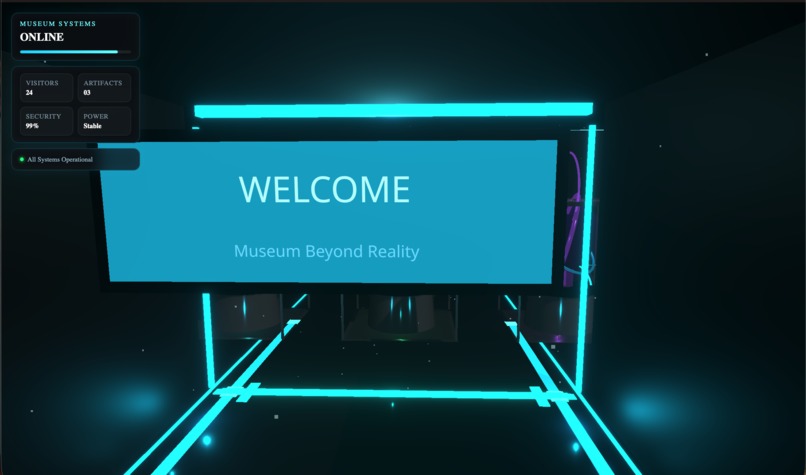
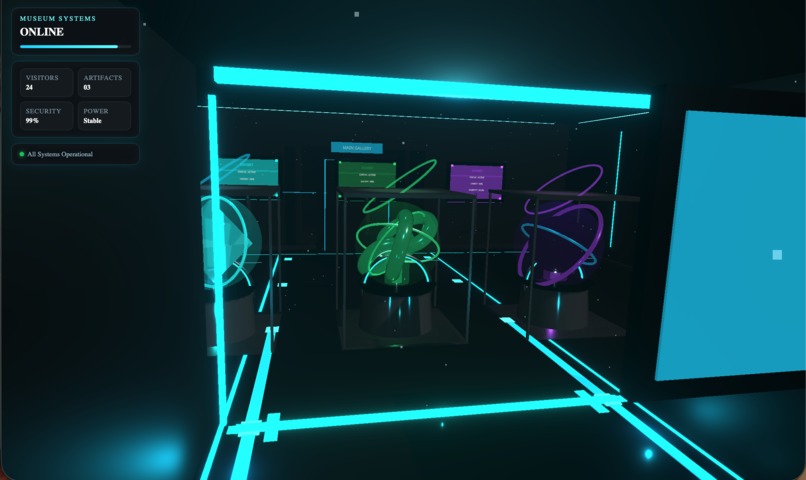
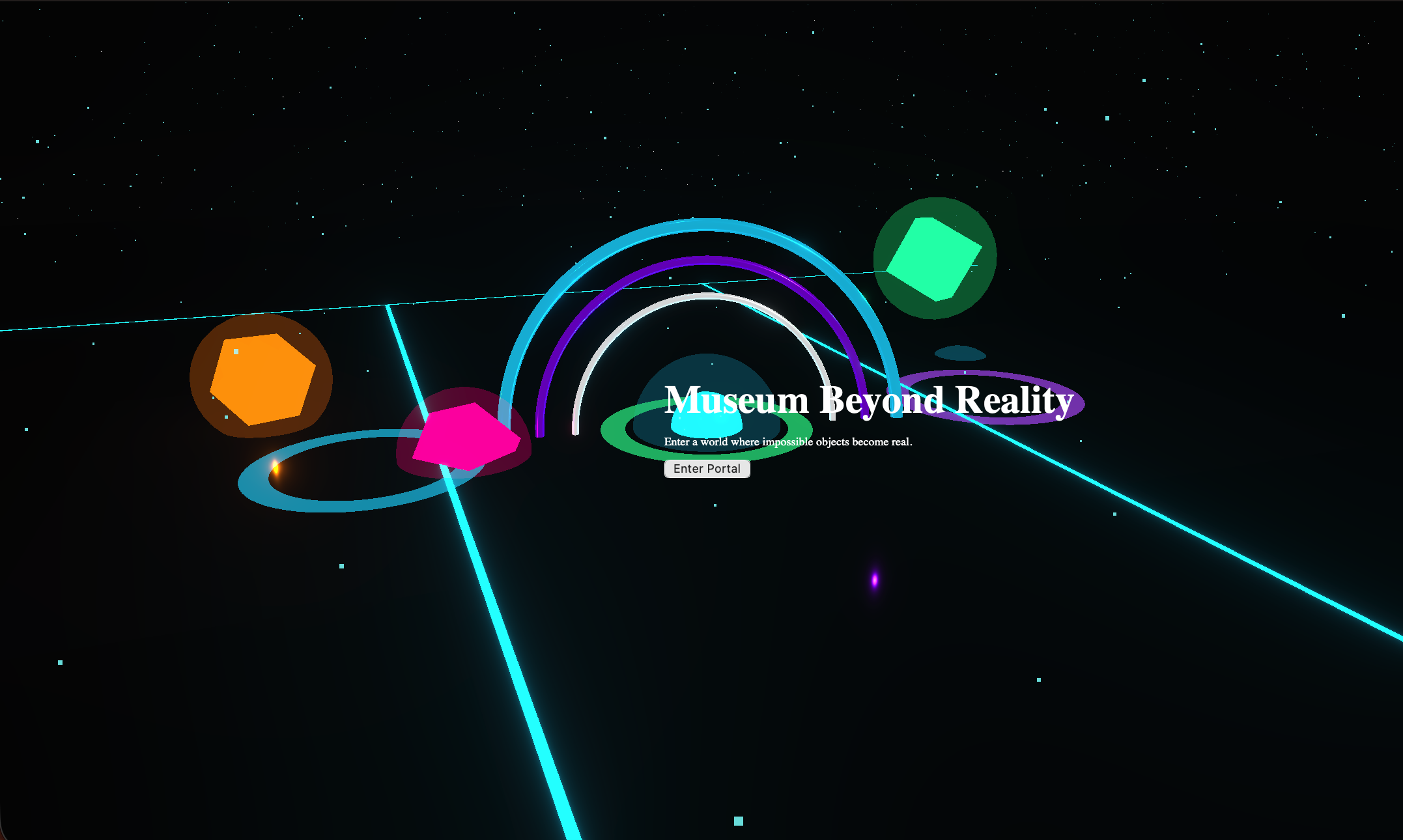
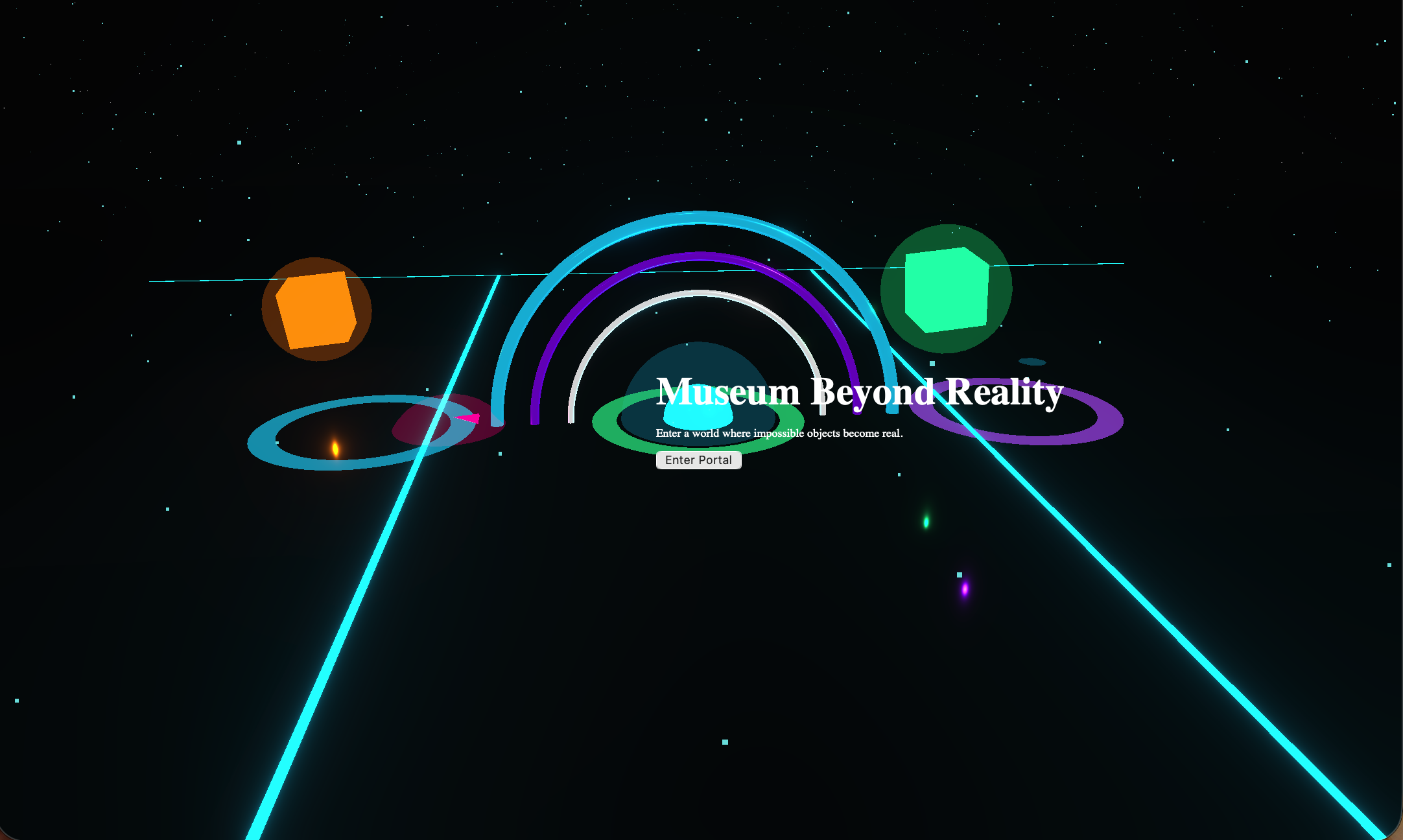
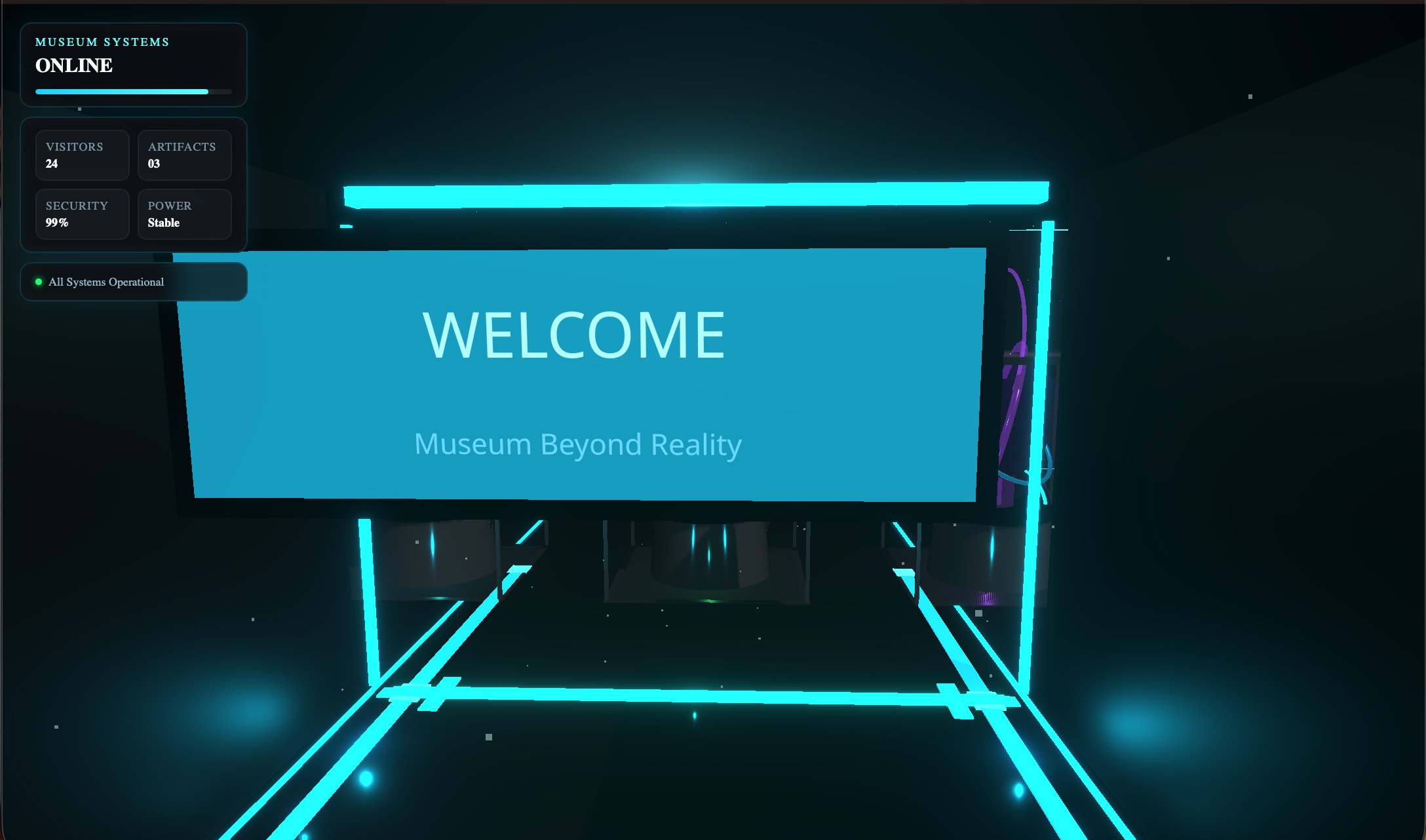
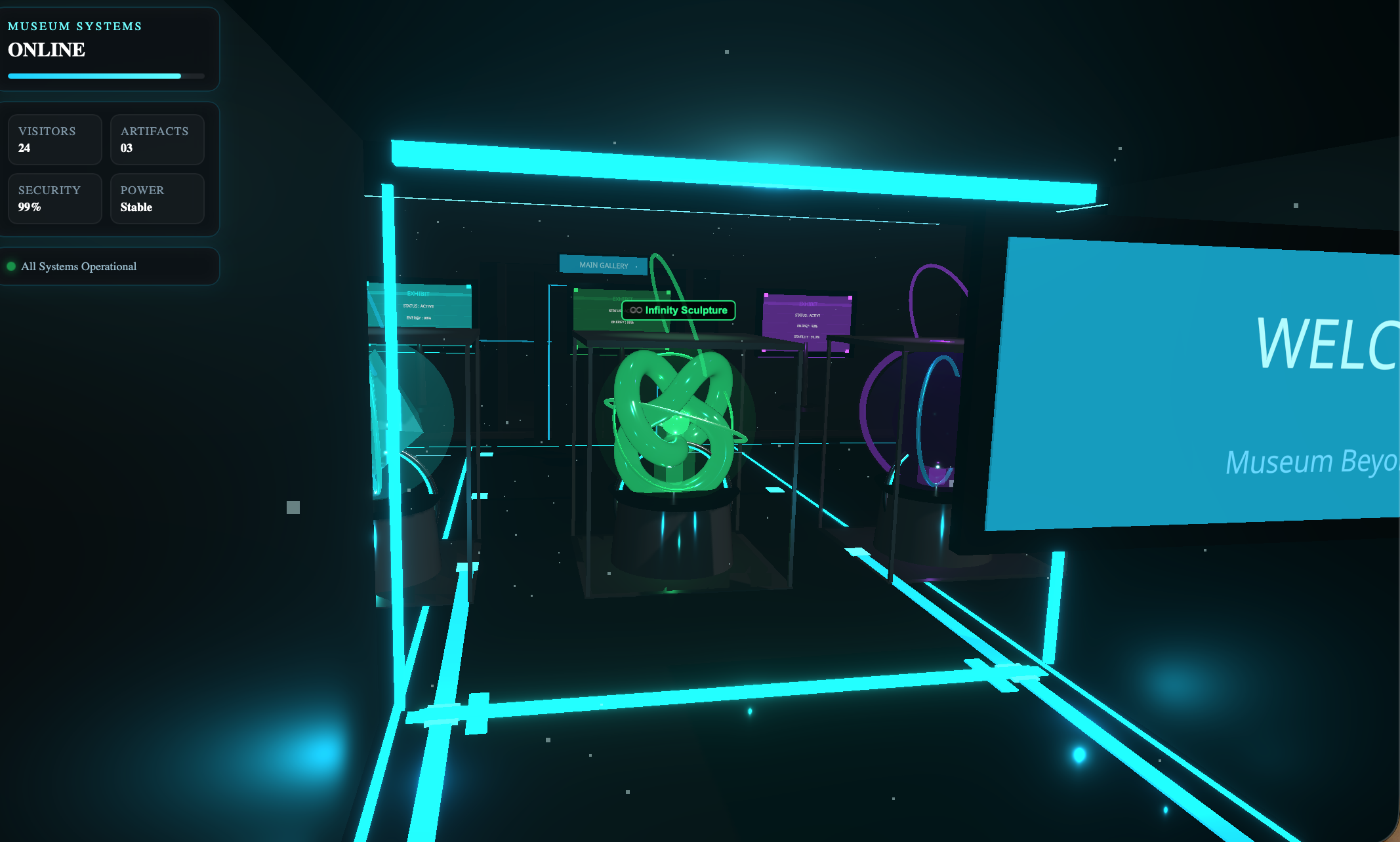
A futuristic portal interface welcoming visitors into an immersive museum beyond reality.
-
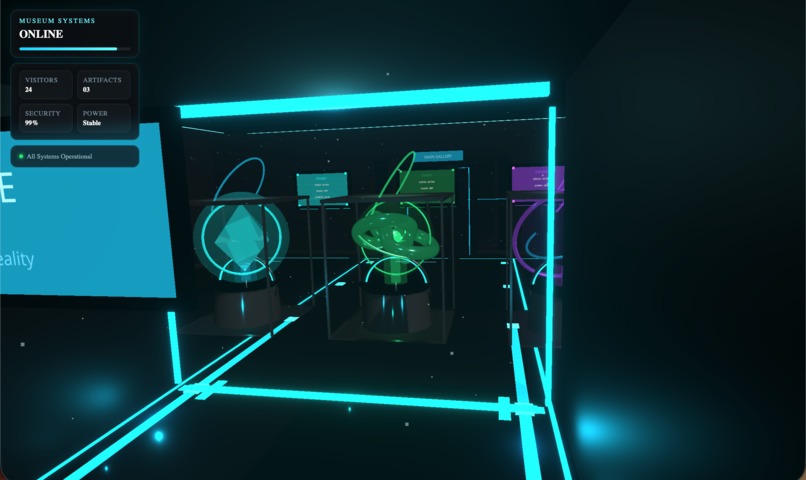
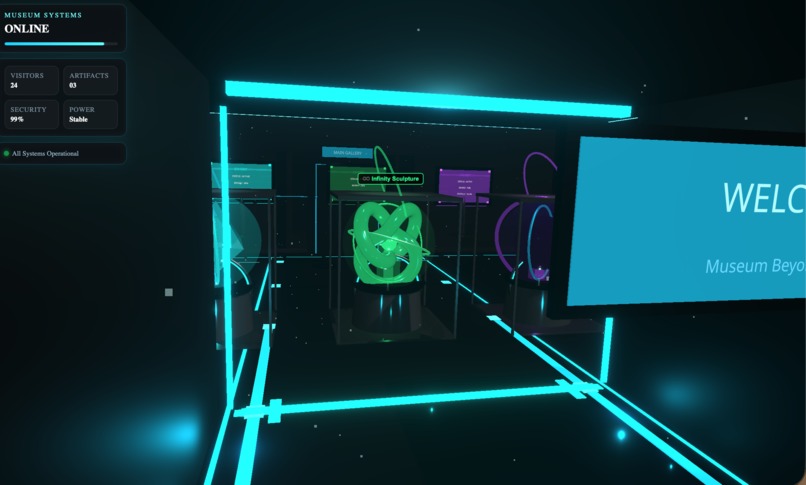
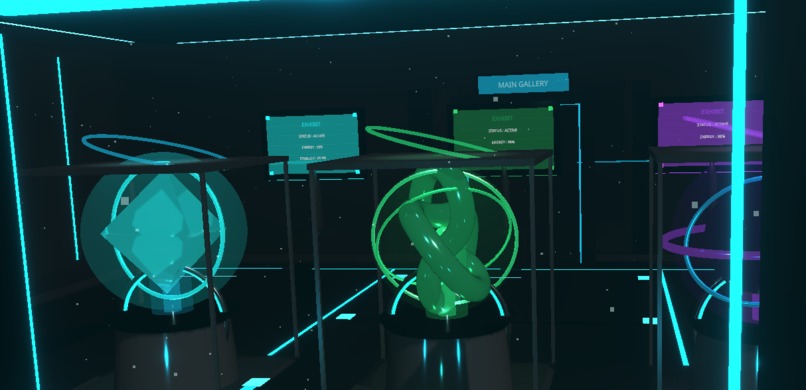
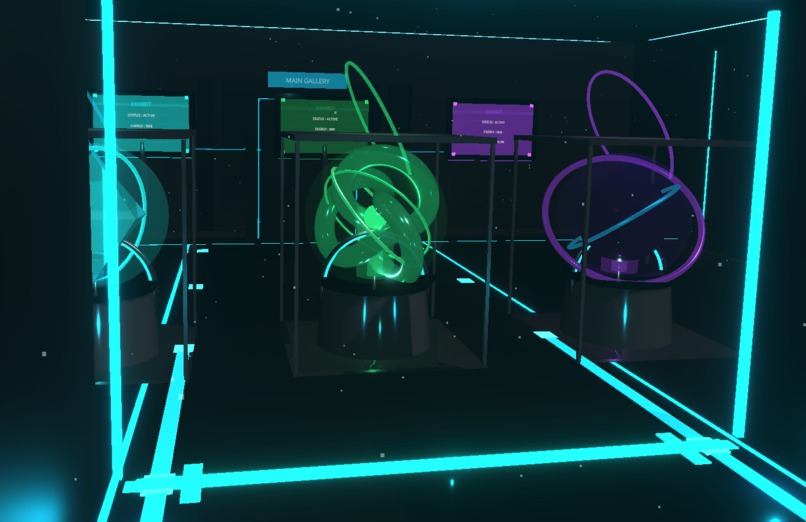
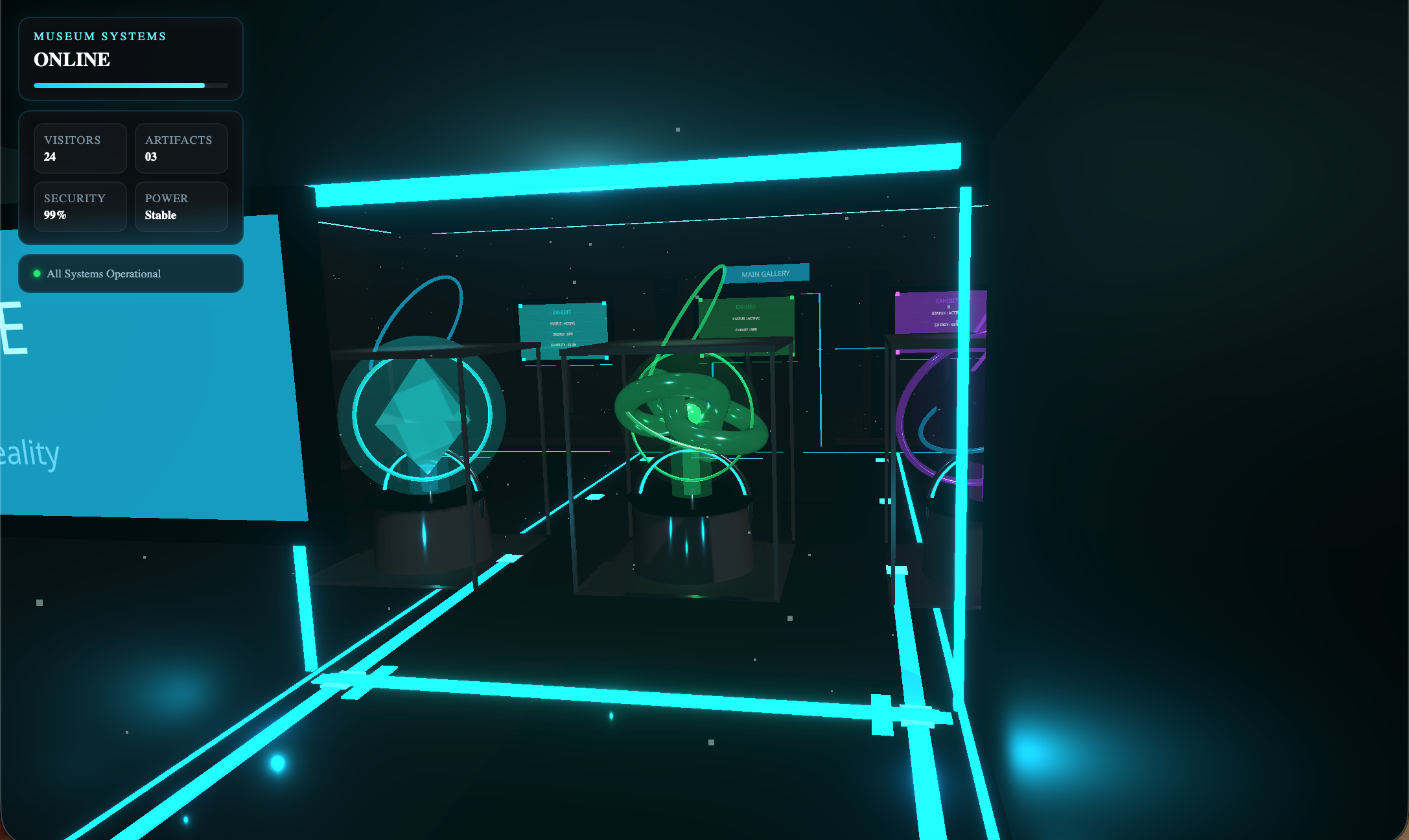
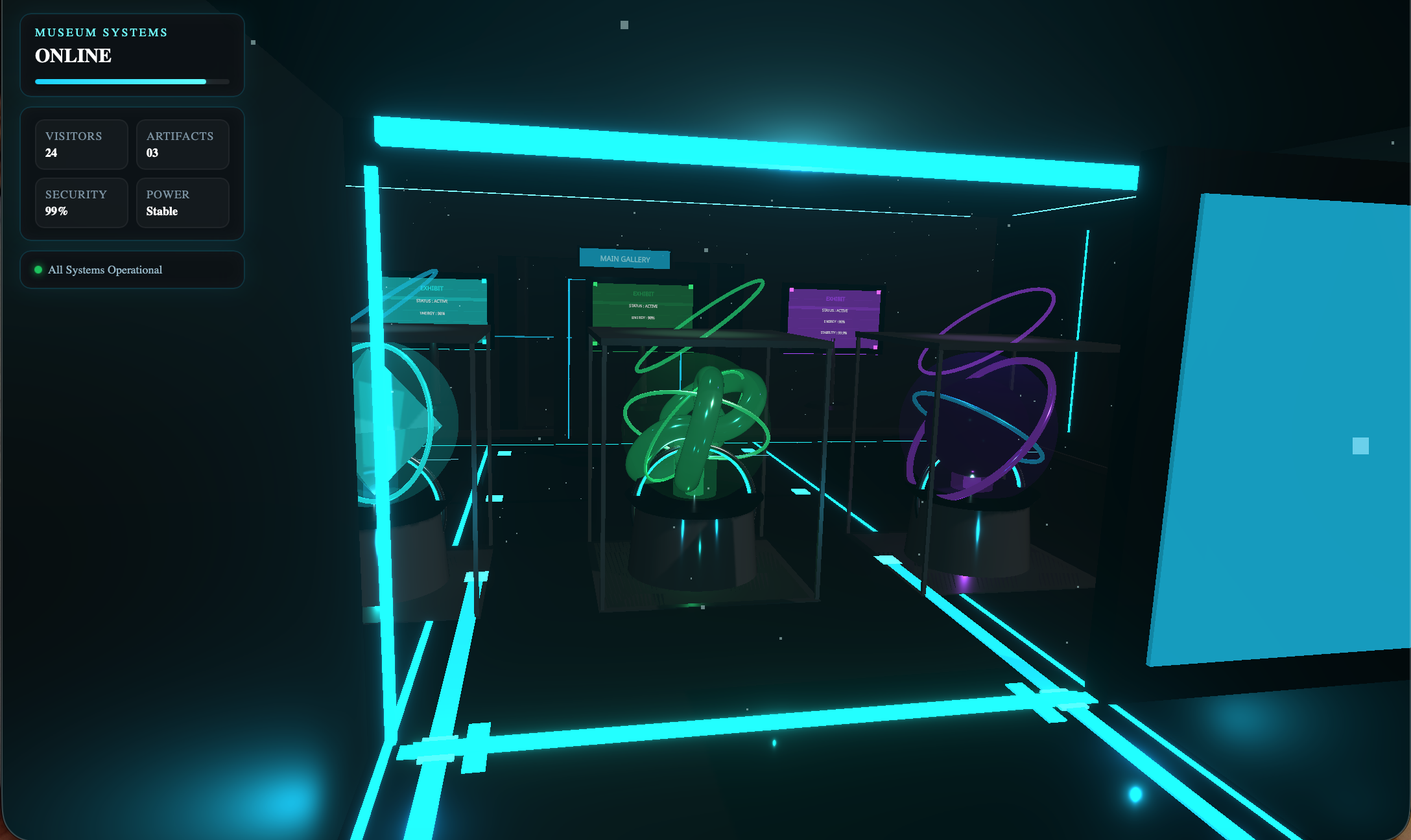
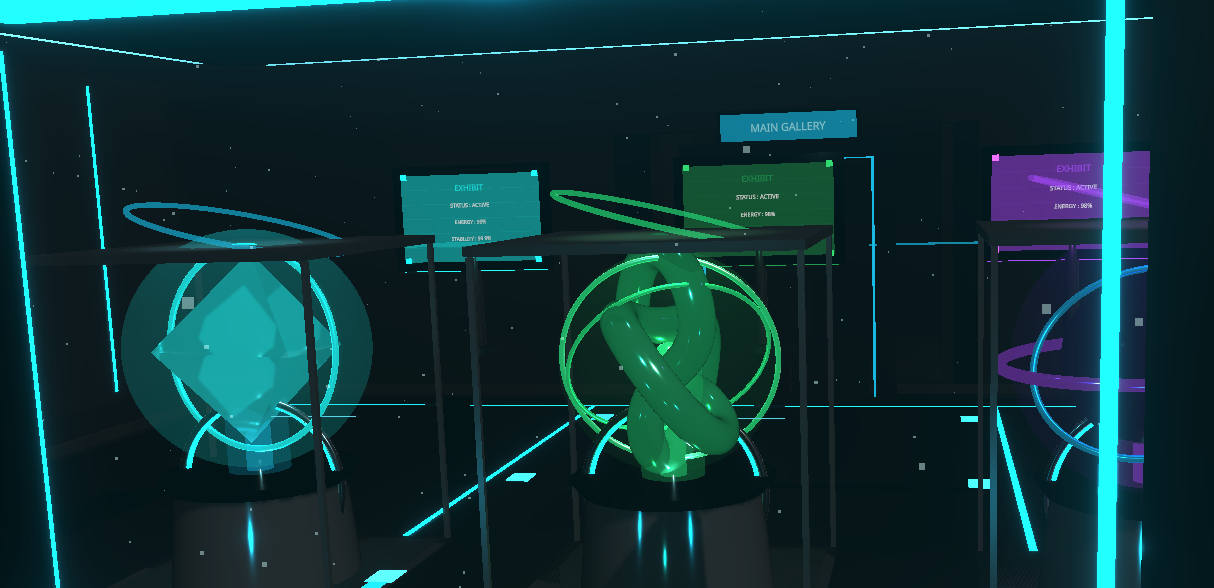
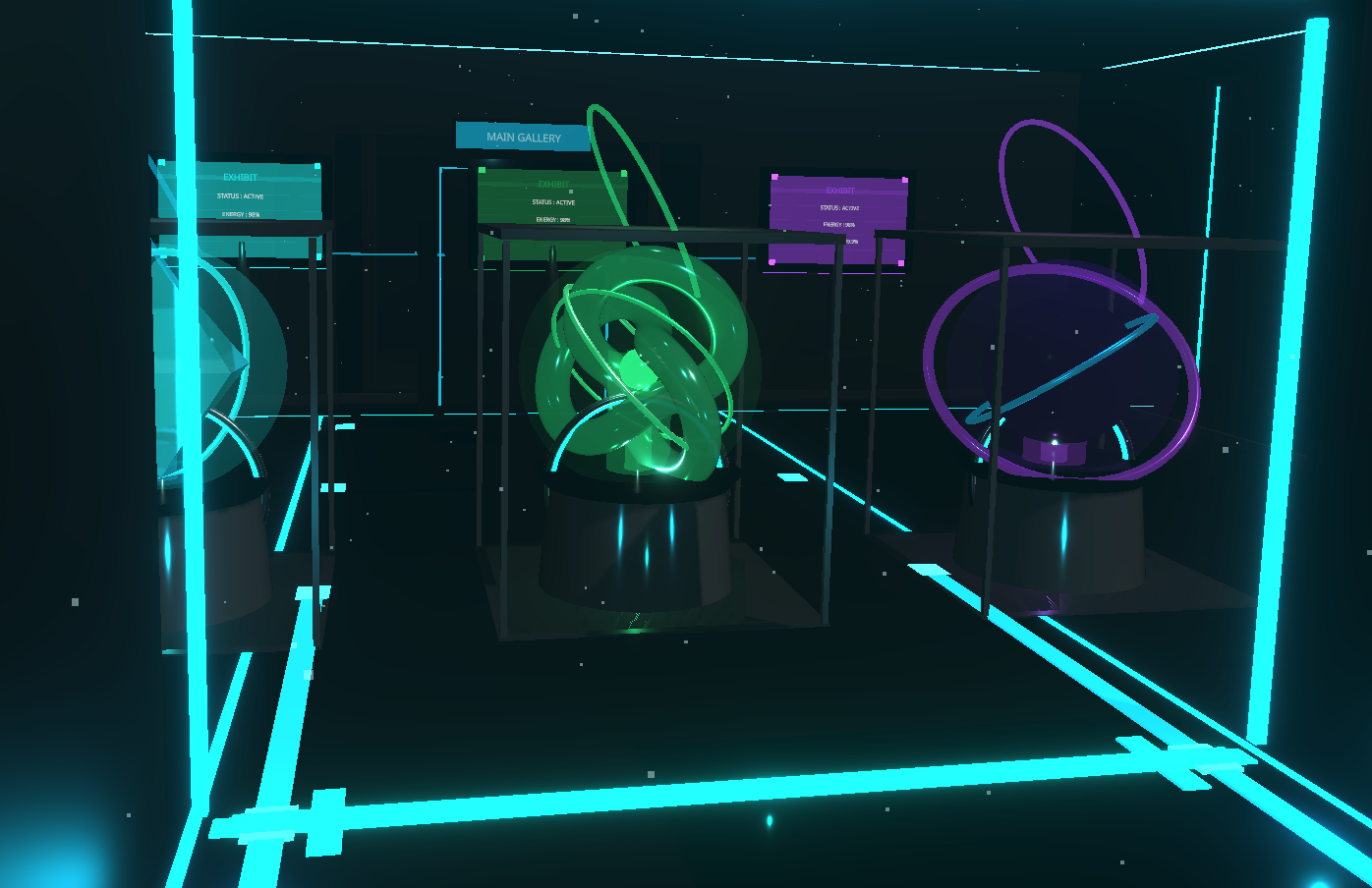
The three exhibits showcase impossible objects that challenge the laws of physics and reality.
-
-
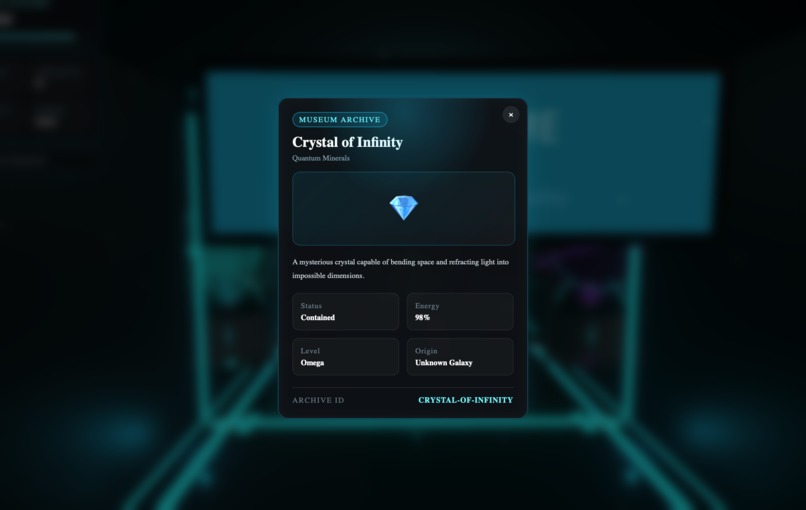
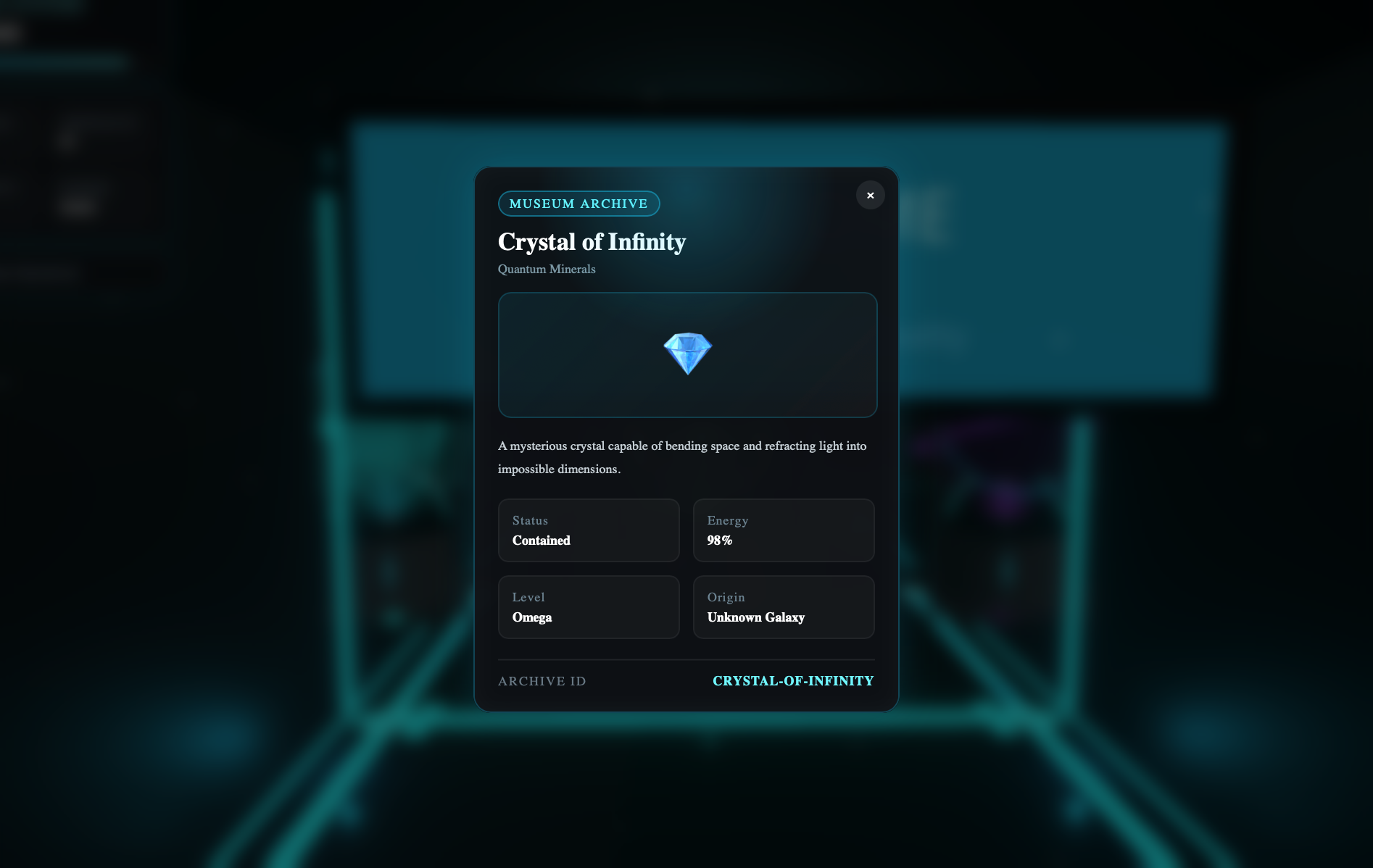
A mystical crystal that bends space, light, and the laws of reality into infinite dimensions.
-
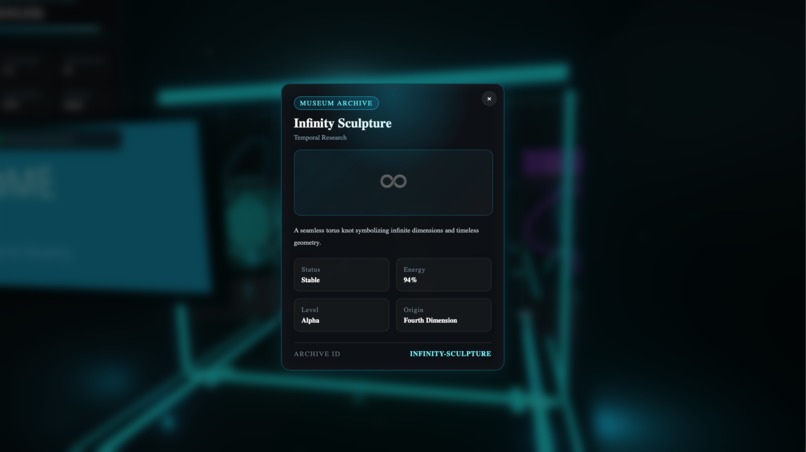
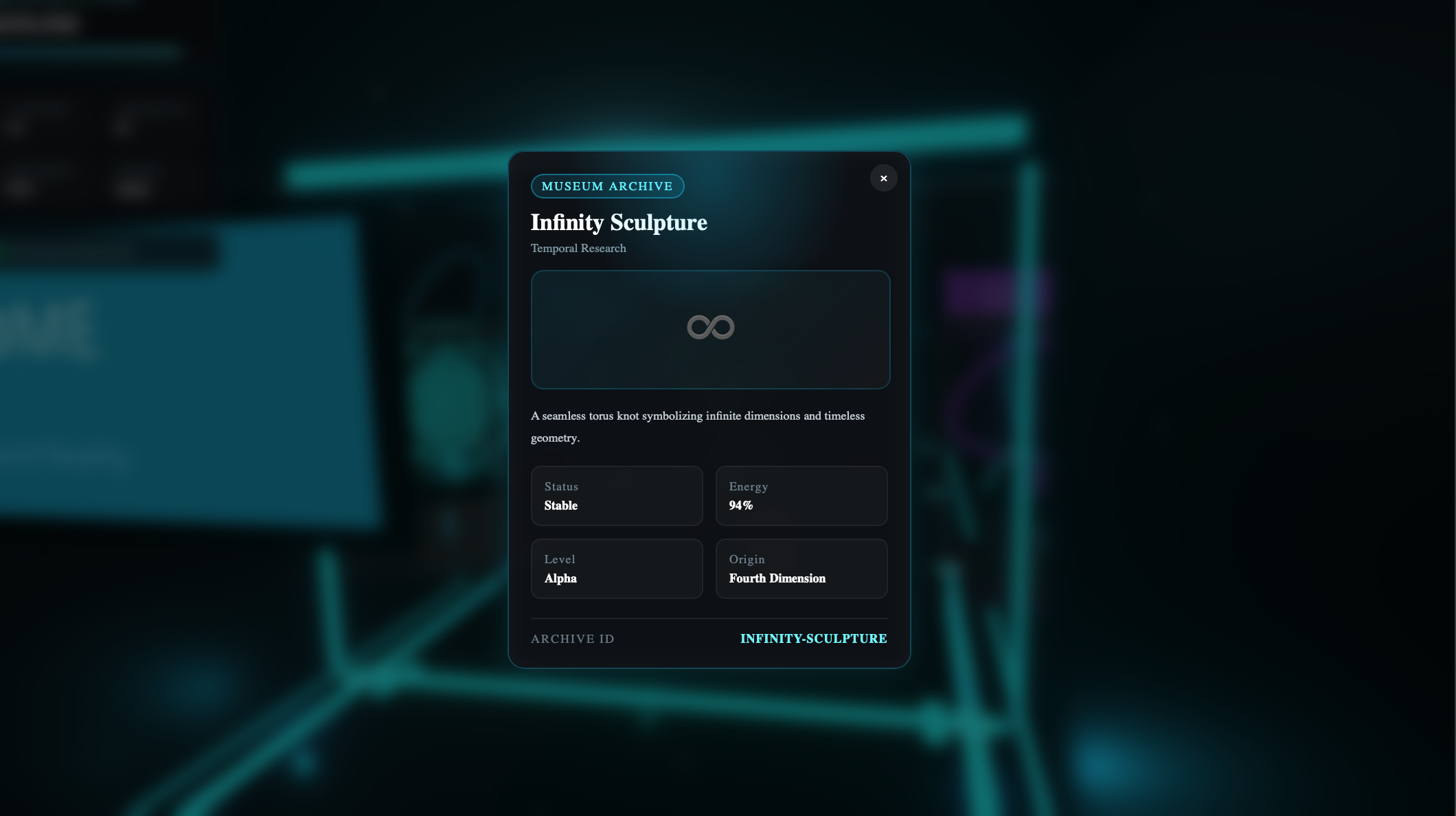
A seamless sculpture symbolizing endless dimensions, eternal motion, and the infinite nature of the universe.
-
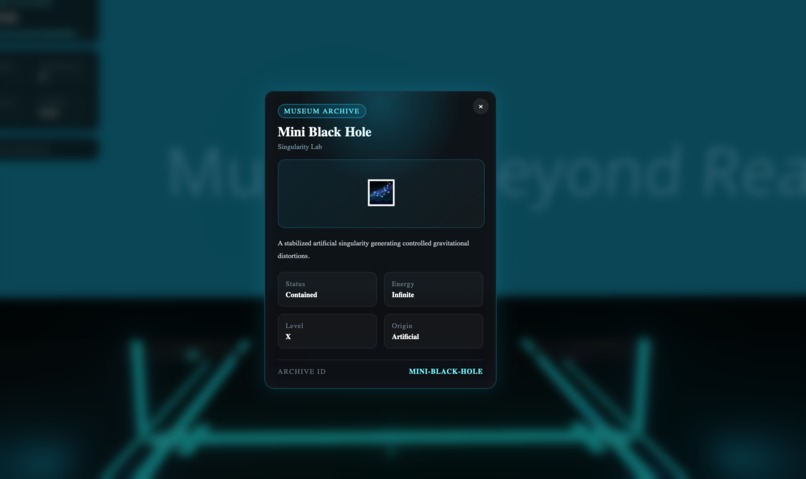
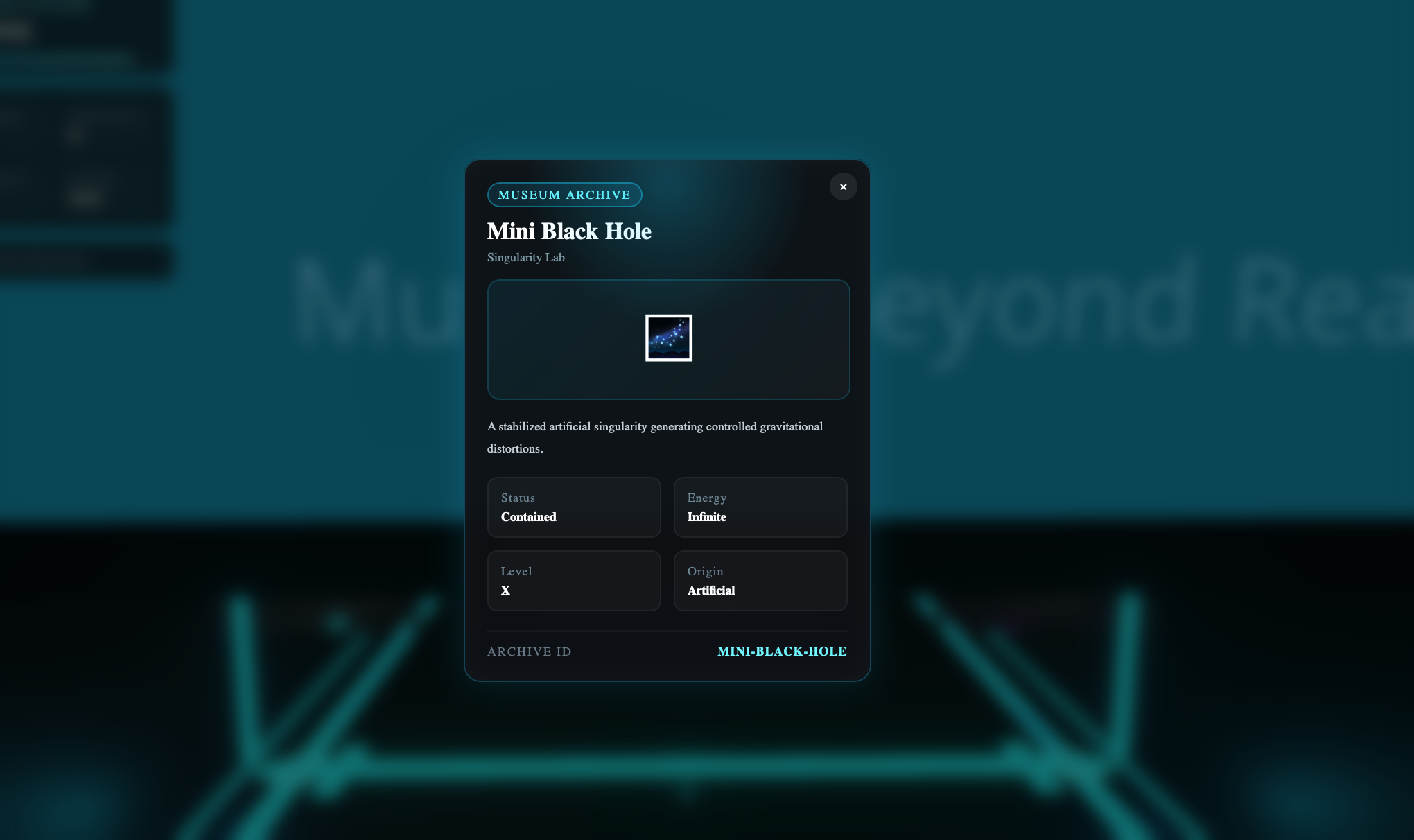
A stabilized artificial singularity that distorts gravity and space while remaining safely contained for observation.
-
-
-
This is more than a museum; it’s a glimpse into worlds yet to exist.
Inspiration
Museums have always been places where people explore history, science, and culture. We wanted to take that concept a step further by imagining a museum that exhibits objects which cannot exist in the real world. Inspired by science fiction, futuristic architecture, and interactive digital experiences, we created The Museum Beyond Reality, a virtual museum where visitors can discover impossible artifacts such as the Crystal of Infinity, the Infinity Sculpture, and a Mini Black Hole. Our goal was to combine creativity with modern web technologies to create an engaging and immersive experience that feels both futuristic and interactive.
What it does
The Museum Beyond Reality is an interactive 3D virtual museum that runs entirely in the browser. Users can explore a futuristic exhibition hall featuring realistic lighting, holographic effects, floating particles, and dynamic visual elements. Each exhibit can be inspected by clicking on it, which opens a detailed archive card containing information such as its origin, energy level, containment status, and classification. The project combines storytelling with interactive visualization to create a unique museum experience.
How we built it
The project was built using React and React Three Fiber to create a modular and interactive 3D environment. Three.js was used for rendering the scene, while React Postprocessing was used to add bloom effects that enhance the futuristic appearance of the museum. The environment was divided into reusable components including walls, floors, lighting systems, pedestals, glass cases, holographic rings, energy beams, floating particles, and exhibit models. CSS was used to design a modern glassmorphism-based interface for the information popup and HUD, resulting in a clean and immersive user experience.
Challenges we ran into
One of the biggest challenges was balancing visual quality with browser performance. Multiple light sources, transparent materials, bloom effects, and particle systems significantly affected frame rates during development. Achieving realistic glass and metallic materials while maintaining smooth rendering required extensive experimentation with material properties and lighting. Designing an interface that complemented the 3D scene without distracting from it also required several iterations before reaching the final layout.
Accomplishments that we’re proud of
We successfully created a complete browser-based 3D museum that combines interactive exhibits with modern visual effects and an intuitive user interface. We are particularly proud of the immersive atmosphere created through lighting, holographic effects, and environmental design. The modular architecture of the project makes it easy to expand the museum with additional exhibits in the future. Most importantly, we transformed an imaginative concept into a functional and visually appealing interactive experience.
What we learned
Throughout this project, we gained practical experience in building interactive 3D applications using React Three Fiber and Three.js. We learned how to structure large React projects using reusable components, optimize real-time graphics for web browsers, work with physically based rendering materials, and design user interfaces that integrate naturally with 3D environments. We also developed a deeper understanding of performance optimization and the importance of iterative design in creating polished user experiences.
What’s next for The Museum Beyond Reality
In future versions, we plan to expand the museum by introducing additional impossible artifacts, themed exhibition halls, and guided virtual tours. We would also like to integrate AI-powered narration to explain each exhibit, support virtual reality for a more immersive experience, and include multiplayer functionality that allows visitors to explore the museum together. These enhancements would transform the project from a prototype into a fully interactive digital museum experience.

Log in or sign up for Devpost to join the conversation.