-
-
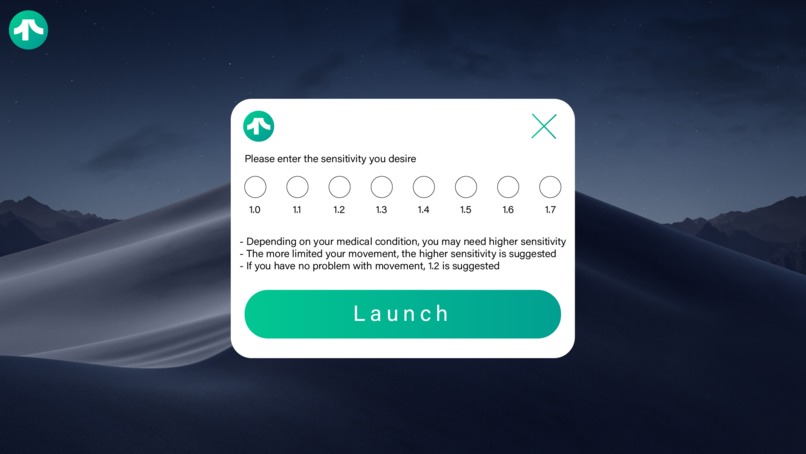
The Application
-

Logo OF The Mouseless Mouse App

Inspiration:
The inspiration behind the project is the recognition of the challenges and barriers faced by people with disabilities in accessing and using technology. The project aims to empower individuals with impairments by developing a tool that allows them to access computers using a laptop camera, thus opening up new possibilities for creativity and innovation.
What it does:
The project aims to create a mouse controller that can be operated using a laptop camera. By directing the camera towards the user's eyes and converting the eye movements into mouse control, the tool provides an efficient and accessible way for individuals with disabilities, particularly amputees, to access computers. This eye-controlled mouse system offers a free alternative to conventional input devices like a mouse or keyboard.
How we built it:
The project utilizes Python programming language and leverages open-source libraries such as OpenCV and Mediapipe. Video frames captured from the laptop camera are processed using OpenCV, and the facial landmarks are detected using the FaceMesh model from Mediapipe. The position of the user's eyes, determined through the facial landmarks, is then used to control the mouse using the Pyautogui library.
Challenges we ran into:
During the development process, the project team encountered several challenges. Some of these challenges included:
- Ensuring accuracy and precision of the eye-tracking system under various scenarios, such as different lighting conditions, facial expressions, and head positions.
- Determining the optimal sensitivity levels for the eye-controlled mouse system and assessing its performance under different sensitivity values.
- Designing a robust mouse clicking mechanism based on the user's eye position and evaluating its usability and effectiveness compared to traditional mouse systems. Accomplishments that we're proud of: The project team takes pride in the following accomplishments:
- Developing a functional mouse prototype that can be operated using a laptop camera.
- Collaborating closely with assistive technology specialists and individuals with disabilities to ensure the efficiency and simplicity of the tool.
- Conducting user studies and gathering feedback to assess the usability and effectiveness of the eye-controlled mouse system.
- Providing a free and accessible technology option for amputees in underdeveloped nations, thereby promoting inclusion and creativity. ##What we learned: Throughout the project, the team gained valuable insights and learning experiences. Some key learnings include:
- The importance of collaboration with domain experts and end-users to develop inclusive and effective assistive technologies.
- The significance of user testing and feedback in refining and improving the functionality and usability of the developed tool.
- The challenges and considerations involved in designing and implementing eye-tracking systems, including factors like lighting conditions and accuracy requirements. ##What's next for The Mouseless Mouse: For the future, the project aims to continue its development and improvement. Some potential next steps for the project include:
- Conducting further research and refinement to enhance the accuracy and precision of the eye-controlled mouse system.
- Exploring additional functionalities and features that can be integrated into the tool to further support individuals with disabilities.
- Conducting extensive user testing and gathering feedback from a diverse range of users to ensure the tool's effectiveness and user satisfaction.
- Exploring partnerships and collaborations to scale up the production and distribution of the eye-controlled mouse system, making it accessible to a wider audience of individuals with disabilities. Overall, the project strives to contribute to the creation of a more equal and inclusive society, where individuals with disabilities can pursue their passions and reach their full potential through the use of assistive technologies.


Log in or sign up for Devpost to join the conversation.