Inspiration
Untested and unopened gifts from previous hackathons are an excellent starting point for new projects. We mostly wanted to explore and have fun and that goal was certainly accomplished.
What it does
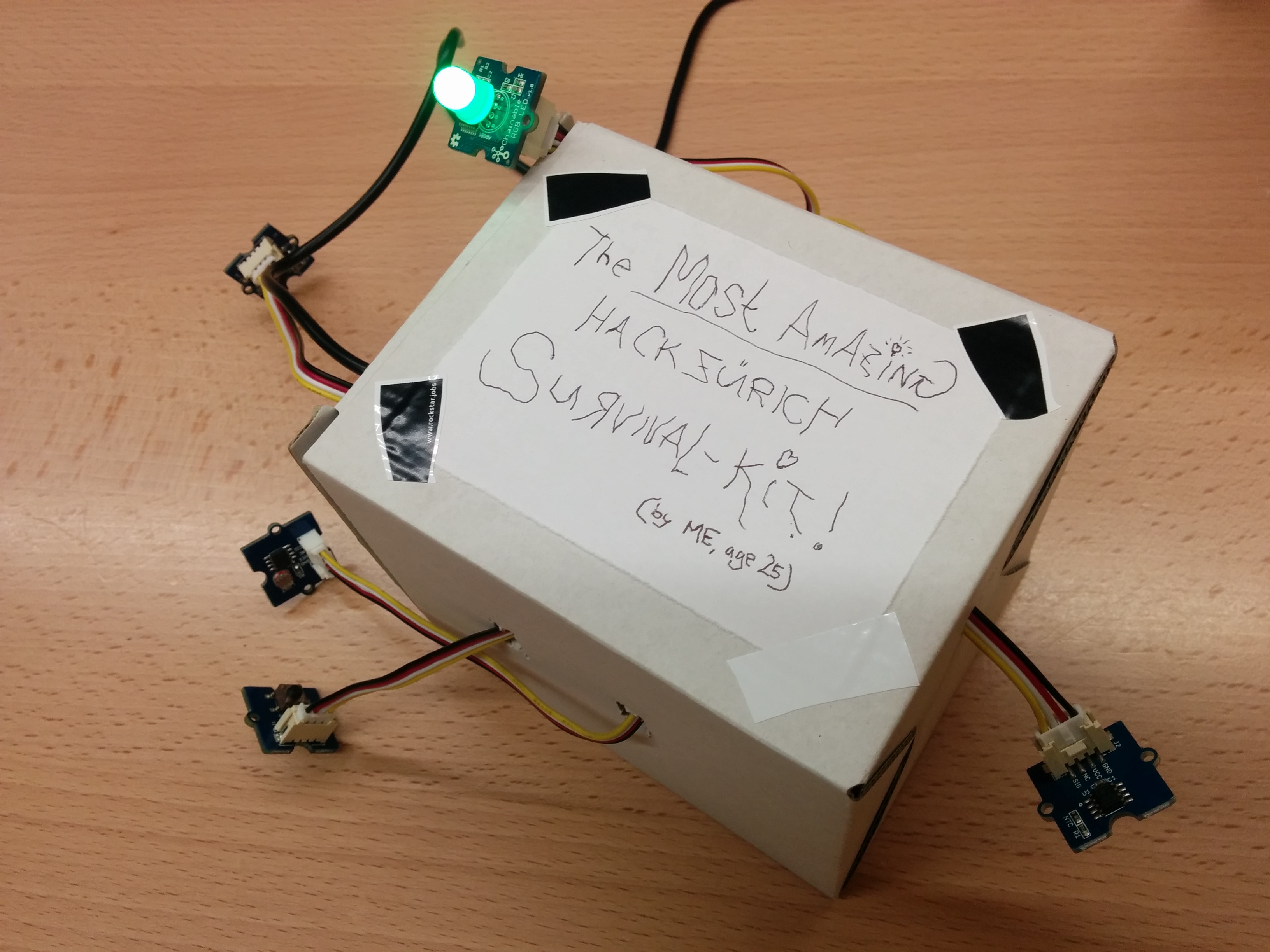
Essentially a mix of sensors and actuators all packaged neatly in a single box.
How we built it
Everything was packaged with lots of neat chiplets but sadly no useful instructions. At first, we had to dig around to find the appropriate development toolchain and platform definition files which was a first struggle. Fortunately the components can be easily snapped together and with some trial-and-error we progressively built up a set of small demos which grew organically.
Challenges we ran into
Embedded systems are quite limited in terms of their capabilities compared with a typical mobile, desktop or server setting. In addition, tutorials are often outdated and the capabilities of each board differ quite heavily so there's lots of tinkering and dead ends along the way.
Accomplishments that we're proud of
Mostly the feeling of dreaming up some goal and having the code you've been fighting with eventually produce a small light pulse or tone that you can hear. This gives a huge boost in momentum and catapulted us forward!
What we learned
This was all new for us and mostly an exploration and learning experience. It was lots of fun and gave us a glimpse into lower levels of the tech stack and expertise that hardware designers and electrical engineers have built up.
What's next for The Most Amazing HackZurich Survival Kit
All doors are open: with the expansion breadboard there are many free I/O ports available and other types of sensors that we have yet to fully explore. With this basic set of building blocks we can expand out into practical applications like low-energy monitoring stations or even tiny building management widgets that can be hidden in small channels.

Log in or sign up for Devpost to join the conversation.