Inspiration
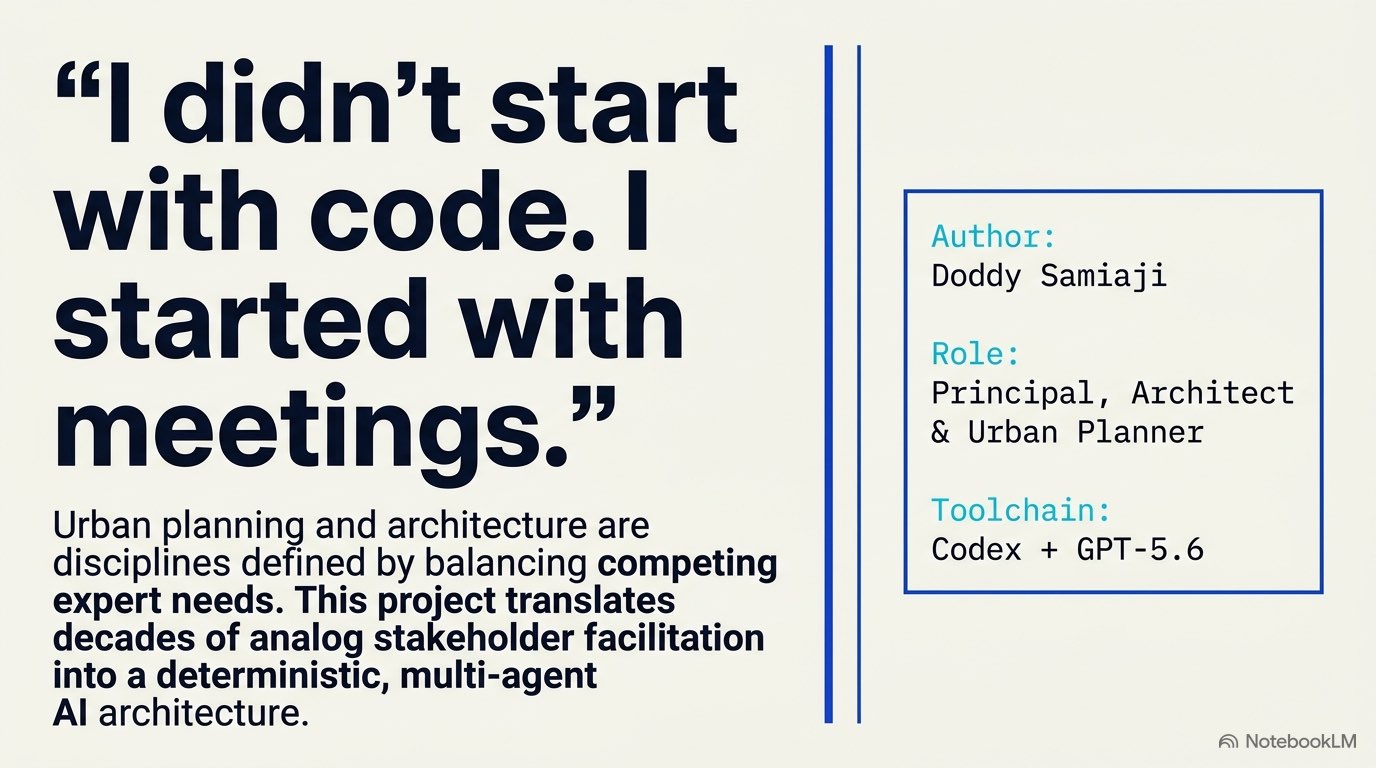
I am not a software developer. I am an architect/urban designer by training, a principal of a design and urban planning firm in Indonesia, and the founder of Kolabs.Design, our think tank exploring how AI can improve everyday work in design, planning, and development.
The Meeting Room grew from that professional journey. Our projects bring together designers, engineers, investors, lawyers, operators, government stakeholders, and clients. The challenge is rarely a lack of ideas. It is deciding which ideas are credible, what assumptions have been overlooked, and what should happen next.
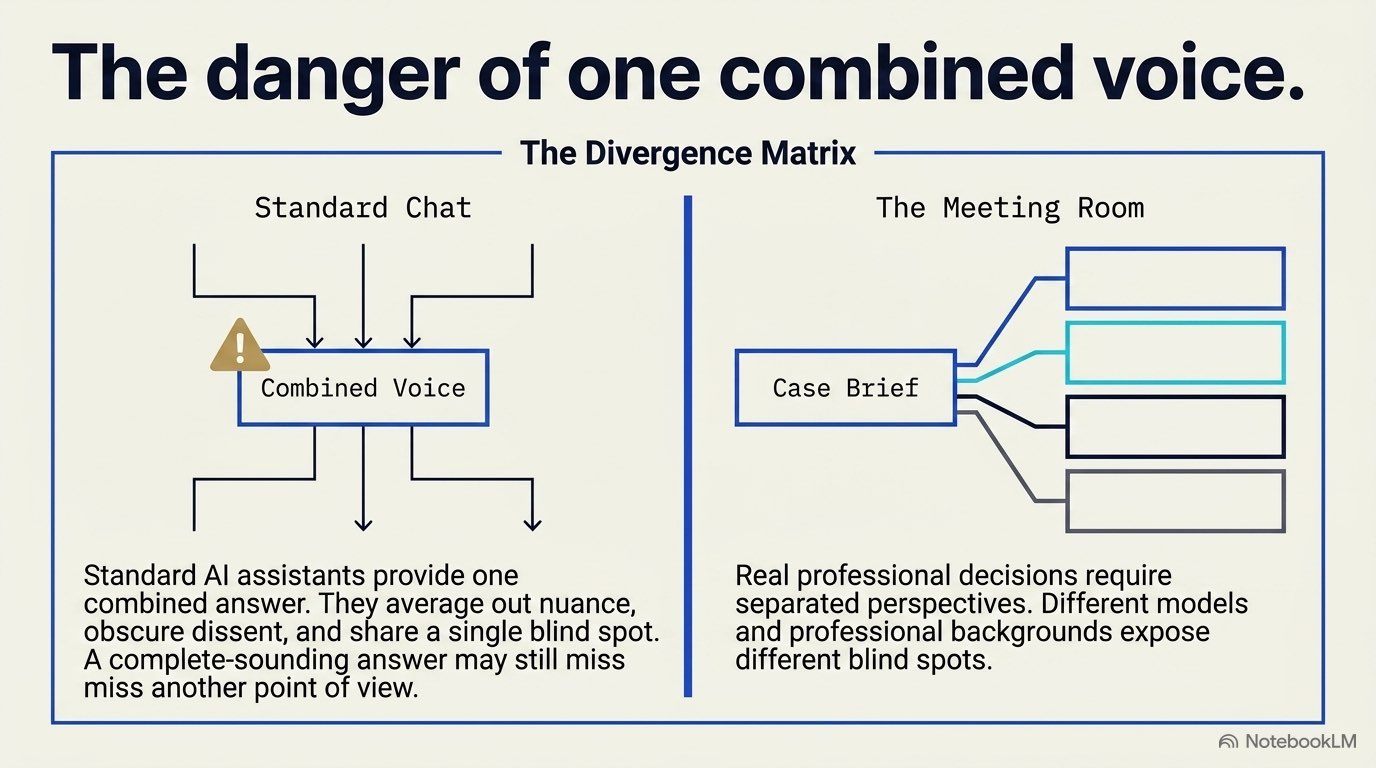
A single AI can give a strong answer, but it still feels like consulting one intelligent person. I wanted something closer to a serious professional review: independent perspectives, constructive disagreement, and a clear synthesis to help the principal decide.
What it does
The Meeting Room is one of several tools we are building and using at Kolabs.Design to support real design and planning work.
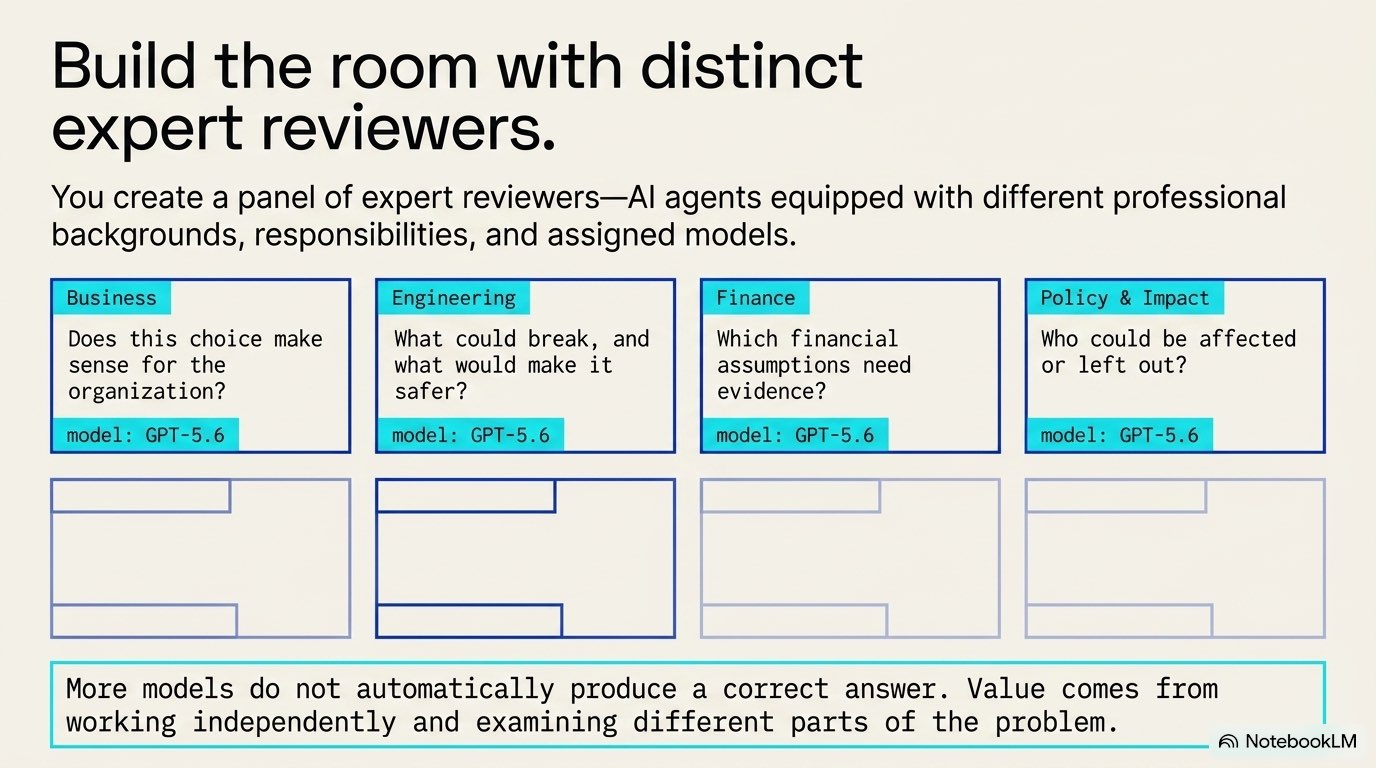
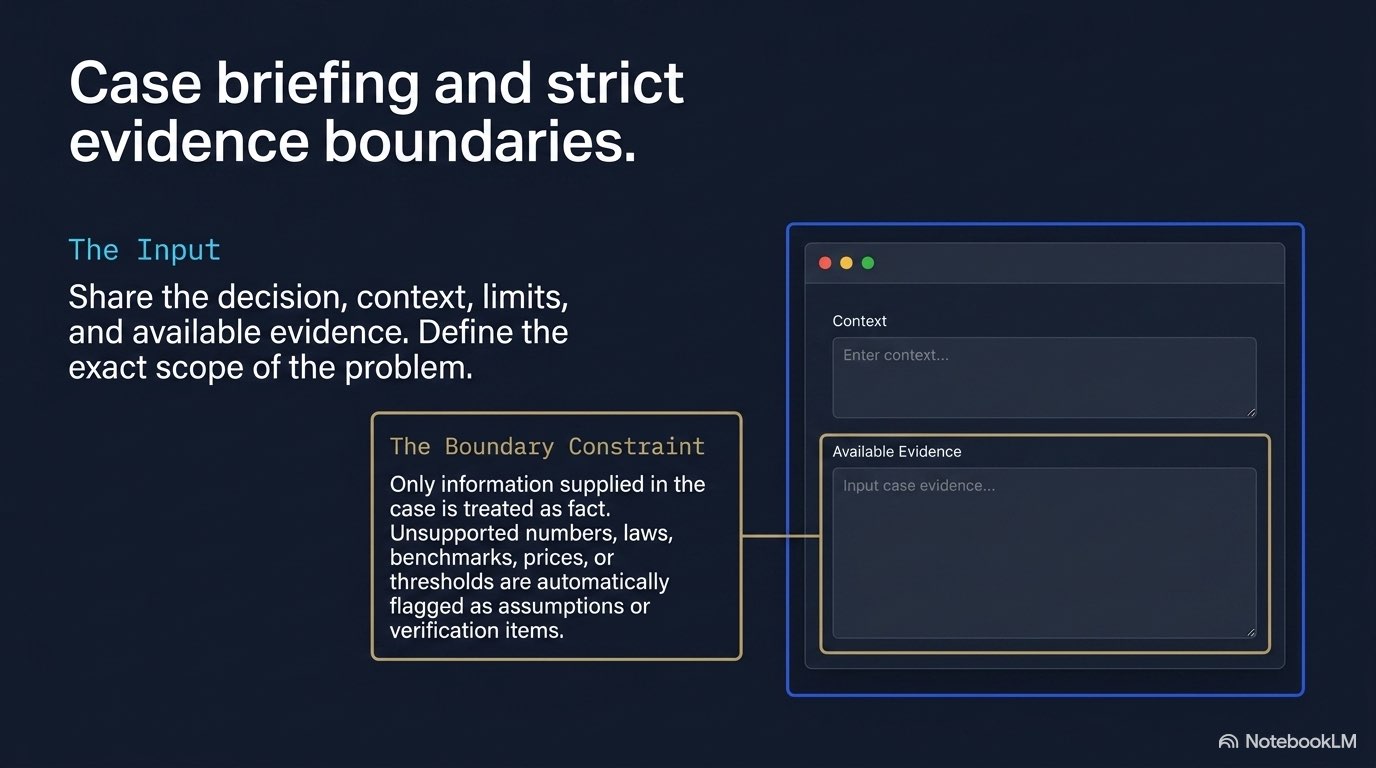
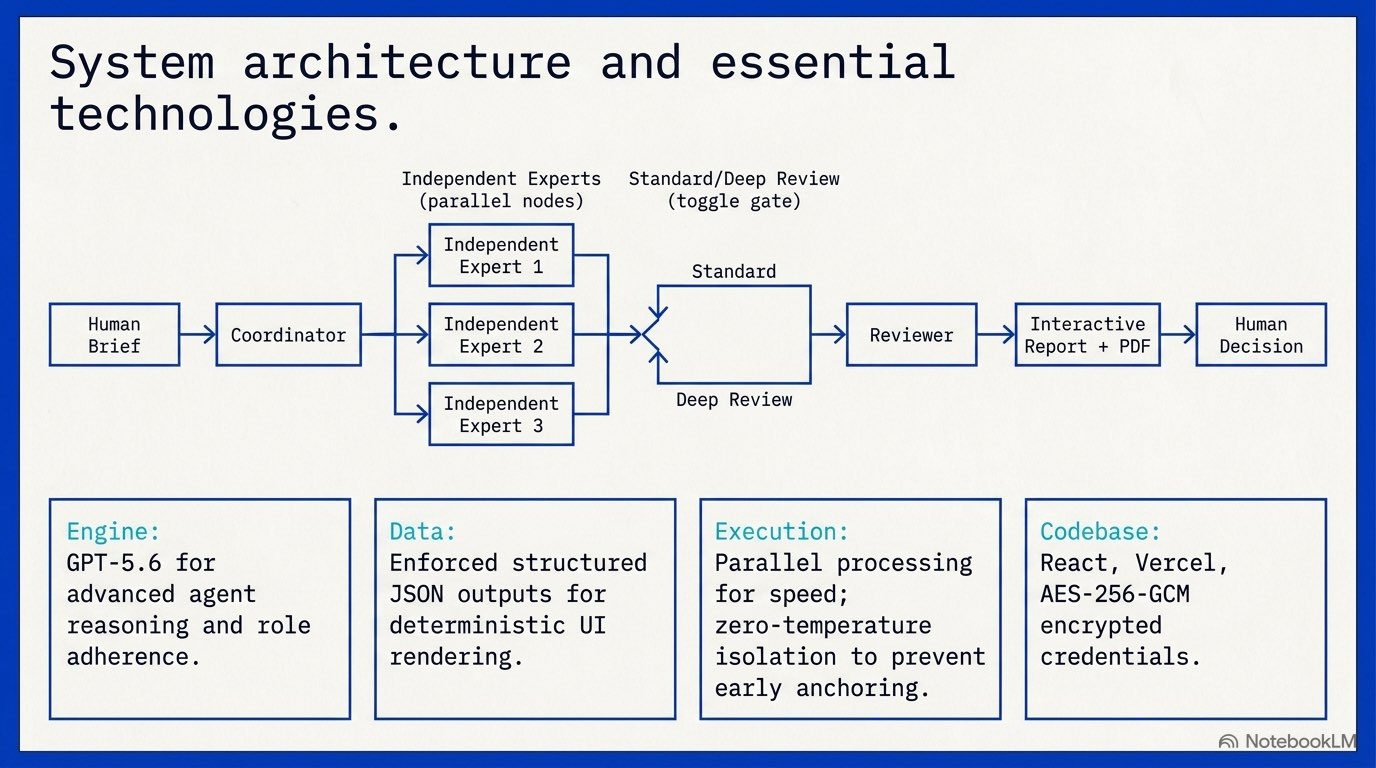
A user brings in a proposal, strategy, design, policy, investment opportunity, or business decision, then assembles two to eight AI reviewers. Each reviewer is shaped as a credible professional—perhaps a financial adviser, planner, engineer, lawyer, operator, investor, or community representative—with a defined background, responsibility, and question.
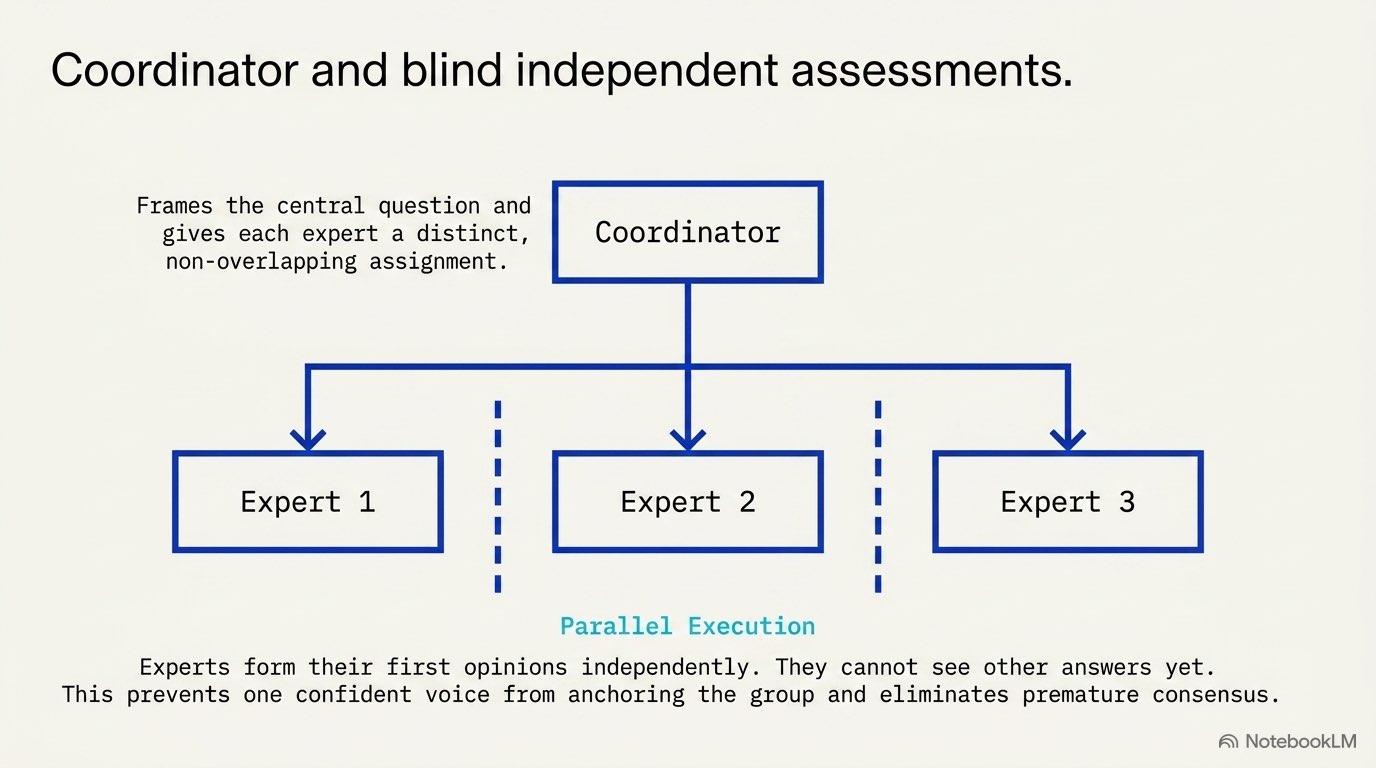
A Coordinator identifies the central decision and gives every reviewer a distinct assignment. The reviewers work independently without seeing one another’s answers, preventing the first confident opinion from influencing the room.
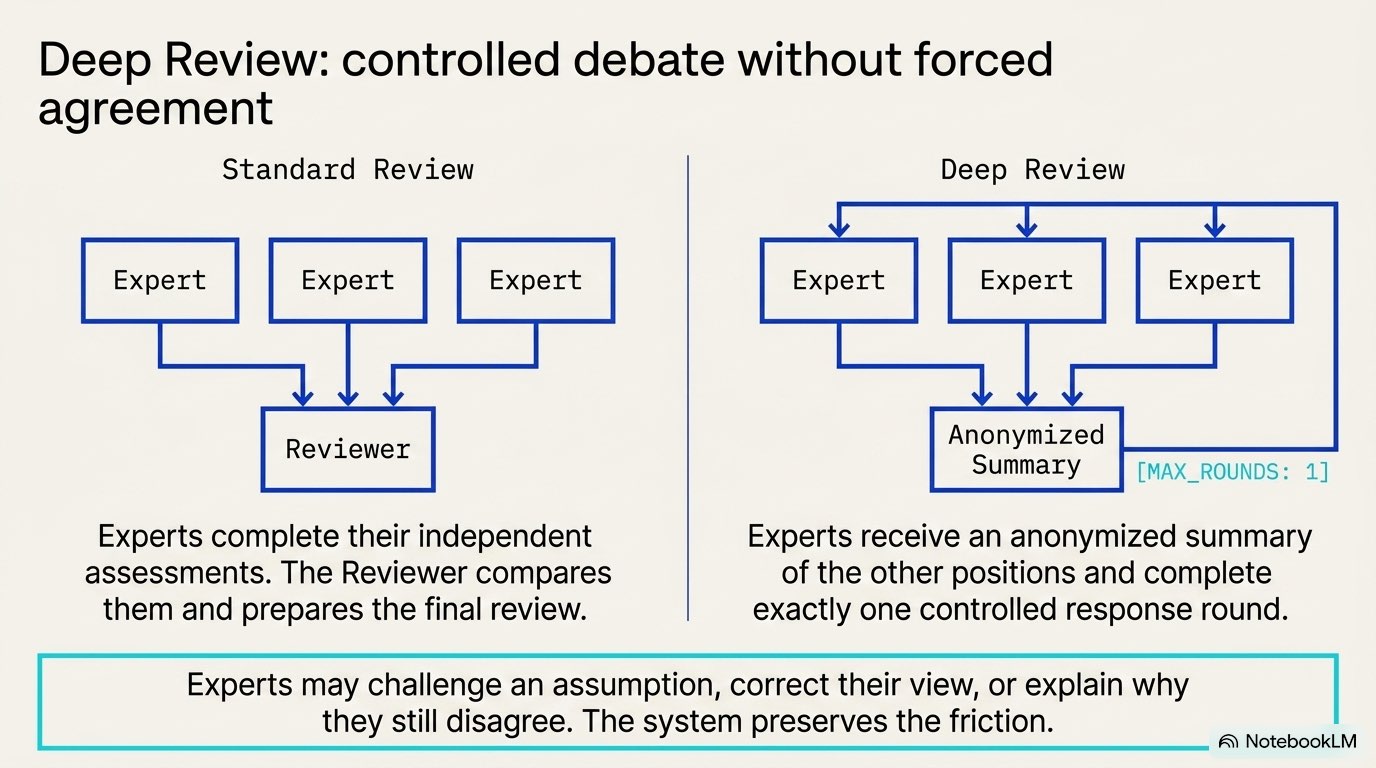
For complex cases, Deep Review gives each expert an anonymous summary of the other positions and one opportunity to reconsider. They may correct an assumption, challenge another view, or strengthen their original argument.
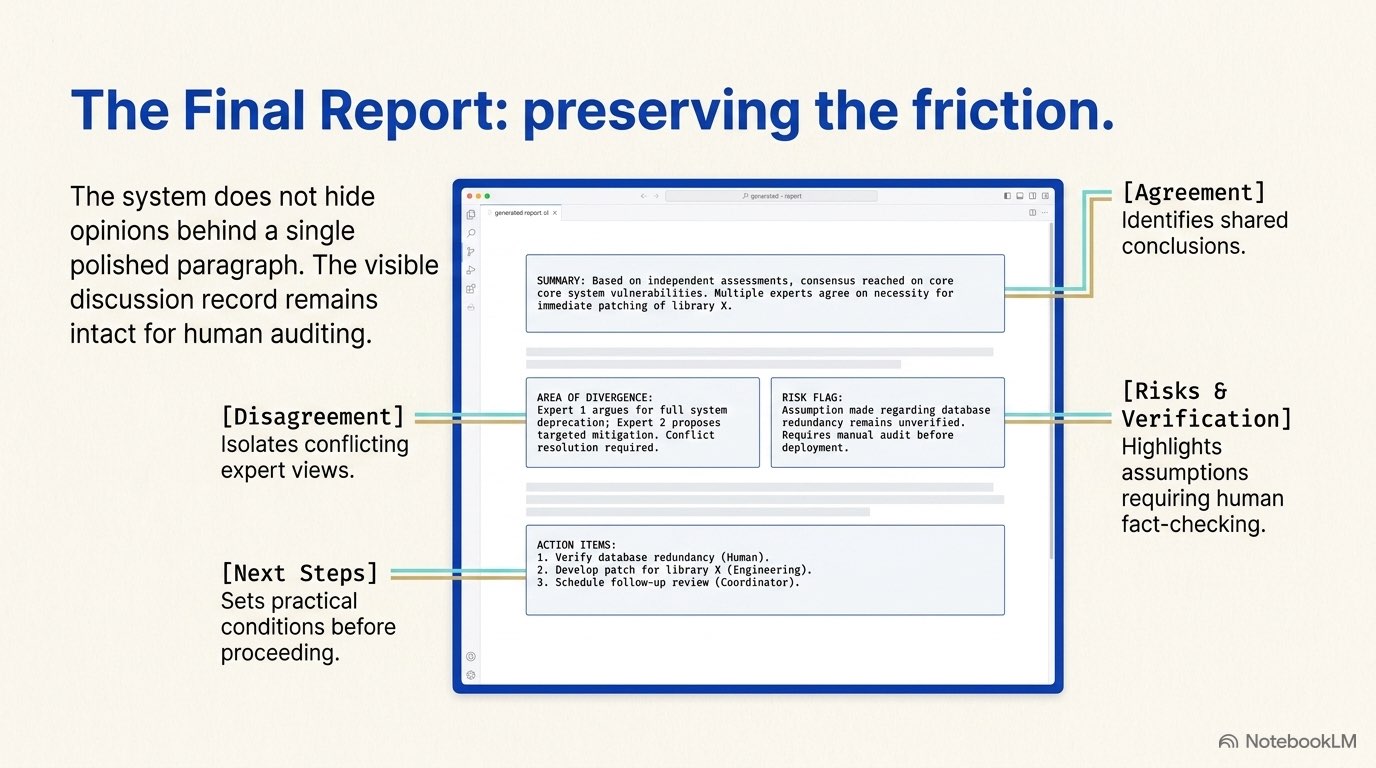
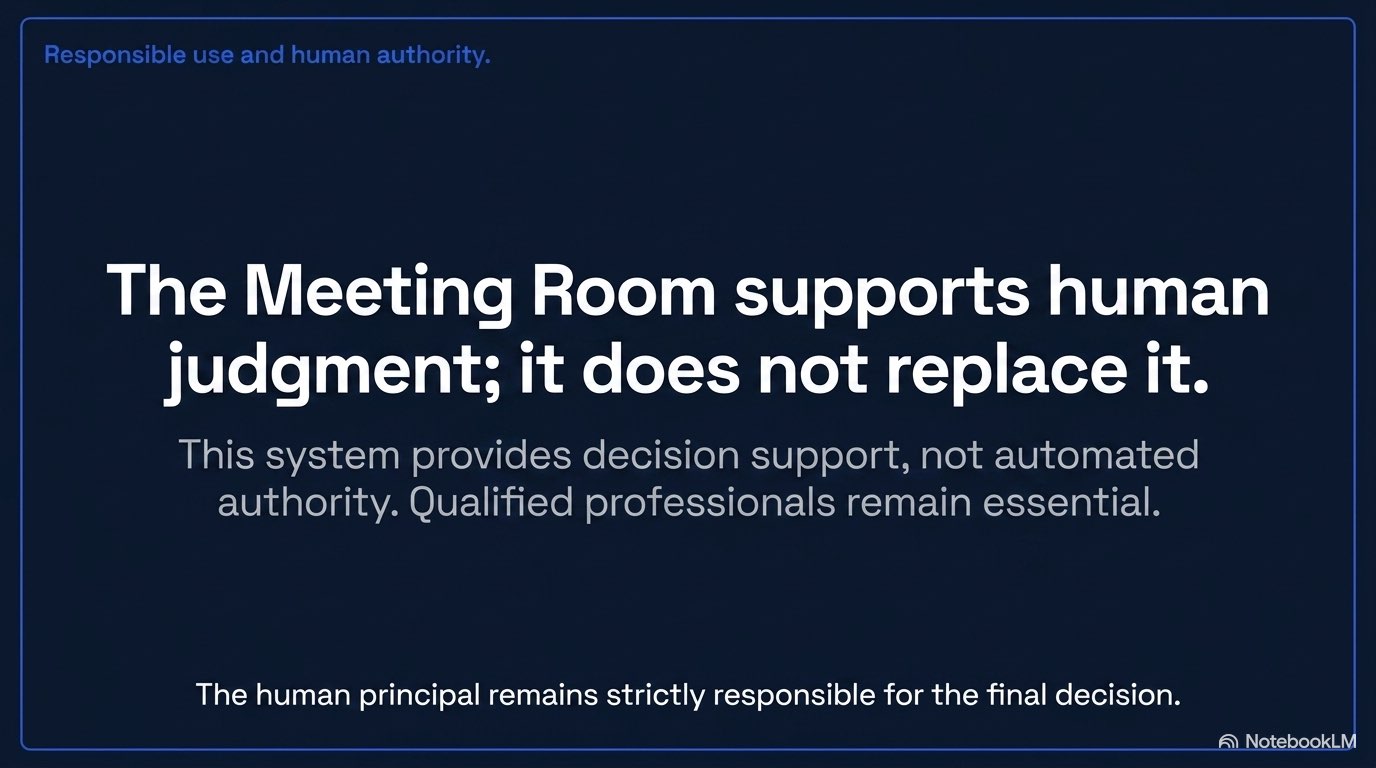
The final report, downloadable as a PDF, identifies agreement, meaningful disagreement, risks, unsupported assumptions, verification needs, conditions for proceeding, and the most practical next step. The human principal always decides.
How we built it
The Meeting Room demonstrates how the role of designers and planners is changing.
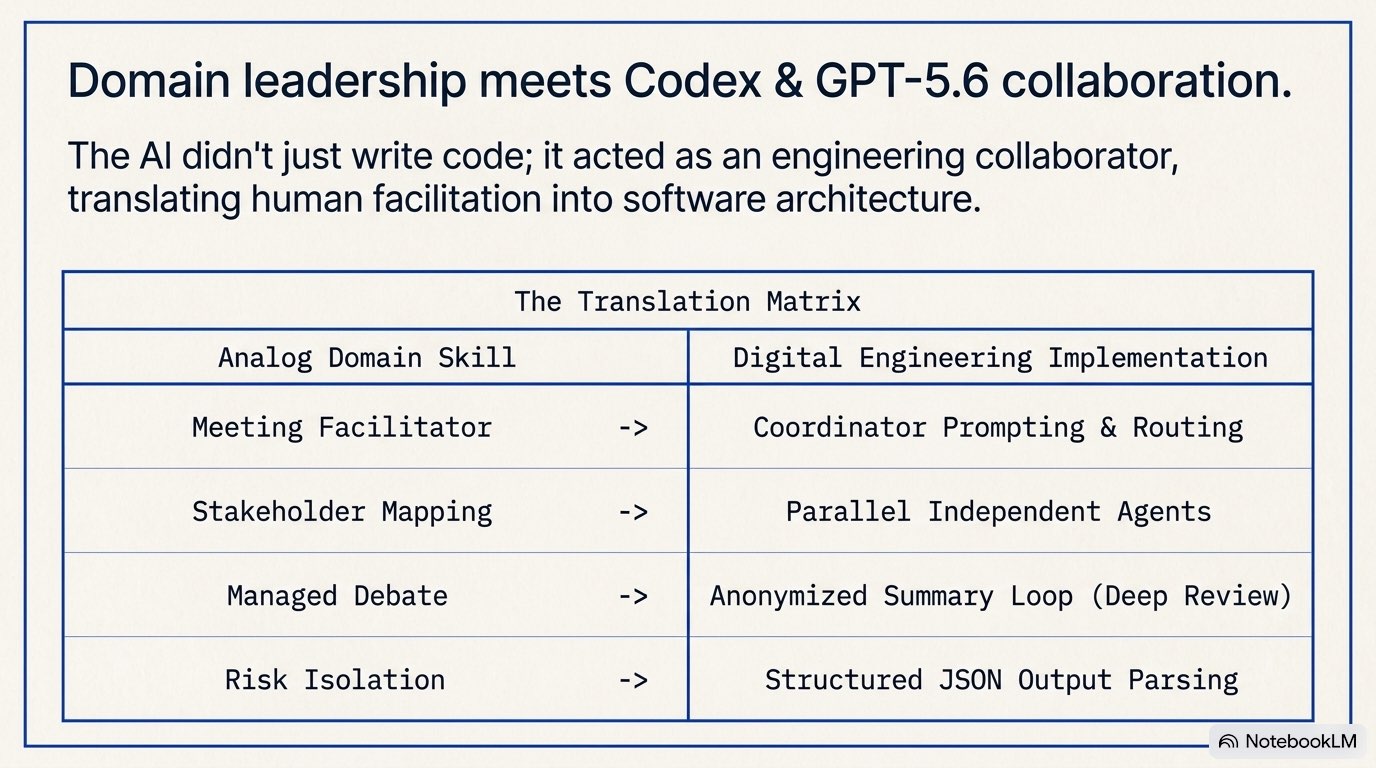
I did not try to become a software engineer. I remained in my domain: defining how professional reviews should work, who belongs in the room, and what a useful decision document should contain.
Codex 5.6 helped translate that knowledge into a working product. It supported the programming, challenged gaps in the product logic, and strengthened the process. Other technologies allow us to use different AI providers, protect documents, save reviews, monitor costs, and produce reports.
Codex strengthened the technical side while I concentrated on professional judgment and the realities of practice. The result feels less like operating an AI system and more like entering a well-run meeting.
Challenges we ran into
The hardest challenge was creating genuine independence. Several AI agents can easily become an echo chamber, producing variations of one opinion.
We addressed this by assigning distinct responsibilities, keeping the first round blind, and limiting Deep Review to one controlled reconsideration.
Evidence was another challenge. AI can introduce convincing facts, regulations, or benchmarks that were never provided. The Meeting Room separates case information from interpretation. Unsupported claims are removed or clearly flagged for verification.
We also learned that more reviewers and more discussion do not automatically produce a better decision. The process must balance depth, time, and cost.
Accomplishments that we’re proud of
The Meeting Room reflects how consequential professional decisions actually happen. Financial, design, technical, legal, operational, and human perspectives can examine the same case without being forced into artificial agreement.
Users can inspect each assessment, see when positions change, and download a practical report with risks, conditions, unresolved questions, and recommended actions.
It also demonstrates that a design and planning practice can build its own tools without abandoning its professional domain. Our domain knowledge is what gives the technology purpose.
What we learned
Multiple AI models do not automatically create collective intelligence. The value comes from who participates, what each reviewer examines, when opinions are shared, and how evidence is controlled.
We also learned that Codex can extend professional capability without replacing professional identity. Technology contributes what we do not specialize in; our experience gives it direction and relevance.
What’s next for The Meeting Room
The Meeting Room is one part of a wider collection of tools being developed at Kolabs.Design. We will test it on real cases, improve it through daily use, and help organizations create their own roster of trusted AI reviewers.
The Meeting Room brings the right perspectives together, allows them to disagree, and helps a human make the decision.
Built With
- clerk
- codex
- drizzle-orm
- google-stitch
- gpt5.6
- neon-postgres
- next.js
- openai
- openai-api
- openai-codex
- pdf-lib
- react
- tailwind-css
- typescript
- vercel-ai-sdk
- vercel-blob
- vercel-workflow
- zod

Log in or sign up for Devpost to join the conversation.