-
-
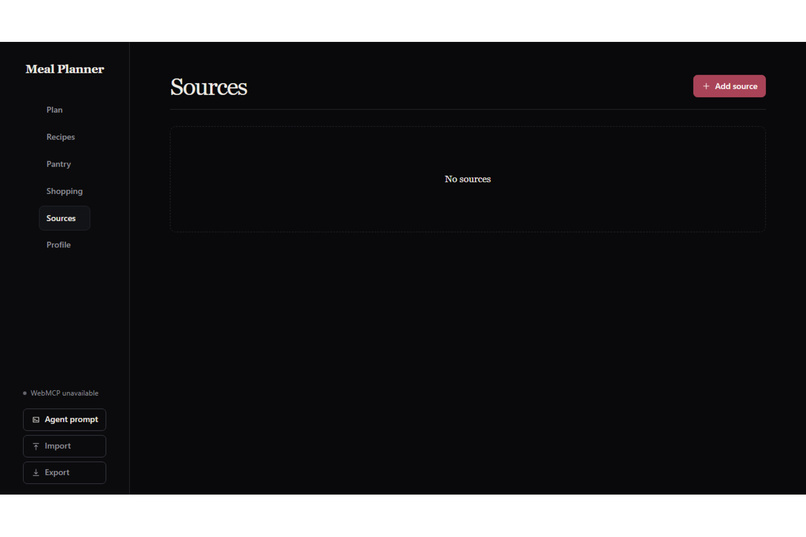
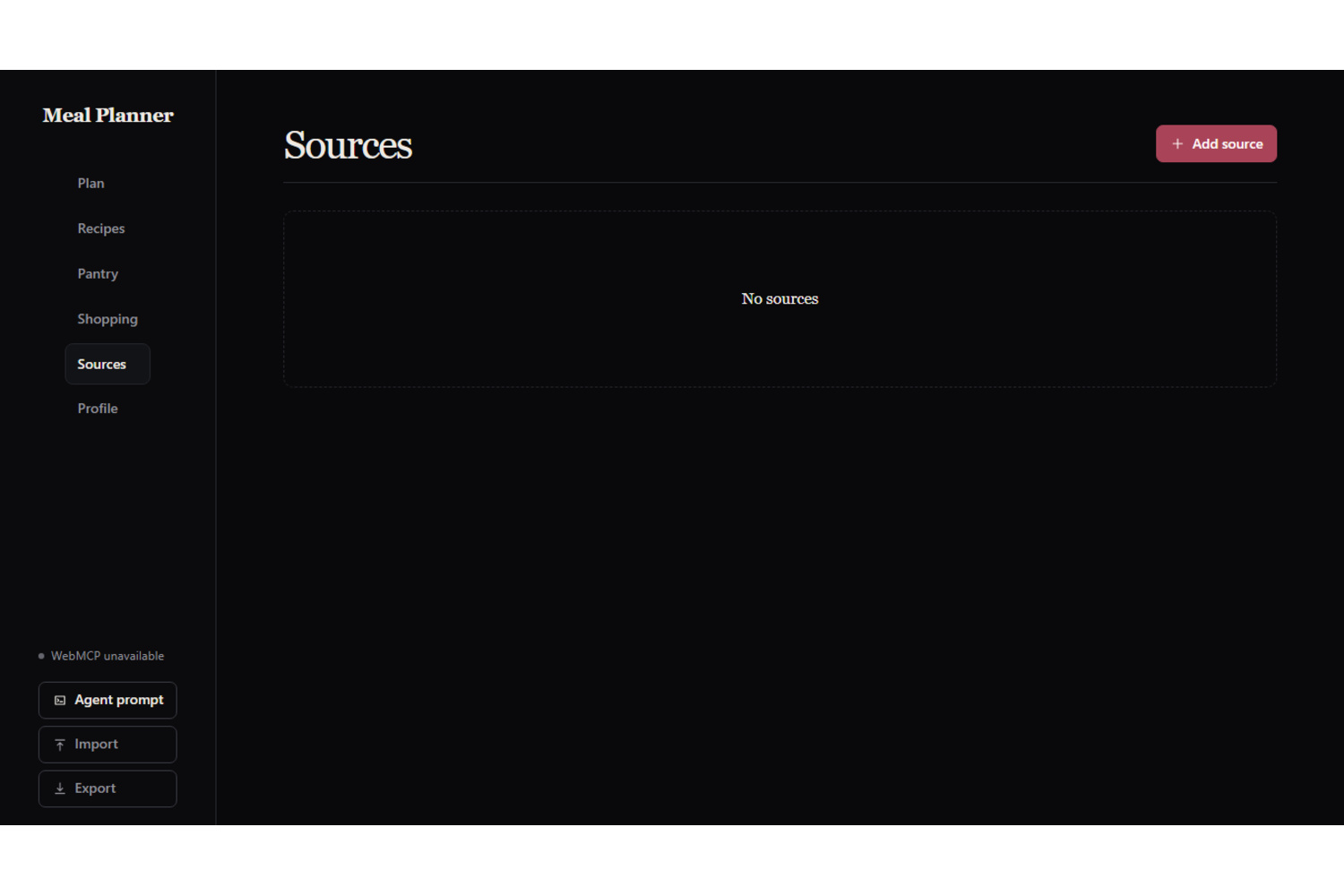
sources
-
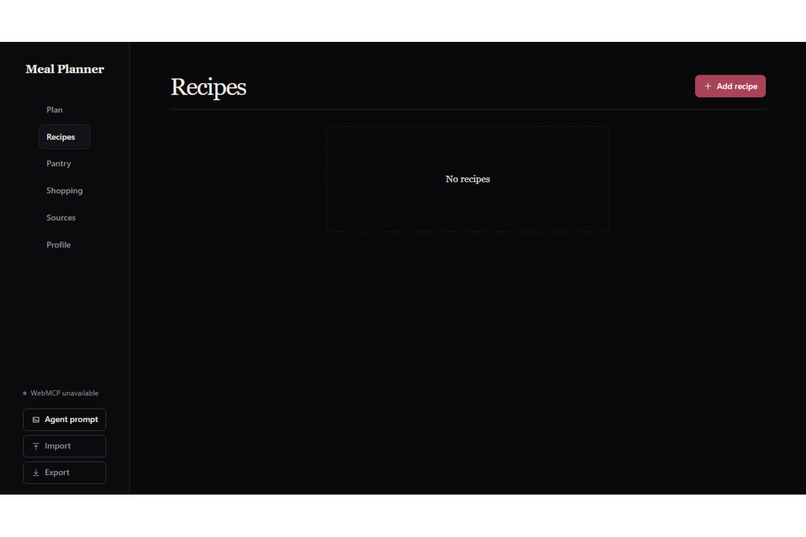
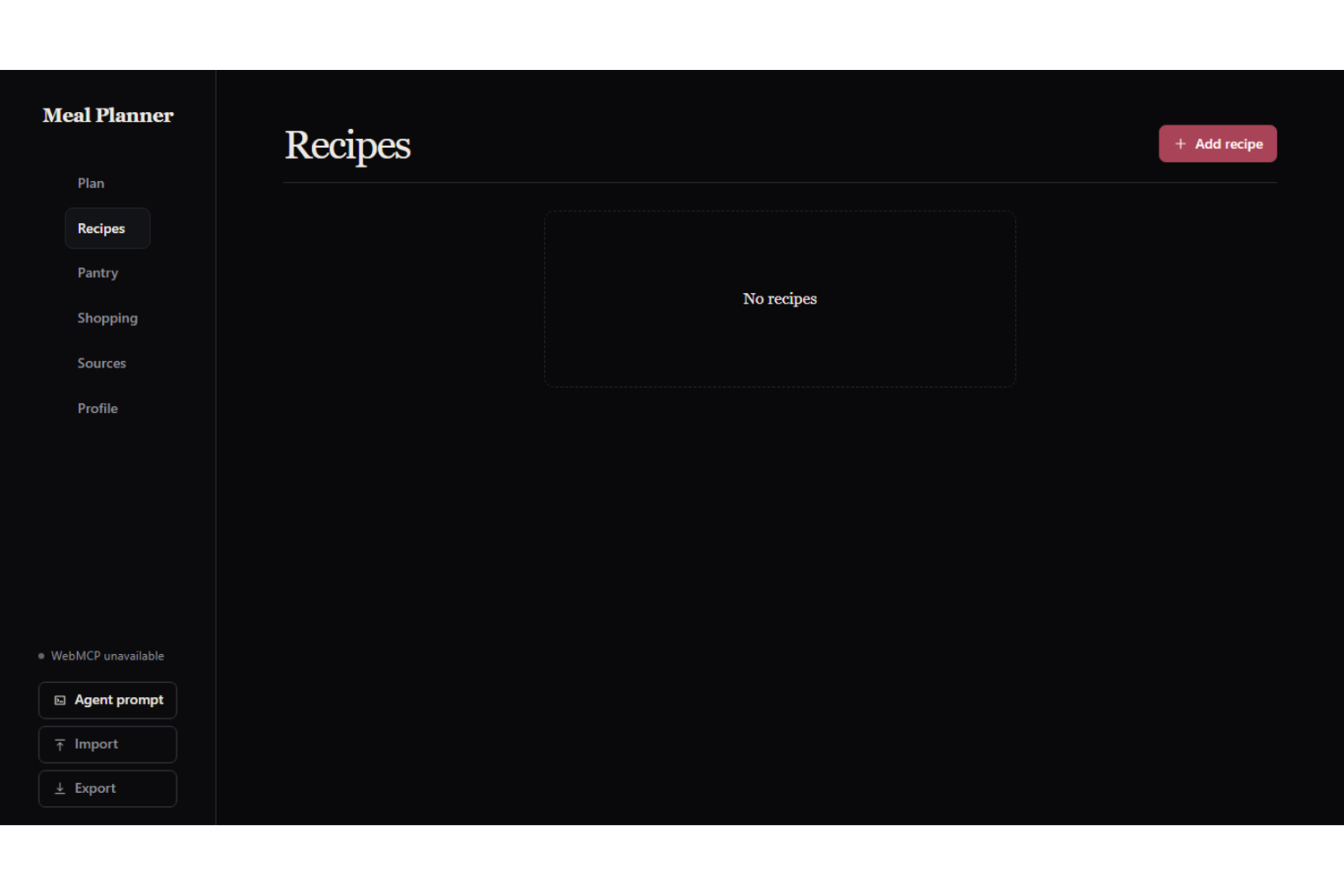
recipes
-
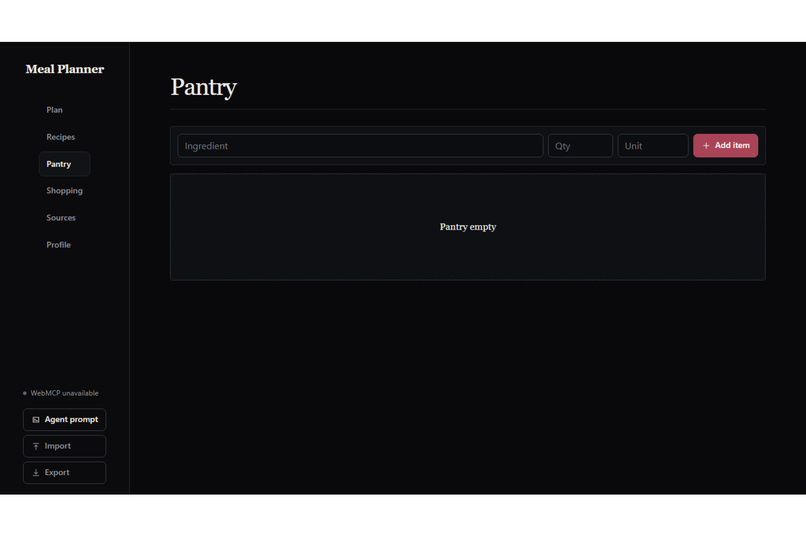
pantry
-
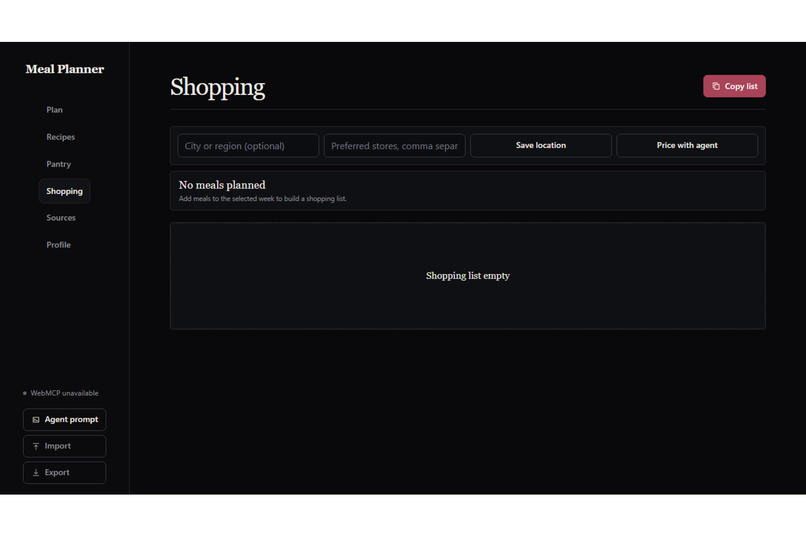
shopping
-
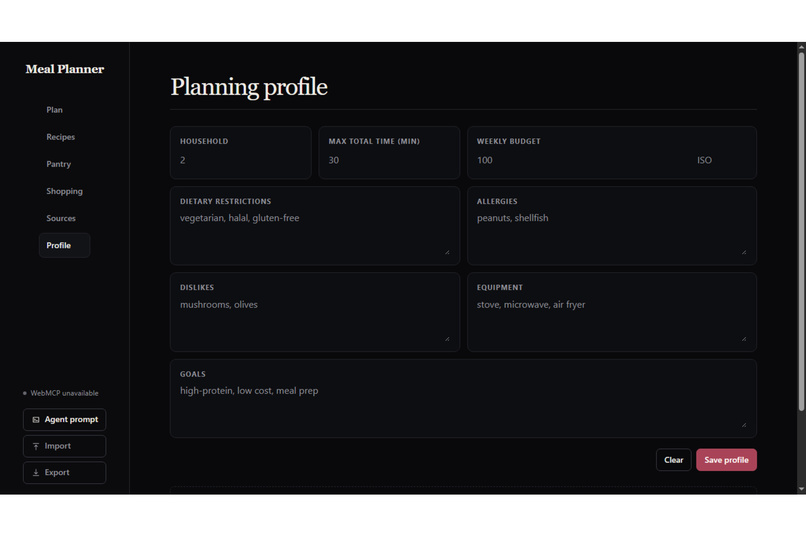
preferences
-
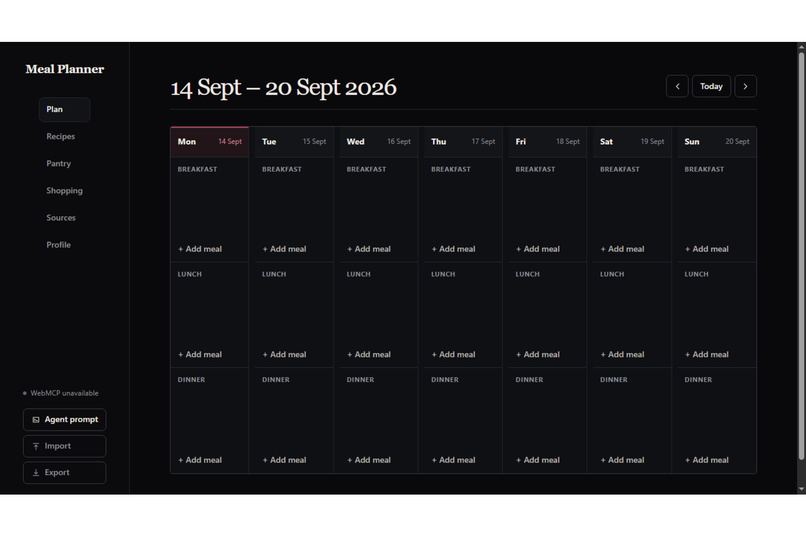
schedule
Inspiration
First and foremost, I have been experimenting with AI. One of my main goals was to see how much work I could realistically get done with AI assistance. I pitched the idea, tested the website, reviewed changes, and repeatedly stripped away unnecessary bloat.
I decided to build a meal planner because eating well and staying consistent can be difficult, whether you are trying to gain weight, lose weight, or simply eat better. Automating parts of meal planning can make that process much easier to maintain.
What it does
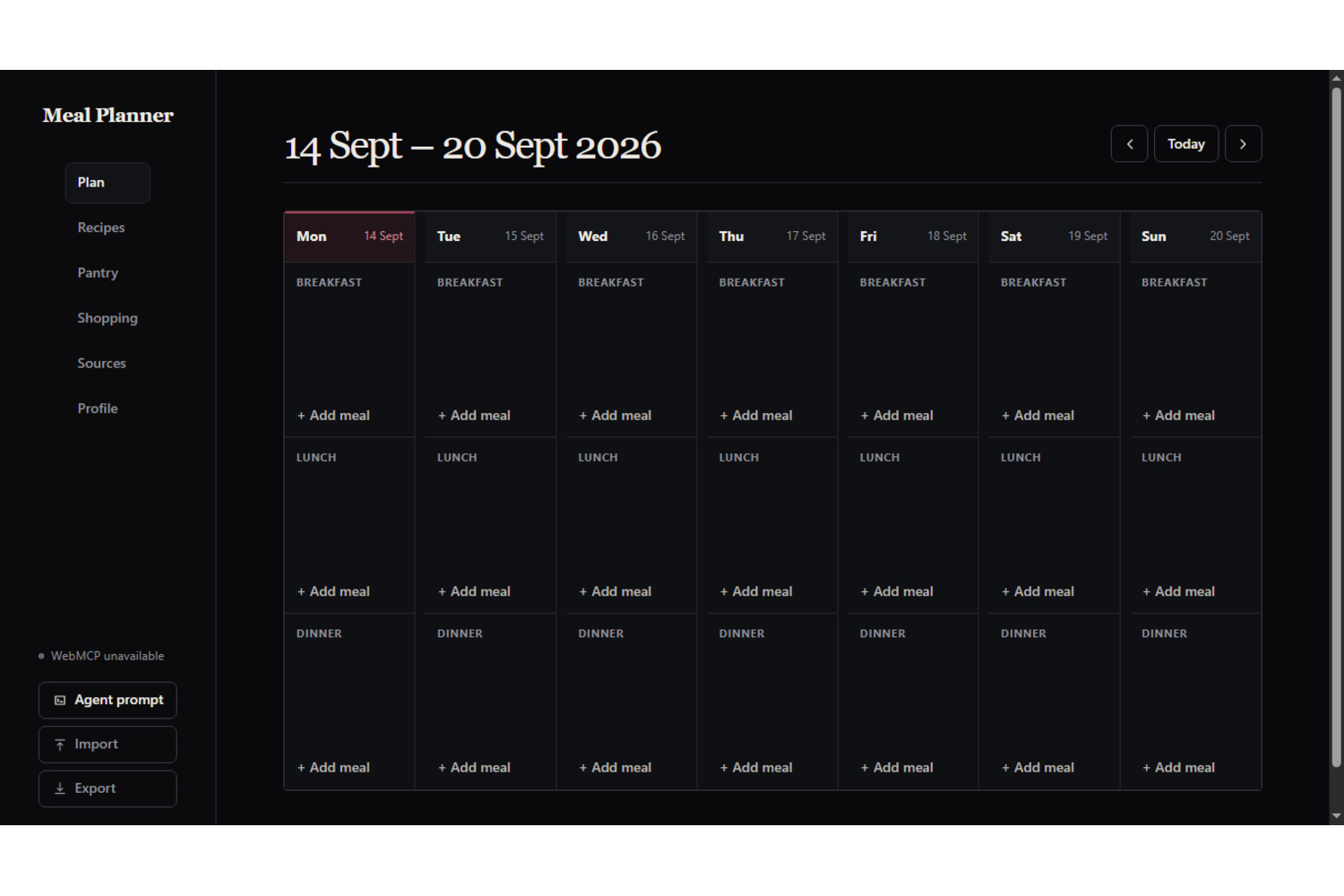
Meal Planner allows users to plan breakfast, lunch, and dinner in advance. Meals are linked to recipes, while recipes can also be stored independently for later use.
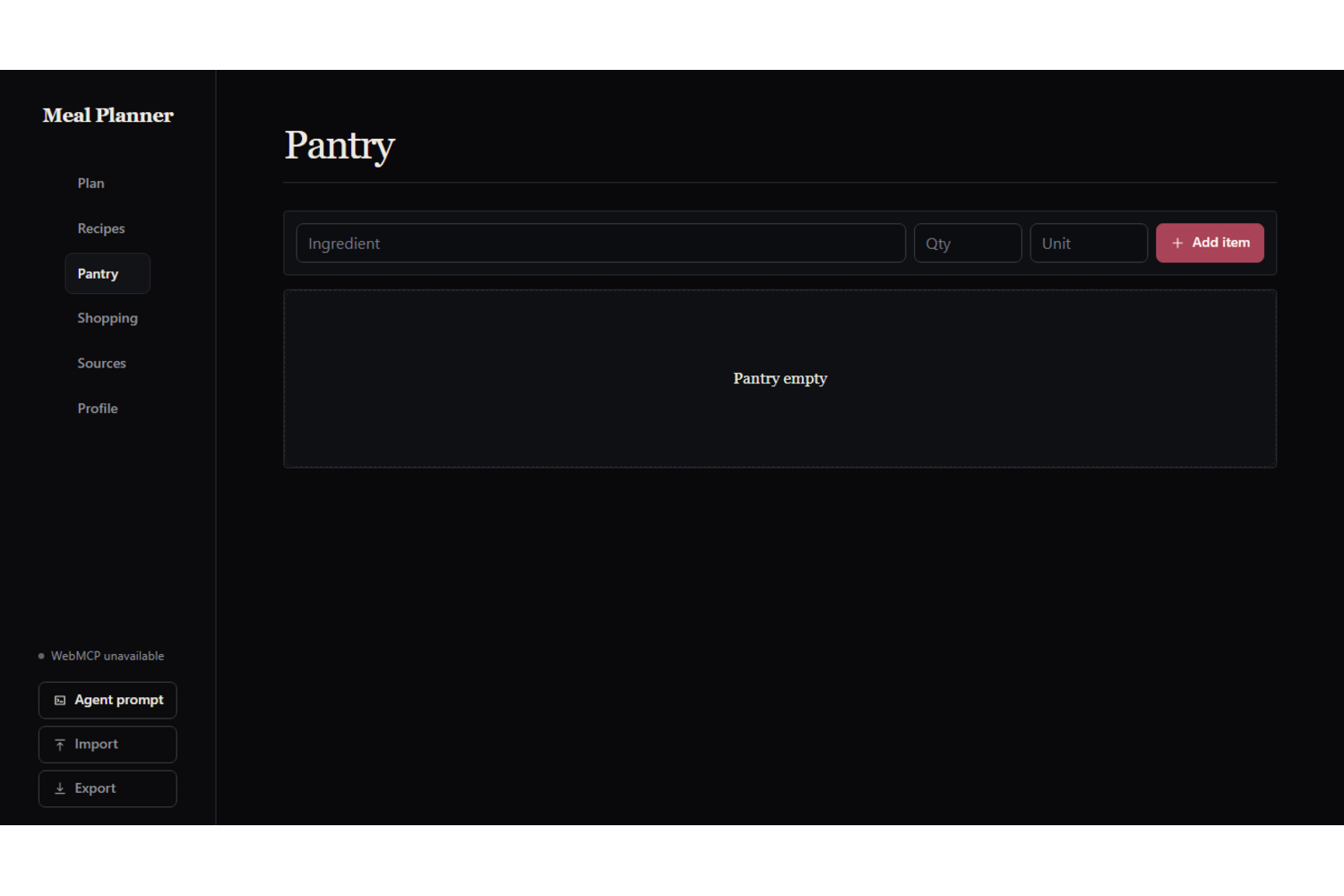
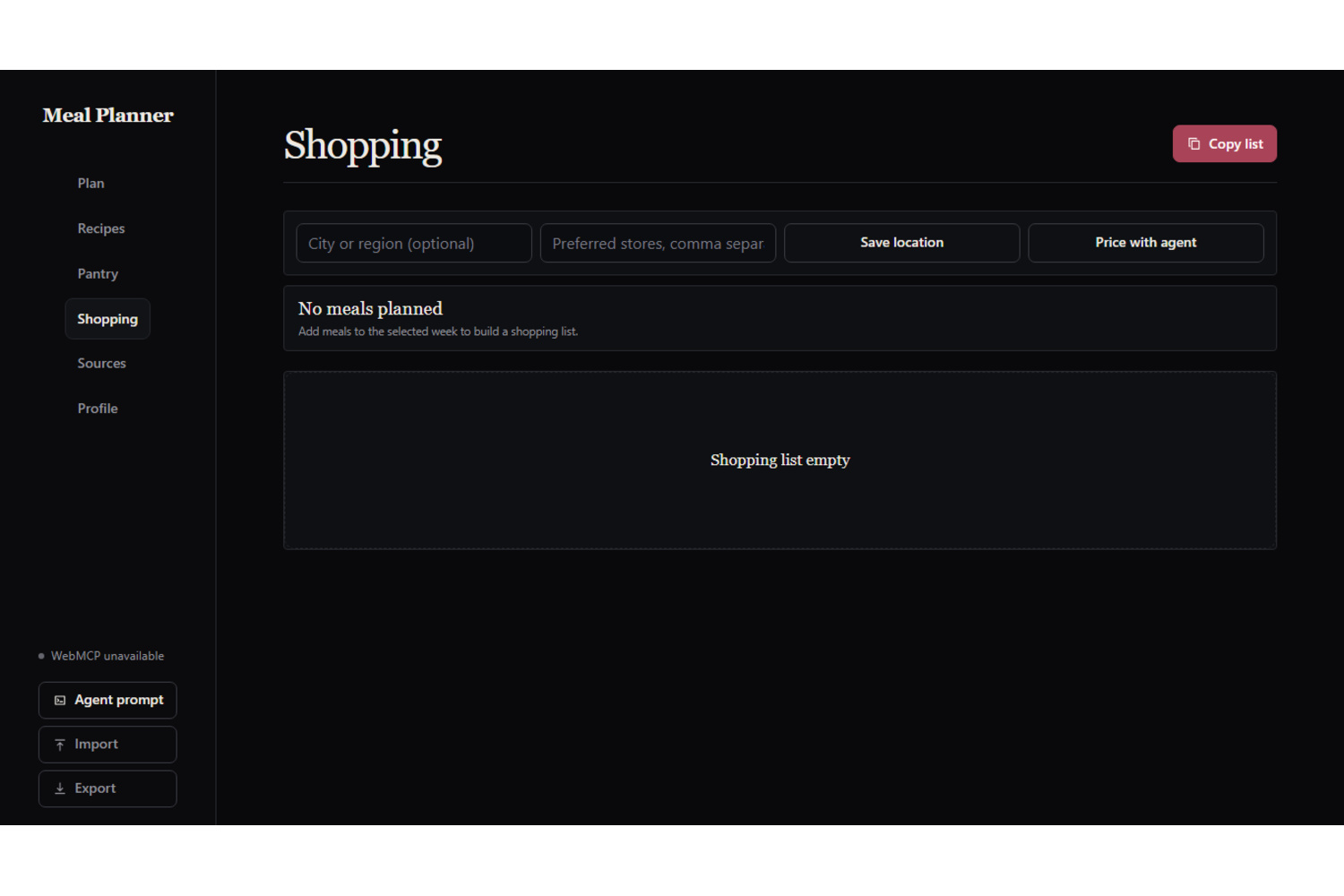
Users can keep track of pantry inventory, calculate what ingredients they still need, and generate a shopping list based on their planned meals.
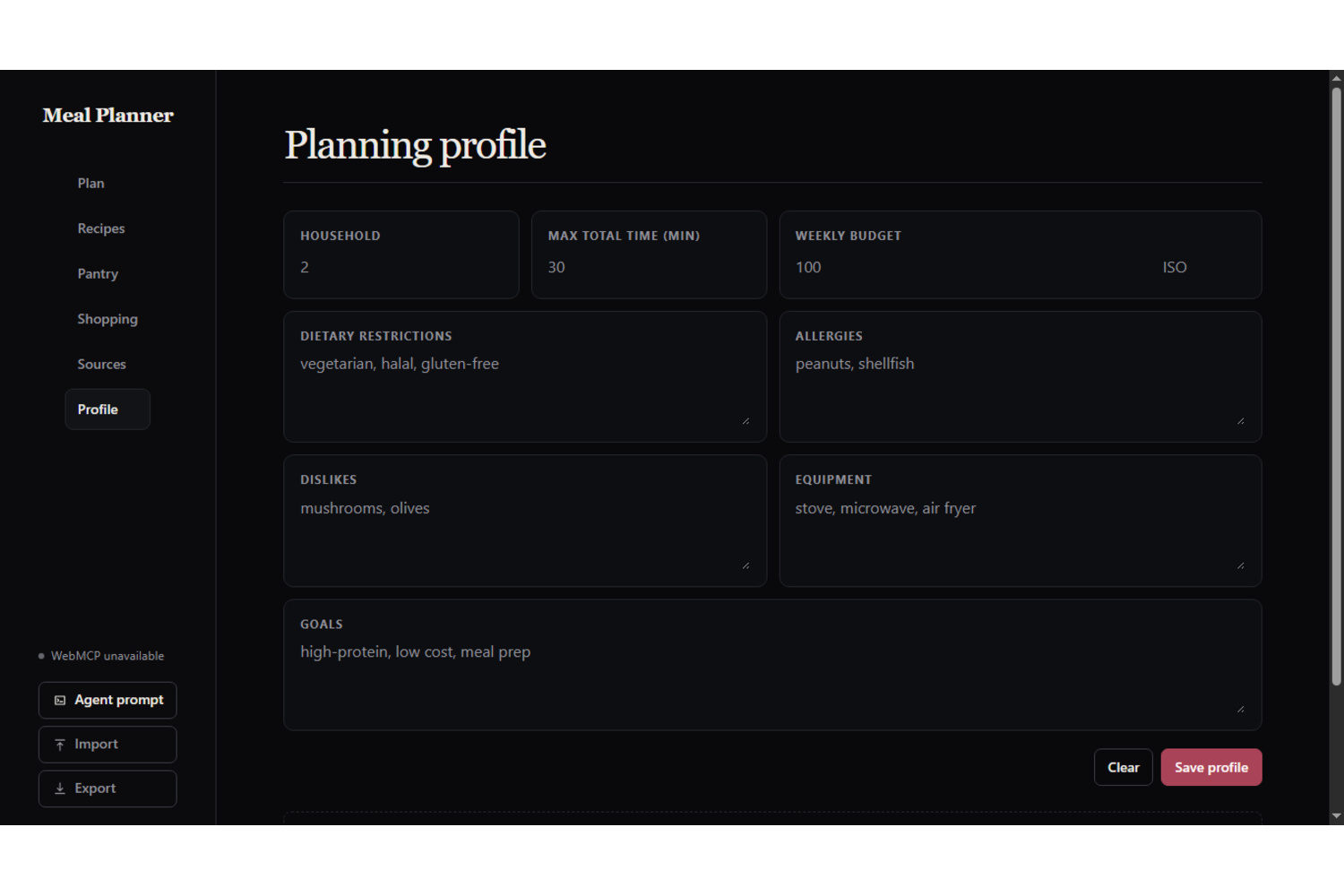
All of these core functions are also exposed to an AI agent through WebMCP. An agent can read recipes, inspect pantry inventory, plan multiple meals, update stock, calculate shopping requirements, and help research prices or promotions based on a location the user explicitly provides.
The application also supports importing and exporting meal data between devices.
How we built it
The application was largely vibe-coded. I pitched the meal-planning concept and used ChatGPT to help implement it.
My role was defining the product, testing the implementation, making architectural decisions, reviewing changes, and removing features that made the application more complicated without making it more useful.
The final application is deliberately simple: HTML, CSS, vanilla JavaScript, browser localStorage, and WebMCP. It runs as a static site with no required backend or database.
Challenges we ran into
I was not sure if this entry would be good enough for the competition. However, I still made an effort to participate.
Accomplishments that we're proud of
The application has been improved significantly. Agents can access more tools, allowing fine grained control and execution. The visual interface has been slightly modified to be more dynamic.
Most importantly, this entire website is built around a new and experimental technology. I am glad that I was one of the first people to give it a go.
What we learned
Vibe-coding works, but only if you understand what you are trying to build.
AI can produce a large amount of implementation very quickly, but a human still needs to define the goal, make architectural decisions, test the result, identify unnecessary complexity, and decide what should actually ship.
For this project, having a human in the loop was indispensable.
What's next for Meal Planner
The next step would be rigorous testing and finding all failure points. Once that is done, I could publish a more comprehensive and complete version.
Built With
- and-render
- css3
- github
- html5
- javascript
- render
- webmcp


Log in or sign up for Devpost to join the conversation.