-
-
-
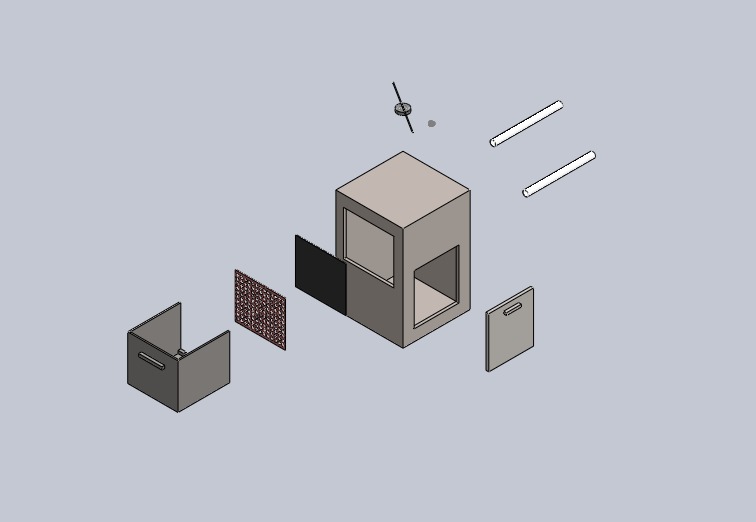
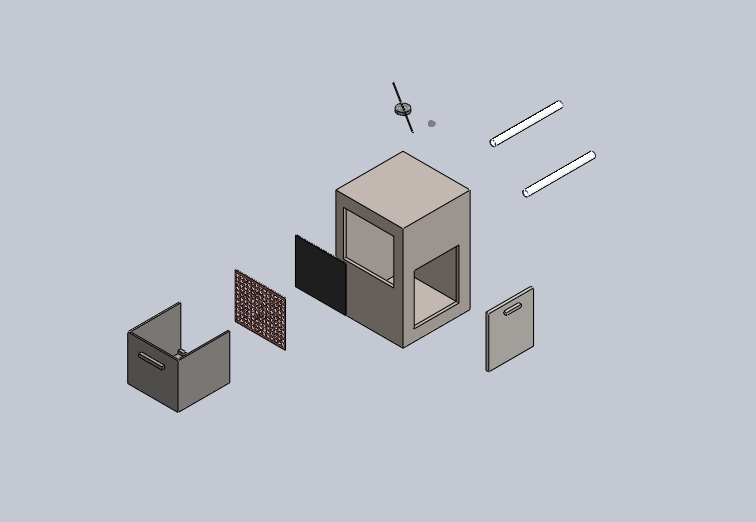
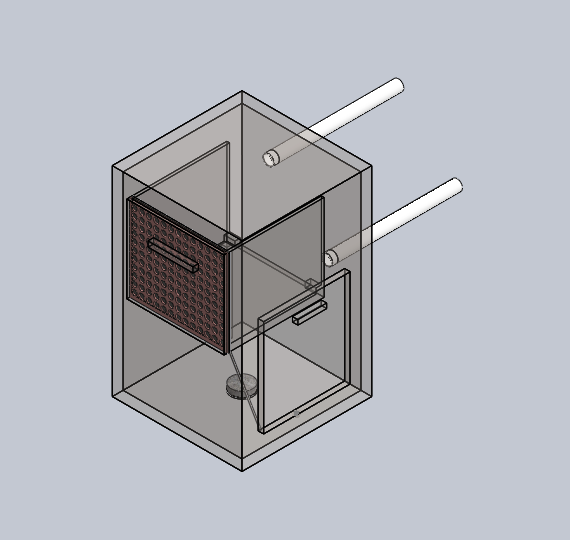
Exploded View
-
-
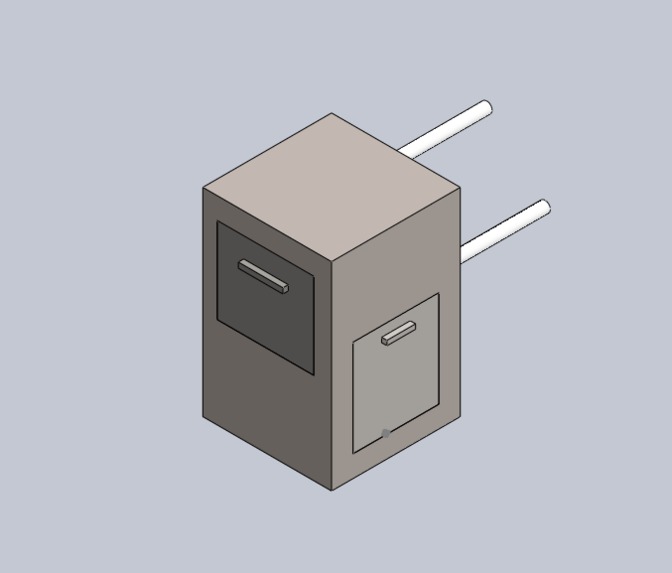
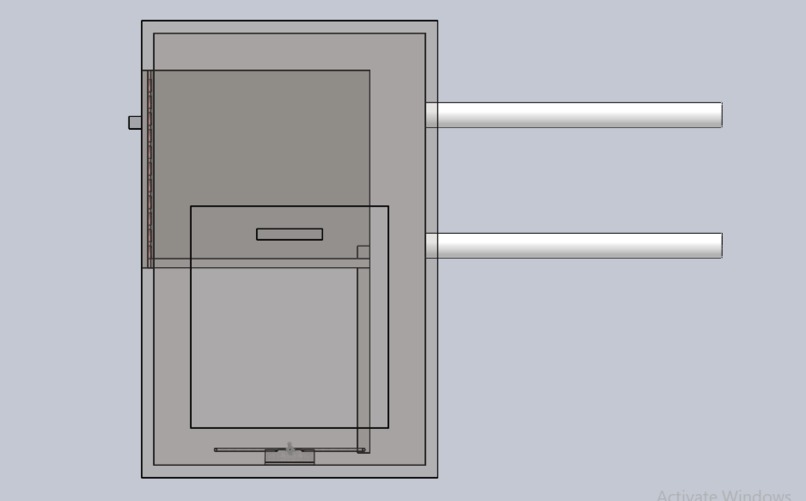
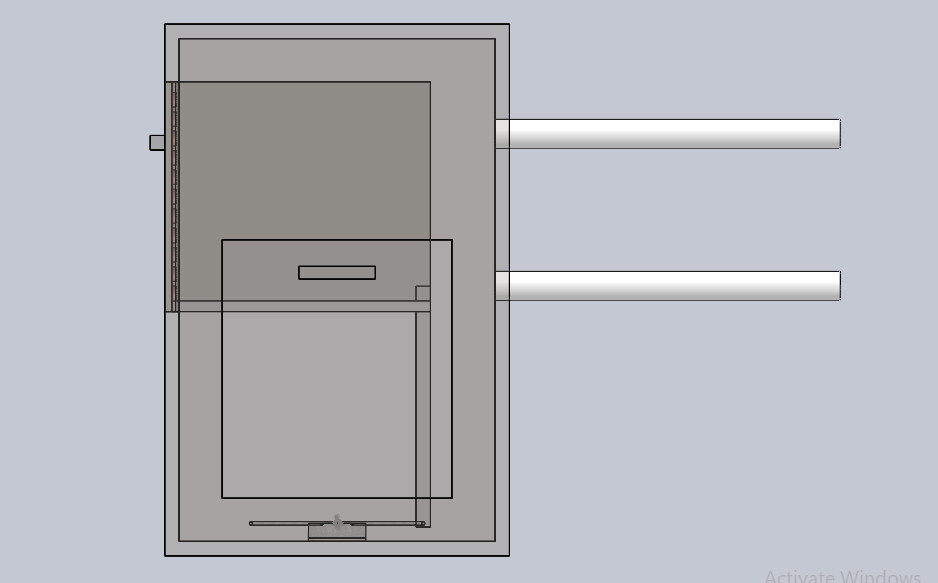
Side View to demonstrate how drawer connects to mixer
-
-
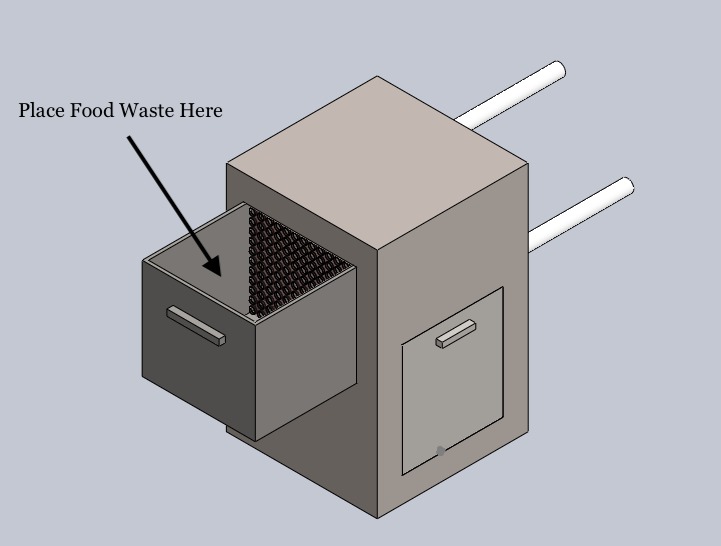
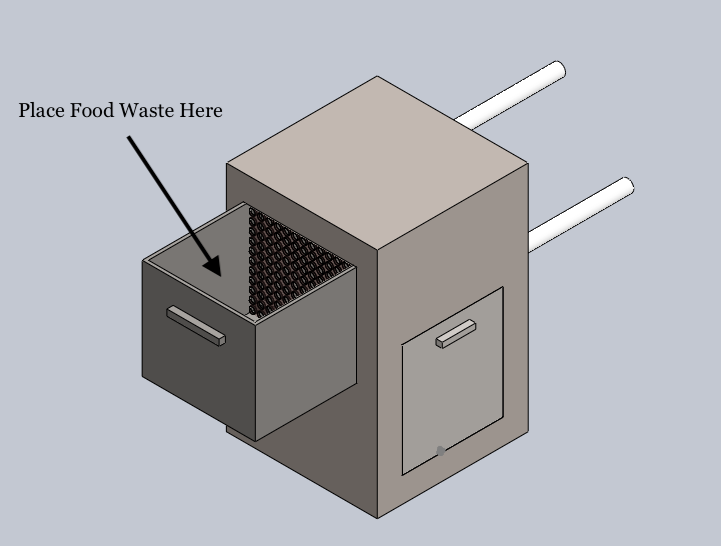
Demonstrating functionality of food drawer

Introduction: Every year in America, over 80 billion pounds of food is discarded. This throw-away food is worth over $100 billion and is over 30% of the US food supply. Not only are we wasting food that could feed millions of hungry people, money that could be spent on bettering the planet, and expendable resources that our lives depend on, this food waste is directly contributing to the climate crisis.
The majority of food waste-- from homes, stores, farms, transportation, etc.-- ends up in landfills where it is left to rot for years. As waste accumulates, lower layers are buried and therefore oxygen-deprived. As food continues to decompose, now anaerobically, it produces methane-- and a lot of it. Landfill gas composes over 15% of US methane emissions which greatly affects the climate as methane is anywhere between 25 and 80 times more effective at trapping heat in our atmosphere than carbon dioxide. Because of the environmental implications and the fact that we can use methane for energy, some landfills have incorporated systems to capture, process, and send the gas to the grid for utility use. But this does not provide use for the wasted food itself, methane still escapes, and this is not yet widely adopted. In our project, we aim to tackle both the problem of unused food and unused methane.
It is estimated that over 40% of food waste happens at the consumer level. Then, all of this waste has to be dealt with and transported to landfills, further increasing its environmental impact. The solution that we are proposing is a trashcan-like appliance known as the MassGas that allows food to decompose to the point of usable soil and captures released methane that is filtered into the natural gas line of the home and used for household energy needs.
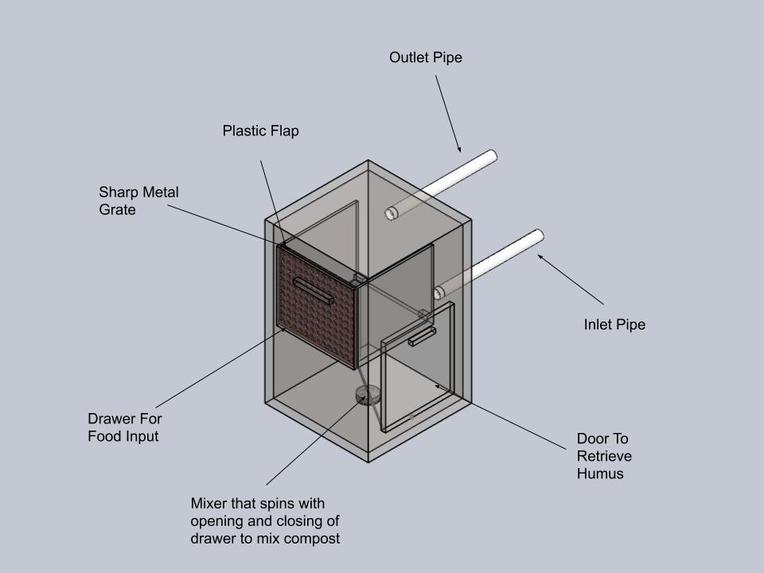
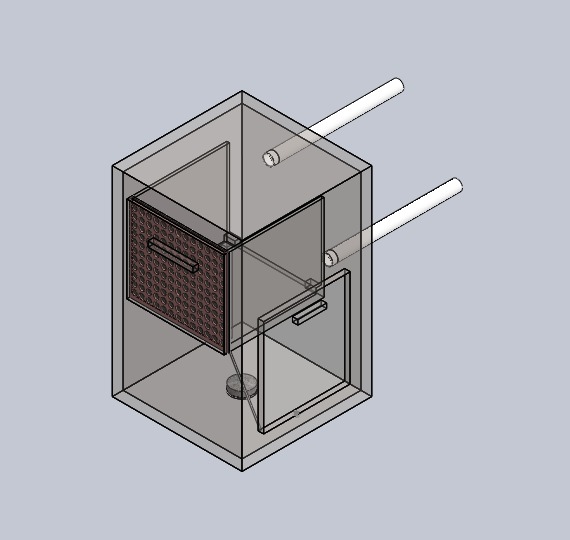
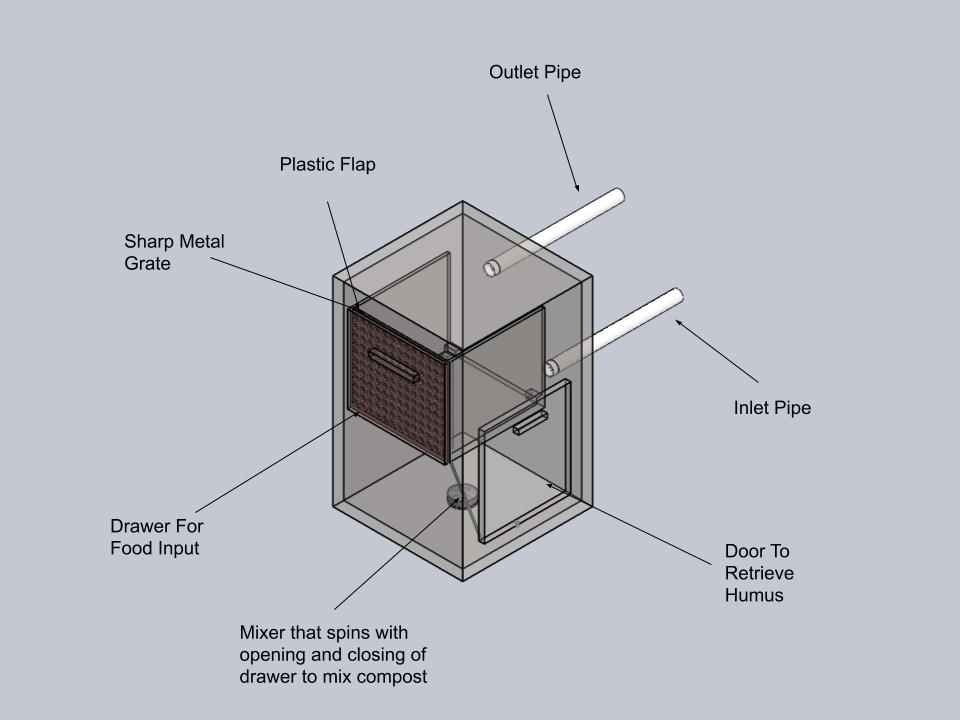
Product Dec: The MassGas is designed as a high functioning composting and energy-producing unit. It is composed of a 15 gallon air sealed bin with a drawer for dispensing the food waste, and a door for removing the compost. The drawer opens, allowing the consumer to place their food waste in the compartment. When the drawer closes, the food is forced through a sharp metal grate that divides the food waste into smaller pieces. When the drawer is then reopened, the waste falls into the main bin. Dividing the waste into smaller bits accelerates the decomposition process. A plastic flap is installed behind the grate, providing an airtight seal until pushed by the drawer to allow the food waste in. The drawer also connects to a mixer located at the bottom of the main bin by means of a long rod. When the drawer is opened or closed, the mixer spins, churning the compost with it. Mixing the waste allows for circulation and some aeration to further expedite the composting process. While sitting in the largely anaerobic container, the waste will be decomposed by bacteria into humus, the desired product of compost. This process, under these air-sealed conditions, produces methane, an extremely potent greenhouse gas that largely contributes to climate change. The power of our product lies in harvesting this gas for a usable purpose. To make the MassGas a standard appliance in any modern-day home, this menthane will be directly fed into an already initialized natural gas line that connects to the home. The home’s natural gas line will pump the pressurized fuel into the MassGas where it will, in turn, pressurize the methane produced from anaerobic food waste decomposition, push it through a standard natural gas filter, and into an input pipe to the homes’ natural gas line. This process has a zero energy input, utilizing the already existing gas pressure in the home. The outlet pipe will have a lower pressure than the input’s so the gas will naturally flow down the pressure gradient. The methane will then no longer be a harmful byproduct but a utilized resource in the home. The methane from this decomposition process will also offset the need for conventionally produced natural gas. When the MassGas reaches its capacity of food waste, the natural gas line may be turned off with a valve, and the MassGas’s door can be opened to remove the humus. The humus can then be used for gardening, soil health, or sold to a local municipality.
Analysis: Once the MassGas is manufactured it can immediately be bought and used by the consumer. The only installation necessary is to connect the two lines on the back of the appliance to the home’s natural gas line. We aspire for the MassGas to become a standard appliance in every home, drastically cutting down the need for other sourced natural gas. The MassGas is a major stepping stone in absolving the global demand for natural gas production and the use of other fossil fuels. As of right now, a large majority of energy comes from these environmentally unfriendly sources. Not only do they release large sums of greenhouse gases, but their extraction, refinement, and transportation use absurd amounts of energy and other resources. The MassGas will allow for the fuel to be produced onsite, without mining, fracking, or other harmful extraction methods. Despite the fact that utilizing methane is not a completely carbon neutral process, the released gases are far less harmful than the methane itself, natural gas is a fuel much cleaner than coal or oil, the gas is naturally produced so the resources and energy for extraction are greatly diminished, and the gas is produced on the site of use which greatly increases efficiency by eliminating most transport and transmission losses. Once the food waste breaks down into humus, it can be used in agriculture and gardening, further sequestering CO2 and offsetting emissions. Additionally, the MassGas will be a relatively cost-neutral or even eventually a cost positive appliance. The upfront cost is the only direct monetary input to the product. After that, the MassGas only uses resources that are available and would otherwise be wasted. By taking these materials and making useful products out of them-- both humus and methane-- our product offsets its initial cost greatly. The methane that is produced will be energy that is not drawn from the grid, reducing electricity and gas bills, and the compost produced can be used to grow food or sell. Due to both the cost neutrality and the user-friendliness, the MassGas is a product that can be easily implemented in nearly any residence.
As the world develops, so will our product. As we phase out fossil fuels, and subsequently natural gas, the purpose of the MassGas will adapt to using methane harvesting for electricity generation. The basic framework of our appliance will remain, but with modifications to fit the modern, electrically driven home. The MassGas can also be enhanced to meet the food waste needs of a larger consumer such as an industrial-sized farm, a food processing center, or a market. This will greatly reduce the strain on landfills and repent uncapitalized methane from food waste decomposition.
Not only is the MassGas a very unique product, it is also more practical than most home energy and food waste solutions. Although the end goal is to eliminate virtually all food waste and step completely away from fossil fuels, our society is not capable of doing this overnight. We must crawl before we can walk. So even though cutting out fossil fuels or only producing what exactly will be consumed are ideal, they are not possible at this point in time. The MassGas is an appliance that makes use of the fact that we cannot solve the world’s problems in a night, but we can get closer. In addition to providing a use for food waste and producing energy, our product will foster knowledge and awareness about the topic. It will encourage people to waste less and make use of what they do waste, pay attention to where their energy is coming from and how they are using it, and hopefully further inspire developments to a waste and fossil fuel free planet.
If executed on a wide scale, the impact of our product will be drastic. The MassGas will limit the need for extracted natural gas, greatly reduce the amount of food waste sent to landfills, provide compost for agriculture at the home or to be transported to a farm, and increase consciousness of food waste and energy use.
Built With
- solidwork
- solidworks


Log in or sign up for Devpost to join the conversation.