-
-
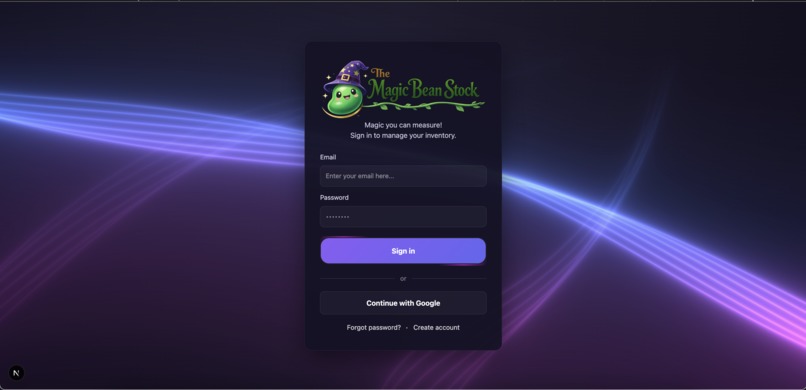
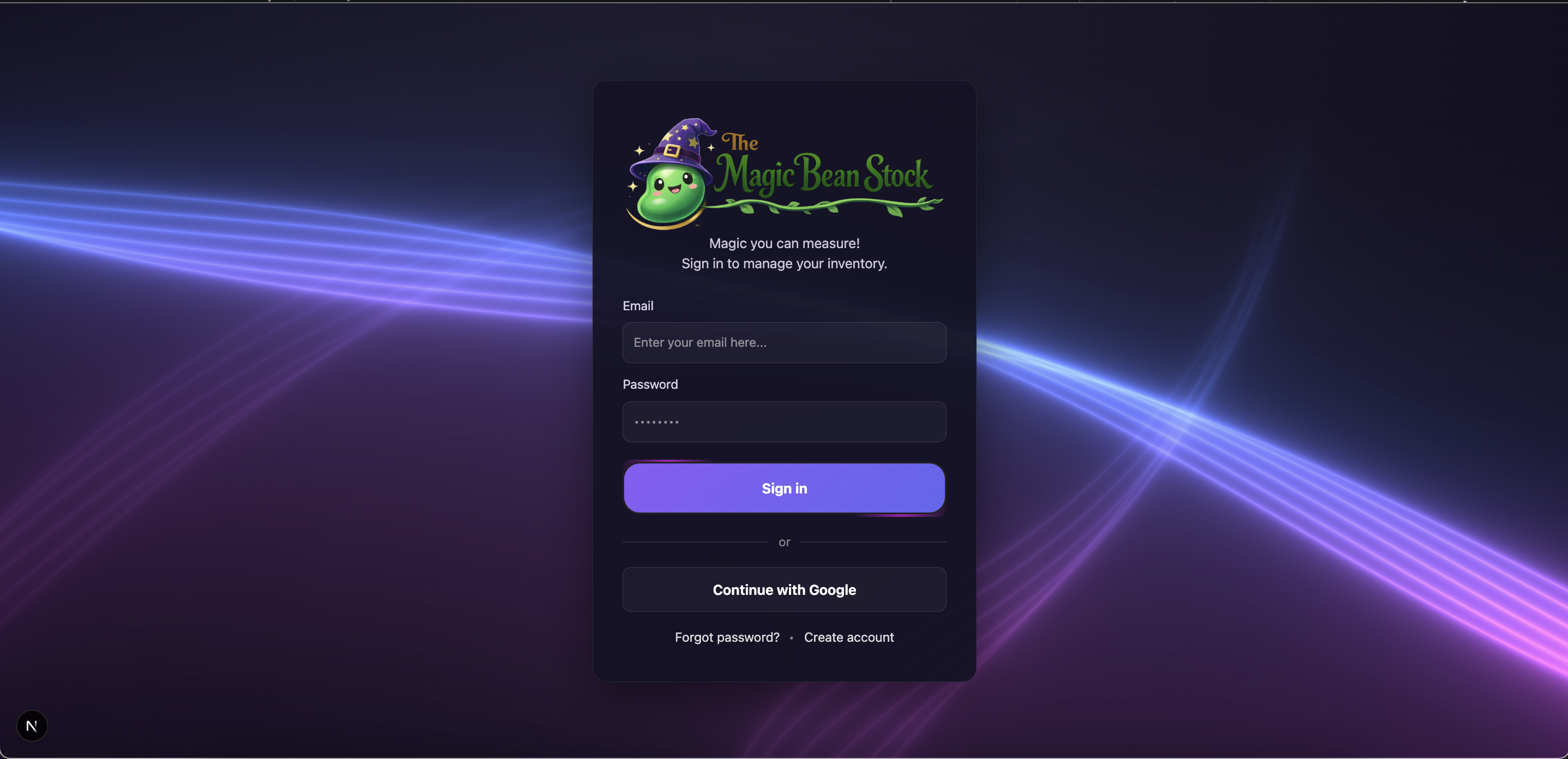
Login page for The Magic Bean Stock
-
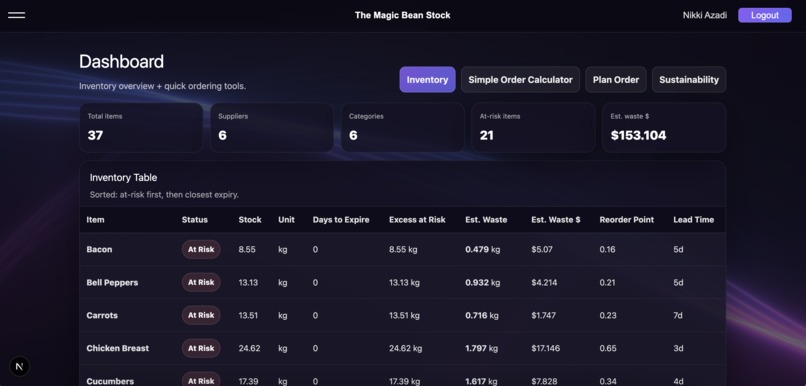
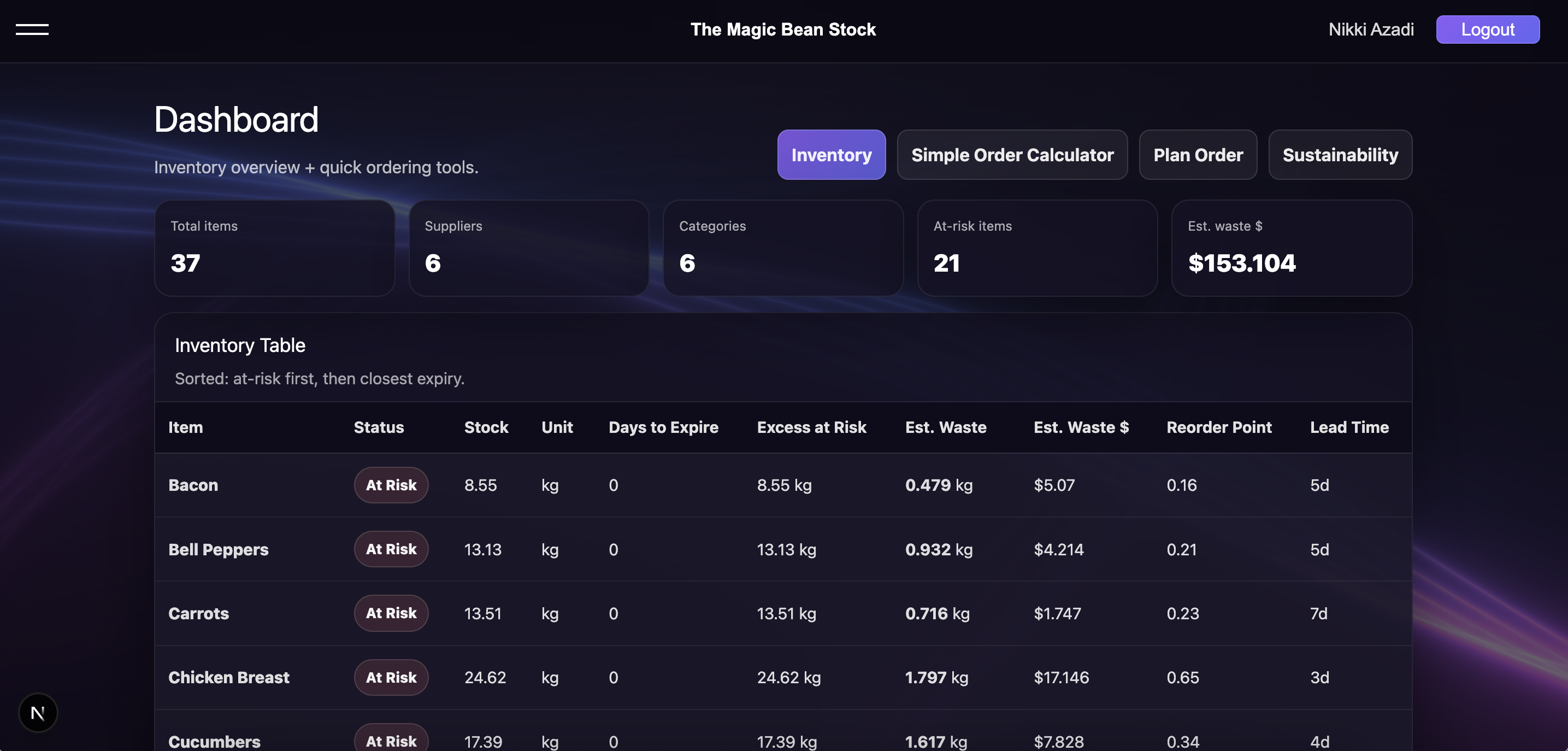
Dashboard page for MBS
-
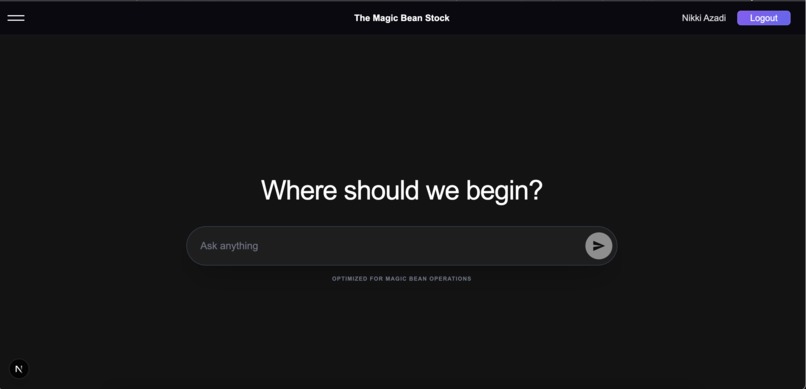
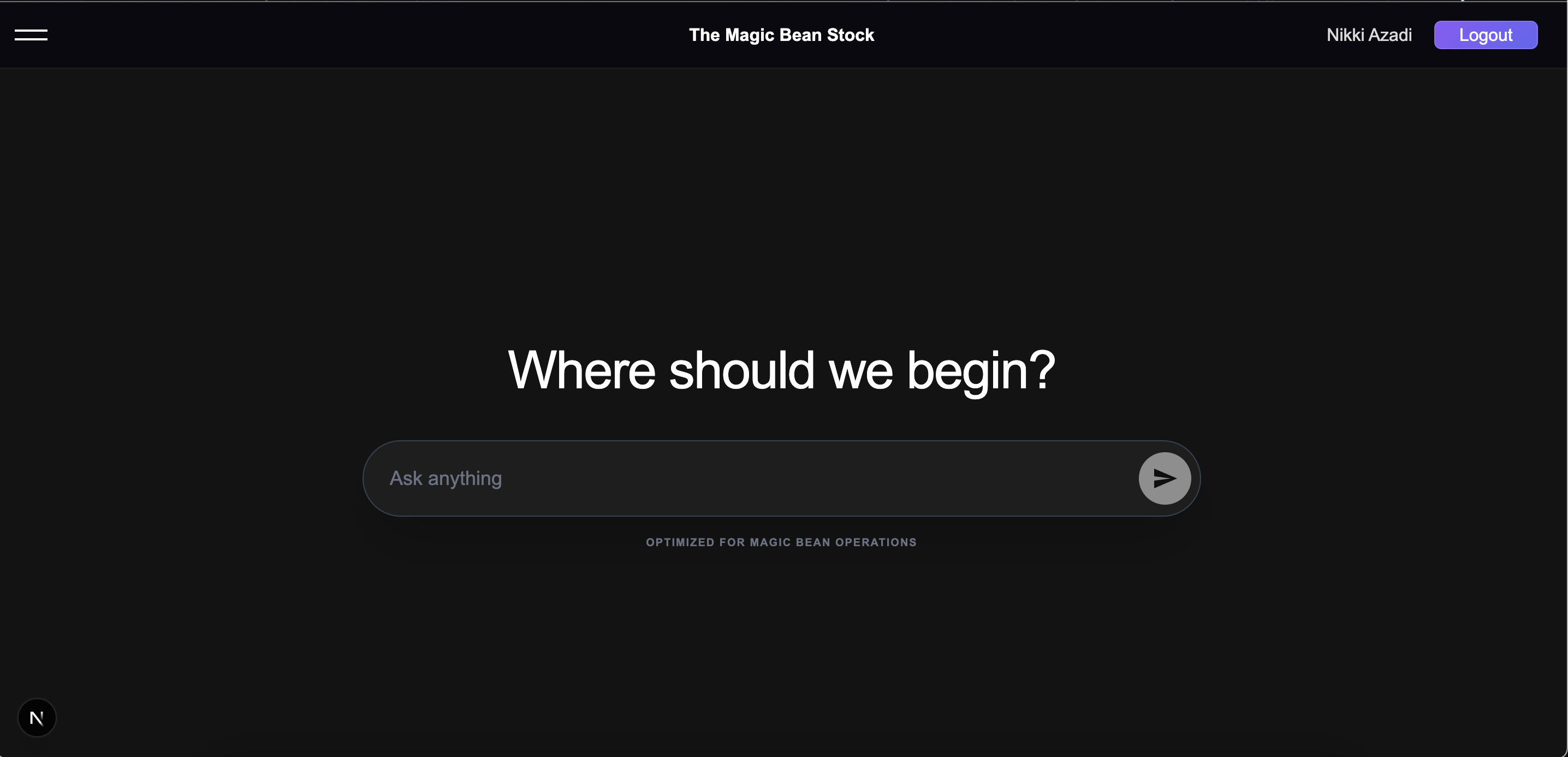
Home page for MBS
-
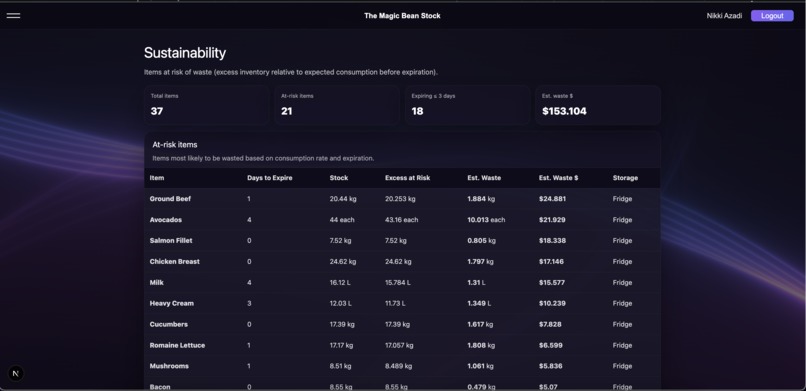
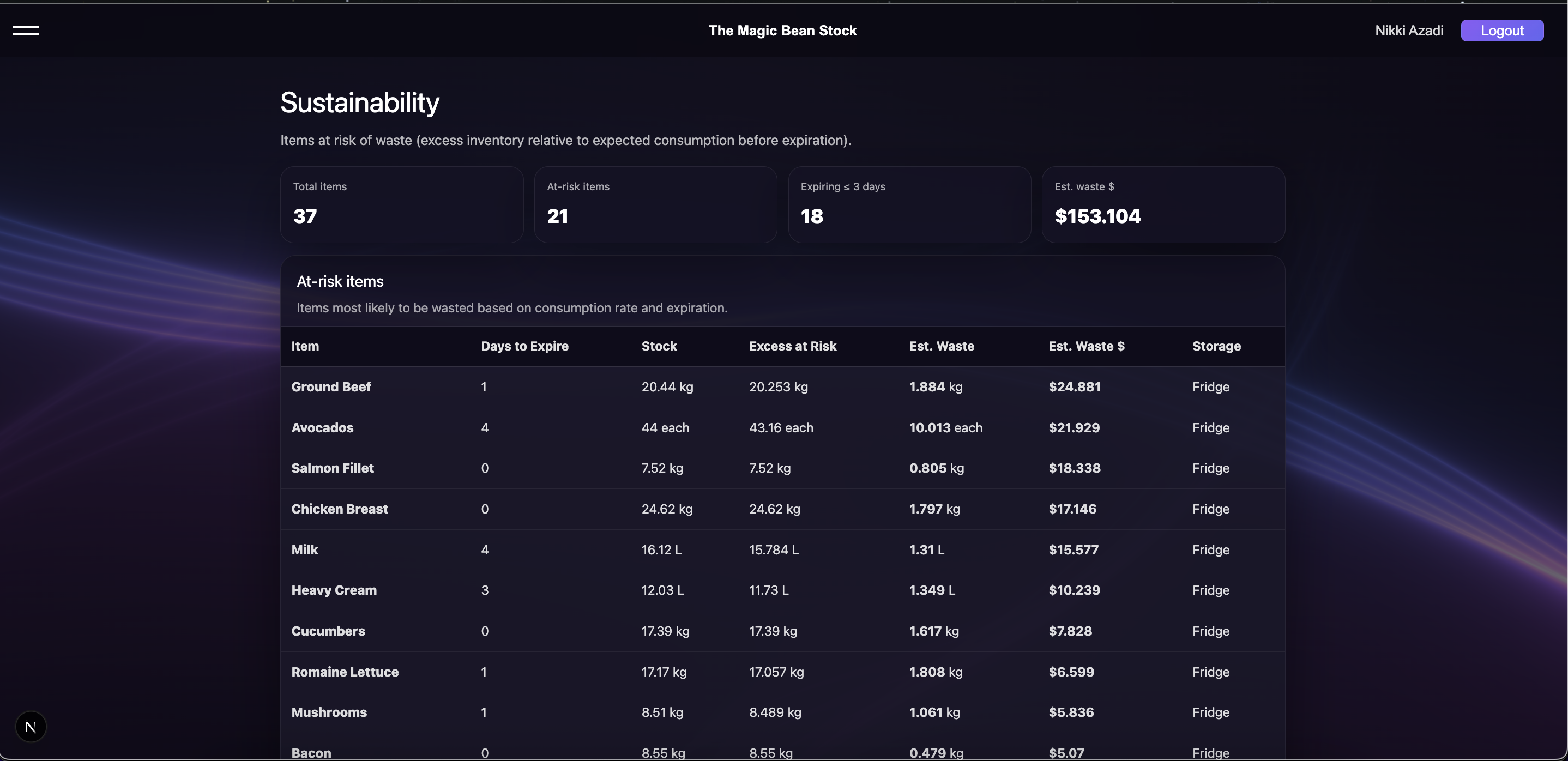
Sustainability Page section 1 for MBS
-
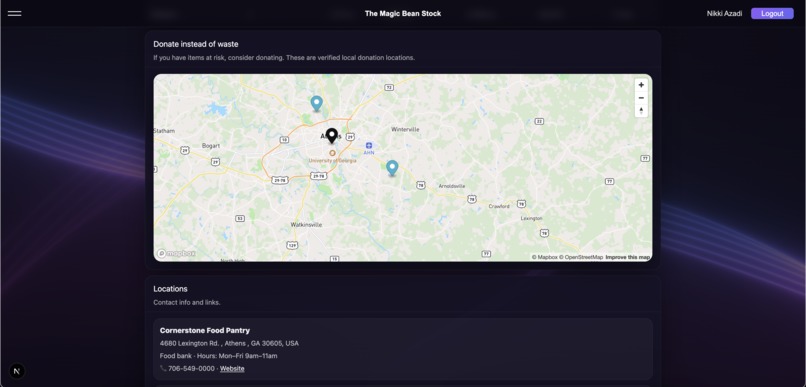
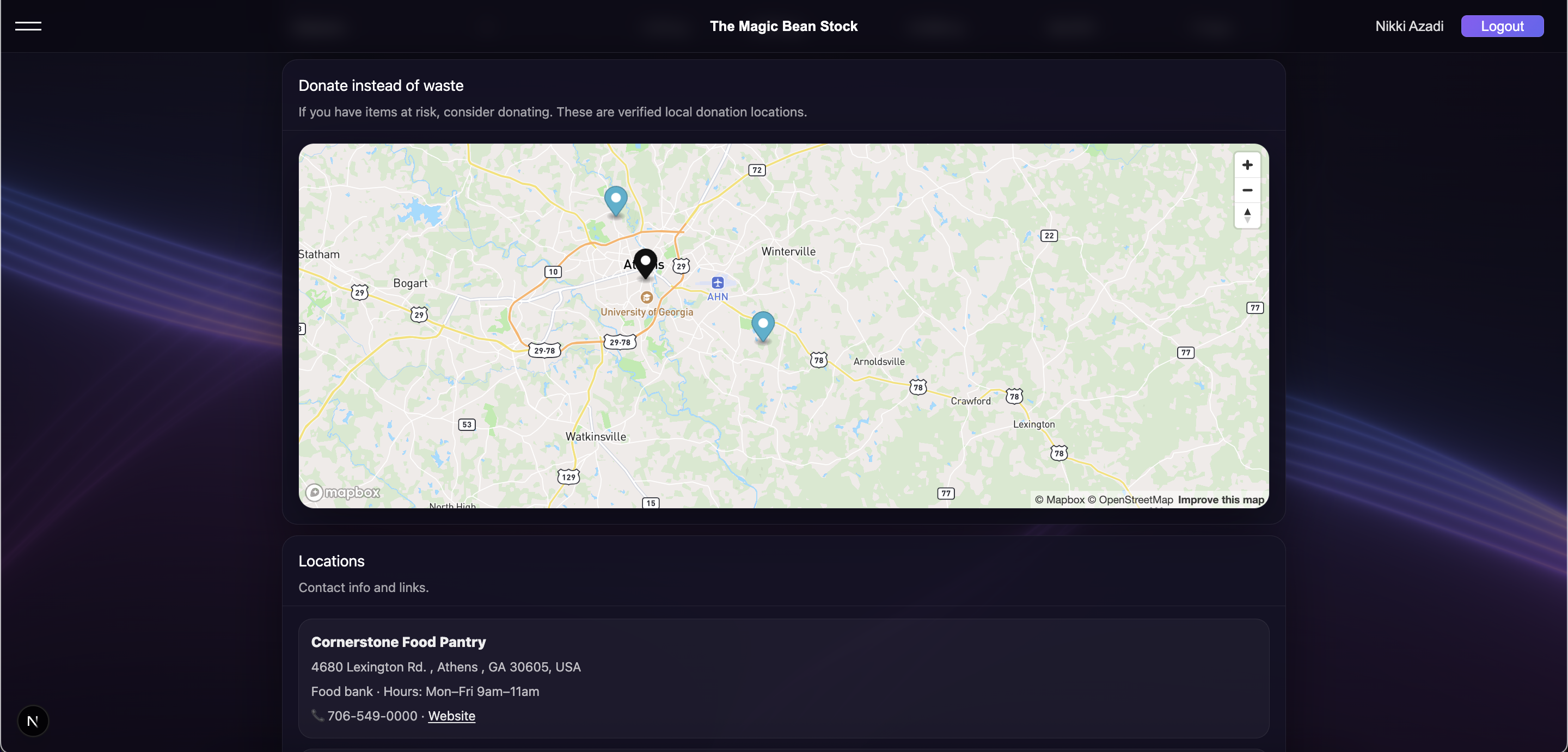
Sustainability Page map section for MBS
Inspiration
Our team, Nikki Azadi, Sydney Staggs, and Dante Dunham, wanted to address several challenges presented during the UGA Hackathon, particularly the inefficiencies and waste associated with large-scale restaurant inventory management since Dante is also the owner of a small, family restaurant. Food waste is both an environmental and economic issue, and we saw an opportunity to leverage technology and AI to help restaurants make smarter, more sustainable decisions while supporting the local community that scales upwards.
What it does
Magic Bean Stock is a web application designed to help restaurant managers monitor inventory health, predict stockouts, and reduce food waste. By analyzing current inventory levels, expiration dates, and sales trends, the platform generates actionable recommendations for reorder timing and quantities. It also suggests sustainable alternatives to prevent waste, helping restaurants operate more efficiently and responsibly.
How we built it
We built Magic Bean Stock as a full-stack web application using Next.js and React for the frontend, with Tailwind CSS for responsive styling. Firebase was used for authentication and application services, while Firestore stores inventory and usage data in real time. AI-driven insights are powered by the OpenAI API, with additional experimentation using Python and scikit-learn for forecasting and analysis. We collaborated using GitHub for version control and Figma for UI/UX design.
Challenges we ran into
Scope vs. Hackathon Reality
One of our main challenges was managing scope within the limited time of a hackathon. Magic Bean Stock brings together inventory tracking, expiration management, demand forecasting, sustainability insights, authentication, and AI-driven recommendations, which required careful prioritization to remain feasible.
Many of these features are tightly interconnected, meaning progress in one area depended on progress in others. To address this, we focused on establishing a strong core workflow (inventory data feeding into analysis and resulting in actionable recommendations) while designing additional features to be extensible beyond the initial prototype.
Inventory + Expiration Modeling
Another challenge was modeling inventory in a way that reflected real-world restaurant usage. Inventory management involves more than tracking item quantities; it also requires accounting for expiration dates, partial usage, overlapping stock batches, and projected sales.
Designing this data structure was challenging because early decisions directly impacted our ability to perform accurate analysis and predictions later on. We iterated on our inventory model to support time-based analysis while keeping the system flexible and scalable for future expansion.
Turning Sustainability Into Logic
A key challenge was translating sustainability goals into concrete system behavior. While reducing waste is a clear objective, implementing it required defining when inventory is considered at risk, what alternatives qualify as sustainable, and how recommendations should be prioritized.
This was challenging because there is no single correct solution; sustainability exists at the intersection of ethics, practicality, and business constraints. We focused on pragmatic sustainability by generating realistic, actionable recommendations that align with existing restaurant workflows rather than idealized solutions.
Accomplishments that we're proud of
Building a functional, end-to-end web application within a hackathon timeframe
Successfully integrating AI to generate meaningful, actionable inventory insights
Designing an inventory model that reflects real-world restaurant complexity
Creating a product that addresses sustainability while remaining practical for businesses
Strong team collaboration across design, frontend, backend, and AI components
What we learned
Through this project, we learned how important thoughtful data modeling and scope management are when building complex systems under time constraints. We also gained experience integrating AI in a way that adds real value rather than serving as a novelty. Most importantly, we learned how to balance technical ambition with real-world usability and impact.
What's next for The Magic Bean Stock
Real-time forecasting
Supplier API integrations
Donation scheduling
Fine tuning models
Smoother UI
Allow customization of profile
Personalizations
Sustainability score feature
Train more accurate models
Work with real and larger data sets
Built With
- css
- figma
- firebase
- firestore
- github
- html5
- javascript
- mapbox-api
- next.js
- openai
- openai-api
- python
- react
- sklearn
- tailwind
- typescript


Log in or sign up for Devpost to join the conversation.