-
-
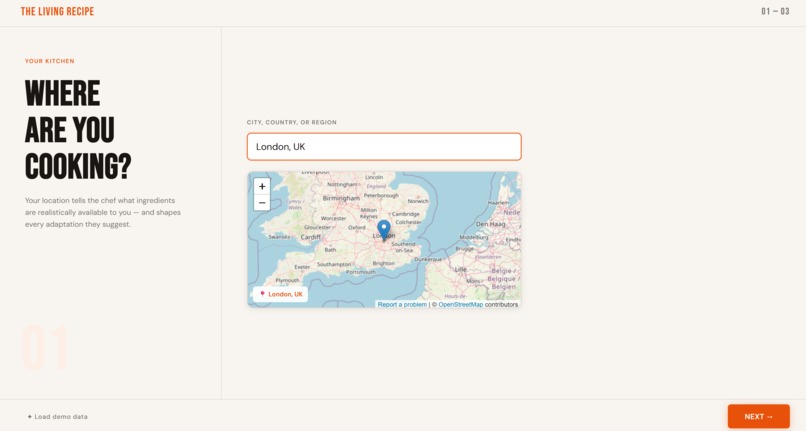
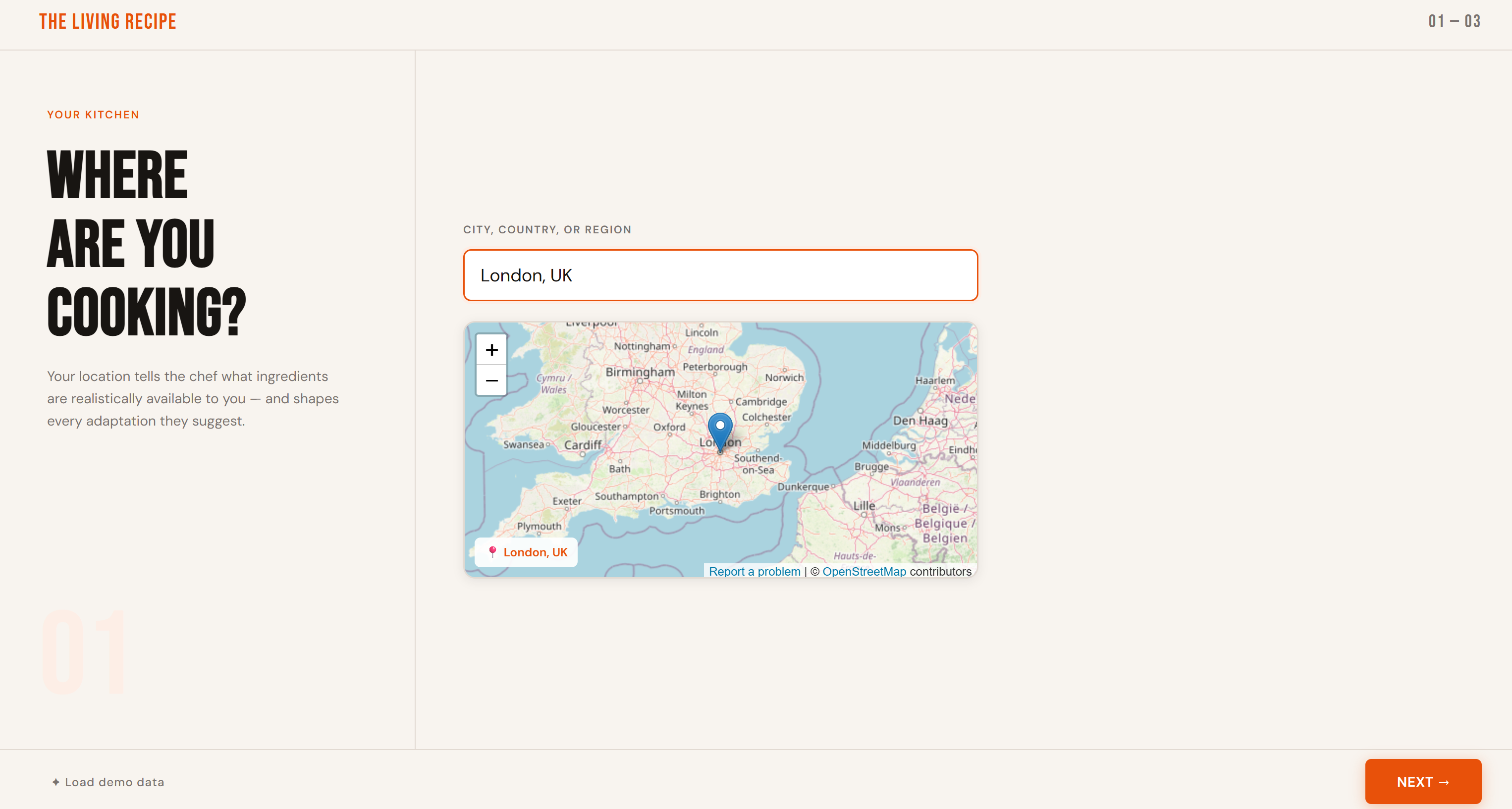
Adapt your cooking to where you live - what ingredients are most available to you in your region?
-
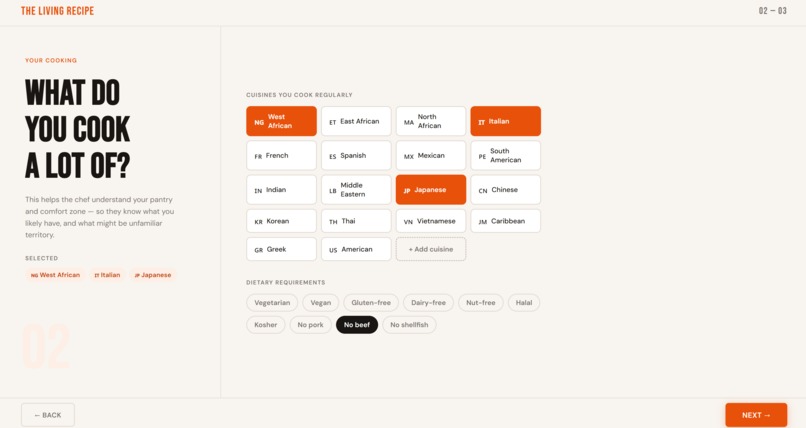
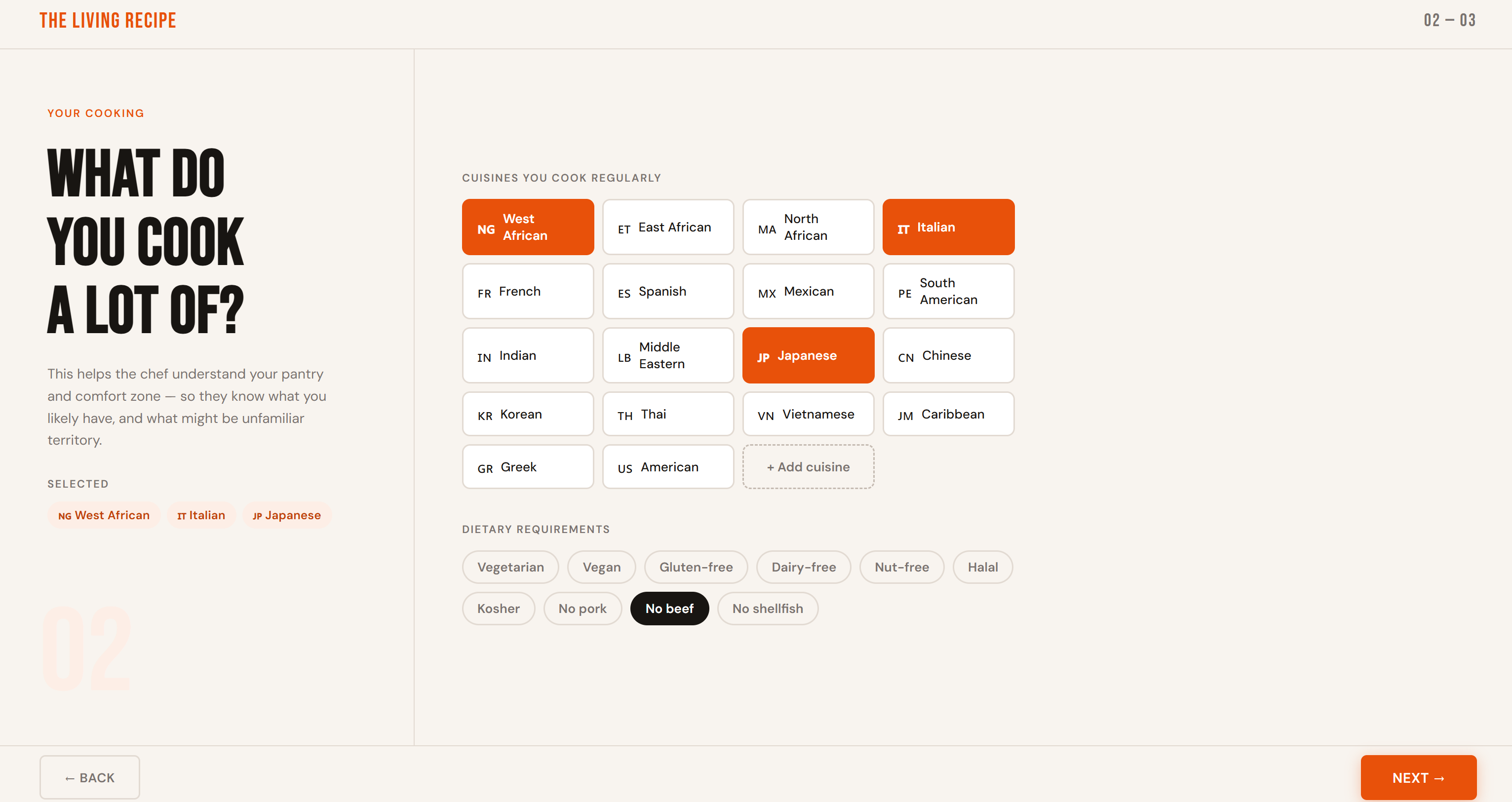
Your kitchen environment - future advanced settings would be more specific towards what cooking equipment and facilities the user has.
-
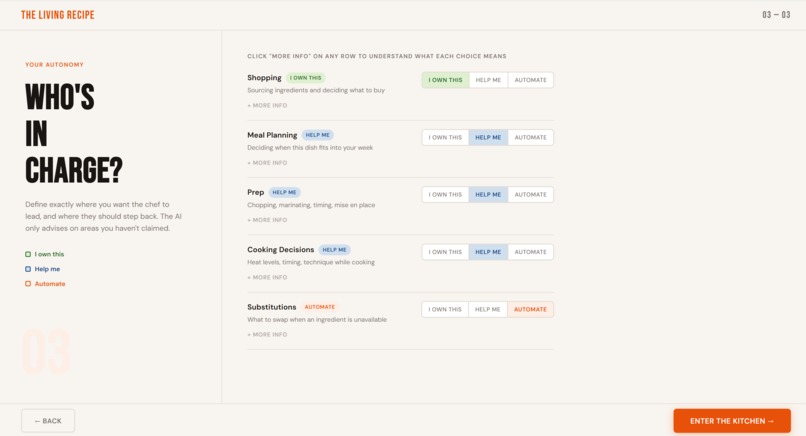
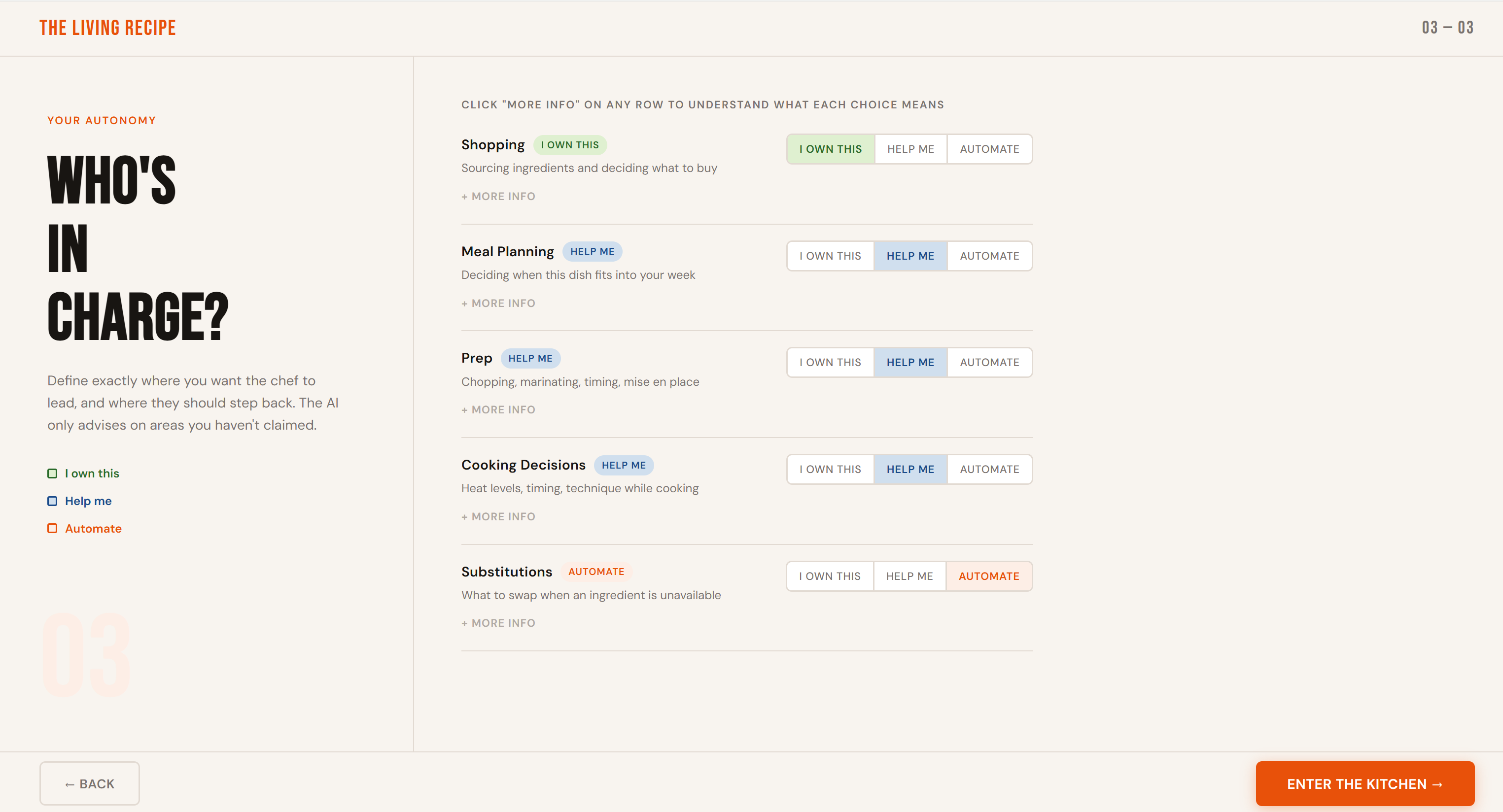
Choose the level of assistance you want Claude to help you with in the cooking process!
-
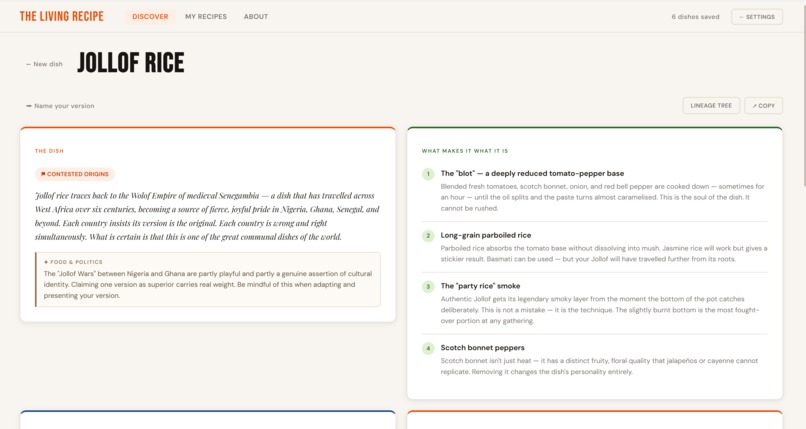
Information relevant to the dish's history and culture - in future, these could be developed to be more visual and interactive.
-
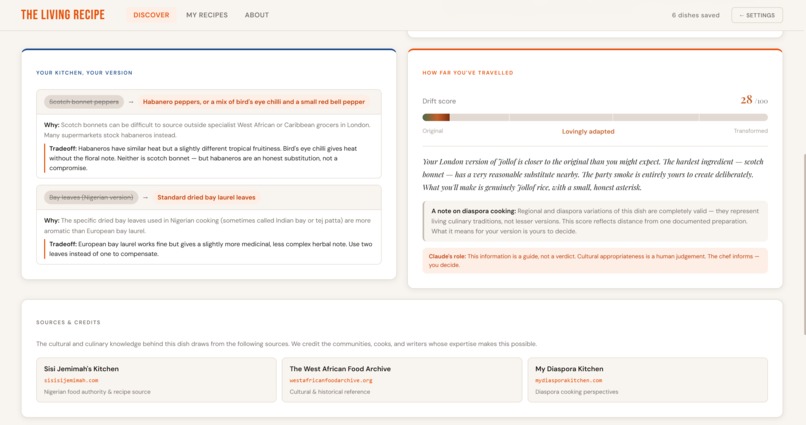
Substitutions, and a calculated 'drift factor' - and the option to ask the AI 'chef' for advice, as always to be taken with a pinch of salt!
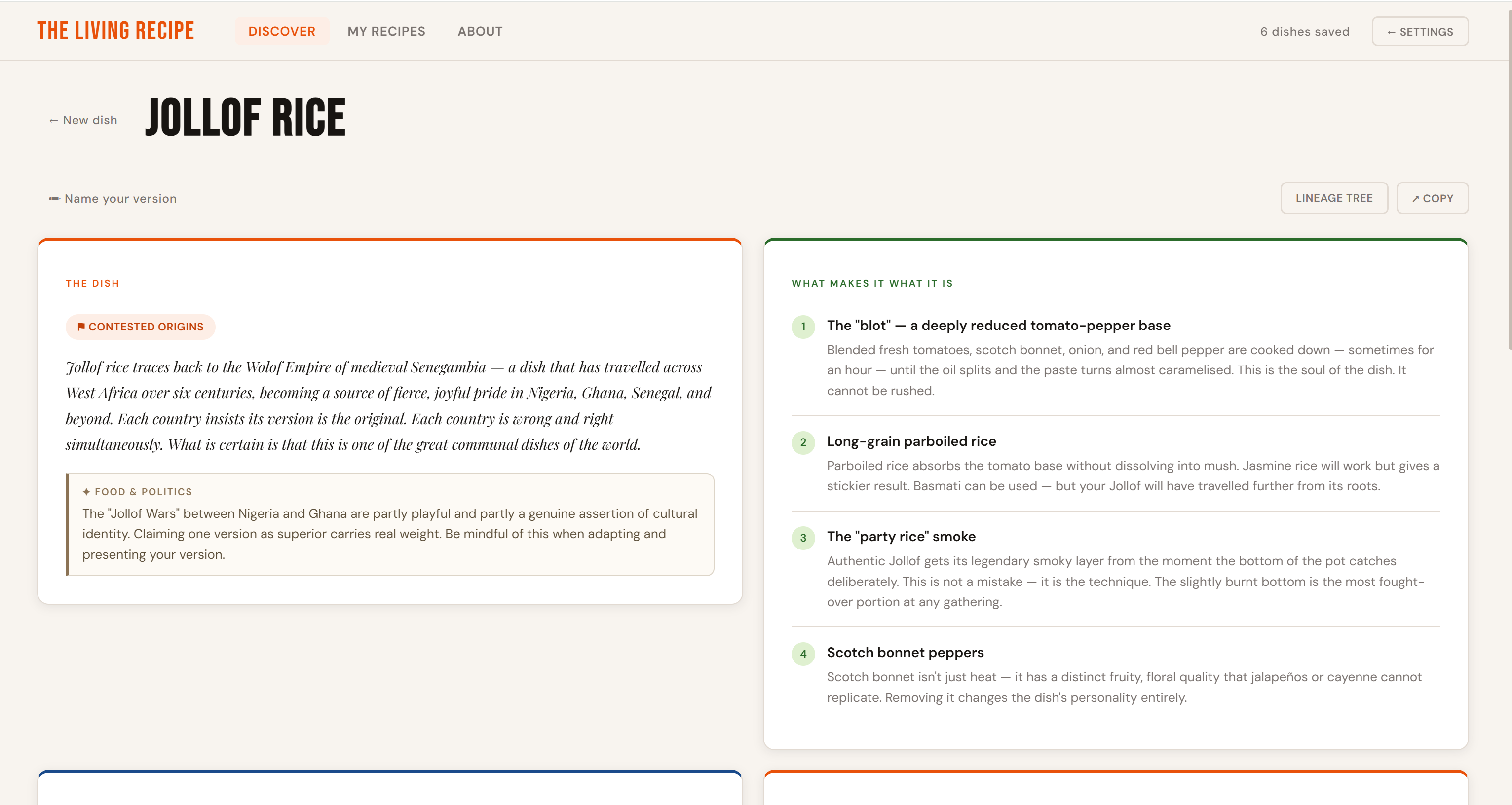
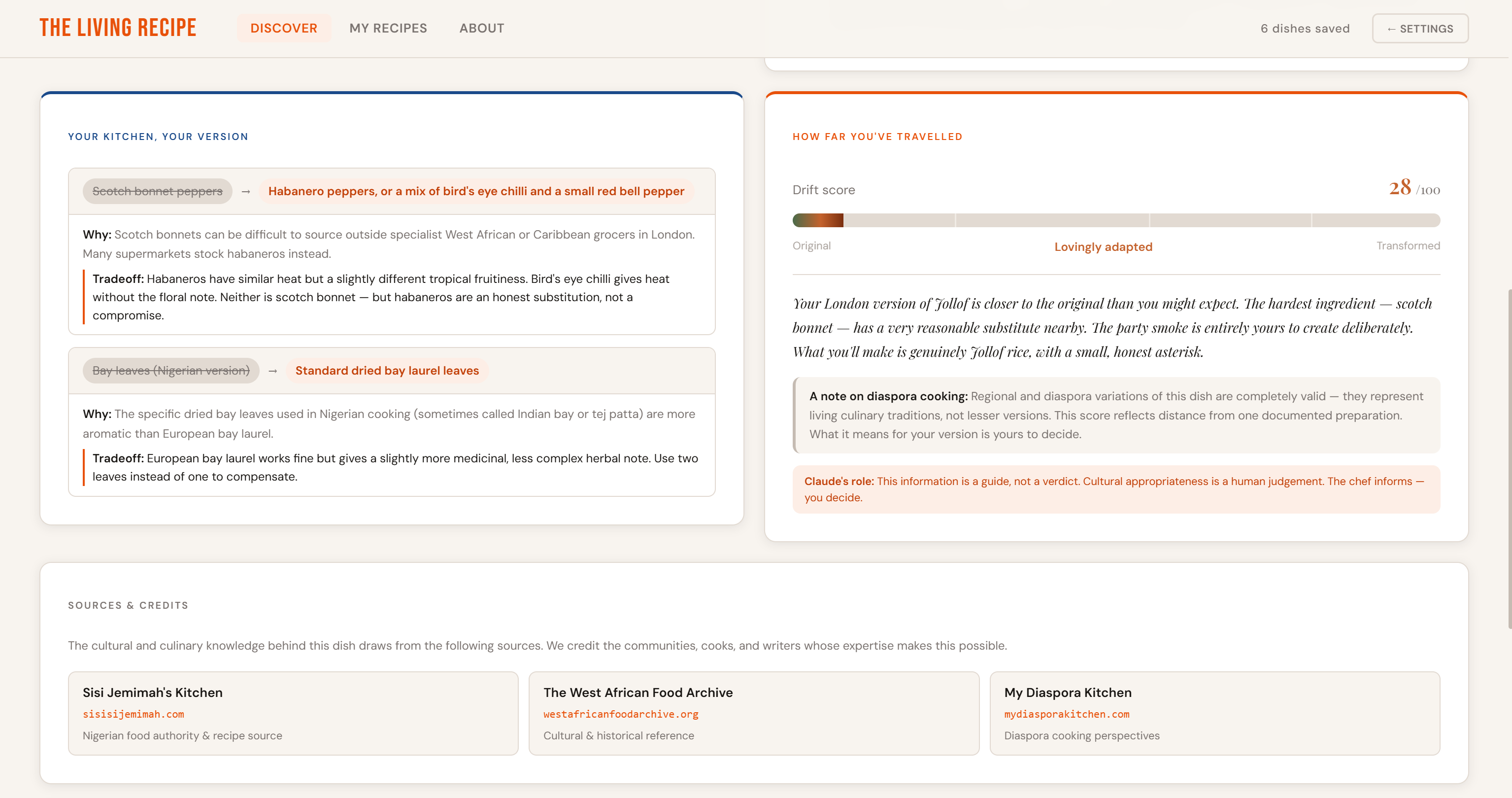
The cultural and creative processes behind food preparation and cooking hold vast opportunities for learning about culture, and history. The Living Recipe teaches you what you're actually making and is honest with you when you change it to adapt to what you have, and what’s available in your region. We built for a simple observation: there's a real difference between just following a recipe, and understanding a dish. When someone in London makes Jollof Rice or Mole Negro, they almost always have to substitute ingredients. Most apps silently swap things out. We thought that was a missed opportunity and an ethical problem.
The Living Recipe walks you through three steps. First, you map your kitchen: where you are cooking, what you have, any constraints. Second, you tell us which parts of cooking you want to own yourself - shopping, prep, cooking decisions - and which you want help with. The AI only advises on what you've permitted it to touch. Third, you name a dish. The app, speaking as an experienced private chef, tells you what the dish truly is, what makes it what it is culturally and technically, what you'll likely need to substitute given your location, and crucially - what actually changes when you do. The drift meter at the end shows honestly how far your version has travelled from the original. Not to shame you - adaptation is how food moves around the world and that's beautiful. But you should know when you're making your own creation versus the dish itself. This directly addresses the Track 5 ethical questions: we enhance the creative process rather than shortcut it, we surface cultural knowledge rather than flatten it, and we enhance the process of exploring culture through cooking to make it accessible to more home-cooks wherever you are.
Additional ethical considerations:
Considering cultural factors when suggesting dishes and substitutions - there could be cases when something is seen as specifically taboo. Food is political - this cannot be avoided. The website should aim to educate the user about the background of the dish - to be respectful, and ensure the user has full autonomy over decisions that could be seen as ethically questionable. Can Claude consider a modified dish ‘too far’ away from an original recipe? There are so many variations of a recipe that are also developed by diasporas, which are all completely valid.
Critical safeguards:
Keeping humans as creators using tools (not AI as creator with human prompter) Enhancing vs. short-cutting the creative process in ways that diminish it
The user is still the one who will be physically cooking and creating the dish, Claude should guide but not overly instruct the practice. Specifically not automating or overly influencing parts of the cooking/ food preparation process that the user actually wants to do.
Cultural appropriation vs. respectful celebration
Claude MUST absolutely refrain from stating ‘this is a good enough substitution’ without explaining itself or giving the user the option to change, as the AI has no authority over what is deemed ‘culturally appropriate’ or not. The system MUST be honest and transparent about the changes in the recipe.
Creating vs. destroying value for creative workers
When looking for recipes, Claude should aim to prioritise independent cooks The recipes that Claude uses MUST be credited to both the website that it took it from.
Built With
- claude


Log in or sign up for Devpost to join the conversation.