-
-
Living Mirror
-
-
Guided Questions Become Your Living Mirror
-
The stories we never think to ask
Our phones are full of videos, but the stories that matter most still live inside the people we love.
Growing up, I never thought to ask my parents who they were before they became my parents. What were they like as children? What did they dream about? What did they overcome? What sacrifices made my life possible?
I believe many of us reach a point when we suddenly become curious about those questions.
The problem is that we assume there will always be more time to ask.
Sometimes there is not.
A person’s story deserves to outlive them, told in their own voice and their own words.
The day that changed everything
I looked up and realized the people who raised me were getting older. I did not want more of my family’s history to disappear, so I gathered my family and began asking questions.
What started as a recording became one of the best days of my life.
We laughed. We cried. I heard stories about childhood, sacrifice, struggle, regret, love, and resilience. I learned things about my own family that I might never have known if I had not created that moment.
The conversations brought us closer while we were still together.
I also understood the cost of waiting. There were questions I could no longer ask someone I had already lost. I was determined not to let more of those stories disappear.
That experience became the heart of The Living Mirror.
A simpler way to preserve a life
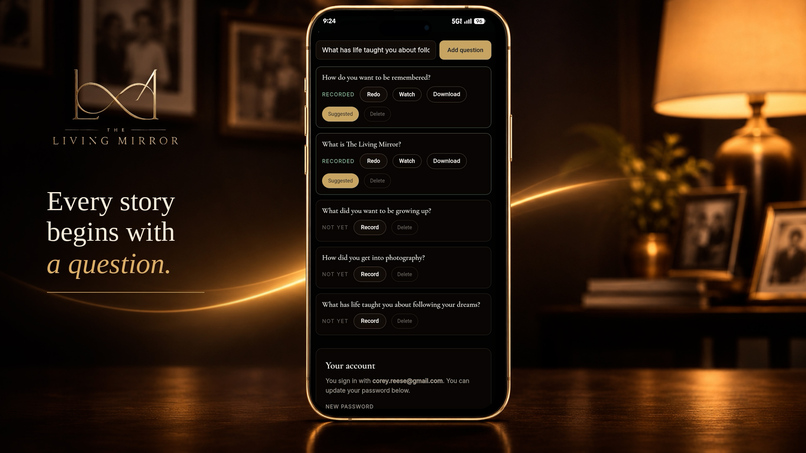
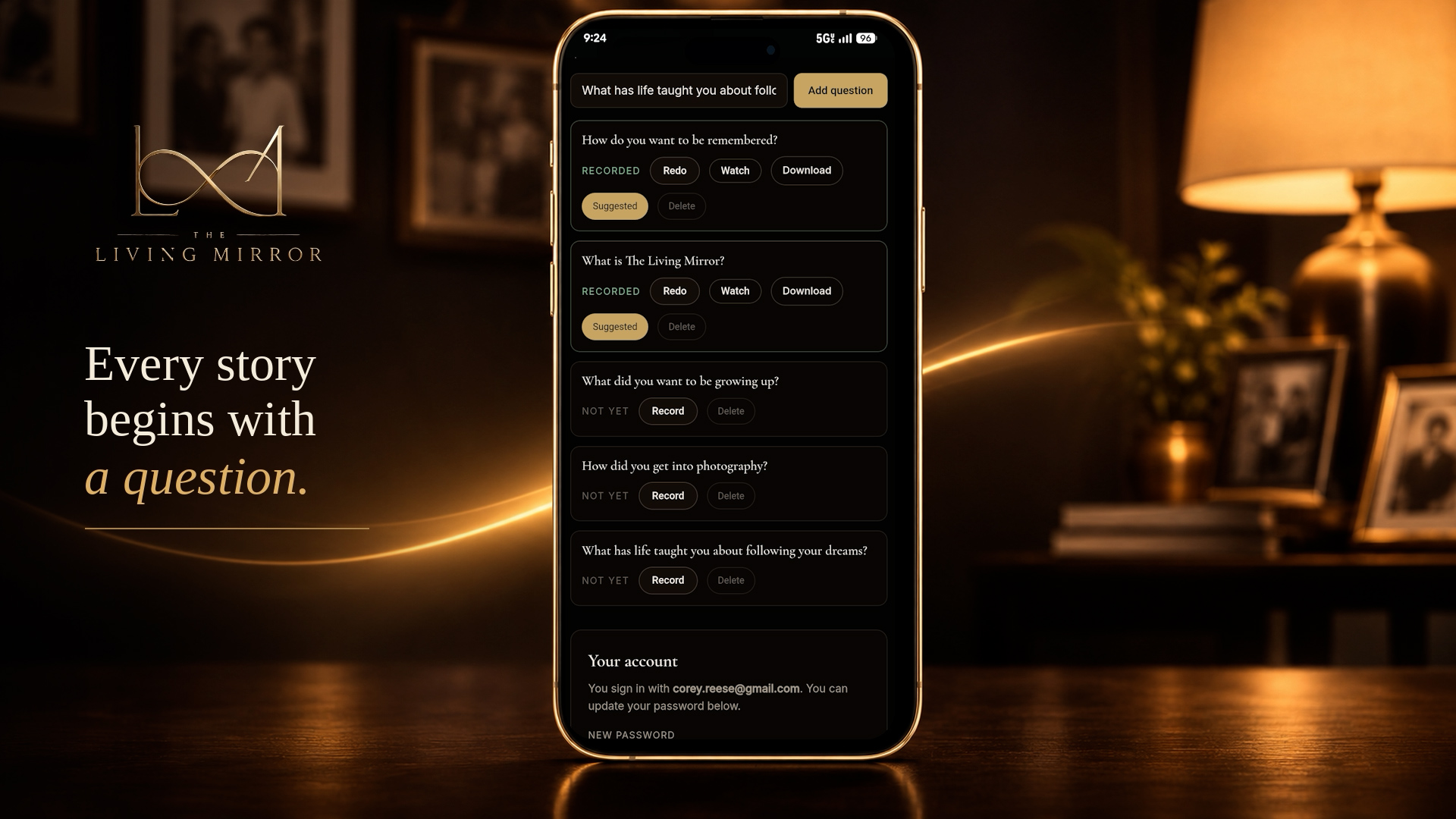
I wanted to create a simple way for anyone to sit down, answer guided questions about life, and record the answers with a phone or camera.
Those recordings should not disappear into a camera roll or a forgotten folder.
They should become something a family can return to.
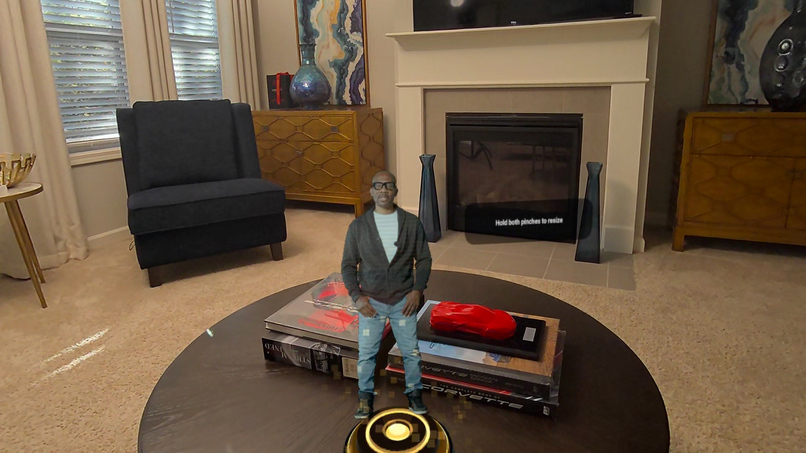
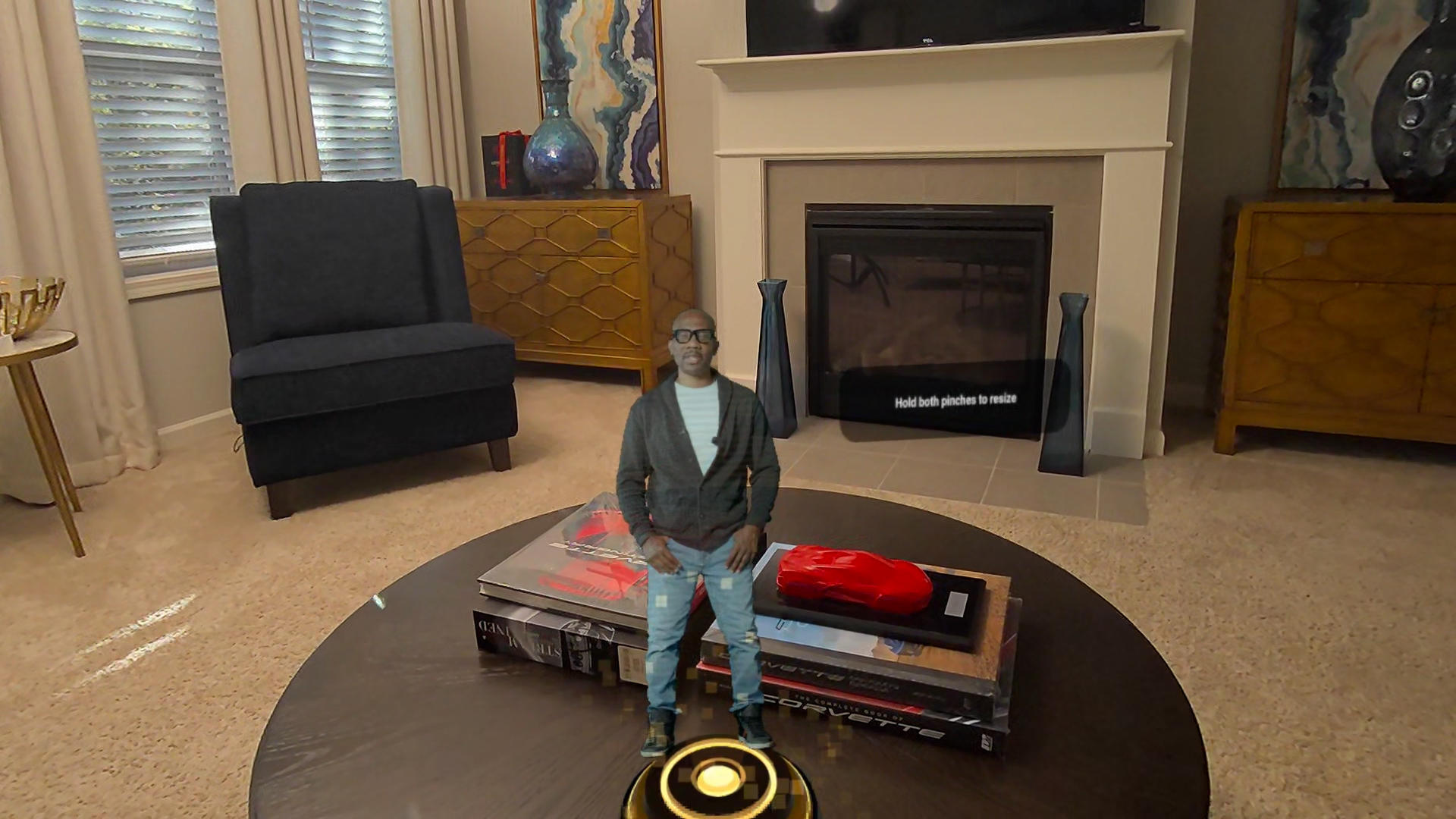
The Living Mirror transforms authentic recordings into an interactive presence. A family member can place that person in the room, ask a question naturally, and hear the appropriate recorded answer in the person’s real voice and their own words.
The plan is simple:
- Record Answer guided questions about your life on video.
- Preserve We Turn those recorded answers into your Living Mirror.
- Ask Let your family ask questions and return to your stories.
AI helps understand the question and locate the right recording. It does not recreate the person, imitate their voice, or manufacture an answer.
The person remains the storyteller.
What this experience demonstrates
This competition proof of concept shows what that idea could become through my own Living Mirror.
The viewer places me inside their real room and follows three connected questions:
- What did you want to be growing up?
- How did you get into photography?
- What has life taught you about following your dreams?
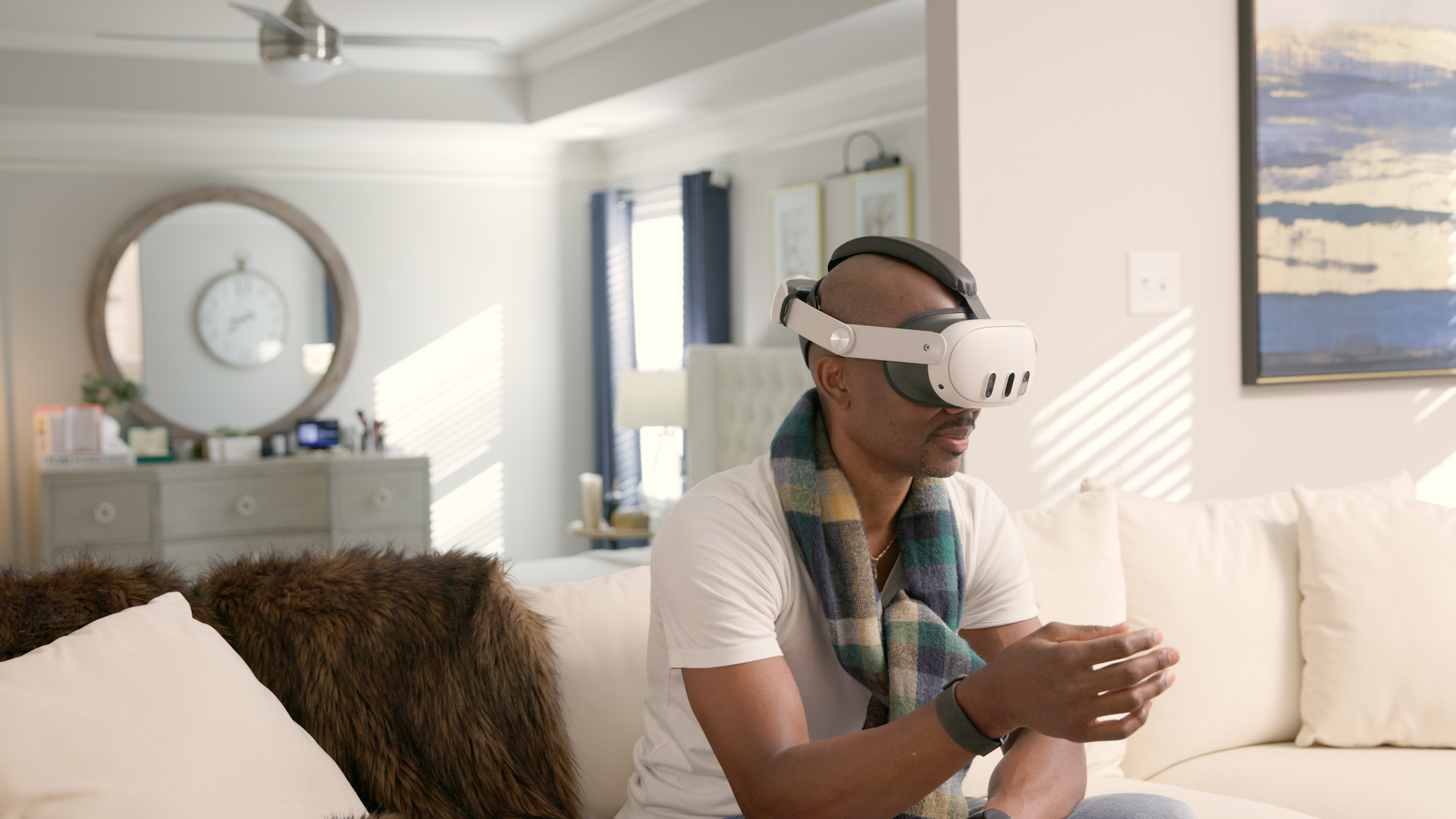
The viewer can speak to me, hear my authentic recorded answers, reposition my presence, and resize me from life-size to a tabletop hologram.
Selected answers open into immersive VR180 memories before returning the viewer to the real room to continue the story.
VR180 represents the most advanced version of the experience, but it is not required for someone to create a Living Mirror. The larger product begins with something almost everyone already has: a phone, a camera, and a person whose story matters.
How we built it
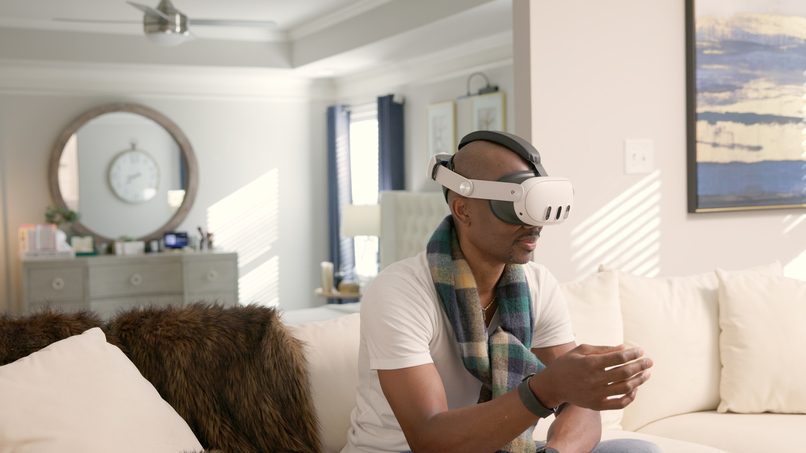
We built the prototype with Meta Immersive Web SDK 1.0 and WebXR. It combines passthrough, hand interactions, voice-question matching, recorded video with transparency, spatial controls, and immersive VR180 playback.
The experience is designed for seated use. People can bring the story into a comfortable position and interact without needing to walk around the room.
We developed a packed-video pipeline that combines the picture and its transparency mask into a single video stream. The rendering system separates them during playback, preserving the recorded performer while working within standalone headset decoding limits.
The question-matching system connects spoken questions to existing recorded answers. The experience coordinates those answers with story prompts, interactive objects, and transitions into immersive memories.
The challenges we faced
One of the biggest technical challenges was making the recorded person feel present in the space. A visible video background, damaged outline, or incorrect scale can immediately break that feeling.
Getting that right required careful attention to color, clean edges, video resolution, compression, and playback performance. Smaller delivery files had to remain clear enough for faces and expressions to carry the story.
Transitions were another major challenge. The experience moves between a person in your room and an immersive memory, then returns to continue the conversation. Playback, orientation, audio, and interface state all have to stay coordinated.
Testing exposed problems that weren’t obvious during a quick run: waiting before selecting an answer, opening a menu during introductory text, returning from a memory, or resizing the presence onto a tabletop.
Those moments taught us to design for how people actually explore, including pauses and unexpected actions.
What we learned
An interaction working technically does not make it understandable. Visitors need to know what they can select, when the experience is listening, and what happens next. Clear prompts and visible selection feedback matter as much as the underlying technology.
The most important lesson was that presence depends on protecting the human details.
The pause before an answer. The smile when a memory returns. The way someone tells a story in their own words. Those details are the reason to preserve the recording.
We also learned that the value begins before anyone puts on a headset. Answering the questions can create meaningful conversations between family members today. Returning to those recordings gives those conversations another life.
What comes next
Our next step is to make the complete family creation process easier: guided questions, recording or uploading answers, and preparing those recordings as 3D/4D Living Mirror.
This submission demonstrates the experience families could return to. The broader vision makes creating one accessible.
The invitation starts today.
Sit down with someone you love. Ask something you’ve never asked. Record the answer.
Whose story would you keep alive?
The Living Mirror
Where memory becomes presence.


