Inspiration
Most modern AI tools rely on typing, reading tiny fonts, or understanding English. When I looked at how Cantonese-speaking older adults interact with technology, I saw a huge accessibility gap. Many struggle with traditional interfaces and literacy, leaving them left behind in the AI era.
I built The Listening Tree as a solo project to flip this dynamic—creating a voice-first, highly accessible AI companion that speaks their language naturally and reduces everyday loneliness.
What it does
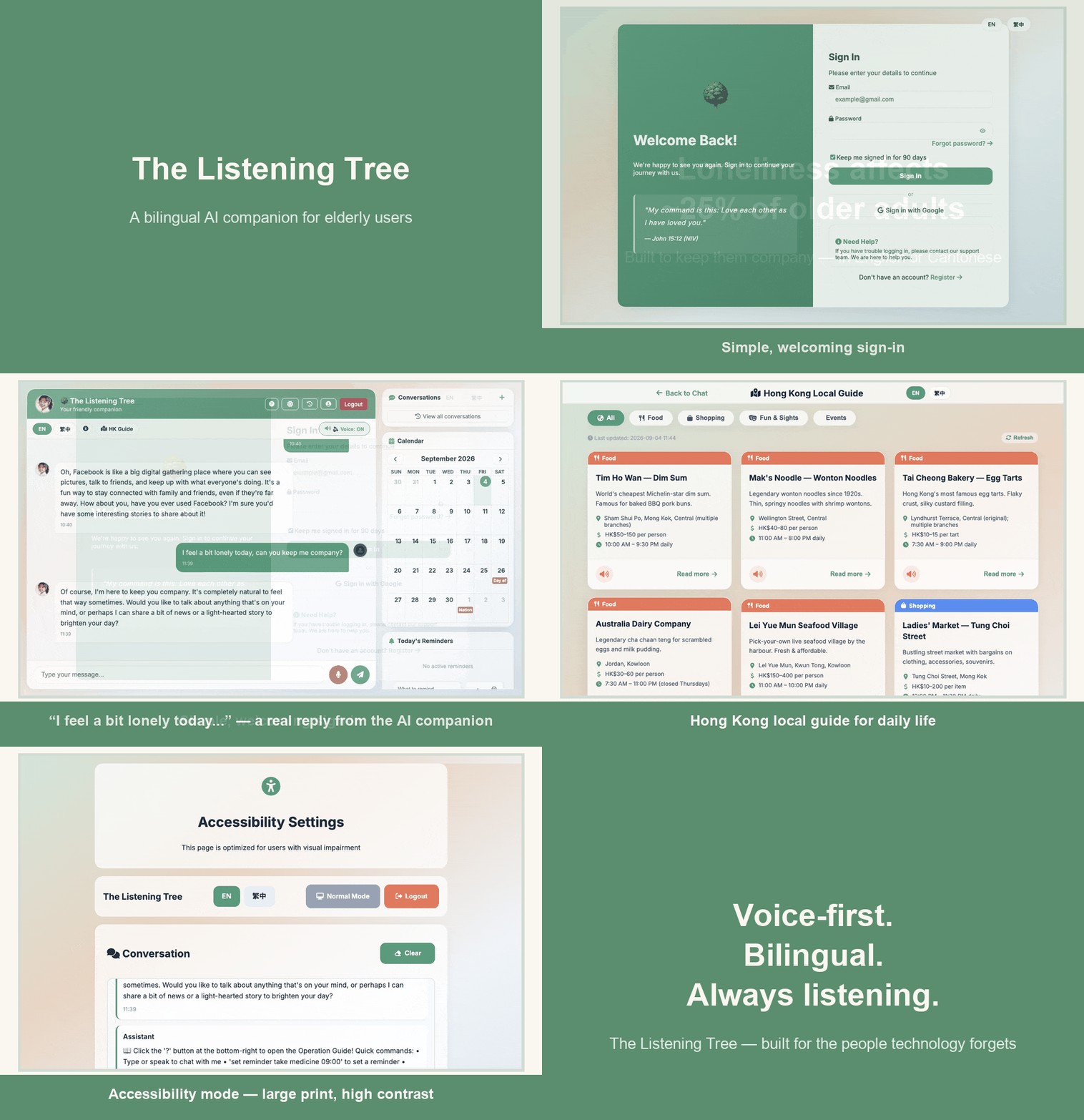
The Listening Tree is a voice-first web application tailored for seniors. Key features include:
- Voice-First Interaction: Powered by natural speech input and output, minimizing the need to touch or type on screens.
- High-Contrast & Accessible UI: Clean, ultra-large UI elements designed specifically for elderly visual needs.
- Bilingual AI Companion: Delivers empathetic, natural conversations in Cantonese and English using advanced LLM reasoning.
How I built it
As a solo developer, I built the system end-to-end focusing on responsive design and low-latency response:
- Frontend: Next.js / React with Tailwind CSS, optimized for high contrast, responsive viewports, and clean UI components.
- Speech Processing: Web Speech API & Whisper API for accurate Cantonese voice recognition and speech synthesis.
- AI Engine: GLM-4 model integration for contextual understanding, dialogue management, and fast response times.
- Testing & CI/CD: End-to-end browser compatibility testing using Playwright across Chromium and WebKit environments, automated via GitHub Actions.
Challenges I ran into
- Cantonese Speech Recognition: Handling Cantonese dialects, accents, and mixed speech patterns required careful prompt tuning and speech API fallback strategies.
- Voice Latency: Minimizing the turnaround time between user speech and AI response to make conversations feel natural for older users.
- Solo Execution: Balancing frontend UX design, AI integration, and robust automated E2E testing as a single builder within deadline constraints.
Accomplishments that I'm proud of
- Successfully designed and shipped a working voice-first interface specifically tailored for senior accessibility.
- Achieved high E2E browser compatibility test passes across desktop and mobile browsers using Playwright.
- Created an intuitive, warm product flow that real older adults can use without a steep learning curve.
What I learned
- Deep insights into accessible UX standards (WCAG guidelines, contrast ratios, touch targets) for senior demographics.
- Hands-on experience tuning multimodal/voice AI workflows and managing real-time speech processing pipeline latency.
What's next for The Listening Tree
- Real-user Field Testing: Conducting user testing sessions with local community seniors to gather qualitative feedback.
- Cognitive Memory & Reminders: Adding lightweight memory features and gentle daily reminder notifications.
- Offline Voice Support: Exploring local edge-speech models to improve privacy and offline capability.
Built With
- github-actions
- glm-4
- next.js
- playwright
- react
- tailwind-css
- typescript
- web-speech-api

Log in or sign up for Devpost to join the conversation.