-
-
Agent-Native
-
Document Collaboration
-
Package Design
-
Comparing Manufactories
-
Outreach
Inspiration
I started The Line List because my girlfriend sells banana bread, and we started asking a simple question: what would it actually take to get her product manufactured and into stores?
The answer was way more confusing than it should be. Manufacturer websites are inconsistent, important details are hard to find, and new founders usually do not even know what questions they should be asking. I wanted to make that process feel less overwhelming.
The Line List originally started as a public directory of food and beverage manufacturers. For the WebMCP Challenge, I built a new sourcing workspace that lets a founder and their AI agent work through the process together.
What it does
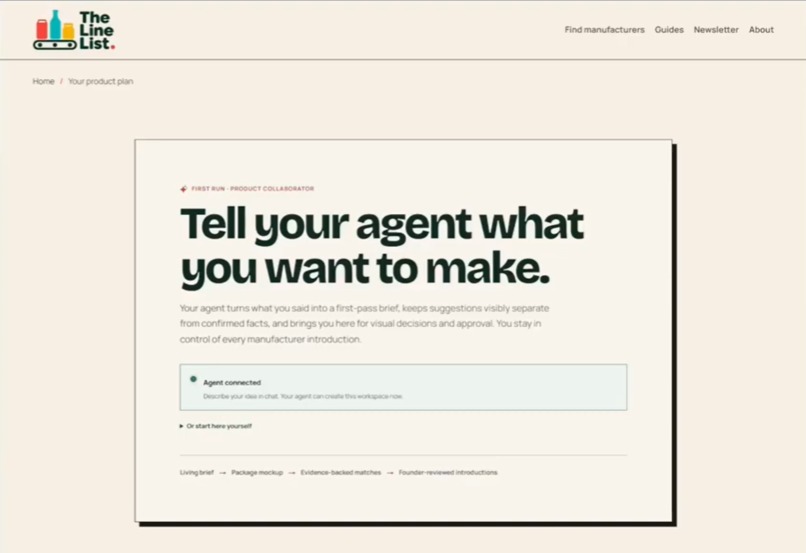
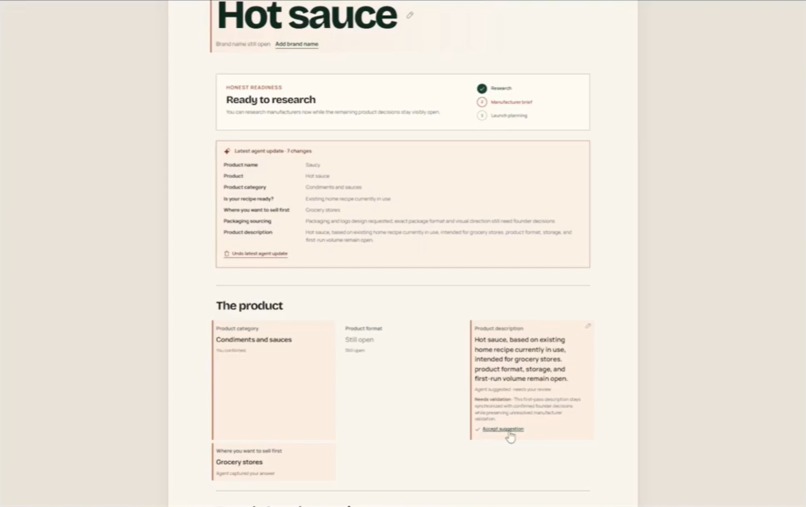
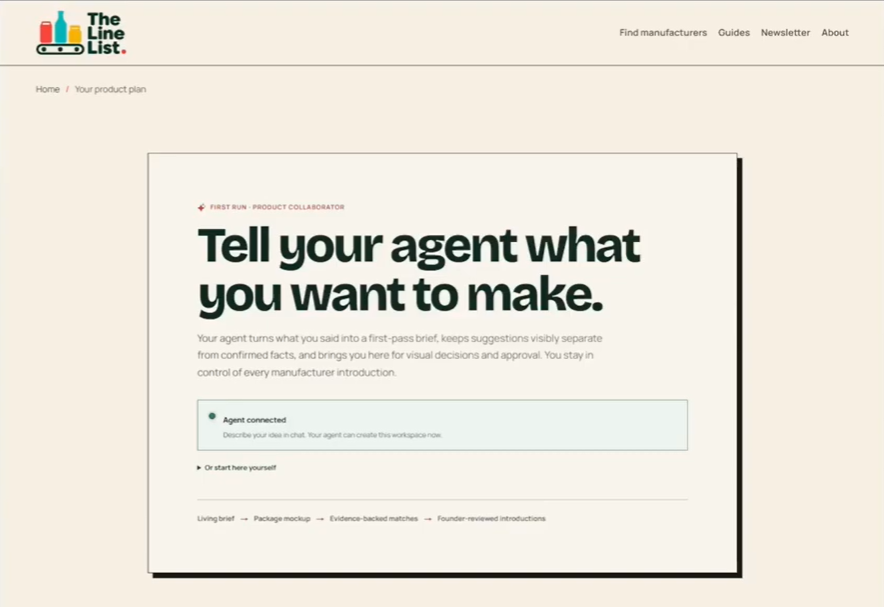
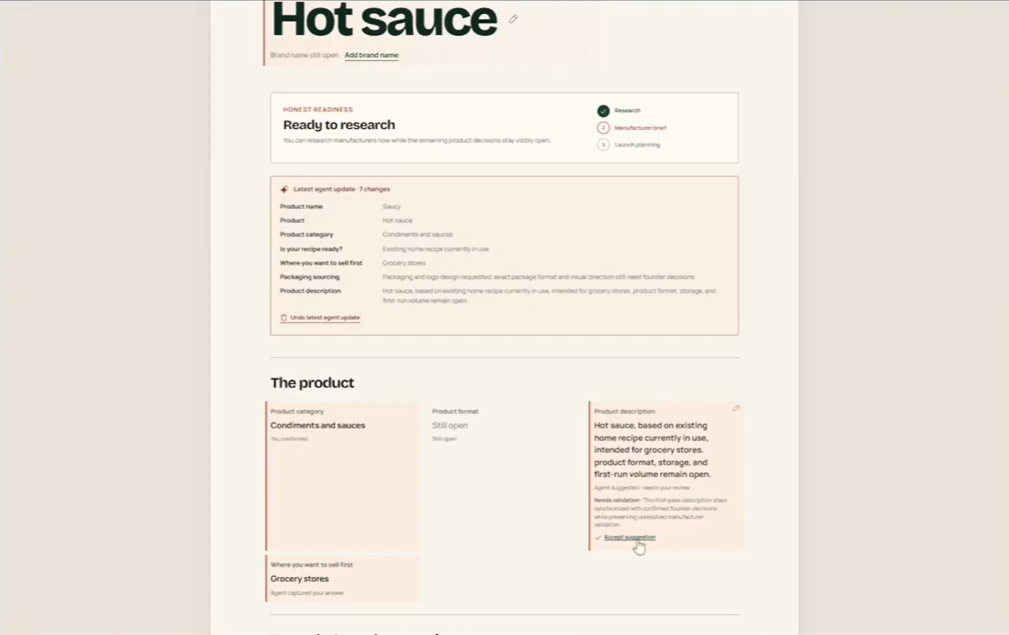
A founder can describe what they want to make in plain language. Their agent then creates a living product brief and helps them work through the decisions that actually matter, such as product format, production volume, shelf life, packaging, and where they want to sell.
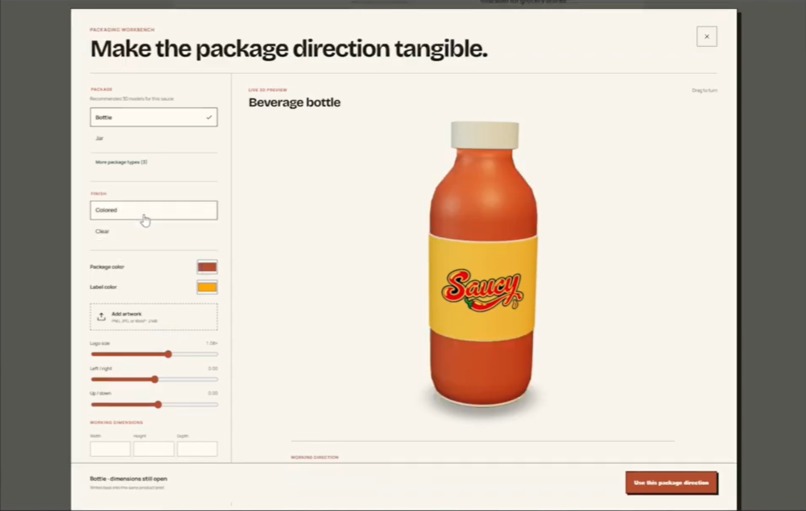
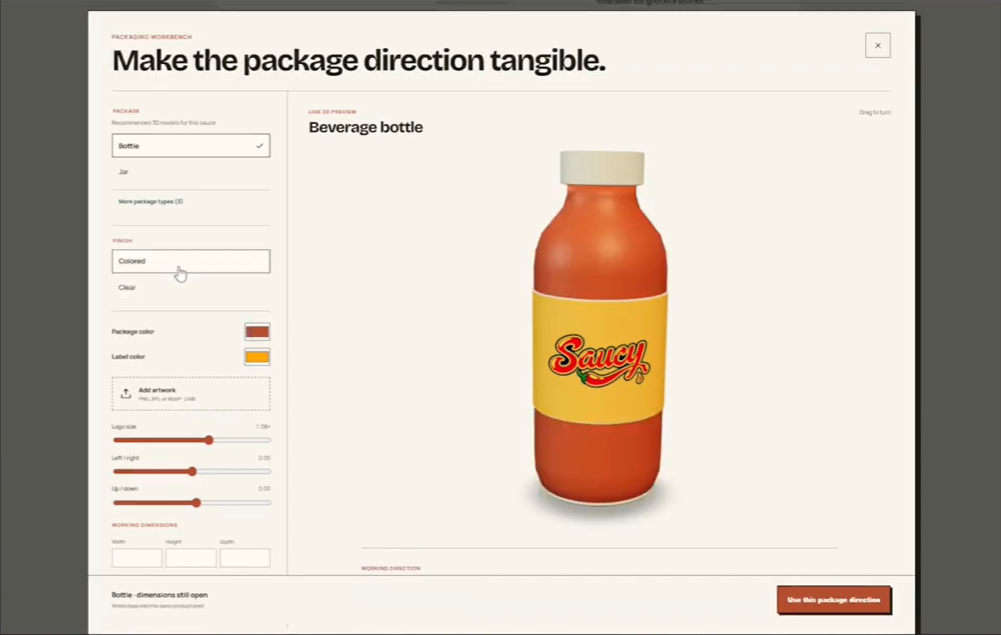
The founder can review everything visually in the browser, explore a packaging direction in 3D, and see which information was confirmed, suggested, or still unknown.
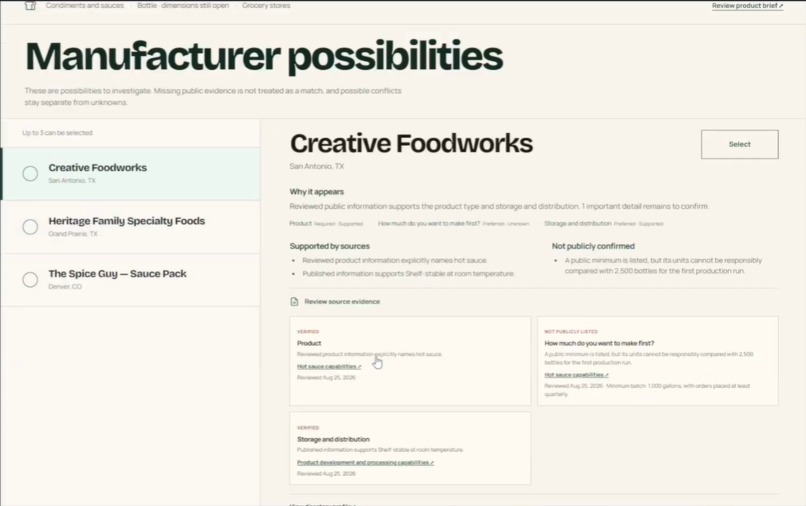
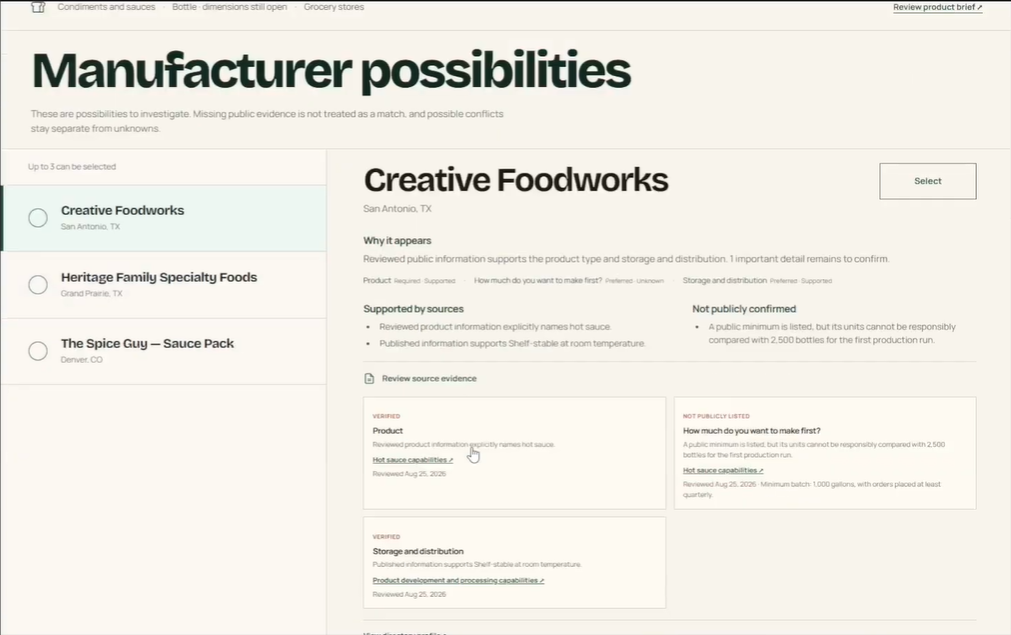
Once the product is ready for research, the agent can find manufacturer possibilities and explain why each one appeared. The Line List does not pretend that missing information is a match. Supported details include sources and review dates, while unknowns and possible conflicts remain visible.
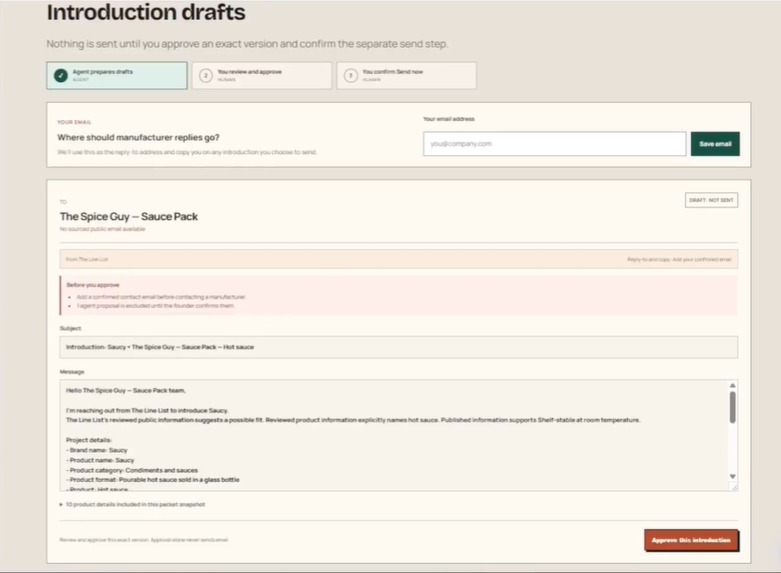
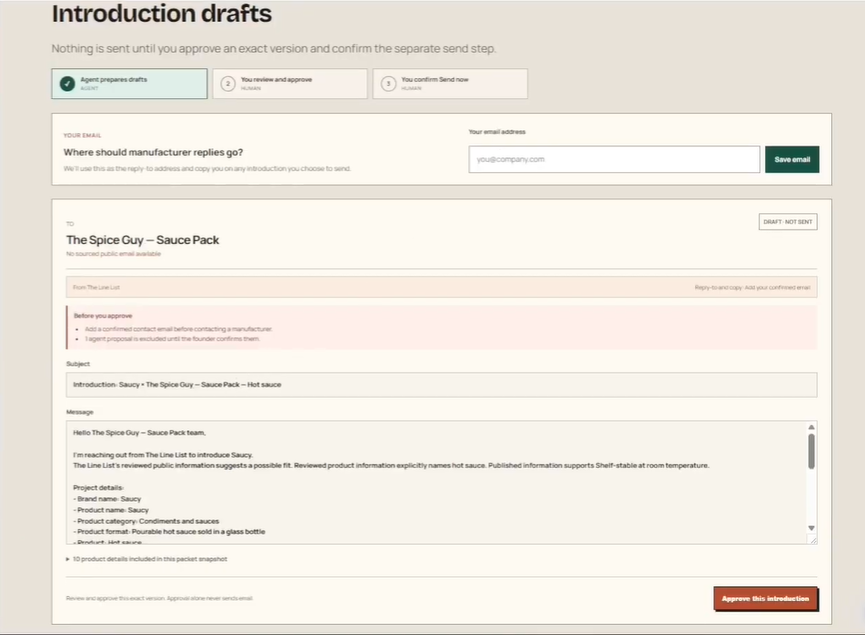
The agent can also prepare manufacturer-specific introduction drafts, but it cannot contact anyone on its own. The founder selects the manufacturers, reviews the exact information being shared, approves the message, and separately confirms when they are ready to send it.
How I built it
I built the experience with Next.js, React, TypeScript, PostgreSQL, Prisma, Three.js, and WebMCP.
The website exposes structured tools that let the agent create and update the same product workspace the founder sees on the page. The tools cover workspace creation, product updates, packaging previews, manufacturer matching, PDF export, outreach preparation, and readiness checks.
The important part was making WebMCP feel like part of the product instead of attaching a chatbot to the side of the website. The person handles visual decisions and final approvals, while the agent handles the repetitive research, organization, and drafting work.
Challenges I ran into
The hardest part was managing shared state between the person, the agent, and the website without letting them overwrite each other.
I had to keep confirmed founder statements separate from agent suggestions, preserve unknown information, make mutations safe to retry, and ensure that manufacturer requirements could not be silently weakened just to produce more results.
Packaging was another challenge. I wanted the agent to do more than recommend a package in text. It needed to open the actual 3D workbench so the founder could see the direction, make changes, and approve the exact version that would become part of the manufacturing brief.
Accomplishments that I'm proud of
I am most proud of the broader-search approval flow.
If no manufacturer publicly proves every required capability, the agent cannot quietly relax the search. The founder sees the exact before-and-after criteria, reviews what will change, and decides whether to continue. Even after broadening, unsupported details stay marked as unknown.
I am also proud that the experience goes beyond a basic WebMCP demo. It creates a persistent workspace, connects agent actions to visible interface changes, includes a real packaging workbench, produces evidence-backed manufacturer possibilities, and keeps the founder in control of anything external.
What I learned
I learned that WebMCP is most useful when the website and agent each handle the parts they are best at.
The agent is good at turning a messy idea into structured information, researching options, and preparing work. The browser is better for comparing results, reviewing visual changes, understanding what will be shared, and making final decisions.
Building around that relationship made the experience feel much more useful than either a normal form or a standalone chatbot.
What's next for The Line List
Next, I want to improve the packaging models, expand the manufacturer data, and let founders manage multiple products and manufacturer conversations from one account.
The larger goal is to make launching a physical product feel less like navigating an industry built for insiders. A founder should be able to start with an idea, understand what they need, find the right production partners, and move forward without guessing through every step.

Log in or sign up for Devpost to join the conversation.