-
-
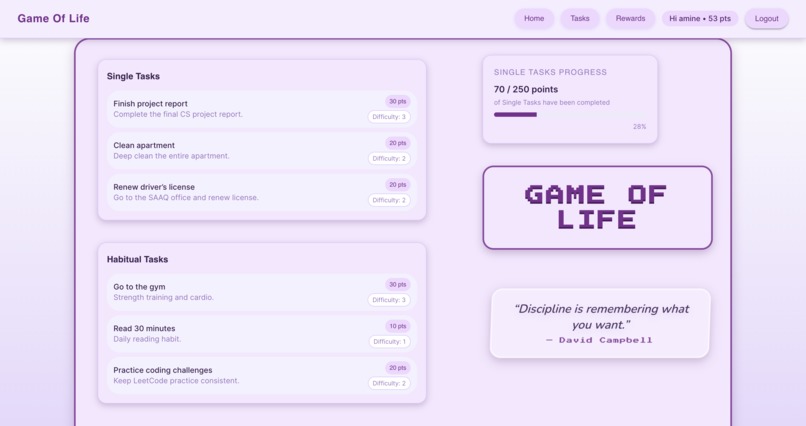
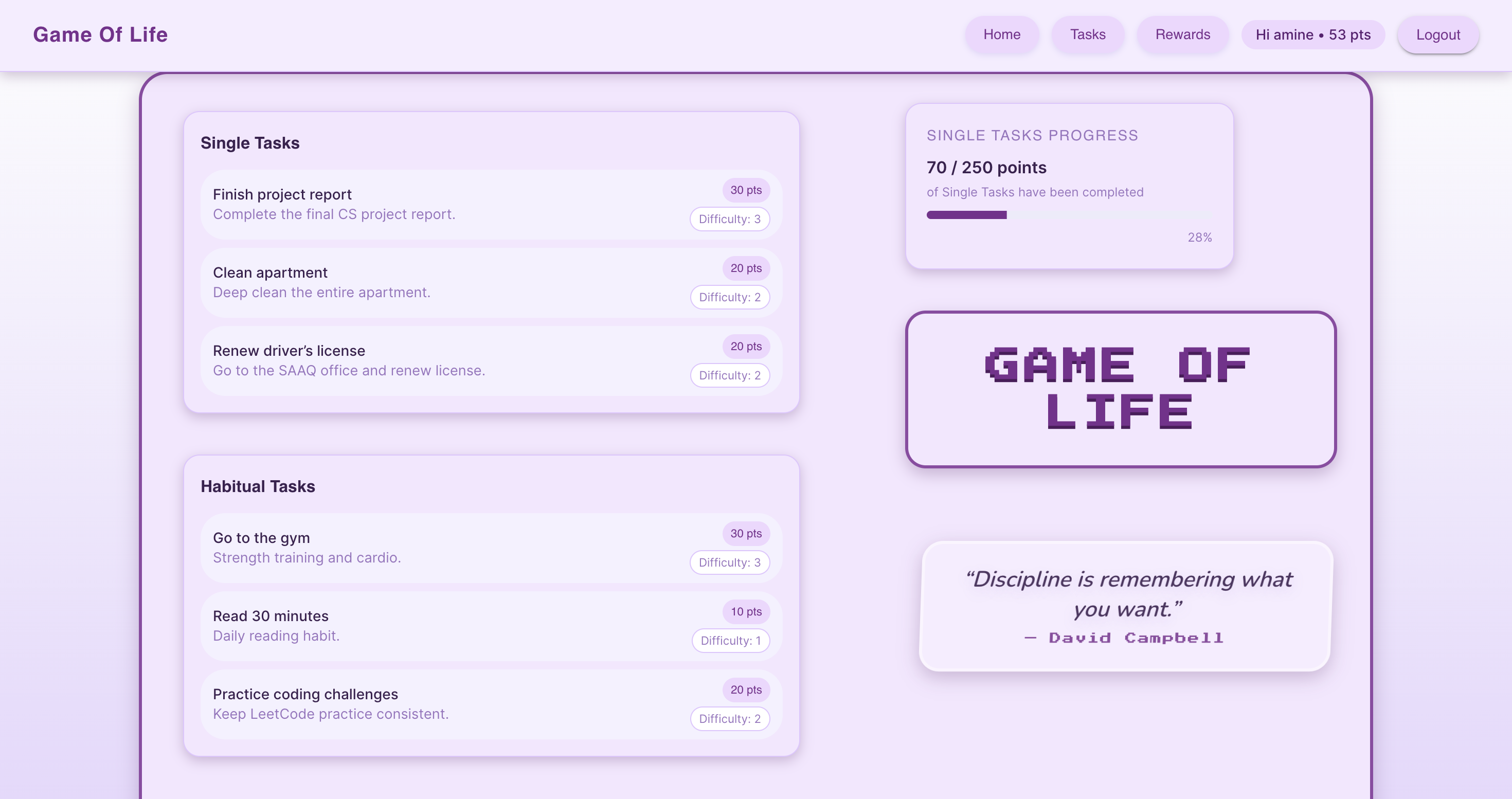
Home page
-
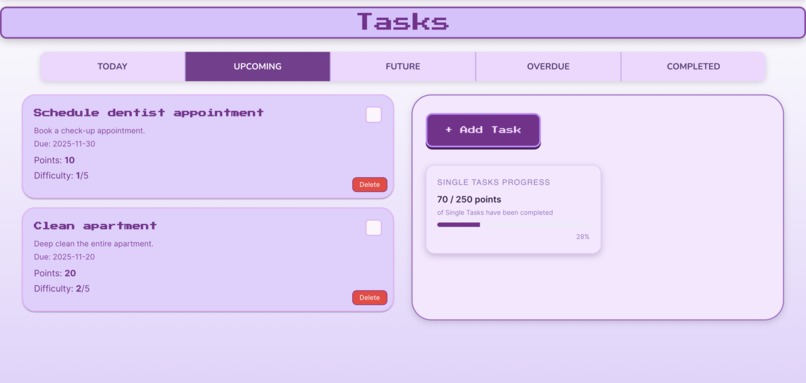
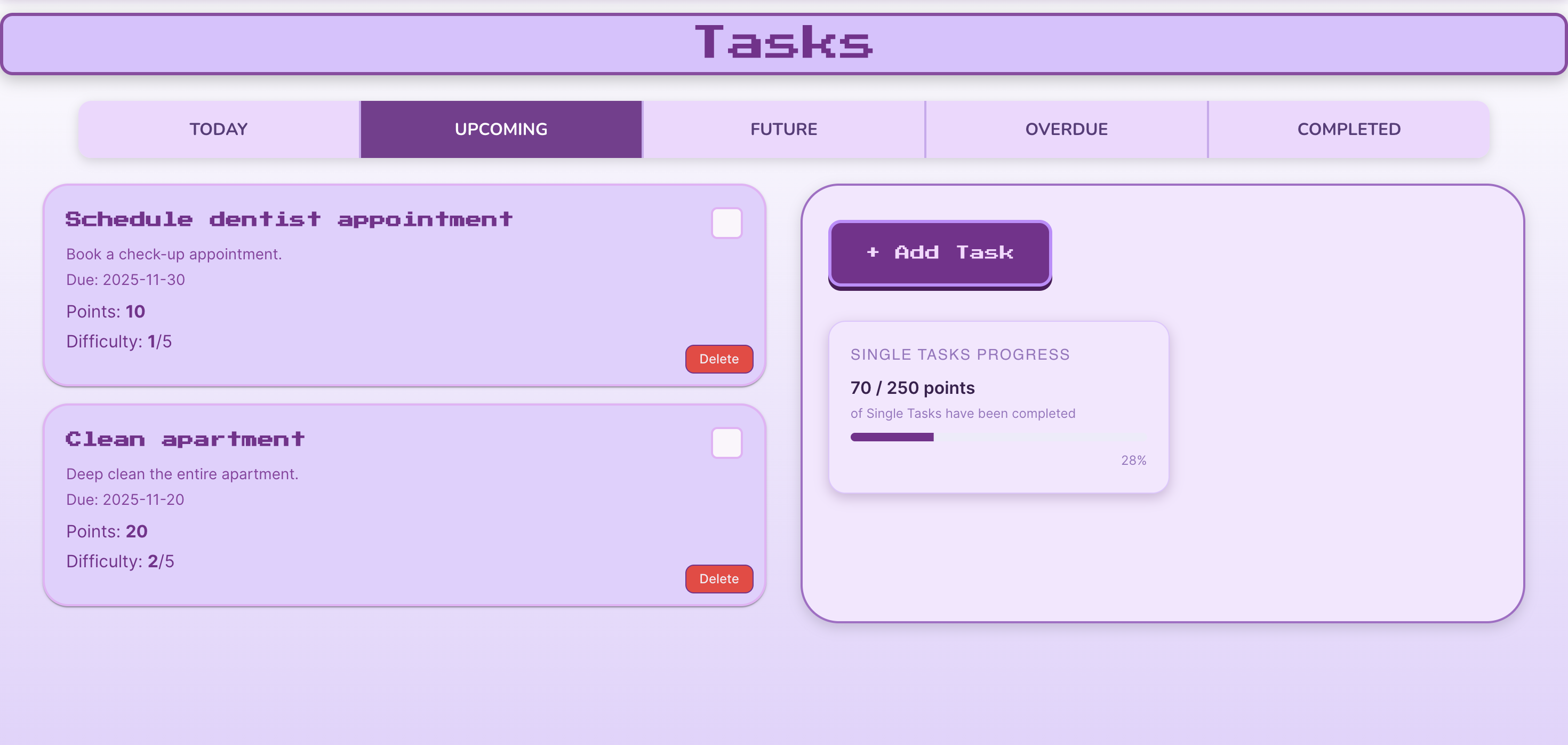
Personal Tasks
-
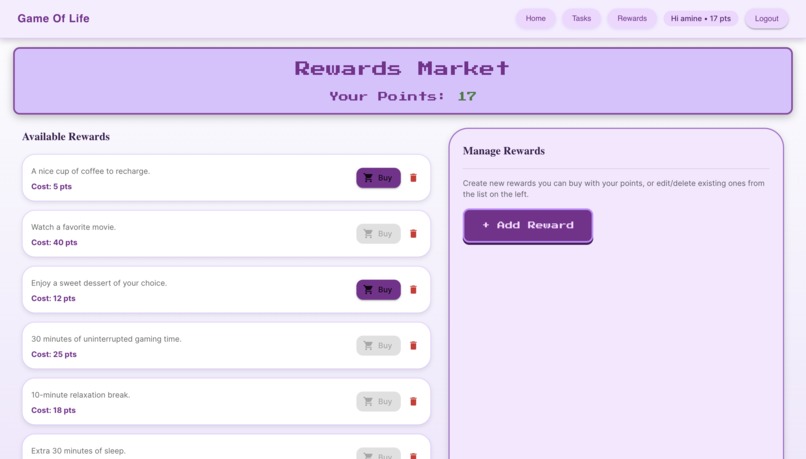
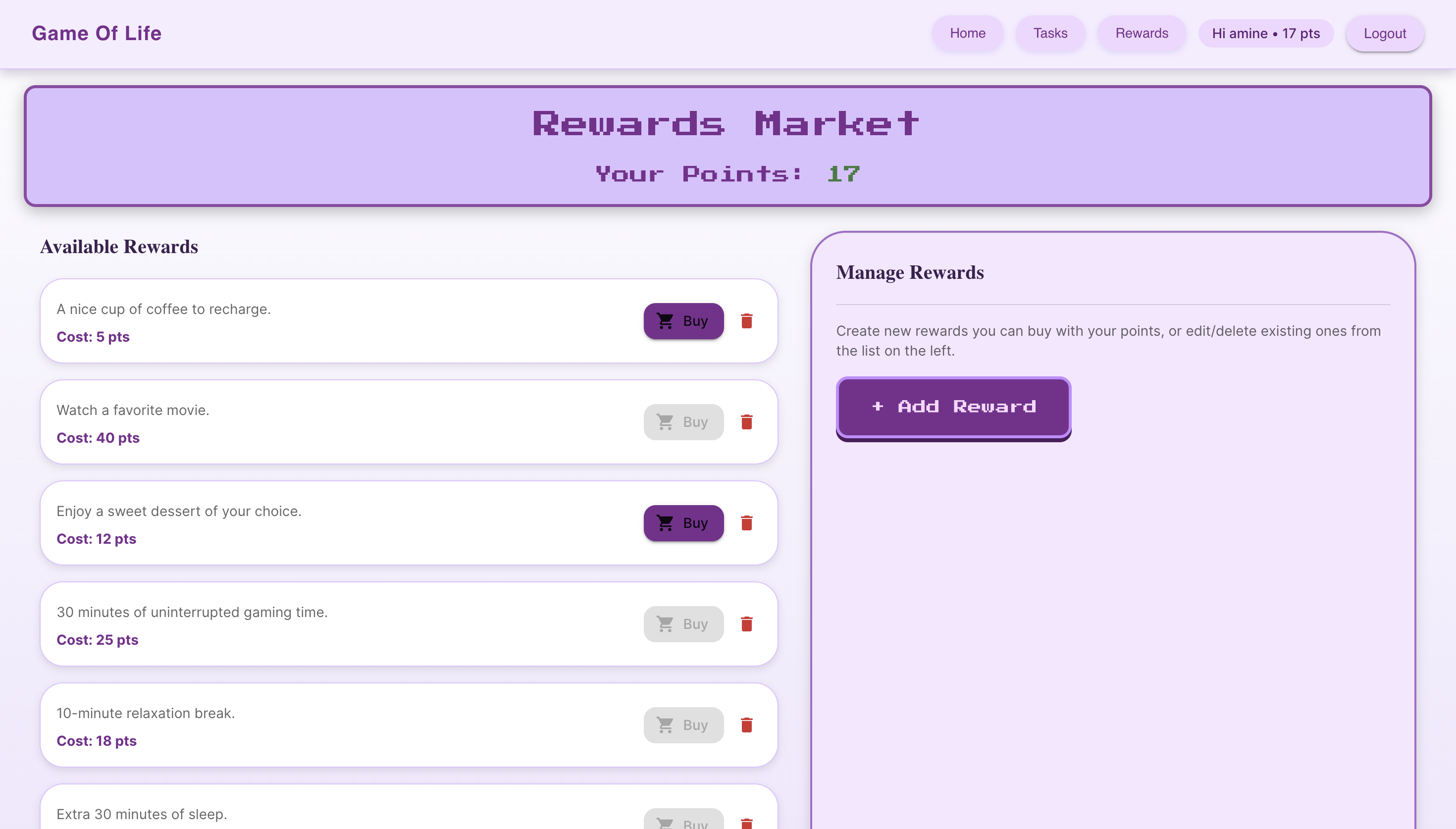
Rewards Sharp
-
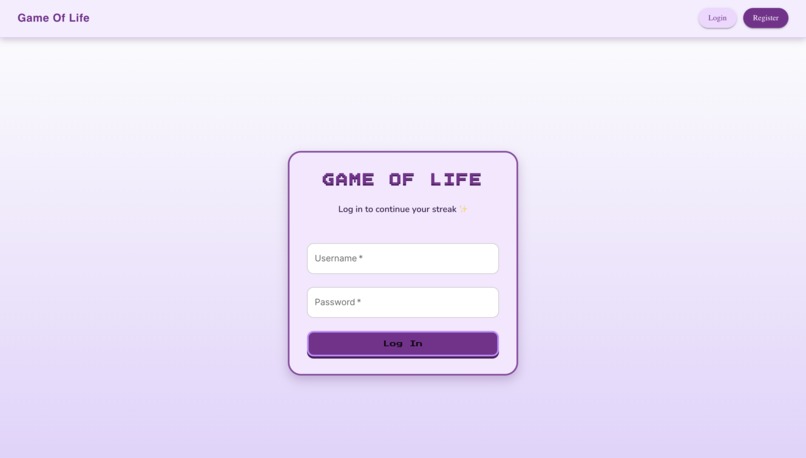
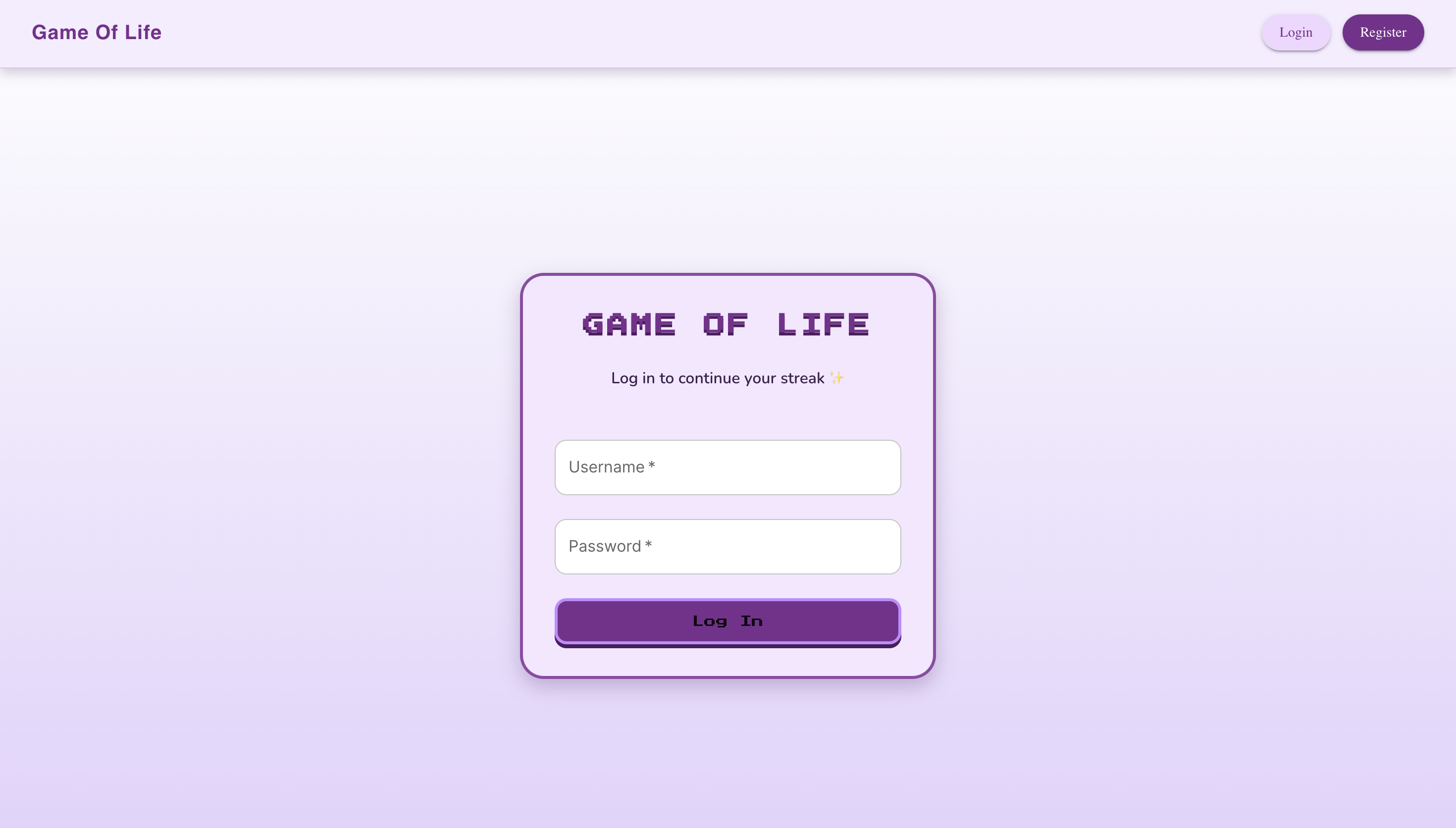
Login screen
Inspiration
We all use to-do apps, and we all abandon them. At the same time, we’ll happily grind levels, chase streaks, and obsess over progress bars in games.
The Life Game was born from a simple question:
What if your real life felt like leveling up a character in a game?
We wanted an app that doesn’t guilt-trip you for not doing tasks, but rewards you for every small win—whether that’s finishing a homework assignment, going to the gym, or just remembering to drink water.
What it does
The Life Game turns your day into a series of quests:
- Create tasks & habits – Daily tasks, one-off missions, and recurring habits (study, workout, chores, etc.).
- Complete tasks to earn points – Each task has a point value. When you complete it:
- The task’s
completedflag is set totrue - Those points are added to your Total Points
- Total Points accumulate over time to track your long-term grind
- The task’s
- Visual progress feedback
- Progress bars and counters make your productivity feel like an XP bar filling up
- Reward-driven, not guilt-driven
- No shame screens—just streaks, rewards, and a feeling that every action moves you forward
We’re also designing a fun, “ego-stroking” AI companion that hypes you up when you complete tasks and nudges you when you’re close to a goal.
How we built it
Frontend
- React + Material UI (MUI) for a clean, responsive interface.
- Uses MUI components like
Card,Typography,LinearProgress, andStackto show:- Total Points
- Task list with completion state and icons
- Clicking a task:
- Toggles its
completedboolean - Updates daily points and visually marks the task as done
- Toggles its
Backend / API
- REST-style API (e.g. mySQL) with endpoints like:
GET /api/users/:id– get current user data including total pointsGET /api/users/:id/tasks– fetch tasks for the logged-in userPATCH /api/tasks/:taskId– update a task’s completion status and trigger a points update
- When a task is completed:
- We update its
completedfield - We add its
pointsvalue to the user’s daily and total points on the server
- We update its
State & Logic
- Frontend calls a
getCurrentUserflow (demo user ID for now) to fetch:- User profile
- Total points
- Task list
- Local state tracks:
totalPoints(from backend)- Tasks and their completion status
Challenges we ran into
Keeping frontend and backend in sync
Making sure that when a task is toggled:- The
completedstatus updates correctly - Points are updated exactly once (no double counting).
- The
Designing a fair scoring system
Balancing:- Small tasks feeling rewarding
- Big tasks still feeling meaningful and worth more.
Daily reset vs long-term progress
We had to balance:- A daily clean slate to avoid overwhelm
- Persistent total points so users feel long-term growth.
“Gamey” but not childish UI
We wanted something playful but not cartoony:- Clean MUI layout
- Subtle game vibes via progress, icons, and counters rather than full fantasy graphics.
Accomplishments that we're proud of
- Turning a simple task list into something that actually feels like a game loop.
- Building a working flow where:
- Tasks are fetched from the backend
- Completing a task updates both the API and the UI
- Daily and total points have a clear, single source of truth.
- Shipping a simple, clean UI where:
- You see progress at a glance
- Completing a task genuinely feels like finishing a quest.
- Laying foundations for:
- Streaks, levels, and unlockable rewards
- A future AI “hype coach” system.
What we learned
Gamification works when done thoughtfully.
Progress bars and points are way more motivating than plain checkboxes.Data modeling matters early.
Even a small life game needs clear handling of:- Users
- Tasks
- Points
- Daily vs total metrics.
Designing for extensibility pays off.
We structured the app so we can add:- Streaks
- Badges
- Levels without rewriting the entire core.
The goal isn’t screen time; it’s real-life wins.
The most satisfying design decisions were the ones that helped users get off the app and back into their lives—with a win logged.
What's next for The Life Game
Streaks & levels
- Daily/weekly streaks for habits
- Levels and titles based on total points (Bronze → Silver → Gold → Legend)
Reward shop
- Trade points for:
- Custom themes
- Avatar cosmetics
- Self-defined rewards (e.g. “500 points = bubble tea”)
Social features
- Optional friend leaderboards
- Co-op quests (shared tasks or group goals)
AI Companion
- A built-in “coach” / “hype buddy” that:
- Celebrates completed tasks
- Encourages you when you’re close to a goal
- Suggests small quests tailored to your habits
Smarter task templates
- Presets for students, devs, fitness, morning/night routines, etc.
The core idea stays the same:
You’re not just managing your life. You’re playing it.
Built With
- api
- css
- javascript
- mui
- mysql
- react


Log in or sign up for Devpost to join the conversation.