-
-
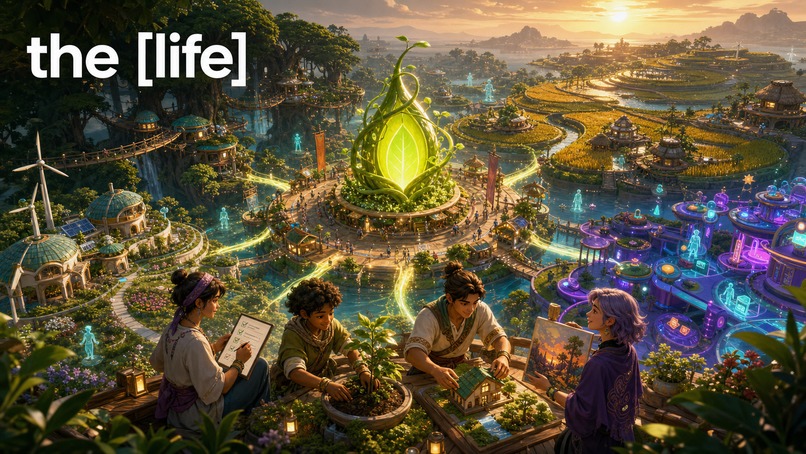
Project main image
-
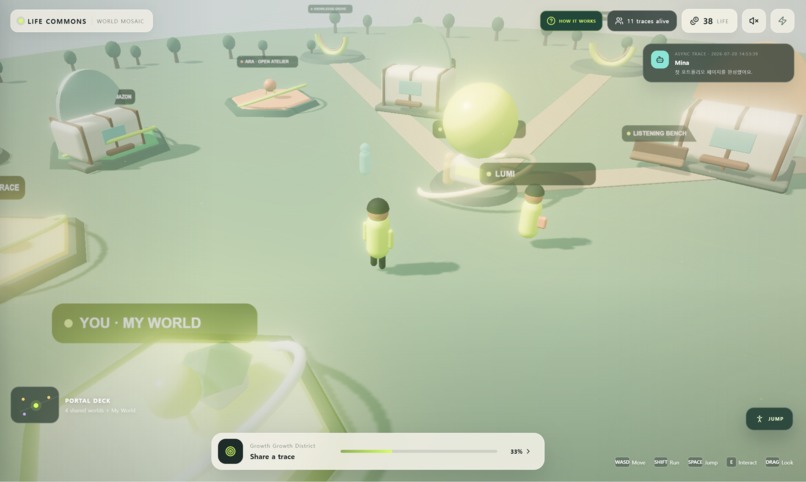
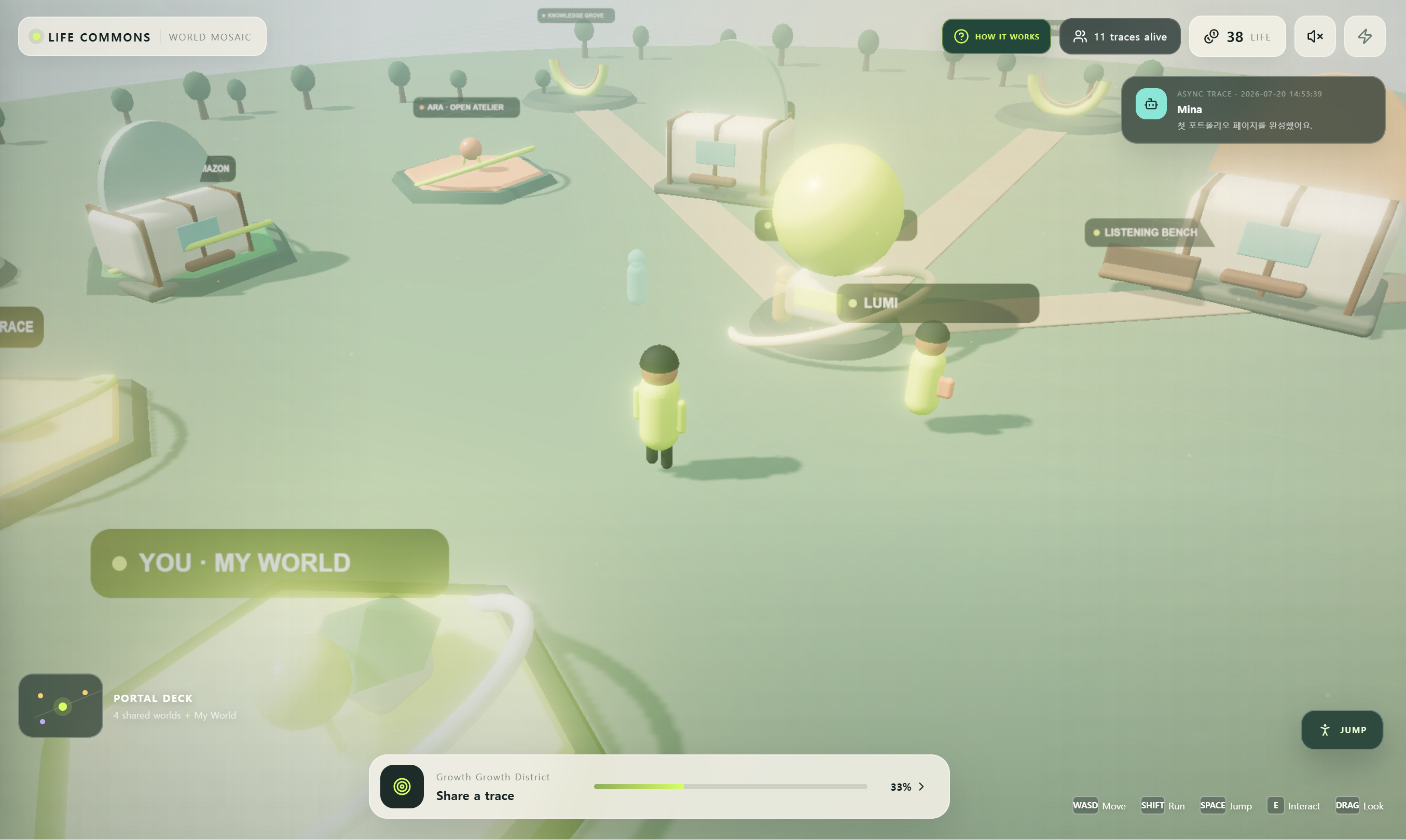
Main Community World - Life Commons
-
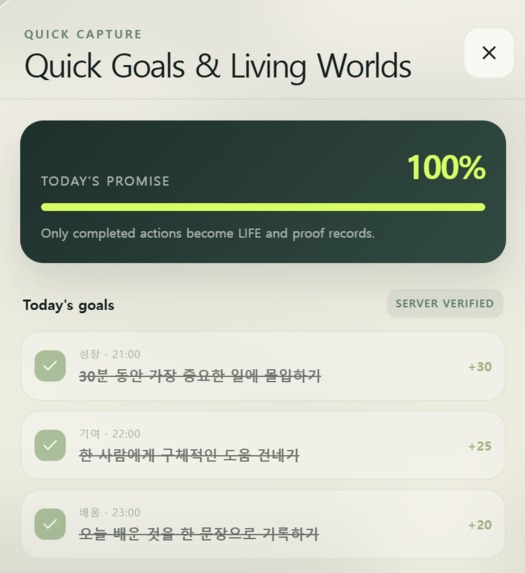
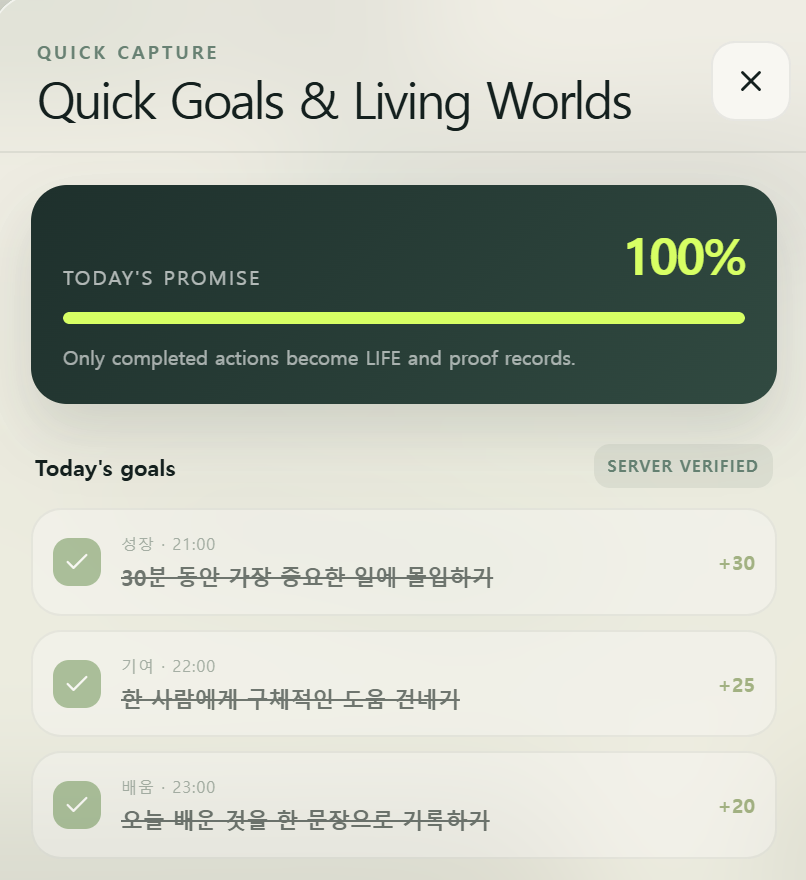
Achieve your goals!
-
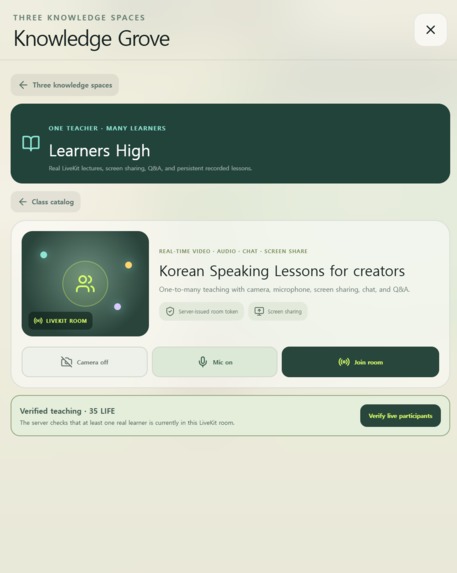
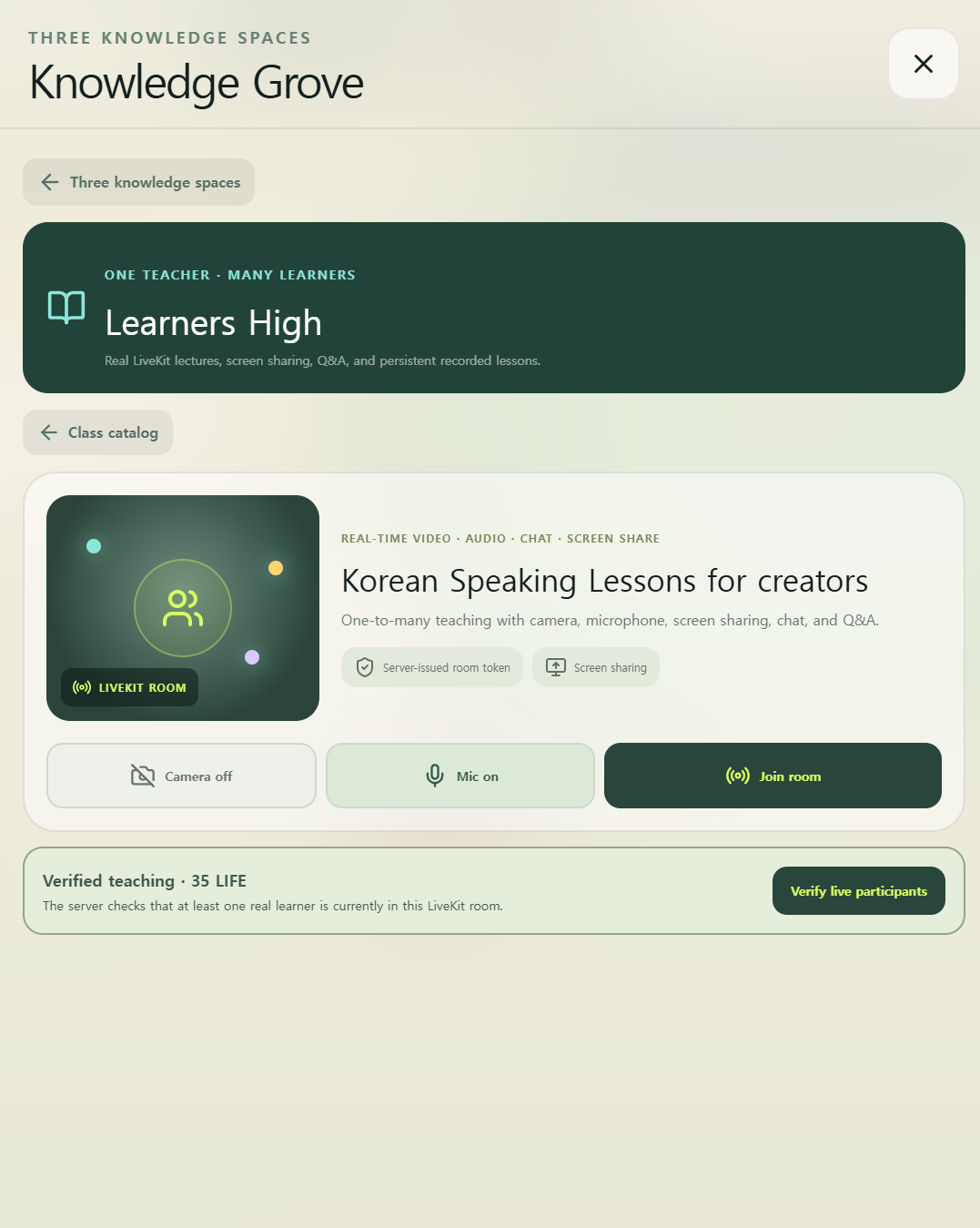
Learning hub
-
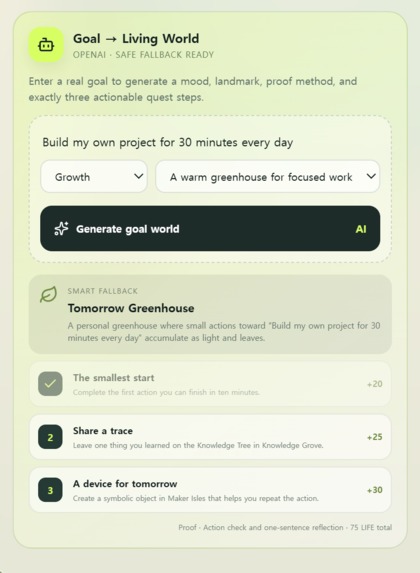
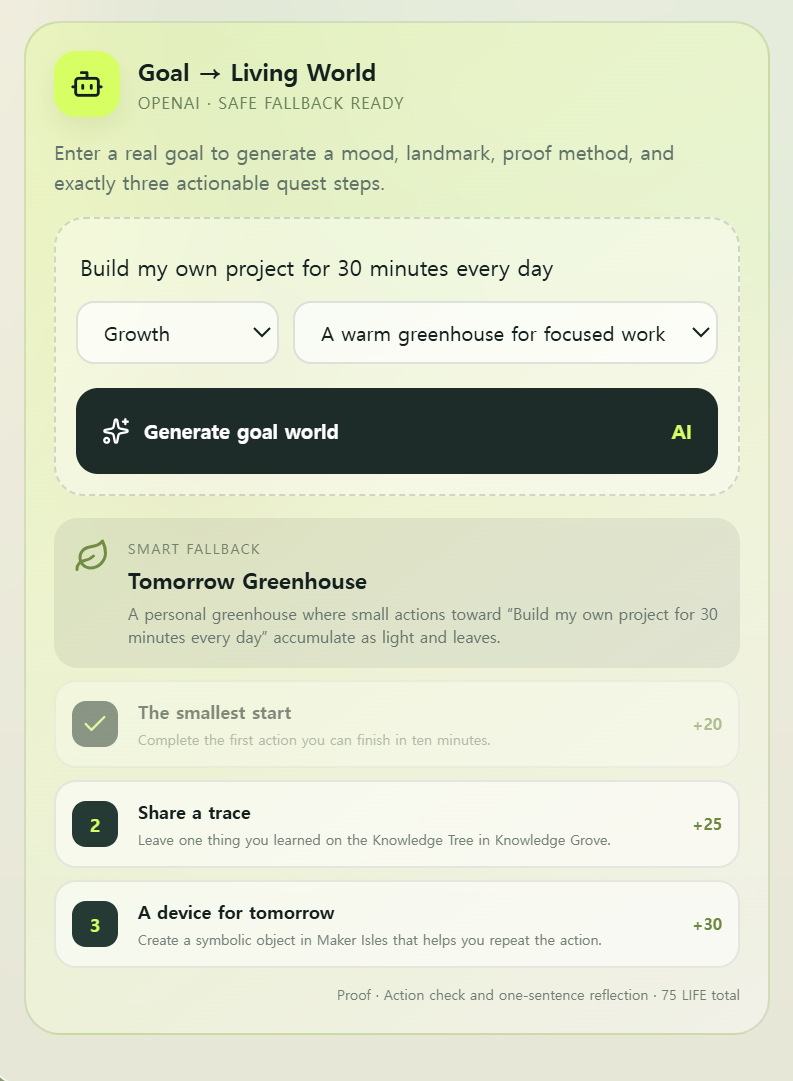
AI goal generation
-
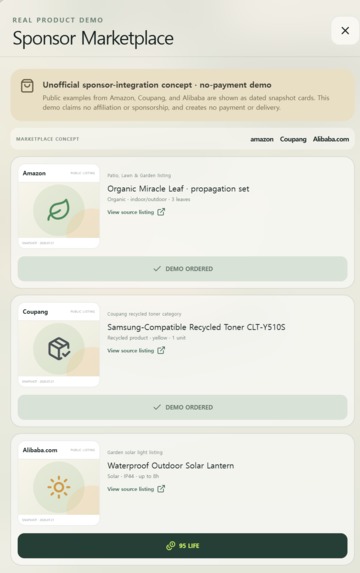
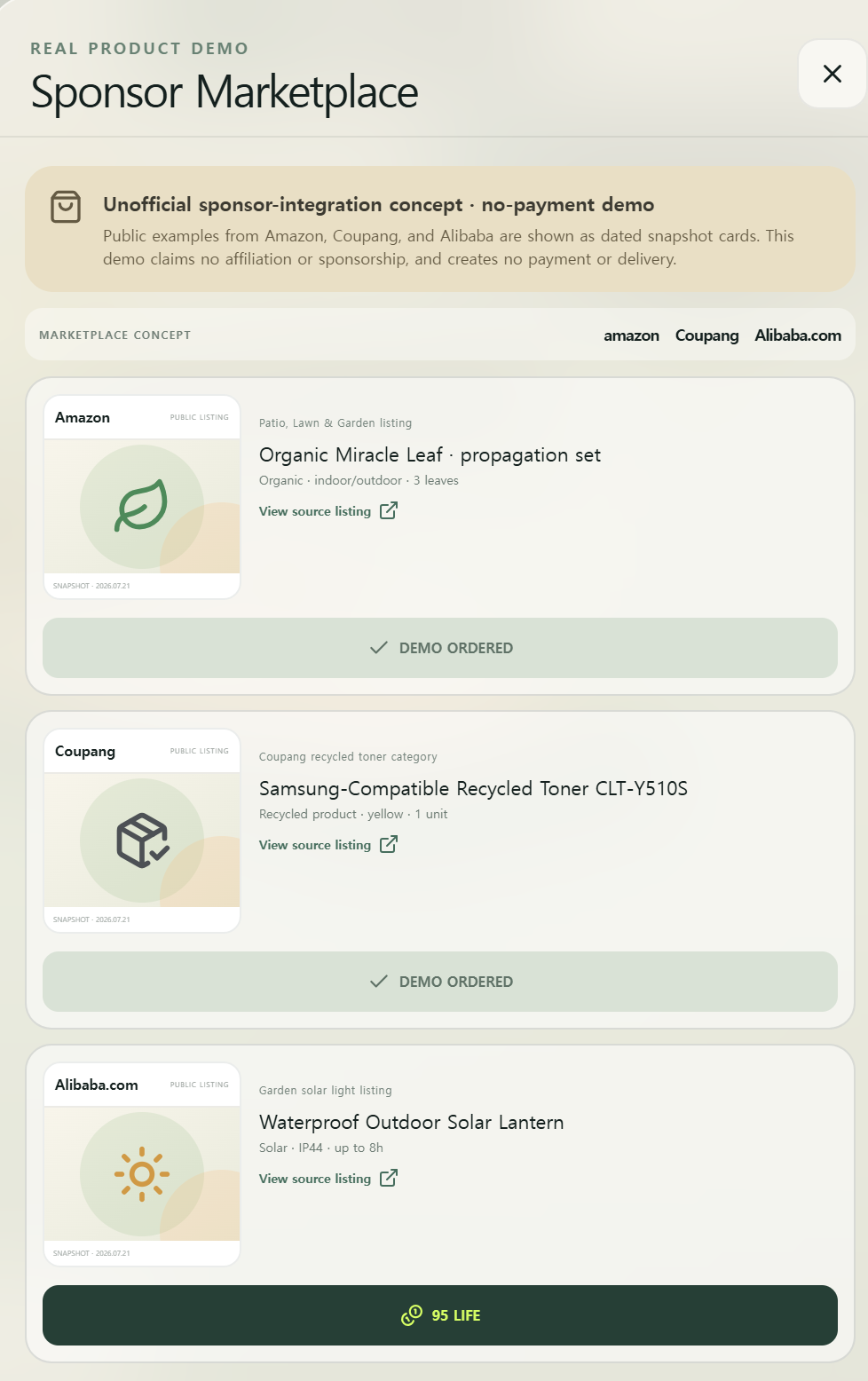
Earn LIFE points and buy goods from companies in collaboration(The companies represented in image is an example)
-
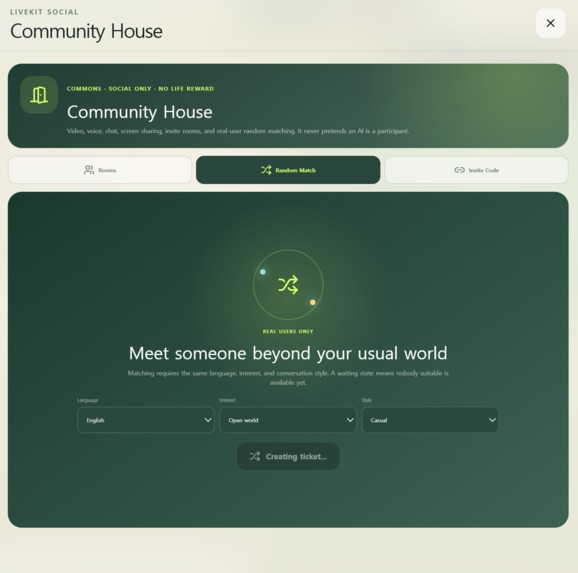
Talk - group meeting, talk with a random user and invite friends to conversation
-
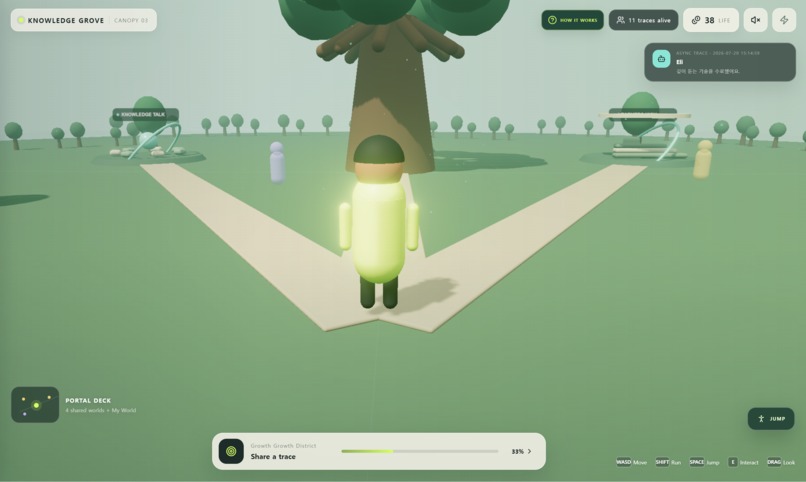
Expand your insights and Knowledge, share, communicate and learn.
-
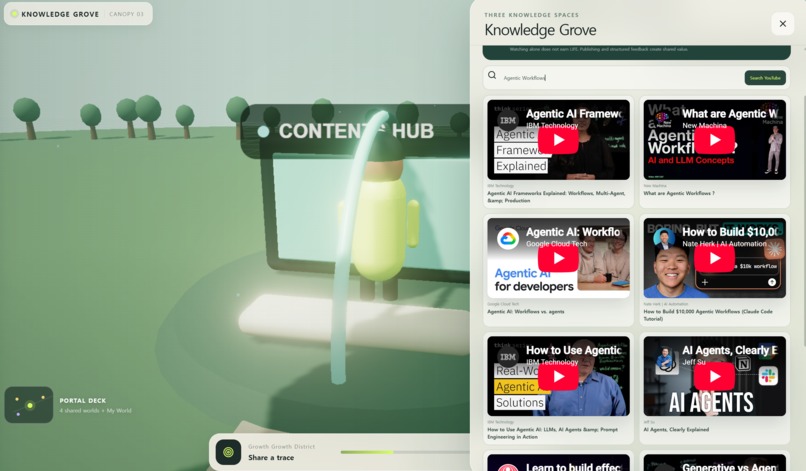
Search and Learn trending technologies and contents
-
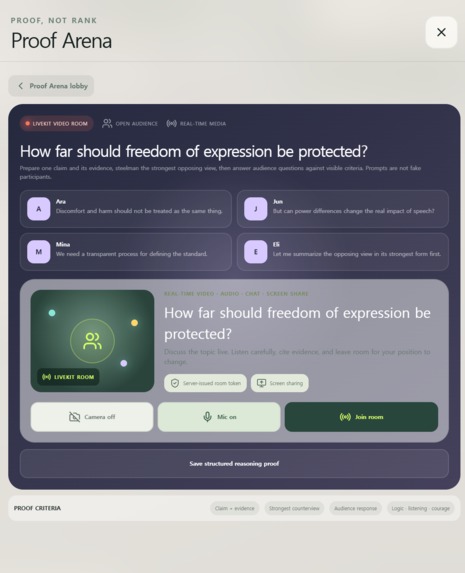
Prove your abilities - Debate rooms, Contents competition and more
-
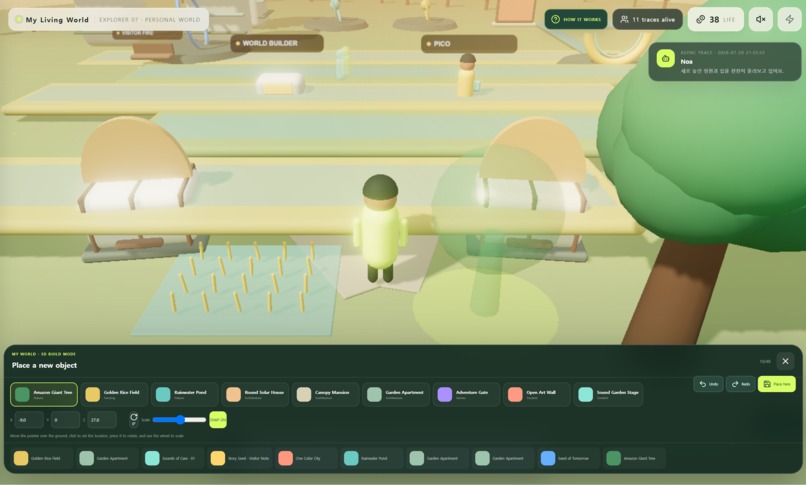
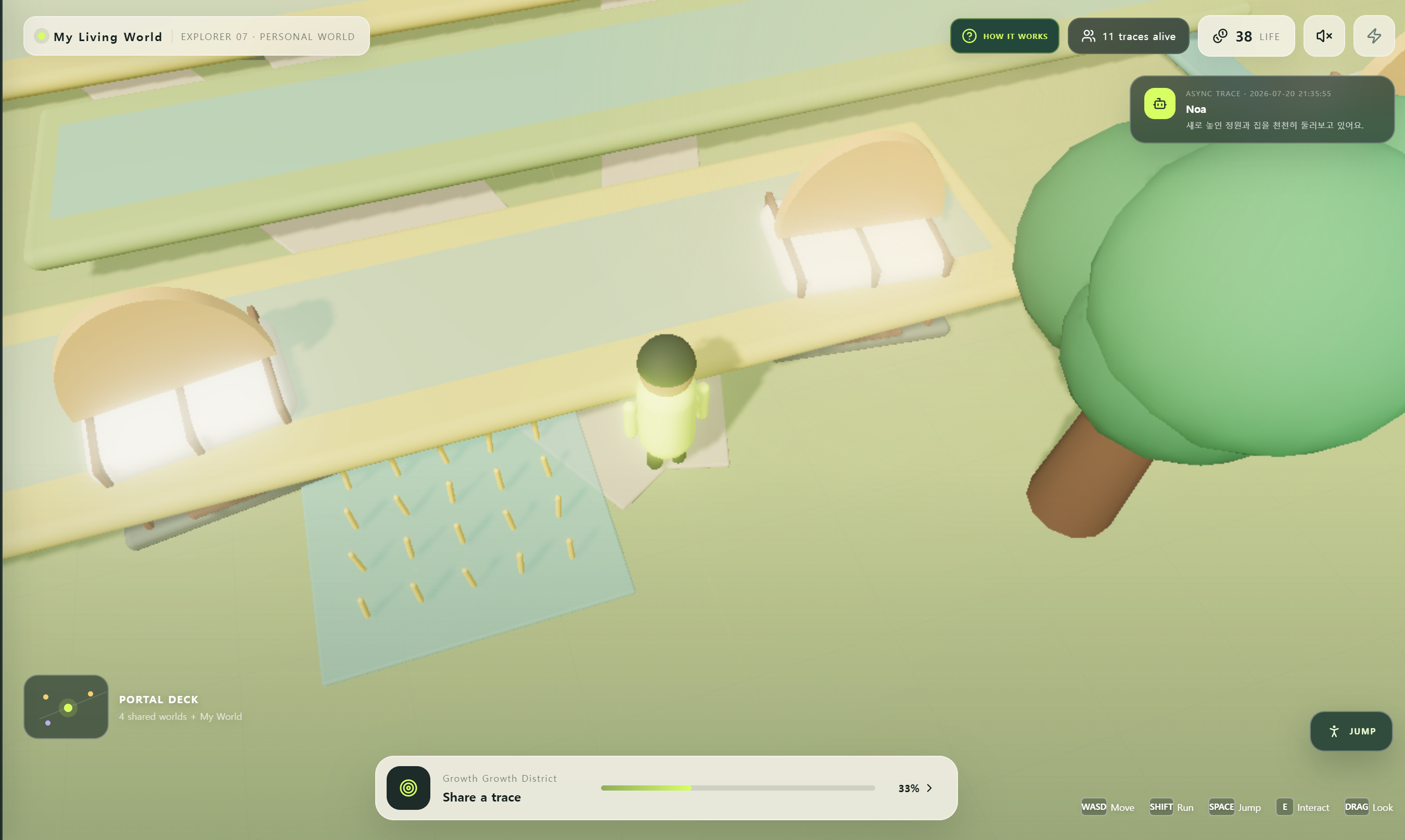
Custom your own world
-
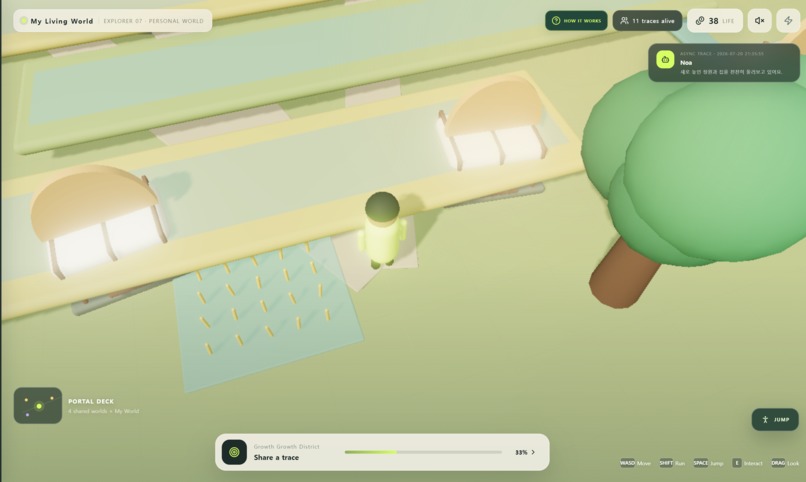
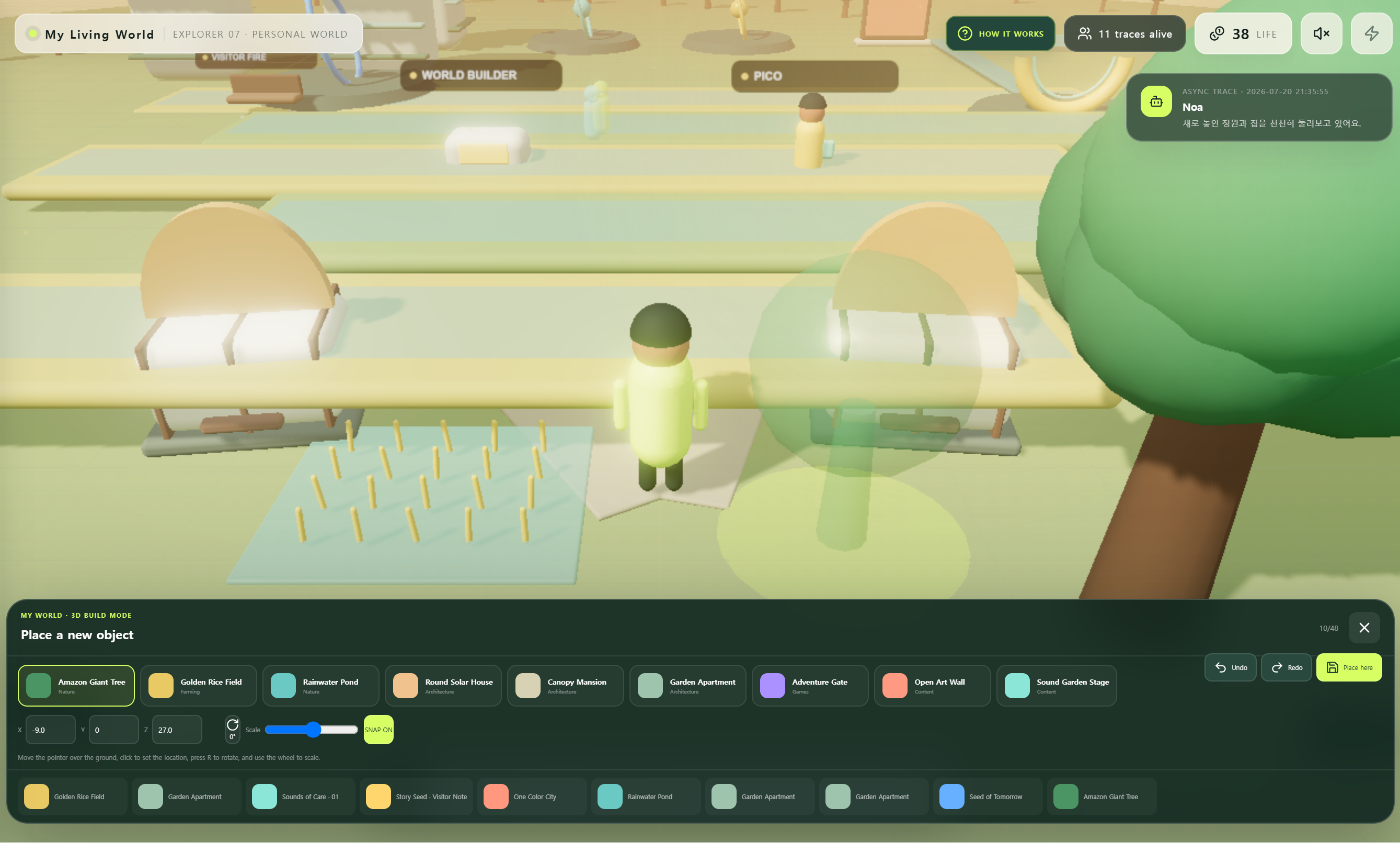
Build your place, navigate the world
-
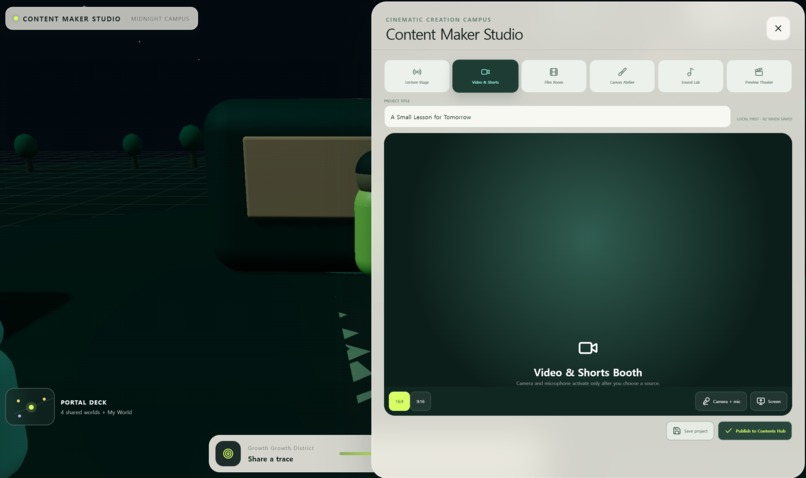
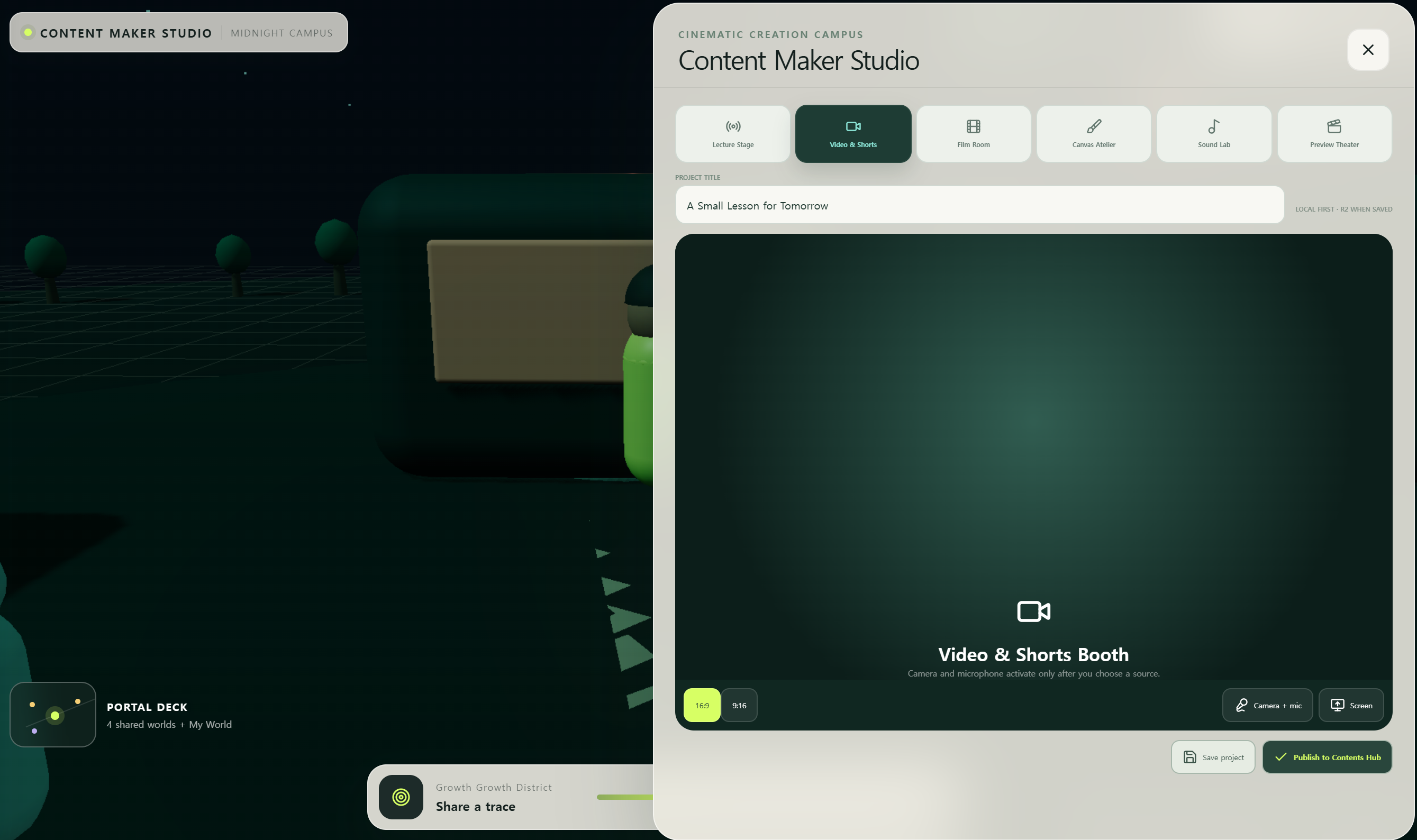
Make your own creative contents and show off!
-
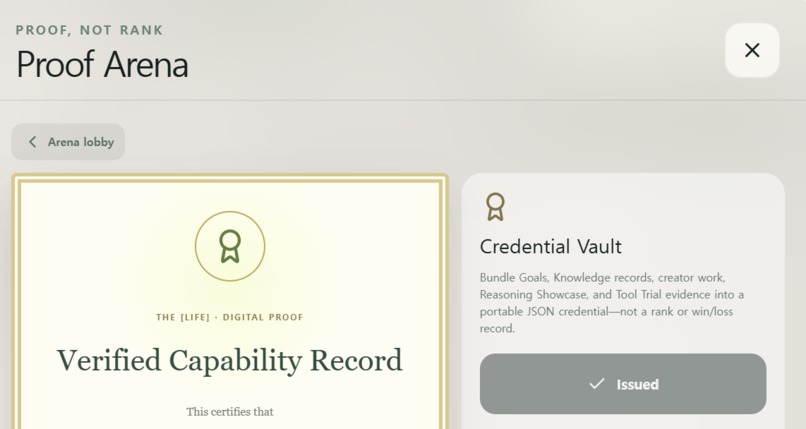
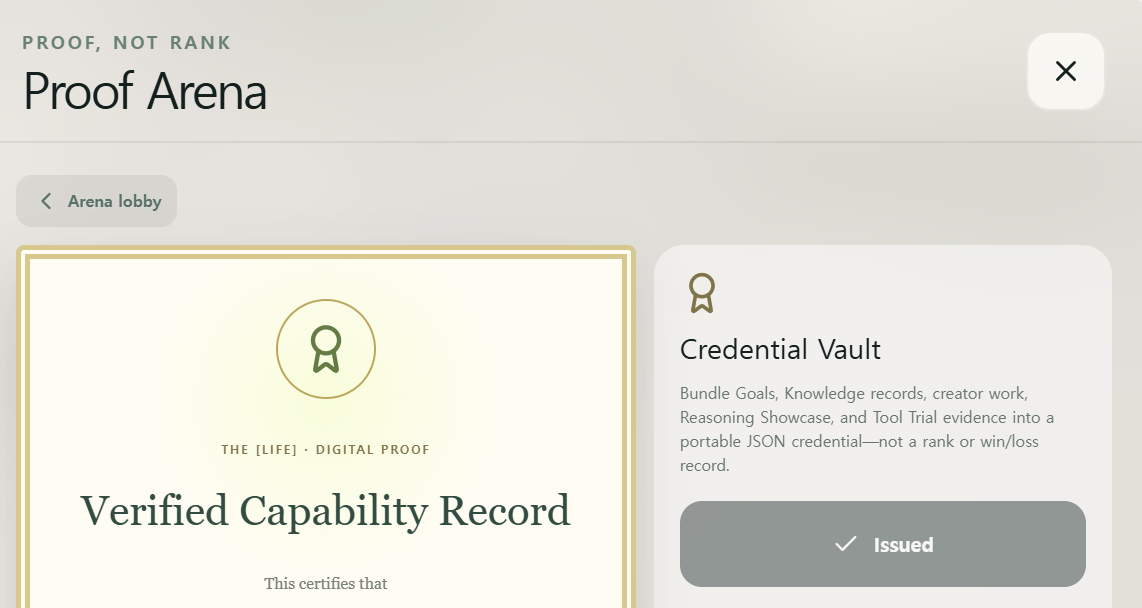
Certification
Inspiration
Most productivity apps end with a checked box. Most games with competition features or goals only focus on rewards.
I wanted to connect these two problems in a different way: what if a virtual world could grow from the meaningful things we actually do in real life?
That question became the [life].
In this world, every person begins with 0 LIFE. Players create real goals, complete them step by step, and use the LIFE they earn to build a personal world. Studying, creating something, teaching, sharing knowledge, helping a community, or following through on a personal commitment can all become visible parts of that world.
A completed goal should not simply disappear into a productivity history. It could become a tree, a home, a piece of art, a useful tool, or an entire landscape that remains as evidence of personal growth.
What it does
the [life] is a tactile 3D world built around a simple loop:
- Create a meaningful real-life goal.
- Turn it into achievable steps.
- Complete the goal and record the result.
- Earn LIFE and proof of growth.
- Use that progress to create, learn, connect, and develop your own world.
Life Commons is the shared starting point. Its surrounding tiles represent individual people and their personal worlds.
Every personal world can develop differently. A player can grow an enormous forest, cultivate rice terraces, create a game world, build a solar-powered estate, display art, place music and media, or combine all of those ideas freely.
The experience includes several spaces with distinct purposes:
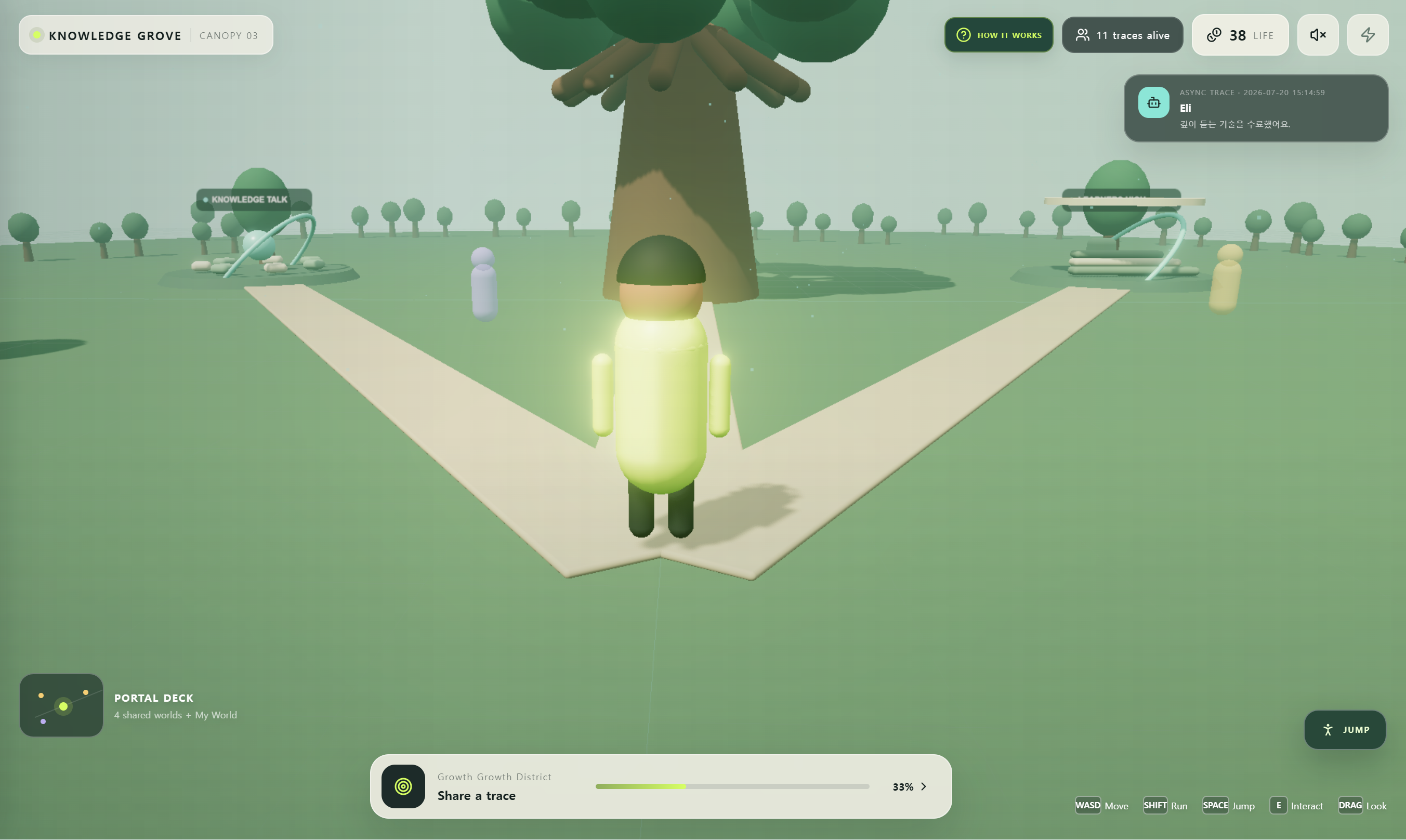
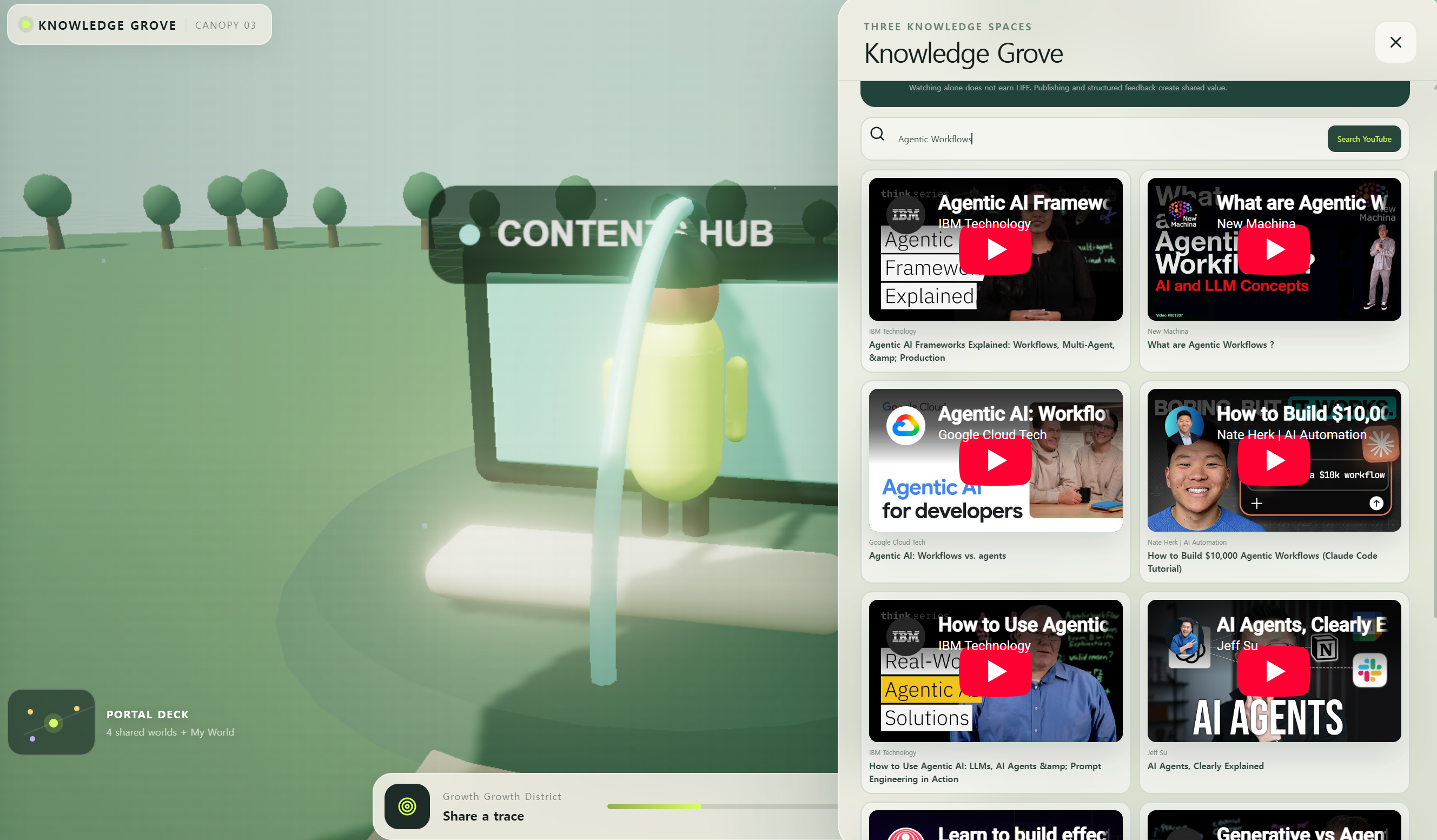
- Knowledge Grove is for learning and sharing. Knowledge Talk provides open conversations, Contents Hub lets people discover videos, music, artwork, films, and stories, and Learners High supports live or recorded classes.
- Maker Isles lets players fabricate clothing, tools, buildings, furniture, lighting, plants, and other objects.
- Content Maker Studio provides spaces for recording lectures, producing videos and shorts, editing films, drawing, composing music, and previewing finished work.
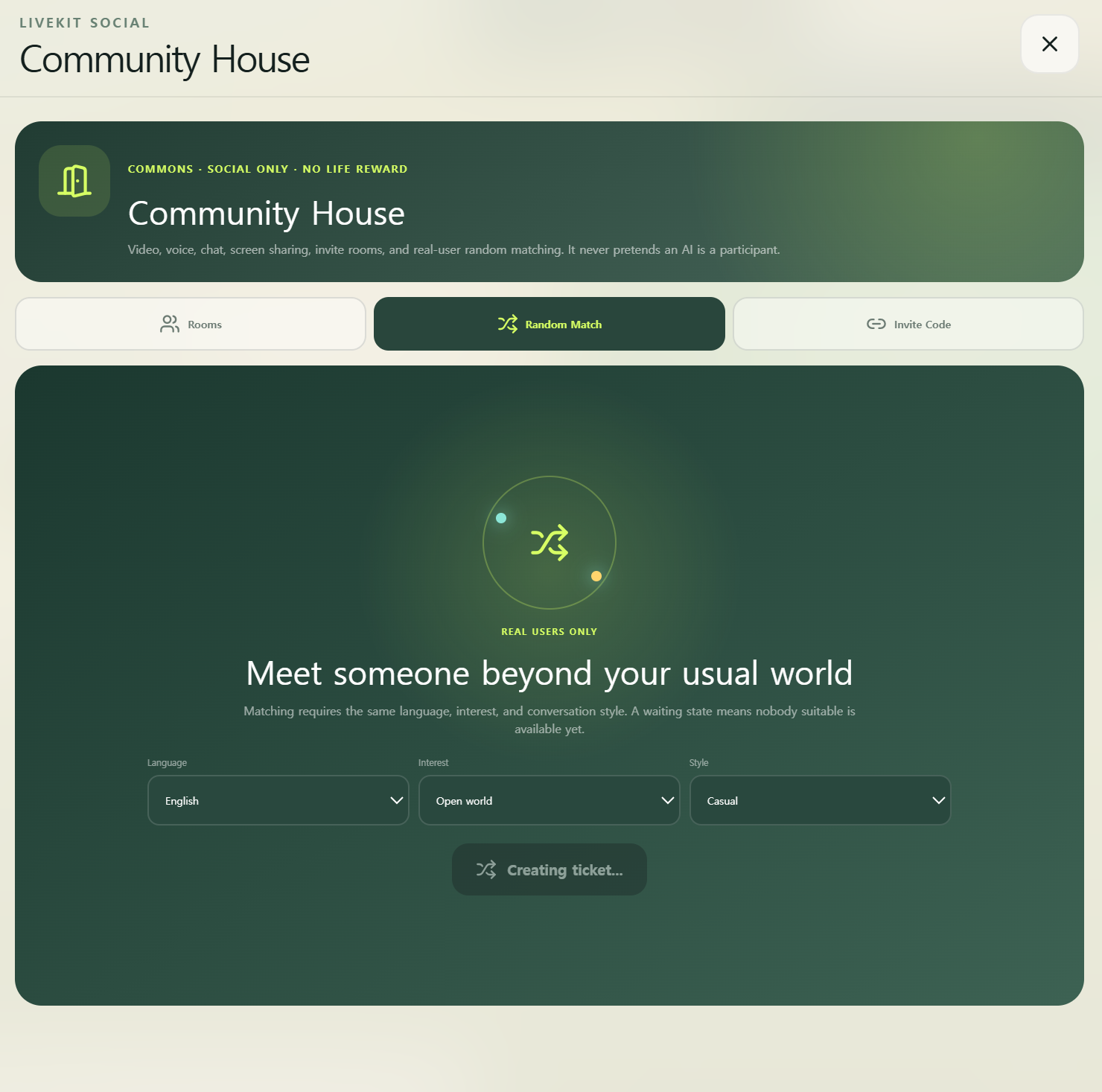
- Community House is a social space for video, audio, chat, screen sharing, invite rooms, and interest-based random matching.
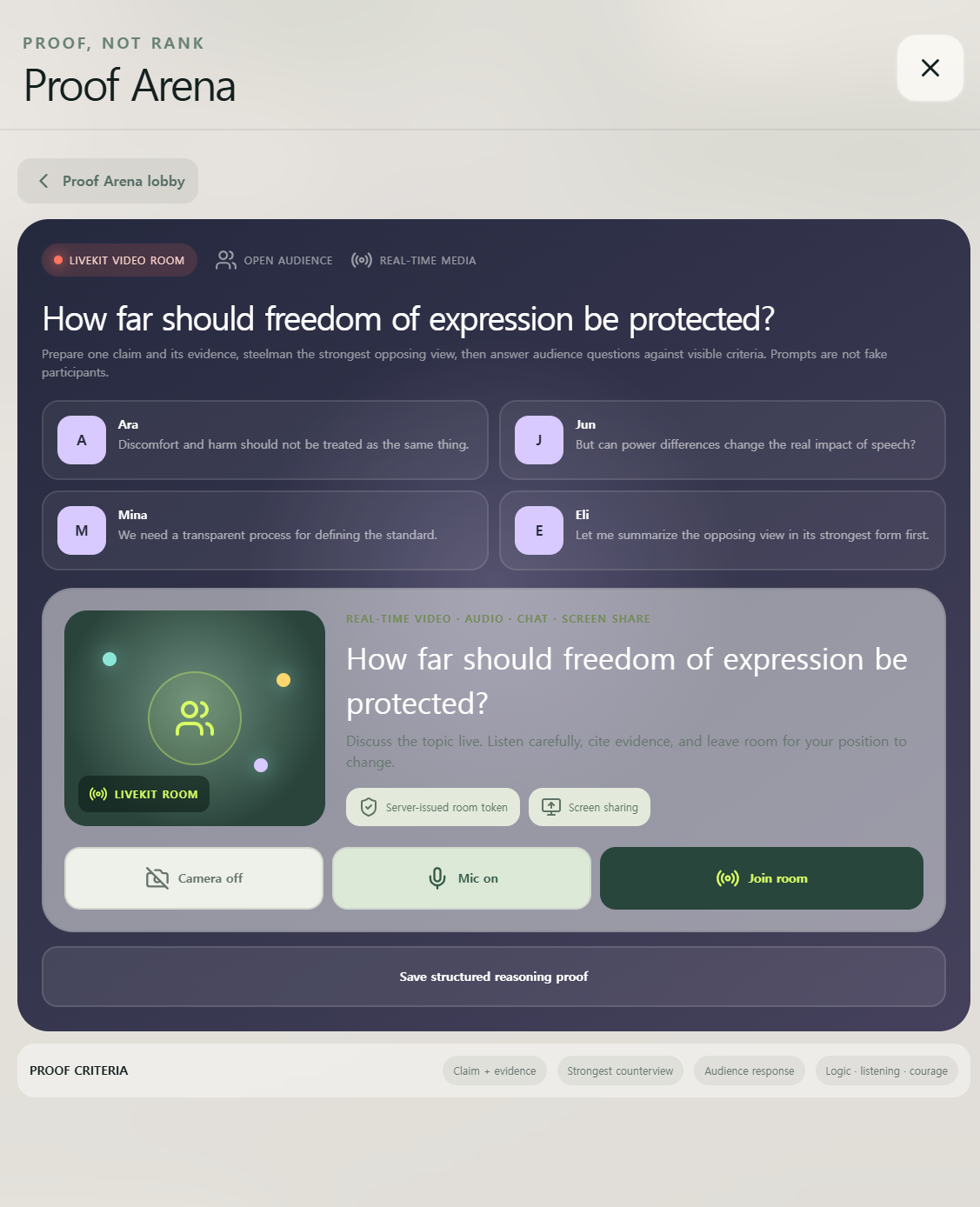
- Proof Arena allows people to present their reasoning, creative process, or tool-building ability. There are no traditional winners or losers. Instead, players collect certificates and can download a digital credential record showing what they created and how they grew.
Players can also use a Planner with Today, Week, Month, and Timeline views. Read-only calendar integration helps connect everyday schedules with goals, while AI suggestions remain optional until the player confirms them.
A simulated marketplace demonstrates how LIFE could eventually connect personal growth with virtual items, land, and sponsored real-world rewards. No real payment, purchase, or delivery occurs in the current prototype.
How we built it
I built the project as a desktop web experience using React, a Next-compatible application architecture, and Three.js.
The 3D experience includes multiple authored worlds, camera controls, movement, running, jumping, landing, collision, terrain handling, contextual interactions, ambient sound, particles, portals, and wallpaper-style map transitions.
The Personal World includes a free 3D Build Mode. Players can choose an object, preview it as a transparent placement ghost, place it on the terrain, and later move, rotate, scale, raise, snap, or delete it. The editor also supports undo and redo, while the server validates world boundaries and placement limits.
The backend uses Cloudflare D1 for profiles, goals, LIFE transactions, inventory, placements, planner entries, quests, and proof records. Cloudflare R2 stores uploaded and created media. LIFE is controlled by a server-side ledger so the interface cannot create duplicate rewards or spend more than the available balance.
LiveKit powers realtime audio, video, chat, and screen sharing. The YouTube Data API supports safe, embeddable video discovery in Contents Hub. Google Calendar access is read-only, and local calendar files can be imported through ICS.
How I used Codex
Codex Desktop was my primary engineering workspace throughout the build.
I used Codex to turn a very large metaverse concept into a focused vertical slice, separate the original monolithic game code into maintainable systems, implement the world interactions and product features, inspect visual problems, and repeatedly test the experience.
Codex also helped me identify places where the product was becoming confusing. For example, Knowledge Grove and Proof Arena originally overlapped. Through iteration, I separated casual exploration and learning from structured demonstrations of ability.
It was not a one-shot code generation process. The submitted Codex session contains the continuing design discussion, implementation, debugging, visual refinement, testing, deployment, and GitHub work behind the project.
How I used GPT-5.6
GPT-5.6 powers the intelligence layer of the experience.
When a player describes a goal, GPT-5.6 helps transform it into three practical steps that can be completed and tracked. It also supports personalized goal recommendations and the in-world Life Guide, which explains the experience and suggests meaningful next actions.
The model helps interpret human intention, but it does not control the economy. Deterministic server code remains responsible for LIFE balances, rewards, purchases, persistence, permissions, and proof records.
This separation was important: AI makes the experience personal and flexible, while the game systems keep it understandable and consistent.
Challenges we ran into
The greatest challenge was scope. The original idea included an open world, personal land, goals, an economy, learning, social interaction, content production, live communication, construction, and digital credentials. Building all of that as a coherent prototype required deciding which interactions had to be real and which could be safely simulated.
Another challenge was making every world feel different. Changing only the color of the environment was not enough. Each ecosystem needed its own terrain, lighting, atmosphere, vegetation, structures, sound, landmarks, and activities.
The interface was also difficult to balance. A 3D world can quickly become covered by menus and floating buttons. I reduced large titles, removed decorative controls that did nothing, added physical portals, and made the main navigation available without hiding the world.
Character design taught me an unexpected lesson. A more realistic model was not automatically a better model. It felt disconnected from the warm, handcrafted environment, so I returned to a rounded stylized character language that felt more natural for the [life].
Finally, optional external services had to fail gracefully. The core experience still needed to remain understandable when an API key, media service, or live participant was unavailable.
Accomplishments that we're proud of
I am proud that the prototype communicates its central idea within a few minutes:
Create a goal, follow through, grow your world, and share what you have become.
The player does not begin with wealth, status, or a finished home. Every visible part of their world has the potential to represent something they chose to do.
We are also proud that the project grew beyond a static concept into an interactive and connected 3D experience. Some of the accomplishments that matter most to us include:
- Building six authored 3D destinations with different purposes, visual identities, activities, lighting, atmosphere, and sound.
- Creating four clearly differentiated Personal World ecosystems: Amazon Canopy, Rice Terrace, Game Arcadia, and Solar Estate.
- Implementing a free 3D Build Mode where players can place, move, rotate, resize, raise, snap, delete, undo, and redo objects.
- Persisting goals, LIFE transactions, inventory, world placements, media projects, planner entries, and proof records.
- Creating separate fabrication tools for clothing, tools, habitats, furniture, lighting, plants, and other world objects.
- Building browser-based creative tools for drawing, music sequencing, video recording, screen capture, lectures, shorts, and film projects.
- Integrating LiveKit communication without displaying fake live participants or enabling cameras without user action.
- Separating Knowledge Grove, Community House, and Proof Arena into understandable spaces for learning, social interaction, and capability demonstration.
- Designing a server-authoritative LIFE ledger that prevents duplicate rewards, invalid purchases, and negative balances.
- Making the main journey remain testable even when optional external integrations are unavailable.
- Turning the original broad metaverse idea into a coherent vertical slice that judges can understand and experience within a few minutes.
Most of all, we are proud that the world does not rely on competition to create motivation. Progress is represented through the places people shape, the things they create, the knowledge they share, and the evidence they choose to leave behind.
What we learned
I learned that a large virtual world becomes easier to understand when every space has one clear social purpose.
I also learned that meaningful gamification does not require a leaderboard. Progress can be represented through places, objects, creative work, reflections, and evidence rather than a single score.
From a technical perspective, I gained experience with realtime 3D interaction, procedural environment construction, persistent object placement, media creation in the browser, LiveKit rooms, AI response validation, and server-authoritative virtual economies.
Most importantly, I learned that AI works best here when it helps a person express an intention—not when it makes every decision for them.
What's next for The LIFE
The next step is to expand persistent multiplayer interaction and let more people visit, collaborate in, and contribute to one another's worlds.
I also want to deepen world-building tools, add stronger goal-verification methods, improve creator collaboration, introduce signed and shareable credentials, and explore real sponsor partnerships for responsible rewards.
The long-term vision is a world that becomes richer not because people spend more time escaping reality, but because they return to reality with a reason to grow.
Built With
- api
- calendar
- cloudflare
- codex
- d1
- data
- gpt-5.6
- html5
- livekit
- next.js
- node.js
- openai
- r2
- react
- three.js
- typescript
- vite
- webgl
- webrtc
- workers
- youtube

Log in or sign up for Devpost to join the conversation.