-
-
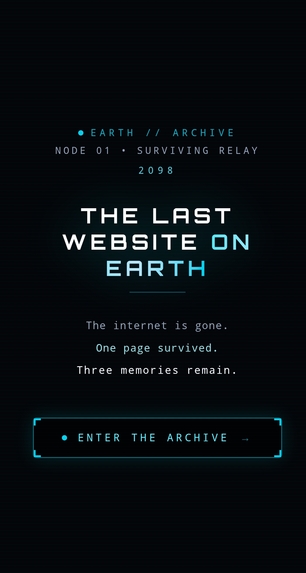
Hero / opening
-
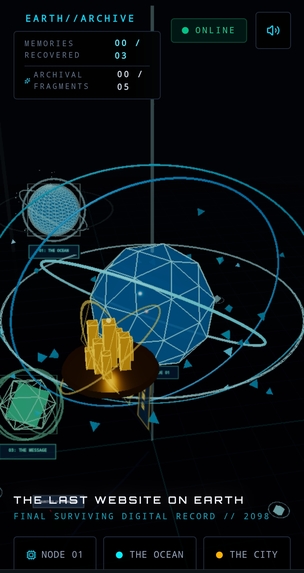
Main archive
-
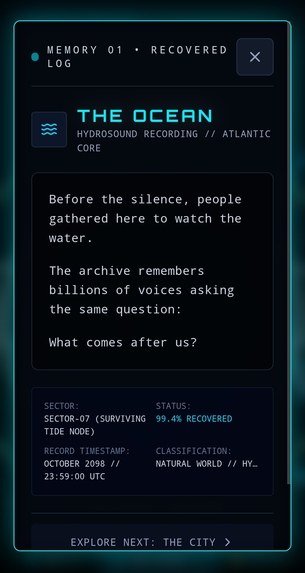
Ocean memory
-
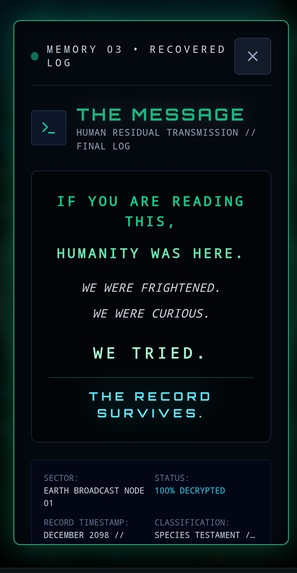
Message
-
City memory
Inspiration
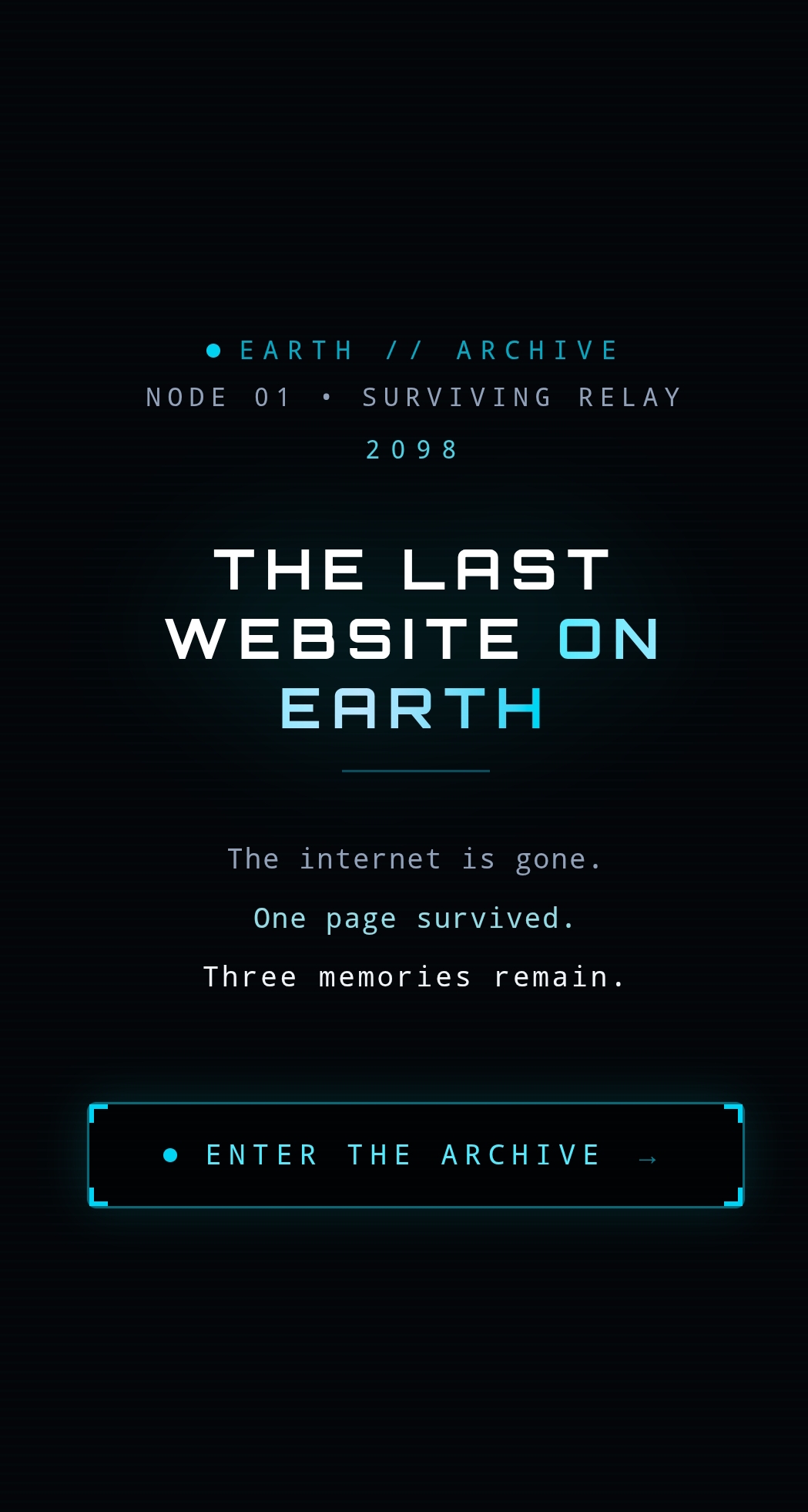
What happens to the internet when humanity is gone? We wanted to turn that question into an experience rather than simply tell a story. Instead of building another conventional website, we imagined a digital artifact from the year 2098: a final surviving website containing fragments of a civilization that no longer exists. The idea became THE LAST WEBSITE ON EARTH — an interactive 3D archive where exploration itself becomes part of the story. The goal was to make the experience feel less like browsing a webpage and more like discovering an abandoned digital installation.
What it does
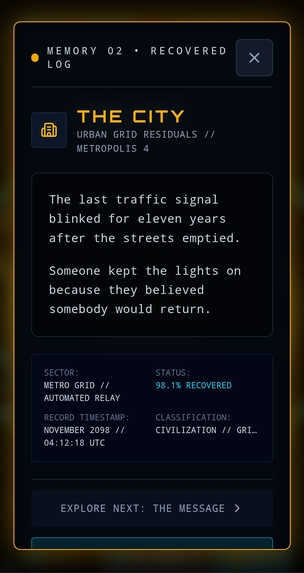
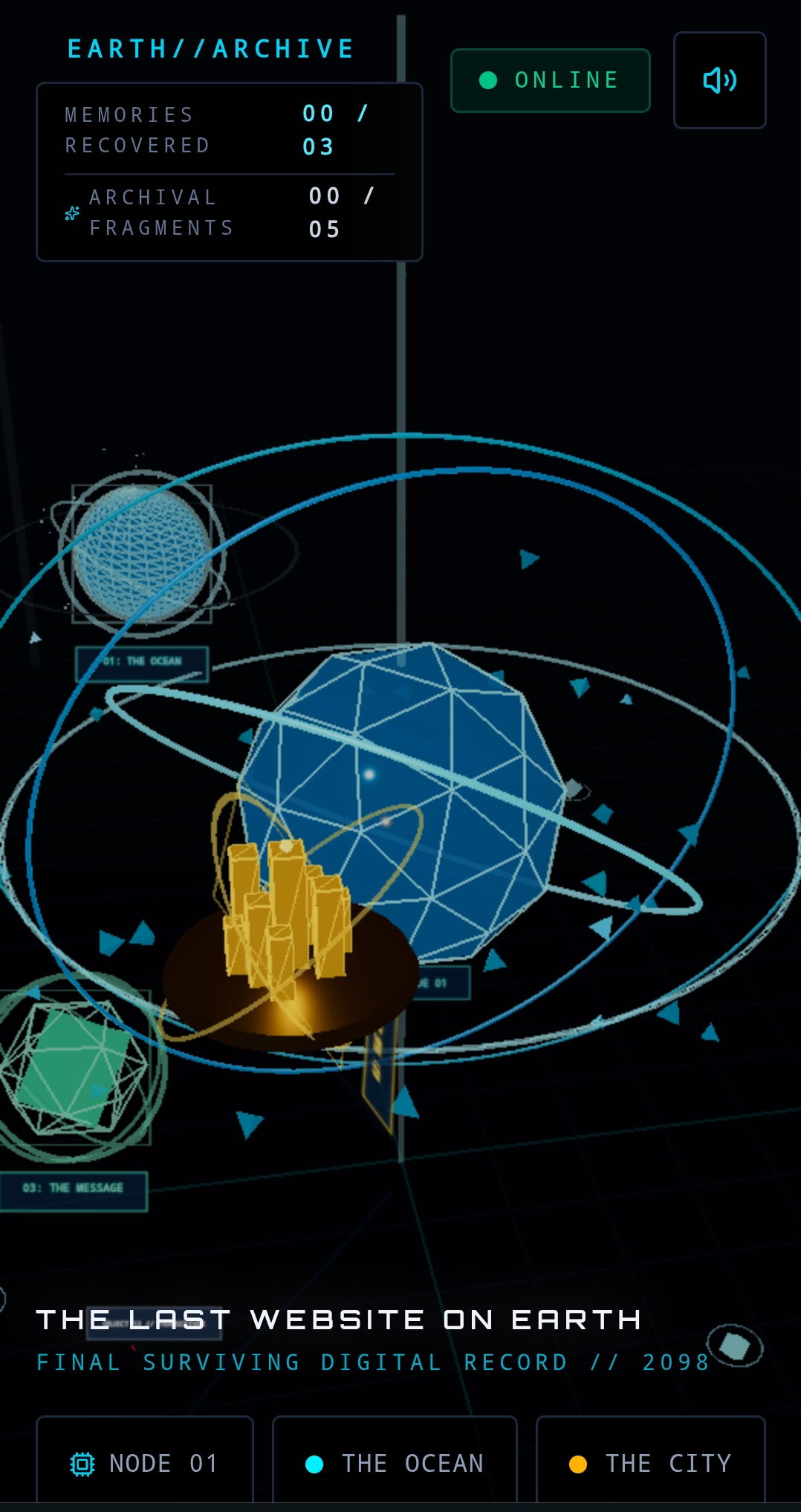
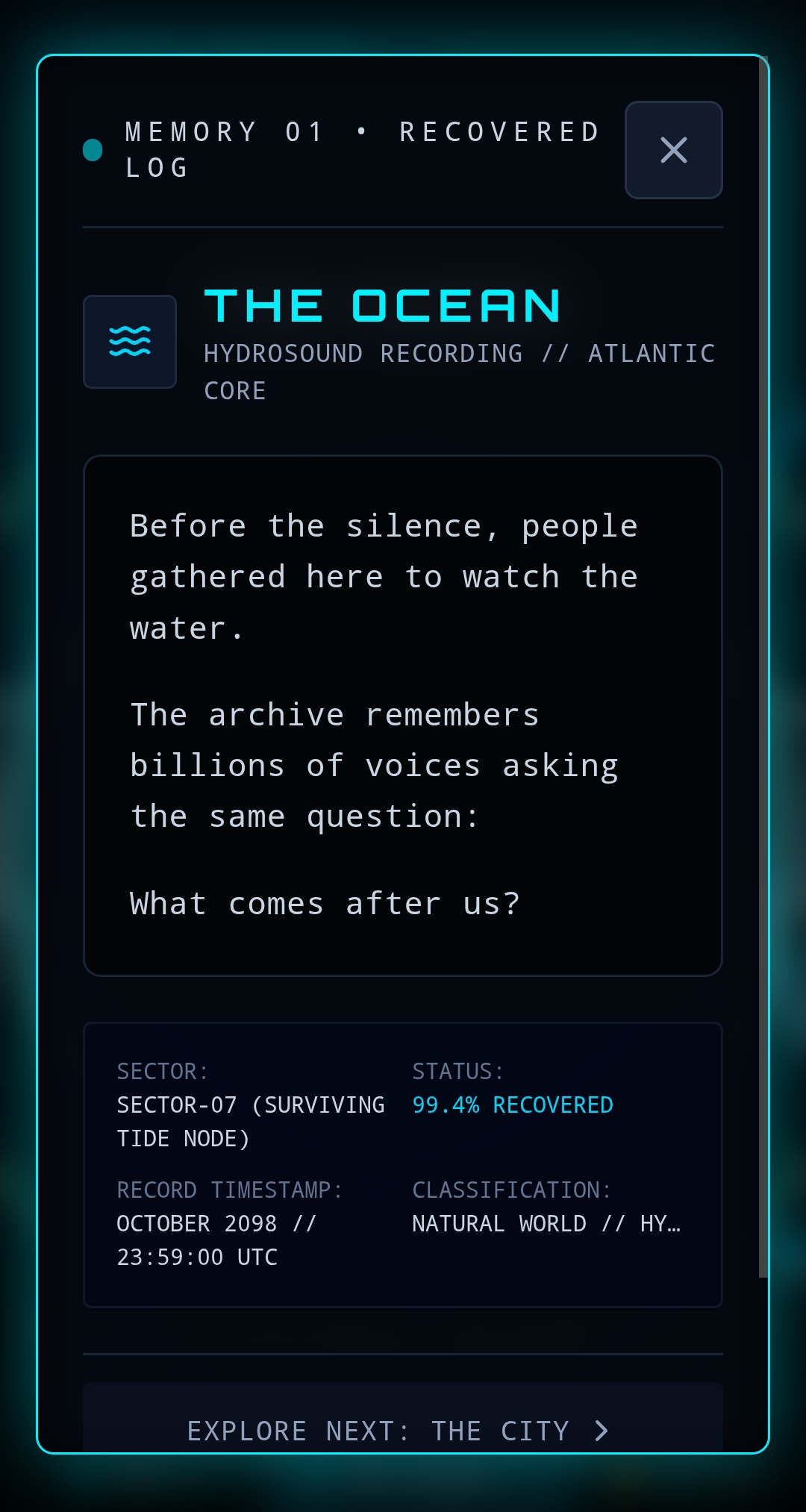
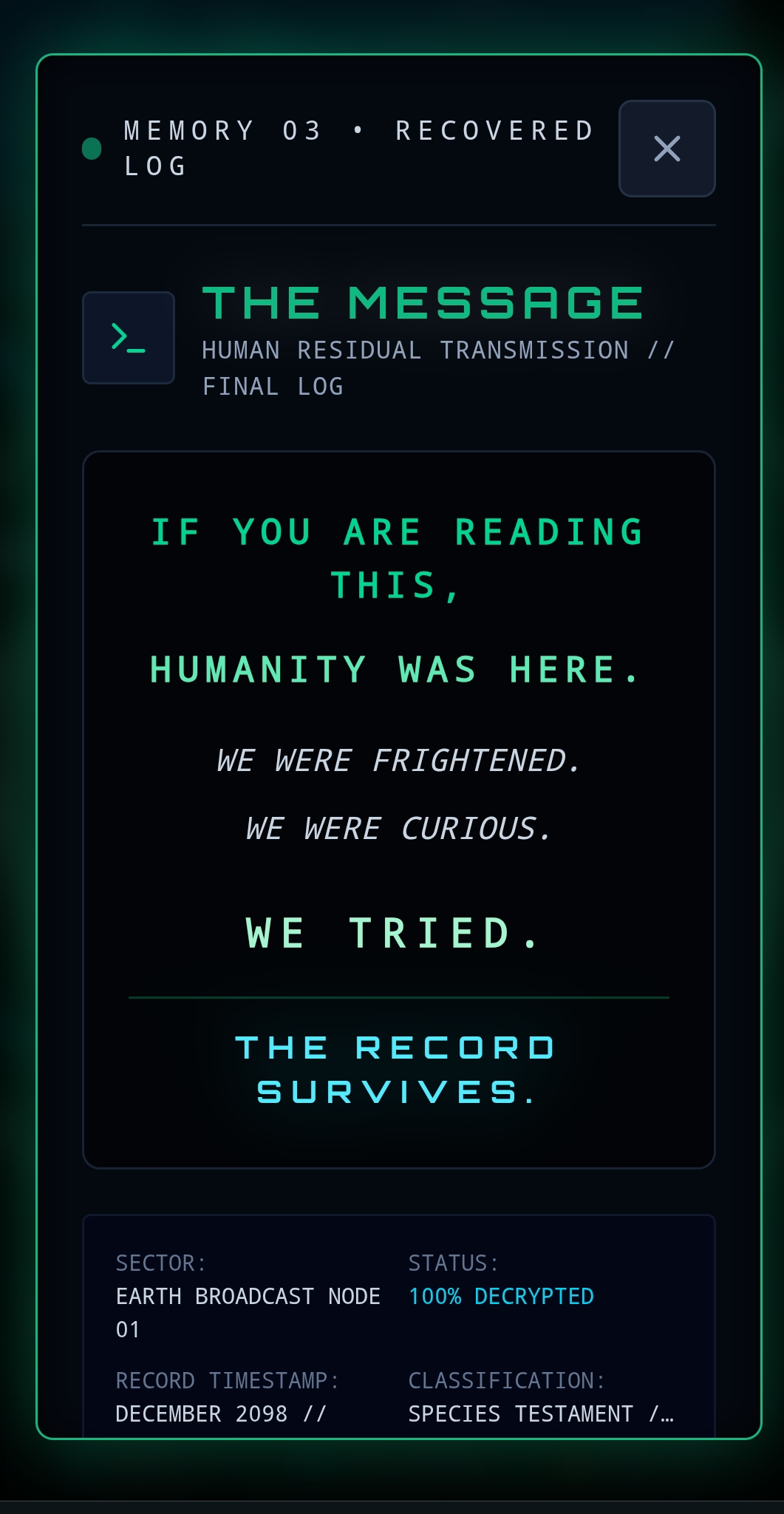
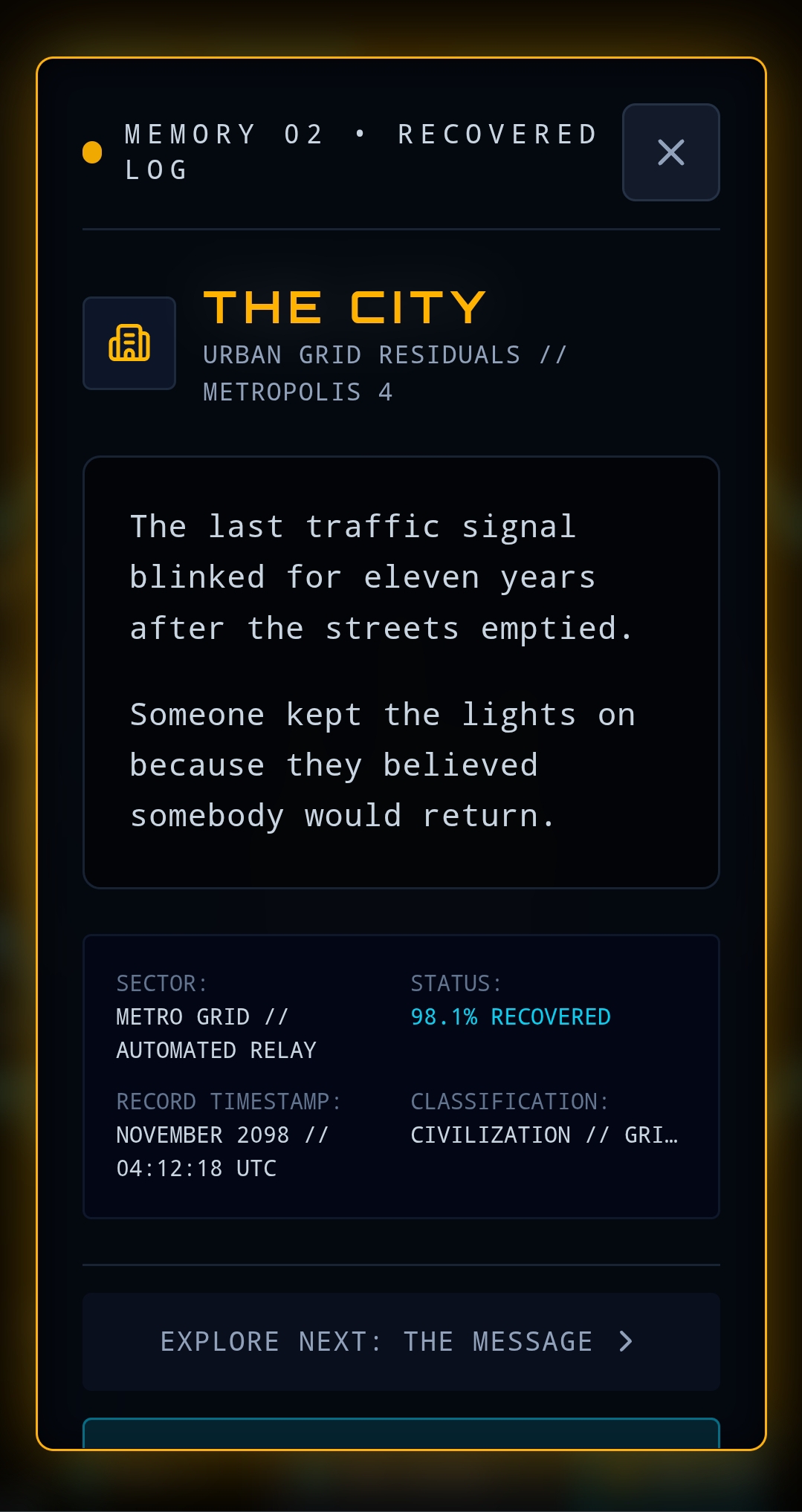
THE LAST WEBSITE ON EARTH places the user inside an abandoned 3D digital sanctuary. After a cinematic introduction, the user enters the archive and can explore the environment by dragging around the scene. Three interactive relics contain the final memories: 🌊 The Ocean — memories of people gathering around the water and wondering what comes next. 🏙️ The City — the story of a final traffic signal continuing to blink after the streets became empty. 💬 The Message — a final message from humanity to whoever eventually discovers the archive. Each relic responds to interaction with visual and audio feedback, while the camera transitions toward the selected memory and reveals its story through a glass-like interface. The experience is deliberately atmospheric: darkness, restrained lighting, crystalline geometry, environmental debris, subtle bloom, and minimal interface elements work together to make the user feel like they have discovered something that was never meant to be found.
How we built it
The project was built as a modern web experience using React, TypeScript, Vite, and Three.js. Three.js handles the 3D environment, camera movement, lighting, materials, relics, environmental objects, and interaction. We used: Three.js for the 3D world React for the application structure TypeScript for the application code Vite for development and production builds WebGL for real-time 3D rendering OrbitControls for exploration EffectComposer + UnrealBloomPass for cinematic post-processing CSS3 for the interface, transitions, typography, and glass-style panels GitHub Pages + GitHub Actions for deployment The project is deployed as a public web experience so the archive can be explored directly in the browser.
Challenges we ran into
One of the biggest challenges was making a 3D experience work reliably as an actual website rather than just a visual experiment. We had to deal with WebGL rendering, camera movement, responsive layouts, mobile interaction, transparency, lighting, post-processing, and deployment. The deployment itself also required troubleshooting the Vite build pipeline and GitHub Pages configuration before we could get the production version running successfully. Another challenge was restraint. It was easy to add effects simply because they looked impressive. We instead tried to keep the visual language controlled so that the atmosphere and story remained more important than the technology. The final goal was not to show how many effects we could add. It was to make the user feel like they had discovered a surviving piece of the internet.
Accomplishments that we're proud of
We're proud that the project became a complete interactive experience rather than a static concept. The archive has a beginning, exploration phase, interactive discoveries, sound feedback, environmental atmosphere, and narrative payoff. We're especially proud of the three-memory structure because each relic gives the user a reason to explore rather than simply presenting information on a page. Most importantly, the experience is publicly deployed and playable directly in the browser.
What we learned
We learned that building an immersive web experience requires thinking beyond individual effects. Performance, interaction design, storytelling, camera movement, sound, typography, and visual hierarchy all need to work together. We also learned how much difference deployment and device testing can make. A project that works in development still needs to be tested as the actual production website. The biggest lesson was that interactivity is most powerful when it has meaning. Every interaction should give the user a reason to continue exploring.
What's next for THE LAST WEBSITE ON EARTH
The current archive contains three memories, but the concept could become much larger. Future versions could introduce: More surviving memories and locations A deeper environmental story revealed through exploration Dynamic sound that changes based on location and interaction More environmental events and subtle world reactions Hidden messages for users who explore beyond the obvious path A larger archive containing fragments of different parts of civilization More sophisticated mobile interaction and performance optimization A final narrative sequence that changes depending on which memories the user discovers The long-term goal would be to turn the website into a complete digital archaeological experience — something users don't simply visit, but slowly uncover.
Built With
- actions
- css3
- effectcomposer
- github
- javascript
- orbitcontrols
- page
- react
- three.js
- typescript
- unrealbloompass
- vite
- webgl

Log in or sign up for Devpost to join the conversation.