-
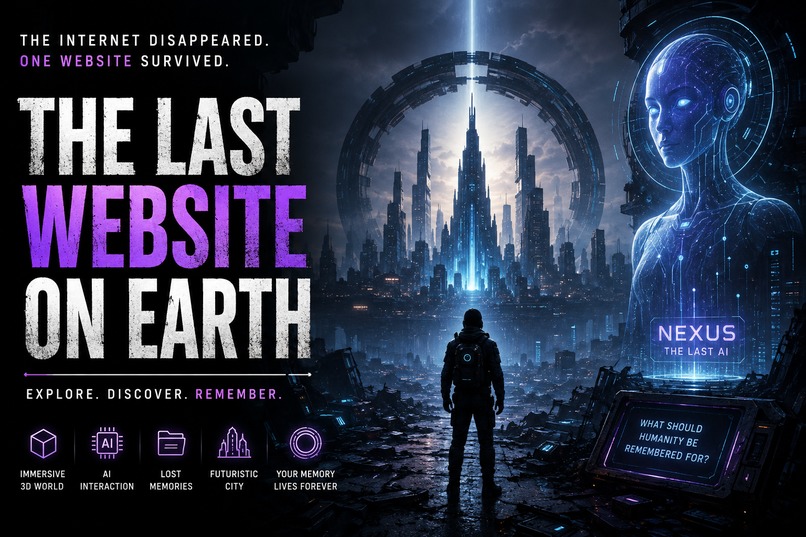
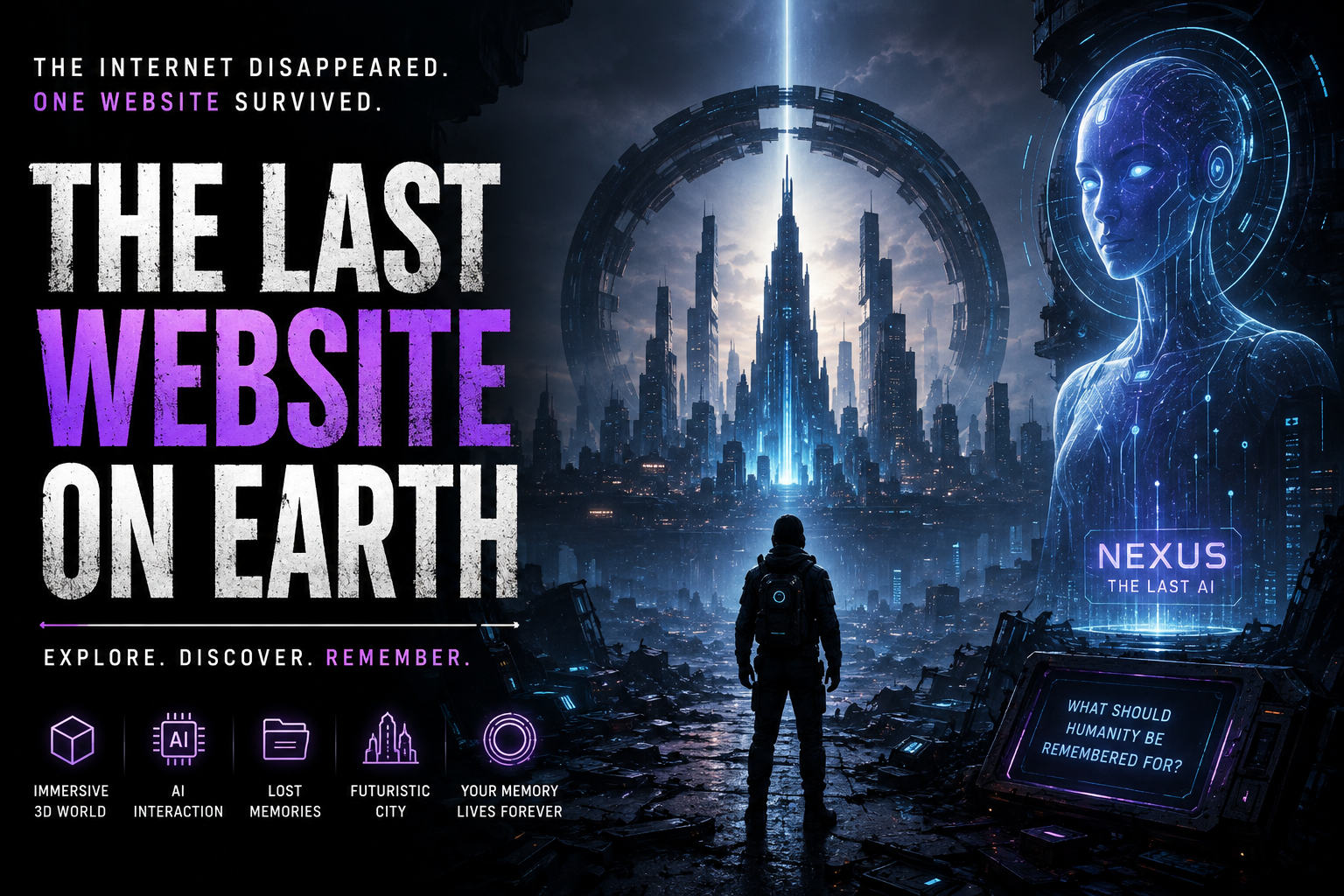
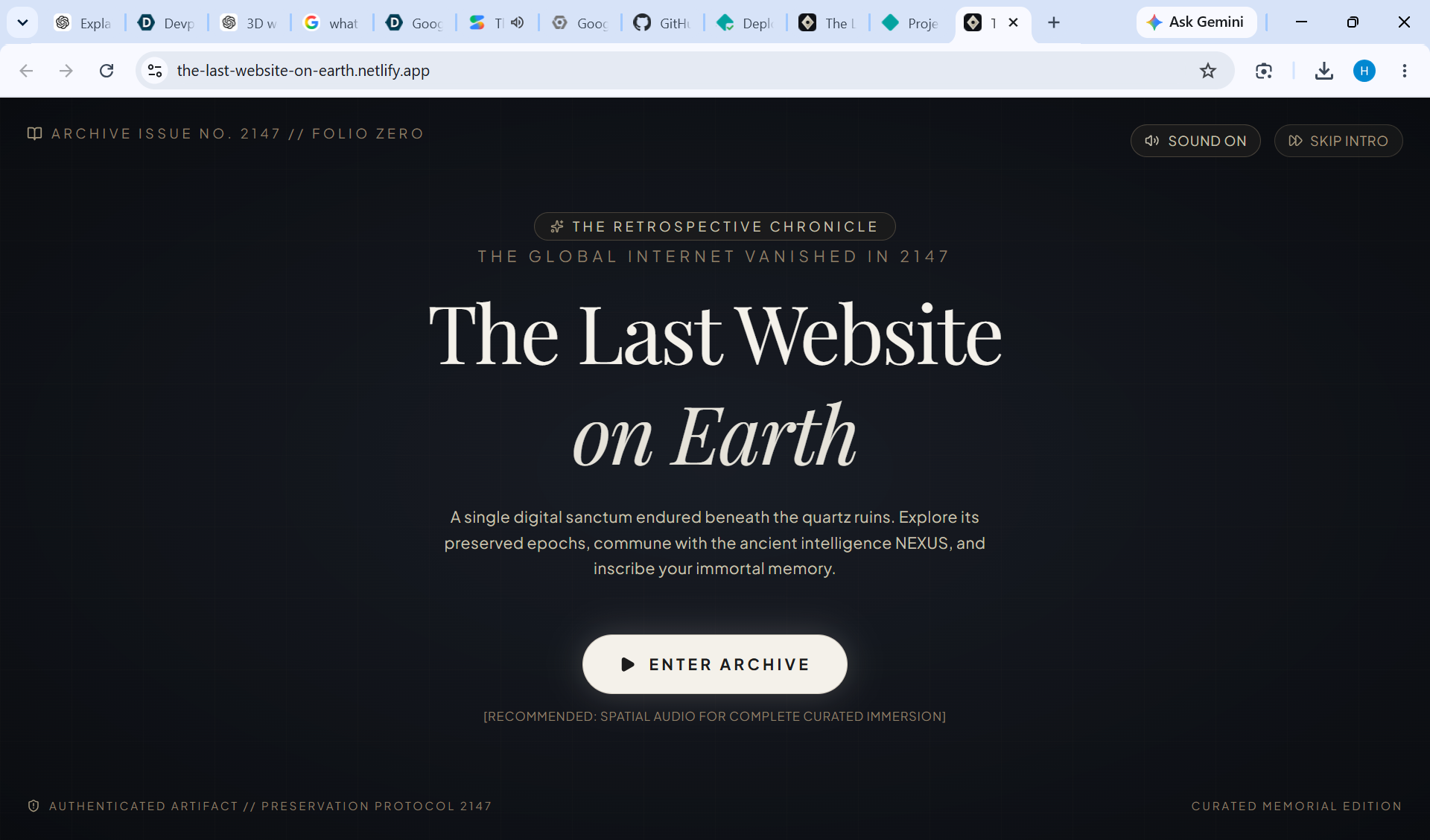
The Last Website on Earth — The final surviving connection to humanity's digital past.
-
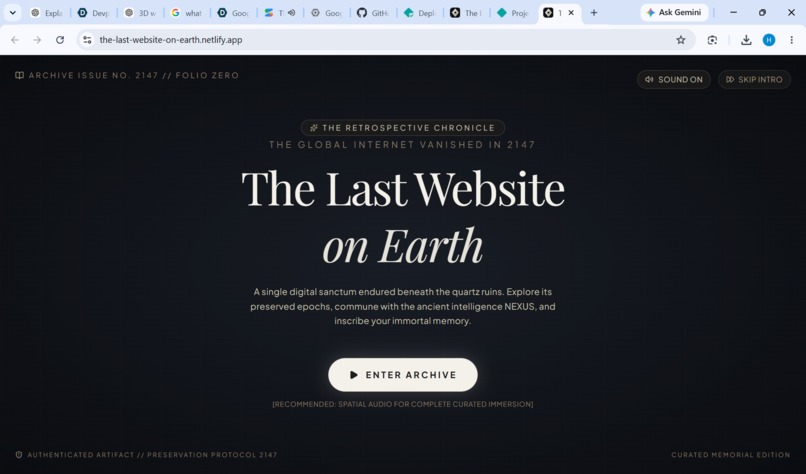
Connection established. The last surviving website is still online.
-
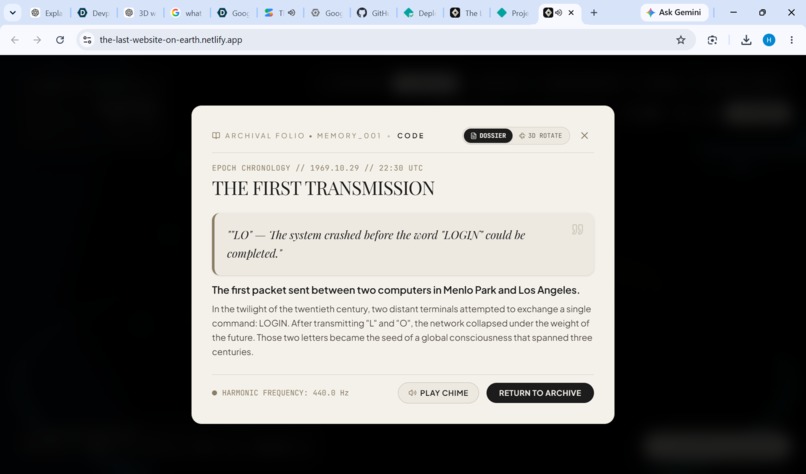
The final surviving interface—and the mystery behind why it still exists.
-
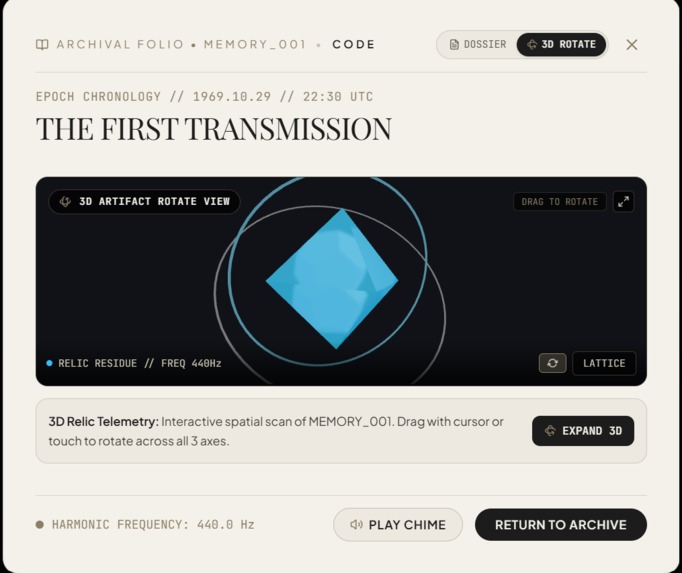
An abandoned digital world built from the fragments of a lost internet.
The Last Website on Earth
Inspiration
What happens when the internet is no longer a place filled with billions of websites, people, memories, and conversations—and only one website remains?
That question inspired us to create The Last Website on Earth, an interactive 3D experience that imagines the final surviving piece of the internet.
We wanted to explore more than just a futuristic visual. We wanted to make users feel what it would be like to explore the digital remains of humanity.
The project was inspired by ideas around digital immortality, lost memories, technological dependence, and the possibility that someday the internet could become an archaeological record of our civilization.
Instead of creating a conventional website, we decided to make the website itself part of the story.
What it does
The Last Website on Earth is an immersive 3D WebGL experience where users explore the remains of a fictional internet.
The experience transforms a traditional webpage into an interactive digital environment.
Users can:
- Explore a mysterious 3D environment.
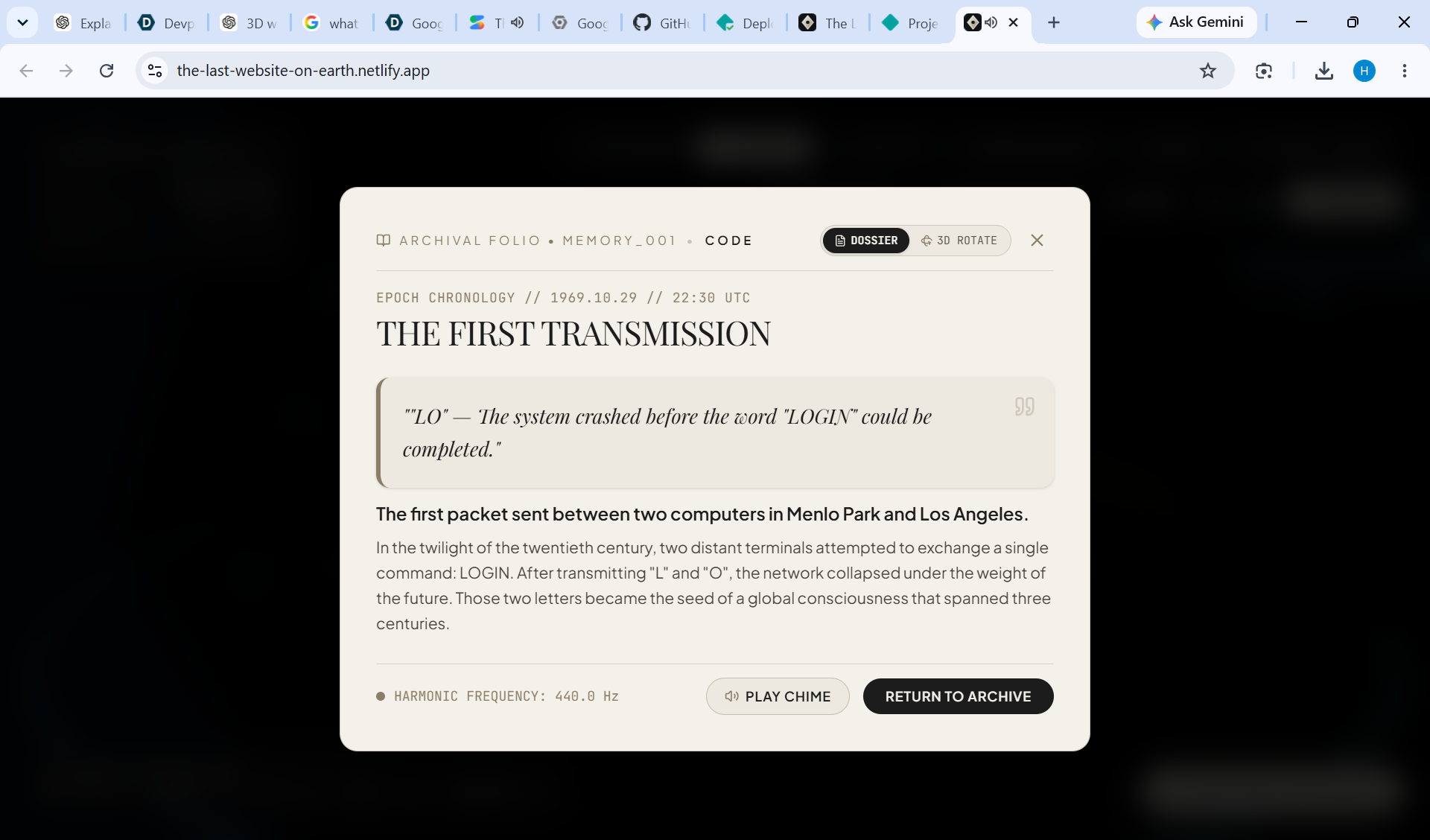
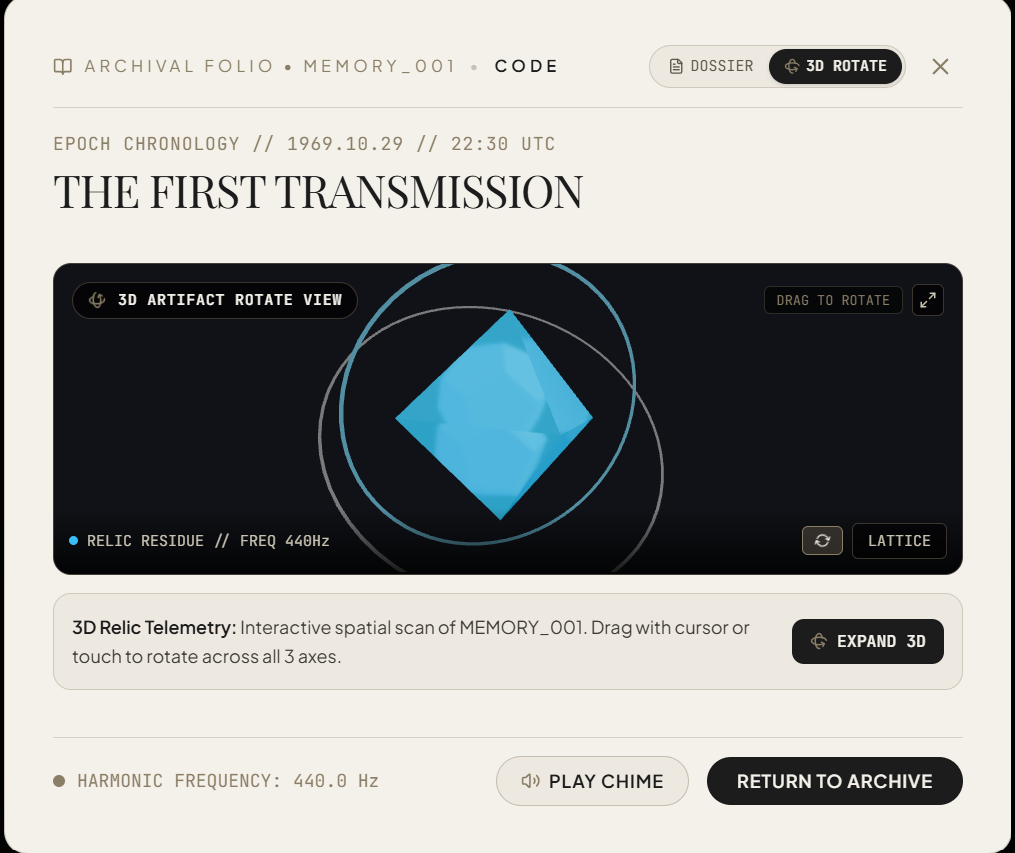
- Discover interactive objects and digital artifacts.
- Navigate through fragments of humanity's digital history.
- Interact with elements of the environment to uncover hidden information.
- Experience atmospheric lighting, animations, and visual effects.
- Discover a narrative that gradually reveals what happened to the internet.
- Explore the final surviving website as if they were discovering an abandoned digital civilization.
The goal isn't simply to tell the user a story.
The goal is to make the user discover the story themselves.
How we built it
We built the project as a browser-based interactive experience using modern web technologies.
The core experience uses 3D WebGL rendering to create an explorable environment directly inside the browser.
Technology
- HTML, CSS & JavaScript – Core web structure and interaction.
- WebGL / Three.js-style 3D rendering – Interactive 3D environment.
- JavaScript – Interaction logic, animations, camera movement, and state management.
- 3D assets and materials – Used to create the abandoned digital-world aesthetic.
- Post-processing and lighting effects – Used to create the atmosphere and cinematic feel.
- Responsive UI – Designed to work across different screen sizes.
We focused heavily on making the experience feel like a combination of a website, digital museum, and interactive sci-fi environment rather than a traditional webpage.
Challenges we ran into
One of our biggest challenges was finding the balance between visual complexity and browser performance.
A highly detailed 3D environment can quickly become demanding, especially on devices with limited graphics capabilities. We therefore had to think carefully about assets, lighting, animations, rendering, and interactions.
Another challenge was designing an experience where users understand what they are supposed to do without being given a conventional list of instructions.
We wanted exploration to feel natural.
We also faced the challenge of turning an abstract concept—the last surviving website—into something users could actually experience.
Rather than explaining the concept entirely through text, we used the environment itself as part of the storytelling.
Accomplishments that we're proud of
We're especially proud that we transformed the idea of a website into an interactive 3D experience.
Instead of building another dashboard, landing page, or productivity application, we created something designed around emotion, curiosity, and exploration.
We're proud of:
- Creating an immersive 3D web environment.
- Making the experience interactive rather than purely visual.
- Building a narrative around digital memory and humanity.
- Combining technology and storytelling in a single browser experience.
- Creating an atmosphere that makes users curious about what happened.
- Designing the project so that the environment itself contributes to the story.
Most importantly, we're proud that The Last Website on Earth feels like a place rather than just a webpage.
What we learned
This project taught us that building an immersive web experience requires much more than making something visually impressive.
We learned how important performance optimization, interaction design, visual hierarchy, storytelling, and user experience are when creating interactive 3D applications.
We also learned that technology can be used not only to solve practical problems, but also to create experiences that make people think and feel.
The biggest lesson was that a strong technical project becomes much more memorable when the technology serves a meaningful idea.
What's next for The Last Website on Earth
This is only the beginning.
We want to expand The Last Website on Earth into a much larger interactive digital world.
Future versions could include:
- A much larger explorable 3D environment.
- More fragments of humanity's digital history.
- Hidden locations, puzzles, and secrets.
- An AI character that exists inside the final website.
- Dynamic AI-generated memories and stories.
- Multiple abandoned digital locations around the world.
- A more immersive adaptive soundscape.
- Better mobile and low-end device support.
- Multiplayer exploration.
- A deeper branching narrative where the user's choices influence what they discover.
- A fictional archive containing the final surviving pieces of the internet.
Ultimately, we want The Last Website on Earth to become more than a hackathon project.
We want it to feel like a digital time capsule—a place where users can explore the remnants of a civilization that once lived online.
If the entire internet disappeared tomorrow, what would we want the last website to remember about us?
Built With
- 3d
- ai
- artificial
- creative
- css
- development
- drei
- fiber
- gemini
- generative
- html
- intelligence
- interactive
- javascript
- react
- studio
- three
- three.js
- typescript
- vite
- web
- webgl


Log in or sign up for Devpost to join the conversation.