-
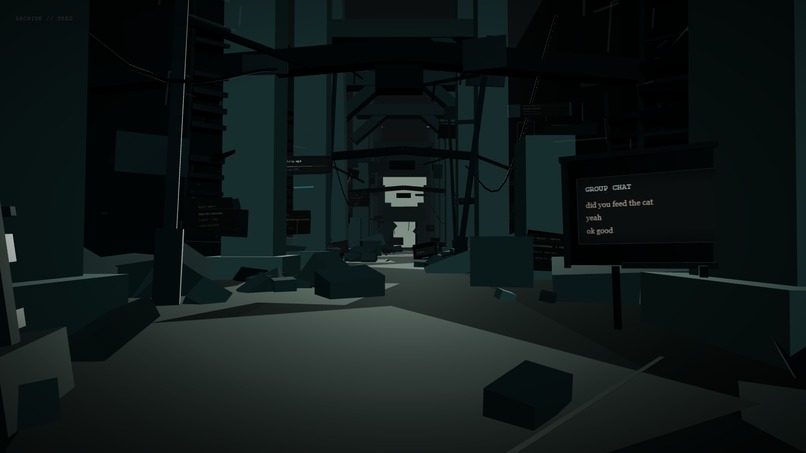
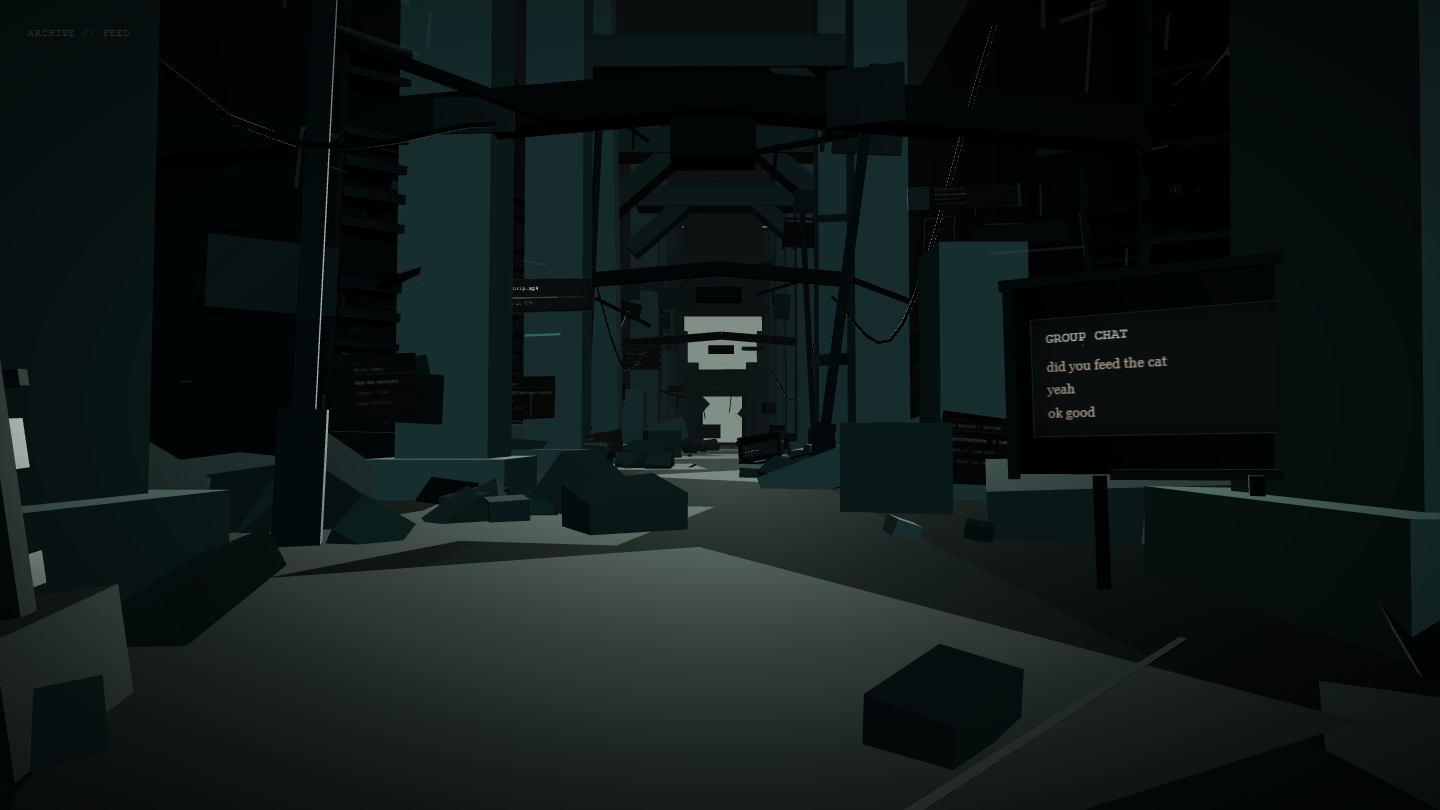
The social feed survived its users — endless posts fading into an abandoned network.
-
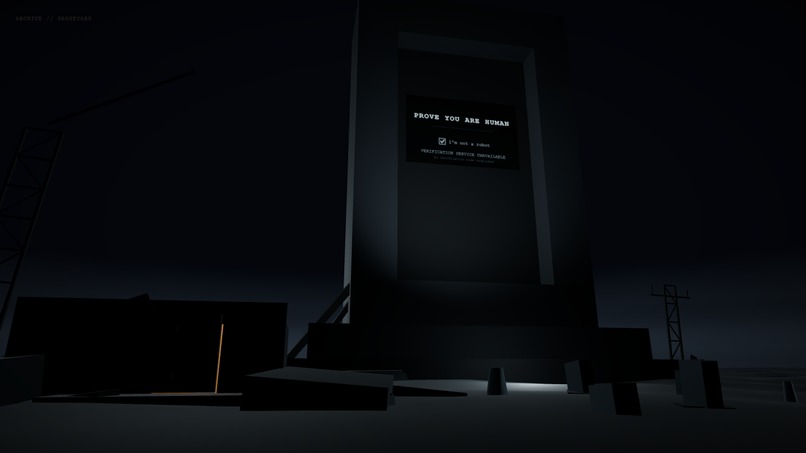
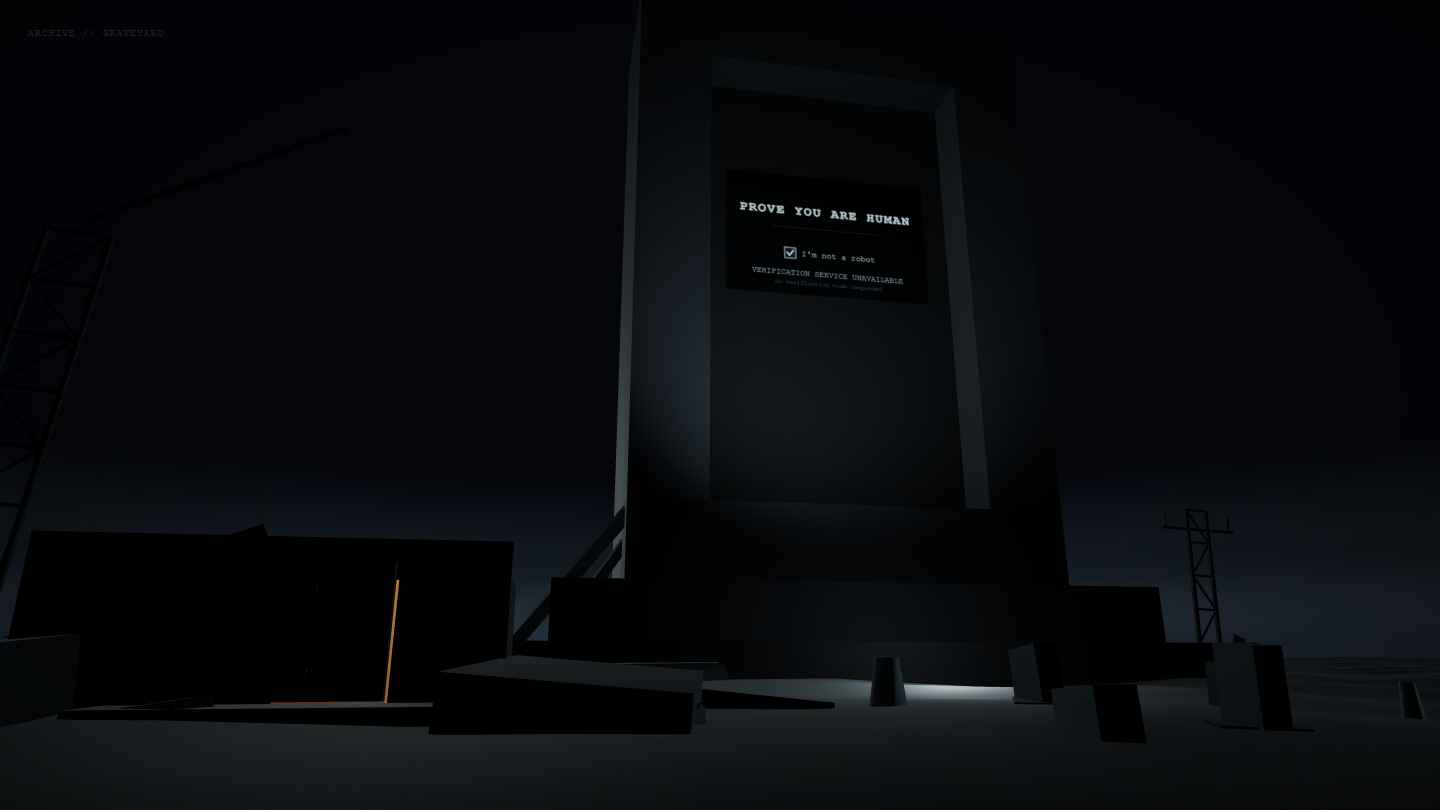
The machine is still asking for a human. Verification is no longer available.
-
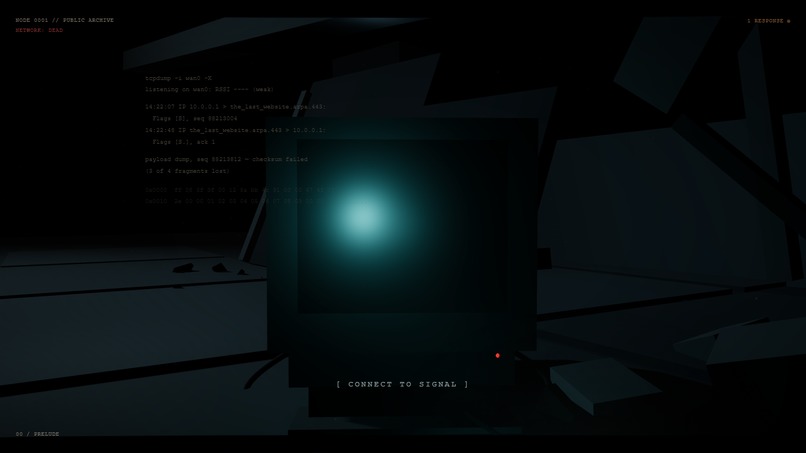
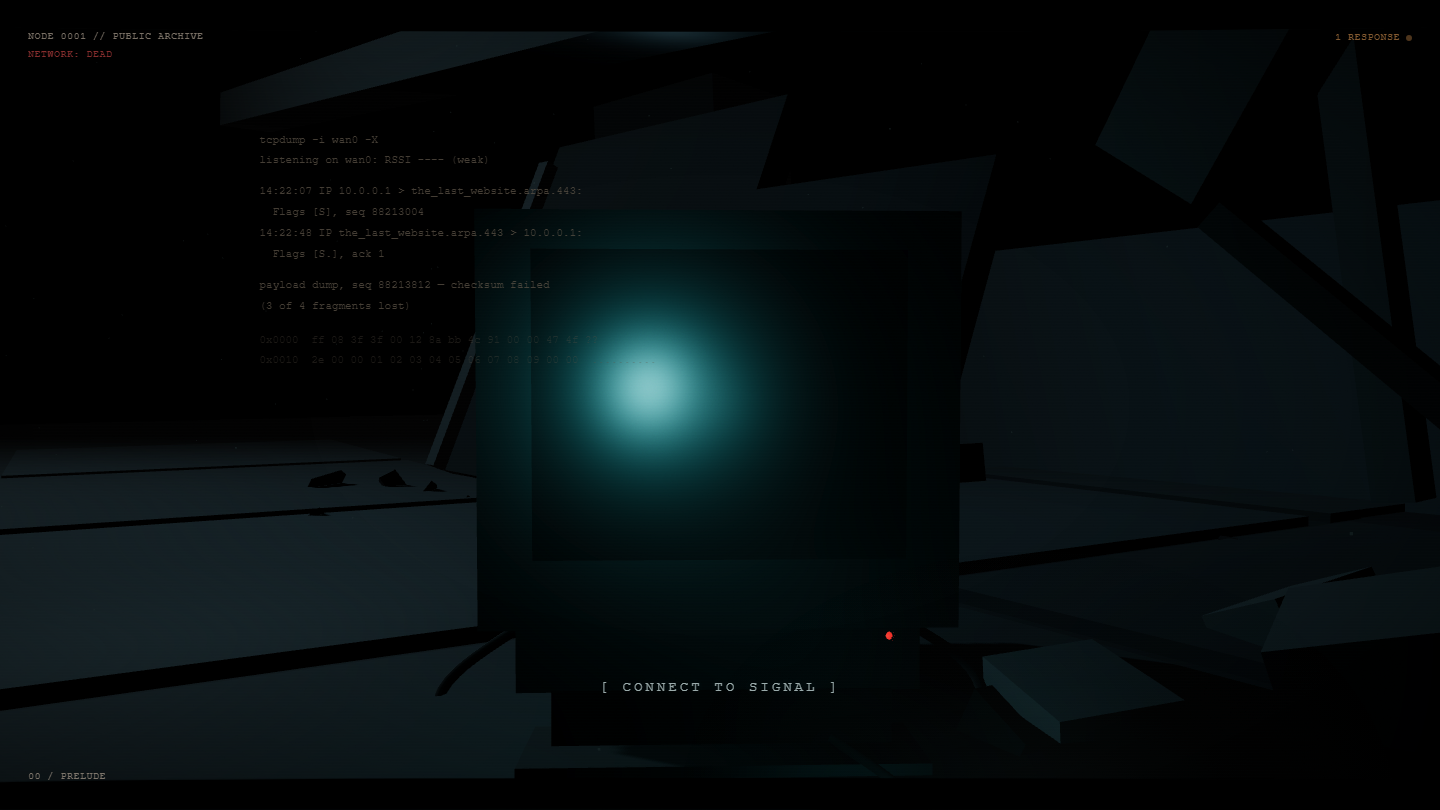
A dying terminal becomes the gateway into the final surviving archive.
-
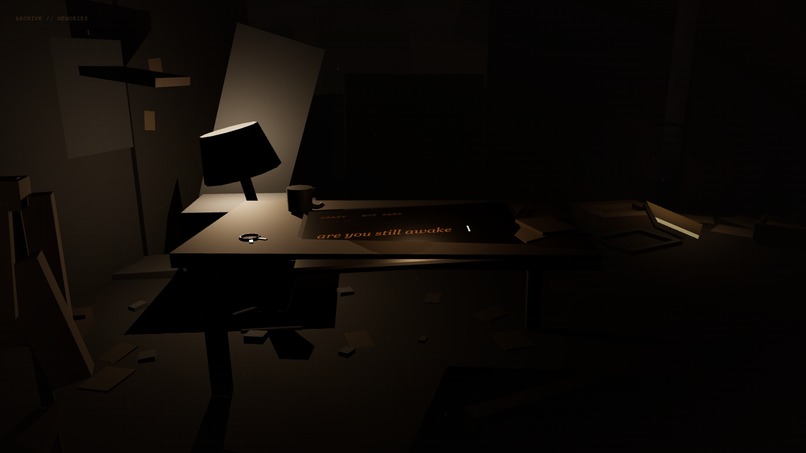
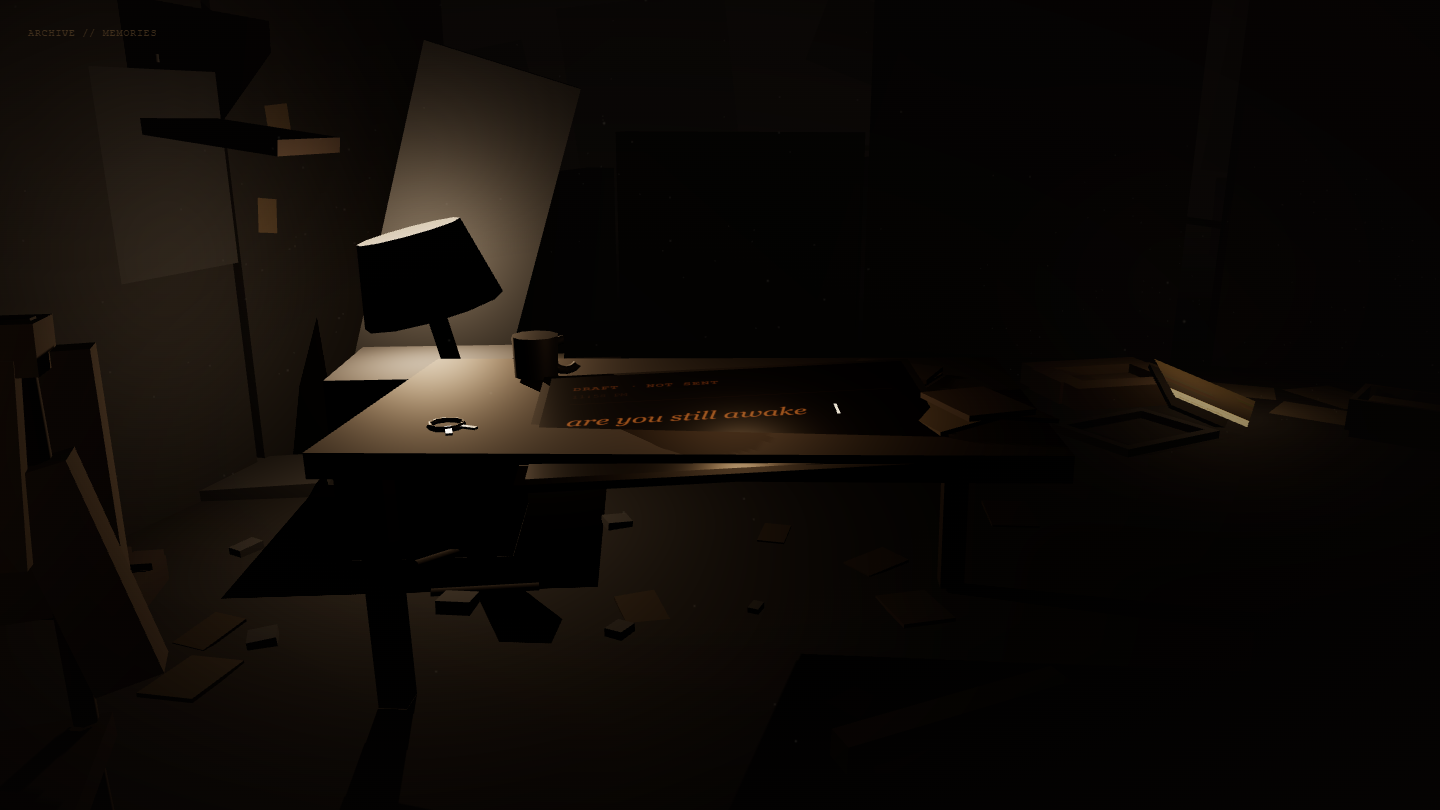
Beyond the ruins of the web, ordinary human memories are still waiting in the dark.
Inspiration
What happens to the internet after there is nobody left to use it?
The Last Website began with that question.
Instead of imagining the end of the web as a spectacular technological collapse, we wanted something quieter: one forgotten server still running, continuing to serve a page long after the rest of the internet — and the people who created it — are gone.
The experience gradually shifts from broken interfaces and dead platforms toward something much more human.
The internet didn't preserve history. It preserved people.
That became the idea behind the entire project.
What it does
The Last Website is a cinematic, interactive 3D web experience told across five connected scenes:
Prelude → Feed → Graveyard → Memories → Last Message
The visitor wakes in darkness beside an old CRT terminal and enters what remains of the internet.
They move through the ruins of an endless social feed, descend into a digital graveyard filled with monuments to dead websites and platforms, encounter a CAPTCHA still desperately asking someone to PROVE YOU ARE HUMAN, and eventually discover an archive containing fragments of ordinary lives.
A voicemail waiting to be heard.
A photograph somebody once kept.
Small traces of people who expected there would always be a tomorrow.
There are no menus or traditional levels. Scrolling becomes movement, and the entire website behaves like one continuous journey whose emotional progression is:
Uncertainty → Recognition → Desolation → Intimacy → Absence
How we built it
The project is built with React, Vite, Three.js and React Three Fiber, with Drei providing supporting Three.js utilities and GSAP helping orchestrate cinematic transitions and timing.
Each major section is implemented as its own authored 3D scene with independent camera behavior, lighting, fog, geometry and interaction logic.
Rather than treating the scenes like separate pages, we built transitions that visually carry the visitor from one environment into the next. Camera movement, environmental lighting and atmospheric effects change alongside the story.
The world combines procedural geometry, custom scene construction and Blender-created assets. Visual hierarchy, silhouettes, depth, fog and lighting were deliberately used as storytelling tools rather than decoration.
The experience supports mouse-wheel navigation and touch input so the same narrative progression works on both desktop and mobile devices.
Challenges we ran into
The hardest problem was not getting Three.js to render.
It was making a 3D website communicate instantly.
A scene can contain plenty of technically impressive geometry and still fail if the visitor cannot understand what they are looking at within a second. We repeatedly rebuilt compositions around focal hierarchy, silhouette readability, depth and lighting until important storytelling objects could explain themselves without needing text.
Transitions were another major challenge. Each scene has its own camera and atmosphere, but switching between them could not feel like loading another page. We had to carefully coordinate camera authority, fog, lighting and timing so the experience remained continuous.
Mobile interaction also required reworking the progression system so touch gestures followed exactly the same narrative gates as desktop scrolling.
Finally, performance and atmosphere constantly competed with each other. Dense grave markers, debris, lighting, fog and environmental details had to create scale without overwhelming the browser.
Accomplishments that we're proud of
We're especially proud that the final experience feels like one journey rather than five separate 3D demos.
The CAPTCHA graveyard became one of our favorite moments: a machine built to distinguish humans from bots continuing its task after there are apparently no humans left to verify.
We're also proud of the shift in scale throughout the experience. The project begins with the enormous abstraction of the death of the internet, but gradually becomes smaller and more personal until what matters is no longer infrastructure at all — it is the people who once used it.
Every environment was designed around that emotional progression.
What we learned
This project changed how we think about visual design in interactive 3D experiences.
We learned that more detail does not automatically create a better scene. Composition matters more. Lighting can function as narrative direction. Camera movement can communicate emotion. Empty space can be more powerful than another object.
We also learned how important interaction pacing is. Because scrolling controls progression, every threshold, pause and transition affects how the story feels.
Most importantly, we learned that technology becomes much more interesting when it stops being the subject and becomes the medium for something human.
What's next
There are many directions we would love to explore further: additional memory fragments, richer environmental storytelling, more spatial audio, expanded accessibility options and deeper optimization for a wider range of devices.
But the central idea will remain the same.
The internet was made of servers, protocols and software.
What made it worth preserving was us.
Credits
Music: “Melancholic” by Monume — Pixabay

Log in or sign up for Devpost to join the conversation.