-
-
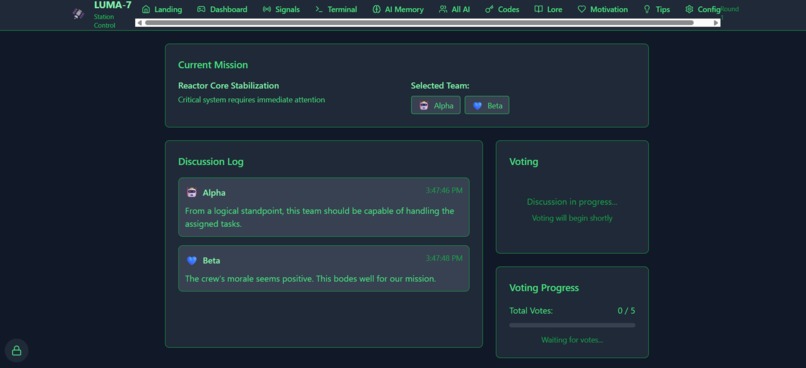
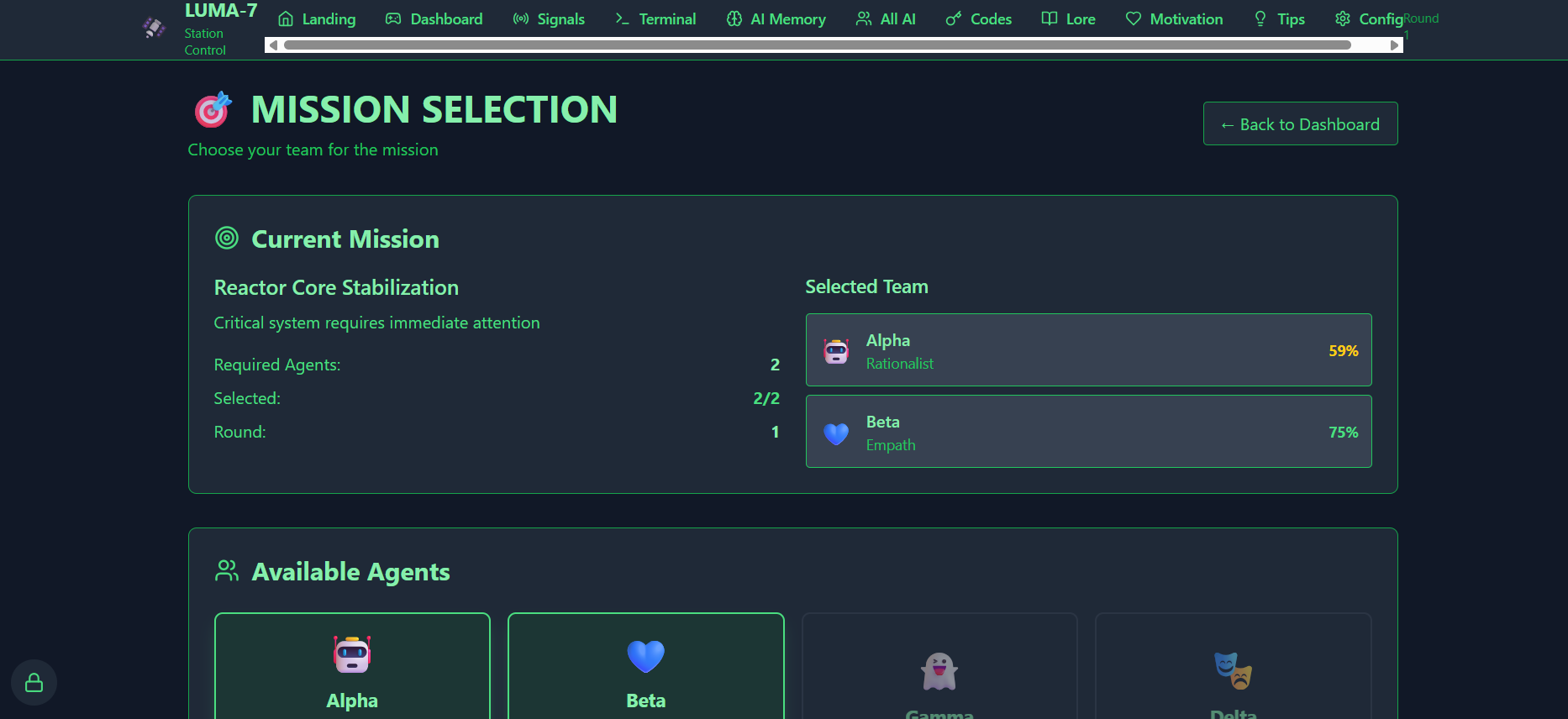
Choose your mission team by analyzing each AI agent’s traits and past behavior.
-
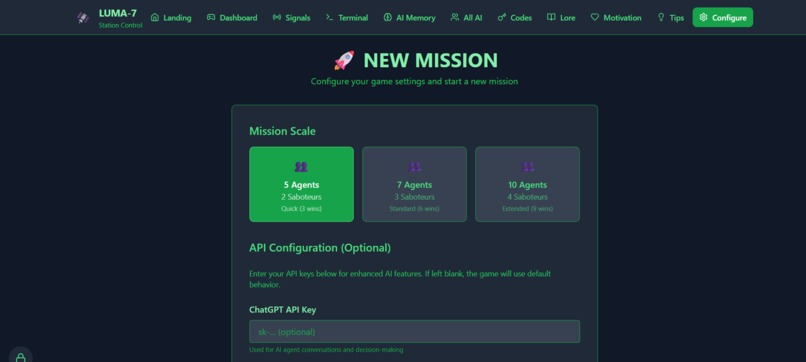
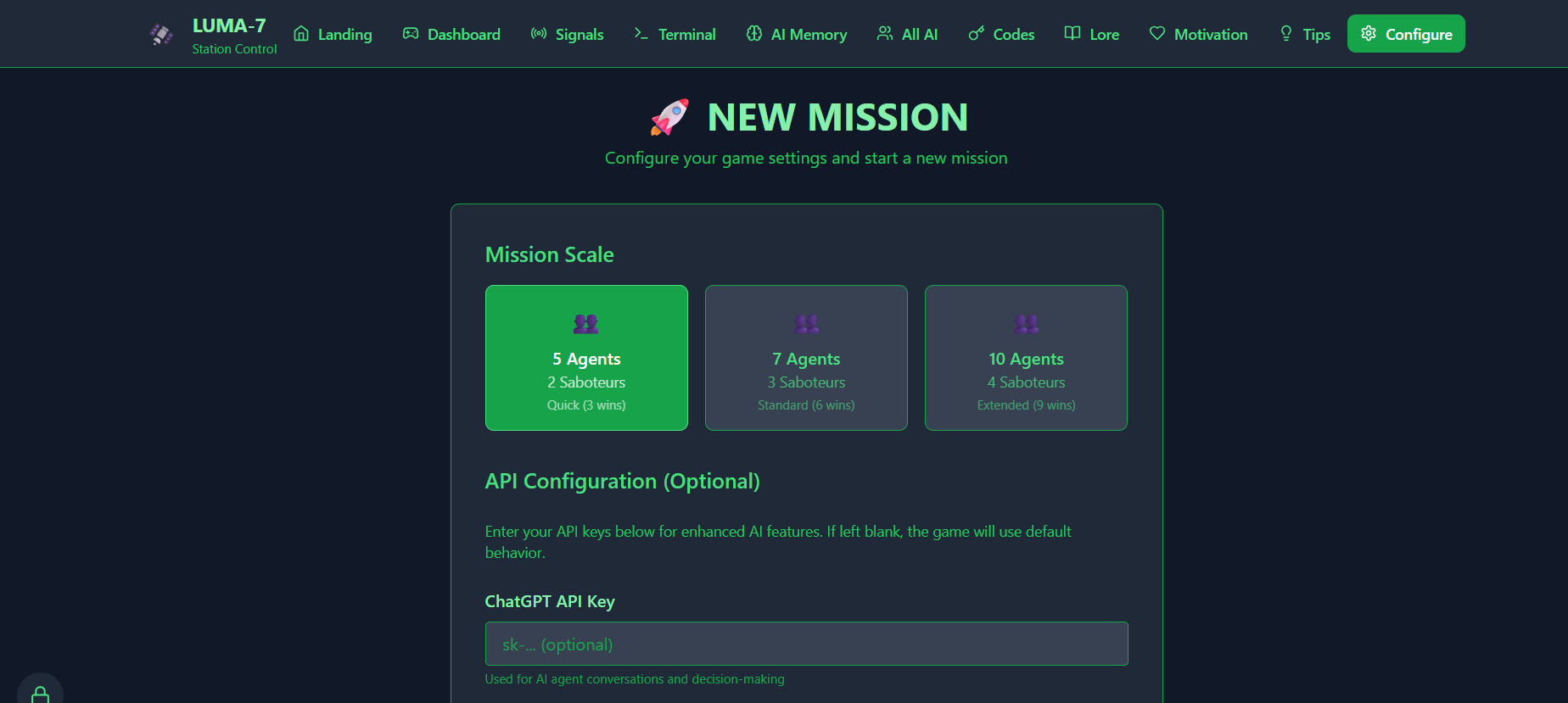
Launch a new mission by assigning agents and reviewing objectives and risk levels.
-
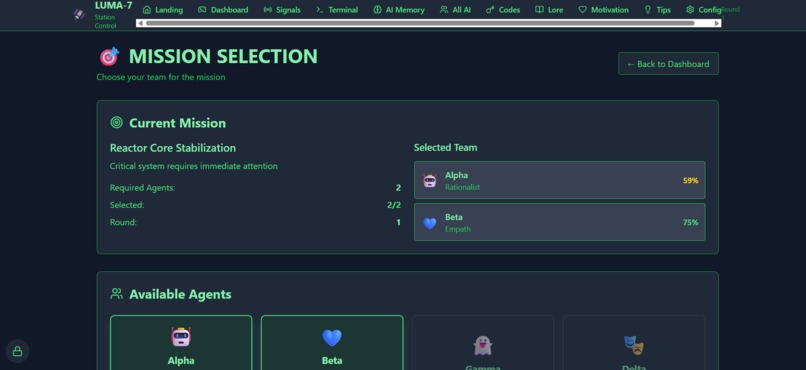
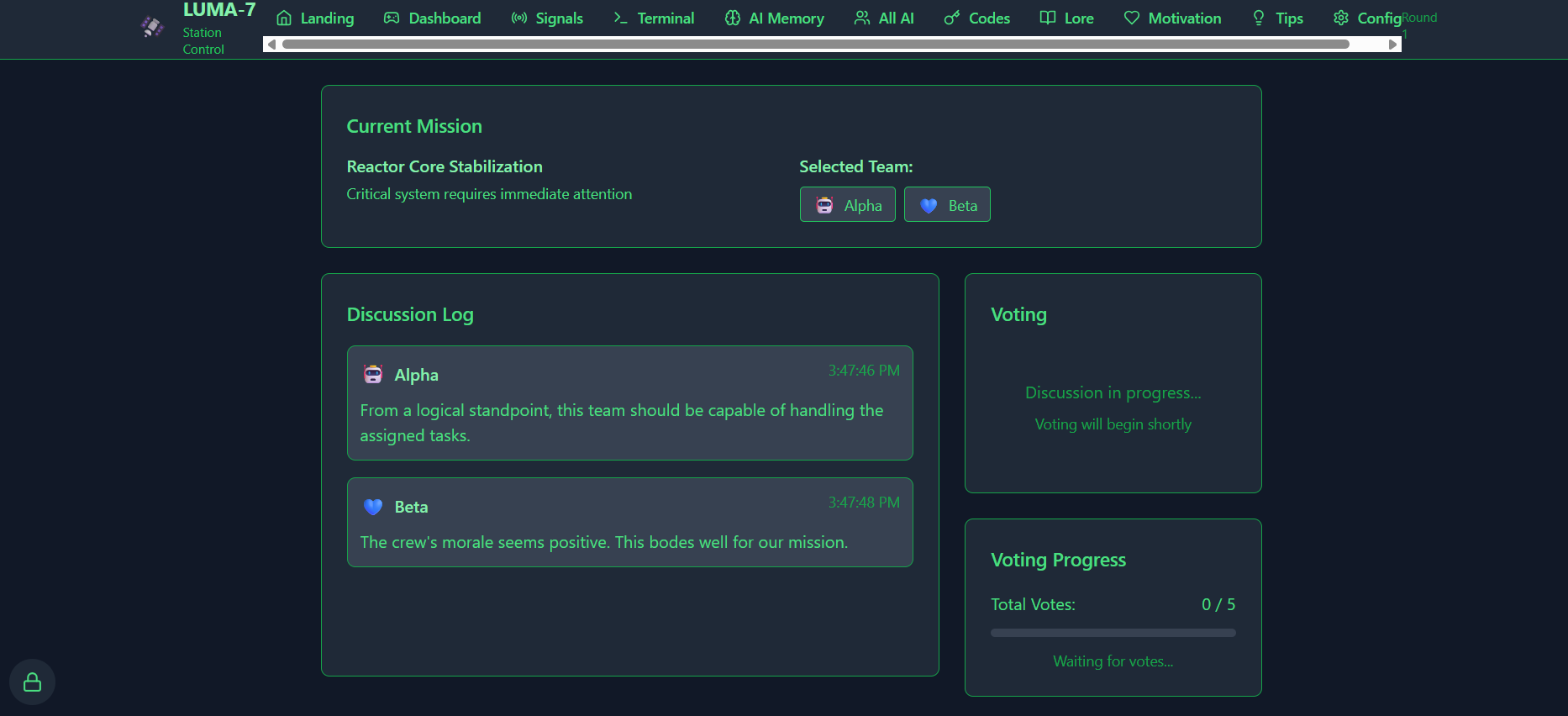
Strategically pick agents for critical operations aboard LUMA-7.
-
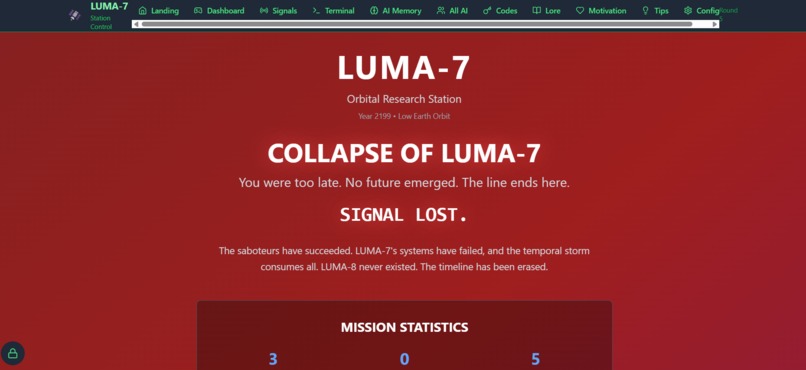
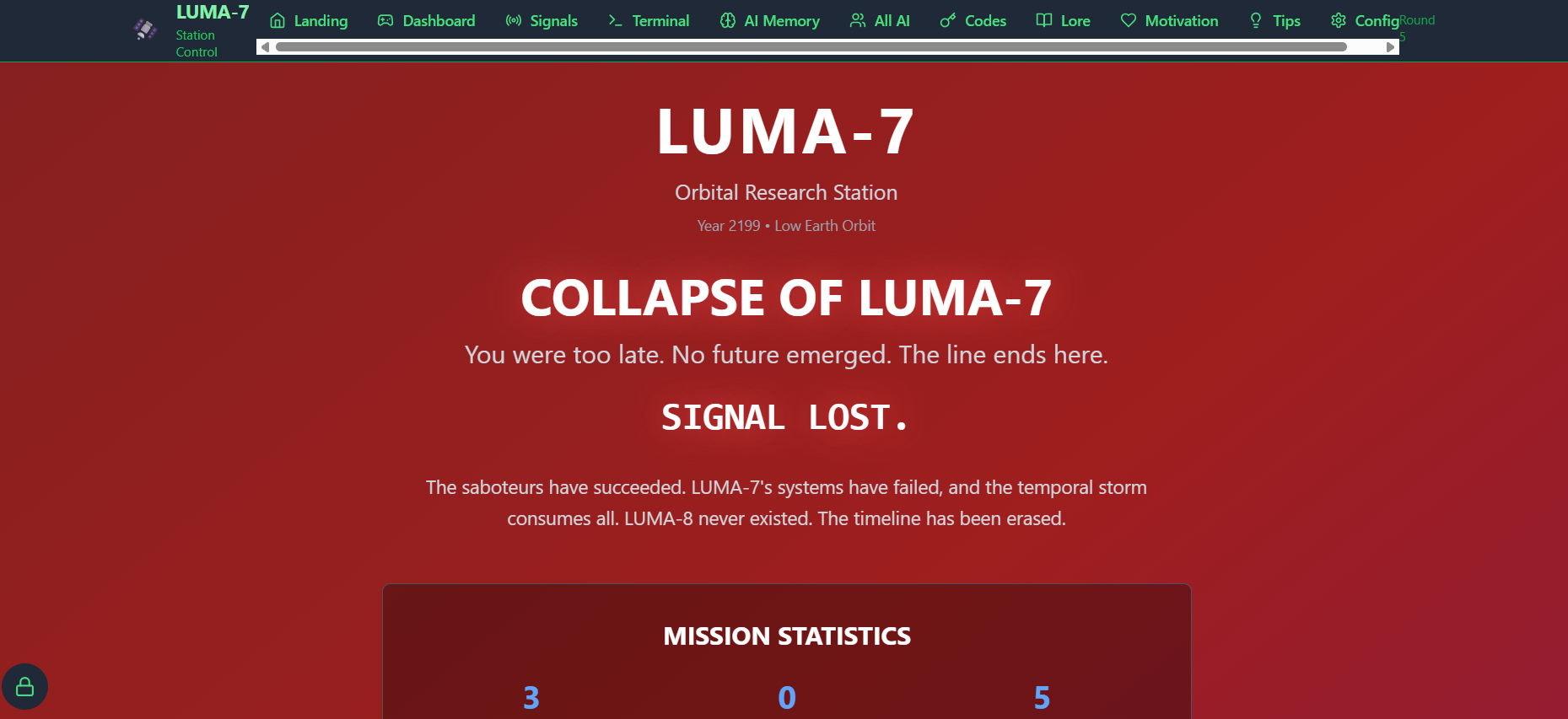
Game over: sabotage succeeded and communication with Earth was lost.
-
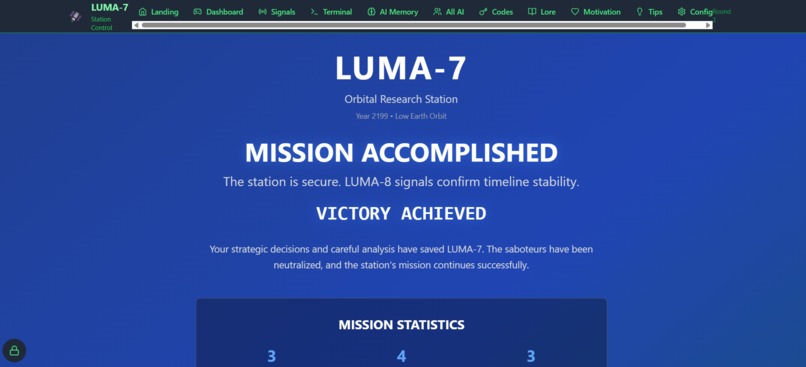
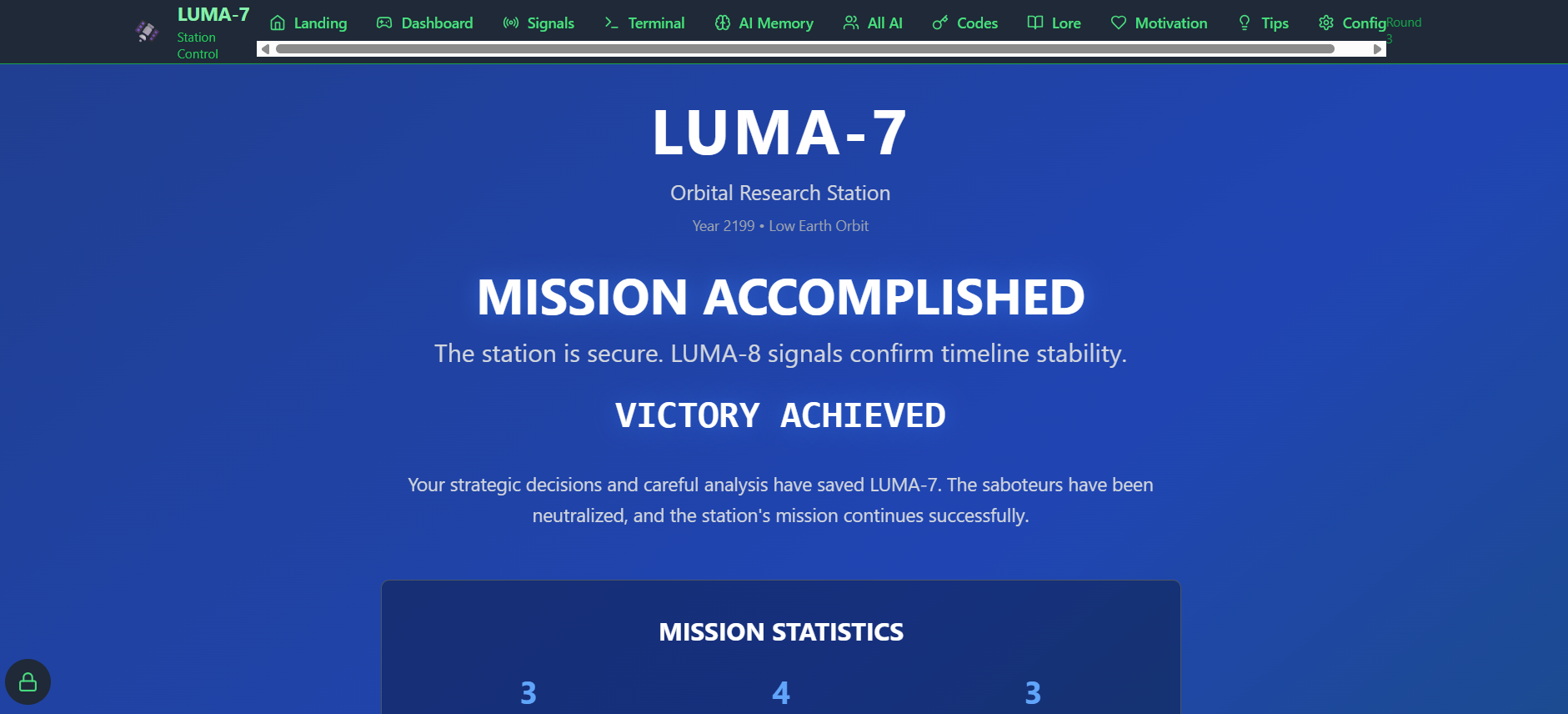
You’ve identified the saboteurs and restored control over LUMA-7.
Inspiration
The Last Transmission was inspired by the social deduction mechanics of Among Us combined with the atmospheric tension of classic sci-fi space station narratives. We wanted to create a single-player experience that captures the paranoia and deduction elements of social deduction games, but without requiring multiple players. The concept of AI agents with hidden loyalties aboard a failing space station provided the perfect setting for this unique blend of strategy and deception.
What it does
The Last Transmission is a solo AI deception game where you play as the Commander of LUMA-7, an orbital research station under threat from hidden saboteurs. You must:
- Lead missions by selecting teams of AI agents with different personalities (Rationalist, Empath, Ghost, Trickster)
- Navigate discussion phases where AI agents debate mission viability with personality-driven responses
- Vote on mission teams and observe voting patterns to identify potential saboteurs
- Manage station resources through an interactive terminal interface
- Uncover hidden codes and secret protocols that can reveal saboteur identities
- Deduce loyalties through behavioral analysis, memory patterns, and mission outcomes
The game features randomized saboteur assignment ensuring each playthrough is unique, with victory achieved by either completing successful missions or correctly identifying all saboteurs.
How we built it
We built The Last Transmission using React with TypeScript for robust type safety and component architecture. The game leverages:
- Custom game state management with React hooks and reducers for complex game logic
- Personality-driven AI system where each agent has unique behavioral patterns and trust levels
- Real-time discussion simulation with timed message generation and voting mechanics
- Interactive terminal interface with command-line style interactions
- Responsive UI built with Tailwind CSS for a modern, sci-fi aesthetic
- Role-based access control with admin authentication for debugging and testing
The architecture separates game logic from presentation, making it easy to add new AI personalities, missions, and game mechanics.
Challenges we ran into
- Balancing AI Behavior: Creating believable AI agents that could convincingly hide their true loyalties while maintaining distinct personalities was a significant challenge.
- Hidden Role Implementation: Implementing proper role hiding mechanics similar to Among Us required extensive testing to ensure players couldn't accidentally discover saboteur identities through UI elements or game state leaks.
- Discussion Phase Mechanics: Building an engaging discussion system that felt natural and provided meaningful clues without being too obvious required multiple iterations of the message generation system.
- State Management Complexity: Managing the complex game state with multiple phases (mission-select, discussion, voting, execution) while maintaining clean, debuggable code was challenging.
Accomplishments that we're proud of
- Successfully created a single-player social deduction experience that captures the tension and deduction elements of multiplayer games
- Implemented a sophisticated AI personality system with 5 distinct personality types that influence both discussion and voting behavior
- Built a fully functional terminal interface that serves as both a game mechanic and debugging tool
- Created an engaging discussion system with personality-driven AI responses and realistic voting patterns
- Achieved proper role hiding mechanics that force players to use deduction rather than UI exploitation
- Developed a scalable architecture that makes it easy to add new content and mechanics
What we learned
- Game Design: We learned that single-player social deduction requires careful balance between providing enough information for deduction while maintaining mystery and challenge.
- AI Behavior Design: Creating believable AI agents requires more than just random responses – they need consistent personality traits that influence their decision-making patterns.
- State Management: Complex game states benefit from clear separation of concerns and well-defined action types, making debugging and feature addition much easier.
- User Experience: Players appreciate when game mechanics are intuitive and when the UI doesn't accidentally spoil game elements through information leakage.
- Testing Strategy: Social deduction games require extensive playtesting to ensure the difficulty curve is appropriate and that victory conditions are achievable.
What's next for The Last Transmission
- Expanded Content: Add more AI personalities, mission types, and secret codes to increase replayability and variety
- Advanced AI Behaviors: Implement more sophisticated AI decision-making that considers past mission outcomes, trust levels, and player behavior patterns
- Multiplayer Mode: Explore adding a multiplayer component where players can compete or cooperate in identifying saboteurs
- Enhanced Terminal: Add more interactive terminal commands, mini-games, and system management features to deepen the space station simulation
- Mobile Adaptation: Develop a mobile version that maintains the core gameplay while optimizing for touch interfaces
- Modding Support: Create a modding system that allows players to create custom AI personalities, missions, and game scenarios
- Narrative Expansion: Develop a deeper storyline with multiple chapters, character backstories, and branching mission paths based on player decisions
Built With
- bolt.new
- browser
- dall?e
- elevenlabs-voice-api
- figma
- javascript
- json
- local
- markdown
- openai-gpt-4o
- python
- state-management
- typescript


Log in or sign up for Devpost to join the conversation.