-
-
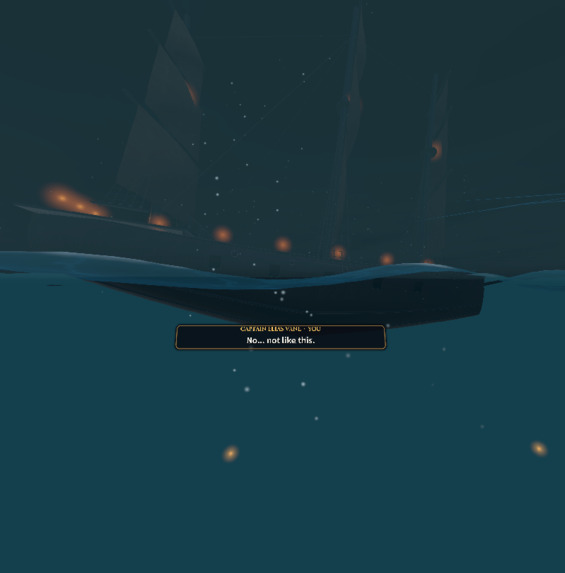
Under Water Sinking
-
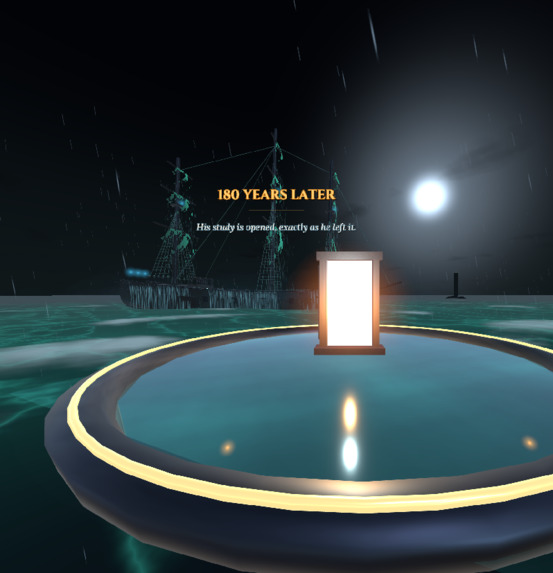
Entry
-
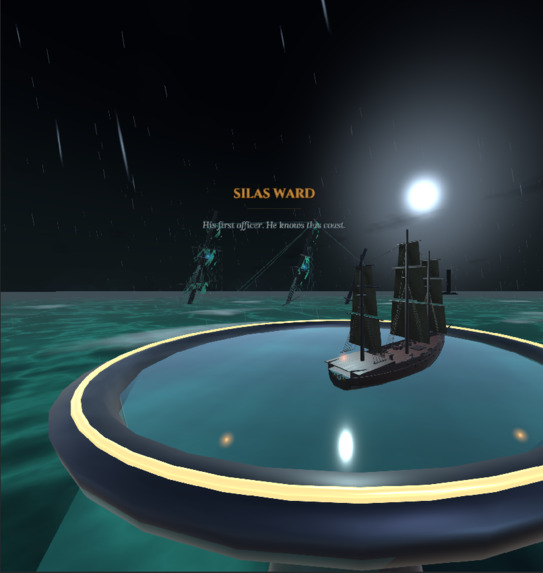
Prologue
-
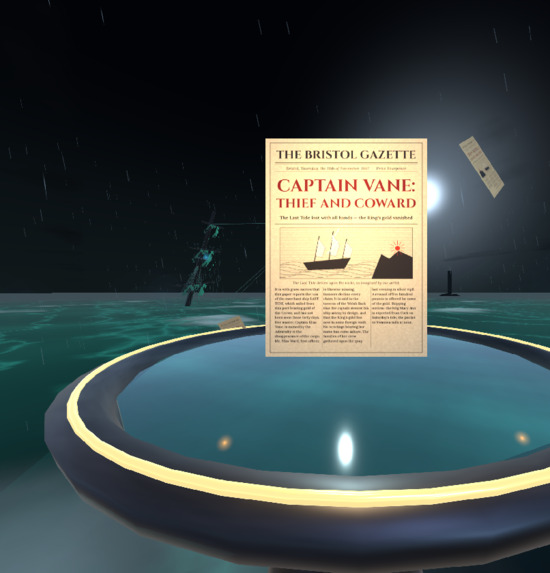
Story
-
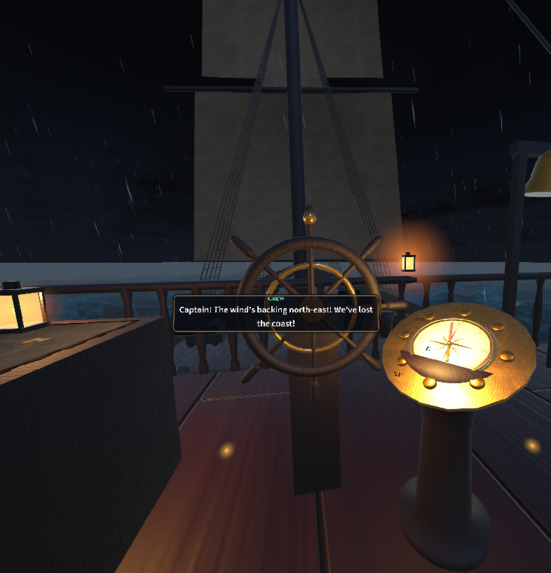
Ship Puzzle
-
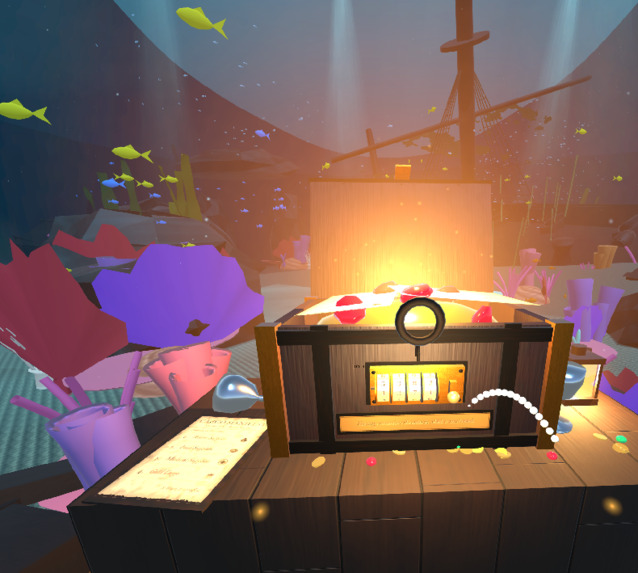
Opened Wreck
-
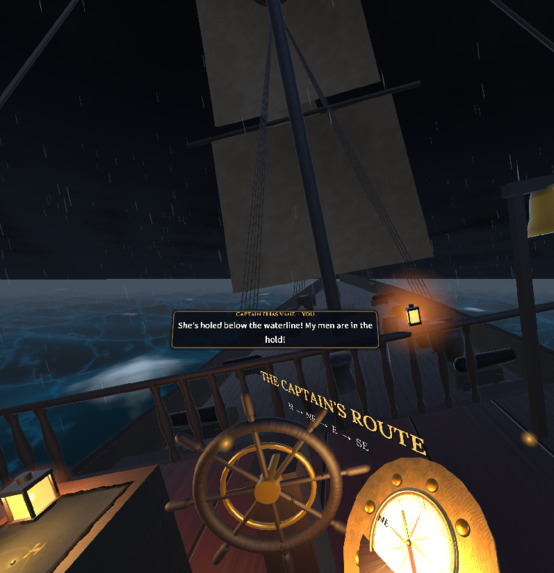
Ship Sinking
-
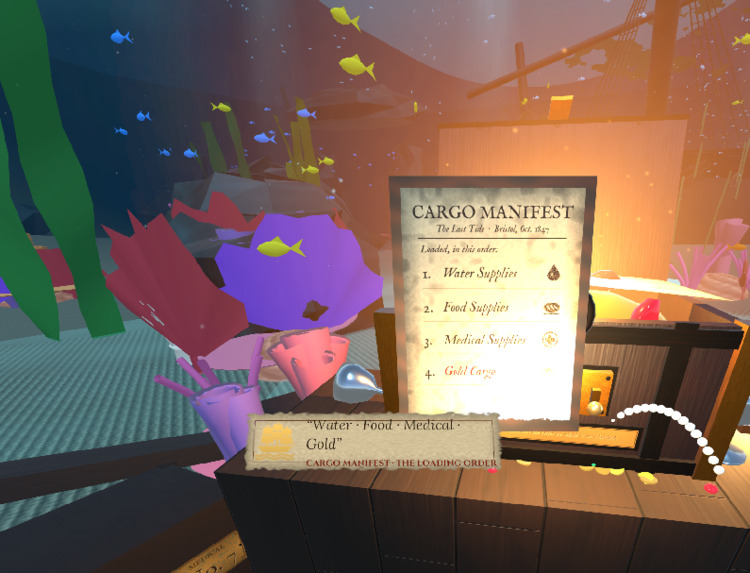
Clue
-
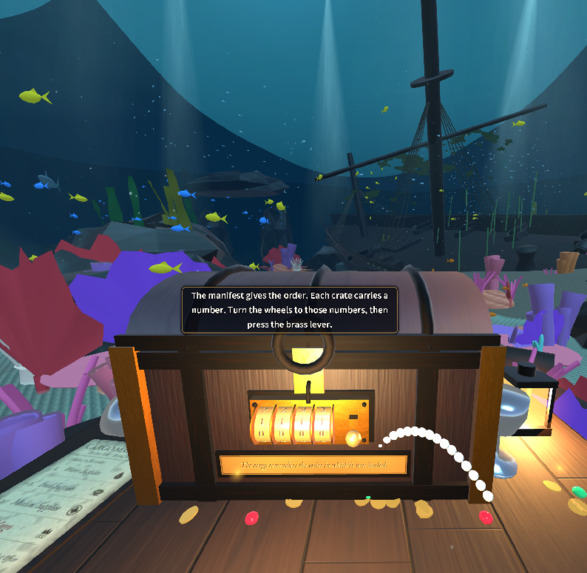
Wreck Puzzle
-
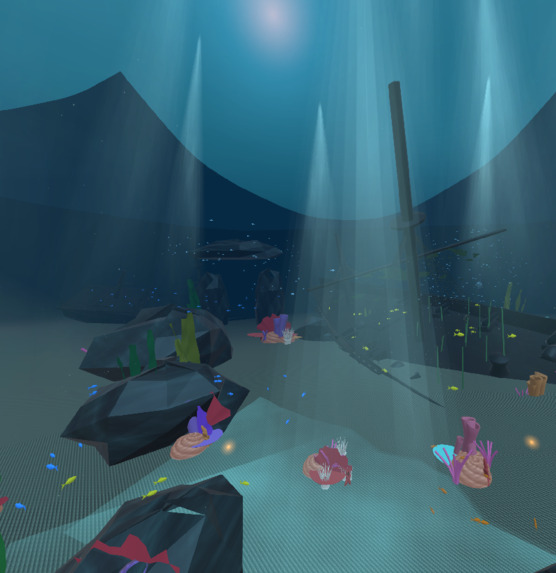
Underwater View
-
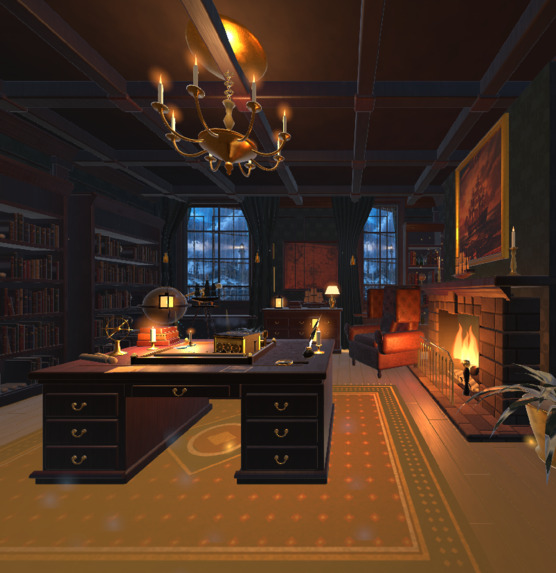
Room
-
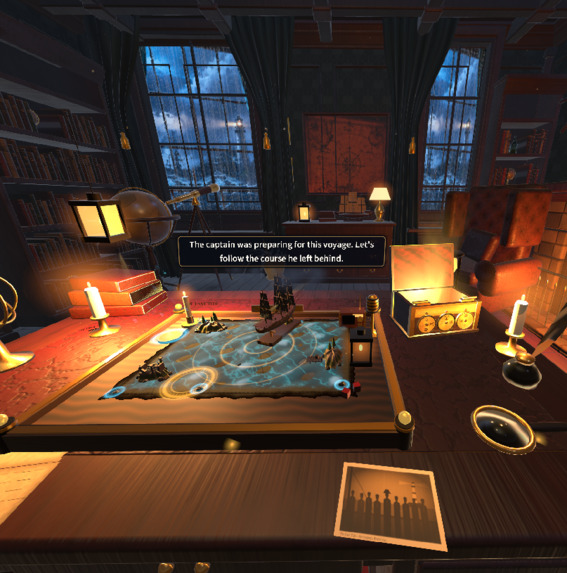
Room Puzzle
THE LAST TIDE
A Hand-Tracked VR Mystery Adventure
Inspiration
In 1847, a merchant ship named The Last Tide departed Bristol carrying the King's gold. It was never seen again.
The world believed that its captain, Elias Vane, had stolen the gold and abandoned his crew to drown. His name became associated with betrayal, and the truth disappeared beneath the waves.
We wanted to create a mystery where players would not simply read about history — they would physically explore it, interact with its evidence and uncover the truth with their own hands.
Inspired by old maritime legends, shipwreck archives and the atmosphere of discovering a sealed room untouched for more than a century, we set ourselves one question:
What if your hands could prove a dead man innocent?
That question became THE LAST TIDE.
What It Does
THE LAST TIDE is an immersive, hand-tracked VR mystery adventure designed for Meta Quest. Players investigate a forgotten maritime tragedy across three interconnected acts, using natural hand interactions to discover clues, solve puzzles and uncover the real traitor.
The experience is designed around hands-first gameplay, with controllers available as an optional alternative.
Prologue: The Memory Pool
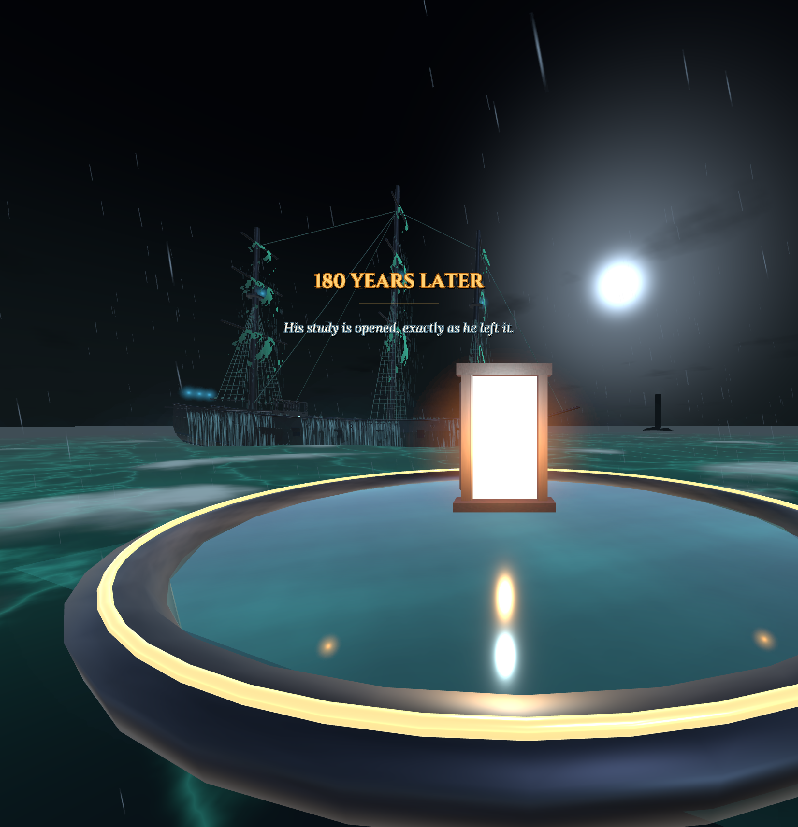
The adventure begins in a mysterious, storm-lit Memory Pool, where fragments of the past emerge from the water.
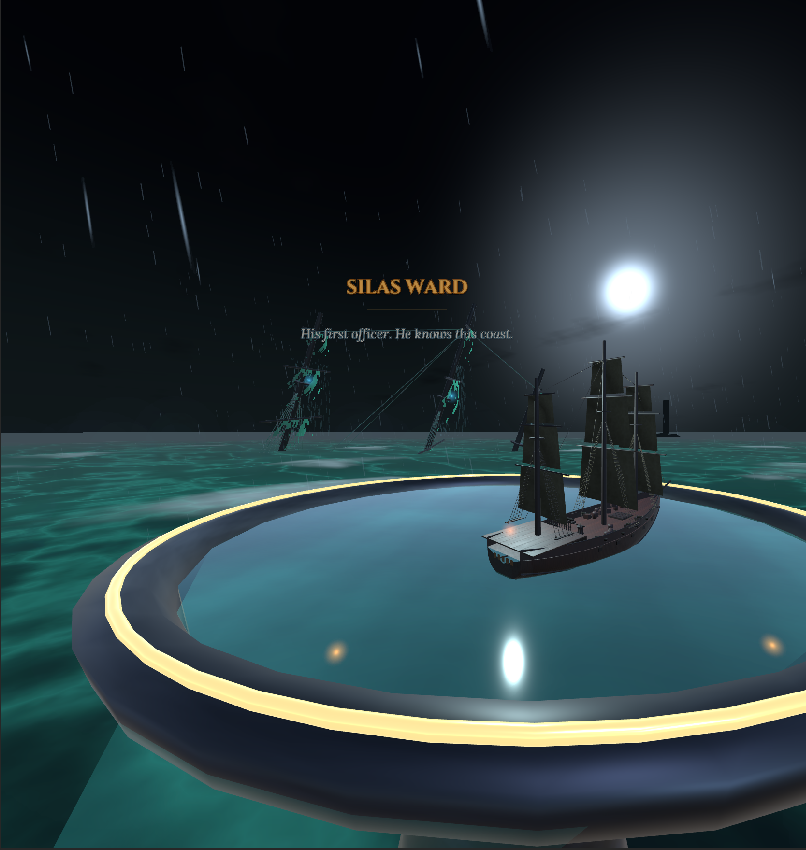
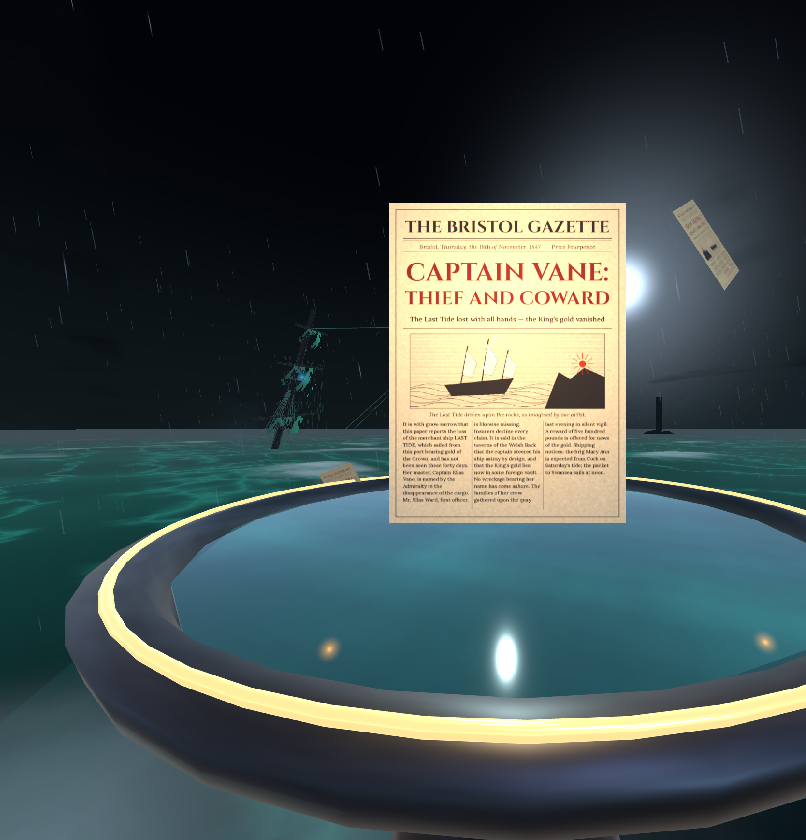
Players witness the final voyage of The Last Tide, learning about Bristol, Captain Elias Vane, his first officer Silas Ward, the mysterious false light on the third night and the newspaper that branded Vane a thief.
The prologue establishes the mystery and introduces the events that players must investigate.
Two Ways to Experience the Mystery
Two objects emerge from the Memory Pool, allowing players to choose how they want to experience the adventure.
- Captain's Compass – Solve the Mystery: Players take control of the investigation and solve all three puzzles themselves, examining evidence and reconstructing the events of the final voyage.
- Logbook – Experience the Story: Players experience a guided, cinematic version of the adventure. The puzzles unfold automatically while the narrator explains the story and reveals important details.
The experience waits for the player's choice before proceeding.
Act I: The Captain's Study
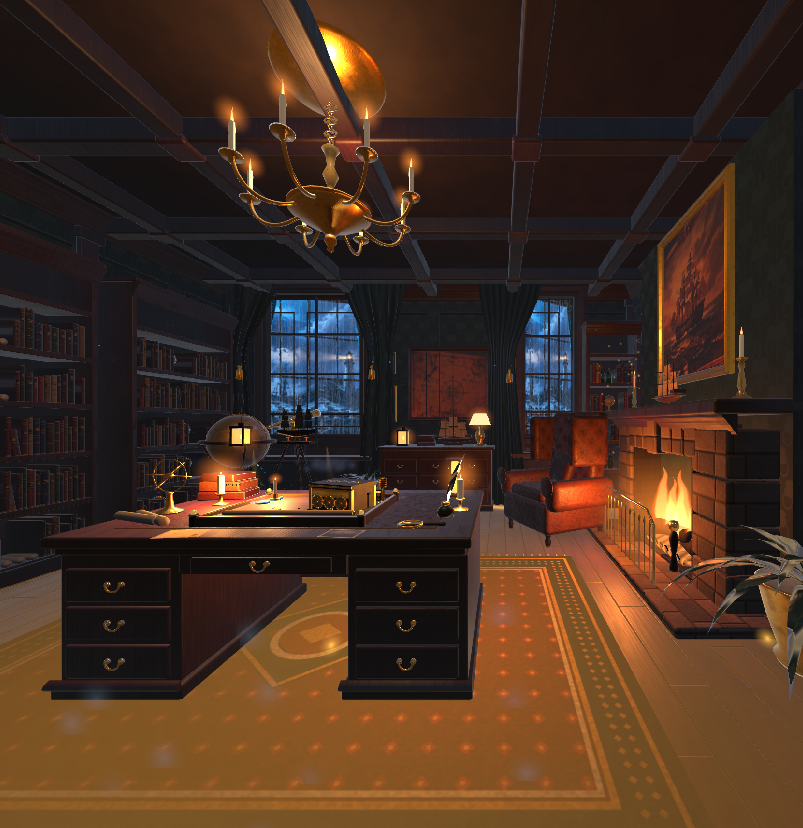
Players enter Captain Vane's abandoned study, preserved almost exactly as he left it.
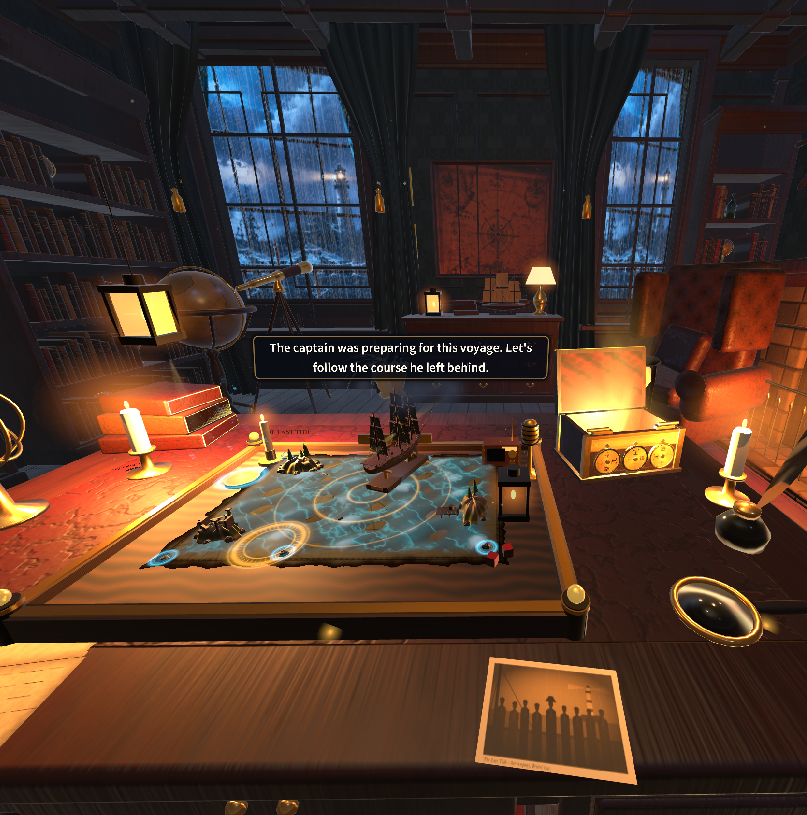
They explore the room, pick up clues from the desk and match each piece of evidence to the corresponding symbols on a set of brass discs.
Solving the puzzle unlocks the captain's chest, revealing his personal records and documents.
A navigation chart then brings the final voyage back to life, transporting players closer to the truth.
Act II: The Last Voyage
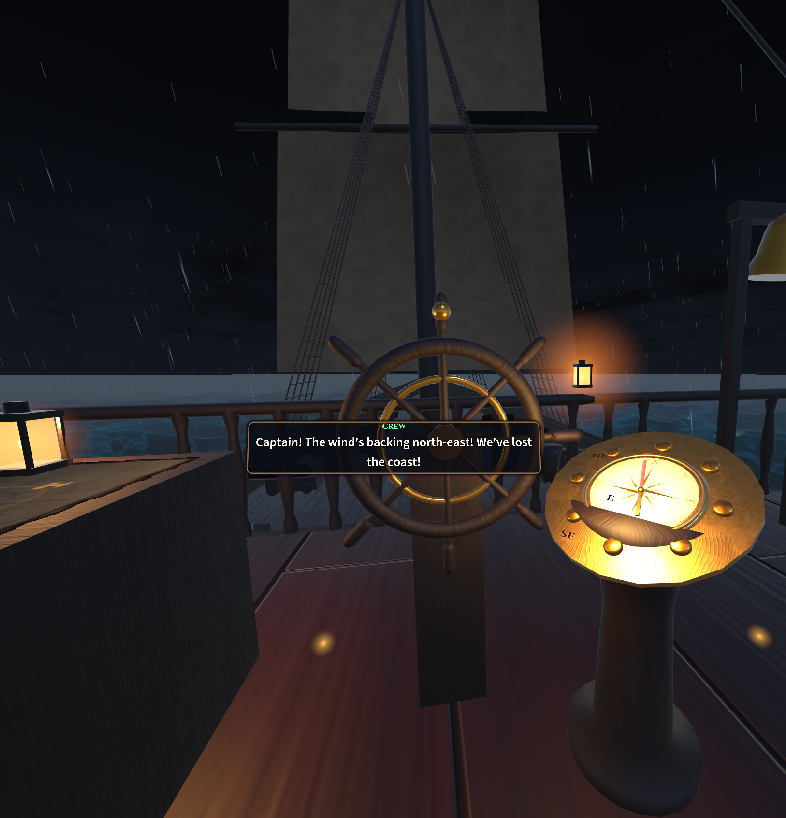
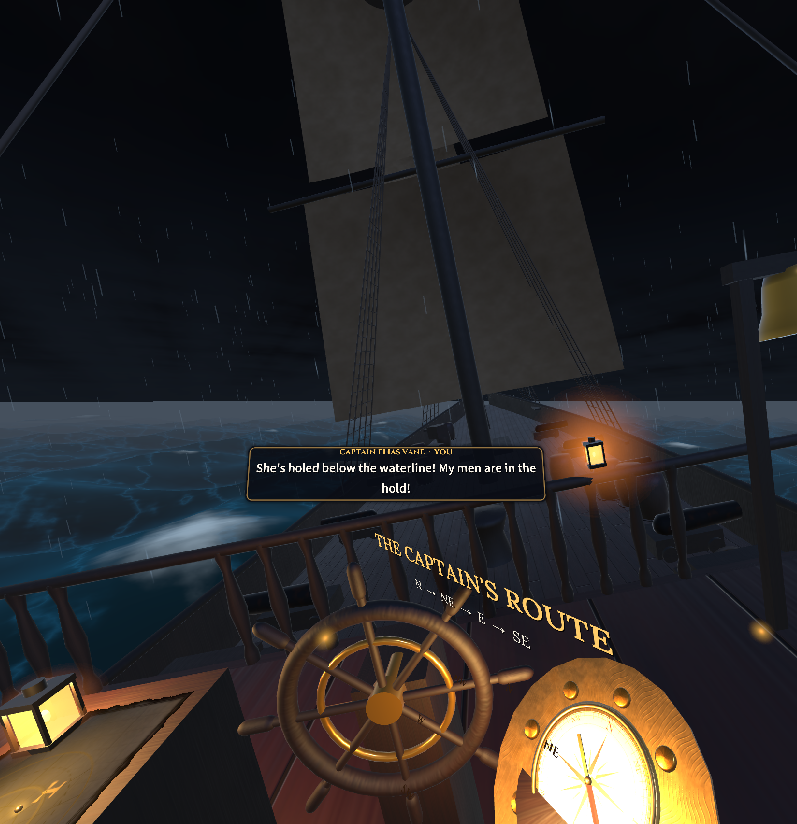
The memory pulls players aboard the ship, placing them at the helm during a violent storm.
Using the compass and brass navigation keys, players must reconstruct the captain's original route:
North → North-East → East → South-East
Each direction must be entered correctly. If a player makes a mistake, the compass needle provides visual feedback so they can try again.
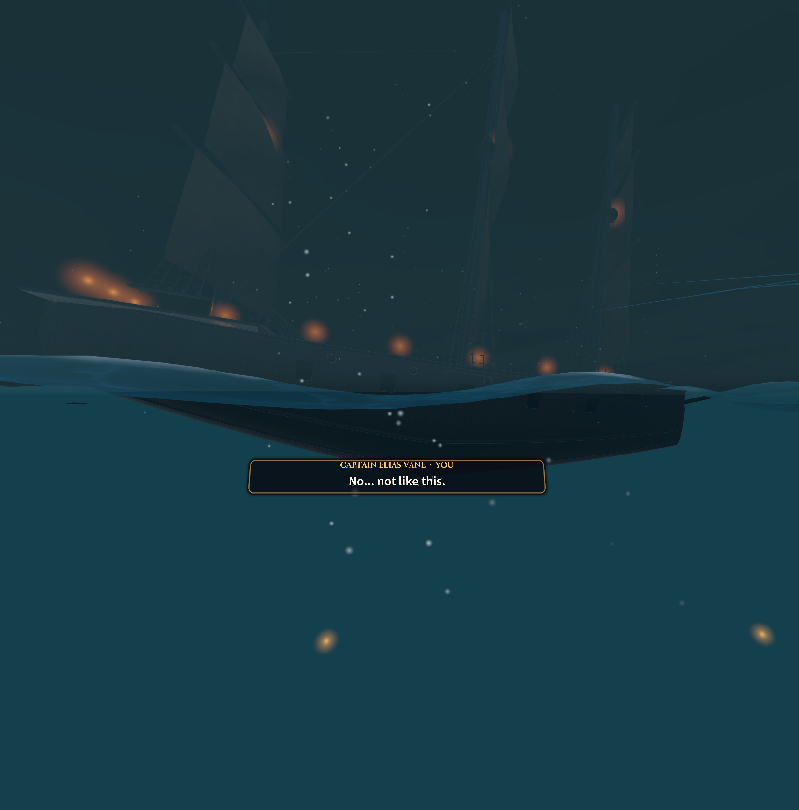
As the sequence progresses, the mysterious light appears, the ship approaches dangerous rocks and the voyage ends in a dramatic shipwreck.
Act III: The Wreck
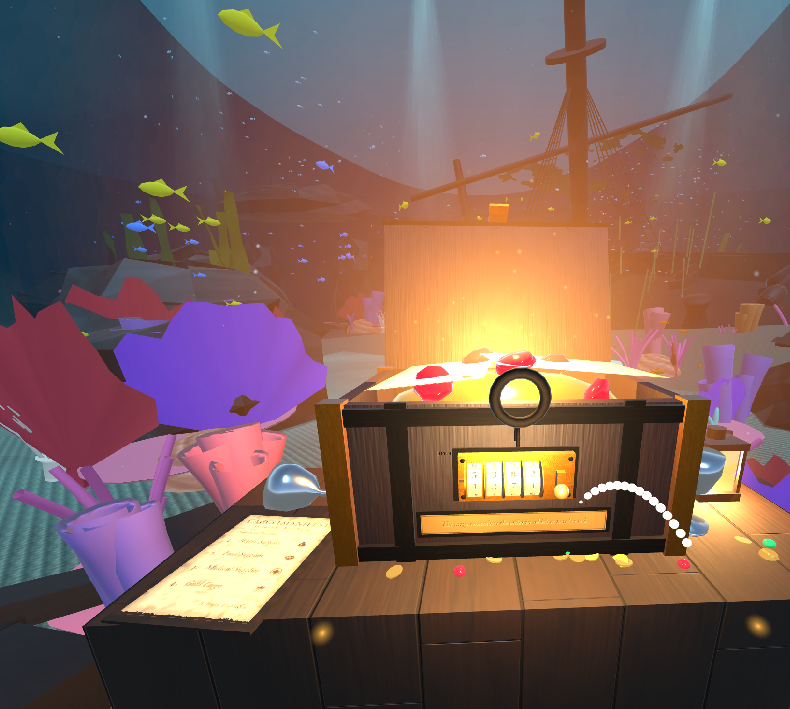
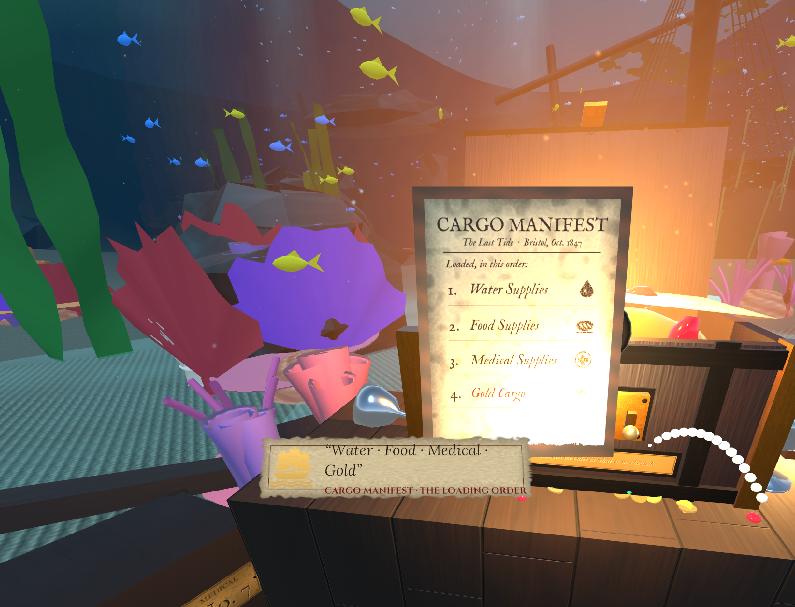
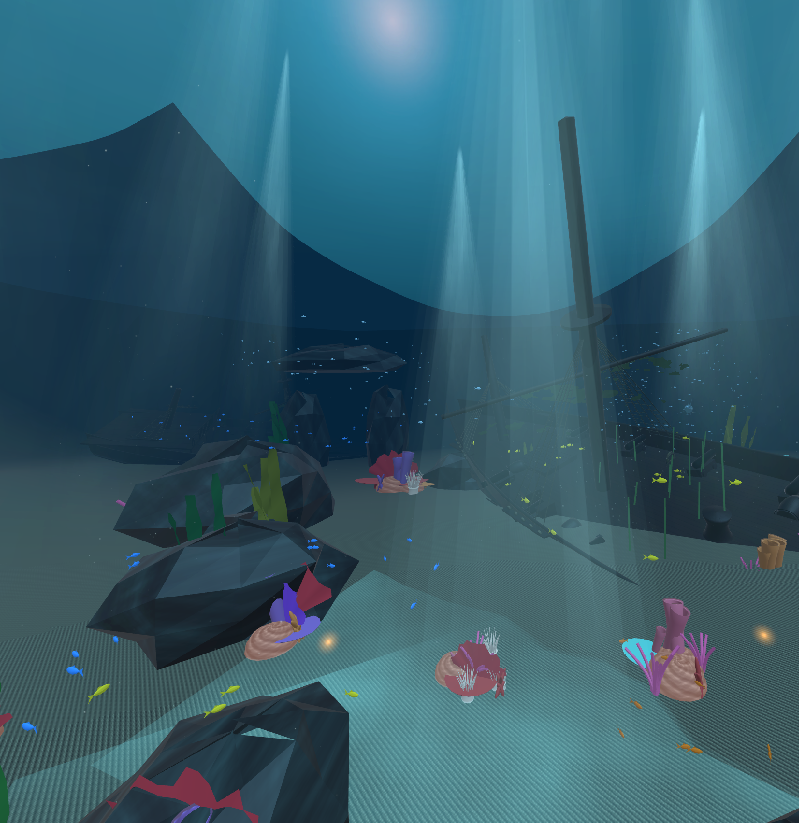
The investigation continues beneath the ocean, where players discover the remains of The Last Tide.
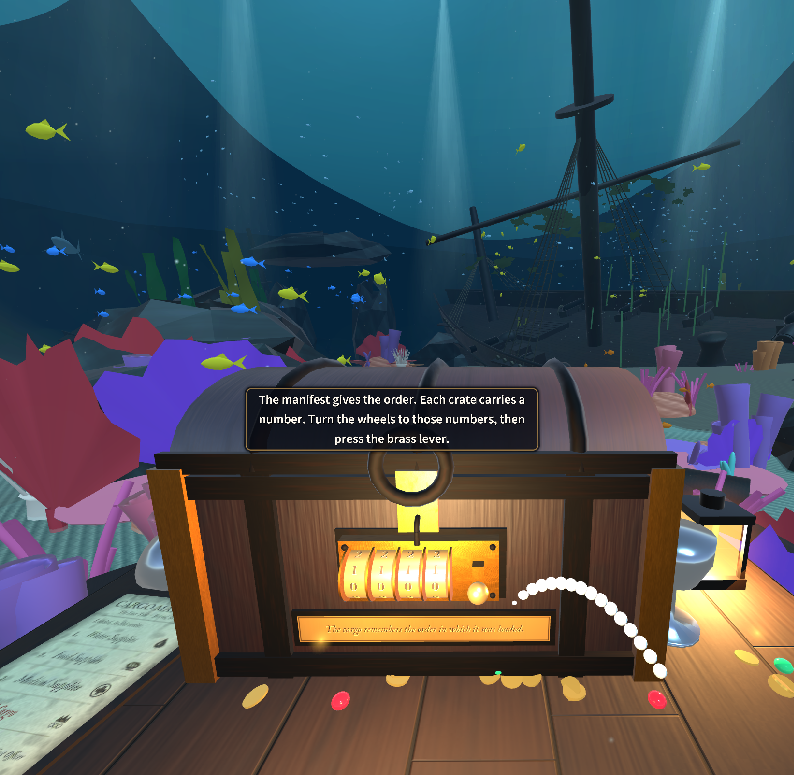
They examine the cargo manifest, search the wreckage and interact with a series of brass wheels to unlock the final mechanism.
Inside the final lock are the original navigation records — the missing evidence that changes everything.
The records reveal the true course of the ship and expose the false light that deliberately diverted it.
The Truth
Elias Vane was never the traitor. Silas Ward was.
The man blamed for the disappearance of the ship and its treasure was, in fact, innocent.
The evidence finally restores the truth about the captain and exposes the betrayal that caused the tragedy.
Player Assistance
The mystery is designed to be challenging without becoming frustrating.
If players get stuck, a small "Show Me" bell becomes available to provide hints. Voiced dialogue and readable subtitles guide players throughout the experience while preserving the atmosphere of exploration and discovery.
How We Built It
Technology Stack
We developed THE LAST TIDE using:
- Unity 6 with Universal Render Pipeline (URP): The primary game engine used to build the environments, gameplay systems, lighting and visual effects.
- Meta XR SDK: Used to support Meta Quest VR functionality.
- Meta Interaction SDK: Used for hand tracking, hand visuals, grabbing and natural interactions.
- Meta XR Simulator: Used for end-to-end development and testing without requiring a physical VR headset.
Procedural Scene Generation
One of our key technical achievements was building the game through procedural scene generation.
A single Unity Editor command, The Last Tide → Build Main Scene, generates the complete game environment and its gameplay components.
This includes:
- The Memory Pool prologue environment.
- The Captain's Study.
- The ship's deck and helm.
- The underwater shipwreck.
- Puzzle mechanisms and interactive objects.
- Lighting, audio and text styling.
This approach allows us to regenerate the entire game from code with a single command, making iteration, debugging and last-minute changes significantly faster.
Story and Gameplay Architecture
We structured the experience using dedicated systems to manage the narrative and gameplay flow.
- VoyageDirector: Controls the progression of the three acts and manages the sequence of story visions.
- DialogueDirector: Manages voiced dialogue, subtitles and the timing of narrative sequences.
- GameMode: Controls the two experience modes — Solve the Mystery and Experience the Story.
These systems work together to maintain narrative continuity while allowing players to choose their preferred style of gameplay.
Hands-First Interaction
Natural hand interaction is at the centre of THE LAST TIDE.
We implemented multiple interaction methods to make the experience accessible and reliable:
- Fingertip Touch: Players interact with objects using their fingertips through the LTHands interaction system.
- Pinch Interaction: Players pinch objects to pick up, hold and release clues.
- Look-and-Pinch: Players look at an interactive object and pinch to activate compass keys or select gameplay modes.
- Touch-and-Hold: Players use sustained hand contact to grab and manipulate objects.
- Controller Fallback: Controller trigger and grip inputs are also supported as alternatives.
Supporting both real hand tracking and simulated interactions required us to carefully handle different input methods across the game.
Readable Text in VR
Text visibility is particularly challenging in immersive 3D environments.
To address this, we developed a custom UIOnTop shader that keeps important text elements visible in front of the environment.
We applied it selectively to subtitles, labels and other essential information, using plate and parchment-style backgrounds.
The visual typography combines Cinzel, Lora and Source Sans 3 to complement the historical maritime atmosphere while maintaining readability.
Audio and Atmosphere
Audio plays an important role in creating the emotional and environmental experience.
We incorporated:
- Layered storm and ocean ambience.
- Underwater environmental sounds.
- Interactive chest and puzzle sounds.
- Background music.
- Haptic feedback.
- Voiced characters generated using neural text-to-speech.
- Reverb and pitch adjustments to enhance the atmosphere.
Together, these elements help bring the mystery to life and make each discovery feel meaningful.
Challenges We Ran Into
1. Developing Without a Physical VR Headset
We did not have access to a physical Meta Quest headset during development, so we built and tested the experience using the Meta XR Simulator.
In the simulator, mouse clicks act as simulated pinch interactions. However, supporting both simulated hands and real hand tracking required us to implement multiple interaction methods, including pinch, touch and look-and-pinch.
Our focus was to make the gameplay work consistently across these different input methods.
2. Resolving a Hidden Gameplay Freeze
During testing, we encountered a freeze when a scene ended while a spoken dialogue line was still playing.
The game continued waiting for the dialogue to finish, causing the experience to stop progressing immediately after the ship sank.
We resolved this by moving dialogue playback into the central dialogue management system and introducing safety timeouts to prevent the game from waiting indefinitely.
3. Making Text Readable in 3D Environments
Subtitles and labels frequently disappeared behind objects or became visible through walls.
We experimented with different rendering approaches before developing a dedicated on-top shader.
By applying it only to essential text elements, we improved visibility without introducing the unwanted grey-screen effects associated with rendering the entire scene on top.
4. Balancing Storytelling and Gameplay Pacing
We wanted the Story Mode to feel like a short cinematic experience of approximately eight minutes, while Play Mode needed to give players enough time to explore, examine clues and solve puzzles independently.
Achieving the right balance between narrative progression and player freedom required careful tuning.
5. Making Hand Interactions Feel Natural
Reliable hand interactions required multiple rounds of testing and refinement.
We tuned interaction reach distances, object release behaviour, clue snapping and grabbing mechanics.
We also adjusted the compass positioning at the ship's helm to ensure that it remained clearly visible and easy to interact with during the navigation puzzle.
Accomplishments That We're Proud Of
- A complete VR mystery adventure: Built a complete beginning-to-end experience across three acts, with a connected narrative and a final revelation.
- Hands-first gameplay: Designed the experience around natural hand interactions, allowing players to explore, grab, touch and manipulate objects.
- Three different puzzle mechanics: Implemented evidence matching, a navigation memory sequence and a combination lock.
- Two distinct gameplay experiences: Created both a hands-on mystery-solving mode and a guided cinematic Story Mode.
- An emotionally engaging story: Built a dramatic shipwreck sequence that delivers an emotional moment without relying on horror.
- Procedural game generation: Developed a one-click system to generate the complete game environment and its gameplay components.
- Integrated audio and storytelling: Added voiced characters, subtitles, environmental audio, music and contextual hints.
- Rapid development and iteration: Used code-driven scene generation and modular gameplay systems to make development and debugging more efficient.
What We Learned
Developing THE LAST TIDE taught us several important lessons about designing immersive VR experiences.
Hands-first design requires careful feedback.
Natural interactions need to communicate clearly through visual, audio and haptic feedback. Every interaction must feel intuitive, responsive and reliable.
Text is one of the hardest elements of VR interface design.
Font size, depth, contrast and positioning are often more important than visual styling. Information must remain readable without breaking immersion.
Player actions should drive the story.
We learned that puzzles are more meaningful when solving them reveals evidence and advances the narrative, rather than simply unlocking another door.
Procedural development enables faster iteration.
Generating environments and gameplay components through code made it easier to rebuild, test and refine the experience, particularly under tight development timelines.
A strong VR mystery needs both atmosphere and interaction.
Visual storytelling, environmental audio, physical object interactions and meaningful discoveries must work together to keep players engaged.
What's Next for THE LAST TIDE
THE LAST TIDE is an important first step towards a larger immersive mystery experience.
Our future development plans include:
- Real Meta Quest 3 testing: Complete testing, comfort tuning and performance optimisation on physical Quest 3 hardware, including standalone performance validation.
- Mixed Reality Experience: Bring the Captain's Study and Memory Pool into the player's own physical environment using passthrough technology.
- Expanded Story Chapters: Explore Silas Ward's side of the story and develop a new chapter focused on the search for the lost gold.
- Accessibility Improvements: Introduce additional languages, adjustable subtitle sizes and seated-play settings.
- Meta Horizon Store Release: Prepare the application for release through the Meta Horizon Store after completing the required device testing and optimisation.
Our vision is to turn THE LAST TIDE into more than a mystery game — an immersive experience where players become investigators, history becomes tangible and the truth is discovered through their own hands.
