-
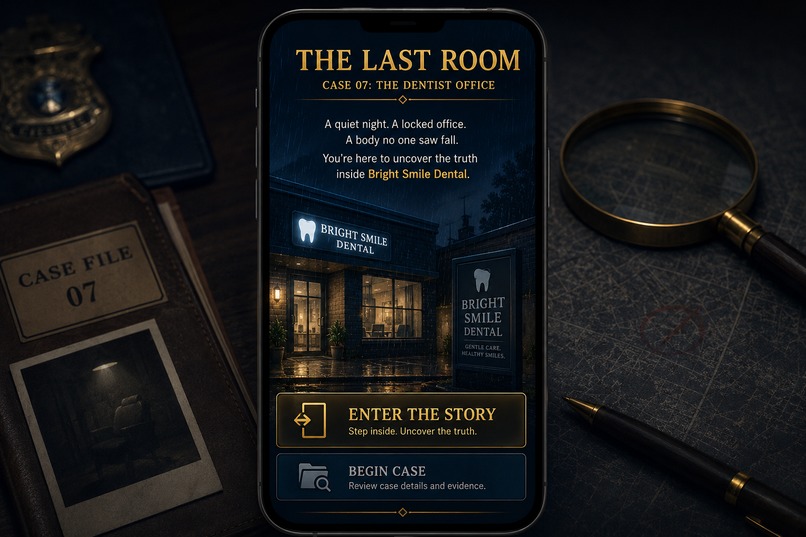
Intro Enter The Last Room, a mystery strategy game where story choices reveal clues and every clue leads to the final grid.
-
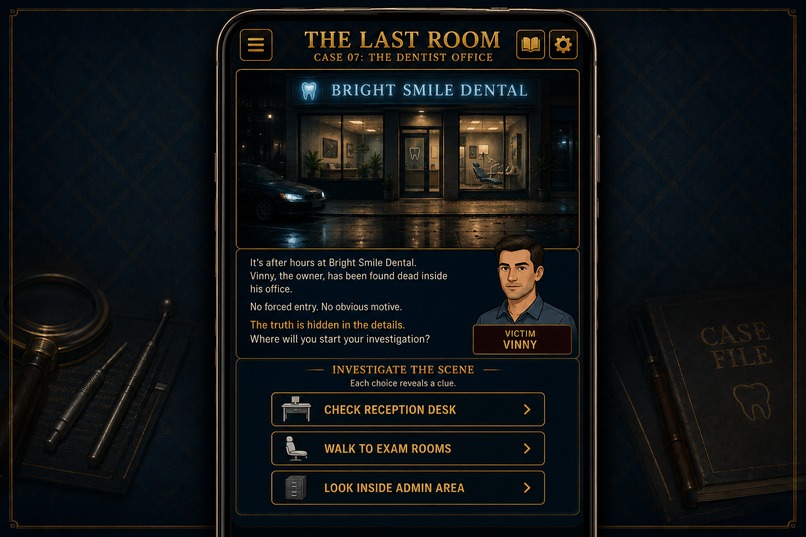
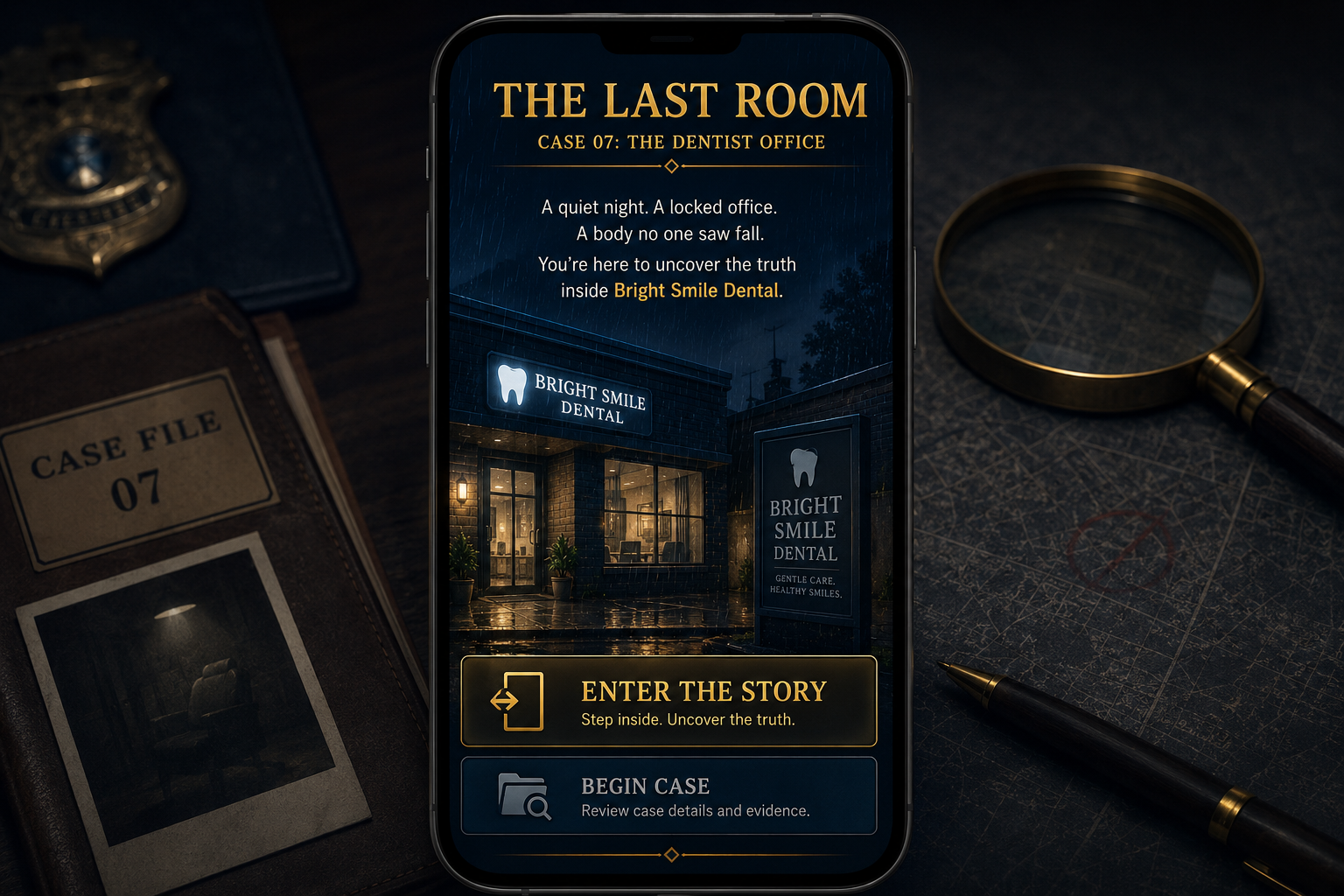
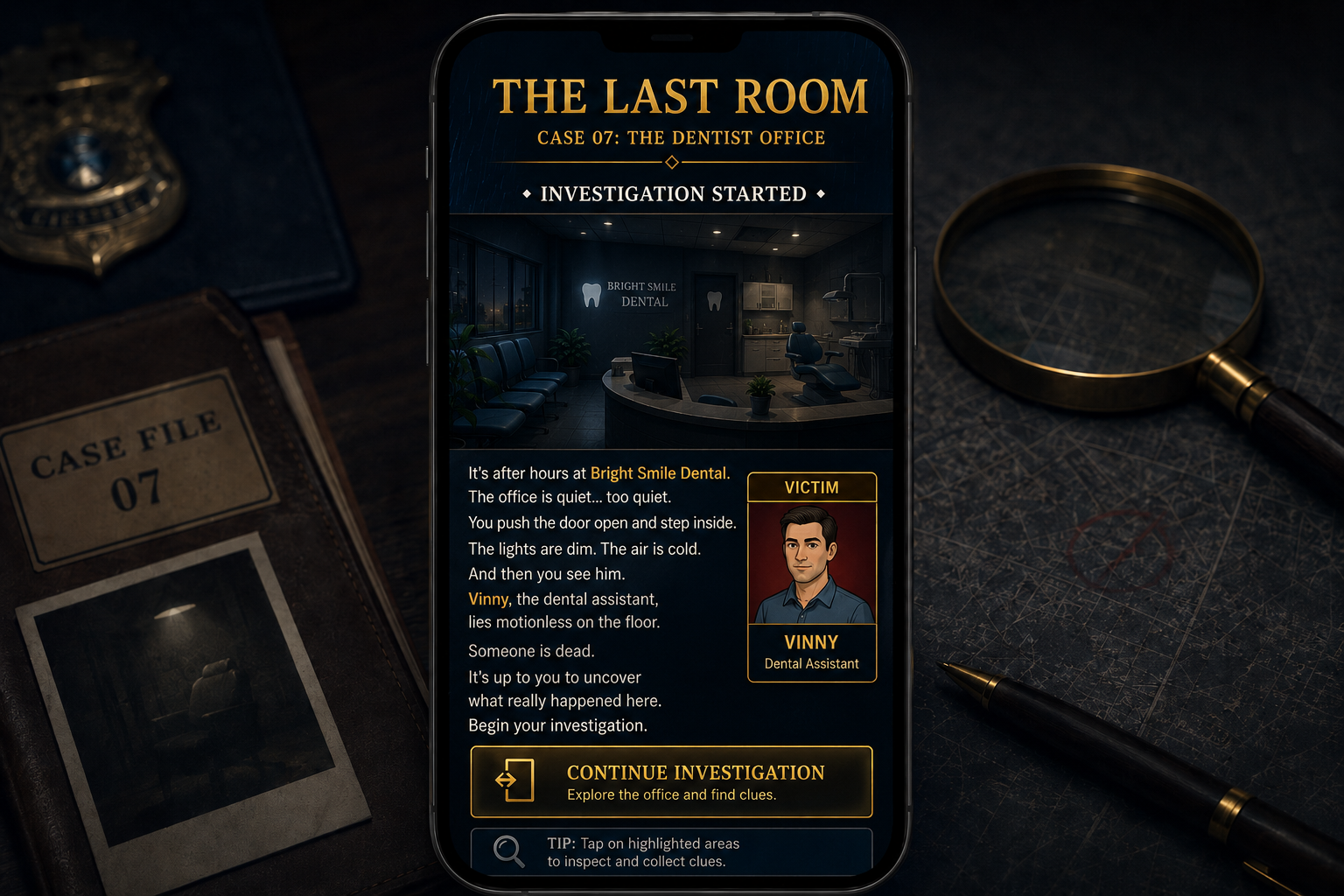
Story first option The player steps inside Bright Smile Dental after hours and begins the investigation into Vinny’s death.
-
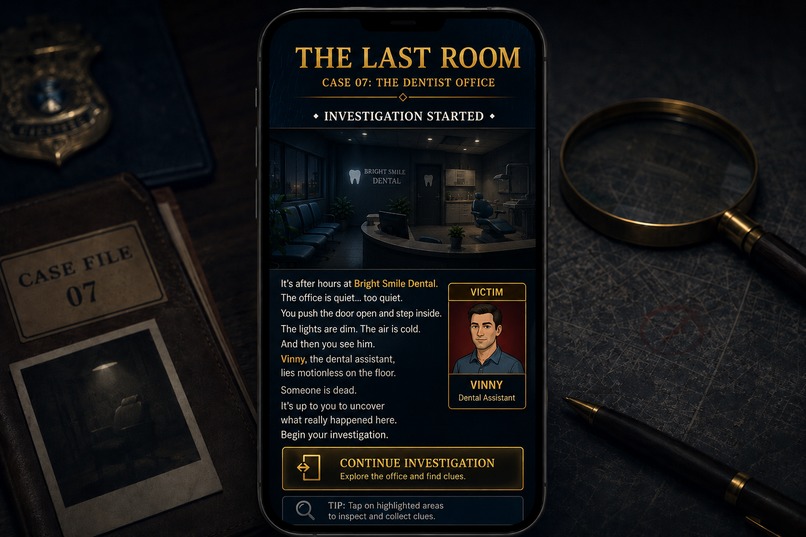
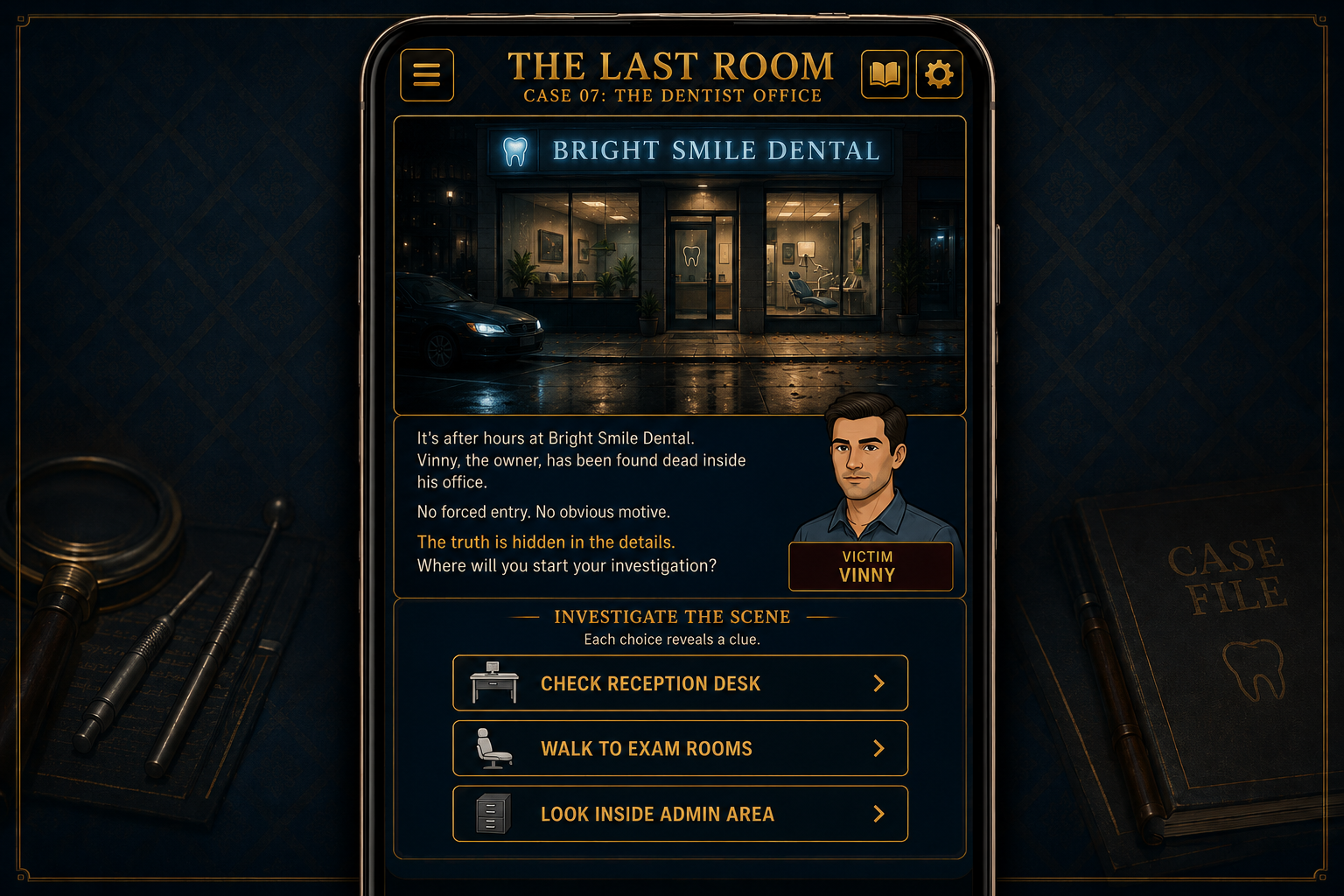
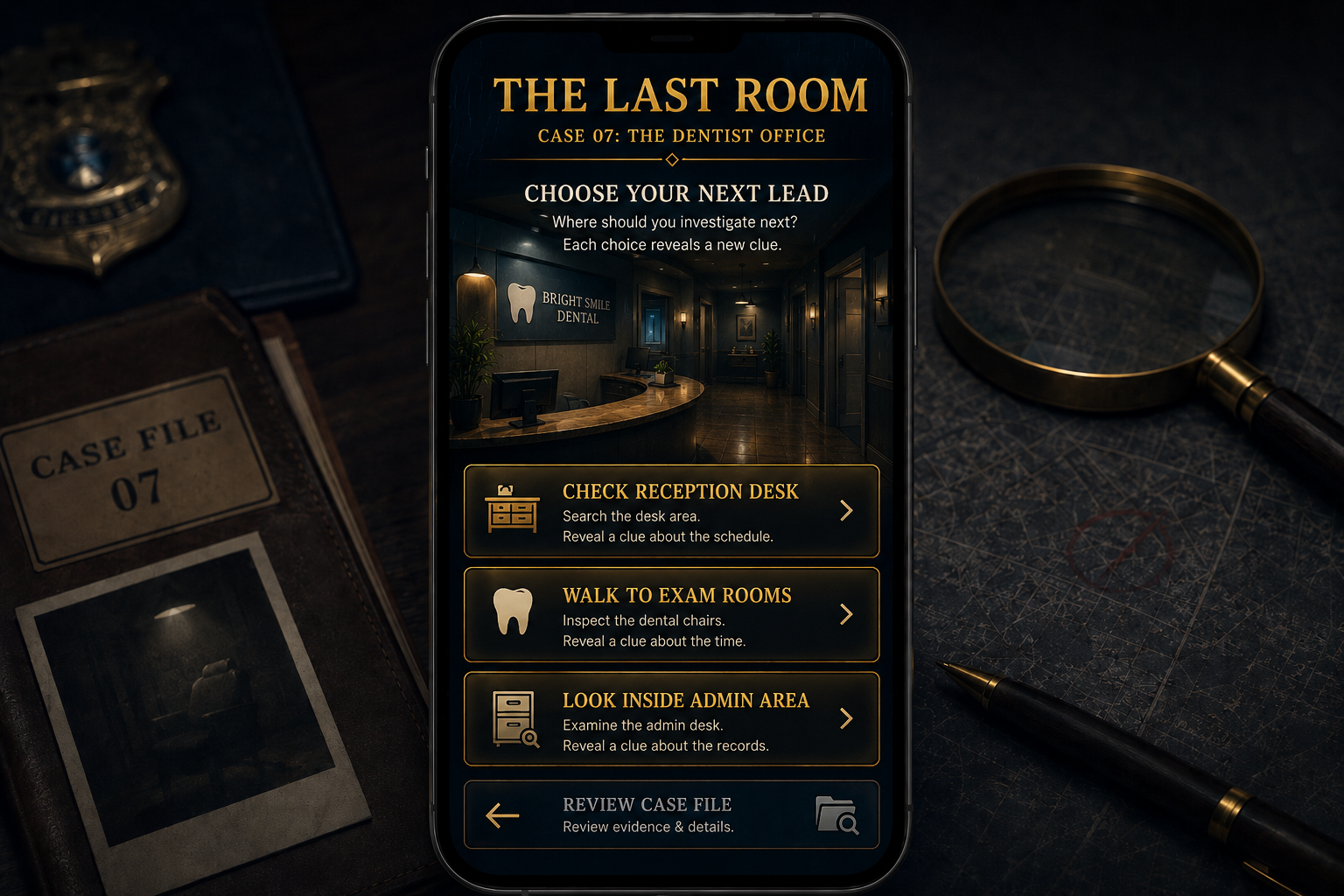
Story page 2 The story unfolds through interactive investigation screens that build tension and guide the player toward key evidence.
-
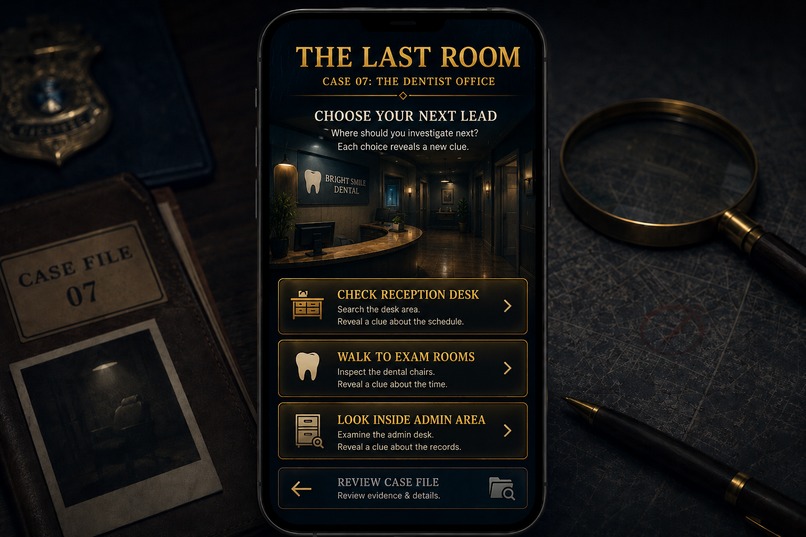
Story that leads to grid Each decision reveals a clue, moving the player from story mode into the deduction grid.
-
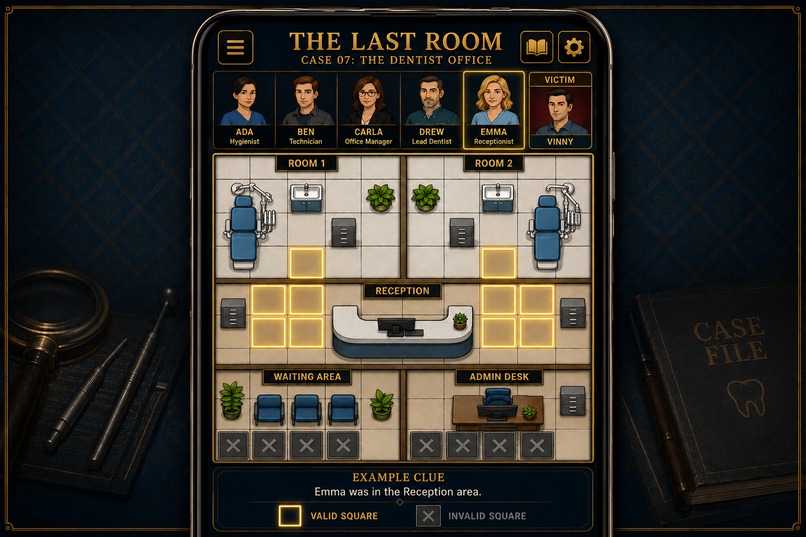
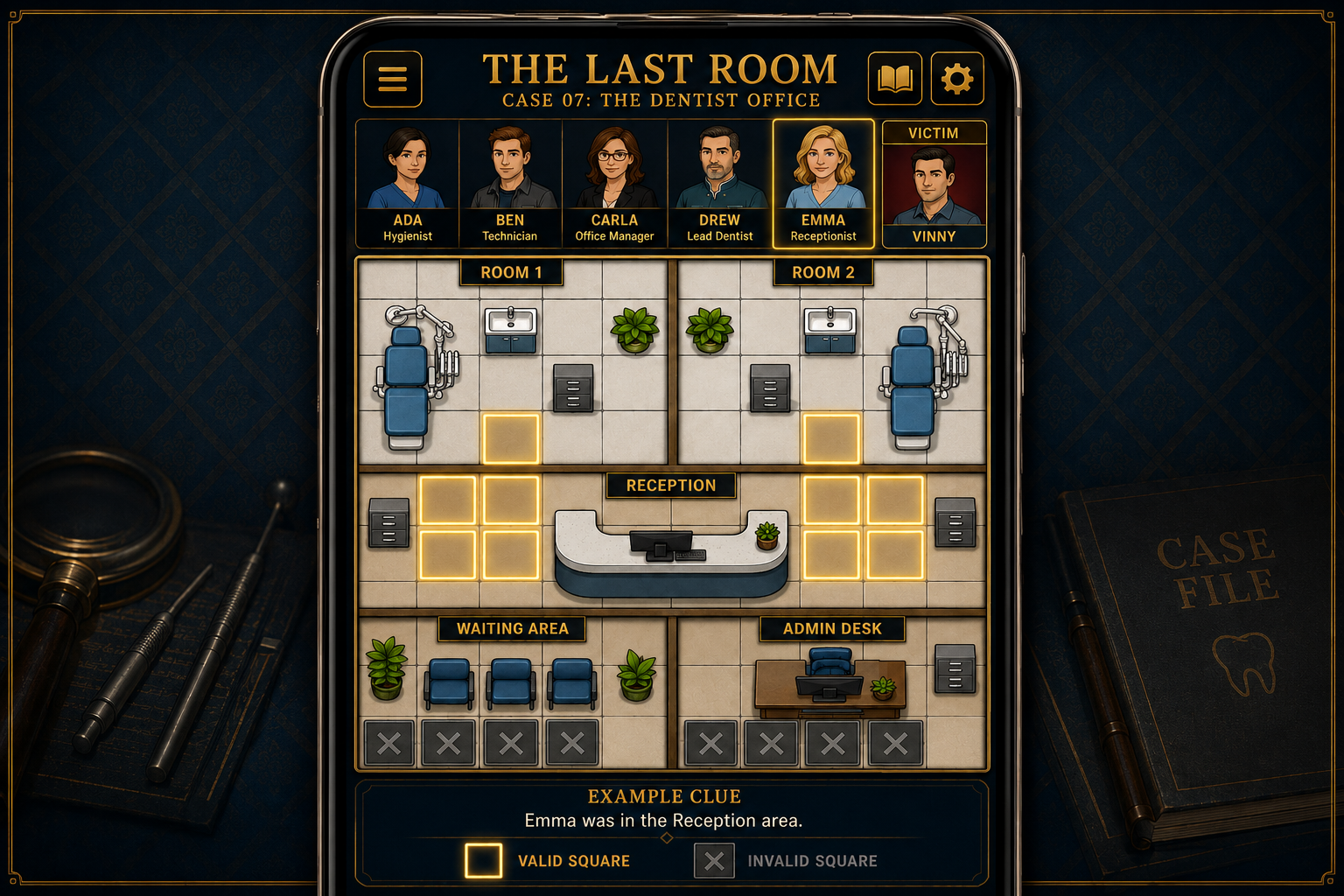
Grid Example The deduction grid unlocks, showing valid squares, blocked spaces, rooms, suspects, and the rules for placement.
-
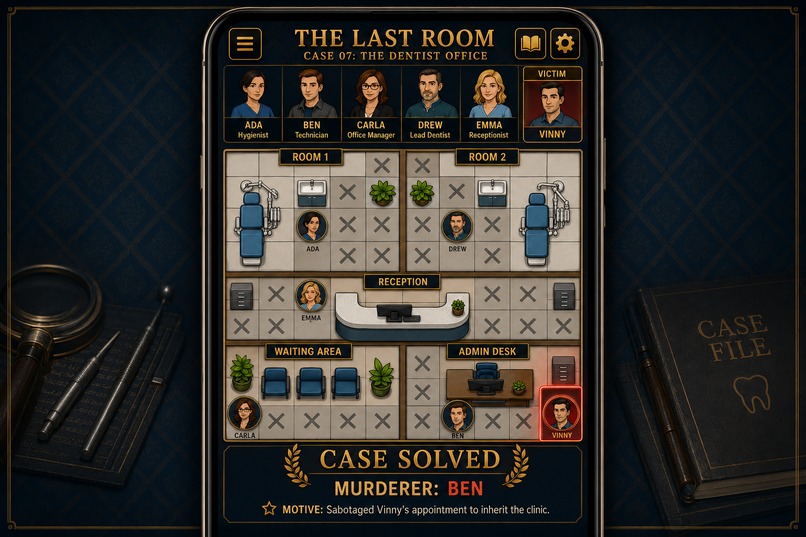
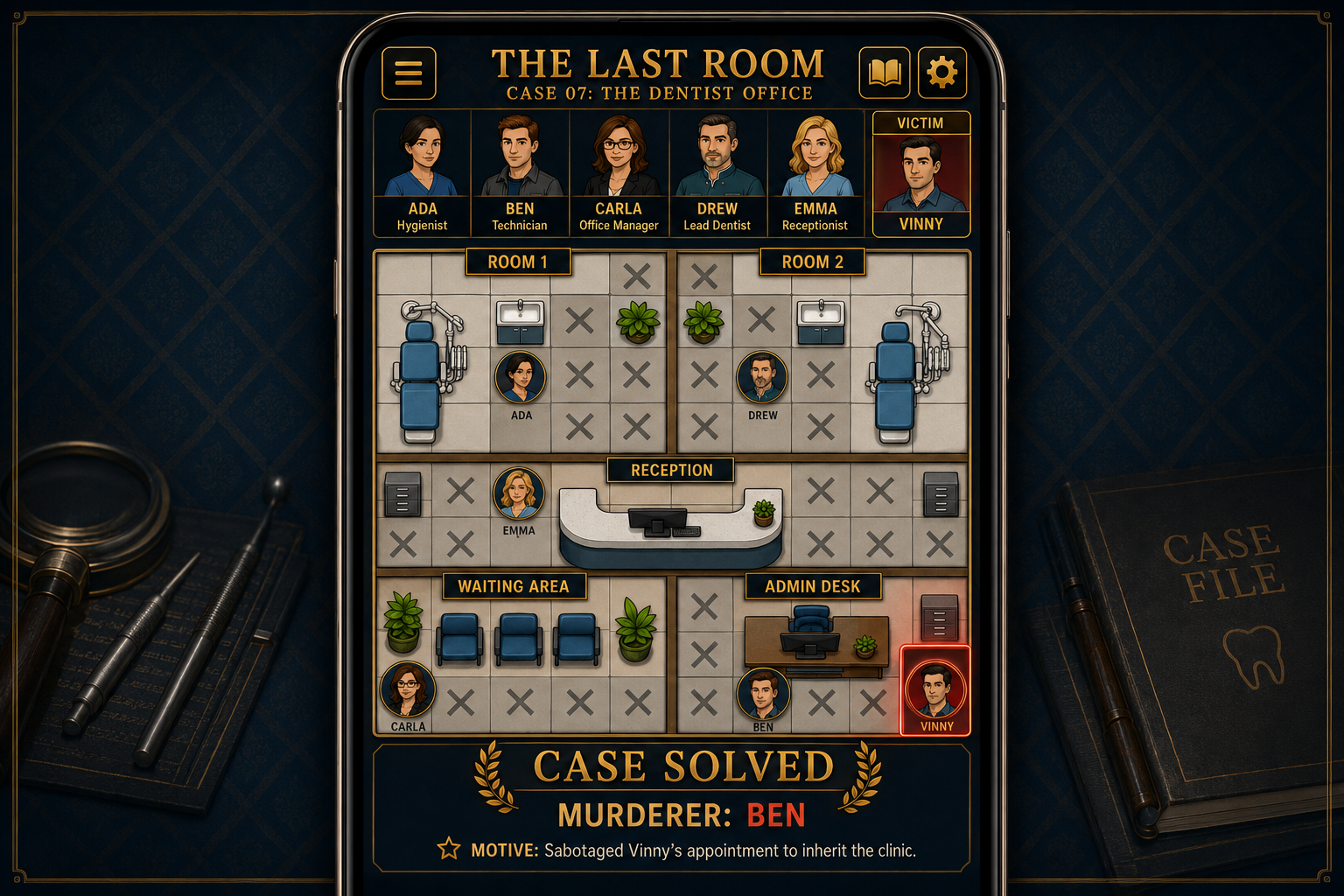
Grid solve The final solved board reveals the murderer by using row, column, room, and clue logic to prove the killer.
Inspiration
The Last Room was inspired by my love of mystery stories, mobile puzzle games, and deduction-based board games. I wanted to design a game where the story does not just introduce the case — it creates the puzzle.
The idea behind the game is simple:
Story choices reveal clues. Clues feed the grid. The grid solves the murder.
For this competition, I designed The Last Room: Case 07, The Dentist Office as a mobile mystery strategy game. The player starts in a pick-your-own-adventure investigation, questions suspects, explores the office, collects clues, and then uses those clues to solve a grid-based deduction puzzle.
What it does
The Last Room combines interactive storytelling with strategic grid deduction.
The player investigates a murder case through short story choices. Each choice reveals information about the suspects, the rooms, or the objects inside the crime scene. Those clues become the logic rules for the deduction grid.
Each suspect has a clue that limits where they can be placed. Some clues are based on rooms, some are based on objects, and some are based on what a suspect was near or not near. The player must place every suspect into a valid square while following row and column restrictions.
Once all suspects are placed, the victim appears in the final remaining square. The murderer is not guessed — the murderer is proven by the grid. The suspect who shares the final room with the victim is revealed as the killer.
How we built it
I built The Last Room as a complete pre-production concept for a mobile strategy deduction game. I started with the core idea that the story should feed the grid, then designed the game loop, the first case, the suspect system, the victim reveal, and the visual direction.
The core gameplay loop is:
- Investigate the room
- Make story choices
- Unlock suspect clues
- Place suspects on the grid
- Eliminate impossible spaces
- Reveal the victim
- Identify the murderer
I also created a visual style using a dark navy and gold mystery interface, suspect cards, room labels, glowing valid squares, and large X marks for invalid spaces. The goal was to make the game feel elegant, suspenseful, and easy to understand on a mobile screen.
Challenges we ran into
The biggest challenge was making the grid feel fair and readable. Because this is a strategy deduction game, every room, object, and square needs to make sense. Furniture has to fit inside the grid, valid spaces need to be obvious, and blocked spaces need to be clearly marked.
Another challenge was balancing the story with the puzzle. I did not want the story to feel separate from the gameplay. The story needed to matter. The final design solves that by making every investigation choice reveal information that directly supports the deduction board.
I also had to think carefully about mobile usability. The board has to be readable on a phone, the player has to understand what they can tap, and the final reveal has to feel rewarding without being confusing.
Accomplishments that we're proud of
I am proud that The Last Room feels different from a typical mobile mystery game. It is not just reading dialogue or guessing who looks suspicious. The player has to solve the case through logic.
I am also proud of how the story and grid work together. The pick-your-own-adventure intro creates tension and gives the player agency, while the grid turns that story information into a real strategy challenge.
The visual identity is another accomplishment. The dark navy, gold trim, suspect portraits, room-based board, glowing valid squares, and final red murder reveal all work together to make the game feel polished and easy to understand.
What we learned
I learned that strong game design needs more than a good idea. The rules have to be clear, the player needs feedback, and the experience has to build toward a satisfying payoff.
I also learned how important it is to scope a mobile game properly. The best version of The Last Room starts with one polished case, one strong grid, clear clues, and a satisfying reveal. Additional cases, more suspects, harder boards, and daily challenges can come later.
Most importantly, I learned that story can be more than decoration. In The Last Room, story is the system that feeds the strategy.
What's next for The Last Room
Next, I would build a playable MVP of Case 07: The Dentist Office. The MVP would include the opening story sequence, suspect cards, clue reveals, the full deduction grid, valid and invalid square highlighting, suspect placement, victim auto-placement, and the final murderer reveal.
After that, I would expand the game with additional cases, harder room layouts, daily mystery puzzles, unlockable case files, hint systems, and replay modes with fewer assists. I would also add more story branches where different investigation choices change the order of clues and the emotional path through the case.
The long-term goal is for The Last Room to become a mobile mystery strategy series where every case starts with a story, every story creates clues, and every clue leads to a solvable grid.
Built With
- ai-assisted-visual-design-tools
- and
- canva
- chatgpt
- design
- game
- google-docs
- mobile-ui-mockups
- original
- pdf-export-tools


Log in or sign up for Devpost to join the conversation.