-
-
-
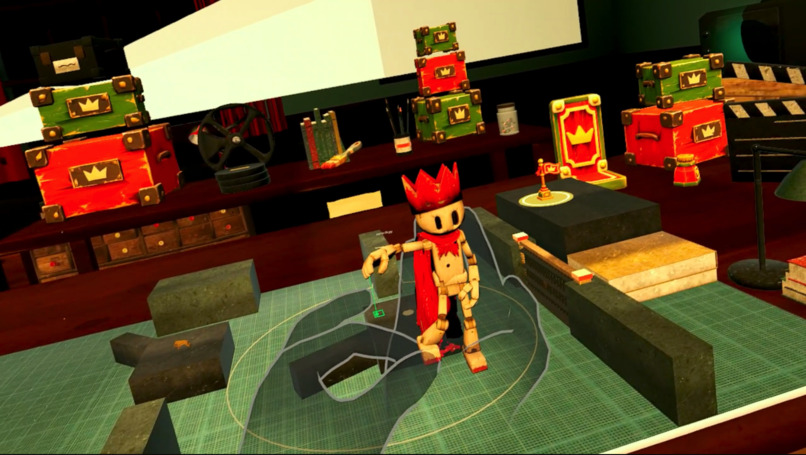
Holding and modeling the king with two hands
-
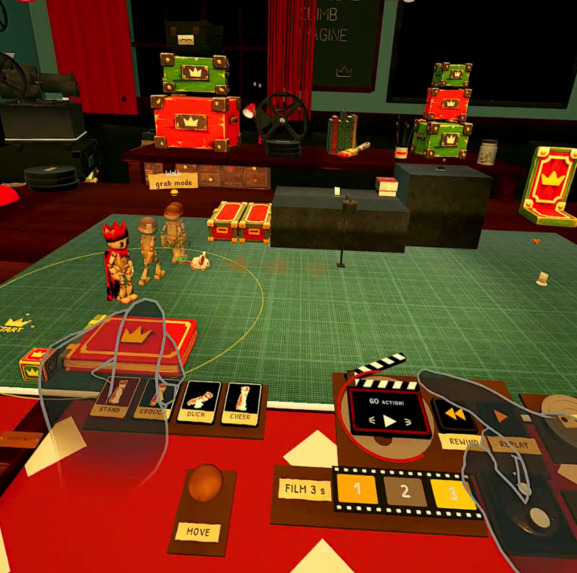
General gameplay
-
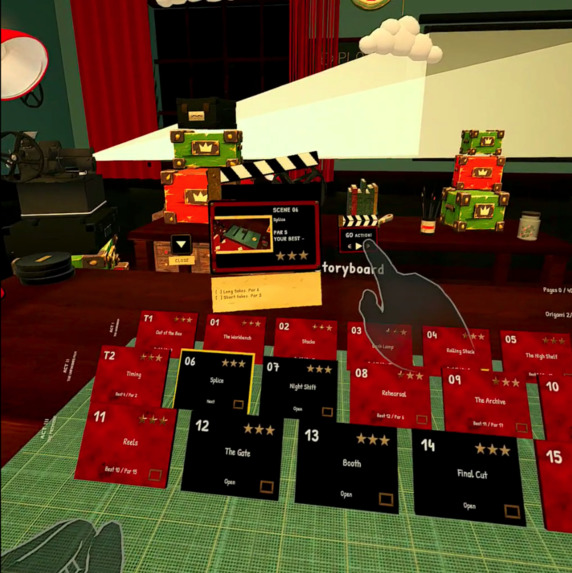
Level select
-
-
-
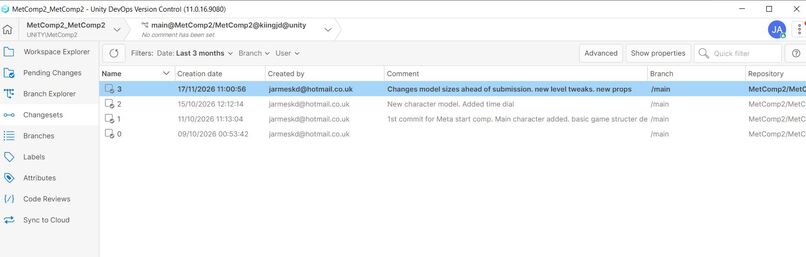
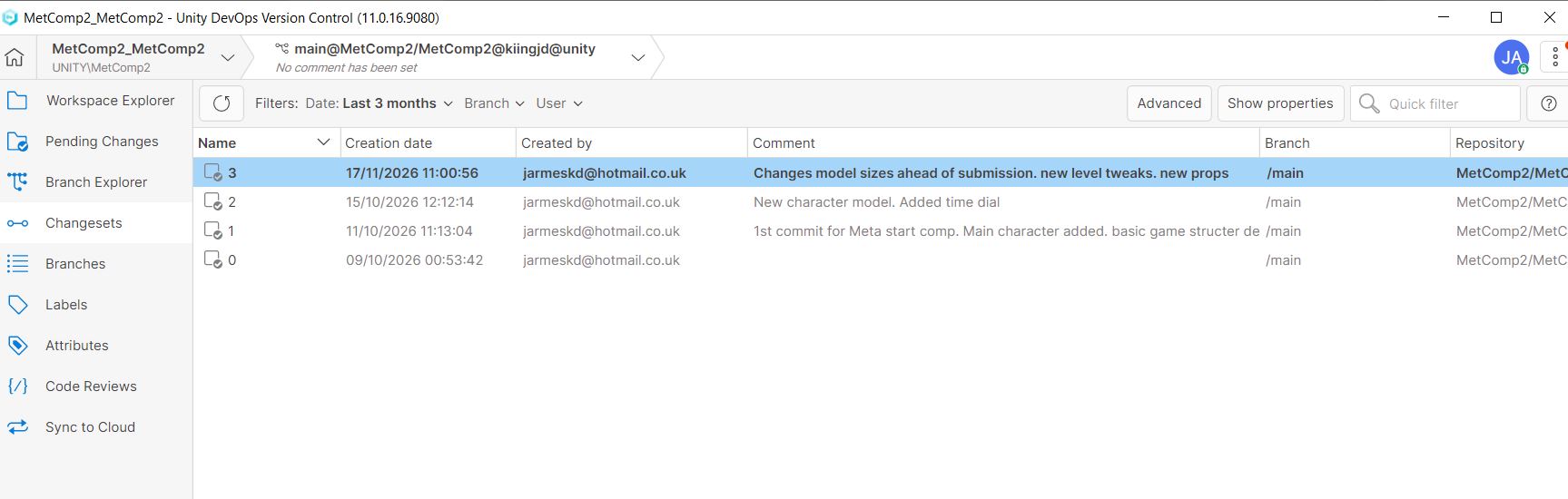
1st commit evidence
Inspiration
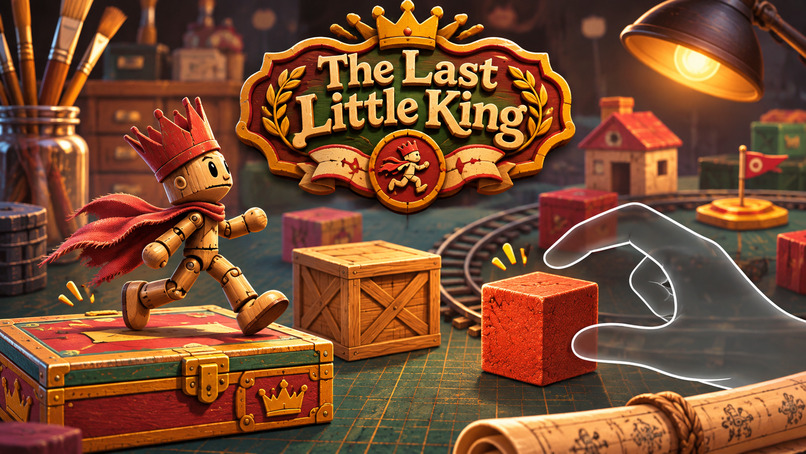
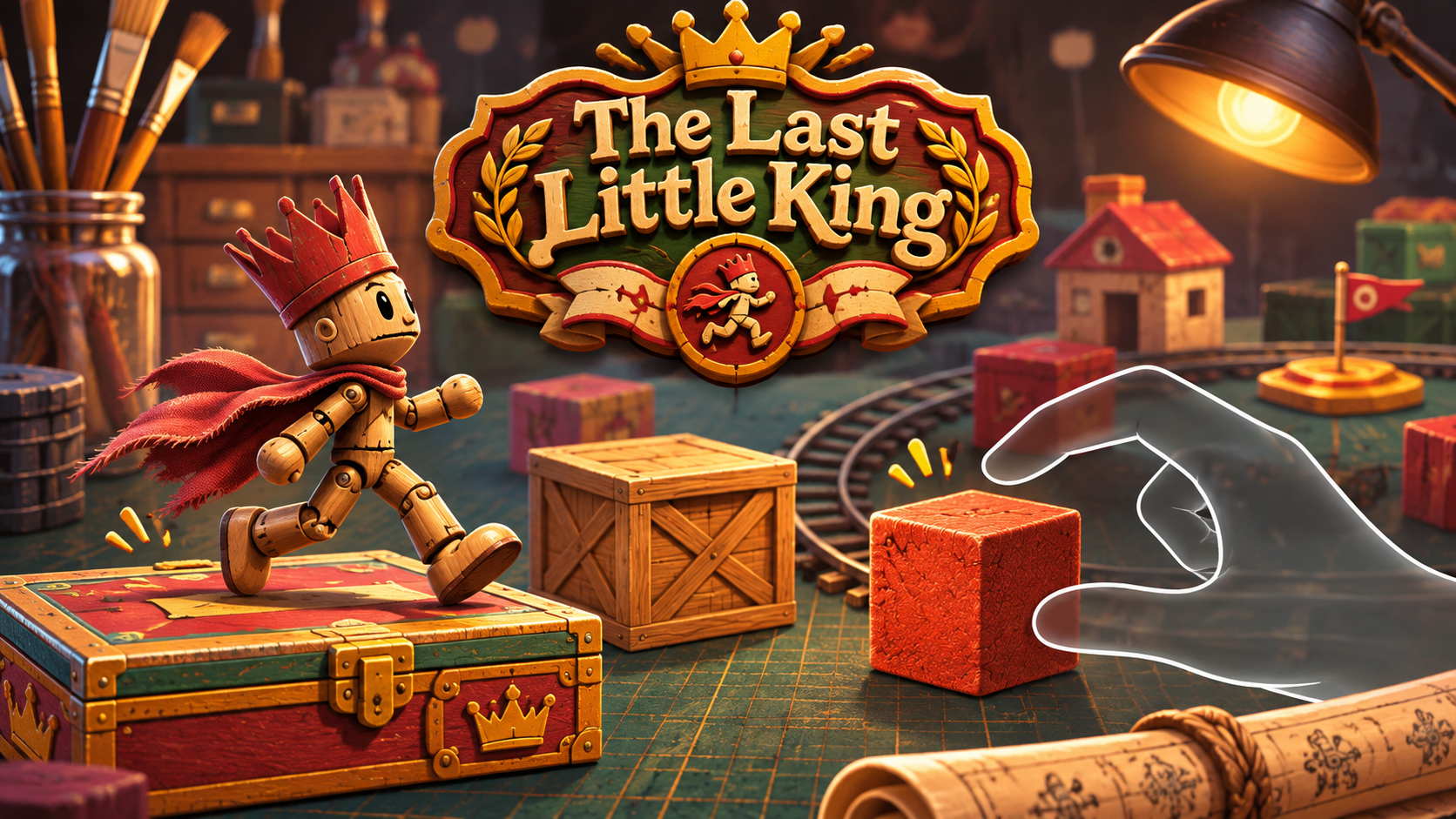
The Last Little King is a casual puzzle narrative game. I wanted a game that gave people the control of a stop-motion animation studio, they pick up a puppet and set its pose. The difference here is that players see the animation play out immediately. Hand tracking on Quest suits this massively. Everyone has played with an action figure in their life, this extends that childhood magic.
In the story, an old master animator made little worlds by hand but didn't finish his last film featuring a small wooden king. The player takes over his desk and moves the king through the workshop so the film gets finished.
What it does
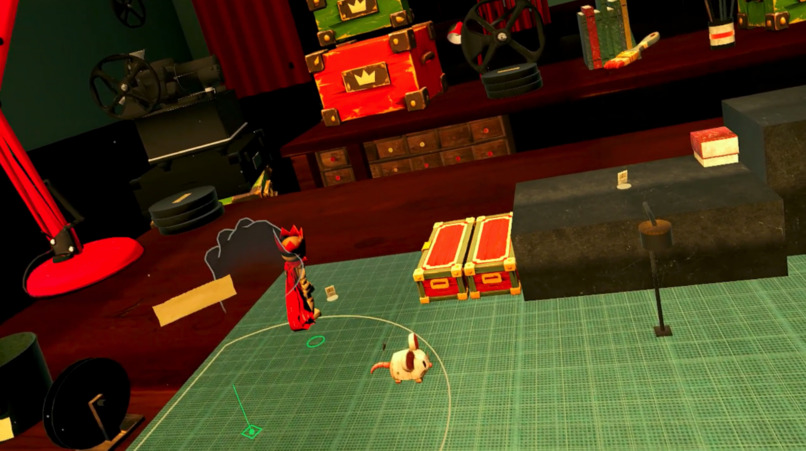
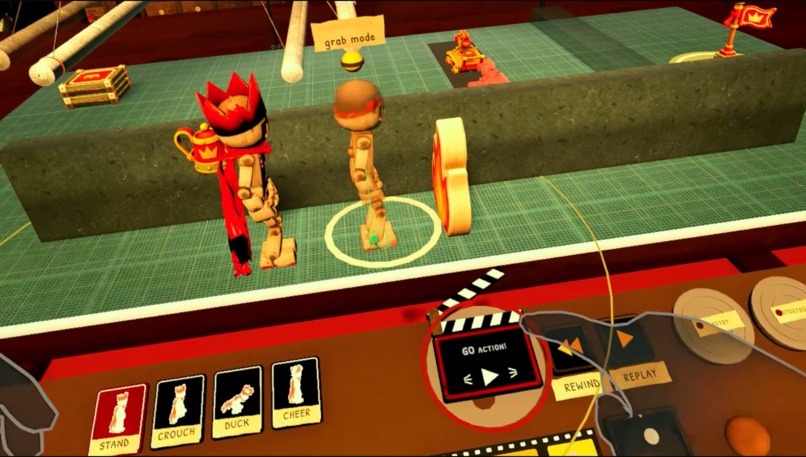
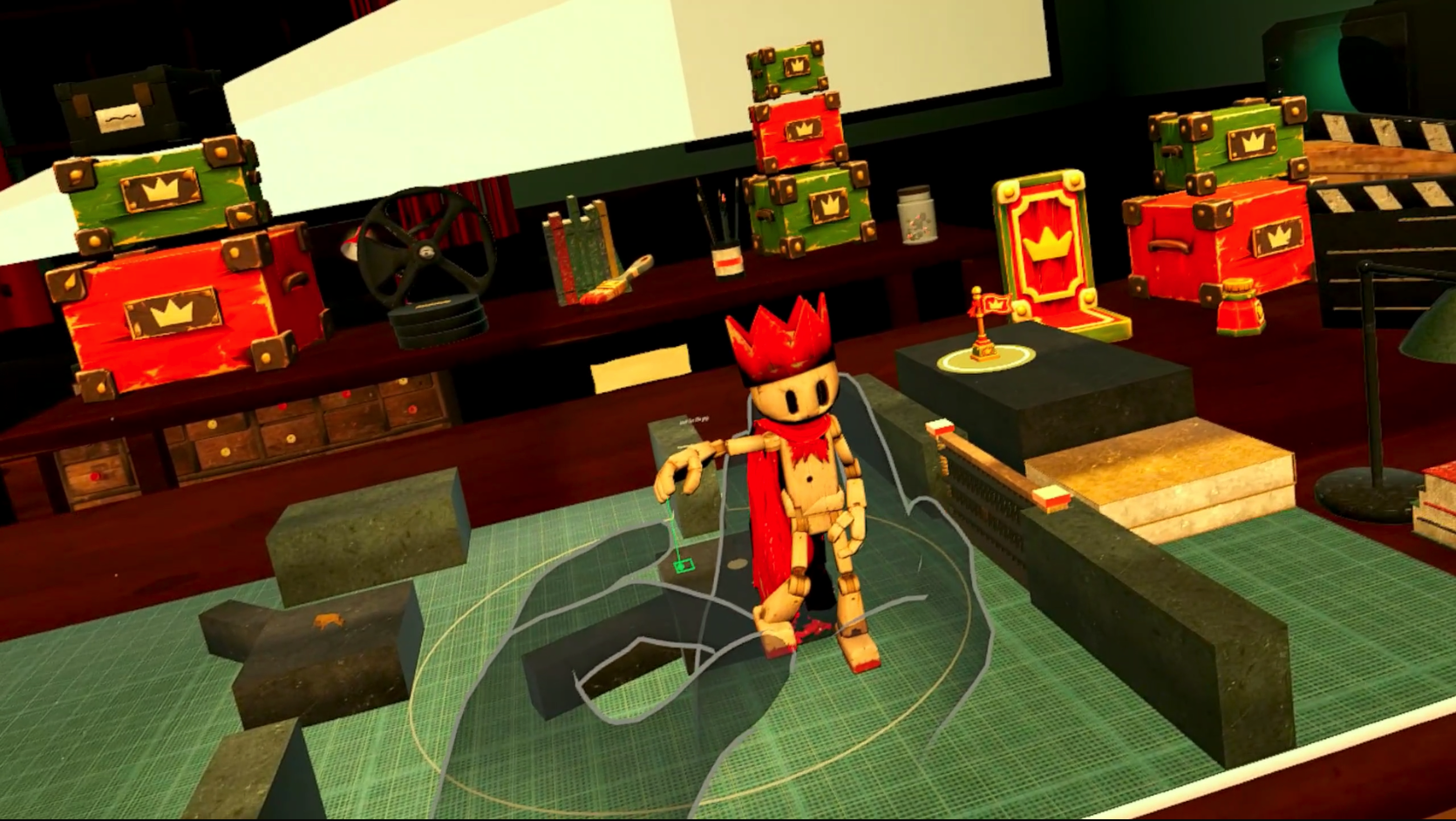
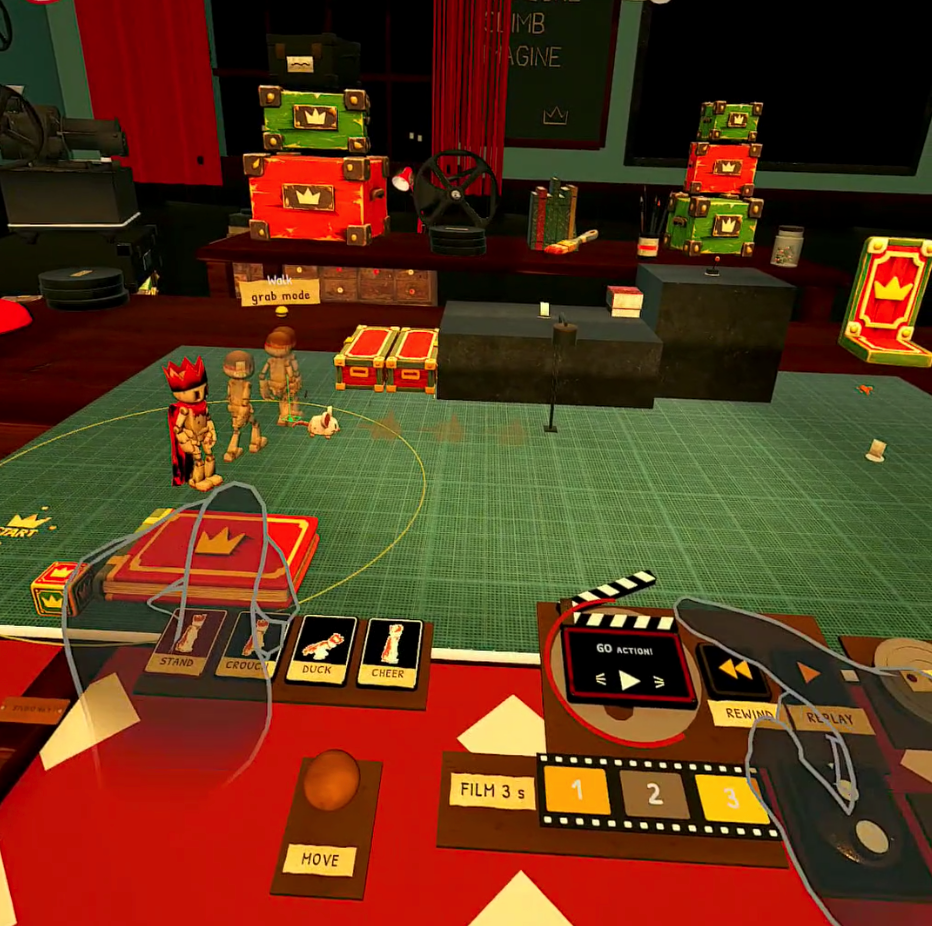
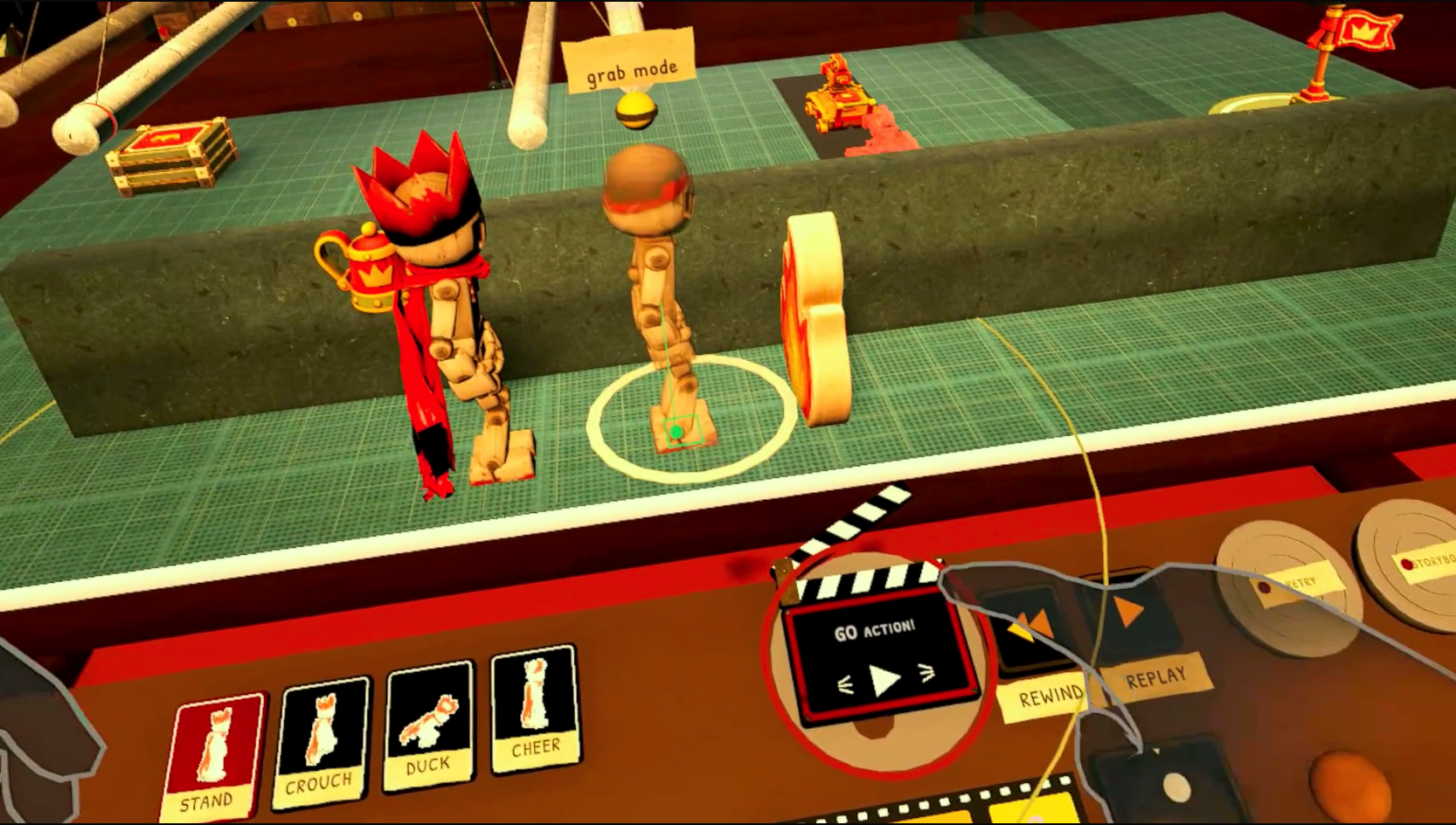
You sit at a film-studio desk. On the cutting mat is a miniature set, and on it stands a carved king 13 cm tall. You pick him up with a fist or a pinch and set him down where he should go. A ring on the board shows how far he can get in one turn. He finds his own way to the spot: he walks, climbs a ledge, hops down or crouches under a shelf. While one hand holds him, the other can pose an arm, a leg or his head.
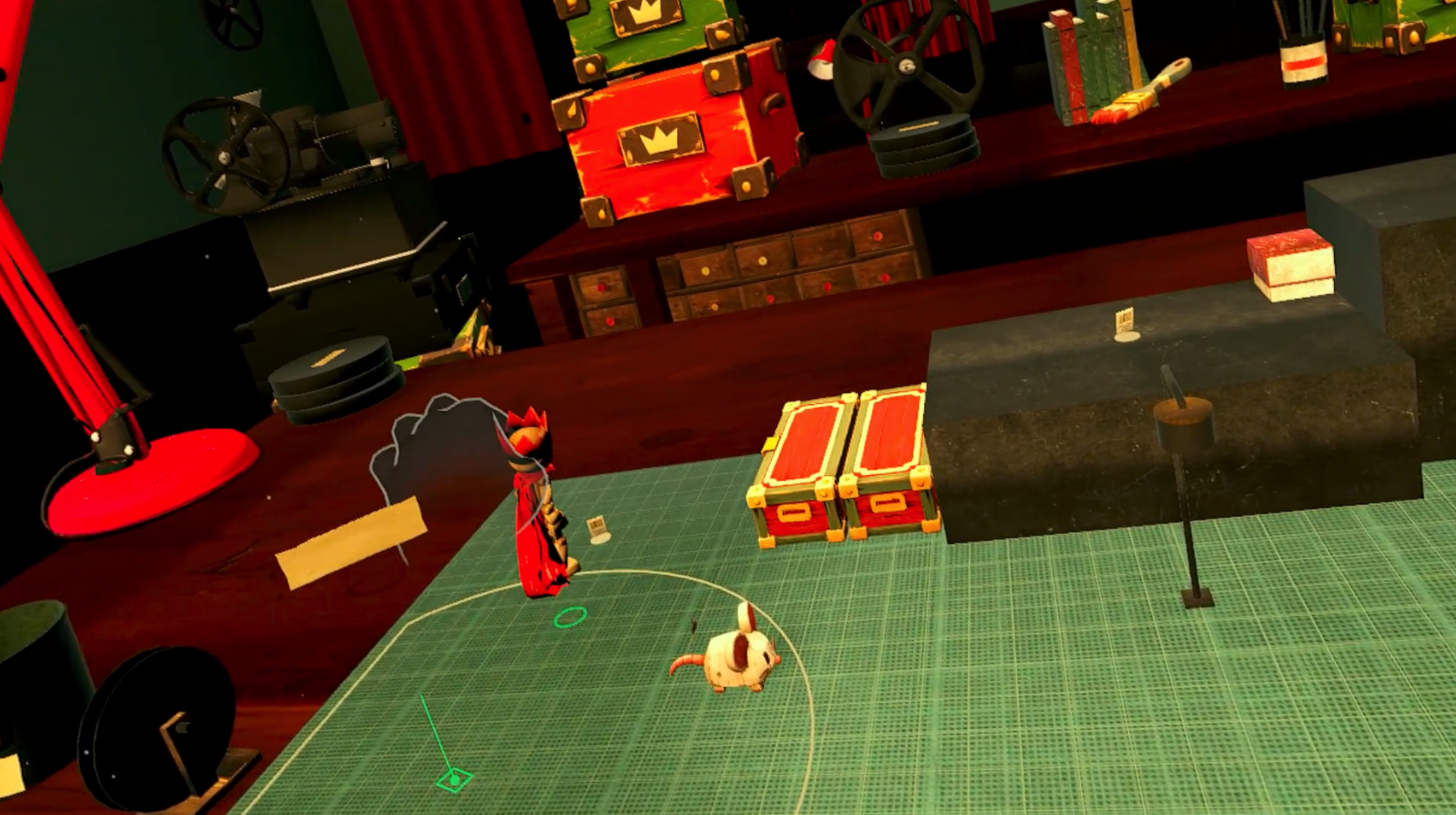
When the pose is set you press the GO clapperboard. The turn plays for up to three seconds and the hazards move: a toy train, a swinging roll of storyboard paper, desk lamps on timers, a wind-up mouse, rolling pencils etc. Ghost future outlines show where each hazard will be. If he is hit or caught, a blooper plays and he goes back to his last good pose for another try.
There are 17 story mission boards: two tutorials and 15 chapters in three acts. Any route that is physically possible is allowed. Chapters come with loose kit pieces (blocks, a matchbox, crumpled pages) that you place by hand as stairs, a bridge or a soft landing. Each chapter card lists its routes as "takes", with a par and your best for each, and gives up to three stars. When you clear a chapter, your turns play back as a short stop-motion film.
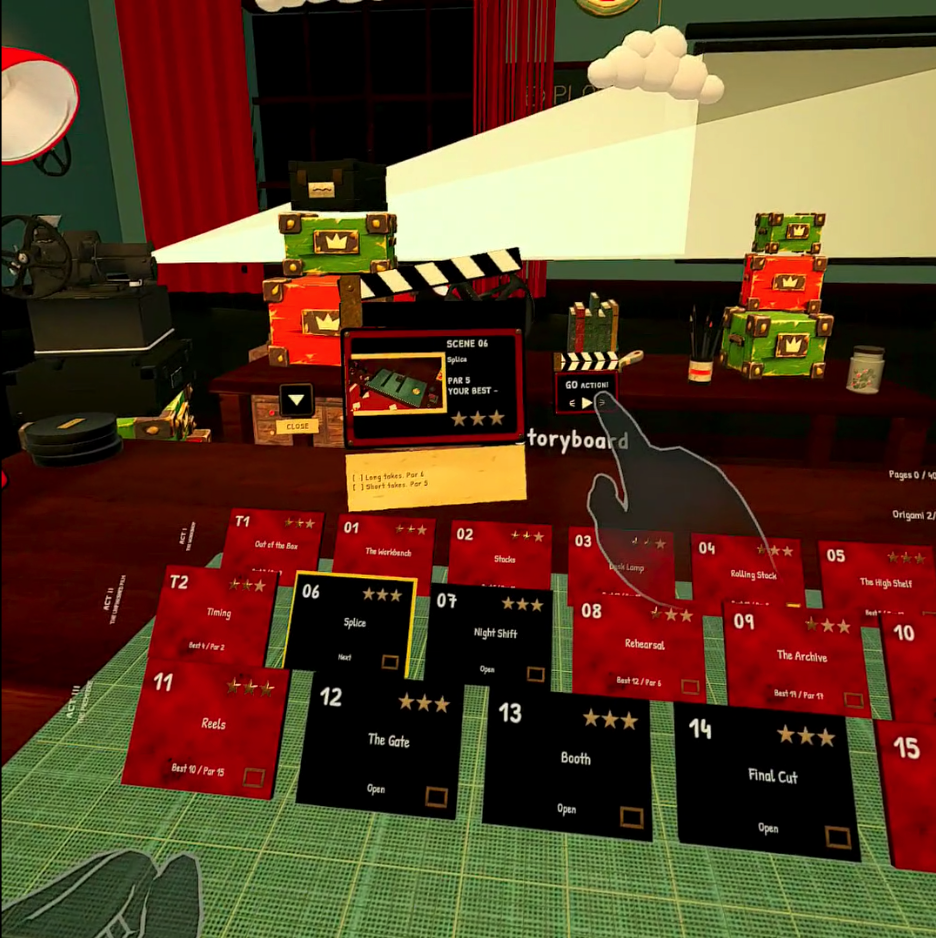
The UI/UX are objects on the desk: the clapper, pose cards, a dial that sets a turn to 1, 2 or 3 seconds. Knobs on the rail move, turn and resize the table to fit your seat and your reach. Chapter select is a storyboard of scene cards, each with a picture of its set.
Desk mode is a separate passthrough mode. The headset's scene data, read through the Mixed Reality Utility Kit, finds your real table and makes it the stage. The edge of your desk is a real edge and the king can fall off it. It is for playing with the king at home and making your own animations/scenes.
There is also a sandbox mode for players to create their own levels and share them online to the Library, players can also download other player created levels to play with their own little king. More props get added to your kit as unlocks as you get through the main story line.
How we built it
The game is made in Unity 6 with URP, OpenXR, and the Meta XR SDK. Hands are tracked through the Meta Interaction SDK and every button is poked with a finger. No controller is needed anywhere.
A turn is worked out from the poses you committed and the time on the clock, with no physics simulation, so the same turns always give the same result. That keeps the replay films exact, and it let me write a solver that plays each chapter through the real turn loop. Every take printed on a chapter card was proven this way. About 270 automated tests cover the rules.
The design, the story and the art direction are mine. The king and most props are models I generated with Tripo AI, then cut into parts, scaled and fitted in Blender. The lettering is Patrick Hand. The code was written in Claude Code sessions working to my direction. I decided what to build, tested each build with my own hands in the headset and chose what stayed. Music is licensed library music from uppbeat.
Challenges we ran into
The first grab code passed every scripted test and failed with real hands. A hand closed round a 13 cm toy sits right at the fist threshold, so a grab started and ended on the next frame. A grab log recorded in the headset showed it, and the fix was a hold margin on the fist and smoothing on the hand.
The king also started at 36 cm, and the boards felt cramped. After three headset tests he became 13 cm in a real-size world, and every board was laid out again for that size. Rebuilding each stage after the fact, for a smaller king, was indeed a challenge.
Accomplishments that we're proud of
Picking up the king and putting him down feels like handling a real figure. You only show him where to go and he works out the move, so the first board needs little teaching.
What we learned
Test with real players early as there is absolutely no set standard in how a game like this should be.
What's next for The Last Little King
Think about my release method with Meta start team. Work on new levels for DLC
