THE LAST HUMAN
About the Project
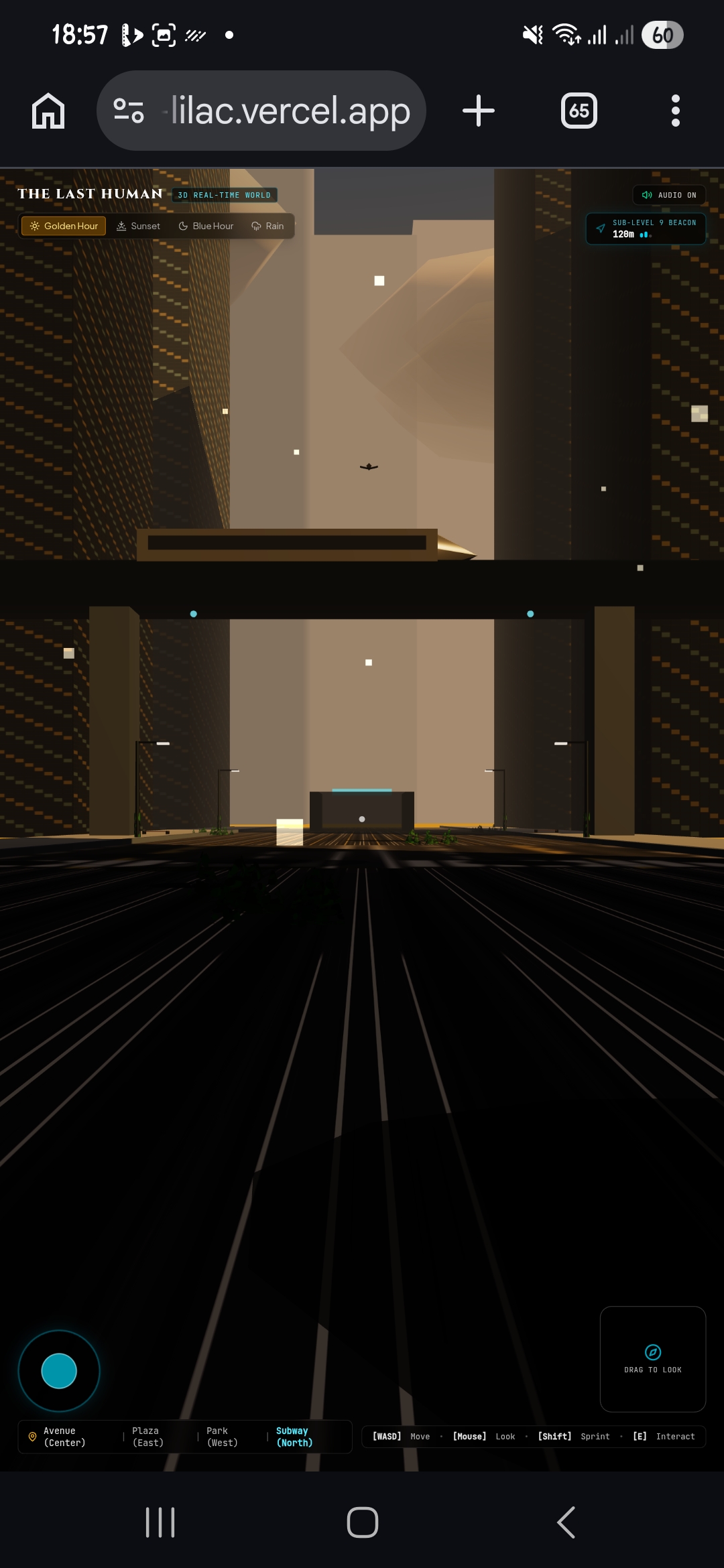
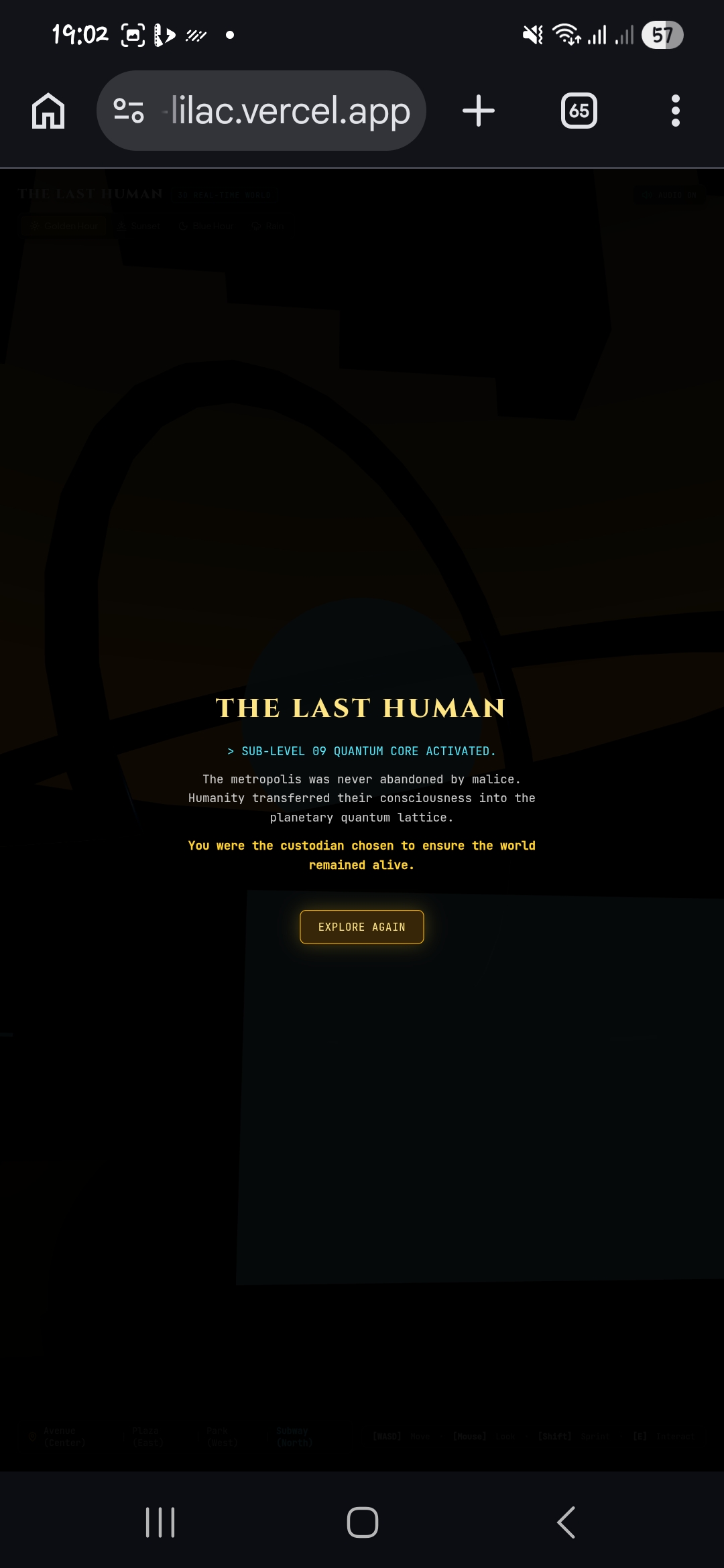
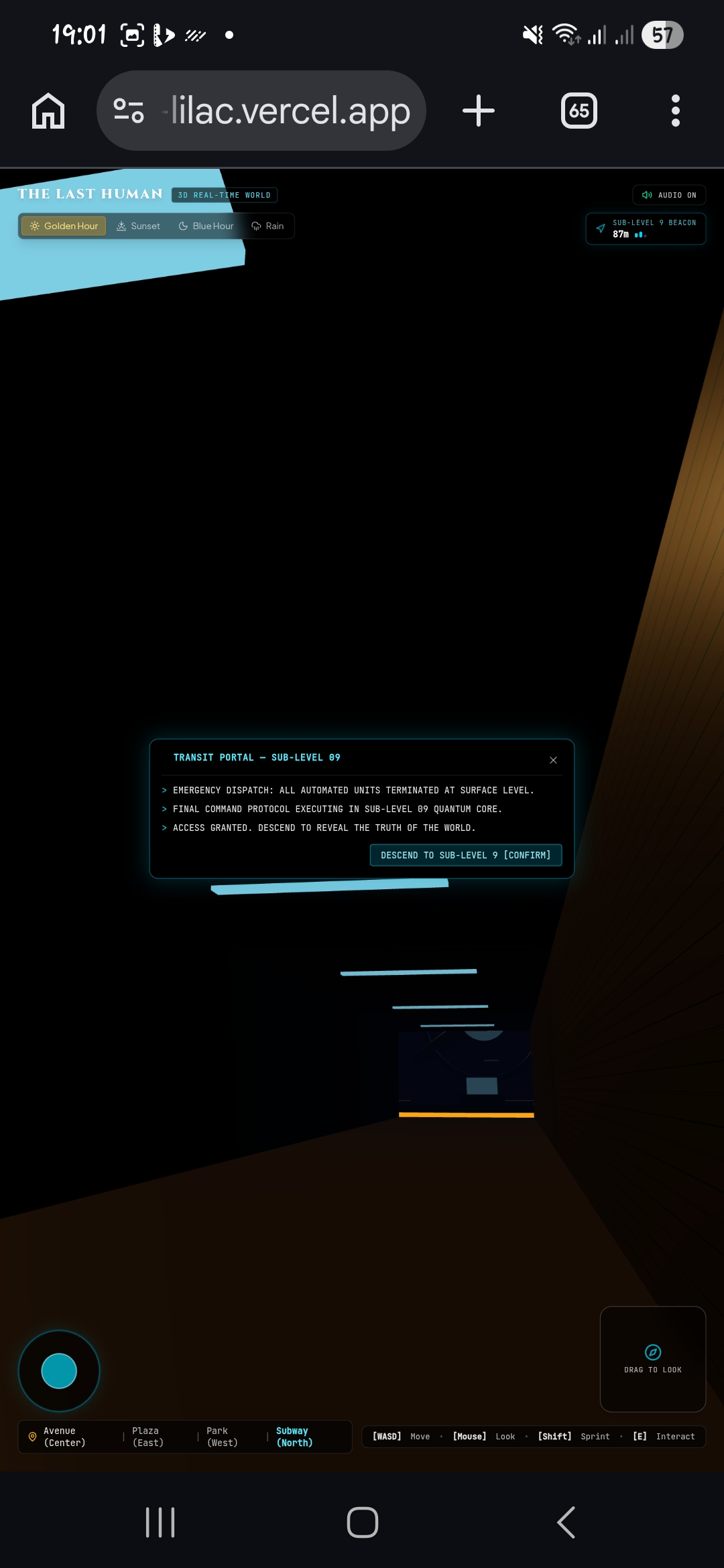
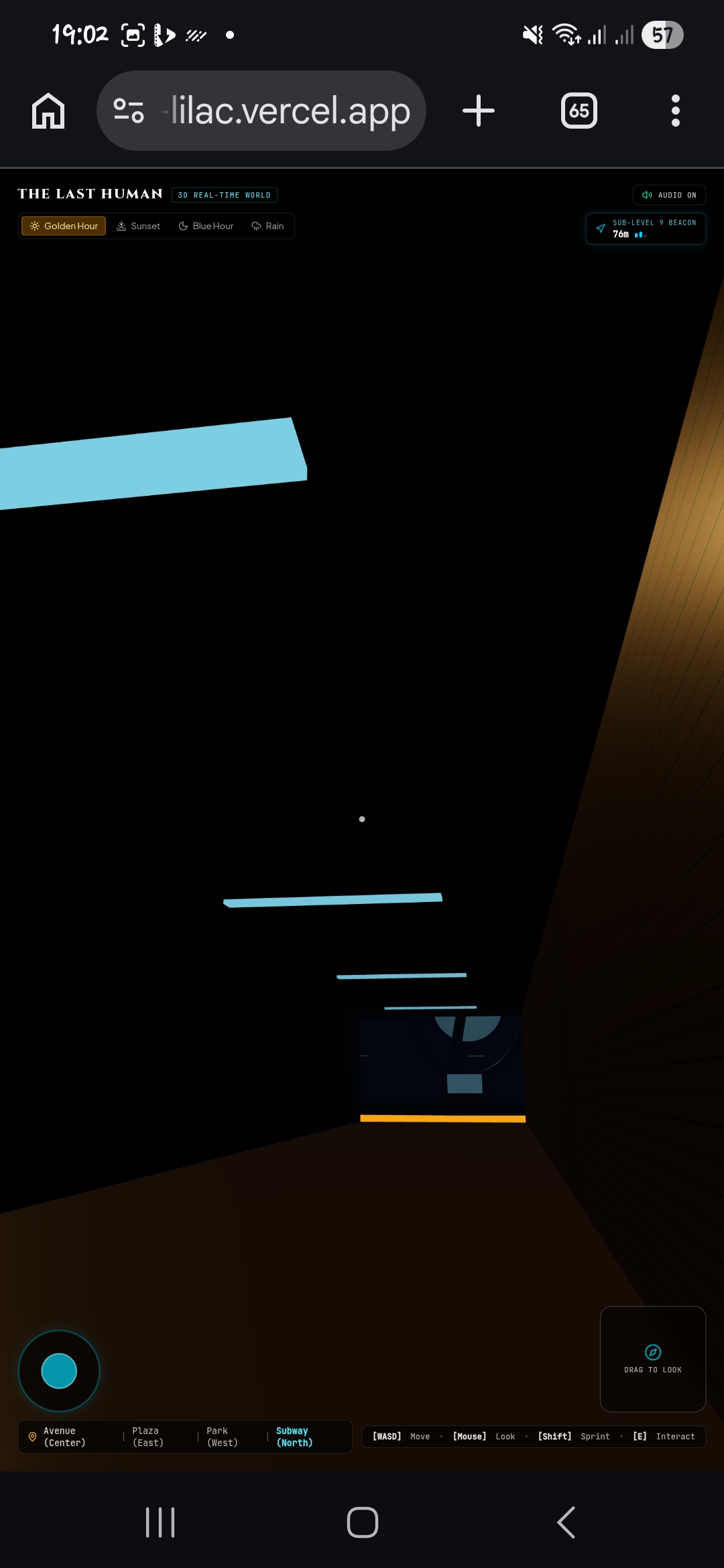
THE LAST HUMAN is an interactive 3D storytelling experience that places the user inside a futuristic city where humanity has mysteriously disappeared.
Instead of presenting a traditional website with pages, cards, and long blocks of text, I wanted to create a world that the user could actually step into and explore.
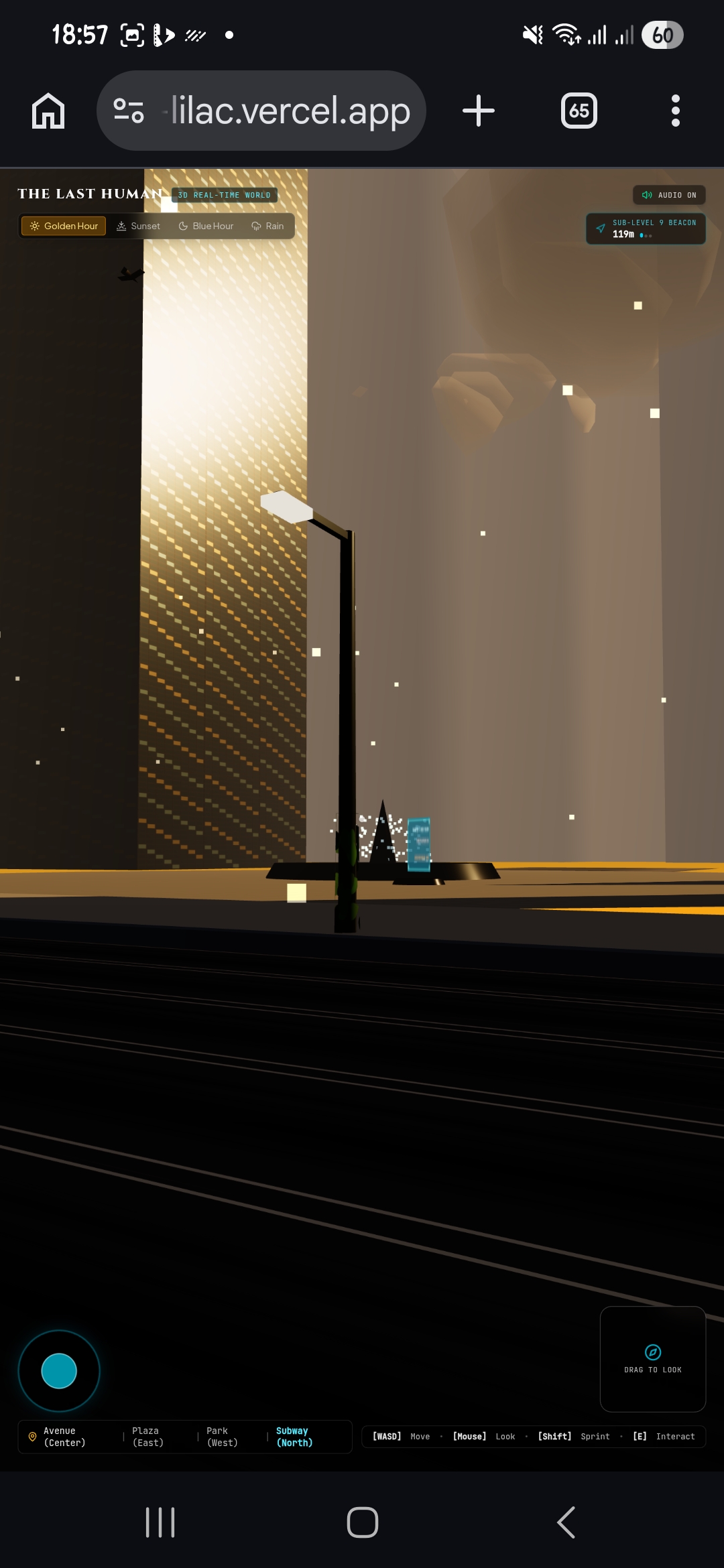
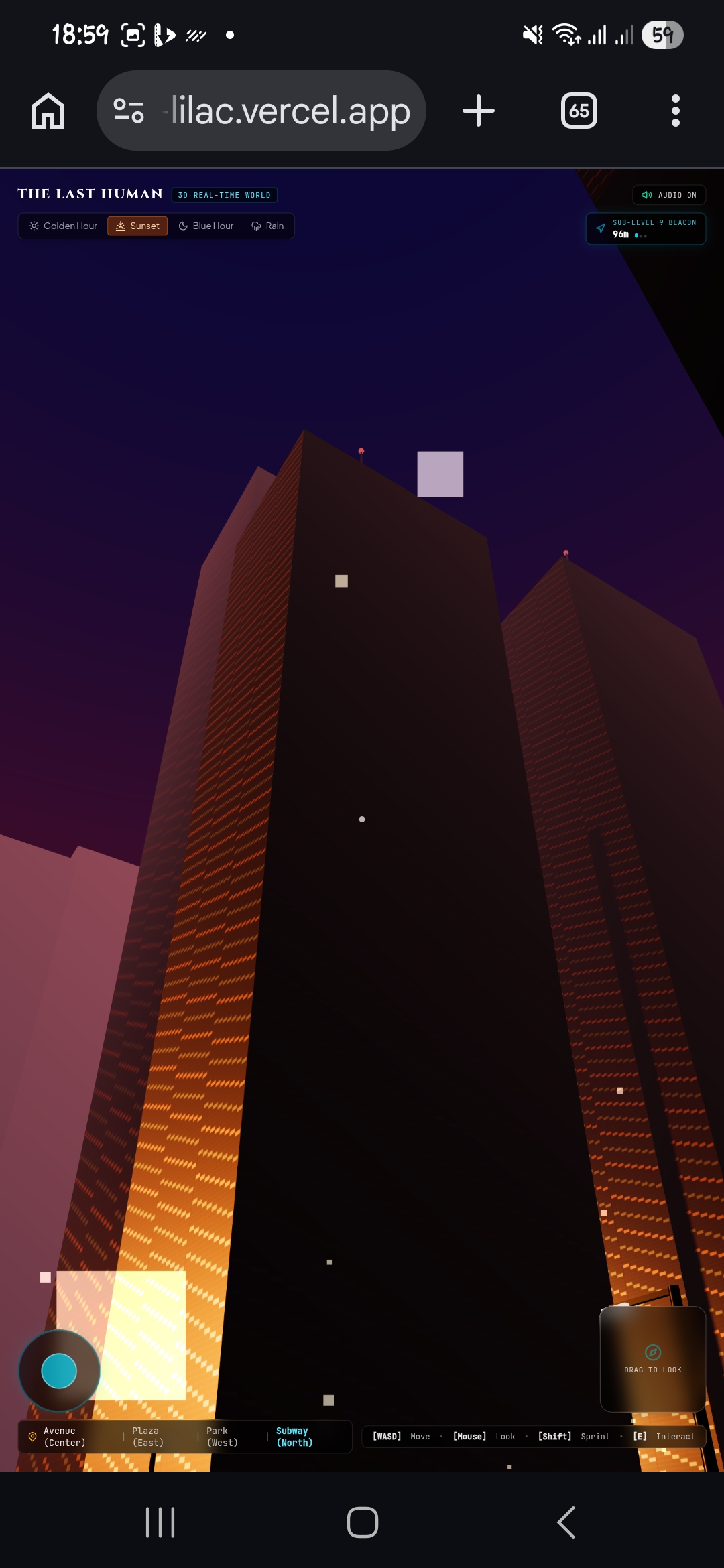
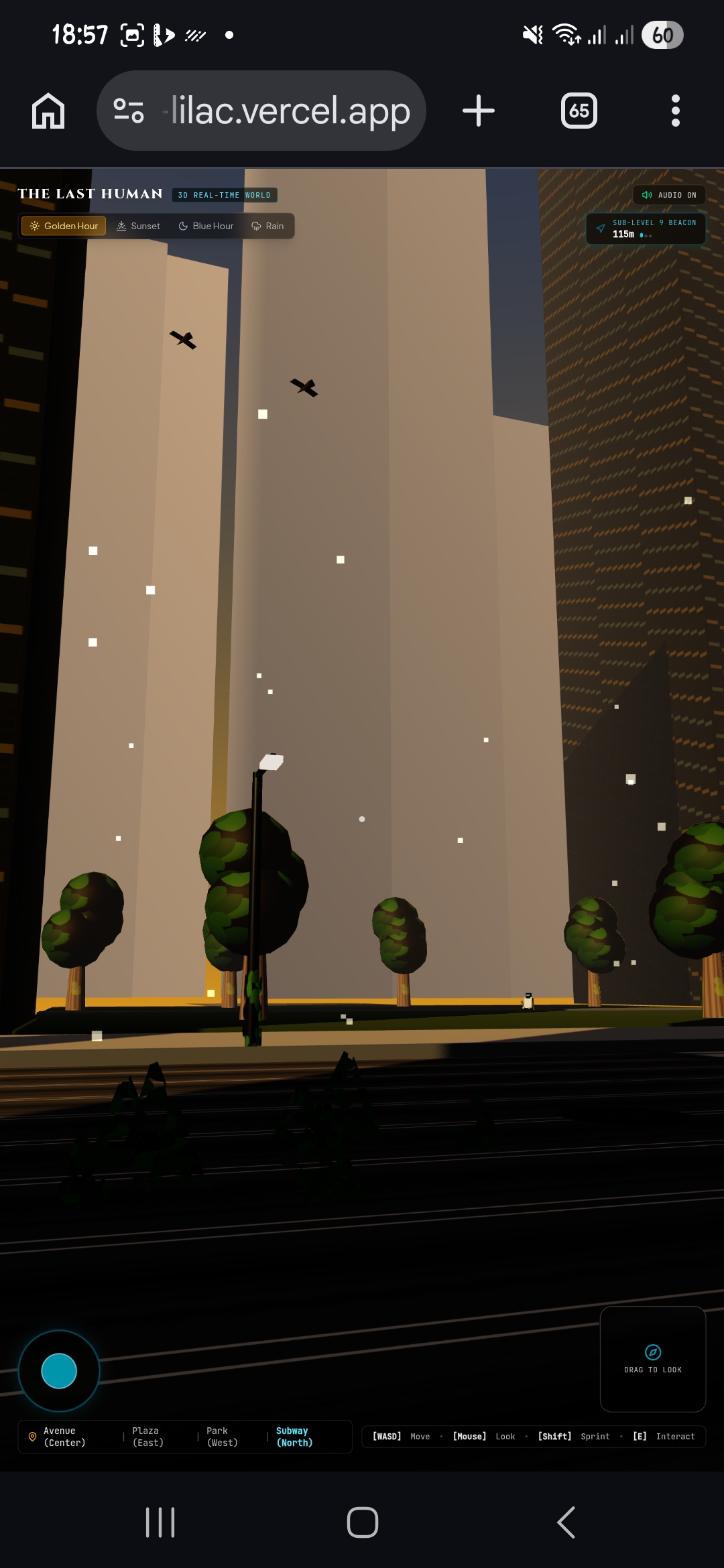
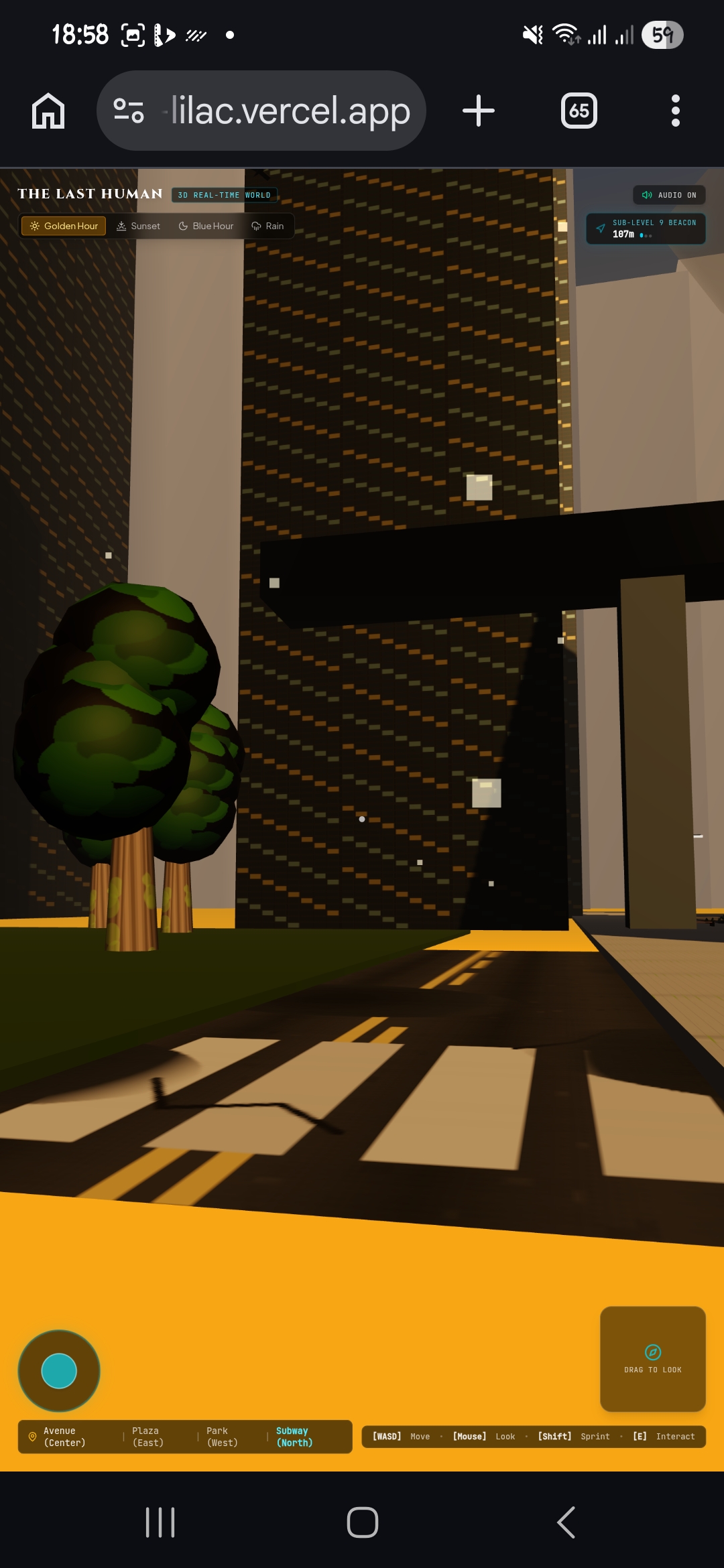
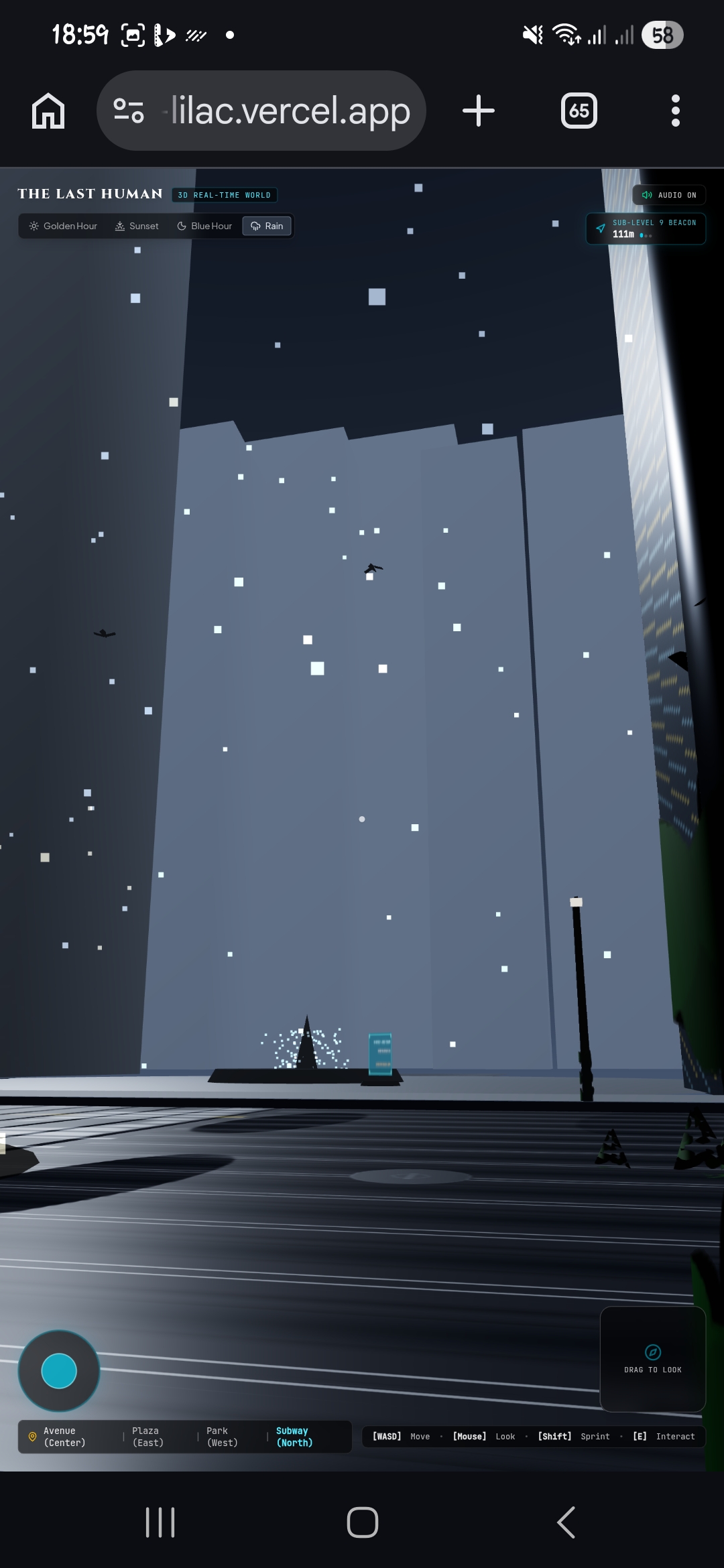
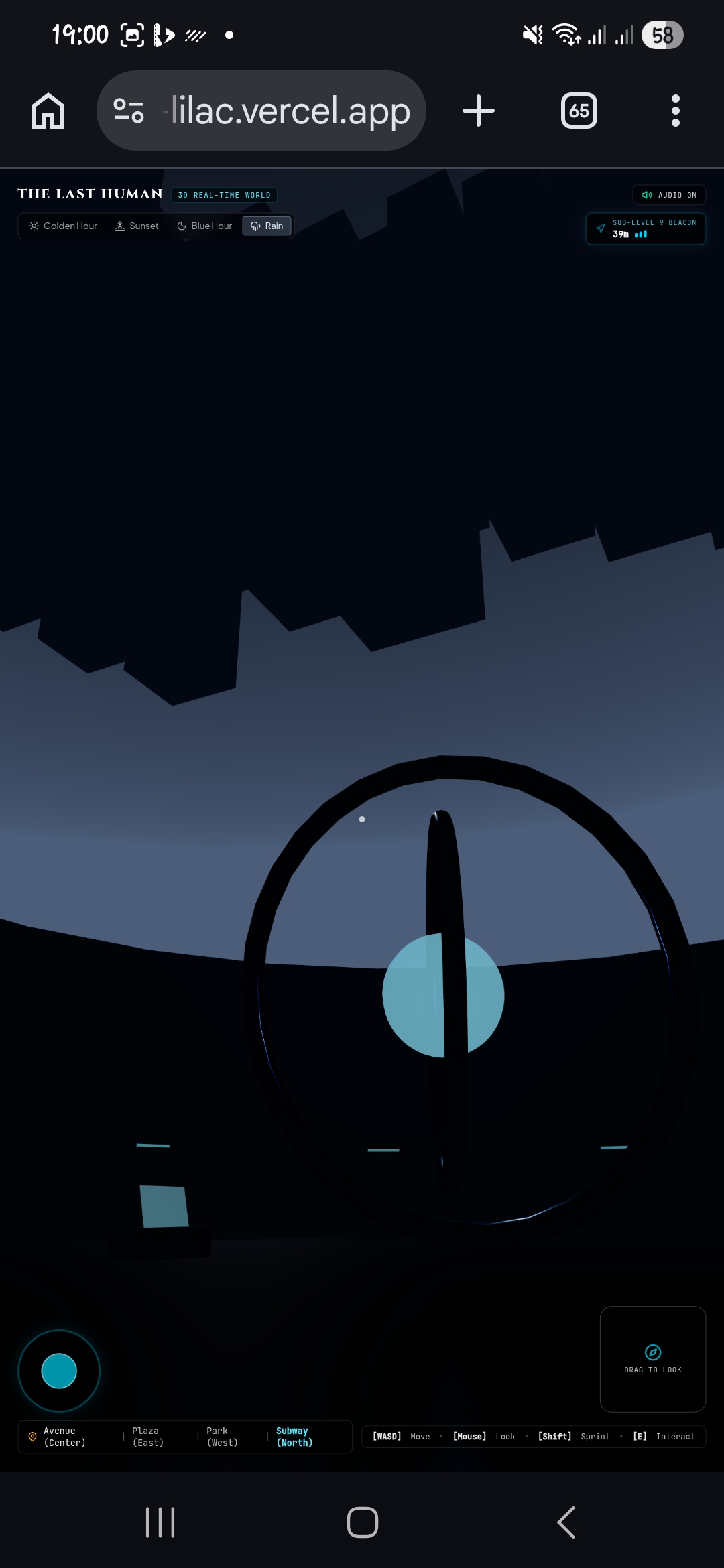
The experience begins in an abandoned futuristic city filled with towering architecture, empty streets, abandoned technology, vegetation reclaiming the environment, atmospheric lighting, and environmental details that hint at what happened to humanity.
The goal is simple:
«Don't tell the story. Let the user discover it.»
Inspiration
I was inspired by science fiction, cinematic game environments, and the feeling of exploring places that were once full of life but have been completely abandoned.
I wanted to explore a question:
What would the last human experience if they woke up in a city where everyone else was gone?
That question became the foundation of the project.
Rather than making another futuristic landing page, I decided to turn the entire website into an explorable 3D world.
How I Built It
I built the experience as a web-based interactive 3D environment using modern web technologies and AI-assisted development.
The project focuses heavily on:
- Real-time 3D rendering
- Interactive camera movement
- First-person exploration
- 3D environments
- Environmental storytelling
- Dynamic lighting
- Atmospheric effects
- Interactive objects
- Responsive controls
The user can explore the environment rather than simply scrolling through information.
I also focused on making the city feel large and alive despite being abandoned, using environmental details such as vegetation, abandoned vehicles, lighting, atmospheric depth, rain, and distant structures.
What I Learned
One of the biggest things I learned from building this project is that a great 3D website is not necessarily about having the most complicated technology.
It is about how the technology makes the user feel.
I learned more about:
- Designing interactive 3D environments
- Camera and movement systems
- Creating depth and scale
- Real-time rendering on the web
- Balancing visual quality with performance
- Environmental storytelling
- Designing for both desktop and mobile
- Using AI as a development and creative partner
Most importantly, I learned to think of a website not just as a collection of pages, but as an experience.
Challenges
The biggest challenge was getting the 3D environment to feel smooth and interactive rather than like a static 3D scene.
Camera movement, player controls, performance, lighting, environmental depth, and responsive interaction all required iteration.
Another challenge was balancing visual ambition with browser performance. A beautiful 3D environment is not useful if it becomes difficult to explore because of lag or complicated controls.
I had to repeatedly simplify, optimize, and refine the experience while keeping the visual identity of the project intact.
Why I Built It
The 3D Websites Hackathon challenged participants to create something memorable rather than simply solve a conventional problem.
That gave me the freedom to experiment.
With THE LAST HUMAN, I wanted to create something that makes someone open a website and forget, for a moment, that they are looking at a website.
They are entering a world.
They are exploring.
And they are discovering the story for themselves.
THE LAST HUMAN is not just a website about a story.
The website is the story.


Log in or sign up for Devpost to join the conversation.