-
-
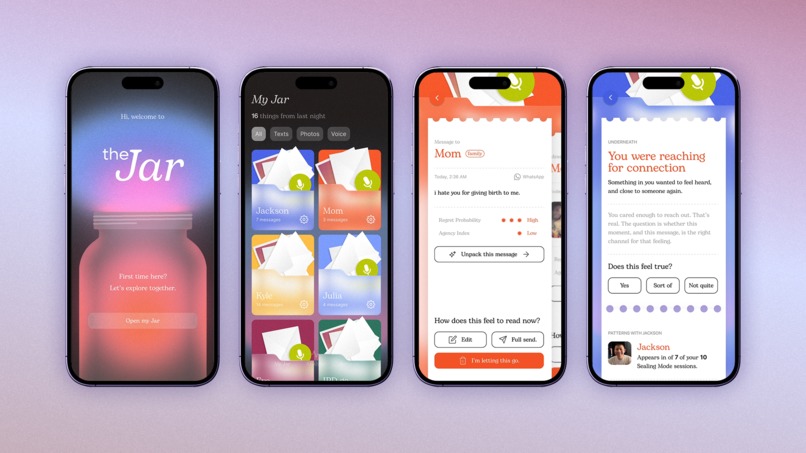
Overview
-
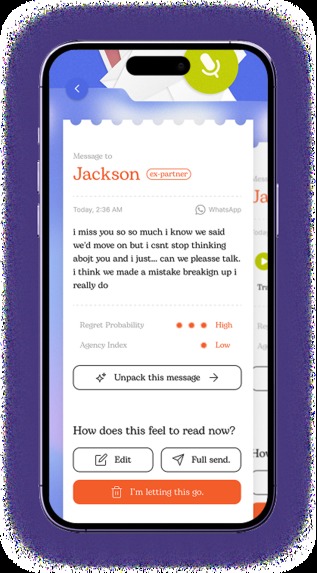
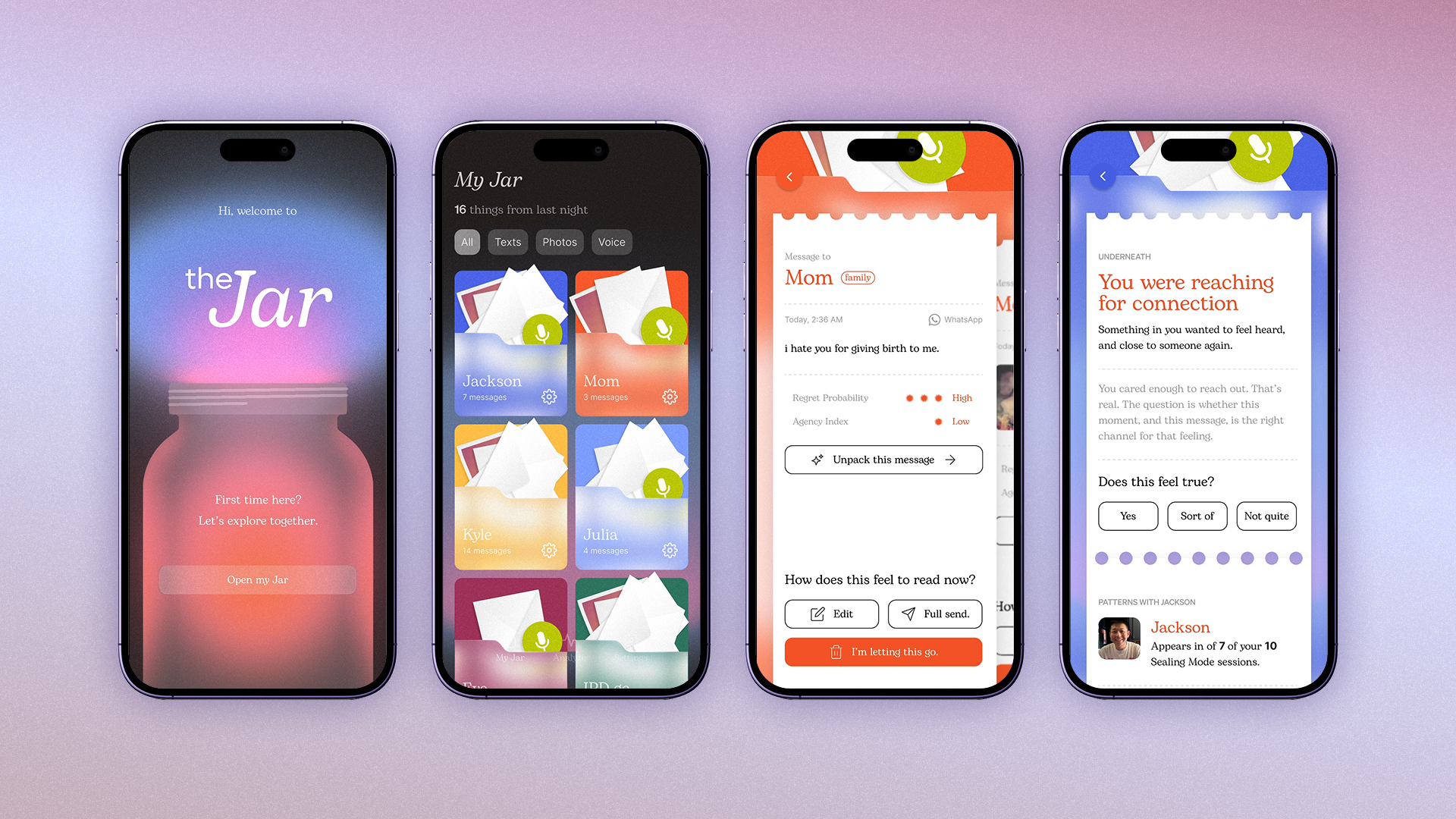
Extracted feelings garnered from user's message and past conversations with recipient.
-
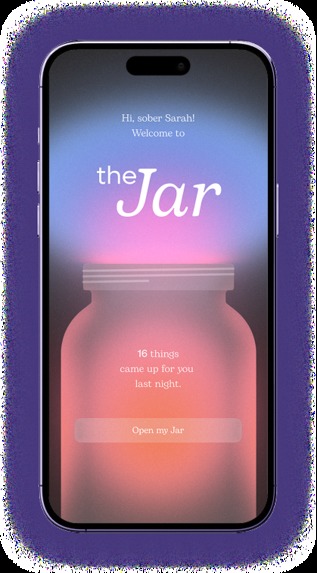
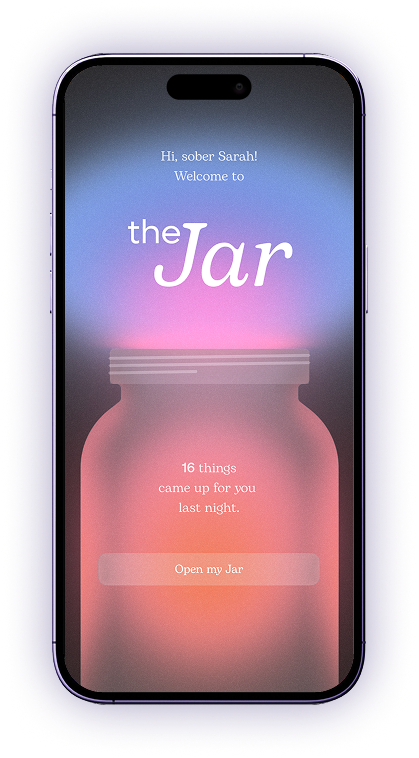
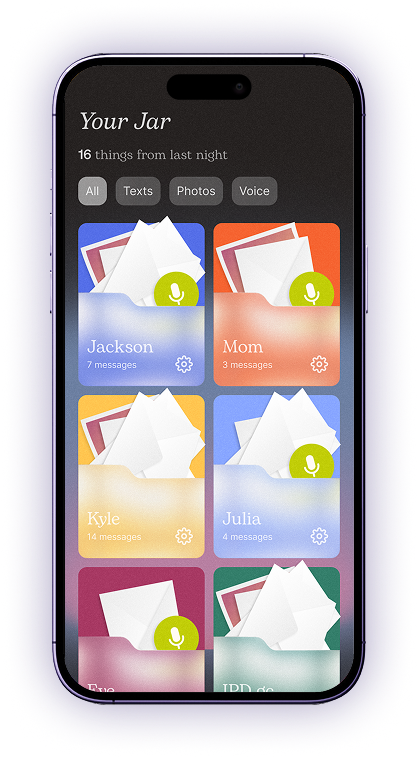
Landing page for The Jar.
-
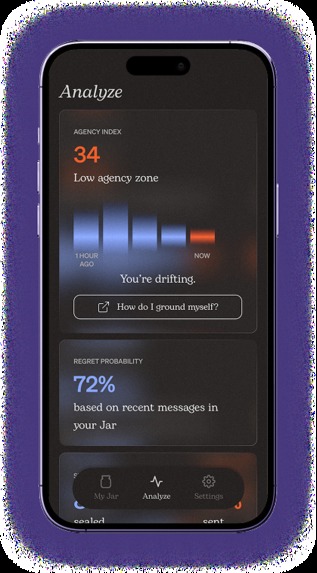
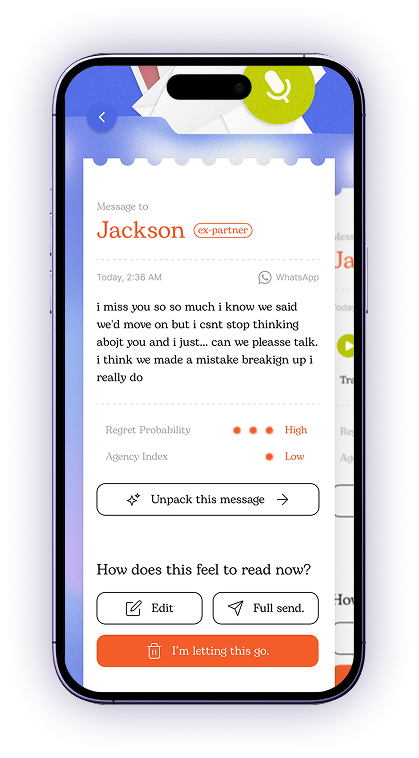
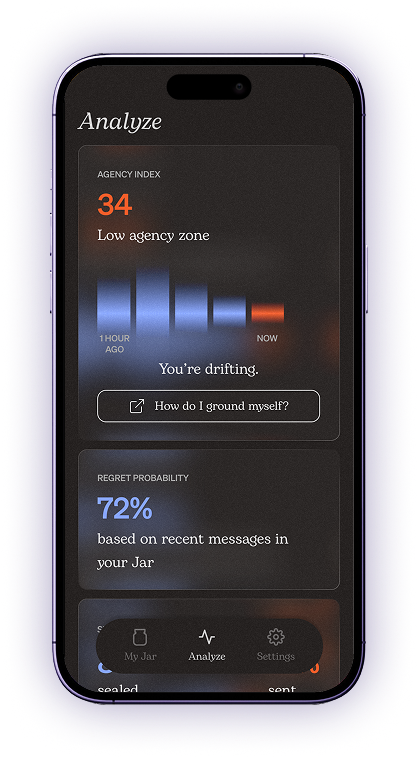
Live status indication metrics including Agency Index, gathered by both habitual & contextual data such as time of day, typo rate, etc.
-
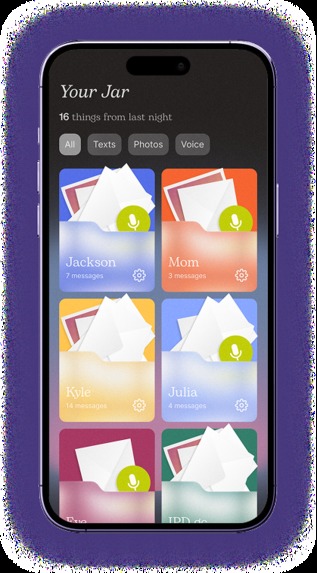
Collected messages from a night out.
Inspiration
The Jar was inspired by conversations with friends about inebriation and the unintended consequences of a night out—especially the infamous “drunk text.” Many people experience strong emotions while drinking, but the ability to communicate those emotions clearly is often impaired. Alcohol lowers inhibitions and increases confidence while simultaneously reducing judgment and emotional nuance. As a result, messages sent in that moment can misrepresent the sender’s true feelings or intentions.
We began to question whether drunk texts are always mistakes, or if they could instead be a window into someone’s honest emotional state. This led us to explore the idea of clarity as a sensory experience: the ability to accurately perceive and express emotions versus the ability to evaluate consequences and make sound decisions.
What it does
The Jar is a speculative tool designed to intercept impulsive communication and transform it into a moment of reflection rather than regret.
When Sealing Mode is activated, messages that carry a high risk of regret are intercepted before being sent and stored in a digital “Jar.” The system estimates risk using speculative metrics such as:
Agency Index – a measure of the user’s decision-making capacity at a given moment. This is inferred through contextual and behavioral signals like time of day, typing patterns, and typo rate. We chose the term agency rather than clarity to emphasize the user’s ability to act intentionally rather than impulsively.
Regret Probability – a playful but expressive metric that estimates the likelihood that the user may later regret sending the message.
Instead of blocking emotional expression entirely, the Jar preserves these messages. The system then uses AI to analyze the emotional tone, underlying motivations, and potential implications of what was written. When the user is sober again, they can review the stored messages alongside this analysis. At that point, they can choose to:
- Send the message as originally written
- Edit it with clearer intent
- Reflect on the emotion and let the moment pass
In this way, The Jar bridges two forms of clarity:
- the emotional honesty of the inebriated self
- the judgment and foresight of the sober self
How we built it
We designed and prototyped the entire app experience manually in Figma without relying on Figma Make. This allowed us to fully control the interface, micro-interactions, and visual storytelling that bring the speculative concept to life.
For research and writing support, we used Claude AI to help synthesize background information and refine the app’s microcopy. However, all interaction design, visual systems, and product decisions were created by our team.
Challenges we ran into
One of the biggest challenges was translating the prompt’s requirement of a human sensory experience into a digital product concept. We were initially drawn to the emotional lens of inebriation, but it took time to frame it as a measurable “sense.” Eventually, we defined that sense as clarity, or more specifically, the tension between emotional honesty and sound judgment.
On the prototyping side, we encountered technical limitations with Figma Make. We were unable to truly translate our manually designed frames and illustrations into a functional prototype using the tool and retain our organic paper-y aesthetic. Rather than compromise the experience, we chose to build the prototype entirely by hand in Figma.
Accomplishments that we're proud of
In just three days, we created a fully realized product concept, from speculative sensing metrics to a polished app experience. The prototype includes detailed flows, micro-interactions, and emotional design elements that make the concept feel tangible and believable.
We’re particularly proud of how the design reframes “drunk texting” from something purely embarrassing or regretful into something reflective and even self-revealing.
What we learned
This project reinforced that while large language models can be useful for synthesizing information and generating language, they cannot replace human judgment in product design. Turning research and abstract ideas into a coherent user experience still requires human interpretation, creativity, and intuition.
In our process, AI helped with synthesis and refinement, but the conceptual framing, speculative sensing model, and design decisions came from our team.
What's next for The Jar
Although The Jar began as a speculative design project, we believe the concept has potential beyond FigBuild. Next steps could include exploring more realistic behavioral signals for detecting impulsive communication, refining the emotional analysis experience, and expanding the concept beyond intoxication to other emotionally heightened states.
Ultimately, The Jar asks a larger question: What if moments of impulsivity could become opportunities for self-understanding rather than regret?
Built With
- claude
- figma


Log in or sign up for Devpost to join the conversation.