-
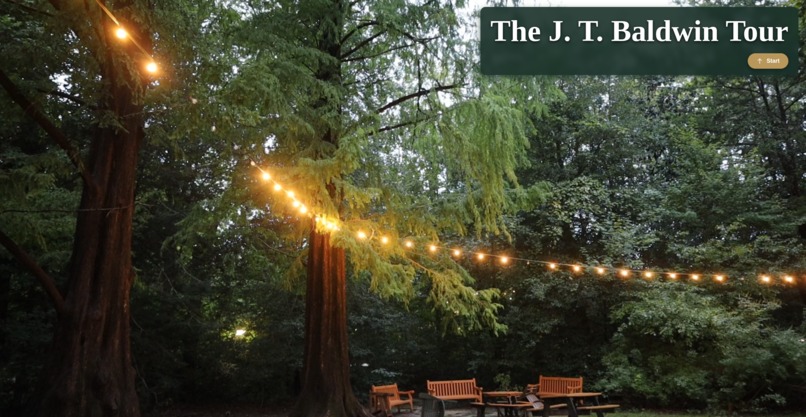
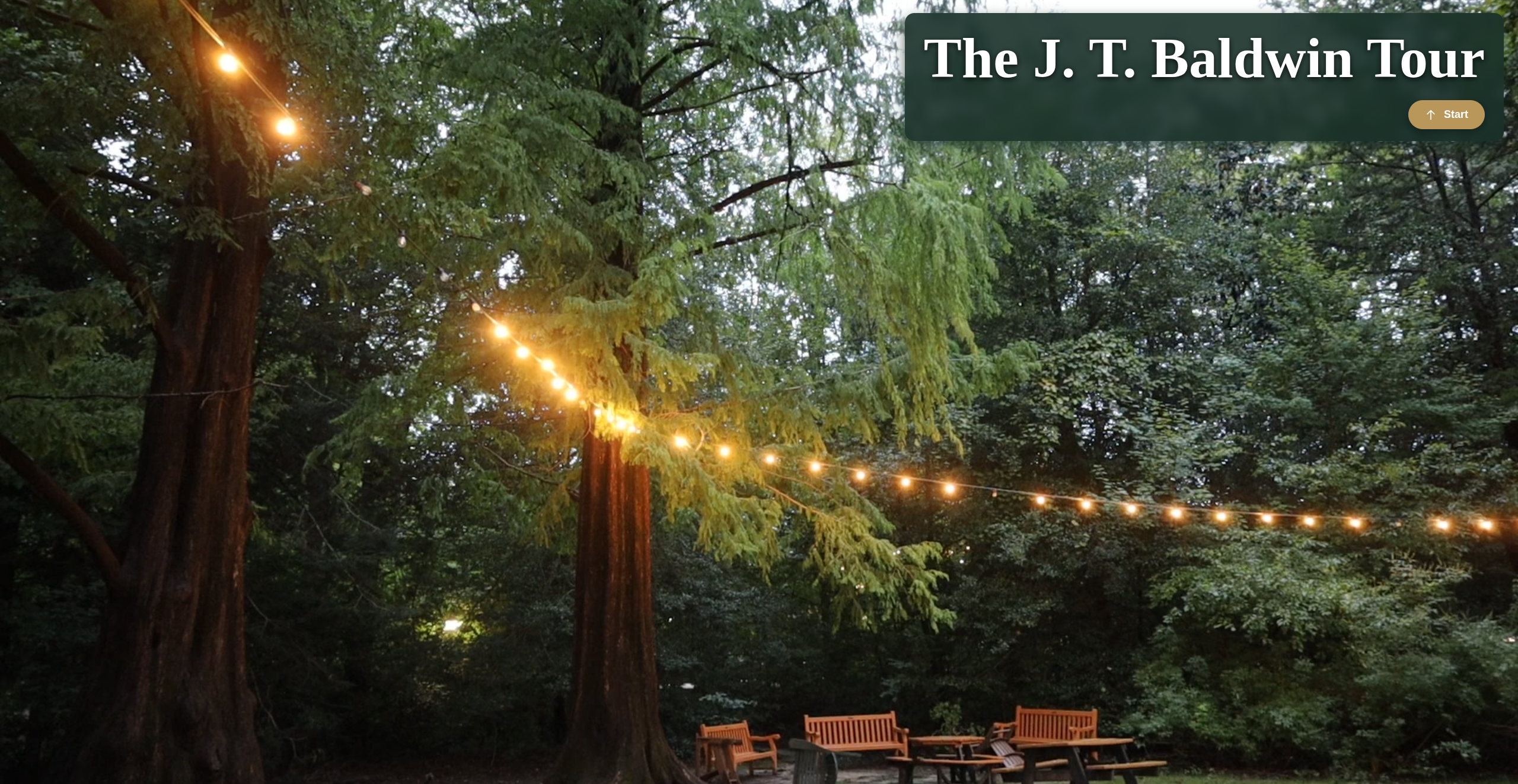
Home page, view of Baldwin's Dawn Redwood at dawn
-
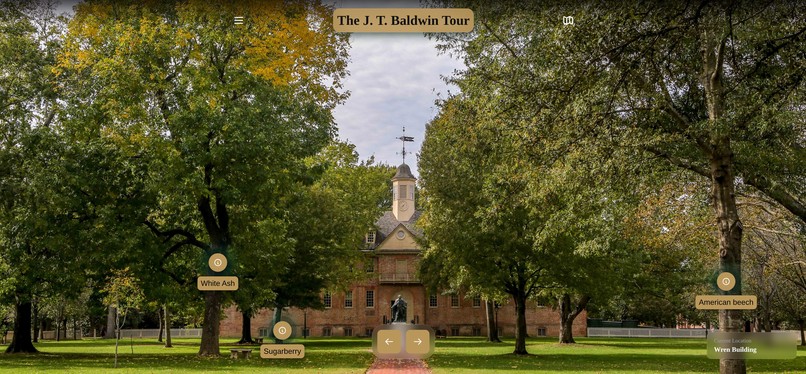
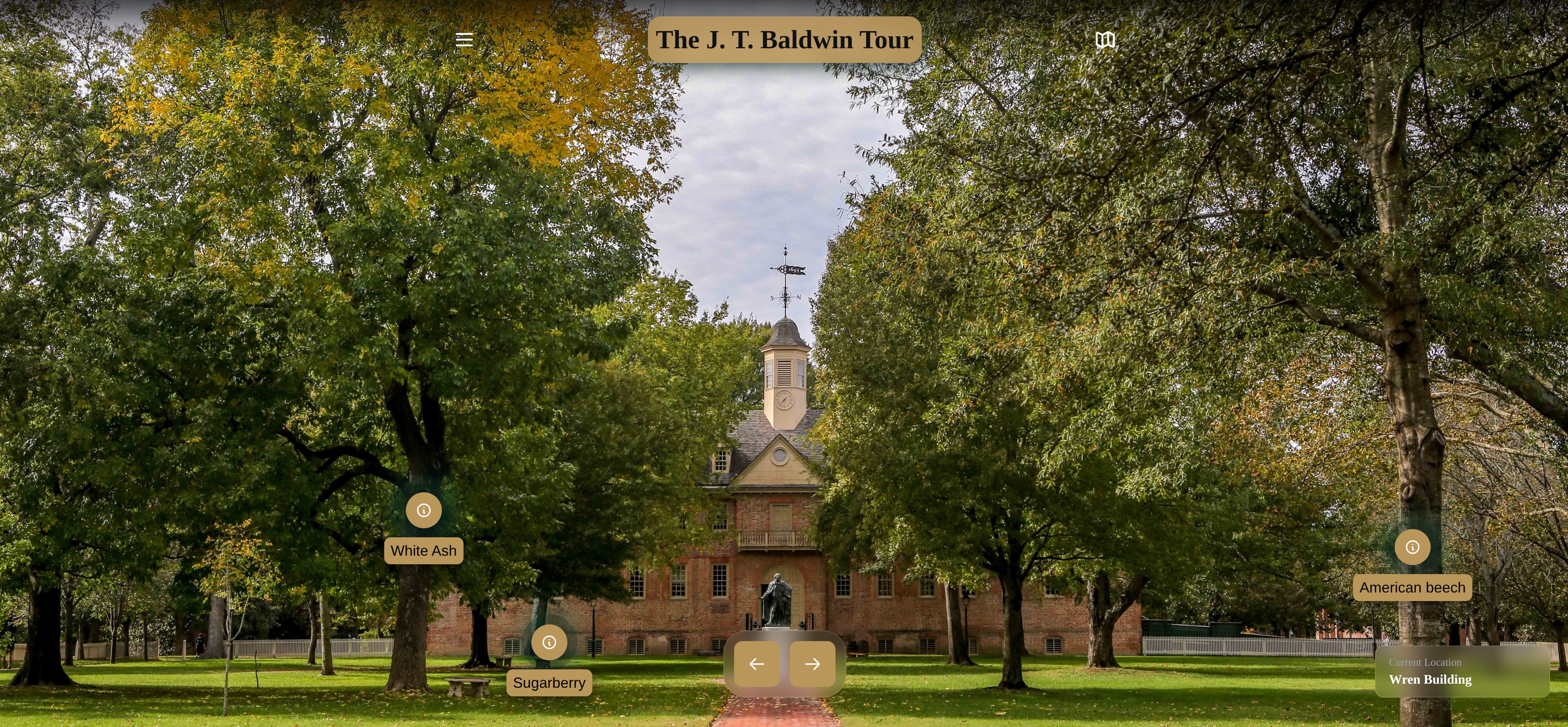
View of Wren Building
-
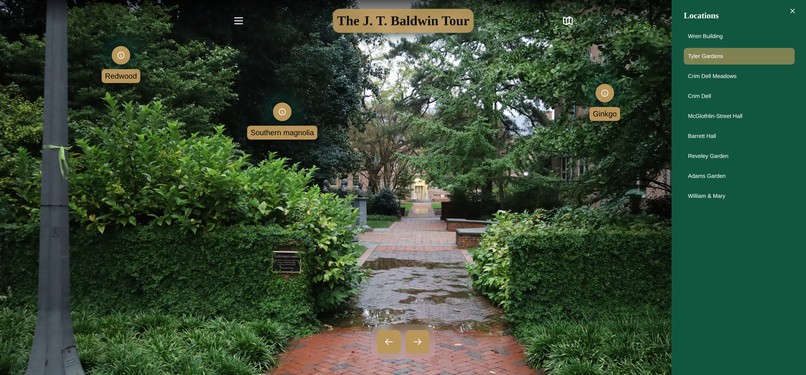
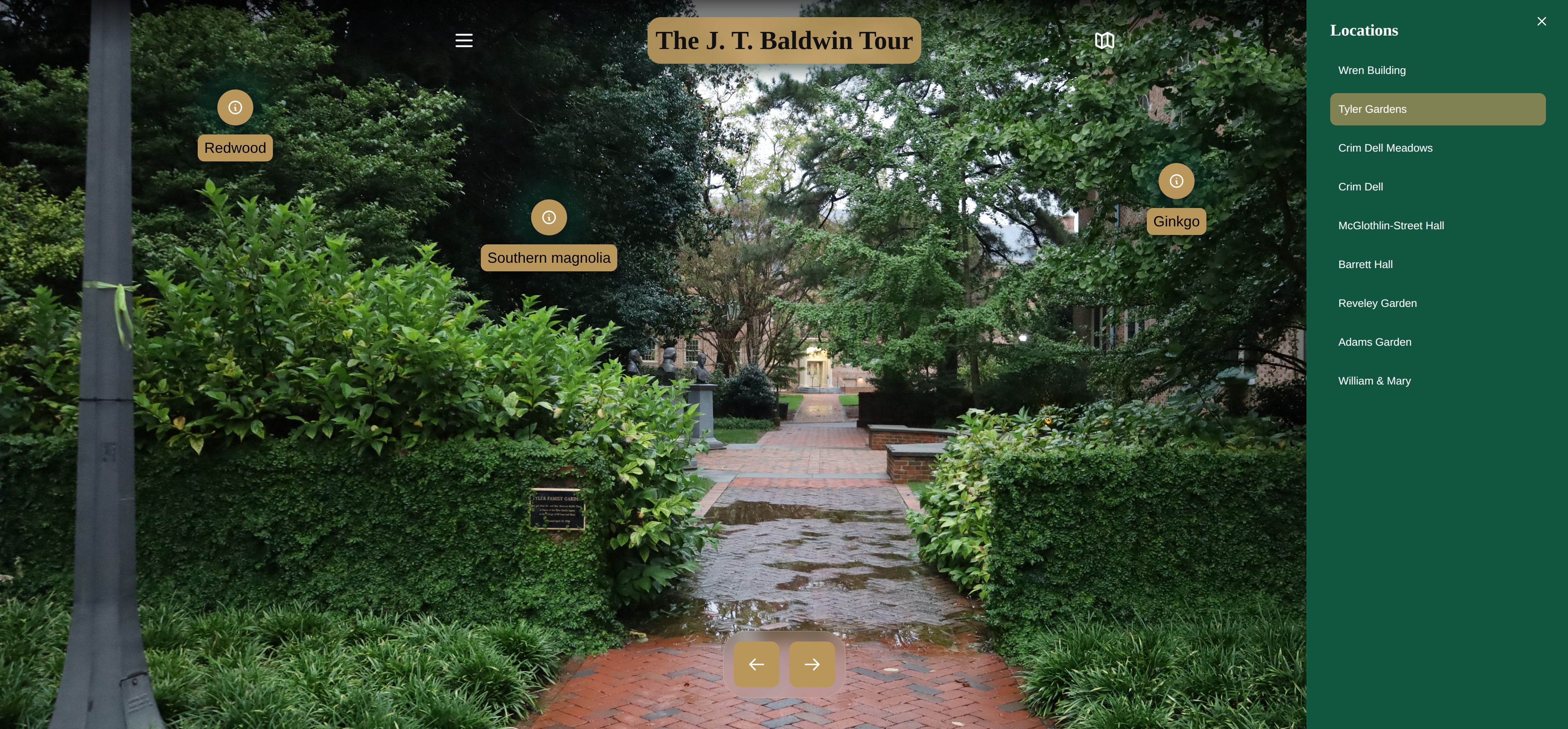
Navigation Pane (at Tyler Gardens)
-
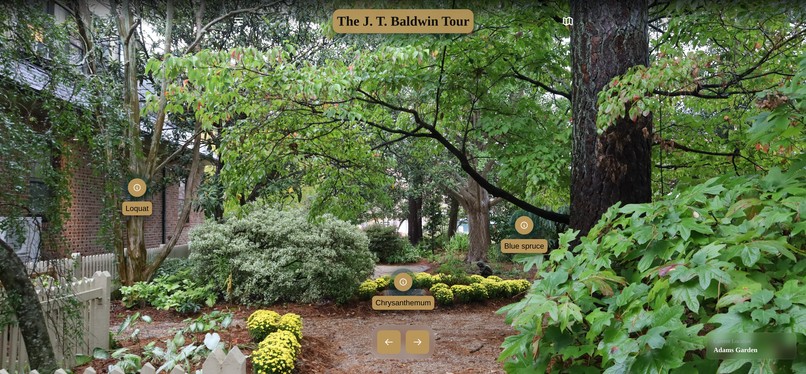
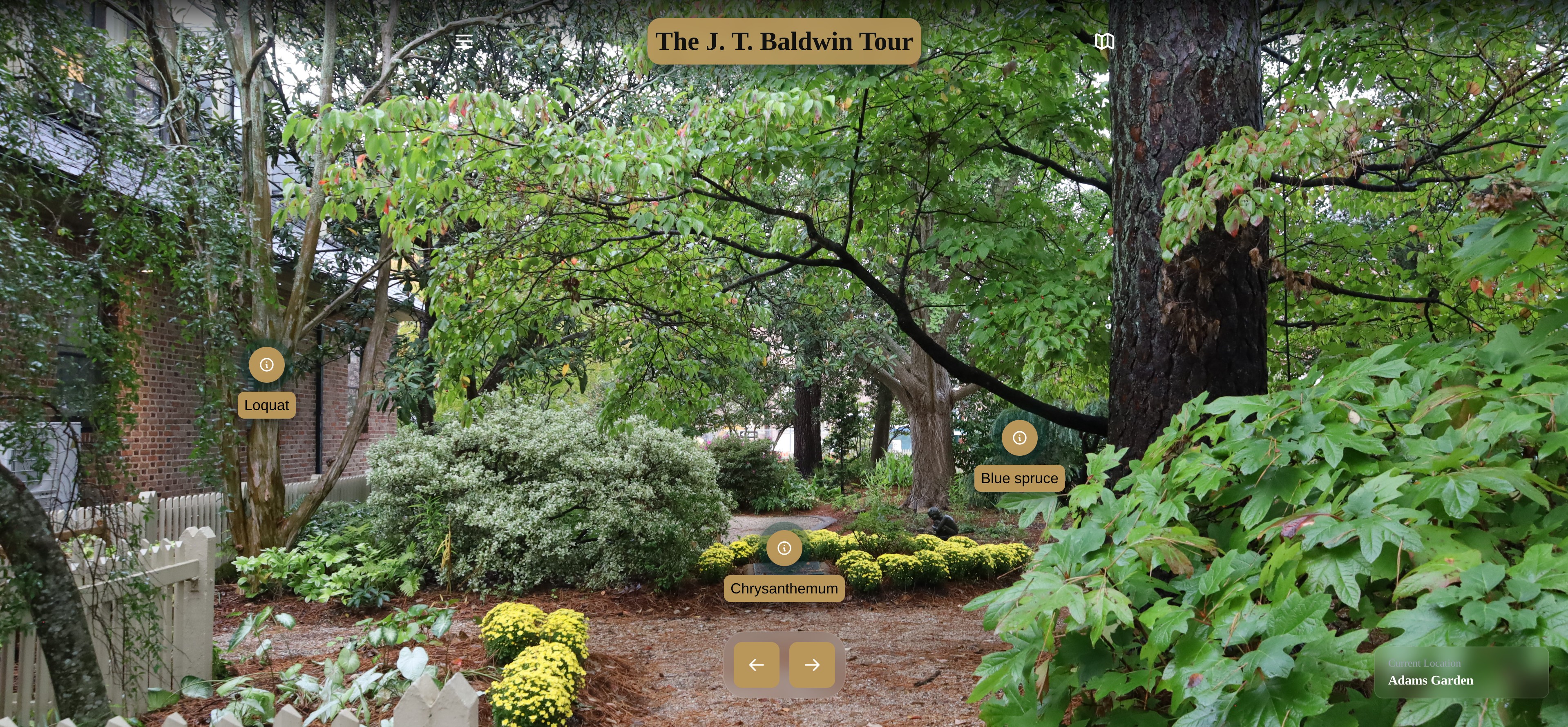
View of Adams Garden
Inspiration
This project was inspired by the life and legacy of John T. Baldwin Jr., a graduate from William & Mary who went on to study at the University of Virginia and Cornell University before returning to Williamsburg as a faculty member in 1937. Over the course of almost 30 years, Professor Baldwin traveled the globe conducting research, often sending back seed samples of exotic plants to Williamsburg. The Professor loved his collection, and valued it for his student's education as much as the library. He often gave tours of the campus fauna, showcasing its diversity.
After Dr. Baldwin's passing in 1974, many curators, including Prof. Mathes and Prof. Case, have upheld his work and legacy through multiple publications and a campus Arboretum. Many of Baldwin's flora have thrived in Williamsburg for nearly 75 years.
More information about Baldwin can be found here: https://www.wm.edu/as/biology/planttour/ https://en.wikipedia.org/wiki/John_Thomas_Baldwin
Personally, I have attended William & Mary for four years - I have walked past these trees and plants every day for my entire college education - and I never knew the history behind it. I believe that raising awareness for the hard work put in to our campus environment will help sustain it for years to come.
What it does
This project aims to sustain the passion for campus flora that J. T. Baldwin championed for over 50 years ago. Tourists start at a home page; a tranquil landing spot showcasing the Dawn redwood, a tree that Baldwin himself planted and still stands over this campus today. Then, once the tour starts, the site leads you through (roughly) Baldwin's original tour path, highlighting interesting flora along the way. There are nine locations in total, each with 3-4 flora. Many of the trees highlighted are exotic and can be attributed directly to J. T.'s efforts.
How I built it
The J. T. Baldwin Tour was built entirely in HTML with CSS. A fancier framework was considered and at first, but once realizing that the project could be built in a much simpler fashion, I pivoted to that model. The single HTML file is admittedly busy and could be broken up, but I have never built a website without React/Node.js, so this was a nice change of pace.
Much of the data presented in the project comes from Professor Case's Arboretum of William & Mary, and remaining gaps were filled in with the help of Grace Parker, who gave the most recent in-person tour in Spring 2025.
Some of the images are from the Arboretum, but many others were taken by myself in two different nature walks that I took during the hackathon.
Challenges I ran into
I am a Computer Science major and math minor, and I haven't taken a biology course since Sophomore year of high school. Understanding what information needed to be paired with which plant, which plants were more important than others, and where to point the camera.
Working with a professional camera was another challenge - not only was it a gloomy day when I was shooting, but I'm sure many of the options could have been changed to get a better quality image. Nonetheless, I'm happy to have seemingly taken pictures of everything important.
Accomplishments that I'm proud of
I'm really proud to have made a real impact, I've always found that hard to do during a 24 hour hackathon. I connected with many people in different disciplines that I would have otherwise never met, and they all seemed genuinely lifted by this work. I can't wait to share this with Biology professors and those who were closer to Baldwin.


Log in or sign up for Devpost to join the conversation.