-
-
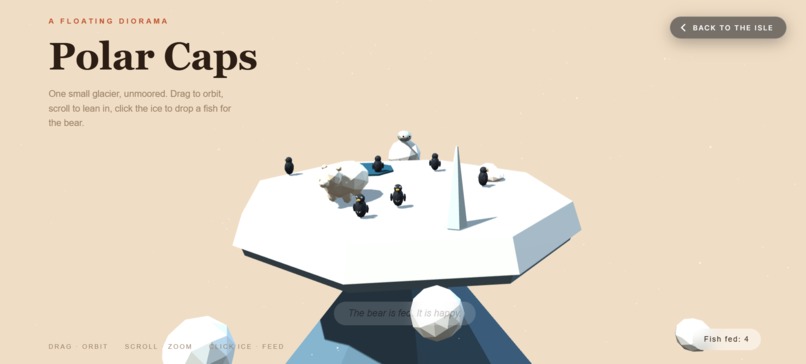
Polar Caps
-
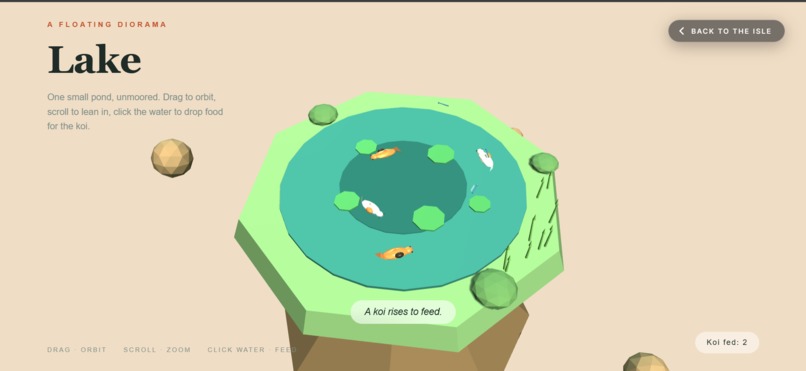
Koi Lake
-
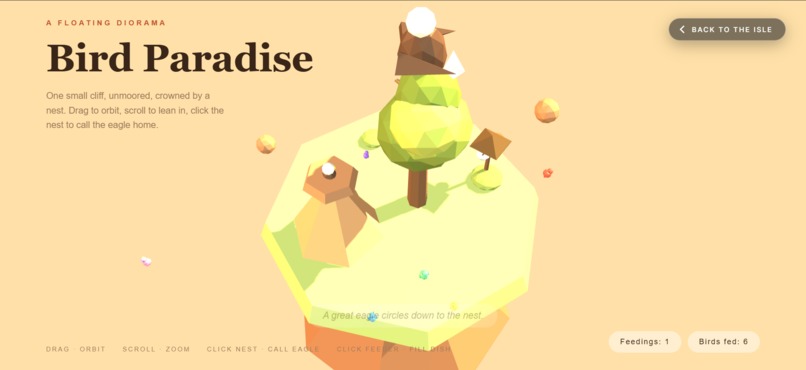
Bird Paradise
-
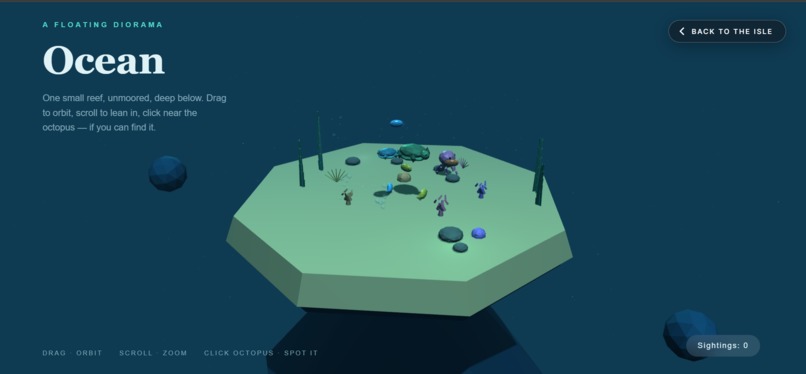
Ocean
-
Silvane
-
Barnyard
-
Desert
-
Rainforest
-
The Isles
Inspiration
We often get lost in massive, complex open worlds, but there is an undeniable, nostalgic magic in pocket dioramas — like peering into a living snowglobe, a desktop terrarium, or a handcrafted physical toy set.
Instead of building an overwhelming, empty expanse, we asked ourselves a single question: what is the most tactile, satisfying thing a person could interact with in this specific environment?
We wanted to capture the cozy wonder of miniature nature sanctuaries where every single island has its own distinct personality, living wildlife, and an immediate, rewarding line of cause-and-effect with the user.
What it does
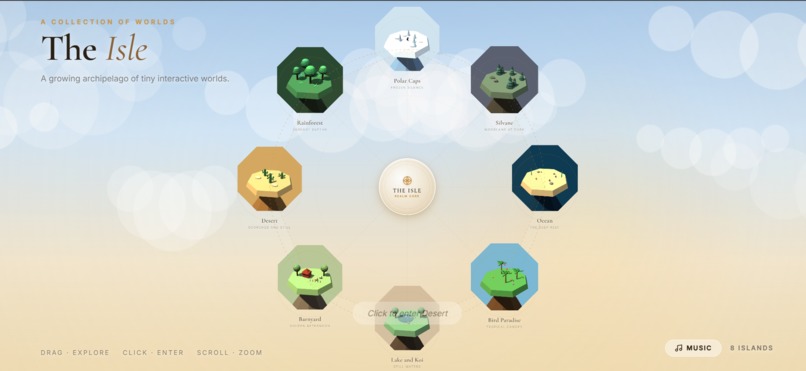
"Isles" is the French word for islands — and that's exactly the spirit here: a drifting ecosystem of self-contained island worlds, each one its own little dome of life
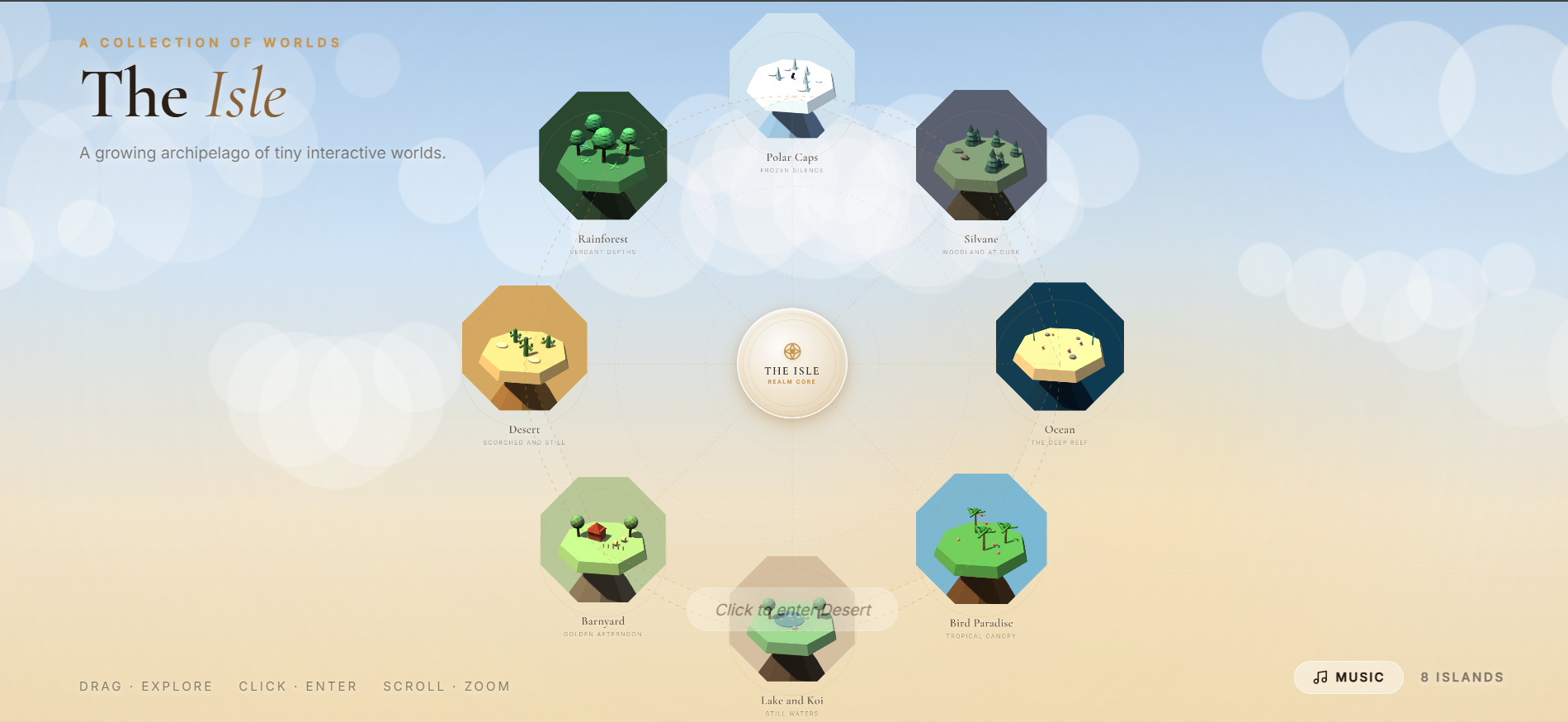
It is a collection of self-contained 3D low-poly dioramas, each built with its own terrain, atmospheric palette, ambient music, and one or two signature hero mechanics:
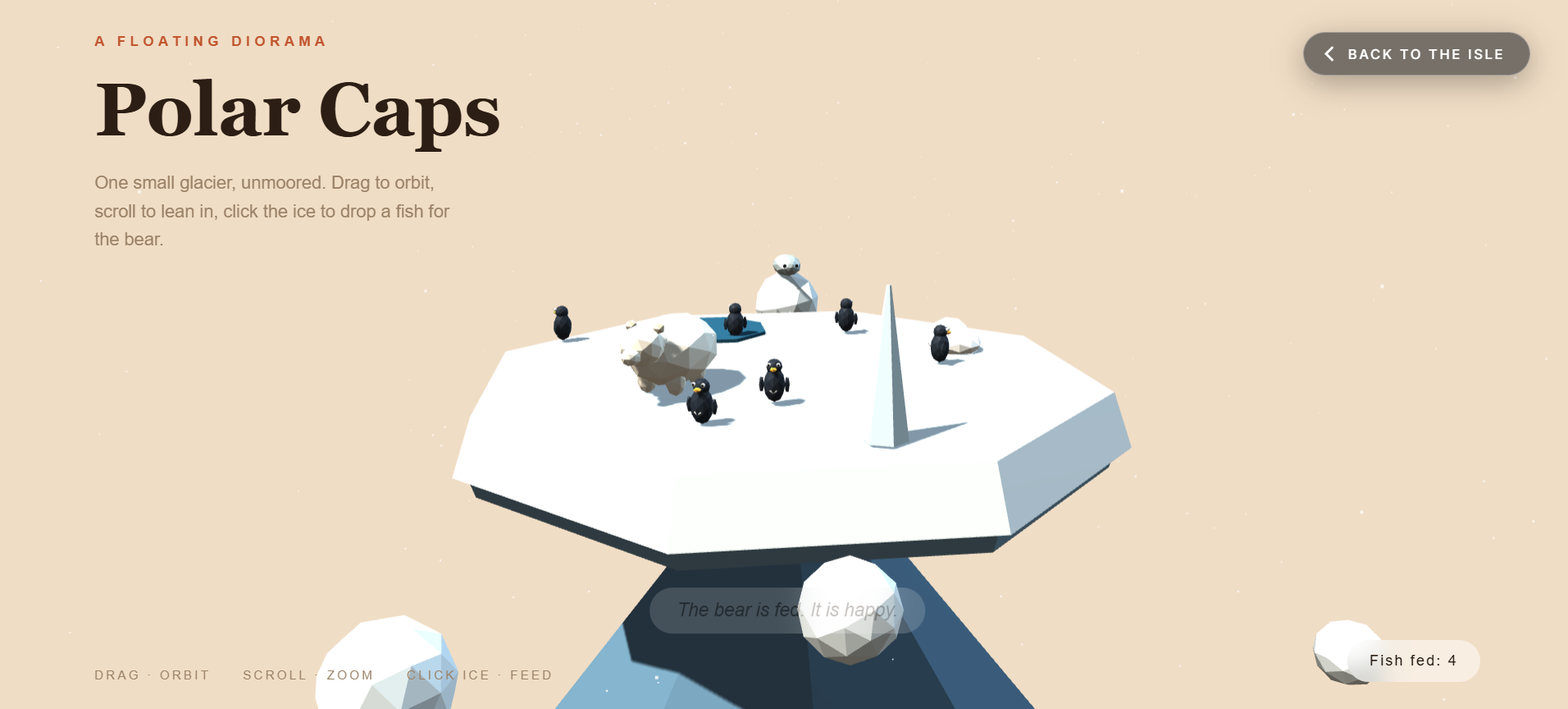
- ❄️ Polar Caps: Feed the polar bear freshly caught fish and watch it lumber across the ice while penguins and a seal go about their day amidst perpetual snowfall.
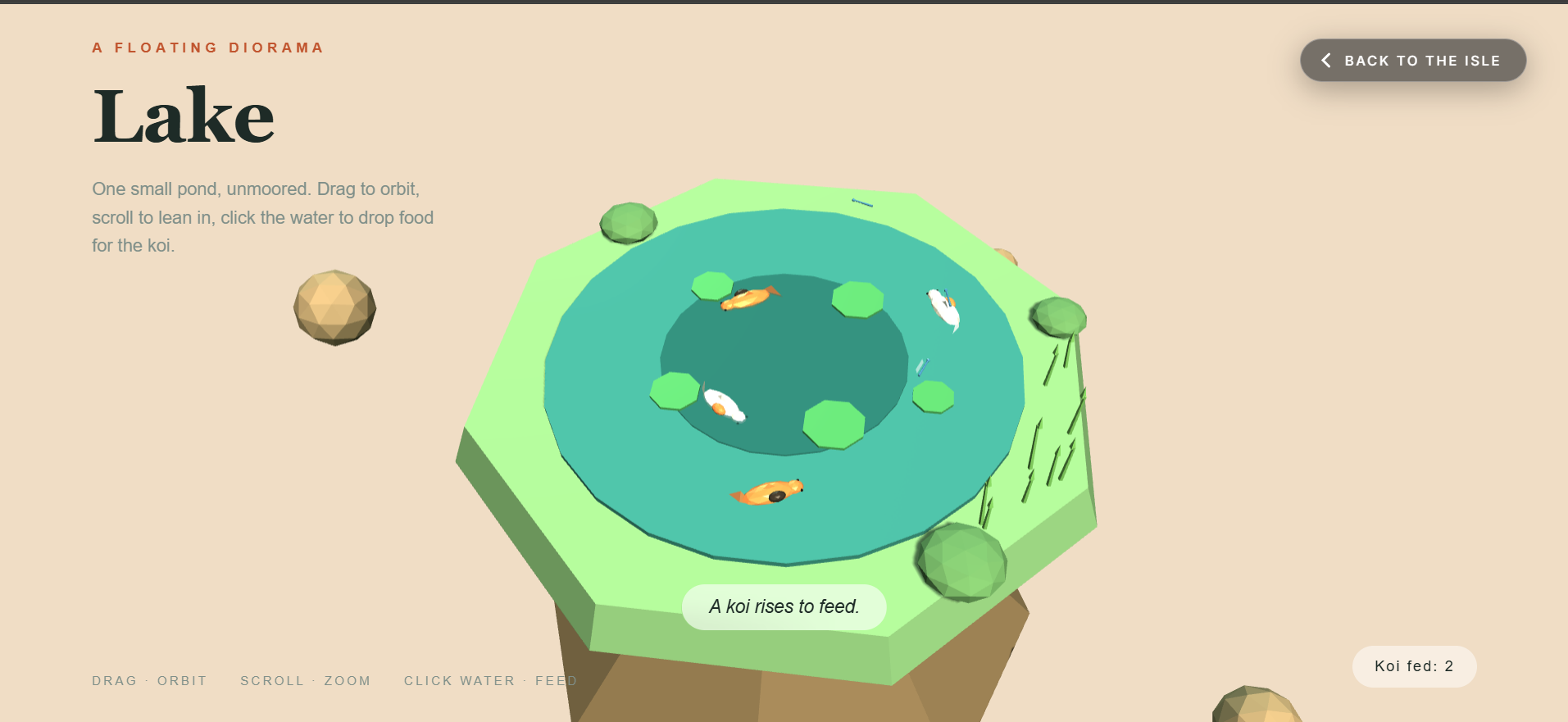
- 🪷 Lake: Tap the water to drop fish food, triggering real-time surface ripples as koi swim up and dragonflies loop overhead through the reeds.
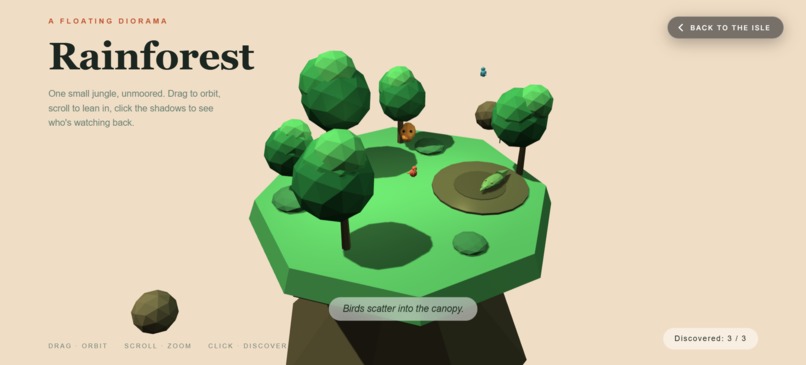
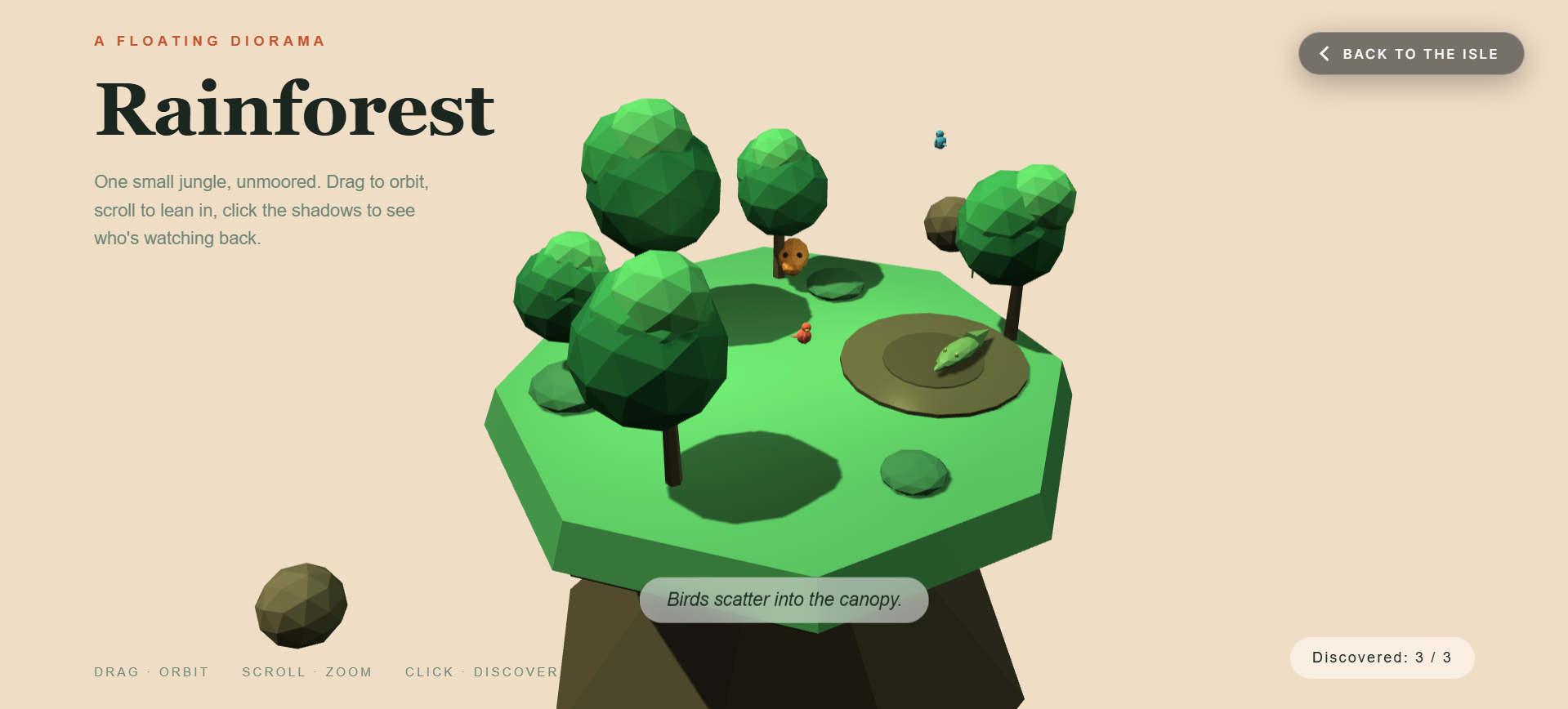
- 🌿 Rainforest: Part the dense canopy to uncover a sleeping tiger, an alligator submerged in the mud, and exotic birds that scatter when discovered.
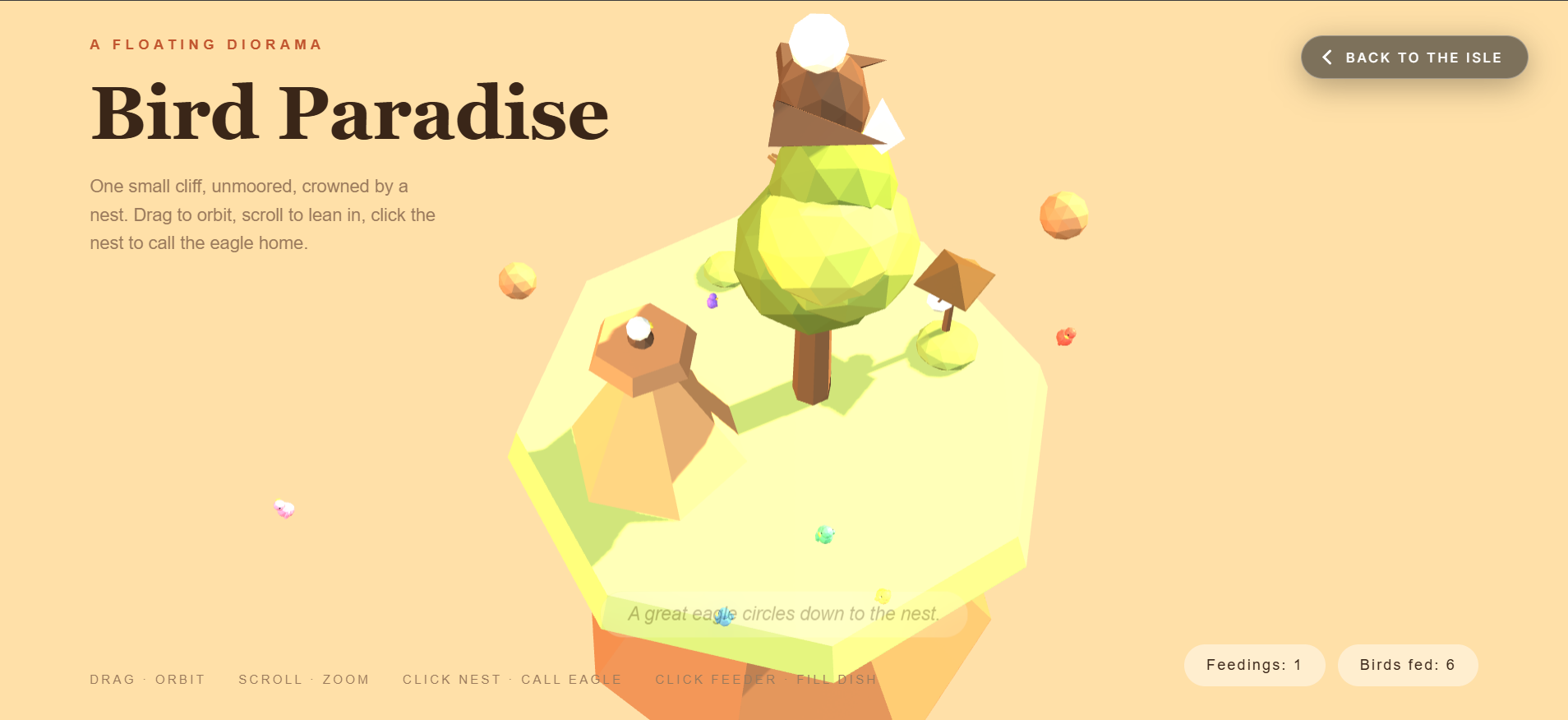
- 🦅 Bird Paradise: Call a majestic eagle home to its high nest, and fill seed/water dishes at the feeder to draw the wider flock down from the sky.
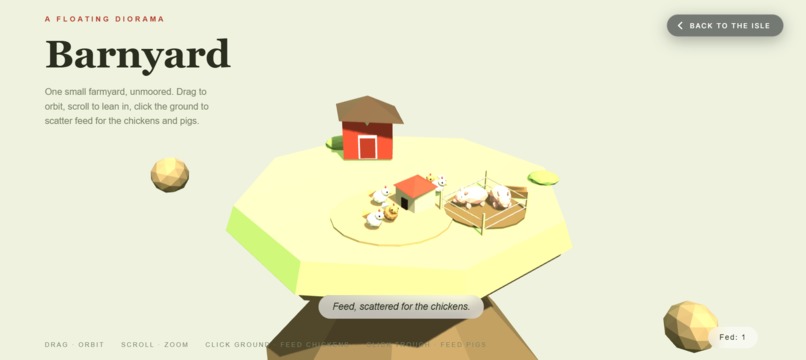
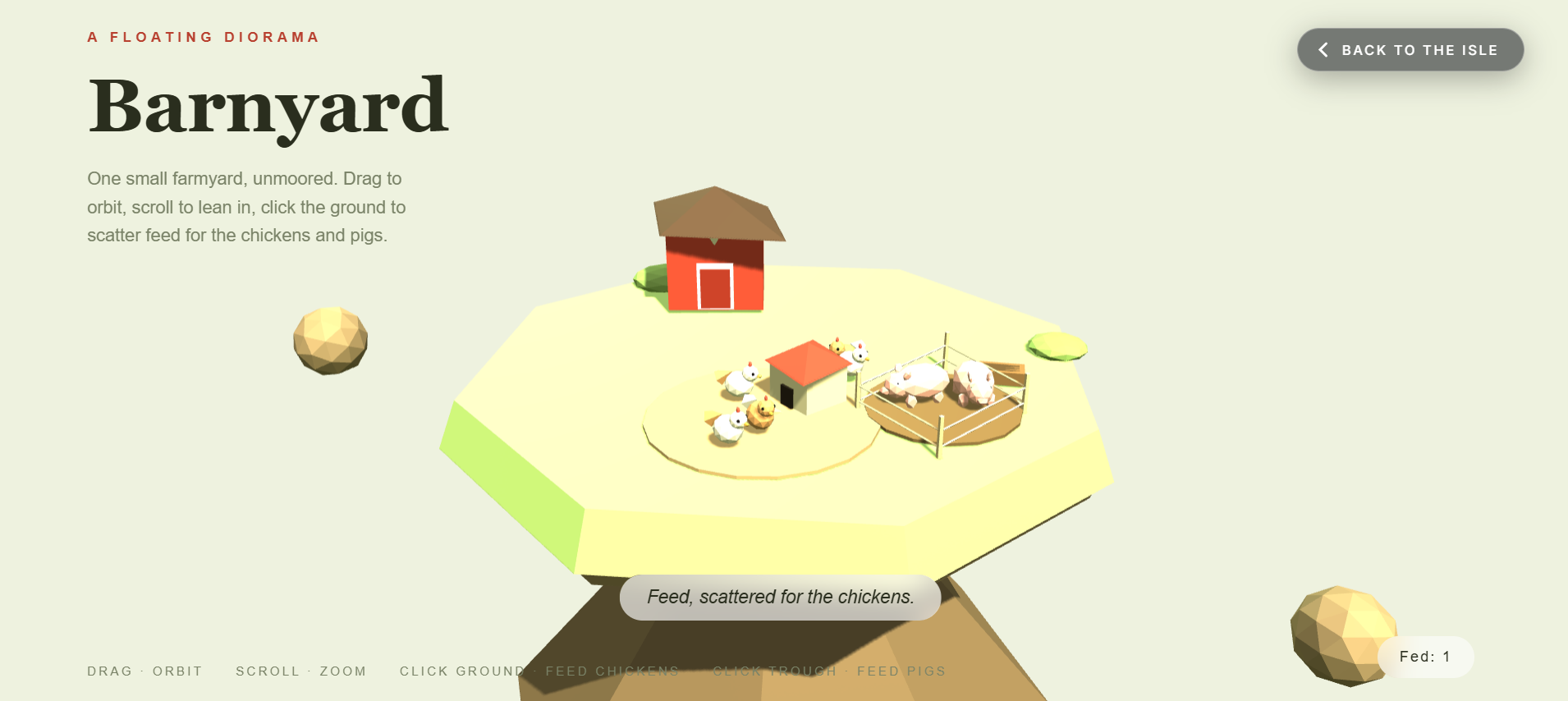
- 🚜 Barnyard: Guide free-range chickens back into their coop, and fill the mud pen trough to feed playful pigs.
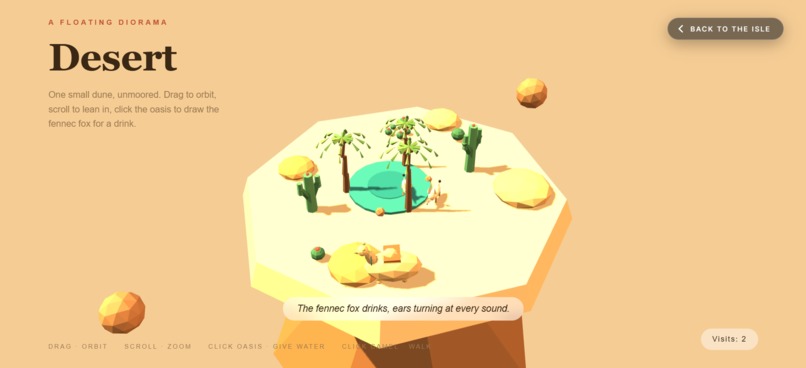
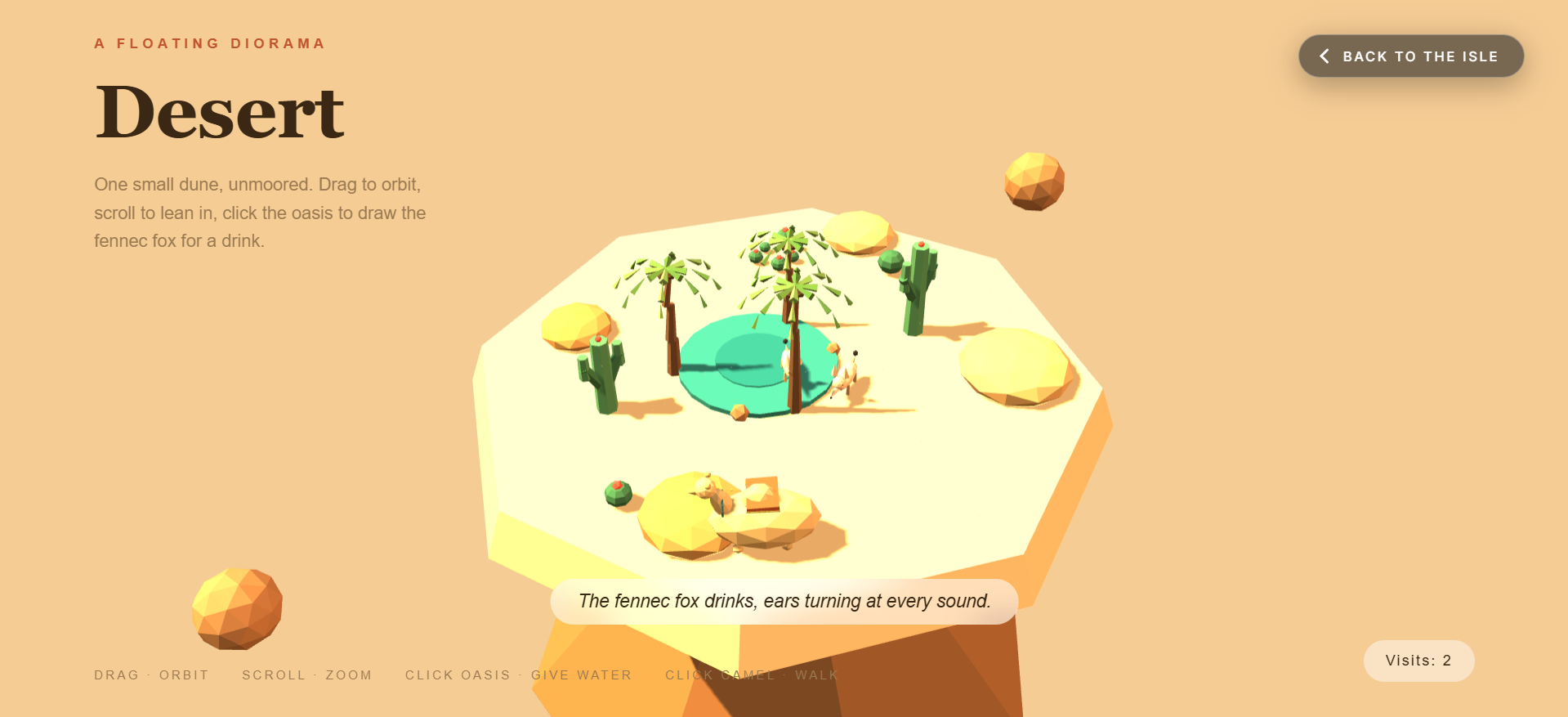
- 🏜️ Desert: Send a caravan camel wandering across undulating dunes, watch desert fennec foxes sip at an oasis, and observe atmospheric heat shimmer over the sand.
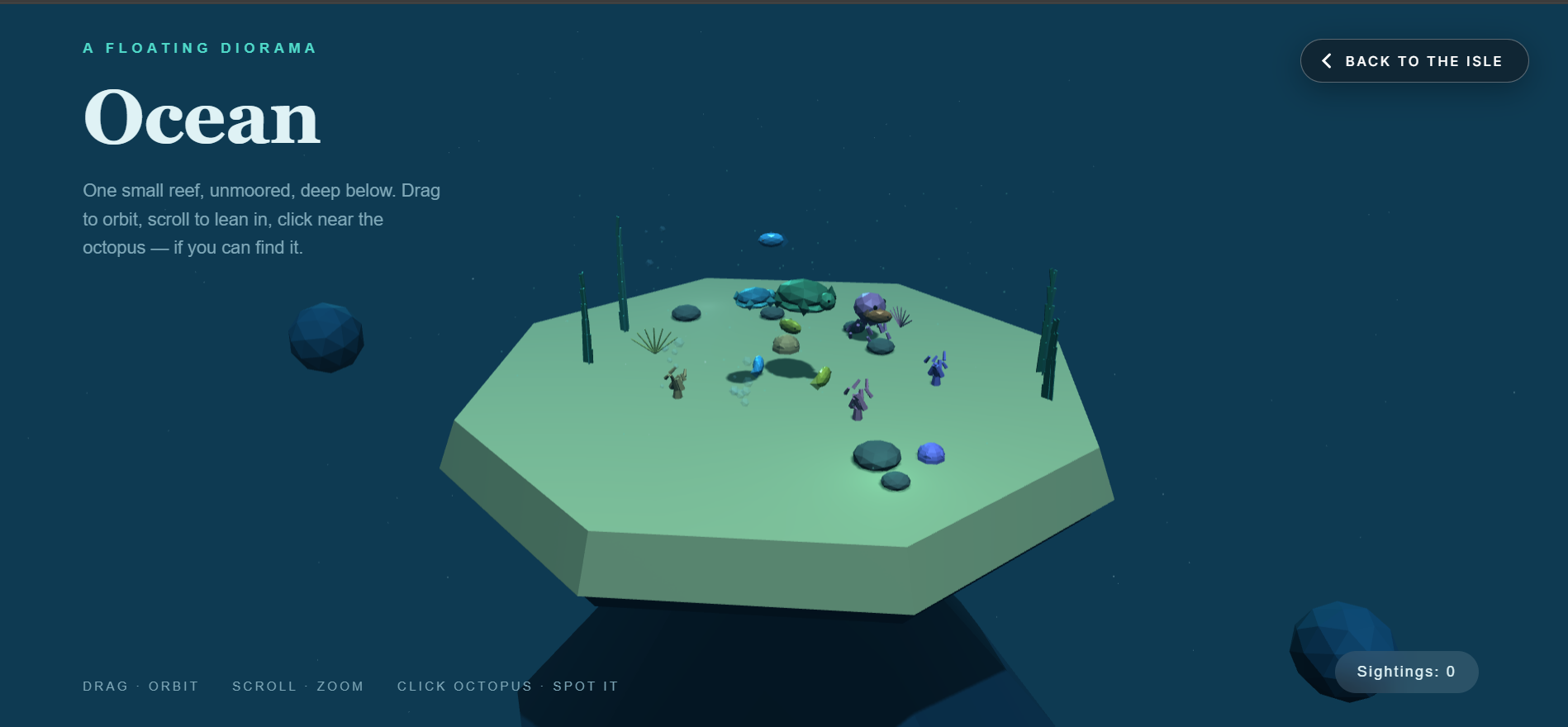
- 🌊 Ocean: Explore a vibrant coral reef with swimming turtles, schooling fish, and an octopus that flushes color and darts behind cover when startled.
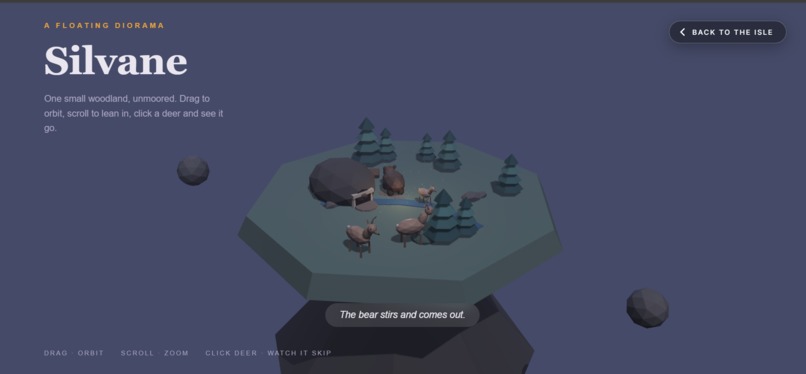
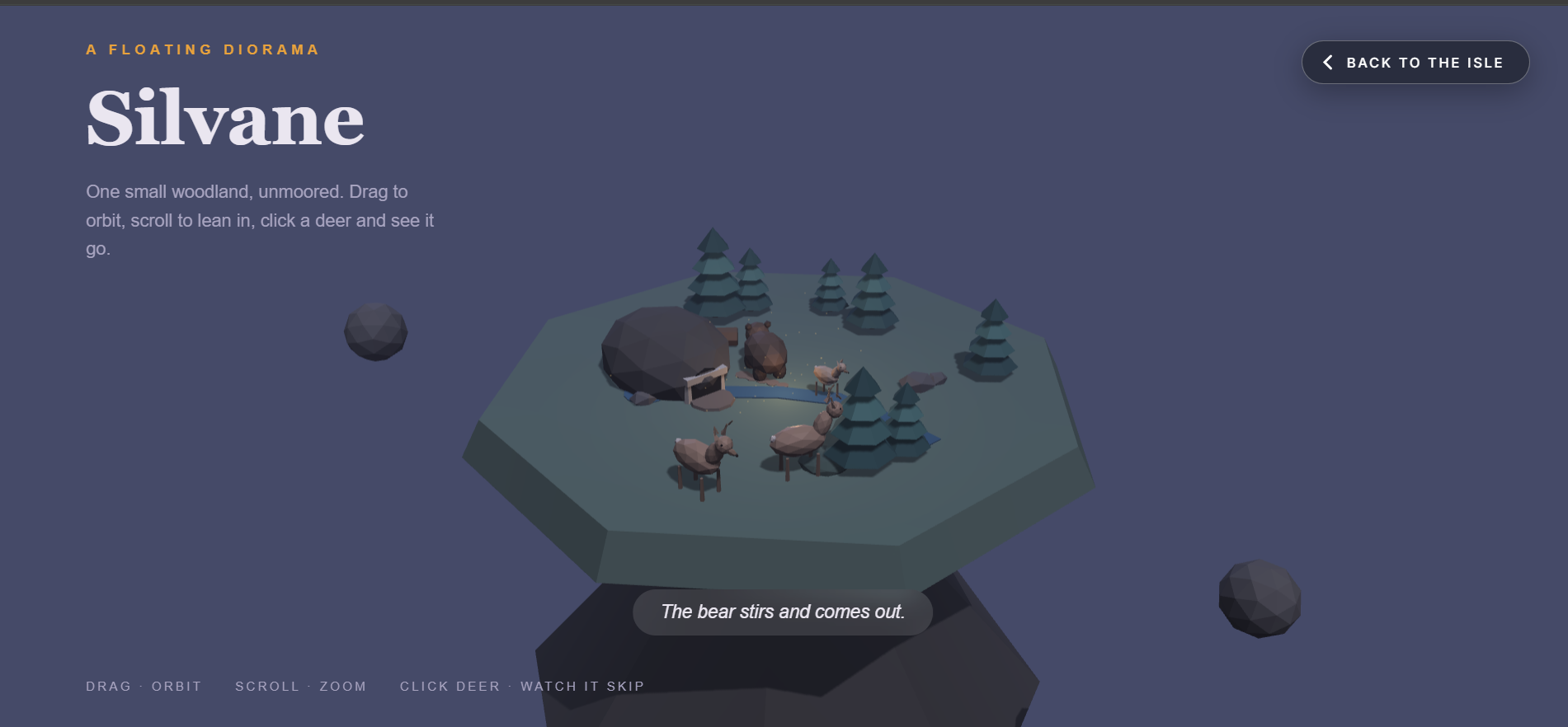
- 🌲 Silvane (Twilight Forest): A serene pine forest glowing with fireflies. Click gentle deer to send them grazing, drinking, or skipping away, and interact with a brown bear with a full den routine: send it home to sleep, or knock on the den to wake it up.
Every isle shares the same intuitive, zero-learning-curve control scheme: drag to orbit in 360°, scroll to zoom, and click to interact.
How we built it
- Vanilla Three.js: Handled direct WebGL rendering, custom procedural geometries, vertex colors, shadow mapping, and camera raycasting without bloated external dependencies.
- GSAP (GreenSock): Orchestrated smooth camera transitions, organic creature locomotion, timing curves, and interactive animations.
- Procedural Low-Poly Pipeline: Built expressive animal models, foliage, and terrains using disciplined geometric primitives and faceted vertex normals to keep load times instantaneous.
- Atmosphere & Audio: Integrated ambient lighting, customized fog, particle systems (snow, fireflies, dust), and background music tracks to give each diorama its own acoustic mood.
- Zero-Build Architecture: Each isle is a single, self-contained HTML file. This enabled rapid prototyping, fast testing, and seamless standalone sharing.
Challenges we ran into
- Expressive Low-Poly Anatomy: Low-poly models can easily end up looking stiff or spiky. Giving animals like the tiger, eagle, and octopus readable silhouettes, expressive eyes, and natural proportions with minimal vertex counts took multiple iterative modeling passes.
- Steering & Boundary Logic: Keeping autonomous creatures reliably on the island — preventing them from clipping through trees, walking off cliffs, or sinking into water — required custom boundary steering vectors and waypoint pathfinding rather than simple random wandering.
- Camera Framing & Raycasting Precision: Ensuring that raycasted click targets (like small fish food spots, nests, or den entrances) remained accurate and easy to hit across varying zoom levels and orbit angles.
Accomplishments that we're proud of
- Fluid Performance: Achieving buttery 60 FPS performance and near-instant load times with zero build steps or heavy assets.
- Emotional Resonance: Creating living micro-scenes where animals have distinct behaviors and reactions rather than static background loops.
- Cohesive Art & Audio Direction: Balancing 8 wildly different biomes — from frozen glaciers to sun-drenched dunes — under a unified visual and interactive design language.
What we learned
- Small, Focused Verbs Win: One clear, deeply polished interaction per isle (feed, call, discover, send-to-sleep) creates a far more memorable and intimate user experience than trying to cram dozens of shallow mechanics into a single scene.
- Low-Poly Is About Discipline: Aesthetic quality comes from deliberate proportions, lighting harmony, and motion timing rather than polygon density.
- Frictionless Prototyping: Keeping each world in a single self-contained file allowed us to experiment fearlessly, iterate rapidly, and polish mechanics in single sittings.
What's next for The Isles
- Seamless Living Atlas: Evolving from the gallery selector into a unified, continuous 3D world where all floating isles render together in one interactive sky realm, allowing players to fly the camera freely between biomes.
- Dynamic Weather & Day/Night Cycles: Adding live rainstorms, drifting snowstorms, sunsets, and glowing night modes across all islands.
- Expanded Ecosystem Mechanics: Introducing multi-creature interactions, food chains, and deeper environmental puzzle quests.
- Mobile Touch & Haptic Enhancements: Optimizing multi-touch gestures and haptic feedback for phone and tablet browsers.

Log in or sign up for Devpost to join the conversation.