Inspiratiown
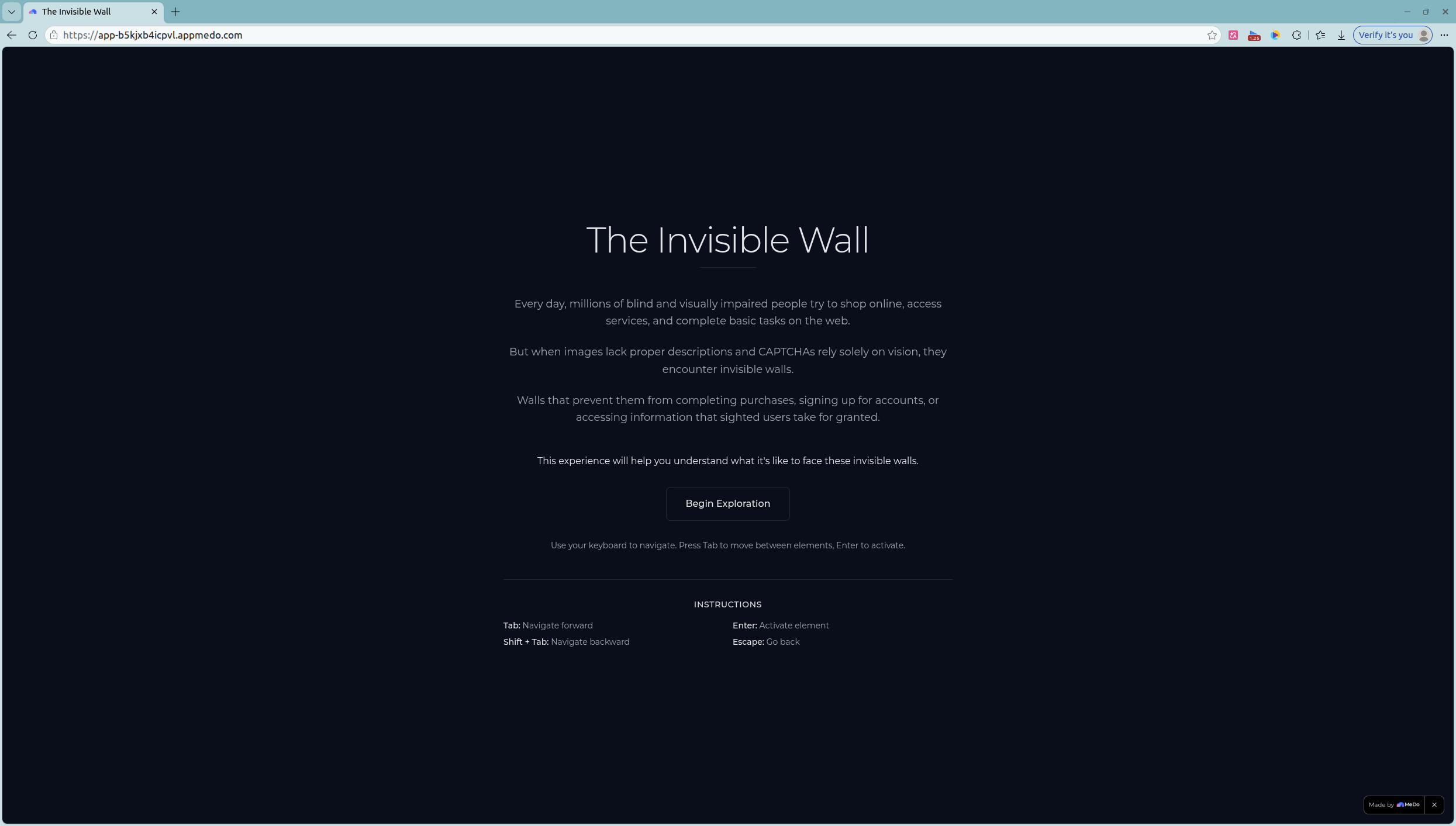
We live in a visual internet. Images, CAPTCHAs, and visual layout dominate every online interaction. But for the 2.2 billion people with vision impairment, this visual-first web is filled with invisible walls—unlabeled images, unnamed buttons, verification systems that demand sight. Most developers simply never experience what their inaccessible code feels like. We wanted to change that. Not by telling people to write Alt text, but by making them feel why it matters.
What it does
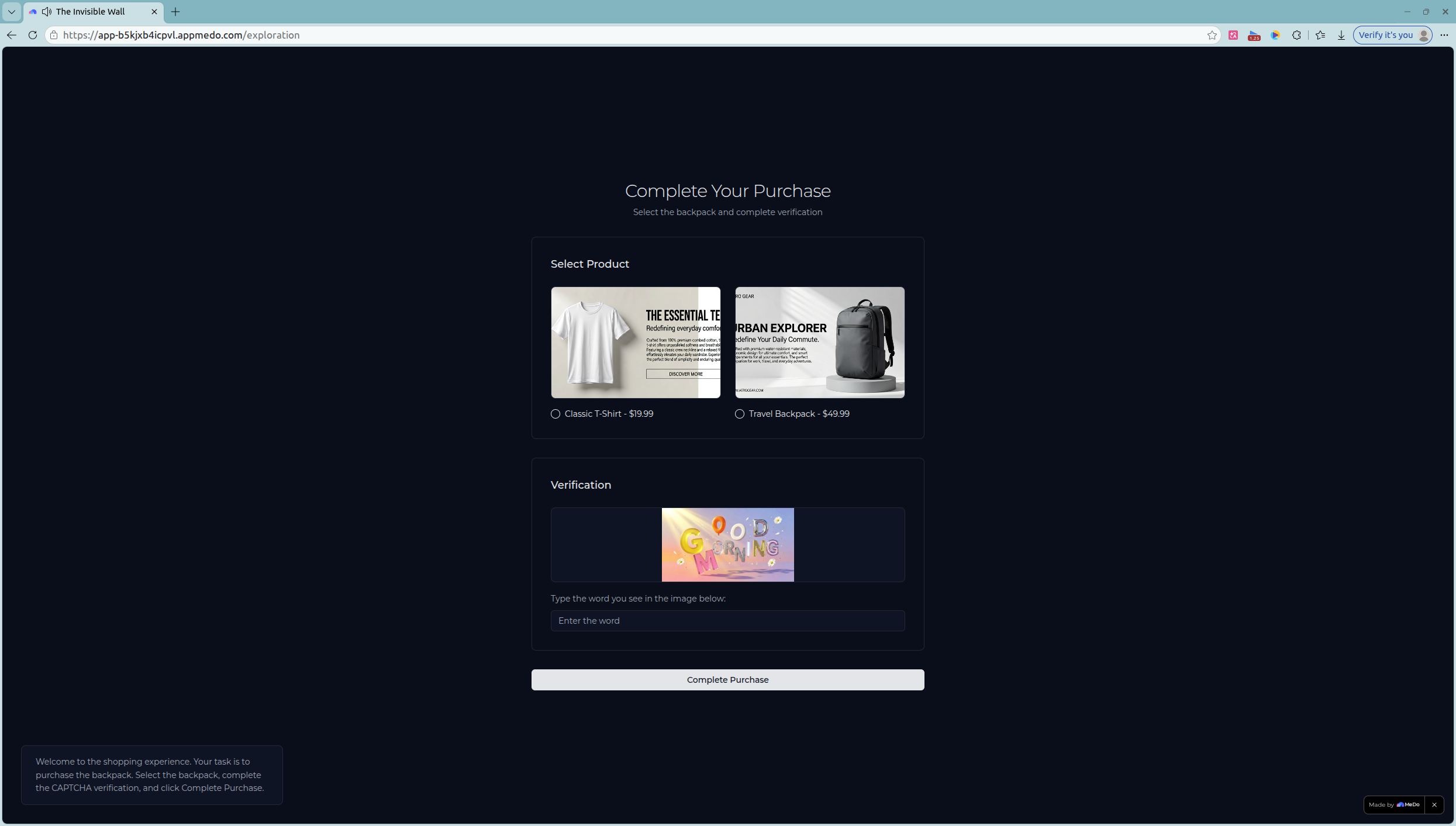
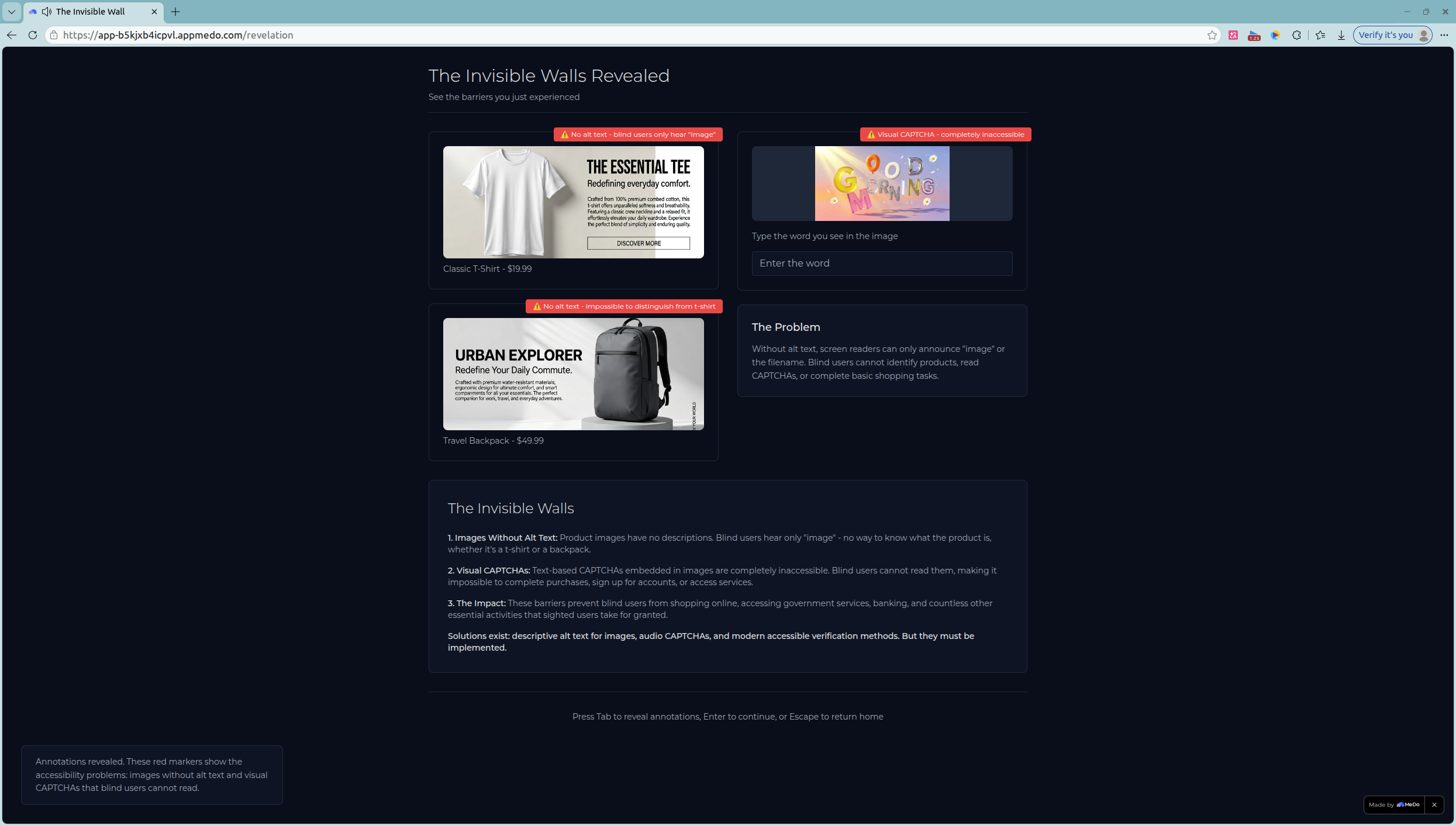
The Invisible Wall is a single-page empathy experiment. First, users complete a simple shopping task visually—pick the backpack and solve a word CAPTCHA. Then the lights go out. Users must repeat the exact same task in total darkness, relying only on keyboard navigation and intentionally broken voice guidance. Product images are read as meaningless filenames. The CAPTCHA image reveals nothing. A task that took seconds becomes nearly impossible. The experience ends with a single question: if one line of Alt text can tear down this wall, why haven't you written yours yet?
How we built it
The entire project was built through conversation with MeDo over 17 iterative versions. Not a single line of code was written by hand. The process followed three stages:
Narrative Design: We used external AI tools to refine the storytelling—the wall metaphor, the gradual darkness trigger, the emotional arc from confusion to revelation. The polished narrative was then fed into MeDo as structured prompts.
Iterative Refinement: Each MeDo version brought something new. We'd test, identify what felt off—voiceovers had too much pause, the corner indicator was in the wrong place, etc.
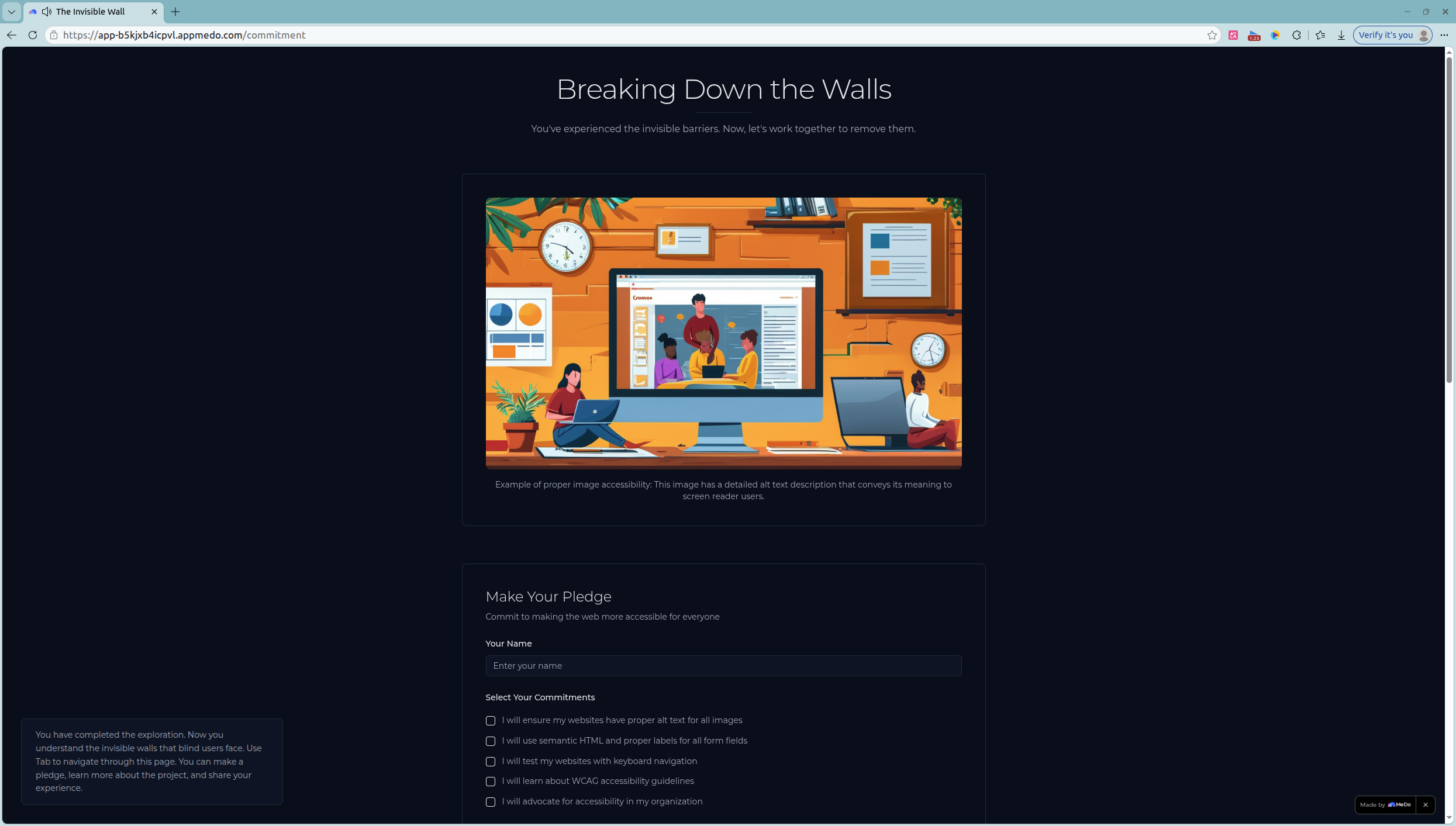
Surprise Features: MeDo automatically generated matching illustrations, produced a shareable public link, and implemented Web Speech API voice synthesis on the first attempt—no debugging required.
Challenges we ran into
The hardest part was designing an experience that felt like personal discovery rather than a lecture. Early versions used a button saying "Enter the Darkness"—too explicit, too easy to opt out of. We completely reimagined the concept: instead of abstract darkness, we built a familiar shopping scenario. Users first complete a purchase visually, then must repeat it blind, relying on broken voice guidance. This "do it yourself, then do it without sight" structure makes the frustration visceral rather than theoretical. Another challenge was pacing the voiceovers. The initial MeDo output had long, unnatural pauses between speech segments, breaking immersion. We had to explicitly instruct MeDo to minimize gaps and make the voice flow conversationally.
Accomplishments that we're proud of
MeDo implemented the Web Speech API seamlessly on the first conversation turn—voice synthesis, queue management, and fallback behavior all worked. The tool also auto-generated custom images for the webpage. Most importantly, we built a complete, emotionally resonant experience in 17 conversation rounds without writing or debugging a single line of code.
What we learned
Web accessibility is fundamentally an empathy problem, not a technical one. Developers don't skip Alt text out of malice, but because they've never felt its absence. We learned that a well-designed experience can bridge that gap in under two minutes. On the technical side, we discovered that the quality of AI-generated output depends heavily on prompt specificity—describing the emotional effect we wanted often produced better results than describing the technical implementation.
What's next for The Invisible Wall
We plan to expand the experience with additional "walls": audio CAPTCHA for hearing impairment, timed interactions for motor disabilities, and cluttered interfaces for cognitive accessibility. We also want to integrate with real screen reader software so users can hear exactly what blind users hear—file names, skipped content, and all. The ultimate goal is an open-source framework that developers can use to test their own websites for empathy gaps before they deploy.
Built With
- medo


Log in or sign up for Devpost to join the conversation.