-
-
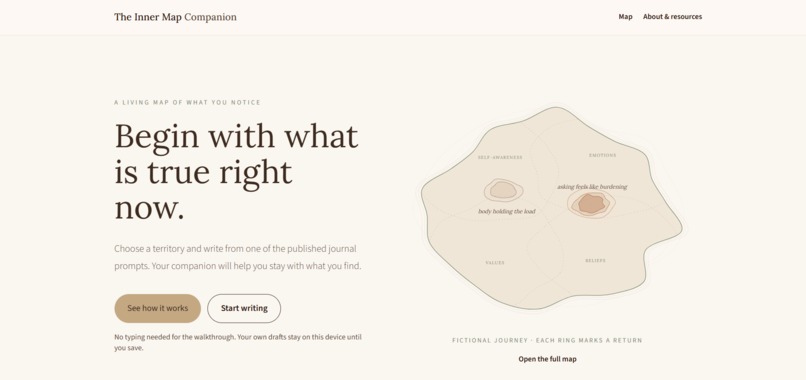
Landing page
-
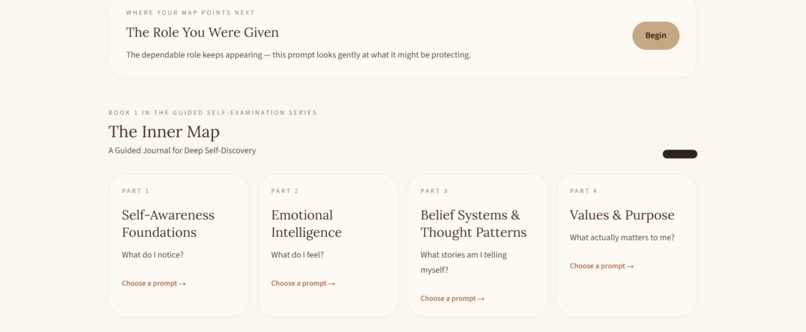
Prompt selection
-
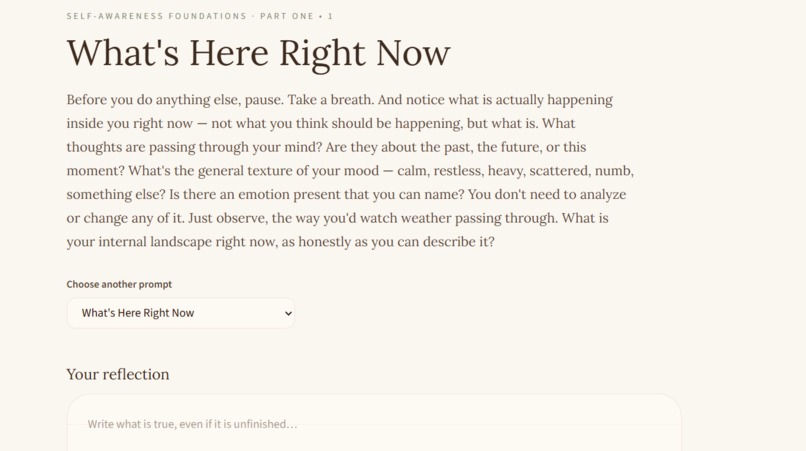
Journaling
-
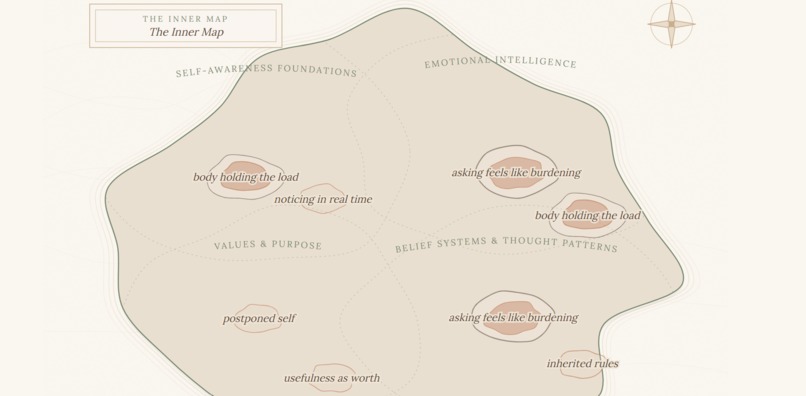
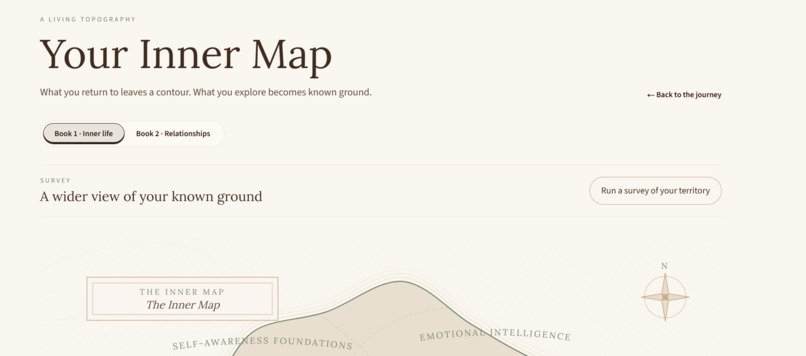
your Inner Map
-
Run a survey of your territory
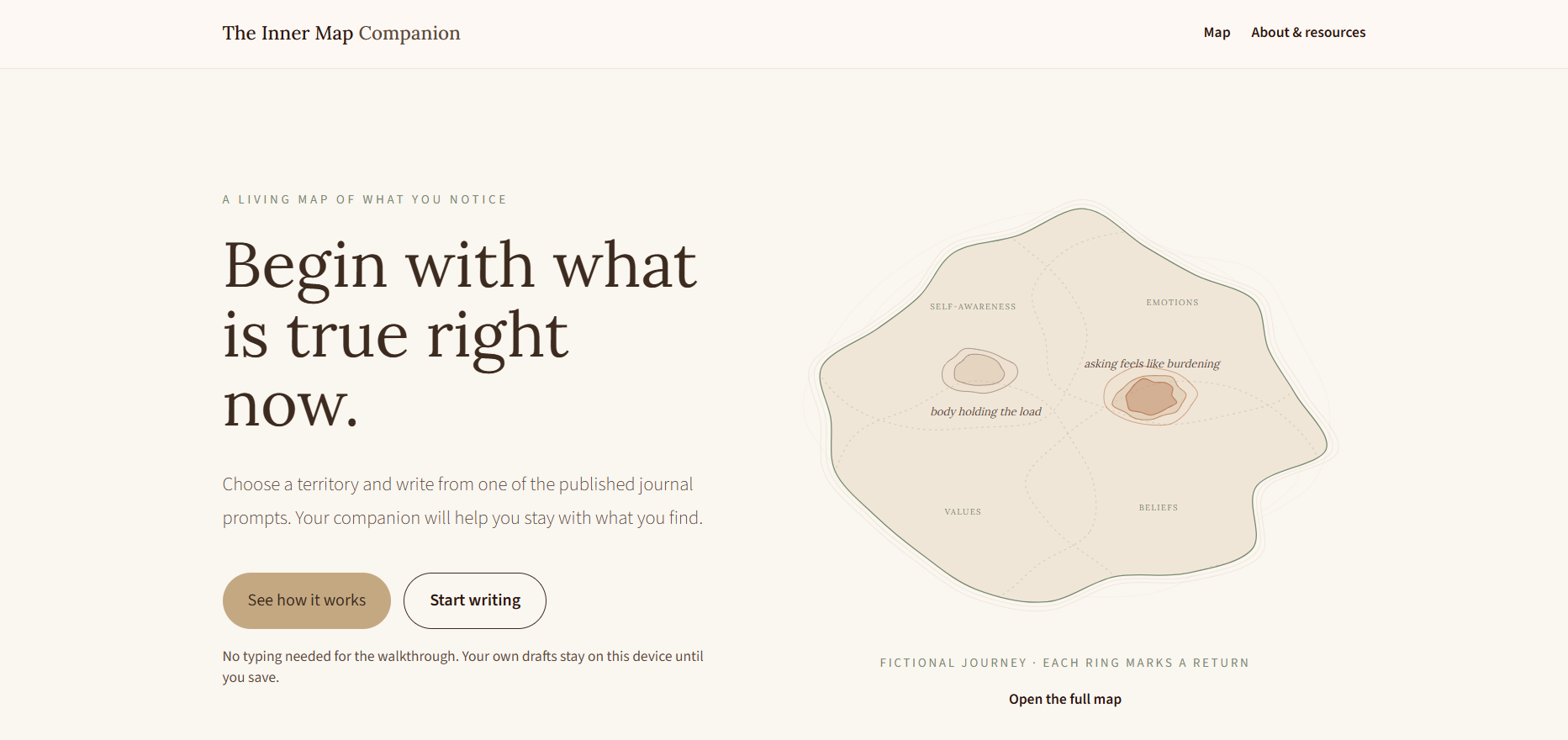
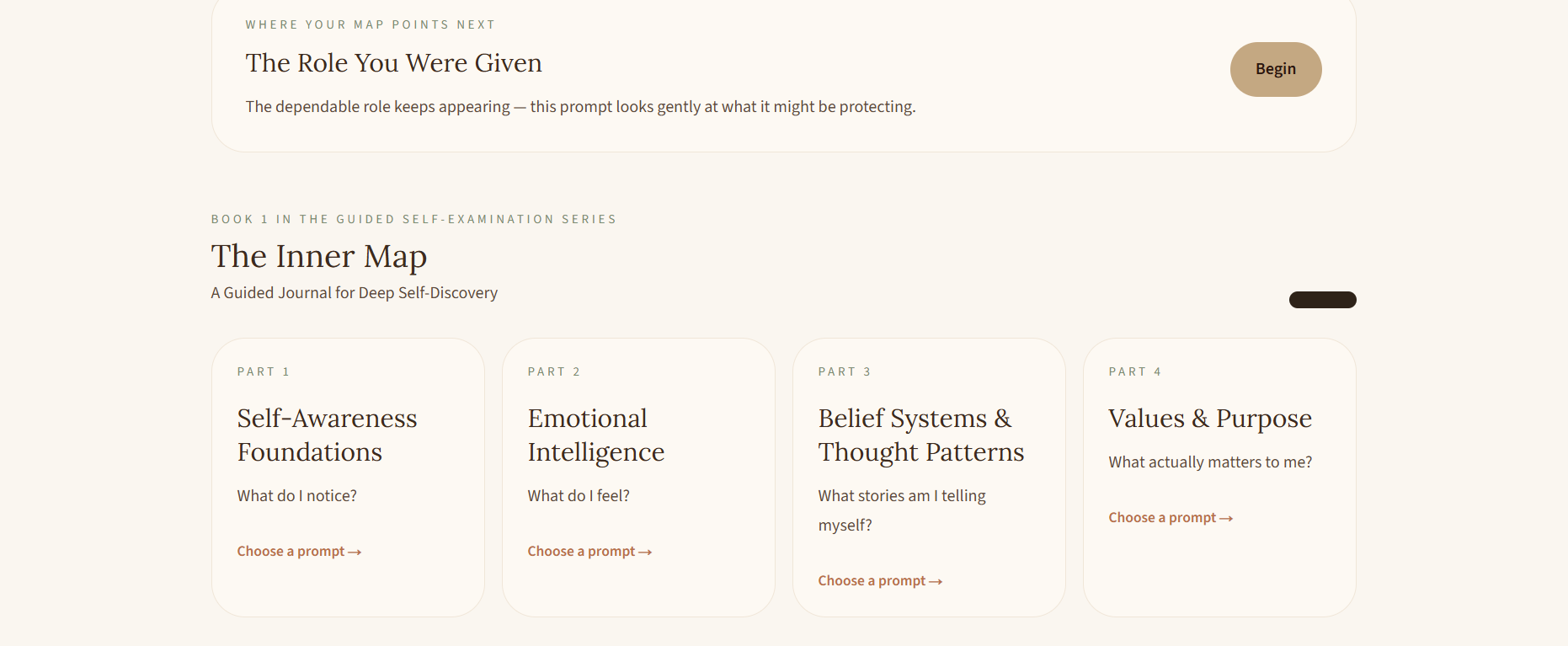
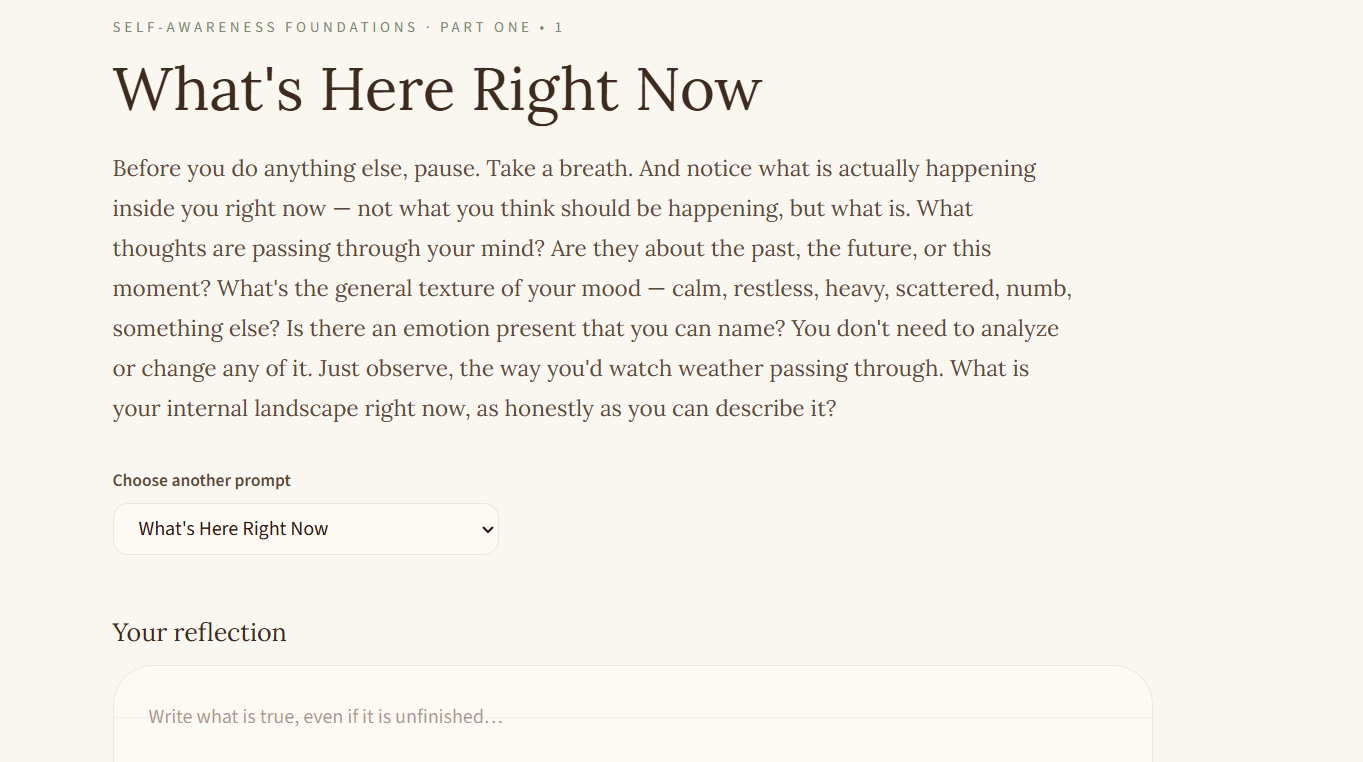
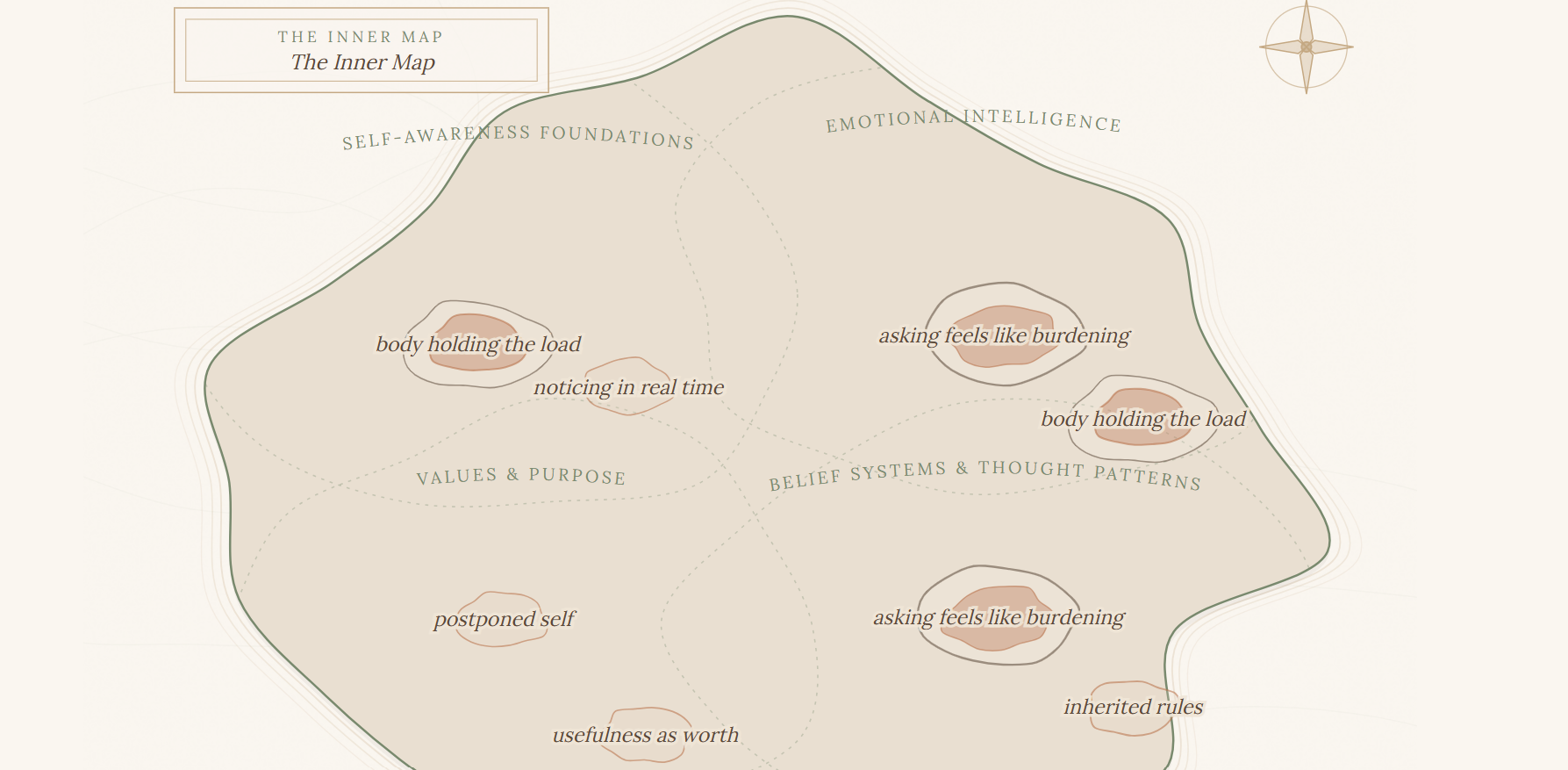
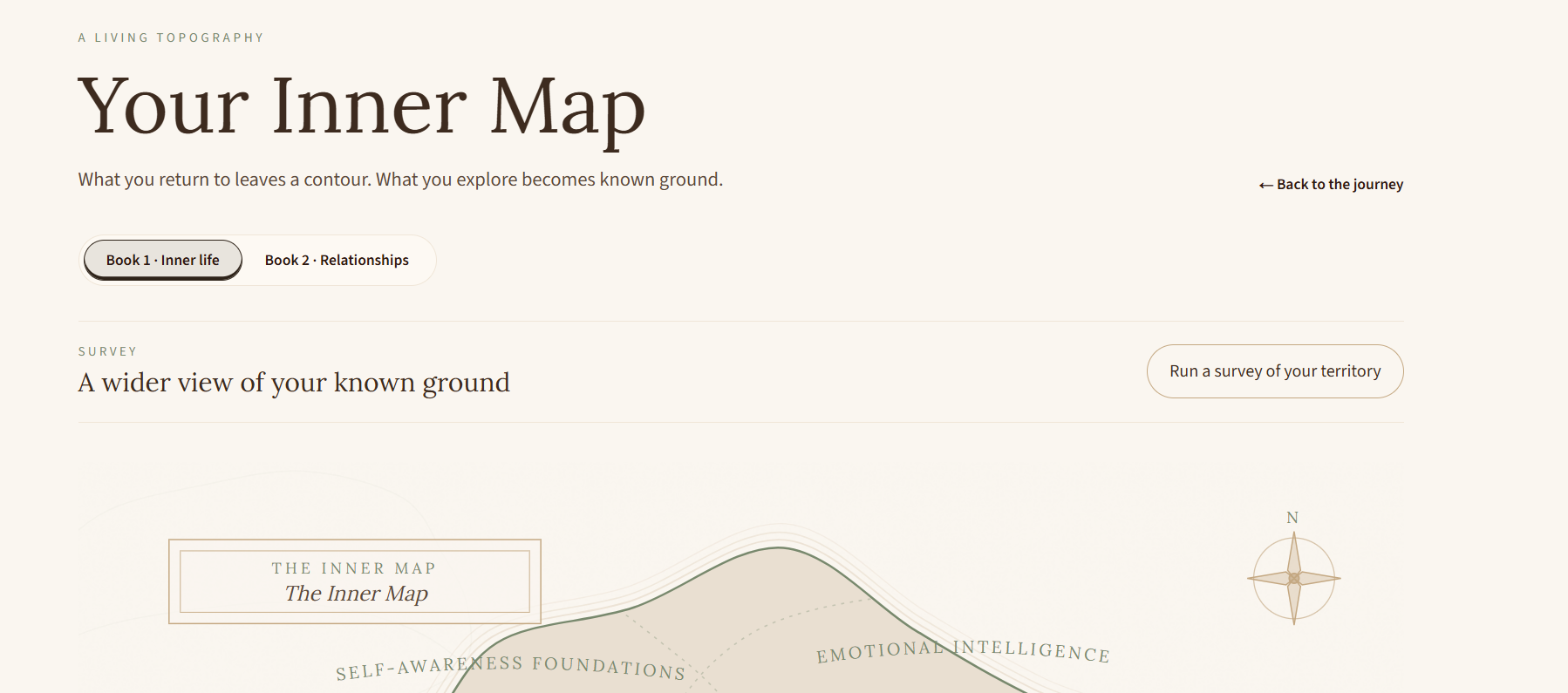
Inspiration I'm the author of the Inner Map guided journals — a published series that helps people examine their own patterns through psychology-grounded prompts. Every guided journal has the same limitation, including mine: the reader is alone with their answers. A prompt surfaces something real, and then it just sits on the page. No one reflects it back. No one notices when the same theme shows up for the fifth time. I'm not a developer. Before Build Week, an app like this was a "someday, when I can hire someone" plan. Codex collapsed that timeline to one week. What it does The Inner Map Companion is the conversation a journal entry was waiting for. You write from one of the published prompts (or free-write). When you save, a companion powered by GPT-5.6 reflects with you — it stays with what you actually wrote, asks one honest question at a time, and never tells you who you are. Behind the conversation, the model extracts the themes, emotions, and beliefs in each entry. Here's the part I care most about: repeated themes gain contour rings on a hand-drawn topographic map of your inner terrain. What you return to leaves a contour. Over weeks, you can literally see your known ground. When there's enough terrain, the companion runs a Survey — a synthesis across entries that names patterns as invitations, not diagnoses. You stay the authority on whether any of it fits. Because people bring vulnerable material to a tool like this, safety was designed in, not bolted on: it's a reflection tool, not a mental health service — the app says so on every page, knows its limits in conversation, redirects to real human support when an entry calls for it, and includes crisis resources. Your writing is yours: export it all as Markdown, or delete everything. A demo mode with a clearly labeled fictional journey lets you explore a populated map without writing anything personal — including a guided "See how it works" walkthrough of the full loop. How I built it I wrote a spec — the product, the psychological grounding, the brand voice, the safety rules, and quality gates — and put it in the repo as SPEC.md, the project's founding document. Then Codex built everything against it: the Next.js app, the data layer, the reflection engine, the theme-extraction pipeline, the map rendering, and deployment to Vercel. The piece I'm proudest of: Codex also built an eval harness that regression-tests the companion's behavior — voice match, no clinical jargon, one question at a time, non-prescriptive stance, and hard-fail safety checks (a crisis-language entry must trigger the support boundary, 100% of the time) — so the companion couldn't quietly drift as we iterated. My role was judgment: approving the spec, the system prompt, and the tone, and making the final calls. Codex did the engineering. GPT-5.6 powers the reflection conversations, theme extraction, and cross-entry synthesis. Stack: Next.js on Vercel, Turso for data, OpenAI API (GPT-5.6), built end-to-end with Codex. Challenges I ran into The hardest problem wasn't technical — it was voice. A reflection companion fails in two directions: generic sympathy that could follow any entry, or clinical analysis that tells people who they are. Getting the system prompt to hold the middle — warm, specific, honest, never diagnostic — took real iteration, and the eval harness is what made that iteration safe. As a non-developer, my other challenge was learning to direct rather than build: writing a spec precise enough that Codex could execute multi-step work against it without me being able to review the code line by line. The quality gates were my substitute for technical review. Accomplishments I'm proud of A complete, deployed product built by a non-developer in one week The map itself — a visualization of self-reflection I haven't seen anywhere else A safety posture I'd stand behind with real readers: scope honesty, crisis resources, conversational boundaries, full data export and deletion This isn't a demo without users: the journals are published on Amazon, and a QR code inside each book leads readers here What I learned That the gap between "person with a product vision" and "person who can ship software" has functionally closed — if you bring the judgment. Codex didn't need me to code; it needed me to know exactly what the product should be, how it should speak, and where its limits are. The spec, the voice, and the safety rules were the actual work. The code followed. What's next
The companion joins a growing ecosystem: seven journal volumes are planned (two published), and this app becomes the connective tissue between them — one map that deepens as a reader moves through the series. Nearer term: refining the reflection quality with real reader feedback, and bringing the app to the readers who already own the books.
Built With
- codex

Log in or sign up for Devpost to join the conversation.