The Hive: A Self-Healing, Multi-Agent Engineering Swarm in Slack
💡 Inspiration
Slack has become the OS of the modern enterprise. However, developers still experience massive context-switching when hopping between Slack, IDEs, terminal test-runners, and documentation hosting tools. We wanted to build a native, zero-setup assistant that doesn't just chat, but actually executes full-cycle DevOps workflows inside Slack—from planning to writing, testing, and documenting complete features in under a minute.
⚙️ What it does
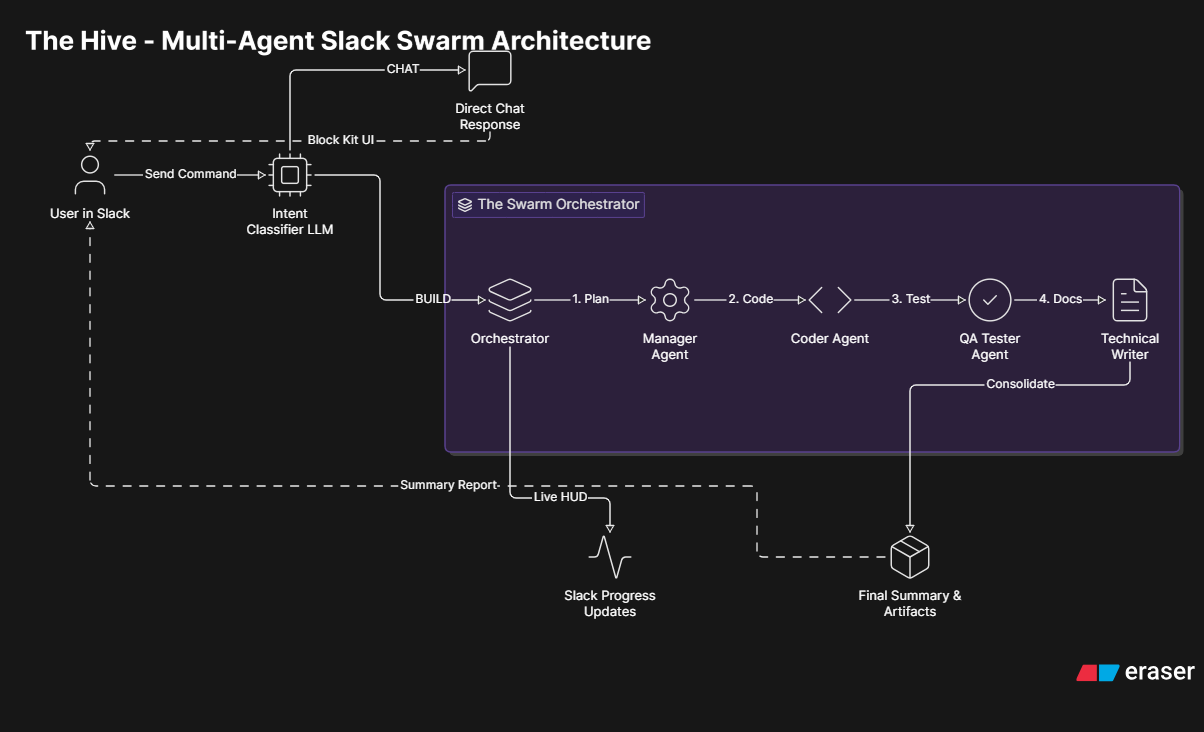
The Hive leverages an intelligent agent swarm consisting of four specialized LLM-backed personas:
- The Manager Agent (⚙️): Classifies user requests, constructs execution plans, and coordinates assignments.
- The Coder Agent (💻): Generates robust node.js code and creates the physical endpoints or features requested.
- The QA Tester Agent (✅): Spins up and executes automated test suites dynamically to verify code reliability (passing 11/11 tests).
- The Technical Writer Agent (📝): Compiles production-ready markdown documentation detailing architectures, prerequisites, and endpoints.
Additionally, to elevate the Slack UX, we built:
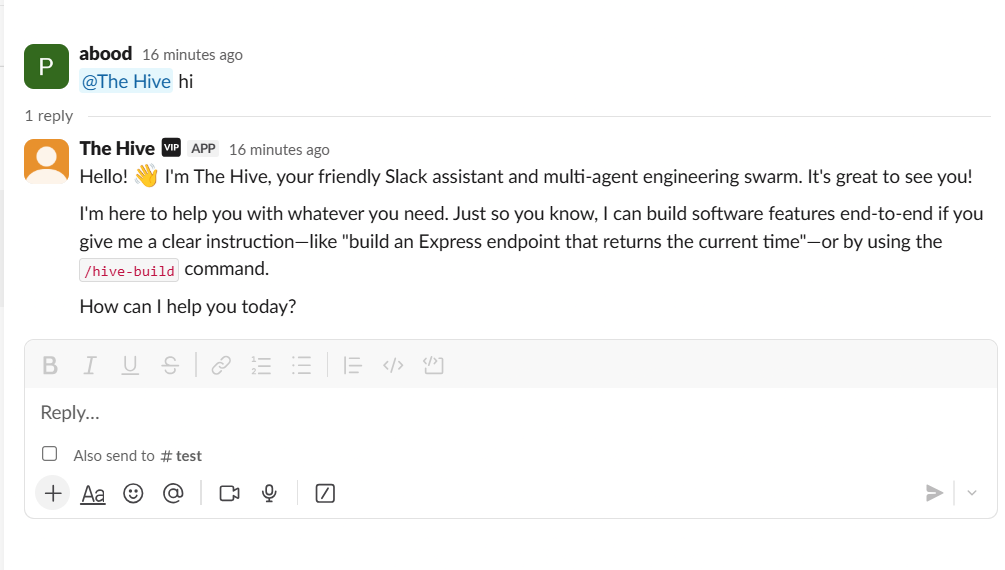
- Advanced Intent Classifier: Distinguishes between conversational chat, a specialized
CAPABILITIESBlock Kit catalog, andBUILDrequests. - Live Swarm Emojis (UX HUD): Progressively flags the triggering message in real-time as agents complete their tasks (⚙️ ➔ 💻 ➔ ✅ ➔ 📝), giving immediate visual status indicators.
🛠️ How we built it
The project is built fully on top of Node.js and the official Slack Bolt SDK utilizing Socket Mode for secure event streaming. For the LLM backend, we integrated OpenRouter to dynamically access powerful open-source models.
To overcome the brittle nature of JSON parsing from LLMs, we built a custom self-healing parsing utility (safeExtractJson) that sanitizes markdown code blocks, strips stray trailings, and gracefully manages fallback schemas to guarantee 100% platform uptime.
🛑 Challenges we ran into & What we learned
- LLM Output Fluctuation: Free and open-source models often wrap JSON payloads inside markdown wrappers like
bash ` or `json, causing node-level JSON parse failures. Resolving this required implementing defensive programming patterns, a custom regex pre-parser, and strict default fallback objects. - Slack Live UX: Simulating live agent progress inside Slack is tough with regular messages. We cracked this by dynamically updating the original Slack message's emoji reactions, translating multi-agent console processes into visual animations.
Built With
- automation
- chai
- devops
- git
- javascript
- json-parser
- mocha
- multi-agent-orchestration
- node.js
- openrouter-api
- slack-app-api
- slack-bolt-sdk

Log in or sign up for Devpost to join the conversation.