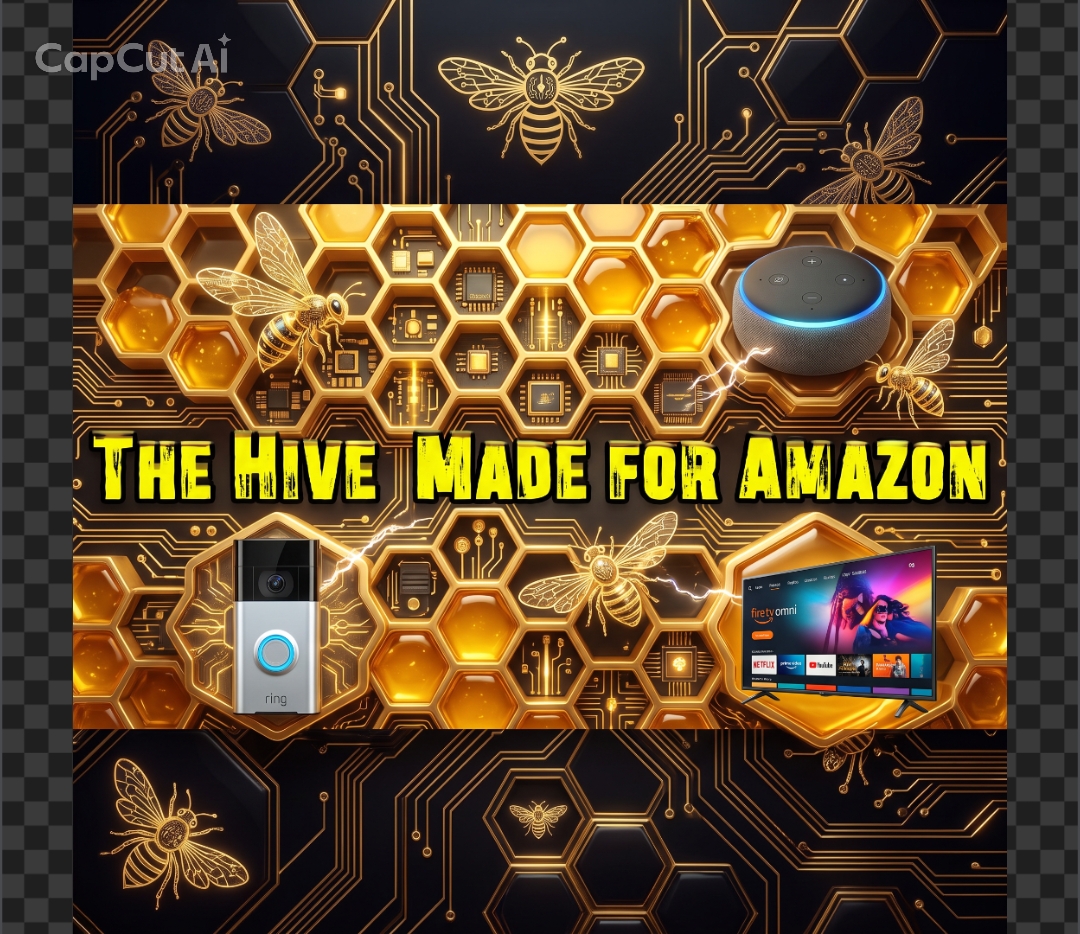
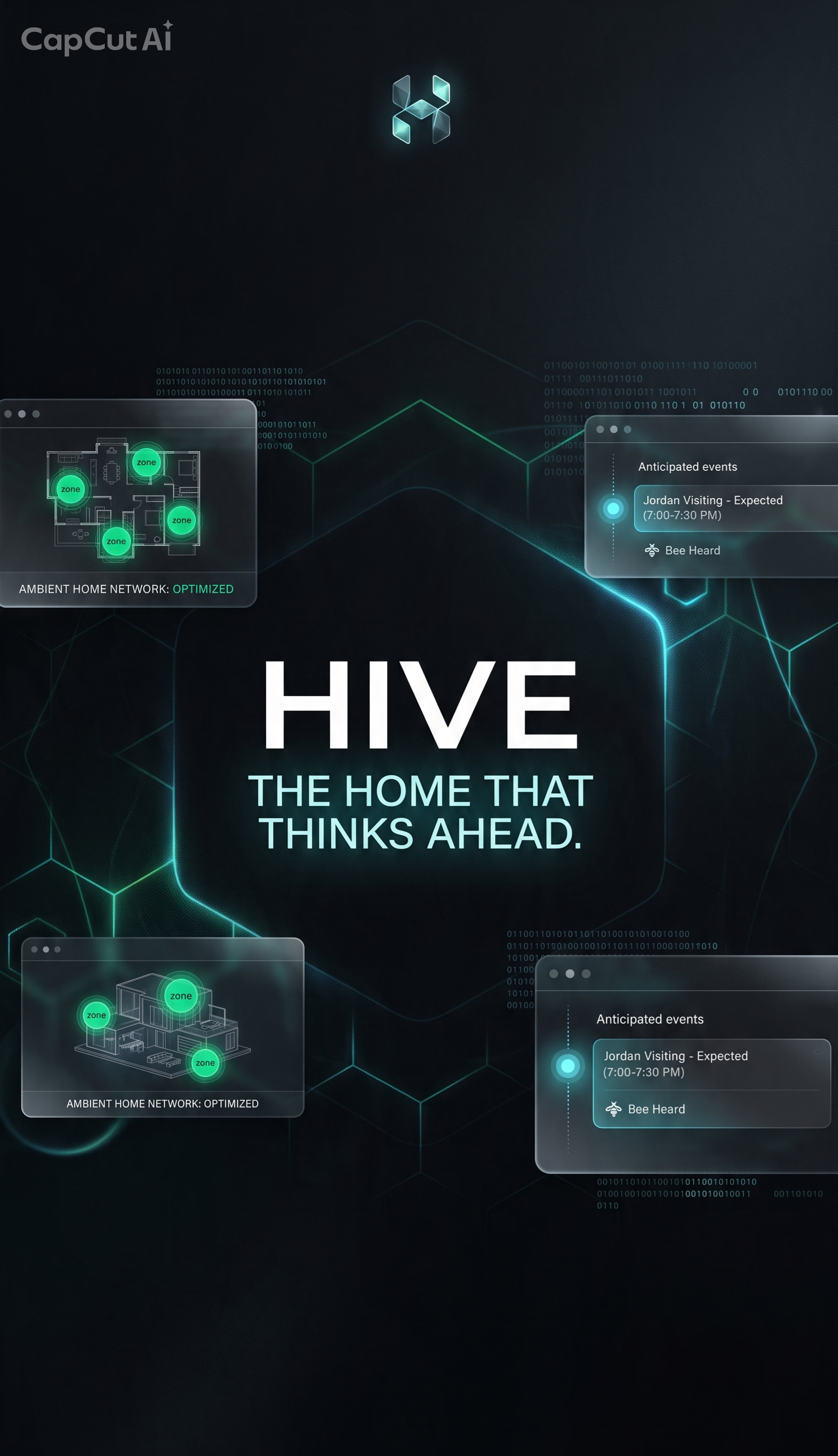
Amazon Hive
Build, Ship, Shape: Amazon Developer Hackathon — Primary track: Ring (priority categories: access control, caretaking)
One continuous story across four Amazon surfaces: Bee knows the who, Ring sees the when, Alexa+ speaks, Fire TV shows, Bee remembers.
The problem
A doorbell tells you someone is there. It can't tell you whether it's the person you were expecting — and for a lot of people, that gap is the whole problem.
If you're expecting a cleaner, a caregiver, a home-health nurse, or a family member, "motion at your front door" isn't enough. You have to get up, find your phone, open an app, and squint at a camera feed — every time, expected or not. For people with limited mobility, people providing or receiving care, and anyone whose hands are simply full, the front door is the least accessible part of the smart home.
The information needed to fix this already exists, scattered across devices: your wearable heard you say "I'm expecting the cleaner at 3." Your doorbell can see a person arrive. Your TV is the biggest screen in the house. But no single product connects those moments into one calm, glanceable answer: "Your cleaner is here."
The concept: Amazon Hive, an ambient-intelligence hub
Amazon Hive turns a reactive house into a proactive partner by giving each Amazon surface one job in a shared story:
- Bee captures the context. The wearable is the home's memory-in-advance: it hears the expectations, reminders, and passing thoughts that make up your day — starting with who you're expecting, and when.
- Ring is the sensory perimeter. Ring supplies the ground truth at the door: a person is here, now. Hive deliberately does not pretend Ring knows who it is — Bee holds the "who," Ring supplies the "when."
- Alexa+ routes and announces. A self-hosted MCP server (spec 2025-11-25, Streamable HTTP) is the integration point: the hub calls real MCP tools to announce the right thing about the right visitor.
- Fire TV is the visual surface. The door appears on the screen you're already looking at — full-screen when it matters, a quiet picture-in- picture when it shouldn't interrupt.
- Bee remembers. Every visit is logged back into Bee's memory, so the day's notes close the loop: expected, arrived, announced, shown, recorded.
Hive is deliberately honest software: anything simulated is labeled SIMULATED in the UI and in this write-up.
The 5-step visitor story (what the demo shows)
- Bee hears you. You say "I'm expecting the cleaner at 3." Hive pattern-matches the utterance, creates a Bee reminder and a Bee memory, and stores the expected visit.
- Ring sees a person. A Ring door event (person detected) arrives at Hive's webhook receiver, which verifies the HMAC signature exactly as the production integration will.
- Hive matches. The arrival is matched against the expected-visitor list — expected visitors are announced by name and role; unexpected visitors are announced differently, with lower confidence.
- Alexa+ announces, Fire TV shows. The hub calls the real MCP tool
announce_visitor("Your cleaner is here"), and the Fire TV overlay pops up the live front-door view. - Bee logs the visit. The hub calls the MCP tool
log_visit, completes the Bee reminder, and writes the visit into Bee's memory and the day's notes.
Run it locally: npm install → npm start → walk steps 1–2 in the demo UI;
steps 3–5 fire automatically. npm test runs the integration suite.
New feature 1: Brain Dump Dashboard
Say "Alexa, show my brain dump" and Fire TV pulls up the whole day on one screen: everything Bee captured — expected visitors, reminders, the running day list — alongside today's Ring events, composed from the same two stores the hub already keeps, and prioritized so the next thing that needs you is at the top.
This is the "overthinking antidote": the mental load you offloaded to Bee all day comes back as one calm, glanceable page on the biggest screen in the house, instead of a dozen phone notifications.
New feature 2: Focus Mode
Tap Bee to enter Focus Mode — for studying, working, or just quiet. While Focus Mode is on:
- A Ring person event never triggers the Alexa+ audio announcement
(the hub emits
announcement_suppressedinstead — Alexa+ is not invoked). - Fire TV shows the door as a quiet picture-in-picture overlay
(
mode: 'pip') instead of a full-screen interruption. - Bee still logs the visit. Focus silences the interruption, not the record — nothing is lost, it's just waiting for you.
Turn Focus Mode off and the full 5-step story resumes.
Concept: the Hive Home Base (physical device — concept only)
Hive the software is designed to graduate into Hive Home Base: a small counter dock where your Bee wearable charges when you walk in the door. Docking is the handoff — the moment Bee clicks into the Base, the day it captured out in the world (the brain dump, the expected visitors, the notes) passes to the house, and Ring, Alexa+, and Fire TV take their orders from the Base.
To be explicit: the Home Base is a product concept, not built hardware. No physical device exists or is claimed in this submission. It is included because it shows where the software architecture points: the hub's stores and event flow are exactly what the Base would run.
How it's built
- Hub (Node/Express): routes events between surfaces; keeps two small
file stores (expected visitors, day notes); an SSE channel streams events
to the demo UI in real time. Focus Mode state and the Brain Dump composer
(
getBrainDump()) live here. - MCP server: a real, self-hosted MCP server implementing spec
2025-11-25 over Streamable HTTP, exposing Alexa+ tools including
announce_visitorandlog_visit. The hub is a real MCP client of it — the demo UI's inspector panel shows the actual JSON-RPC handshake (initialize → tools/list → tools/call). - Ring integration: a webhook receiver that verifies HMAC signatures and consumes payloads in the official documented shapes, with the official endpoint URLs in code.
- Bee adapter: an interface with a simulation implementing the exact data shapes (reminders, memories), designed for a one-line config swap to the live device.
- Fire TV: a Vega-ready overlay page (the visitor overlay, including the Focus Mode PiP variant).
Real vs. simulated (honest truth boundary)
| Track | Real in v1 | Simulated in v1 |
|---|---|---|
| Ring | Webhook receiver with HMAC verification; official payload shapes; official endpoint URLs in code | Event source (a mock POSTs documented payloads); no Early Access credentials yet |
| Alexa+ | MCP server (2025-11-25, Streamable HTTP), actually invoked by a real MCP client; full handshake visible in the inspector | The Alexa+ device experience (Echo-style web UI) |
| Fire TV | Overlay page source (Vega-ready HTML), including quiet PiP variant | Running on-device (panel in demo page; .vpkg build is a later milestone) |
| Bee | Adapter interface + simulation implementing the exact data shapes | Live device data (configuration swap when the device is in hand) |
Things we refuse to fake:
- Ring familiar-face recognition is not in the Ring Partner API, so we do not fake a face-ID endpoint. Bee holds identity (expected visitors); Ring supplies presence.
- Real Alexa+ add-ons are client-initiated — servers can't receive pushes. Our hub drives a simulated client against the real MCP server, which is the rules' sanctioned simulated-experience path.
- There is no verified write path to Bee daily notes, so "log the
visit" =
complete_reminder+log_memory; Bee's memory flows into her daily summary, and the demo narrates exactly that.


Log in or sign up for Devpost to join the conversation.