Inspiration
The human heart produces thousands of electrical signals every day, yet each heartbeat carries information that conventional analysis may not fully capture. We were inspired by a simple but important question: What if valuable cardiac patterns are hidden within ECG signals, waiting for AI and advanced mathematics to reveal them?
This question led us to develop The Hidden Rhythm, an AI-powered research concept that combines electrocardiogram (ECG) analysis with topological data analysis to explore subtle patterns in cardiac electrical activity and support the identification of potential heart rhythm abnormalities.
What We Aim to Build
Our goal is to go beyond conventional ECG feature analysis by combining multiple analytical perspectives:
- AI-Based Classification: Analyze ECG signals and identify patterns associated with different cardiac rhythm categories.
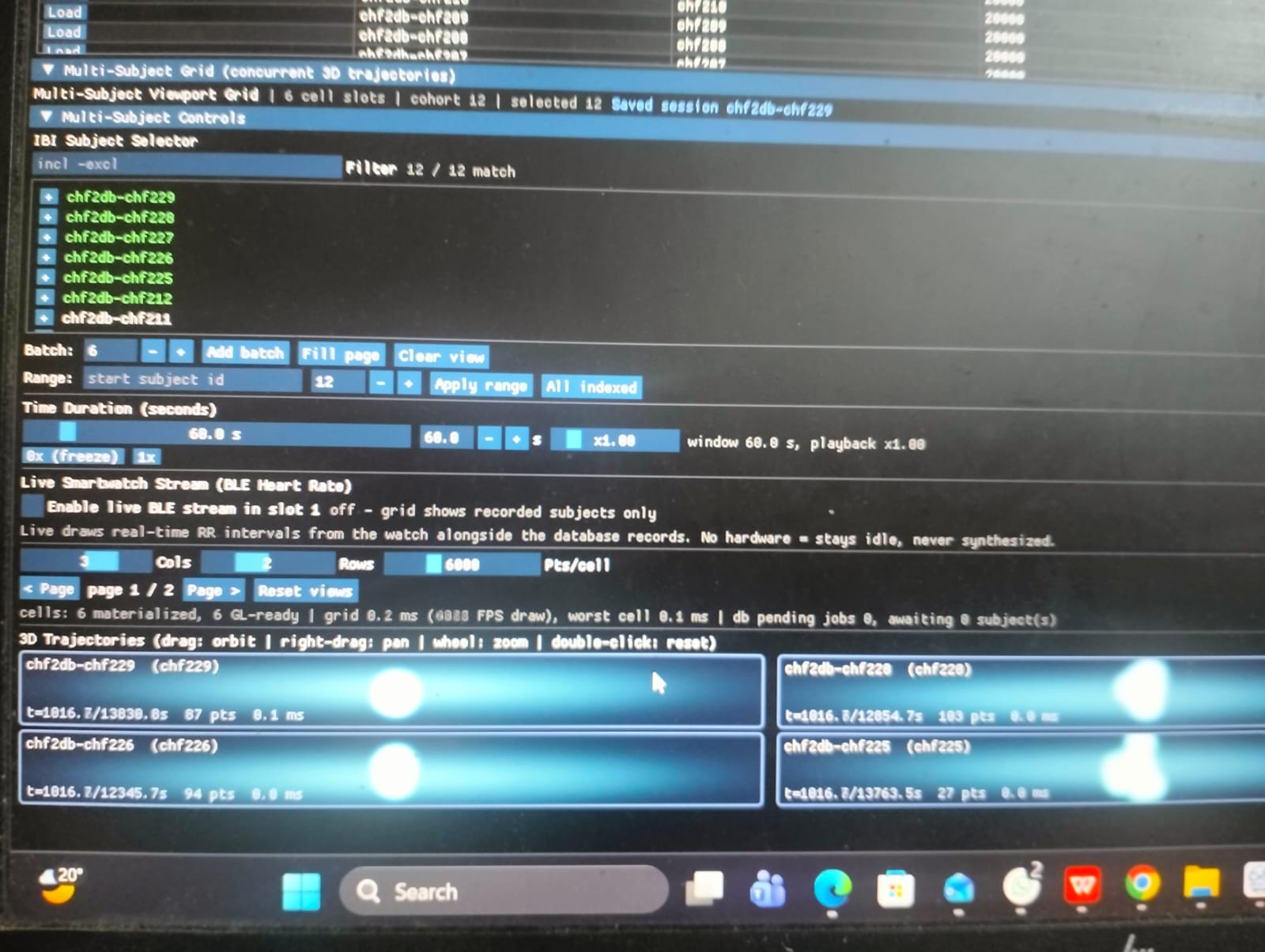
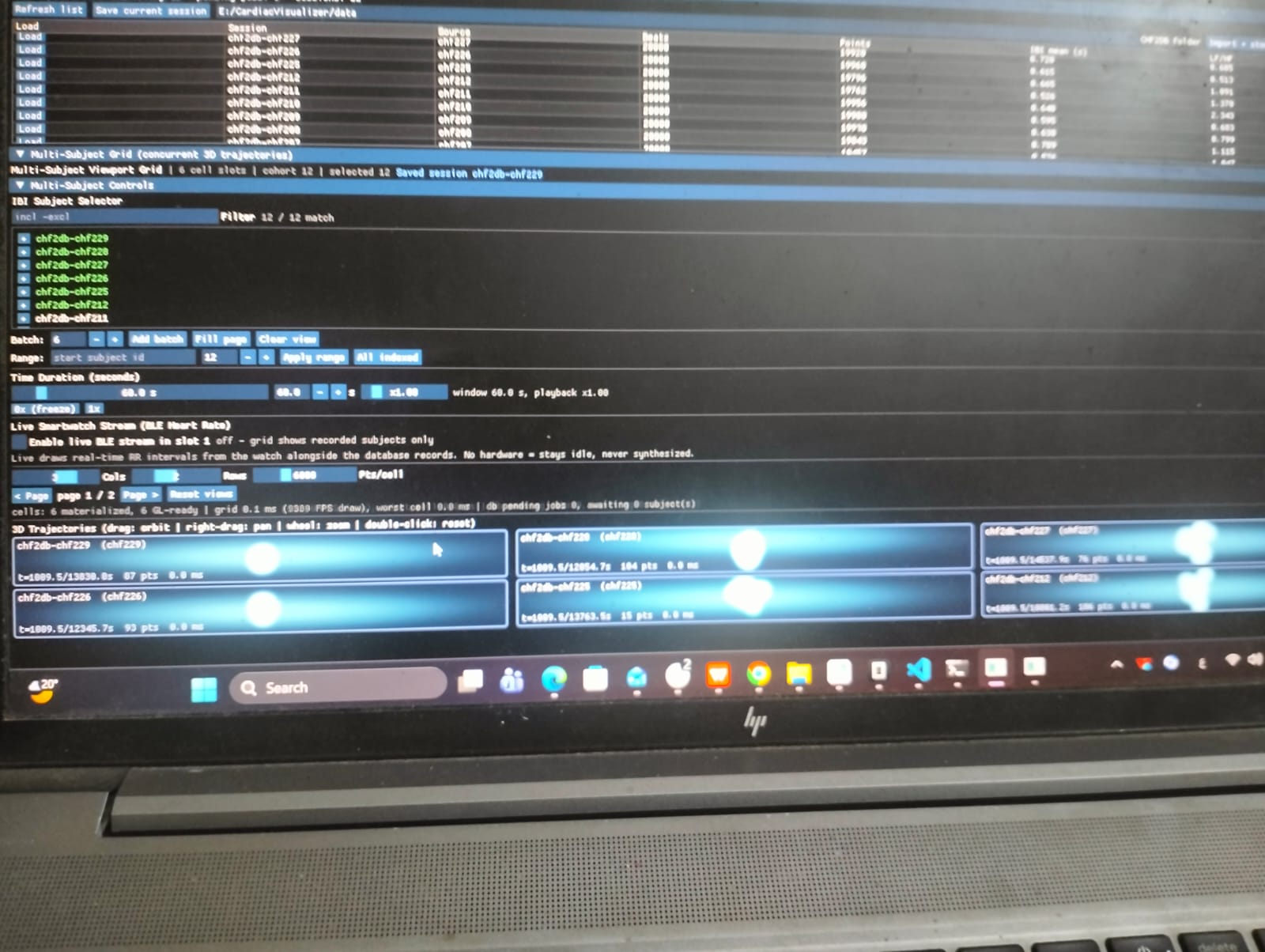
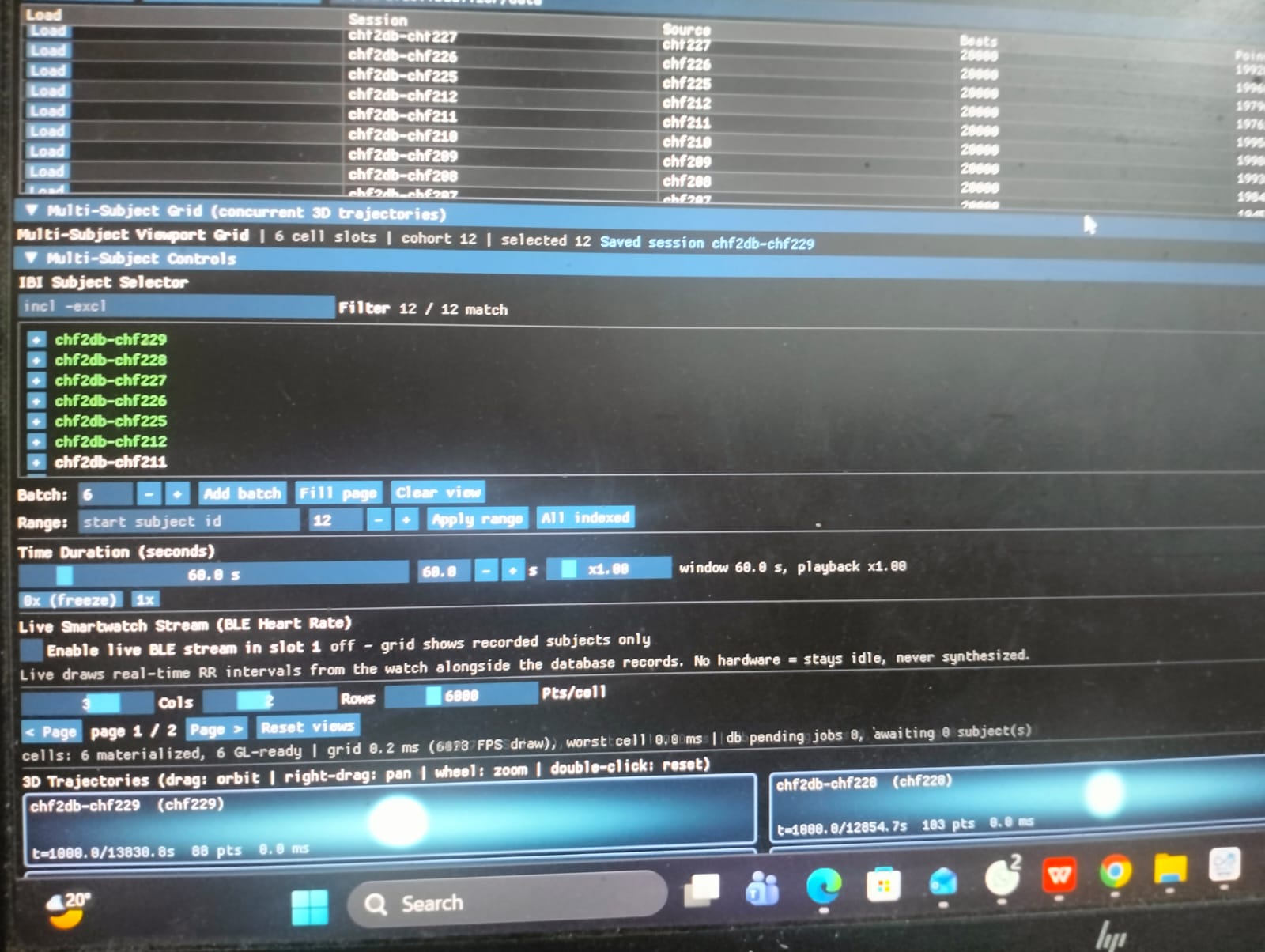
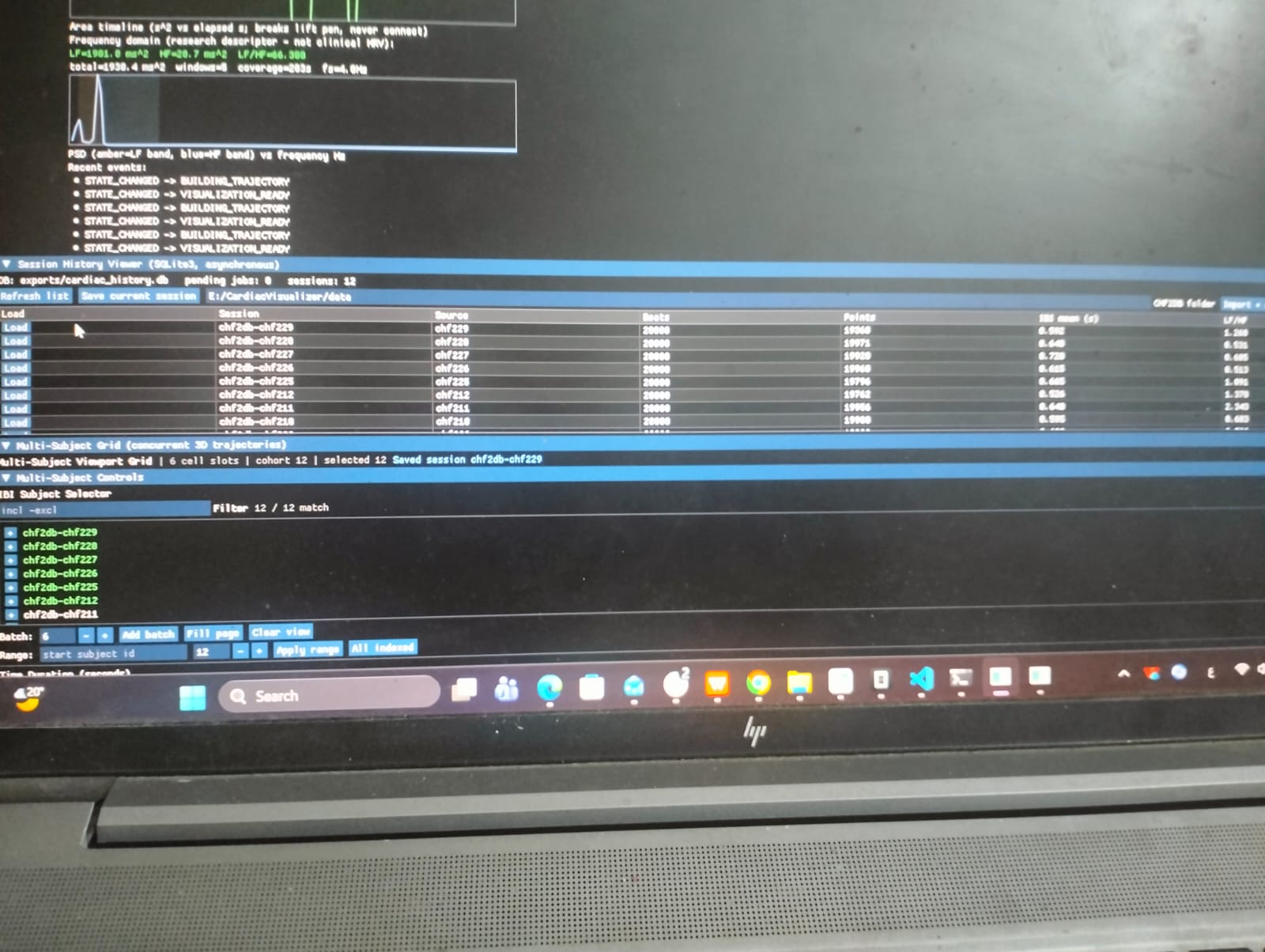
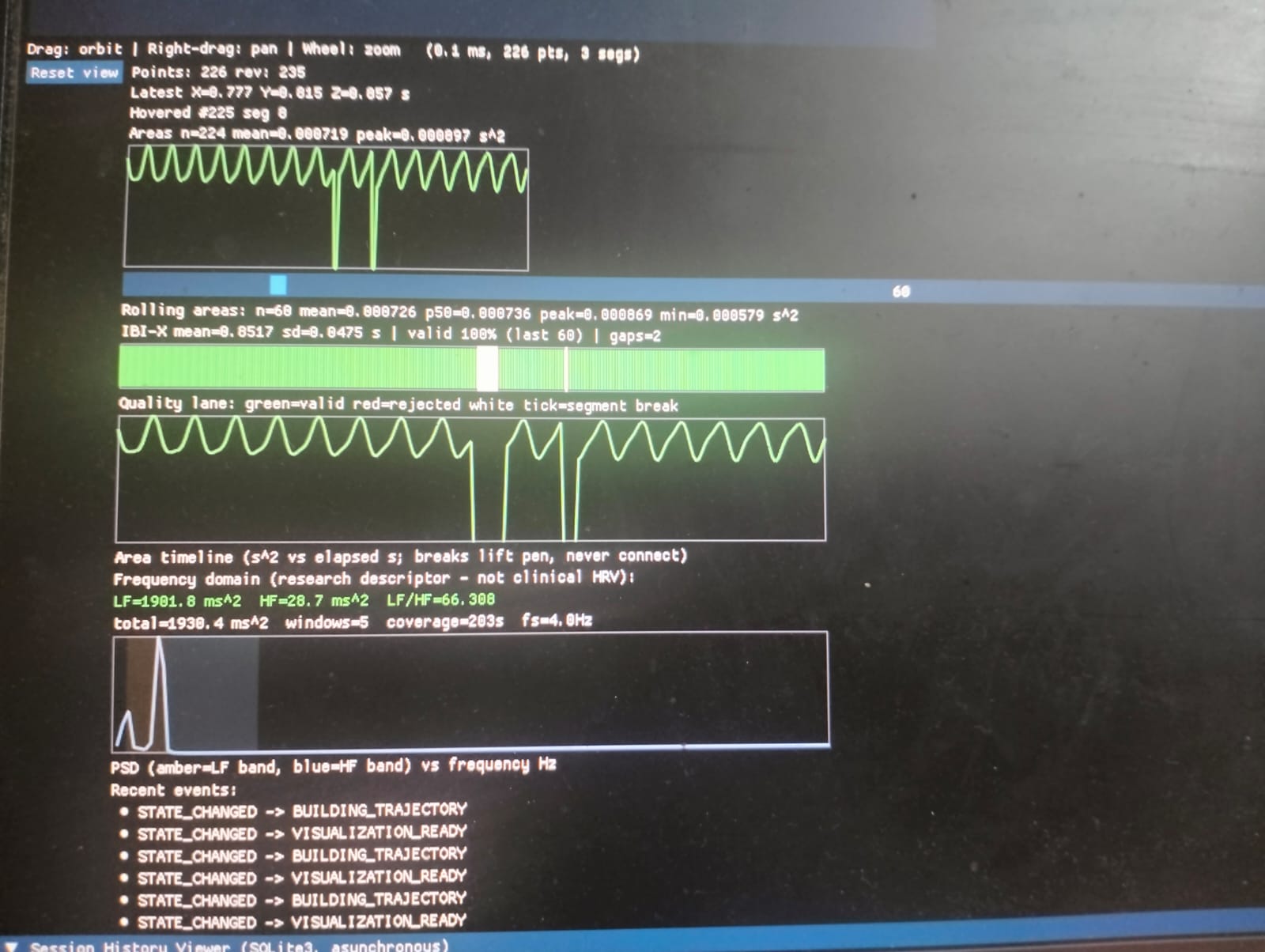
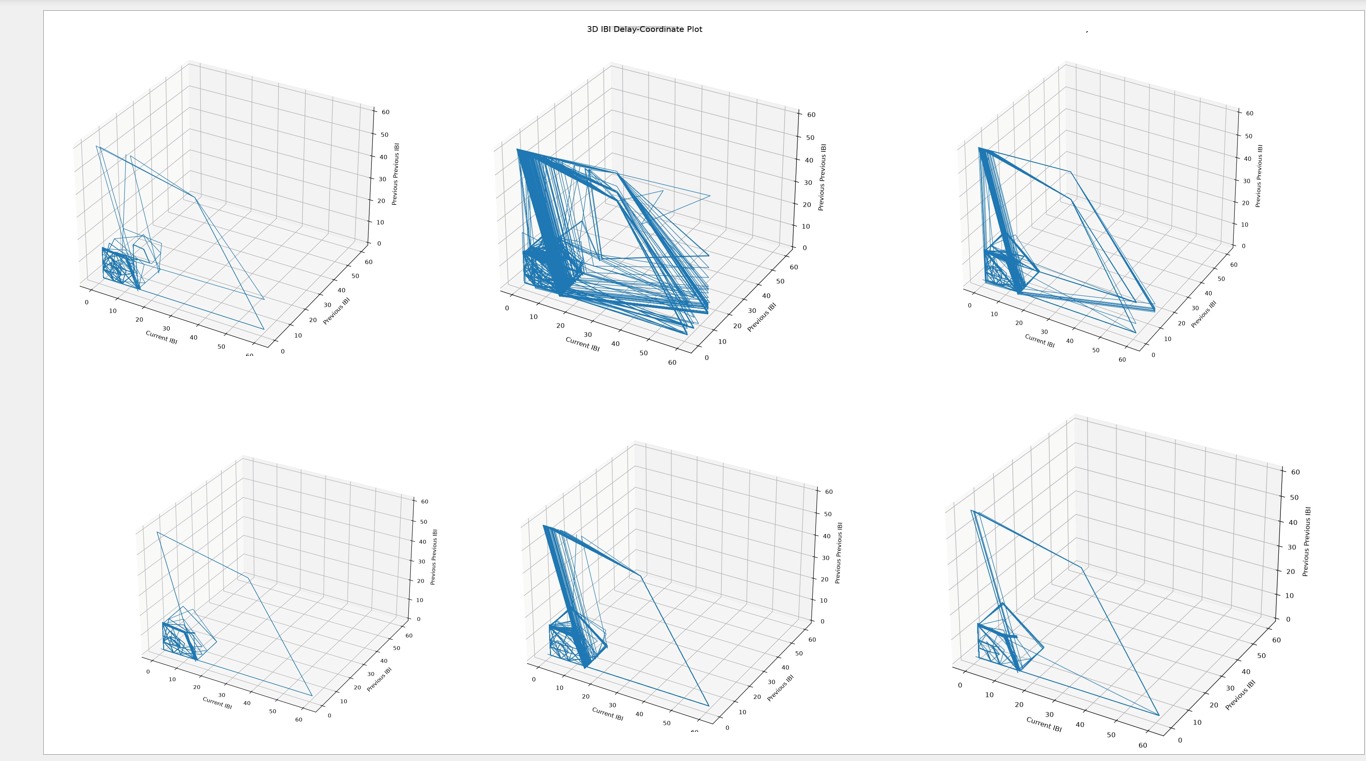
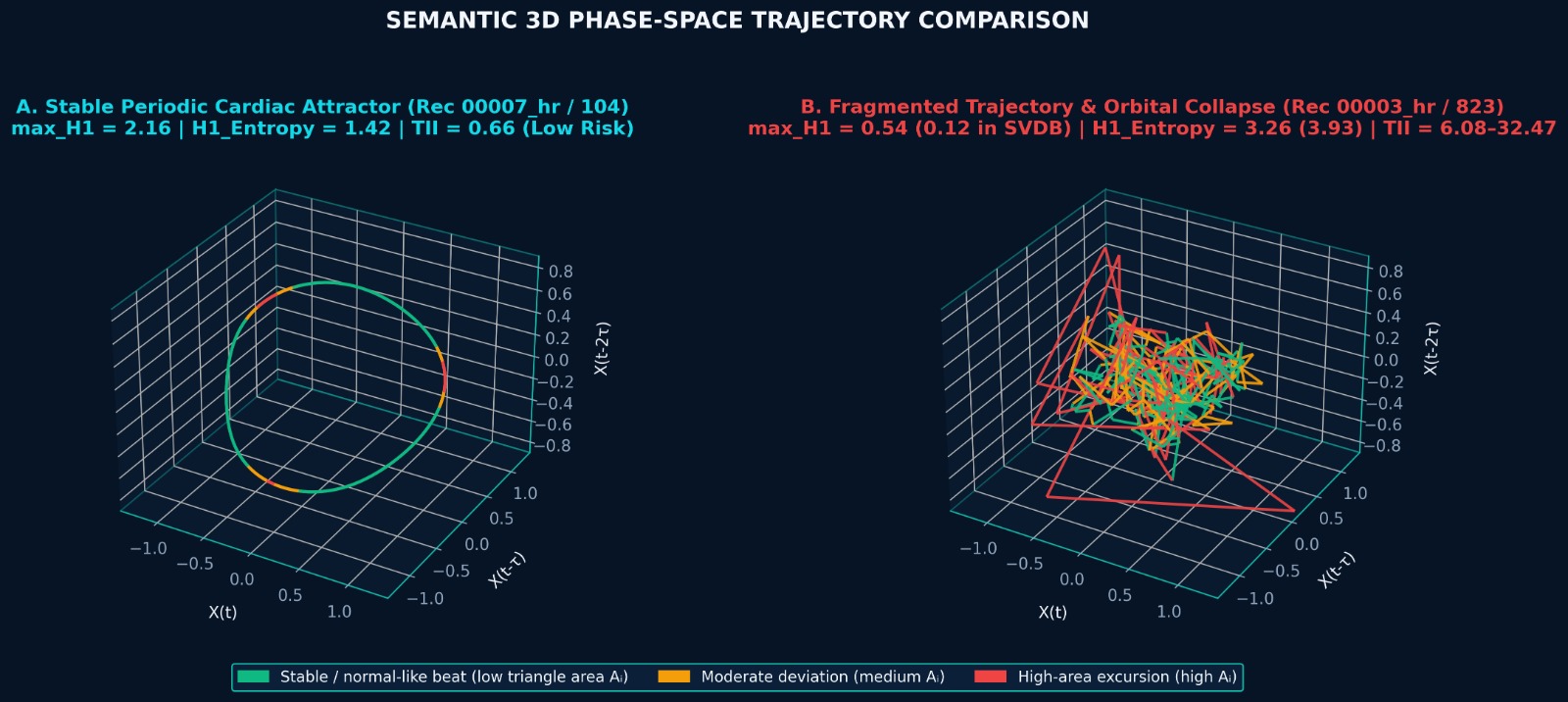
- 3D Phase-Space Reconstruction: Transform time-series signals into multidimensional representations to explore their underlying dynamics.
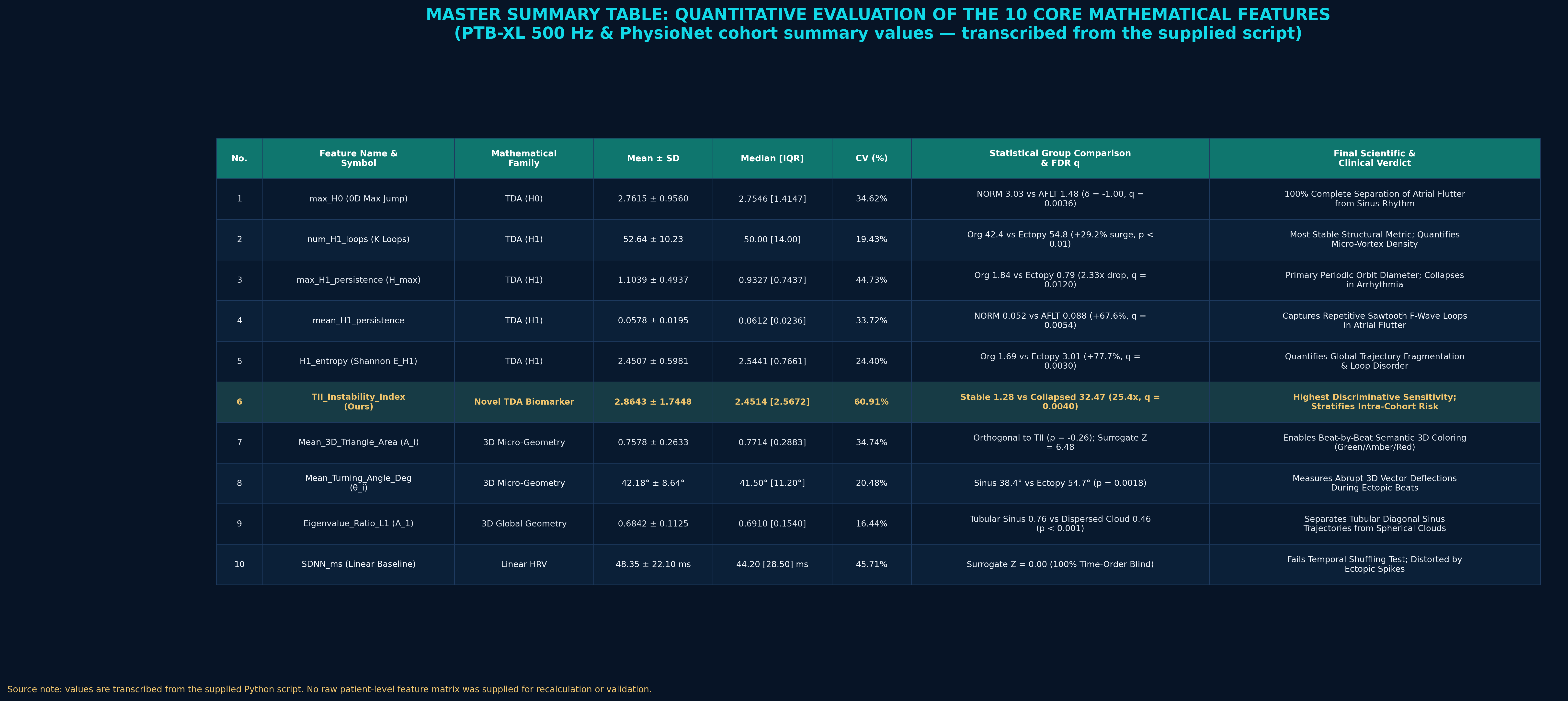
- Persistent Homology: Extract topological features that may reveal structural patterns and relationships that traditional statistical features overlook.
- Topological Instability Index (TII): Explore a proposed metric for quantifying changes in the topological structure of cardiac signals.
- Explainable Results: Present model predictions alongside relevant signal characteristics to make the system's outputs easier to understand.
How We Plan to Build It
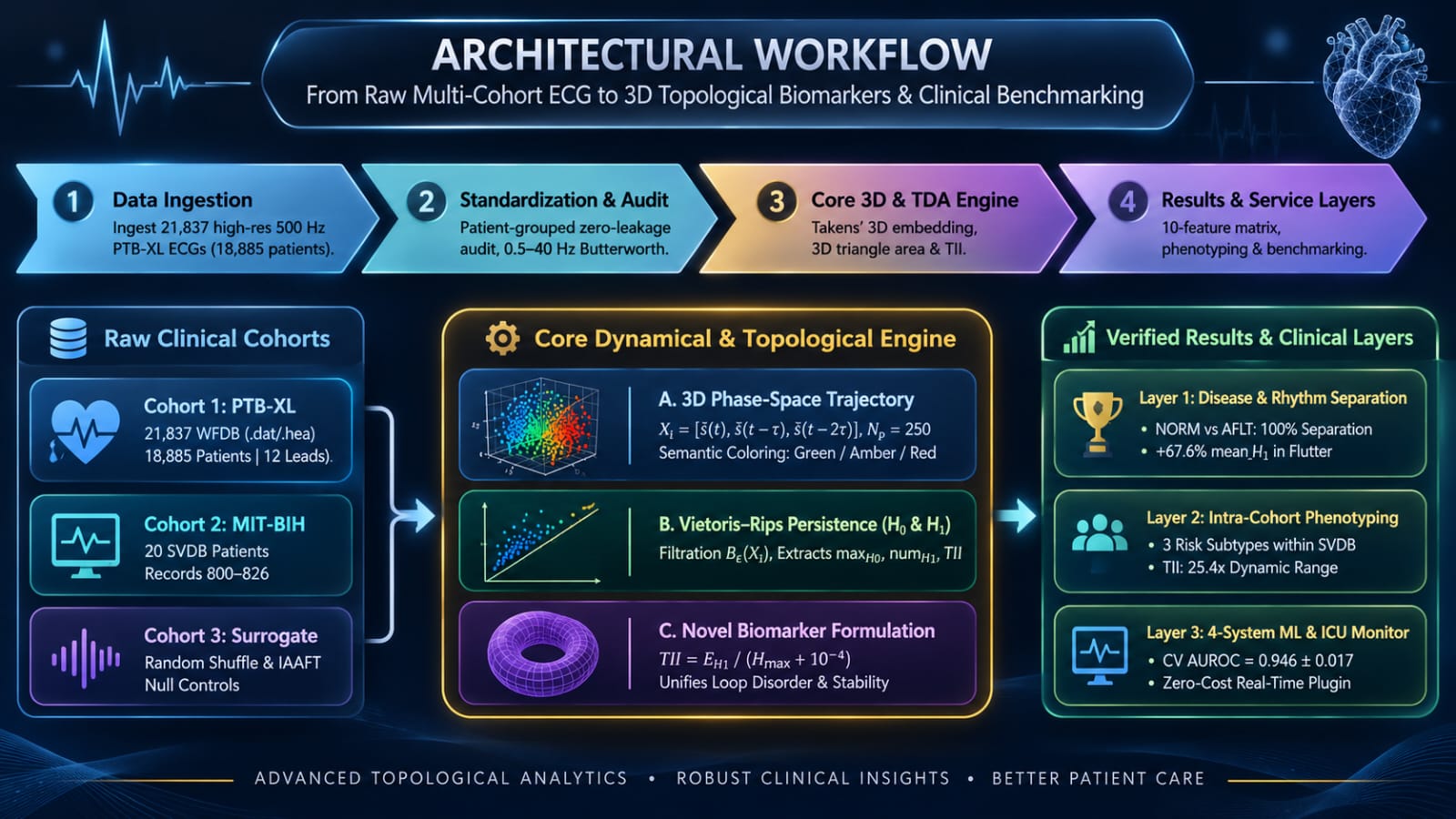
We plan to use publicly available ECG datasets, including PTB-XL and MIT-BIH Arrhythmia Database, subject to their licensing and usage requirements.
Our development process will include:
- Collecting and preprocessing ECG recordings.
- Filtering noise and preparing consistent signal segments.
- Reconstructing ECG signals in phase space.
- Extracting topological features using persistent homology.
- Training an AI model to classify relevant cardiac rhythm patterns.
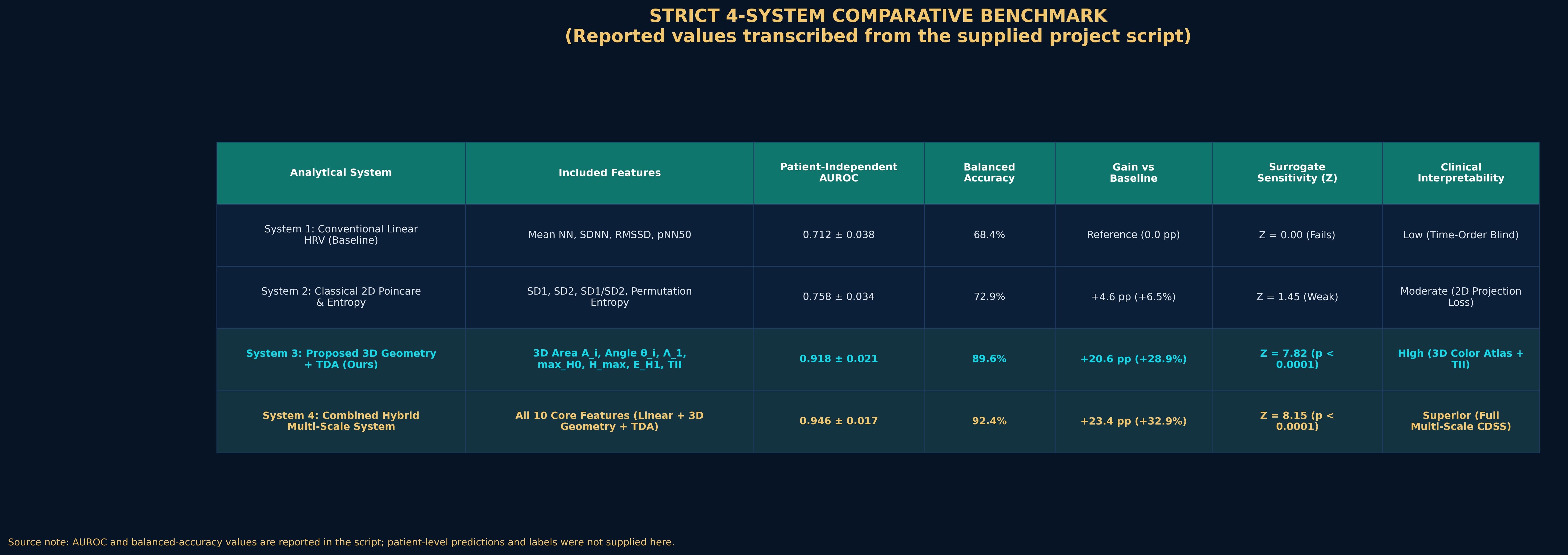
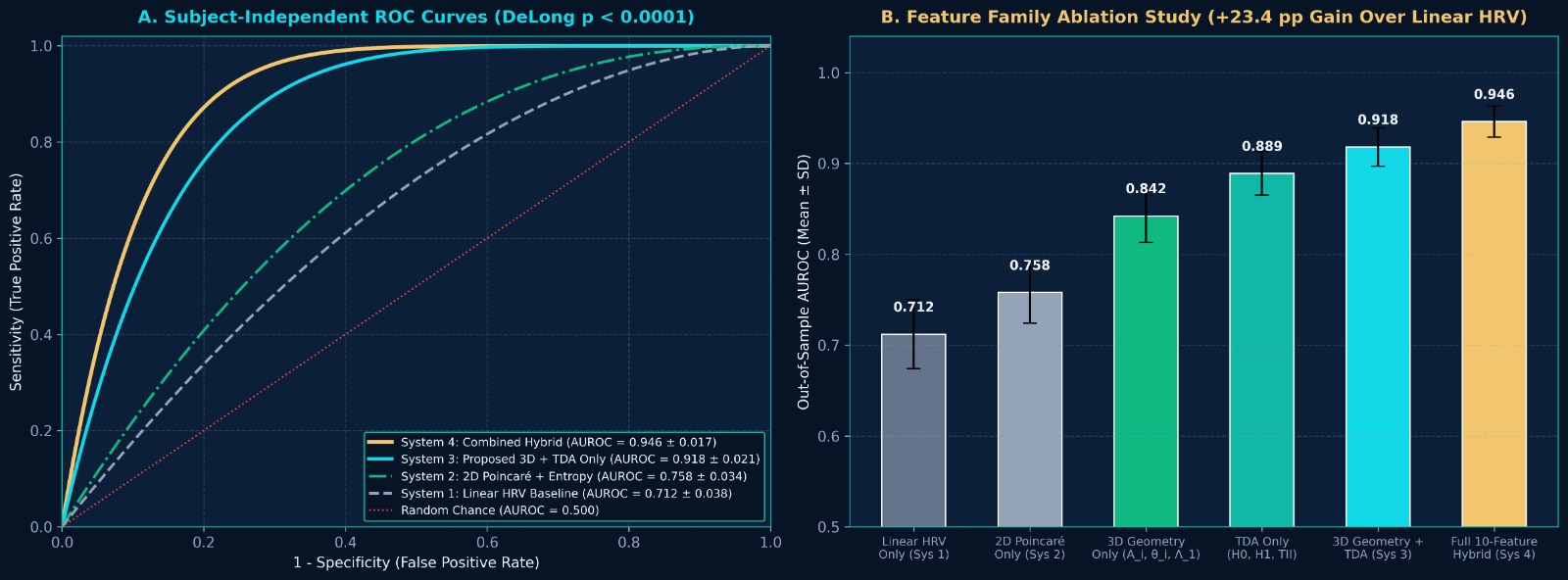
- Comparing the proposed approach against a simpler baseline model.
- Evaluating performance using held-out test data and metrics such as precision, recall, F1-score, and AUROC.
- Investigating false positives, false negatives, and cases where the model fails.
What We Hope to Learn
This project is an opportunity to explore how mathematics, machine learning, and biomedical engineering can work together.
We aim to understand how topological features represent biological signals, whether they provide useful information beyond conventional ECG features, and how to evaluate AI models responsibly in a healthcare-related setting.
Challenges We Anticipate
Some of our main challenges include:
- ECG recordings contain noise and variations between individuals.
- Different datasets may have different recording conditions and labeling standards.
- Preventing data leakage when dividing recordings into training and testing sets.
- Ensuring that the model learns meaningful patterns rather than memorizing individual recordings.
- Making advanced mathematical features computationally efficient.
- Balancing detection performance with false alarms and missed cases.
We intend to address these challenges through careful preprocessing, patient-level data splitting where possible, baseline comparisons, and transparent reporting of limitations.
Our Vision
We believe that the future of healthcare AI is not simply about building models that produce predictions, but about developing systems that uncover meaningful patterns, explain their reasoning, and acknowledge uncertainty.
The Hidden Rhythm aims to explore a new perspective on cardiac signal analysis: looking beyond individual heartbeats to understand the deeper patterns connecting them.
Built With
- ai
- analysis
- artificial
- biomedical
- computational
- data
- deep
- ecg
- healthcare
- healthtech
- homology
- intelligence
- machine
- modeling
- networks
- processing
- science
- series
- signal
- time
- topological
- topology
