Inspiration
Our project grew from a belief in AI's potential, a passion for sustainable technology, and inspiration from Scandinavian countries that are already turning data centers green.
In the coming decades, AI will shape our lives far more than it does today. Its capabilities run on computing power, and as those capabilities grow, so does demand for data centers. These facilities are the infrastructure of our future — and we can either let them sit as isolated energy drains or integrate them sustainably into our communities.
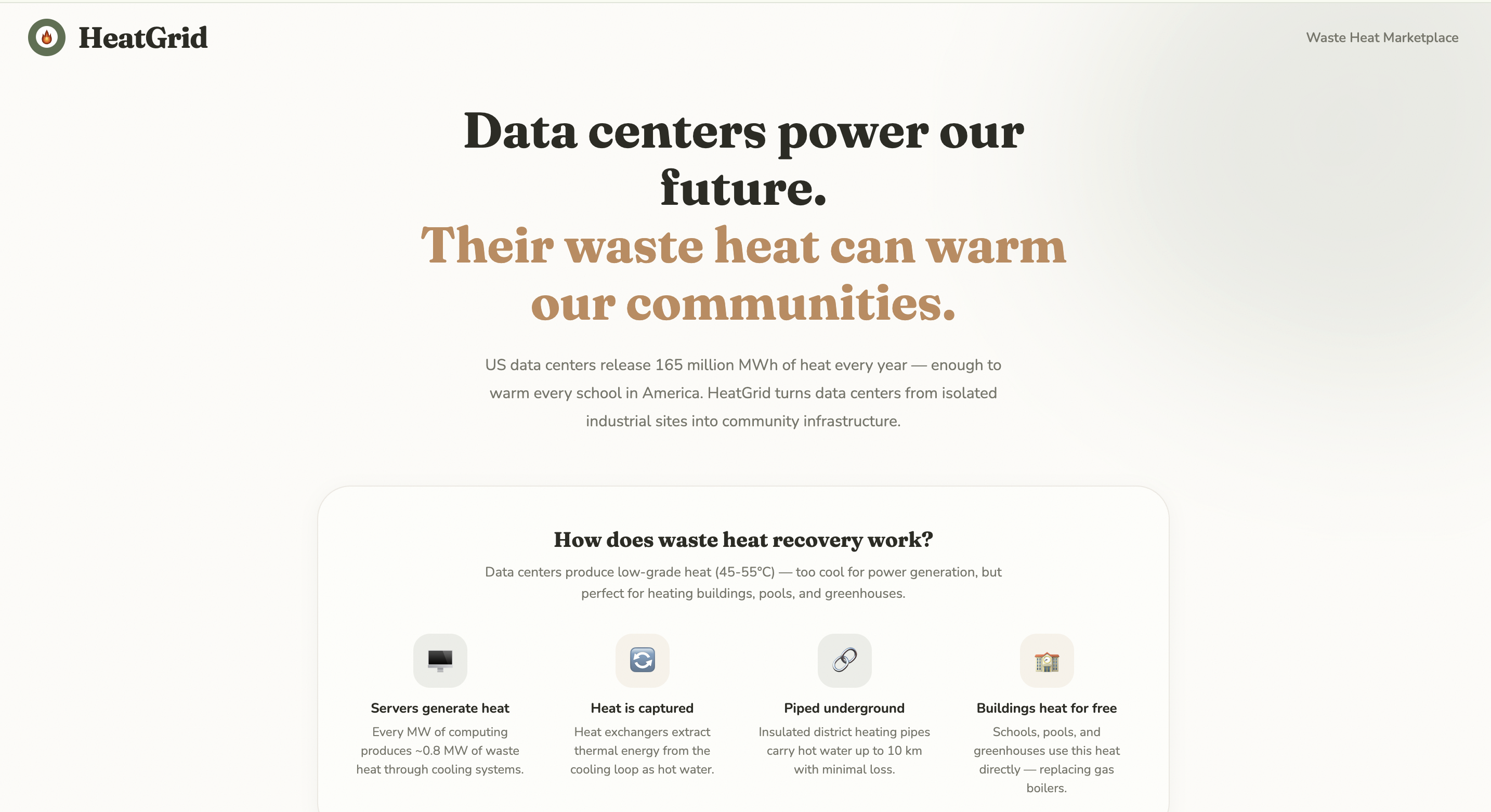
US data centers release 165 million MWh of heat every year — enough to warm every school in America. In Scandinavia, government incentives already make waste heat reuse common. We asked: what if the right business incentives could achieve the same result without them?
What it does
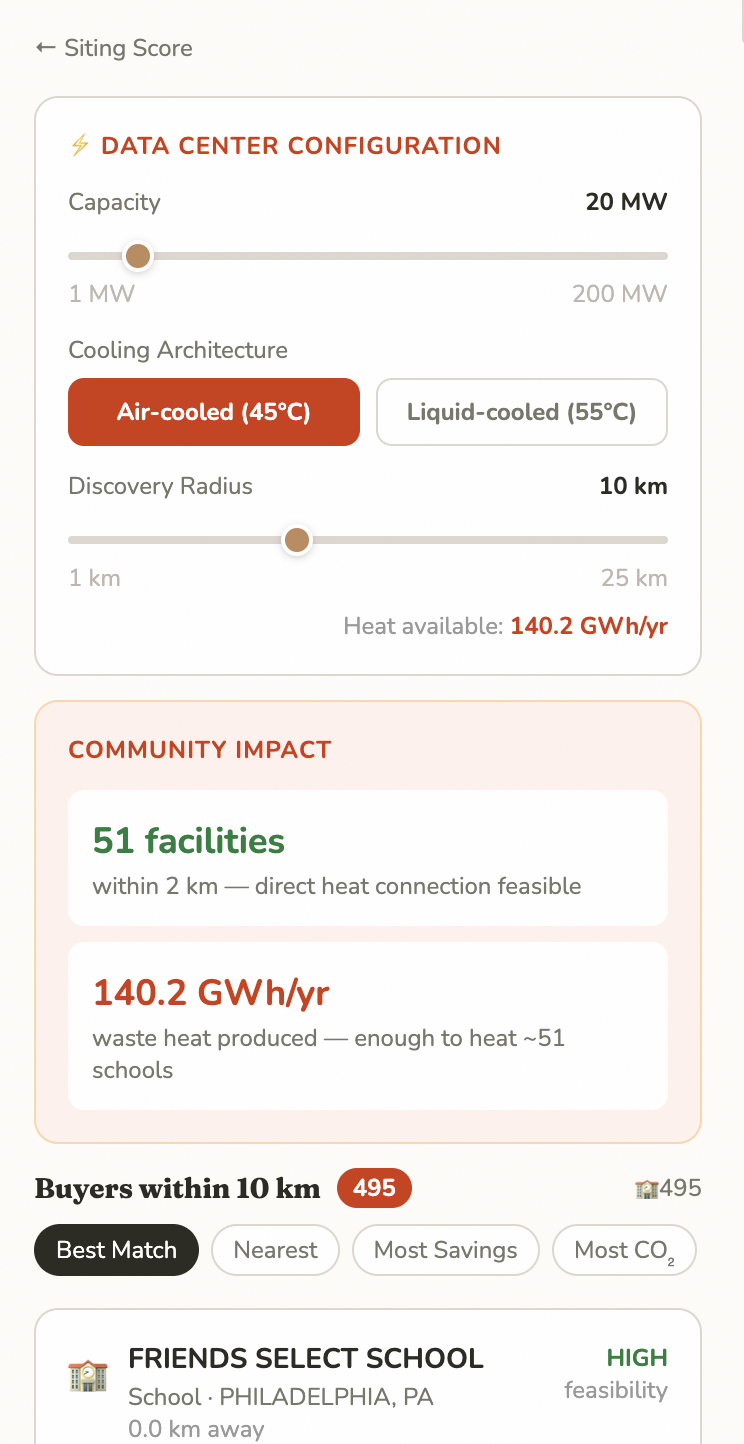
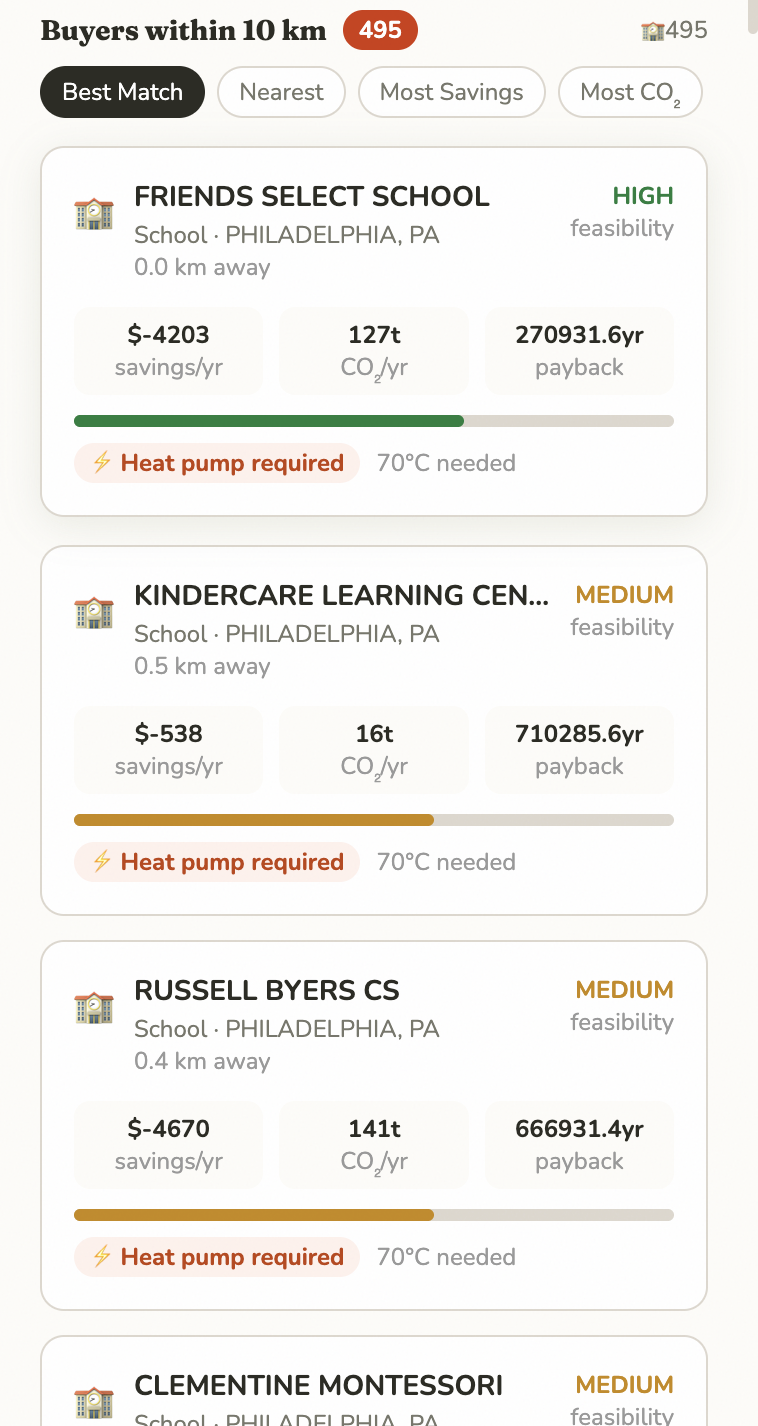
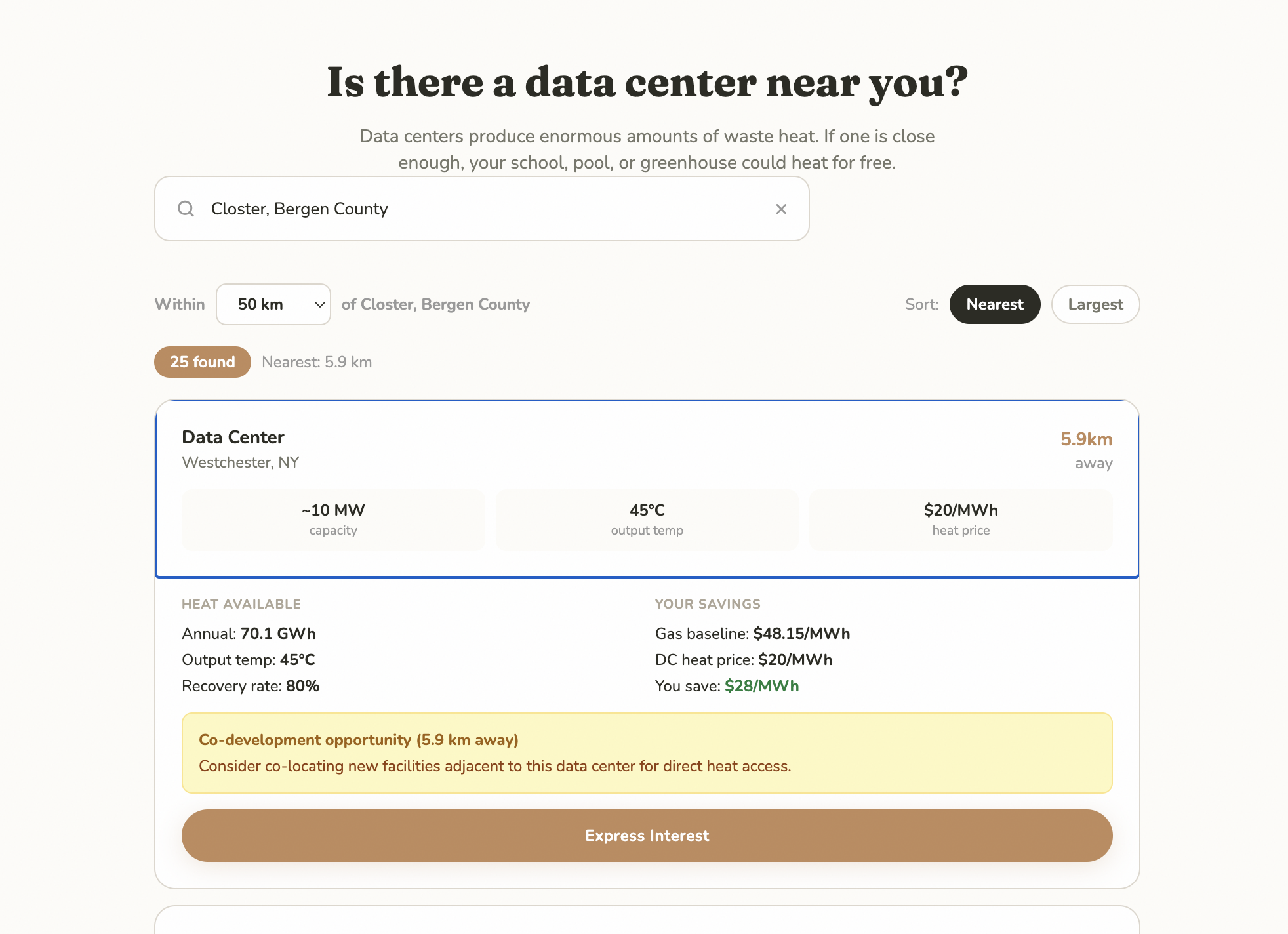
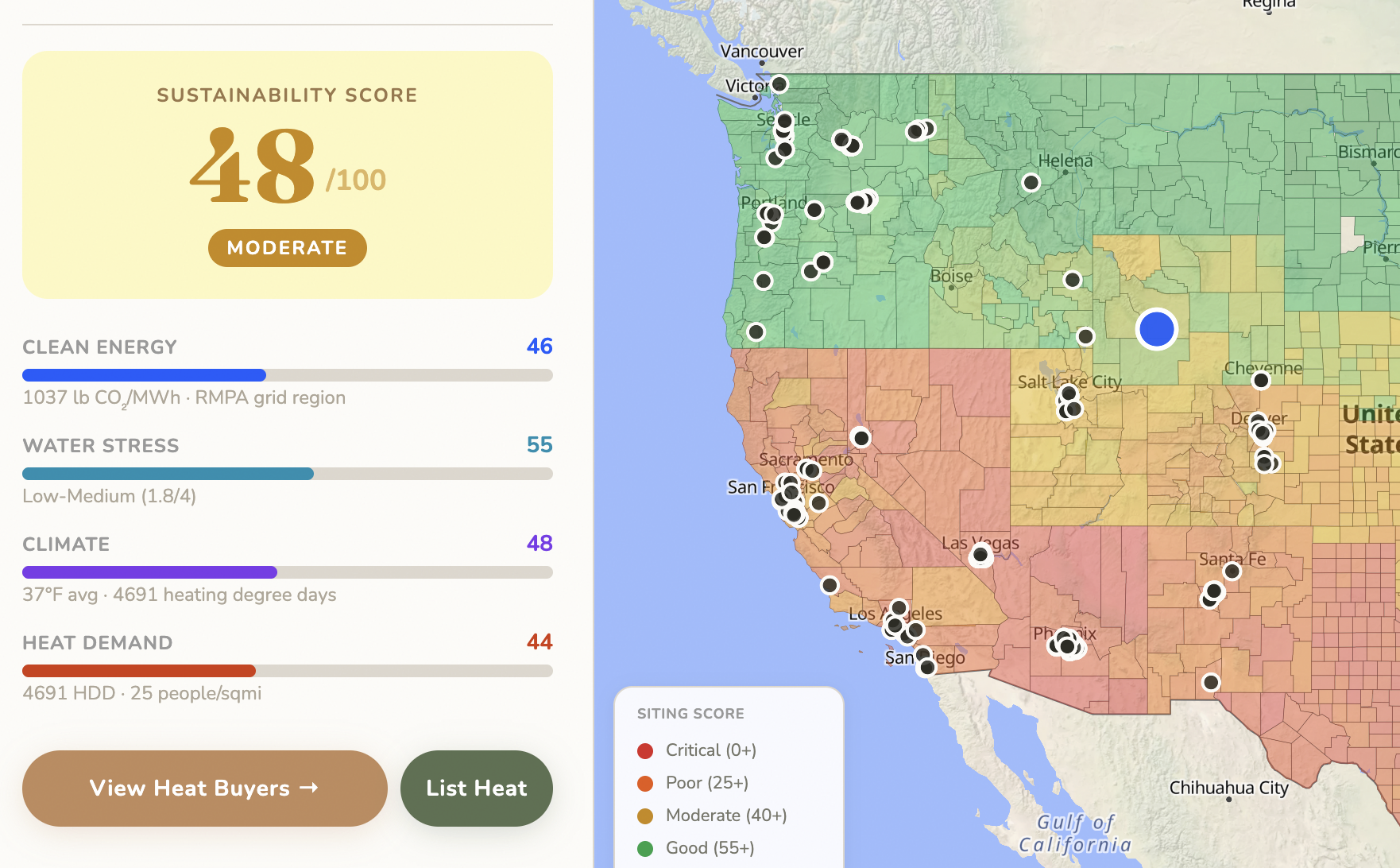
HeatGrid connects data center developers with nearby facilities that need heat. Developers get a siting tool that scores any US county on clean energy, water stress, climate, and heat demand. Schools, pools, and greenhouses get a marketplace to find nearby data centers and see estimated savings, CO2 reduction, and payback period.
How we built it
React 18 + MapLibre GL JS for the interactive map, Tailwind CSS for styling, Supabase for the live marketplace backend. We scored 3,143 counties using EPA eGRID, WRI Aqueduct, and NOAA climate data, and mapped 131,021 schools from the NCES database. A full economics engine calculates deliverable heat, pipe loss, and infrastructure costs for each buyer match.
Challenges we ran into
Nearly 3,000 county centroids had wrong coordinates — clicking Pennsylvania showed Bronx data. We recomputed every centroid from the actual GeoJSON polygons. Iterating 131K schools on every map click froze the browser until we added a bounding-box pre-filter. React and MapLibre fought over lifecycle management until we restructured to stable refs.
Accomplishments that we're proud of
This isn't a mockup — 3,143 counties scored, 131K schools mapped, 1,242 data centers indexed, all with a working Supabase-backed marketplace. Click anywhere on the US map and instantly see which nearby facilities could benefit from a data center's waste heat, with real economics.
What we learned
District heating economics are real — gas costs ~$48/MWh vs ~$20/MWh for DC waste heat. Data quality matters more than algorithms. And switching from a "beta" look to a polished design system immediately made the platform feel credible.
What's next for HeatGrid
Pilot with a real data center and school district. Expand to hospitals and residential districts. Add detailed heat pump modeling. Go international, starting with Northern Europe where district heating infrastructure already exists.

Log in or sign up for Devpost to join the conversation.