-
-
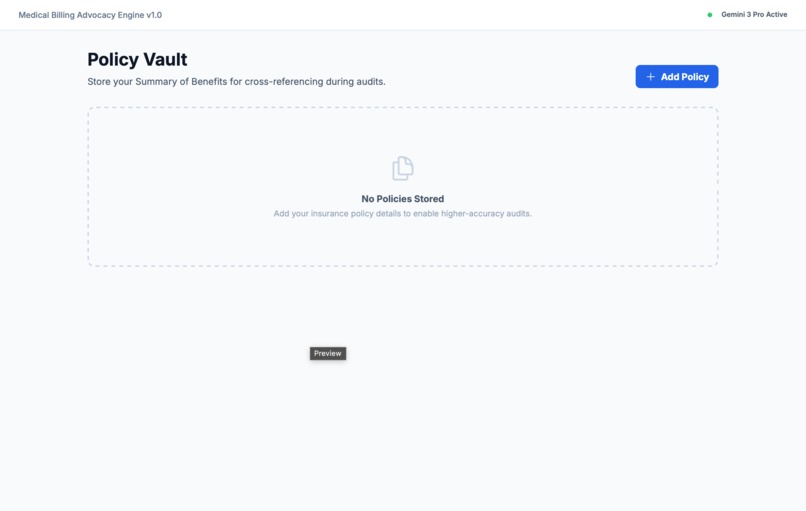
Deep Policy Reasoning (The "Brain")
-
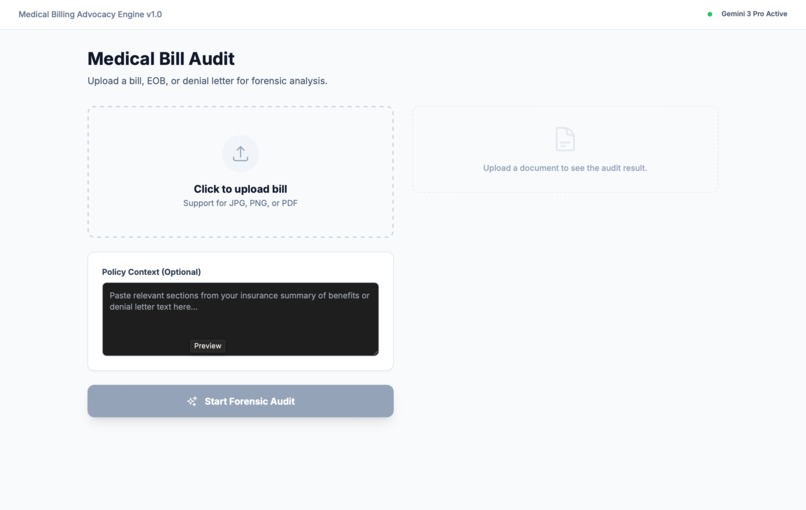
Multimodal Input (The Denial Letter)
-
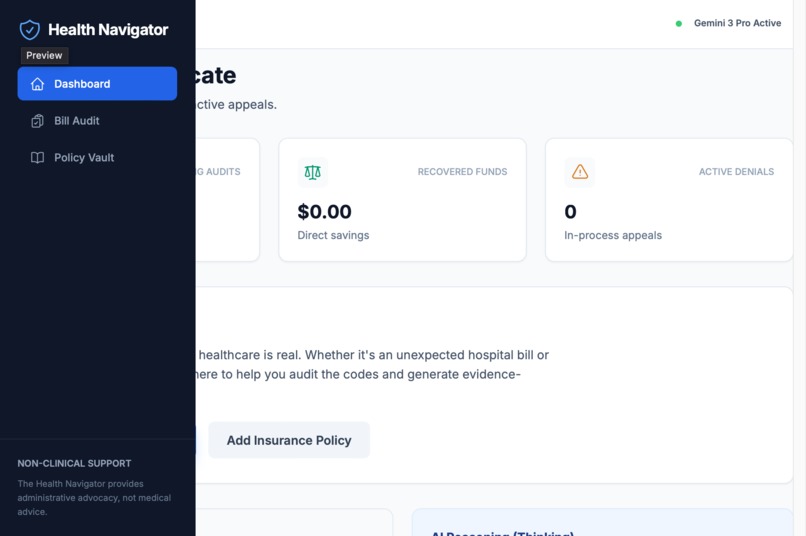
The Action Output (The Appeal)
-
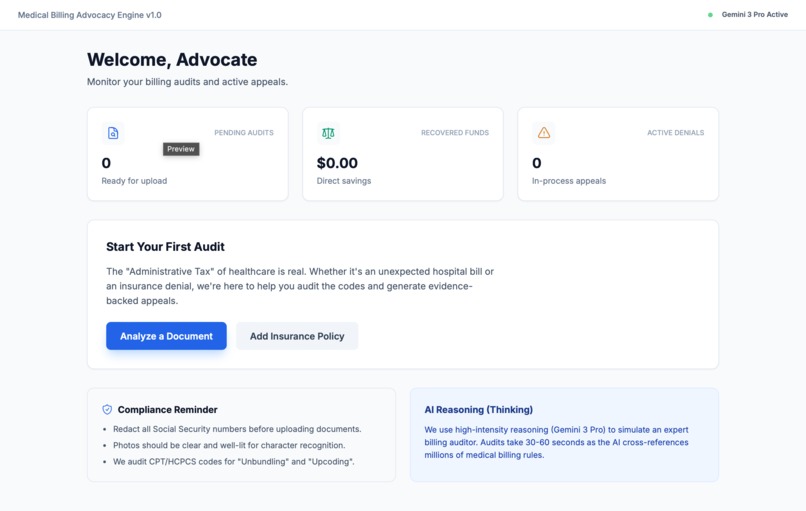
The Health Navigator: Patient Advocacy Dashboard
Inspiration
Across the globe, healthcare is becoming increasingly defined not by the quality of medicine, but by the complexity of the paperwork. I noticed a heartbreaking trend: patients are being denied life-saving treatments or hit with massive "surprise bills" simply because of a clerical coding error or an obscure insurance policy clause. I realized that while doctors treat the body, no one is treating the bureaucracy. Inspired by the capability of Gemini 3 to process massive, complex documents, I decided to build a "legal-medical brain" that acts as a fearless advocate for the patient.
What it does
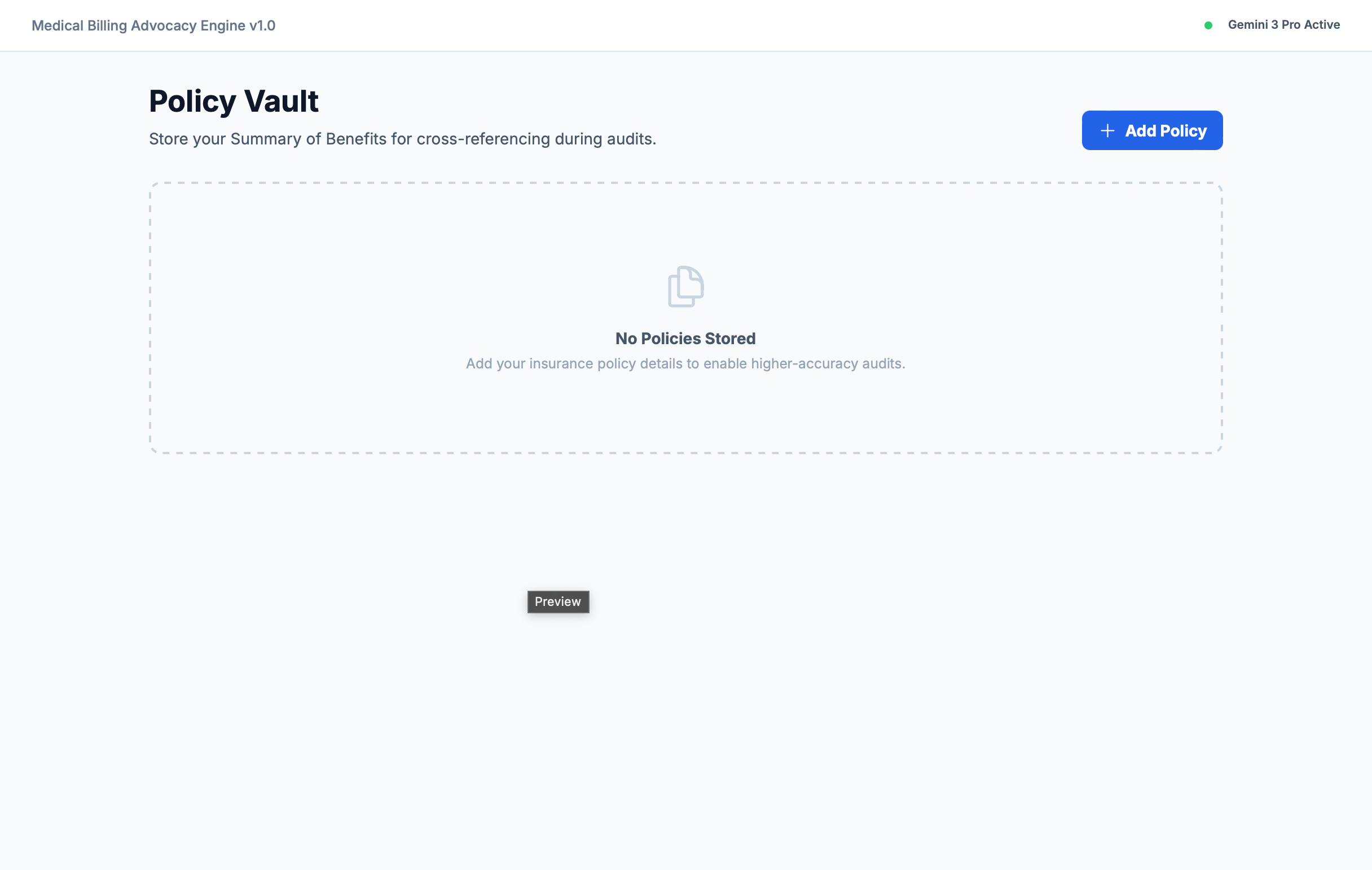
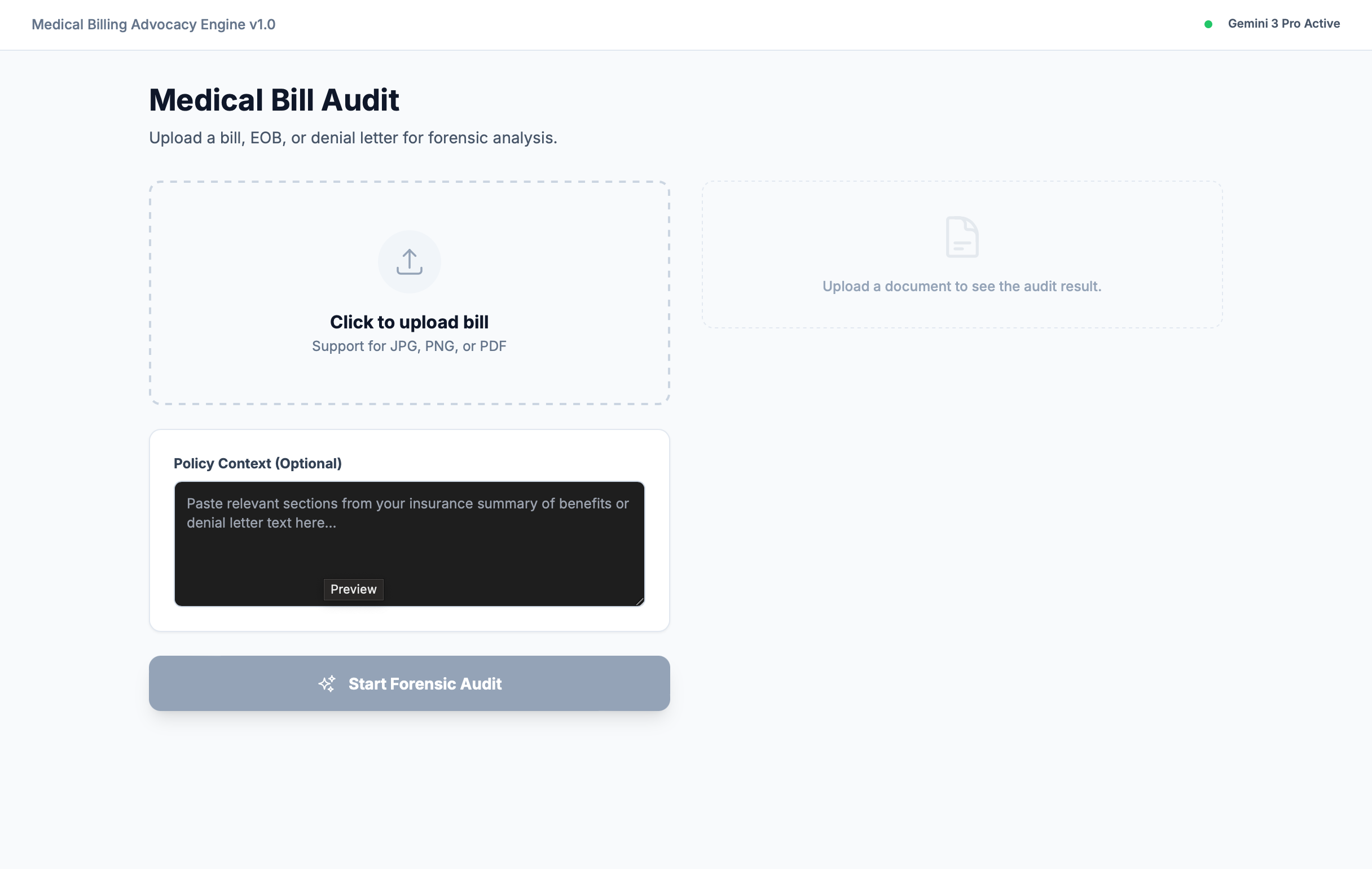
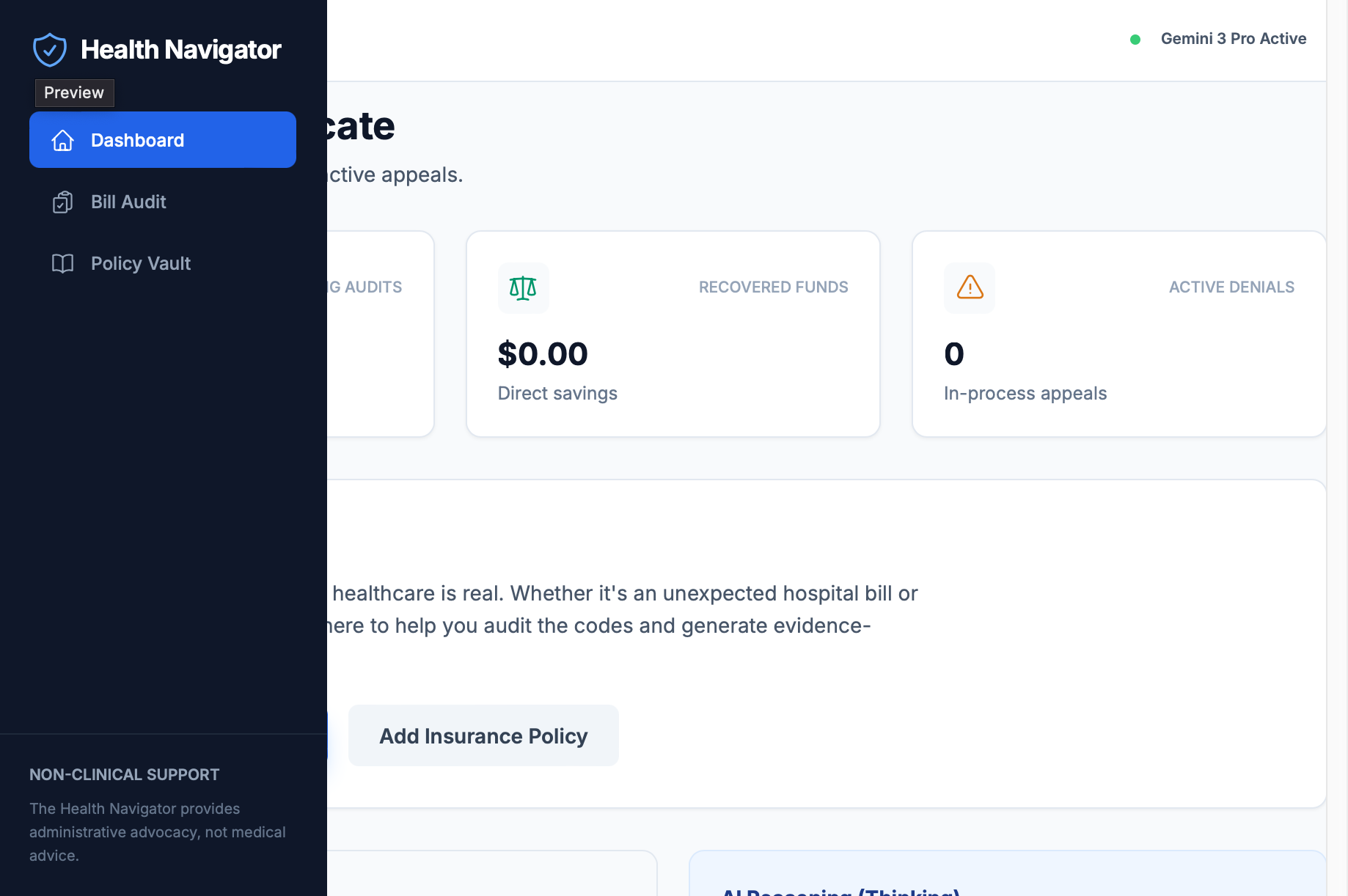
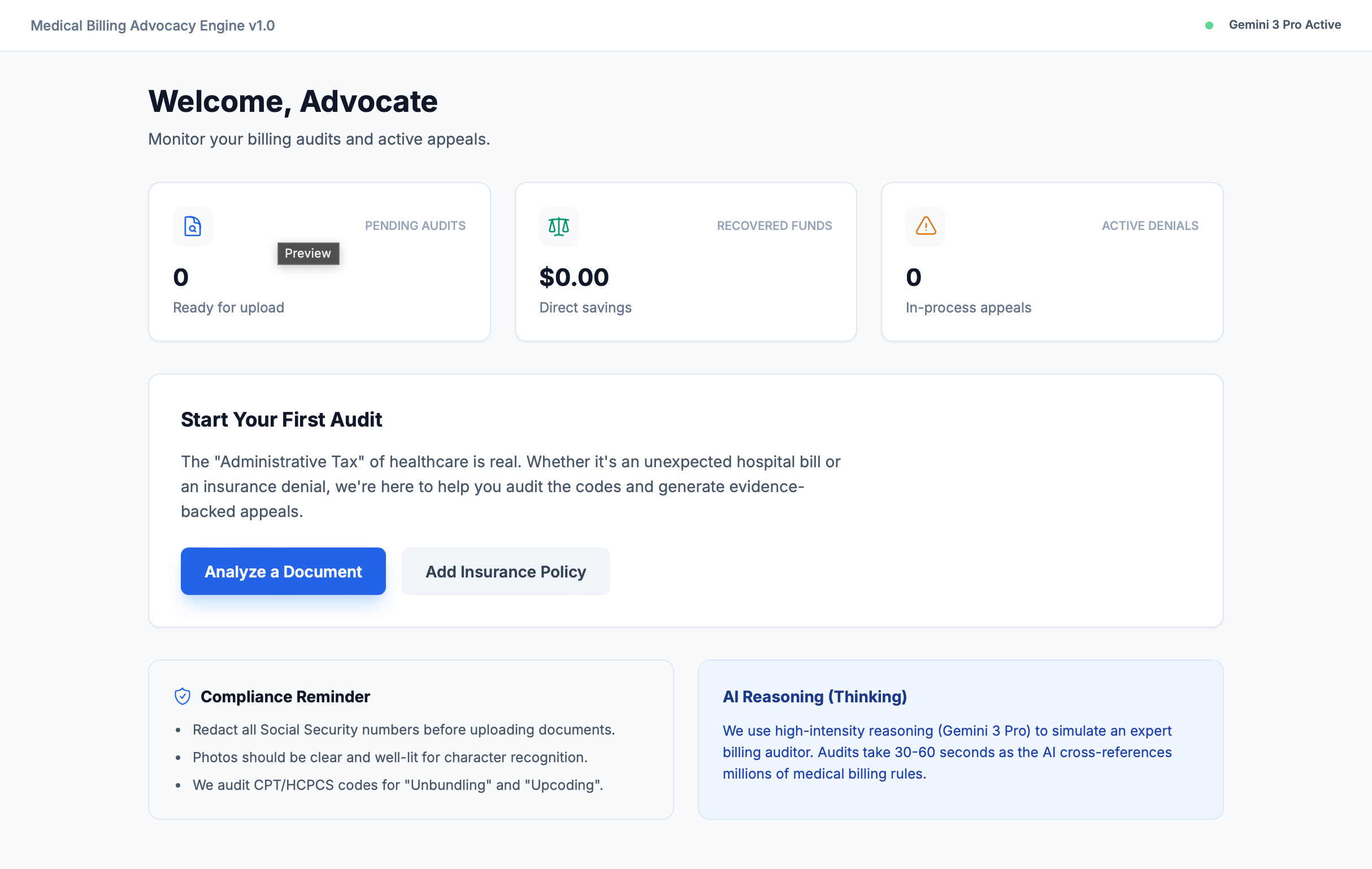
The Health Navigator is an autonomous administrative agent designed to act as a patient’s private advocate in the fight against medical bureaucracy. By leveraging Gemini 3’s multimodal vision and long-context reasoning, the app performs three critical functions:
- Billing Audit: Analyzes photos of medical bills and Explanation of Benefits (EOB) to detect "upcoding," "unbundling," and mathematical discrepancies.
- Policy Intelligence: Cross-references patient denial letters against 1,000+ page insurance handbooks to find specific coverage clauses that have been overlooked.
- Autonomous Advocacy: Generates legally-grounded, policy-backed appeal letters and negotiation scripts to help patients challenge denied claims and reduce out-of-pocket costs.
How we built it
I utilized the same Vibe Engineering principles that powered our first project, but shifted the focus toward Deep Context Reasoning.
- The Engine: I used Gemini 3 Pro because its 1M+ token window allows us to upload an entire 500-page insurance policy manual alongside the patient's specific denial letter.
- Multimodal Triage: I integrated Gemini 3 Vision so patients can simply snap a photo of a confusing hospital bill or a handwritten doctor's note.
- Thought Signatures: I utilized Thinking Levels to ensure the agent performs a "High" intensity audit of medical codes against the provided policy, ensuring the logic is legally sound before drafting an appeal.
Challenges we ran into
The biggest hurdle was Technical Jargon and Ambiguity. Medical billing uses thousands of codes (ICD-10, CPT), and insurance companies often use vague language to protect their bottom line. I had to refine our system prompts to ensure the agent doesn't just "summarize," but actively looks for discrepancies. I also implemented strict privacy guardrails to ensure that while the agent analyzes data, it does not provide "medical advice," but rather "administrative assistance."
Accomplishments that we're proud of
- Solving the "Context Gap": Successfully utilized Gemini 3’s 1M+ token window to allow the agent to read an entire insurance policy alongside a single-page denial letter, a task that traditional AI models would fail at due to memory limits.
- Thought Signature Implementation: I integrated High Thinking Levels to ensure the agent doesn't just scan text but performs a deep audit, documenting its internal logical chain to prove why a bill is incorrect before taking action.
- Multimodal Accuracy: I are proud of the agent's ability to extract structured data from "messy" real-world inputs, such as crumpled bills and blurry smartphone photos of insurance cards.
- Zero-Friction UX: I created an interface where a user can solve a complex financial dispute with a single "Execute" command, moving the burden of labor from the patient to the AI.
What we learned
I learned that Context is King. Traditional AI would fail at this because it couldn't "remember" a clause on page 400 of a manual while looking at a bill. With Gemini 3, the "memory" is effectively infinite. I discovered that the most valuable thing AI can give a person in a crisis isn't just information, it’s advocacy.
What's next for The Health Navigator
- Real-Time Patient Support: Expanding the agent to act as a "Live Advocate" during doctor appointments via Gemini Live, helping patients ask the right questions about billing and coverage in real-time.
- Global Regulatory Expansion: Training the agent's logic on international healthcare systems beyond the US, including European national health insurance models and Southeast Asian private health networks.
- Direct Integration: Building API connections to hospital billing portals and insurance portals so the agent can autonomously file the appeal on the patient’s behalf, truly making it an "Invisible Hand."
- Proactive Prevention: Implementing a "Pre-Check" feature where users can scan a doctor's recommendation before the procedure to ensure it will be covered, preventing the denial from ever happening.
Built With
- agnetic-reasoning
- ai-studio-app-prototyping
- gemini
- google-ai-studio
- thought-signatures
- vibe-coding

Log in or sign up for Devpost to join the conversation.