Inspiration
Rare diseases are difficult to study because knowledge about them is scattered across diseases, symptoms, genes, biological pathways, and research papers. We wanted to build a system that could look beyond already-known relationships and help researchers discover potentially meaningful hidden connections.
What it does
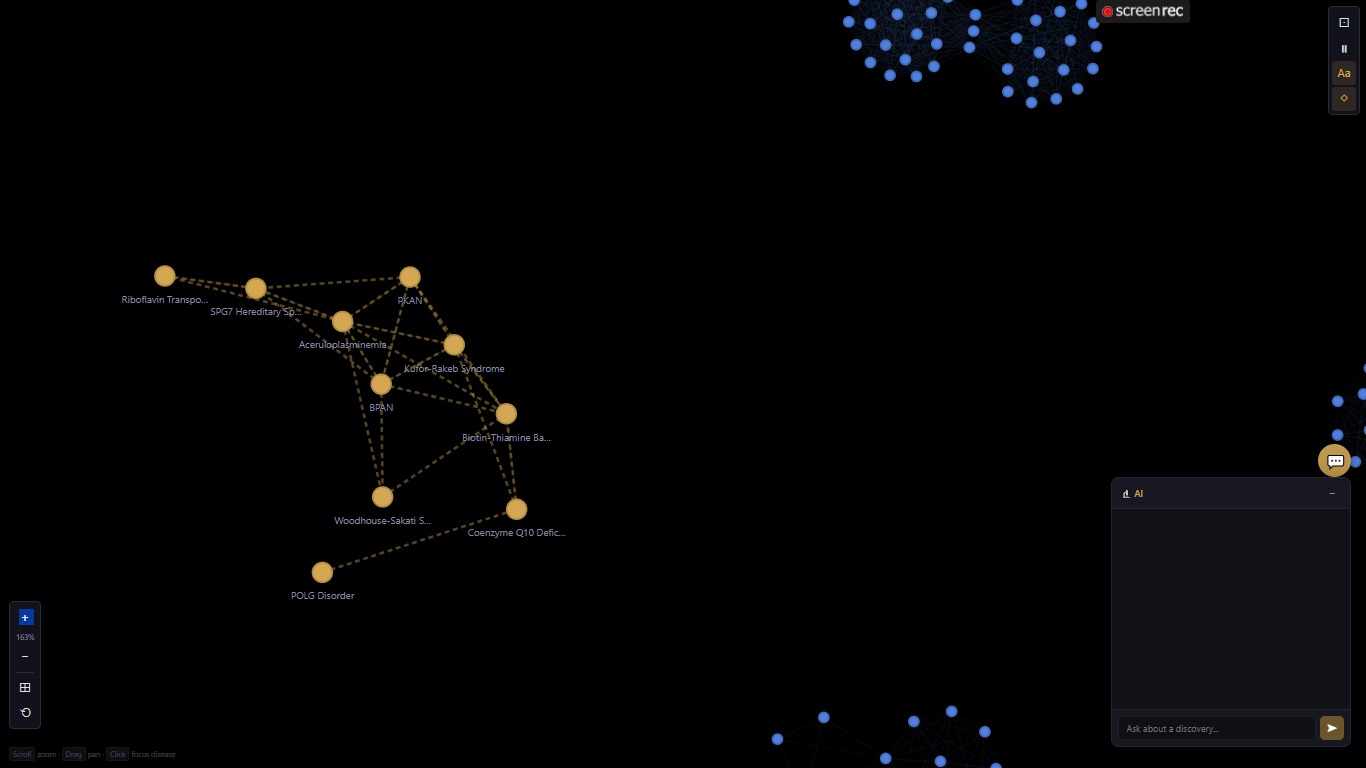
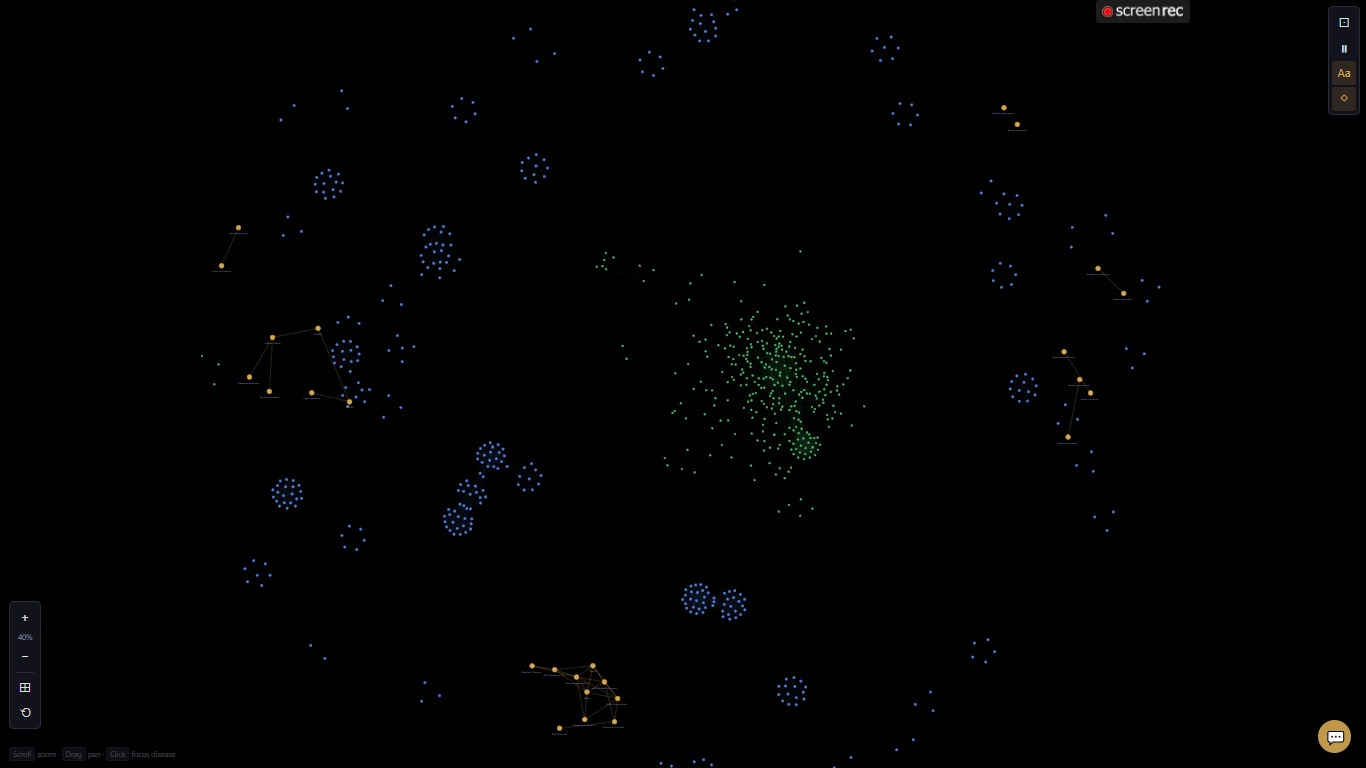
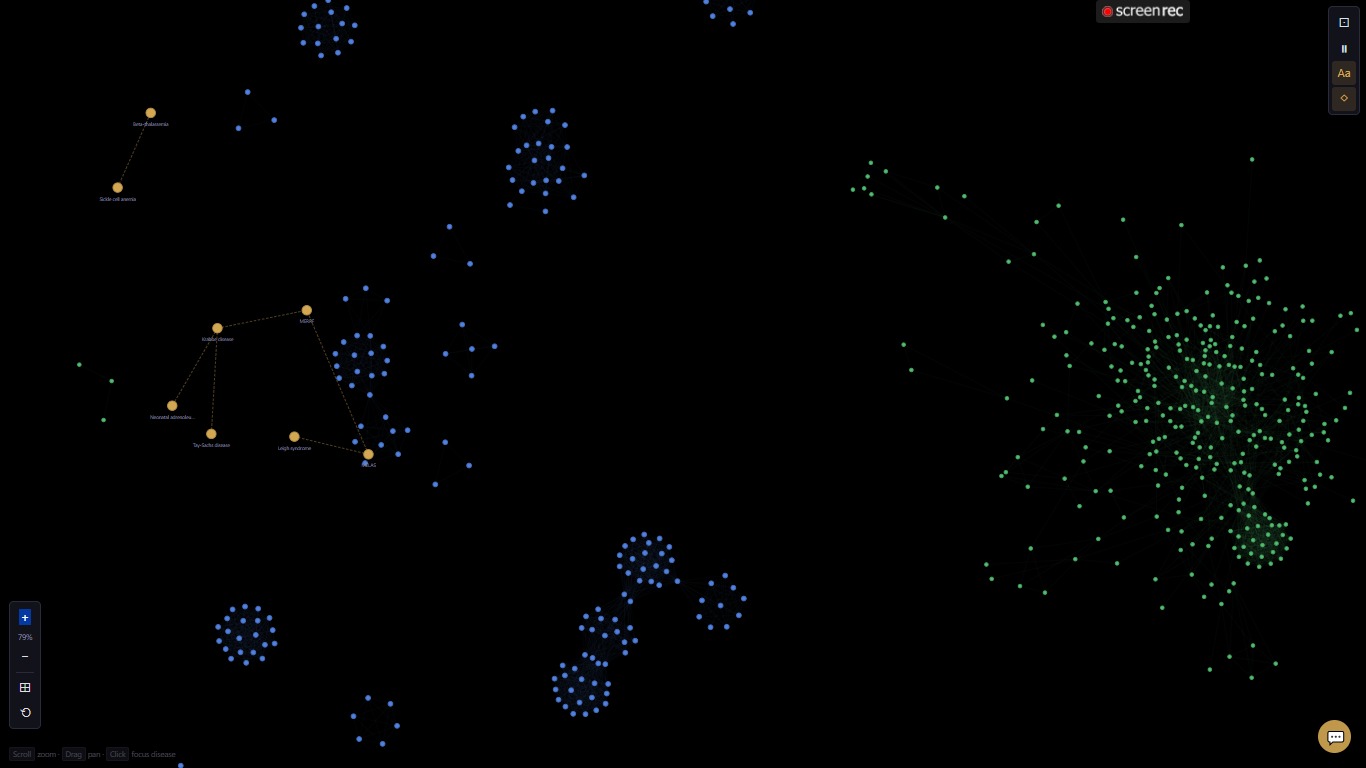
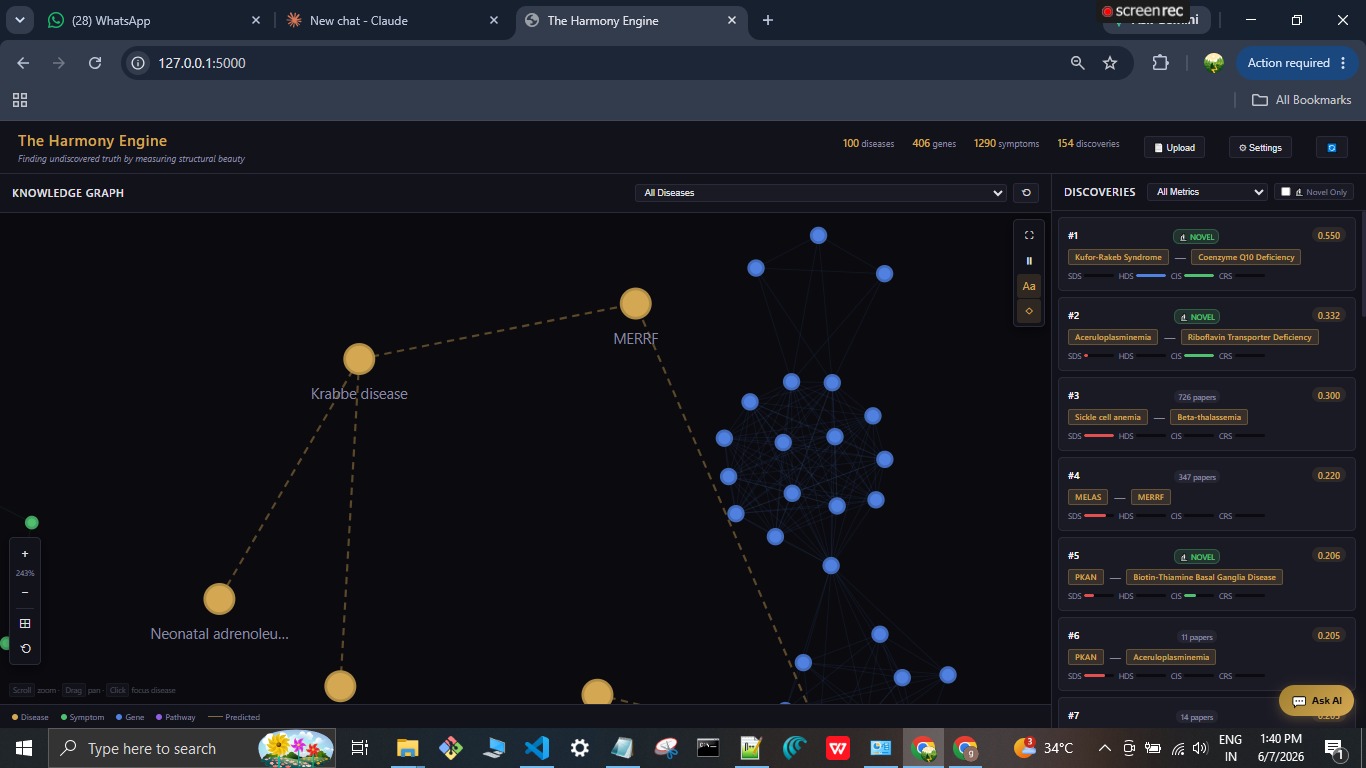
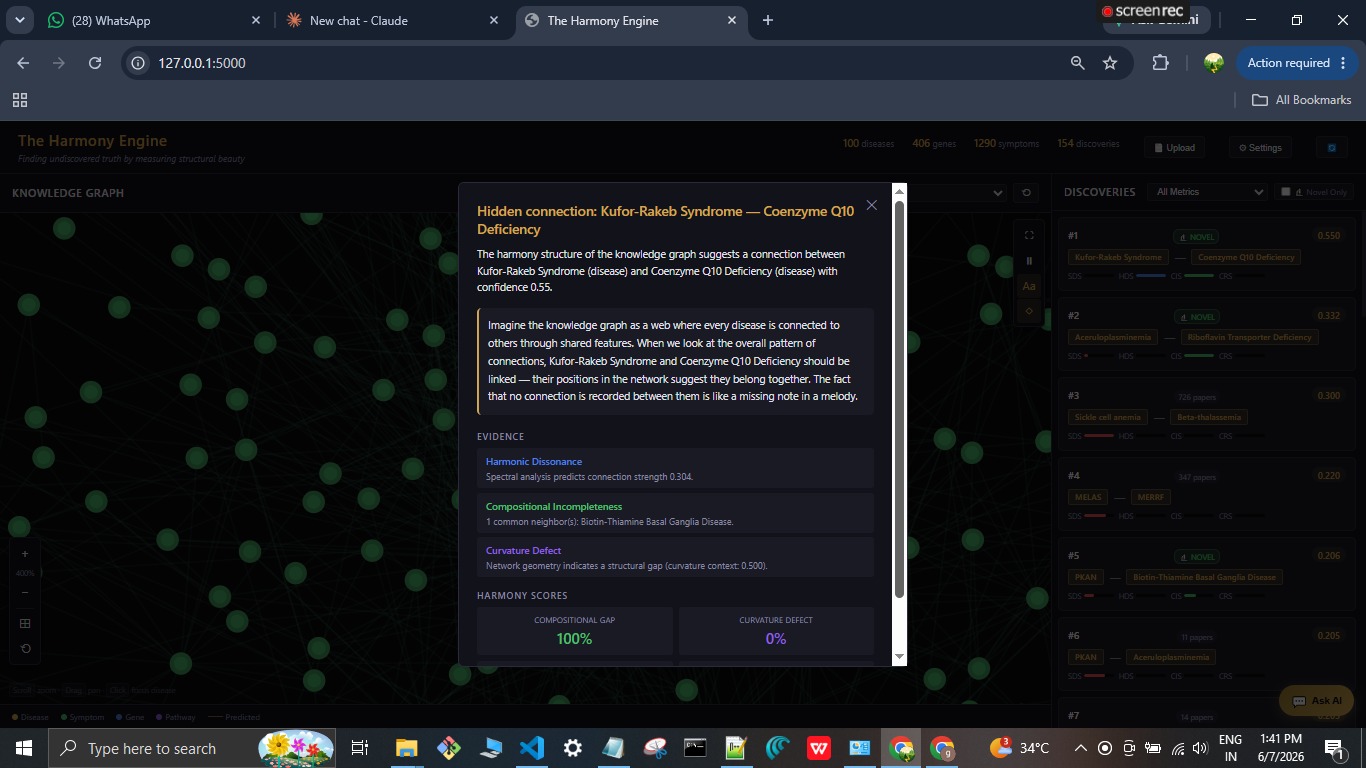
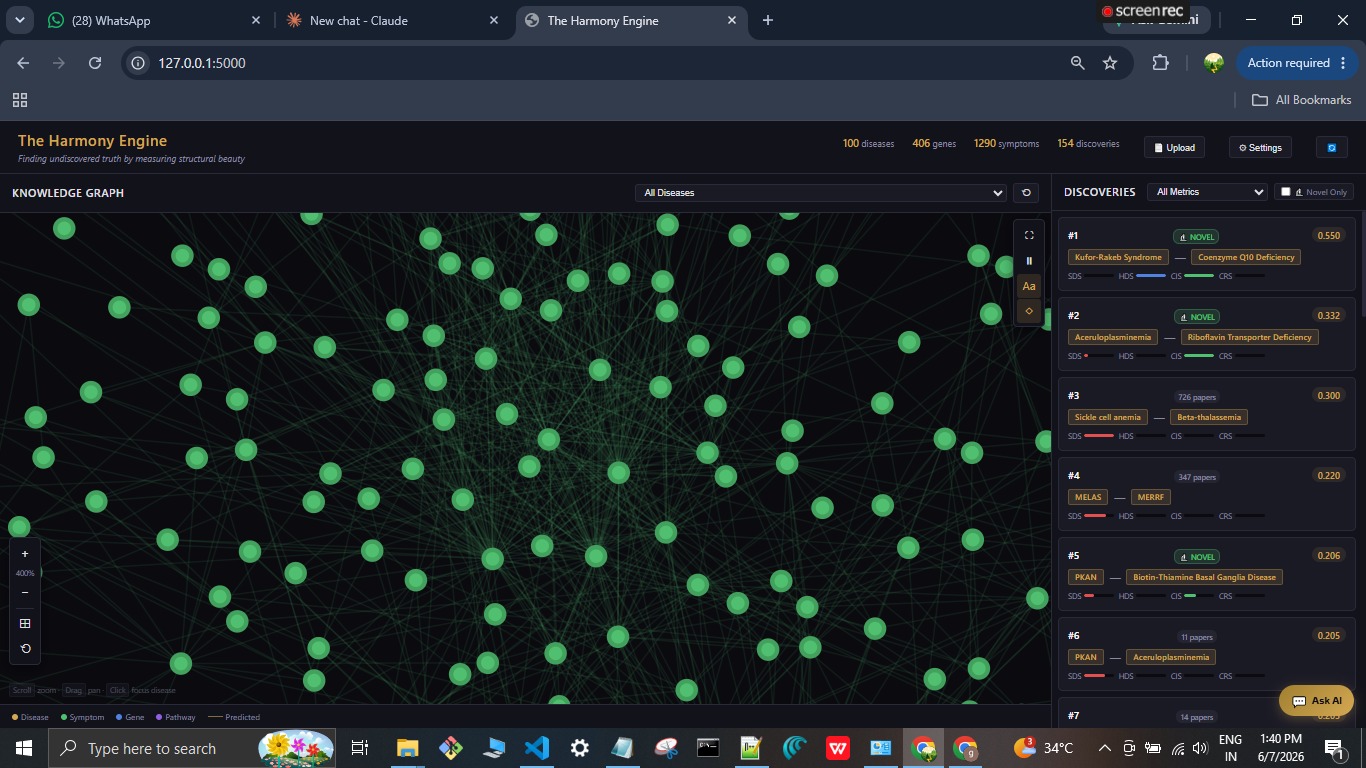
The Harmony Engine is an AI-assisted biomedical discovery system that analyzes a knowledge graph containing rare diseases, symptoms, genes, and biological pathways. Instead of only searching for existing connections, it identifies structural gaps and unusual patterns that may represent potential relationships between diseases.
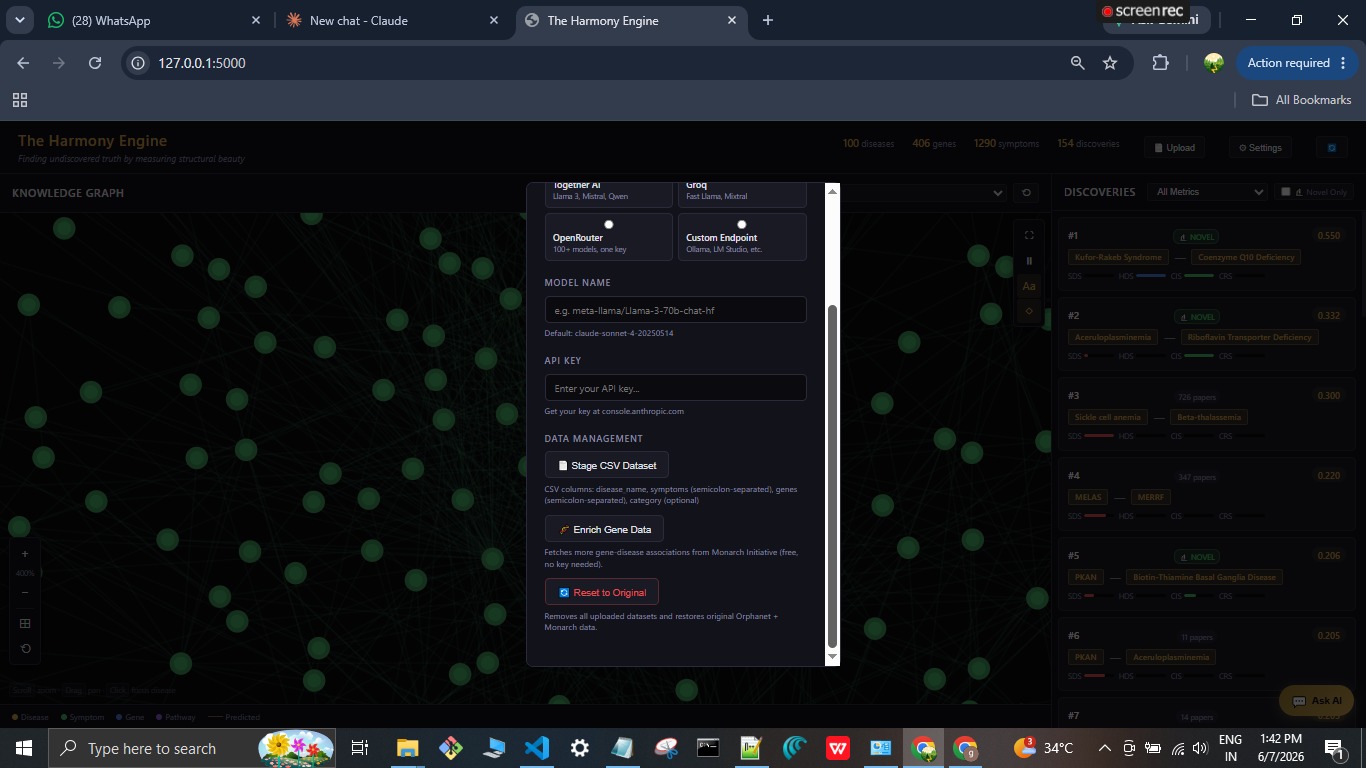
The system uses four discovery metrics:
- SDS (Structural Discovery Score) – identifies structurally interesting disease pairs.
- HDS (Hidden Dependency Score) – measures hidden connections through shared biological concepts.
- CIS (Cross-domain Intersection Score) – finds relationships across different biological domains.
- CRS (Composite Relationship Score) – combines the signals into an overall ranking.
The strongest candidates can then be validated against biomedical literature such as PubMed.
How we built it
We created the biomedical knowledge graph using data from sources including Orphanet, Monarch Initiative, and the Human Phenotype Ontology. NetworkX is used to construct and analyze the graph, while an interactive D3.js interface helps visualize the discovered relationships.
The workflow takes biomedical entities and relationships, builds the knowledge graph, calculates the discovery scores, ranks promising disease pairs, and presents the results for further investigation.
Challenges
One of the biggest challenges was dealing with incomplete and heterogeneous biomedical data. We also had to design scoring methods that could identify interesting relationships without simply treating every missing connection as a discovery.
What we learned
We learned how knowledge graphs can be used not only for information retrieval but also for discovery. Combining graph structure, multiple scoring signals, and literature validation can provide researchers with a way to prioritize potentially interesting relationships for further study.
Future plans
We want to improve the system with larger biomedical datasets, stronger AI-assisted reasoning, better evidence validation, and more interactive visualizations. The long-term goal is to help researchers explore rare-disease relationships that may otherwise remain hidden.
Built With
- css
- d3.js
- graph
- hpo
- html
- initiative
- javascript
- knowledge
- monarch
- networkx
- orphanet
- python
