-
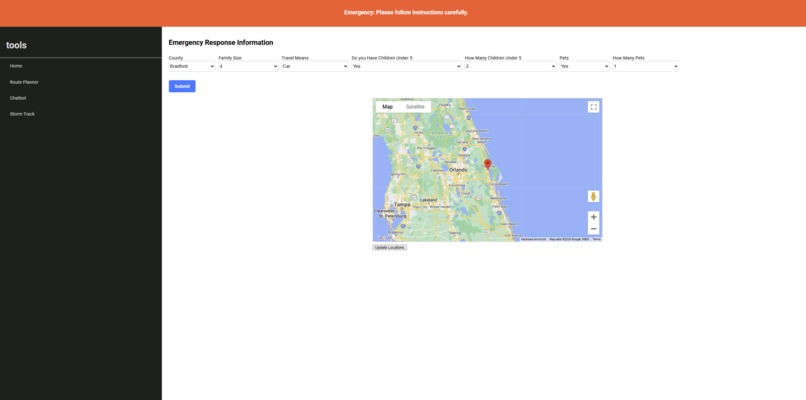
Home Page
-
-
-
-
Inspiration
Our team was inspired to create The Guardian after witnessing the devastating effects of hurricanes and the challenges people face in accessing timely and accurate information during a storm. Much of the information on hurricane preparedness is scattered across various websites and lengthy manuals, making it difficult for individuals to find exactly what they need, especially under stressful conditions. With the rise of natural disasters, we saw an opportunity to leverage technology to create an all-in-one solution that consolidates critical information and provides real-time support through a chatbot, shelter-finding services, and hotel listings.
What it does
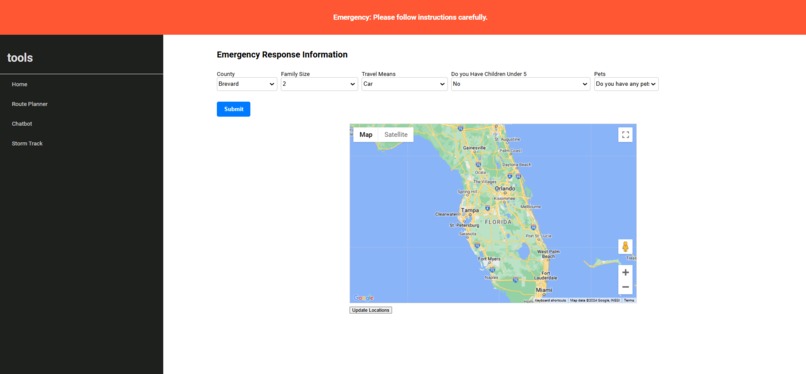
The Guardian is a comprehensive hurricane preparedness app designed to support individuals in Florida during a hurricane. It includes:
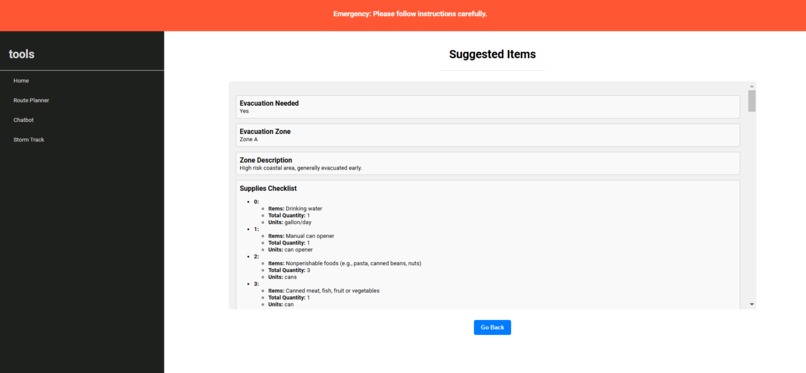
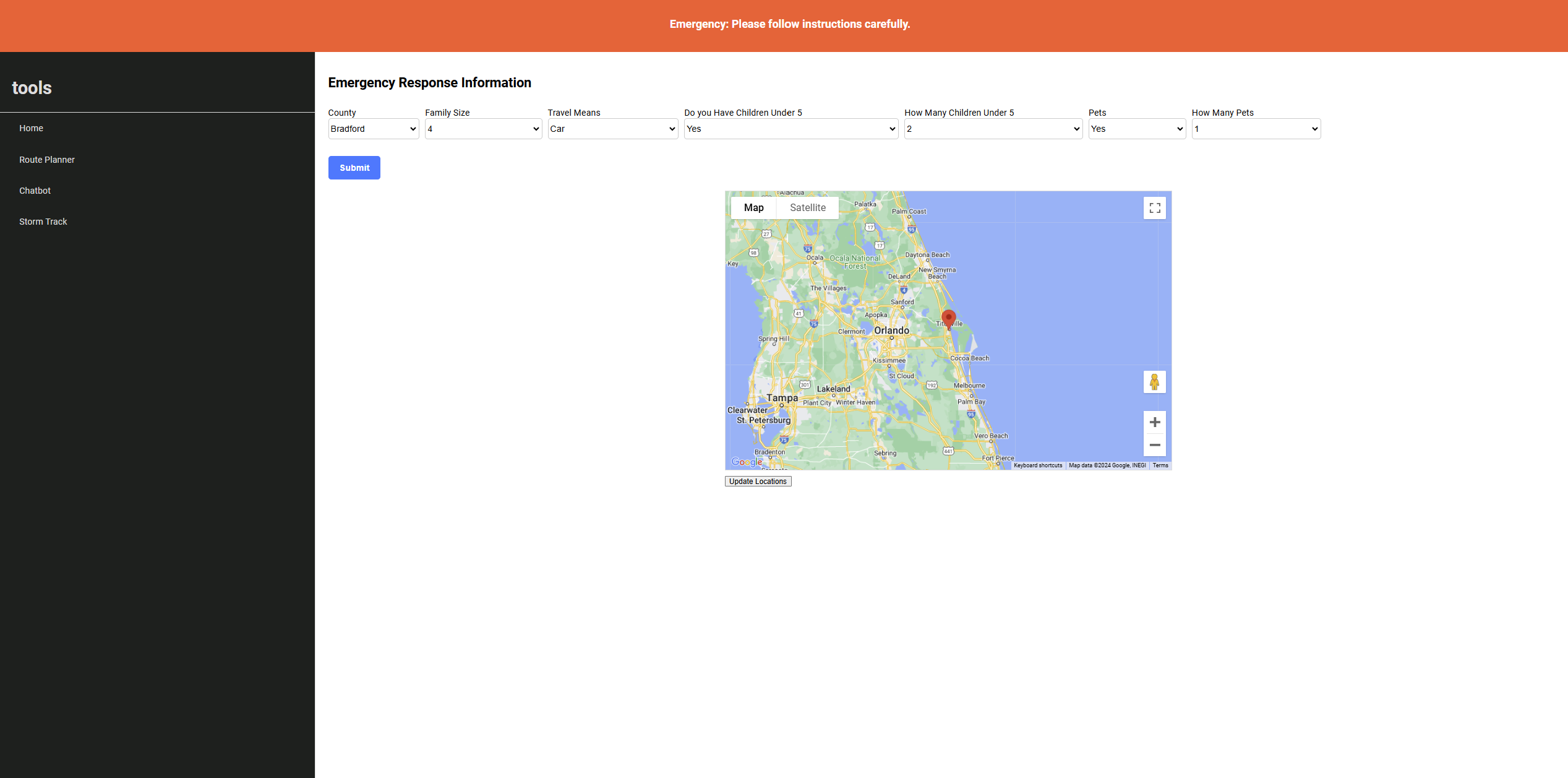
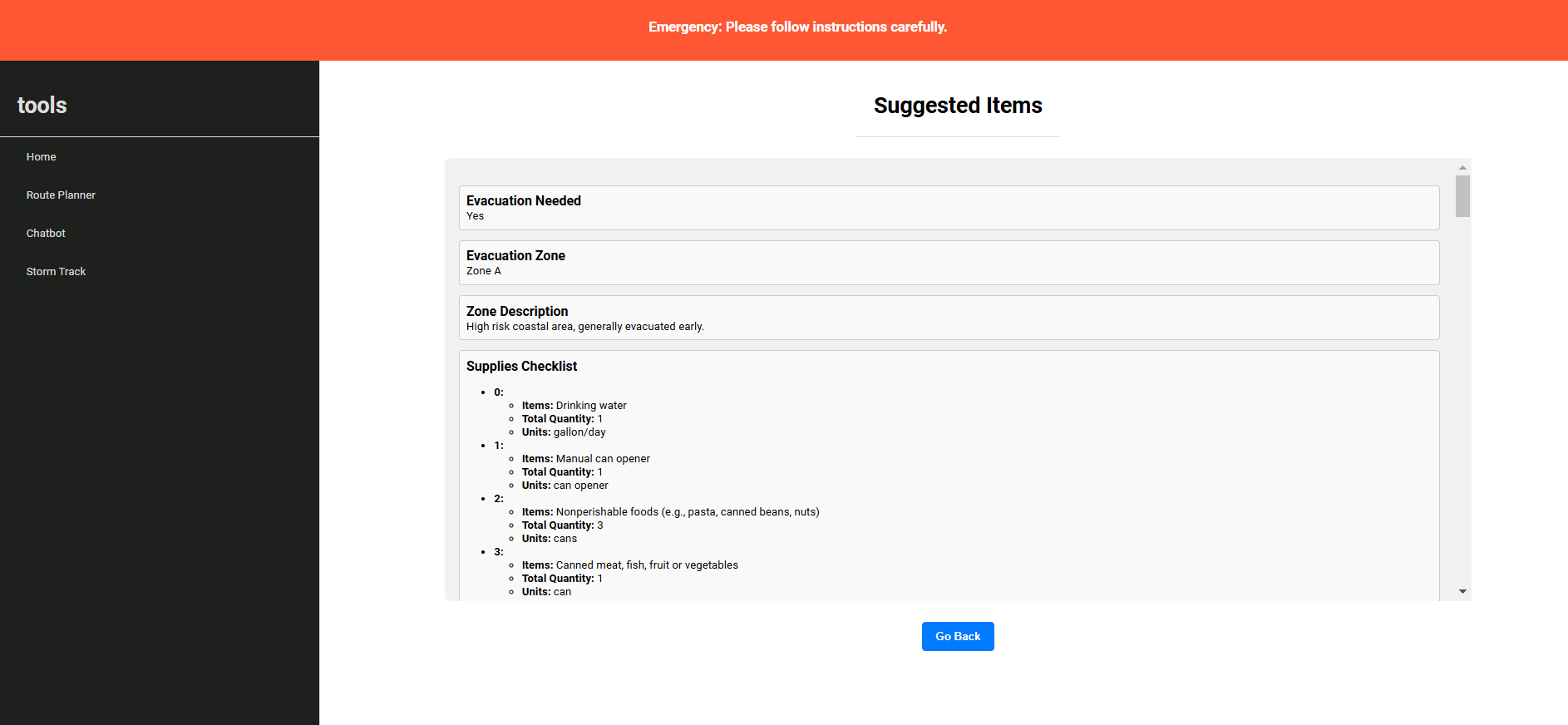
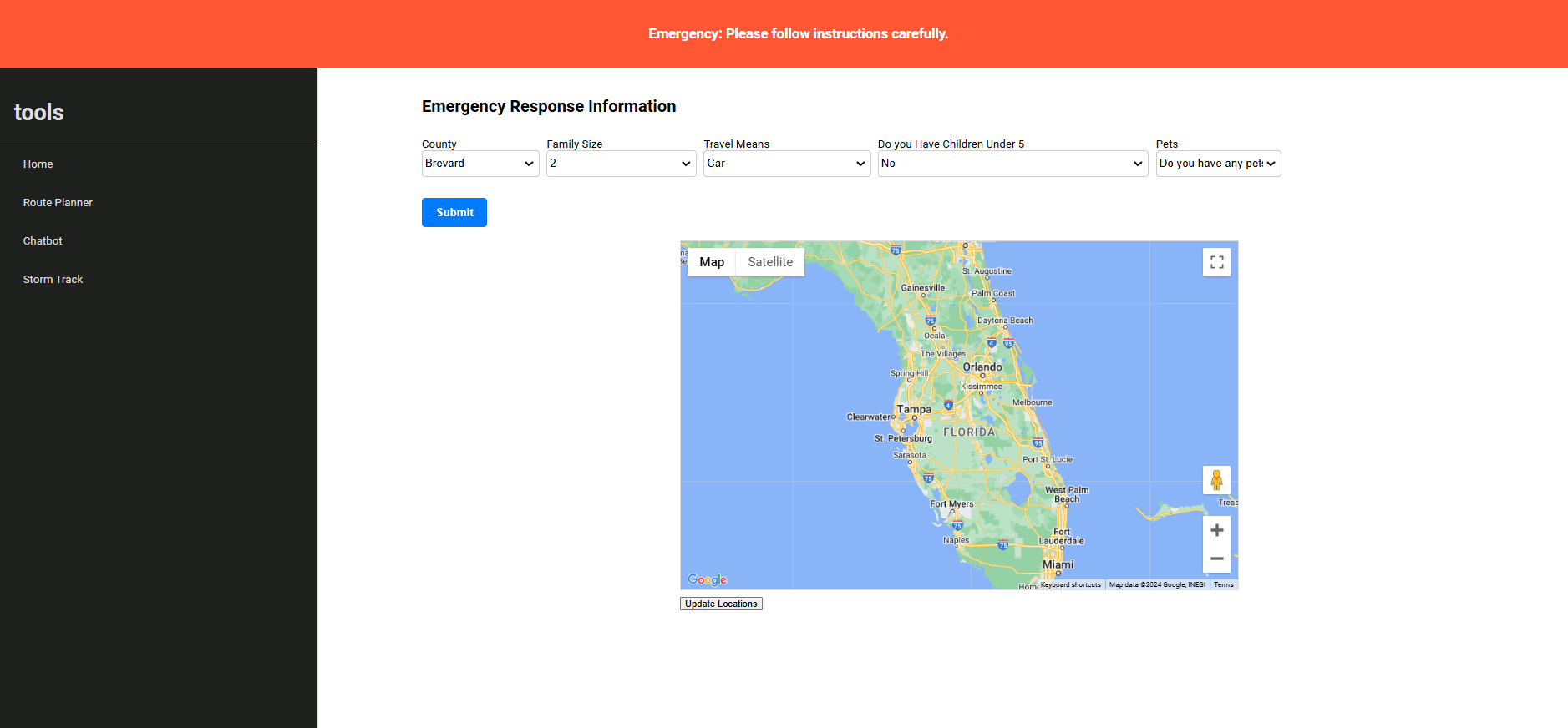
- Preparedness Guide: Delivers tailored information based on the user’s county and family size to provide specific, actionable steps and a tailored checklist.
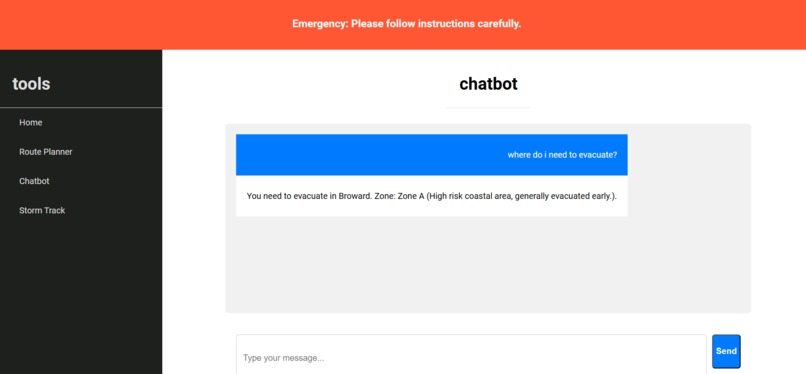
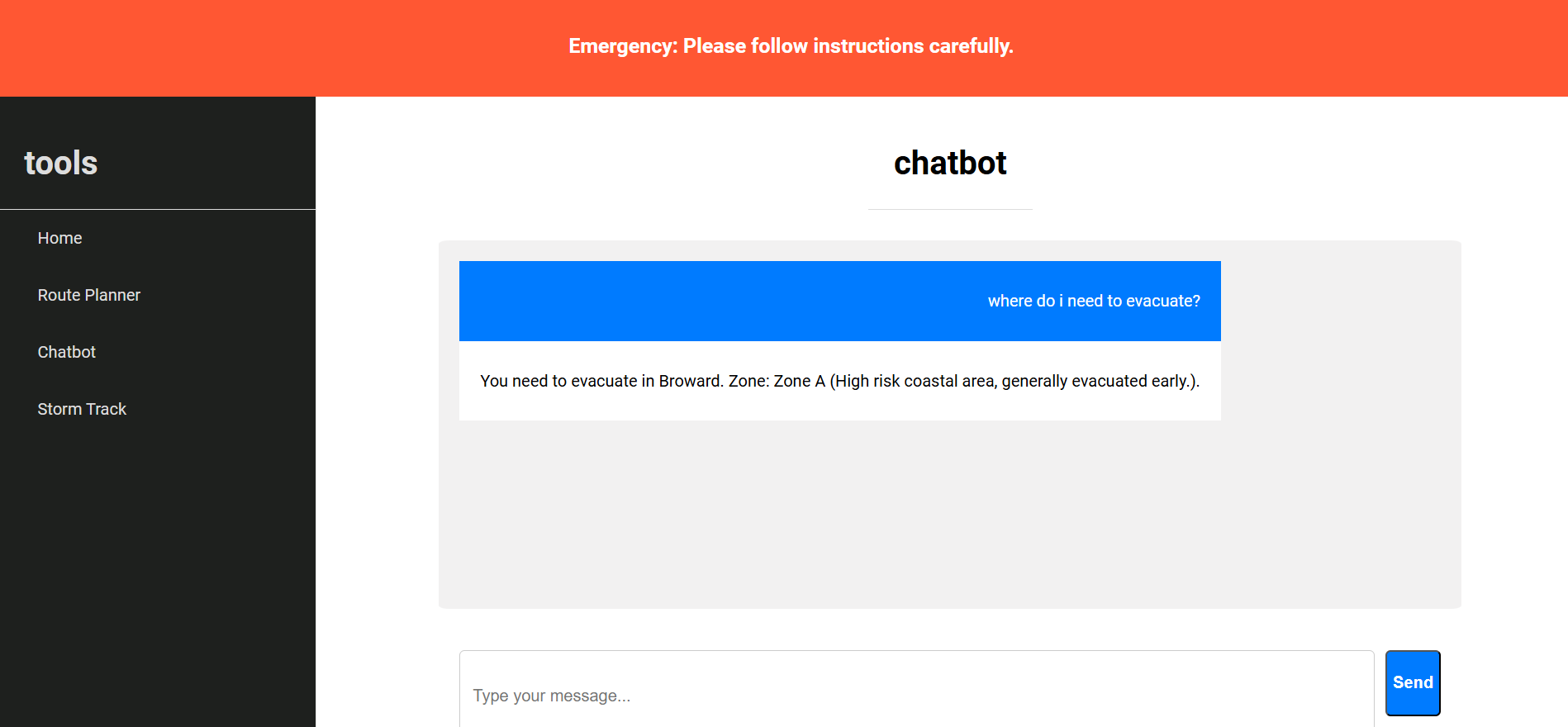
- Interactive Chatbot: An AI-driven chatbot built with RAG and Cohere API, designed to provide specific, accurate and context-aware guidance during emergencies.
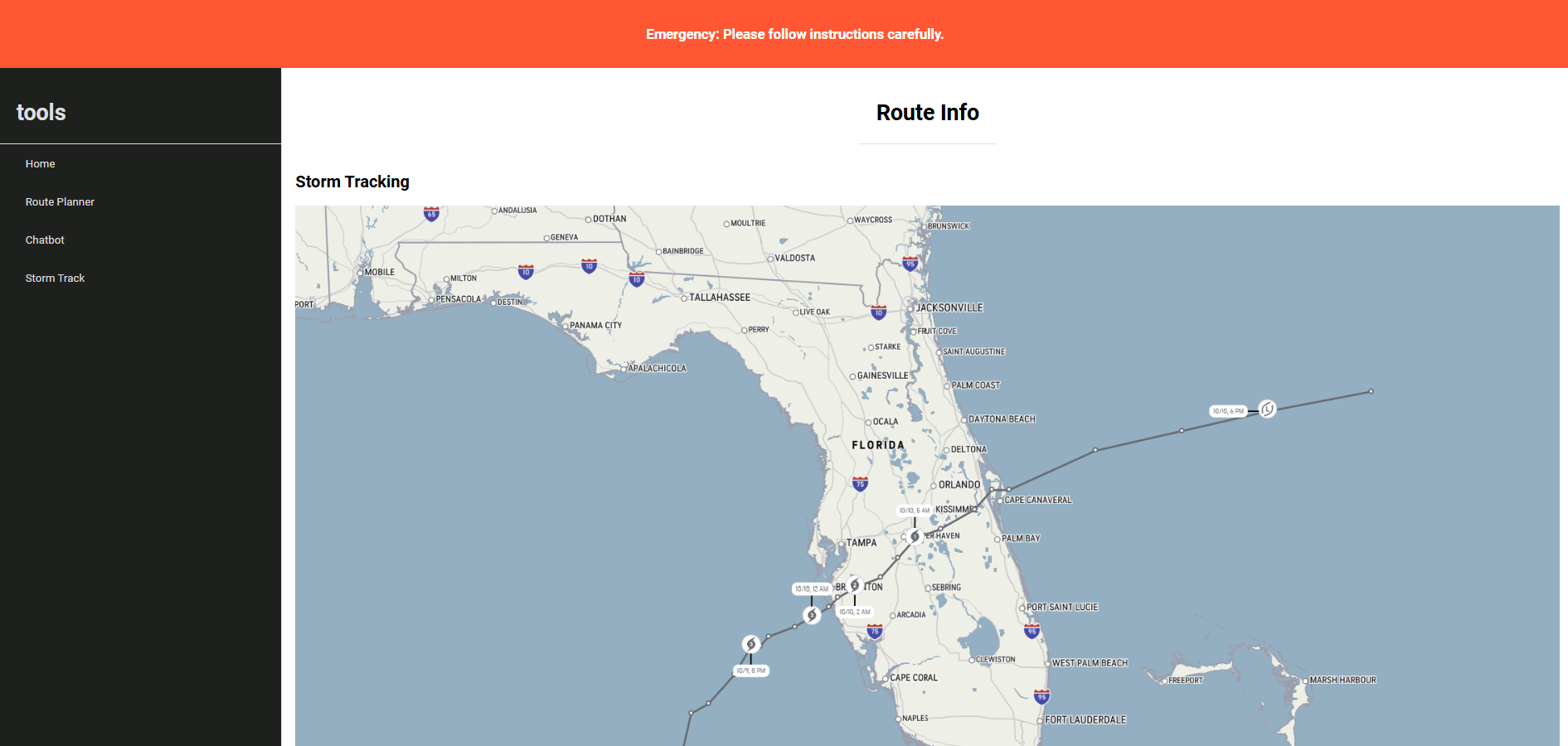
- Nearby Resources: Provides location-based searches for available shelters and hotels. Using real-time storm tracking data, The Guardian identifies safe paths to these resources, guiding users along routes that are free from hurricane impact areas. This feature helps users navigate away from dangerous zones, prioritizing safety and accessibility when they need it most.
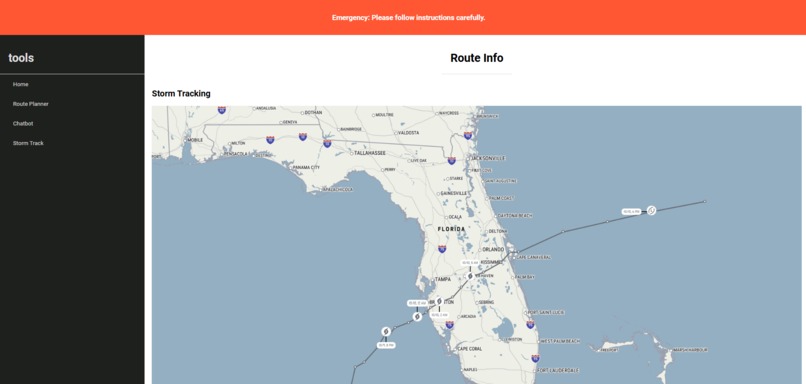
- Storm Tracking: Real-time updates on storm paths and intensity.
How we built it
We built The Guardian using:
- Front-end: Developed with React to create a responsive, intuitive user interface that enhances the user experience.
- Back-end: Developed in Python, with integration of the Google Maps API for location-based services and hurricane tracking.
- Chatbot: Leveraged RAG and Cohere API, trained with official hurricane preparedness manuals to deliver relevant and personalized support.
- Data Sources: Information is based on official records from the National Oceanic and Atmospheric Administration, Florida state government, and hurricane preparedness manuals to ensure accurate, actionable advice.
Challenges we ran into
One of the main challenges was optimizing vector lengths for the Chatbot to provide responses that are both appropriate and succinct, ensuring the user gets clear guidance without unnecessary details. Additionally, overlaying hurricane data onto Google Maps to provide real-time, visual updates on storm tracking presented technical difficulties. Training the chatbot for reliable support and integrating geolocation services for shelter and hotel data also required extensive testing and tuning for a seamless user experience.
Accomplishments that we're proud of
We are incredibly proud of creating The Guardian as an accessible, user-friendly tool that brings together multiple critical services into a single, cohesive platform. One major accomplishment was successfully integrating real-time storm tracking data into Google Maps, which required overlaying hurricane information onto a live map in a way that’s both accurate and easy to interpret. This involved handling real-time API requests while ensuring that the data visualizations didn’t overwhelm the user interface.
Another accomplishment was developing a responsive, context-aware chatbot using Retrieval-Augmented Generation (RAG) and the Cohere API. Training the chatbot to deliver clear, concise responses from official hurricane preparedness manuals challenged us to fine-tune vector lengths and response filtering, ensuring that users would receive precise, actionable advice without extraneous information. We’re proud of how this combination of technical and user-focused work allows The Guardian to offer a streamlined yet robust experience for those facing emergencies.
What we learned
Throughout this project, we gained a deeper understanding of the technical and ethical complexities involved in designing emergency response technology. Real-time data handling taught us to anticipate network latency and fluctuations, which required designing a system capable of processing live data while maintaining speed and reliability. Additionally, working on the Google Maps integration refined our skills in creating interactive and dynamic map overlays that remain responsive across different devices.
This project also highlighted the importance of designing resilient, intuitive interfaces. We learned that, under high-stress conditions, users need simple navigation and quick access to essential information. This led us to iterate on design elements, ensuring every detail—from button placement to color coding—was optimized for usability in emergencies.
Working across technologies like RAG and Cohere API, combined with back-end integrations in Python, strengthened our problem-solving skills and taught us the importance of thorough testing and cross-functional teamwork. Ultimately, The Guardian represents our commitment to leveraging technology to create tools that genuinely benefit users, especially in times of critical need.
What's next for The Guardian
Currently, The Guardian serves users in Florida, but we aim to expand to other hurricane-prone areas, particularly low-income countries where access to reliable information can be limited. We also plan to include additional resources such as emergency contacts, first aid information, and multilingual support. Enhancing the chatbot with more personalized responses and adding predictive analytics for storm patterns could further help users better understand potential risks. Our ultimate goal is to make The Guardian an indispensable resource for anyone facing a hurricane, regardless of location or background.


Log in or sign up for Devpost to join the conversation.