


WHY it's a problem
Many community gardeners lose access to their beloved gardens, their food source, opportunity to connect with their friends, etc. This worsens the social isolation and mental health problem Canadian population is experiencing
SOLUTION
The solution is to advocate for community garden as a part of essential service. Not only for food production, but also for their psychological, physical, societal benefits.
WHY our solution is good
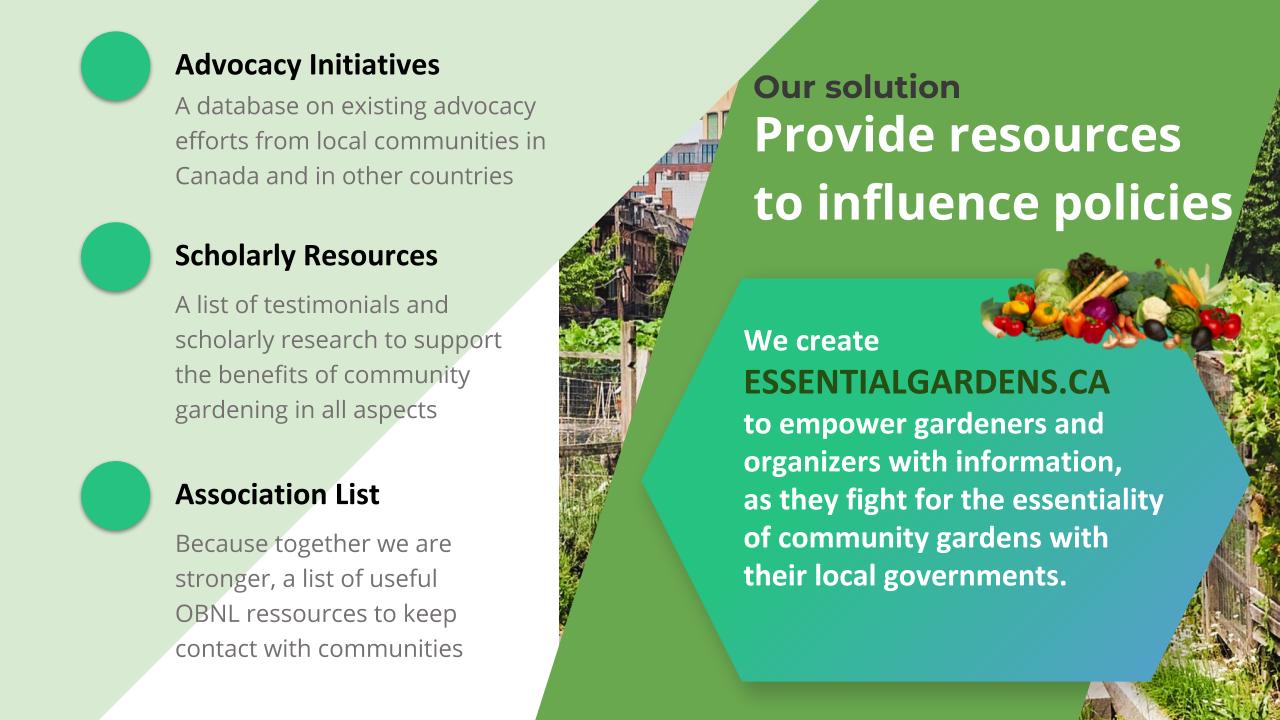
We create ESSENTIALGARDENS.CA to empower gardeners and organizers with information, as they fight for the essentiality of community gardens with their local governments.
What we found
Scientific evidence to support the benefits of community garden
Physical health Gardening is a physical activity. Scholarly research has shown that engaging in community gardening boosts the physical health of those involved, for example reduced body mass index (BMI), reduced rates of obesity, as well as increased tolerance of pain. For example, a study conducted in Utah, US, showed a reduction of BMI in gardners (−1.84 for women; −2.36 for men) compared to non-gardeners of the same age and gender. Gardeners often report consuming more fresh vegetables and fruits. These benefits in physical health are shown not only in adults, but also children, older adults in senior housing, and people living low-income communities, suggesting community gardening can be an effective tool in protecting physical health of vulnerable populations.
Psychological health Community gardening has been shown to promote mental health and reduce stress. For example, an intervention study conducted in Norway reported that patients diagnosed with clinical depression showed lower scores in depression severity after engaging in routine therapeutic gardening activities. Such decline in depression severity was clinically relevant in 50% of the patients. Some aspects about community gardening that are speculated to drive these positive psychological effects are the therapeutic nature of gardening activity (for example the feeling of ‘being away’), increased sense of value and control, and increased community engagement.
3.Social connection to peers and community building Community gardening provides additional benefits in building social connection and communities. Community gardeners often report that they have better social relationships and feel a sense of community pride, including knowing that they can share knowledge and contribute excess food to their local community. Such interaction is fostered between people irrespective of their socioeconomic and demographic backgrounds, including race, age, sex, religion, and immigration status. A review analyzing fifty-five scholarly articles on the benefits of community gardens in the US highlights the use of community gardens as “an effective tool for community-based practitioners in carrying out their roles within the arenas of organizing, development, and change”.
4.Vulnerable populations (e.g., aging population) The benefits of community gardening can help to protect vulnerable populations such as older adults. Case studies on community gardening in senior housing communities (US, UK) often show positive outcomes for older adults engaged in community gardening. For example older adults engaged in community gardening perceive an increased sense of control about their lives, and reduced sense of loneliness or helplessness. Some research has shown that gardening, and other physical activities, may delay the onset of dementia. For individuals who suffer from memory loss or physical decline, engaging in gardening and maintaining existing skills can provide pleasure and confidence (Alzheimer’s Society, UK, report)
5.Food security & Poverty The primary reason for many community gardeners to engage in community gardening is to improve access to quality and nutritious food. A study found that many gardeners in Paris and Montreal reported “having their growing-season produce needs entirely met through gardening, and some even extending that through the winter”, suggesting urban gardening can be a sustainable food production method. Many gardeners perceive that community gardens or urban farming can provide food sources to both the household and the local community, improving food security, especially at times of crisis. Last but not least, gardening provides opportunities for job skills training and income generation. These opportunities are critical for people in poverty and for people seeking equity.


Log in or sign up for Devpost to join the conversation.