
Inspiration
The Great Pacific Garbage Patch is the world’s largest floating trash heap, and a global issue that deserves more attention. When we were considering projects, we knew that the community track spoke to us the most. As members of the global community, every person has the right to a clean and healthy world, and the responsibility to keep the world clean and healthy for future generations. Yet, the Great Pacific Garbage Patch, and many other garbage heaps all over the world, pollute our environment and destroy ecosystems. We felt that awareness of such issues is vastly underrepresented, and chose to use virtual reality as a platform to raise awareness.
What it does
Utilizing VR as a medium allows the user to virtually enter places they would normally not be able to, such as a non-traversable garbage heap. The main purpose of the game is to feel like an immersive documentary about the Great Pacific Trash Patch. As players traverse the level, they are greeted with information about where they are, how it was made, the effects it has on the environment, and what they can do to fix it. While traversing they are also encouraged to look around them at the massive piles of trash floating on the water, all copyright-free 3D-rendered models added to the project by us.
How we built it
To create this project, we started with a basic 3D Unity project and began to build off of that. Adding Unity’s XR Toolkit to utilize VR, we created a player object that can traverse the scene and trigger events to happen. We then added free-use 3D models of various plastic waste and narration to the project.
Challenges we ran into
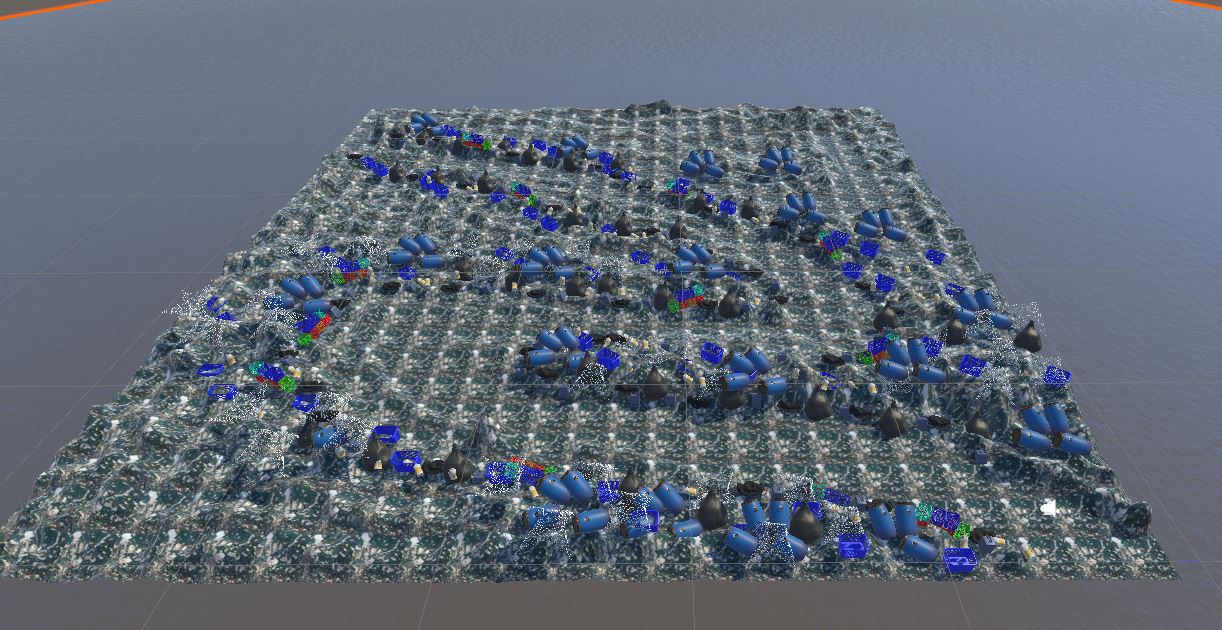
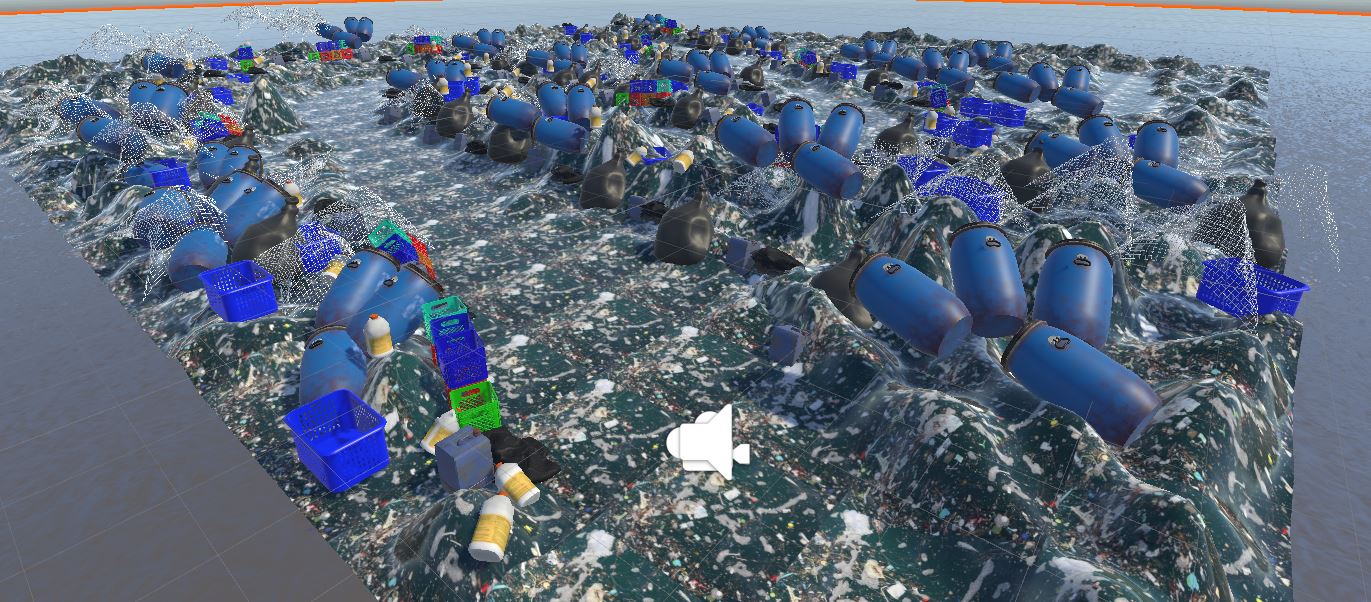
The models in the scene were actually the greatest challenge for us as we developed this project. We wanted to create a project that felt genuine and full to have better immersion, while not overloading the VRAM of whatever device the project is run on. After several Oculus headset crashes we were able to find a balance between optimization for lower-powered VR headsets and a feeling of genuine immersion. We had a lot more 3D models in the simulation originally but had to drastically reduce them in order for the project to run well. This was unfortunate because it did make the simulation less visually appealing, but was necessary for performance. We included images of the simulation with more assets before we had to remove them below.
Accomplishments that we're proud of
Overall we are proud that we made a functional virtual reality simulation that brings light to a very real issue in the global community. We are especially happy that we did so given the short time frame and that only one of us has worked with virtual reality before.
What we learned
The biggest takeaway we learned from working on this project was the amount of time actually building a fully immersive experience takes. We were able to plan, blueprint, and greybox our project fairly quickly, but as we got into adding details realized the time it takes to meticulously create details. It was also one member of the team’s first time creating a project for VR, so there was a bit of a learning curve for him working on this project.
What's next for The Great Pacific Garbage Patch Virtual Reality Tour
The next step in continuing this project would be to find a way to optimize it better, such as replacing the models with lower polycount ones so that we could fill out the simulation more without crashing.


Log in or sign up for Devpost to join the conversation.