-
-
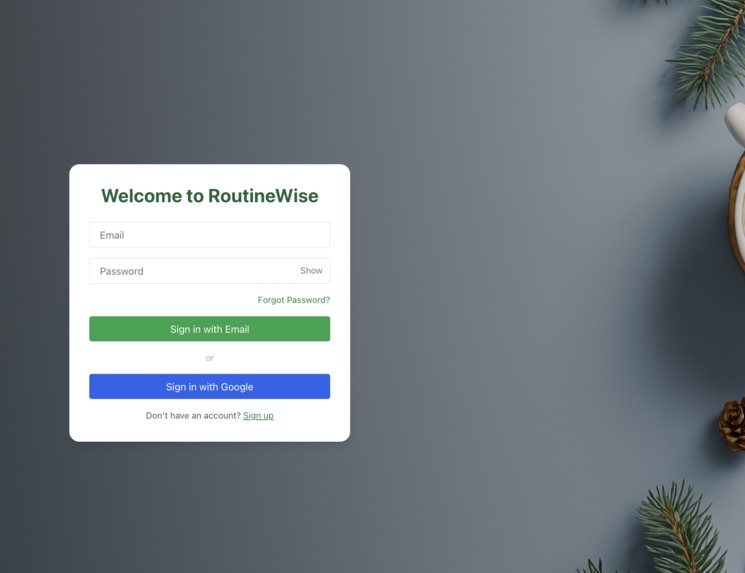
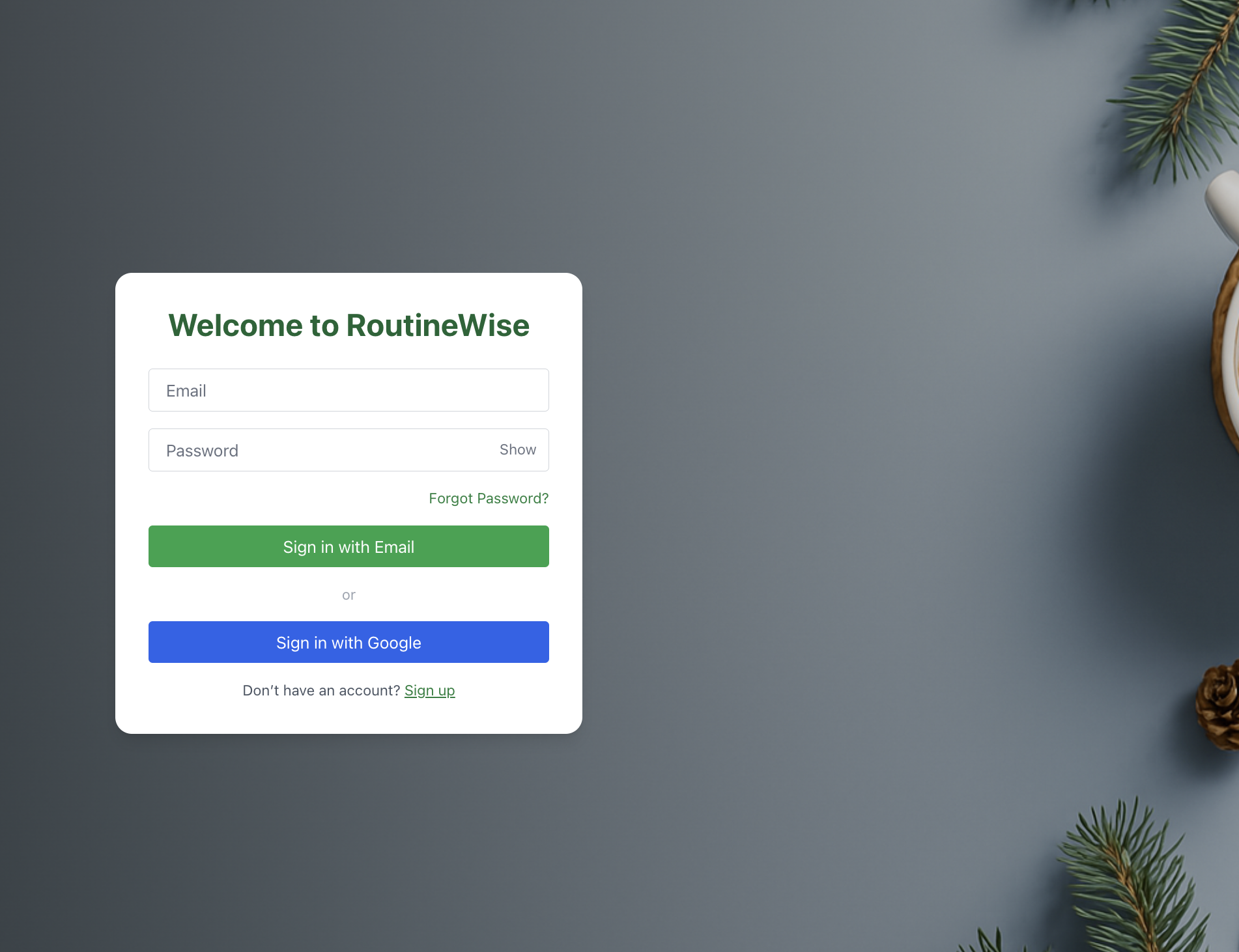
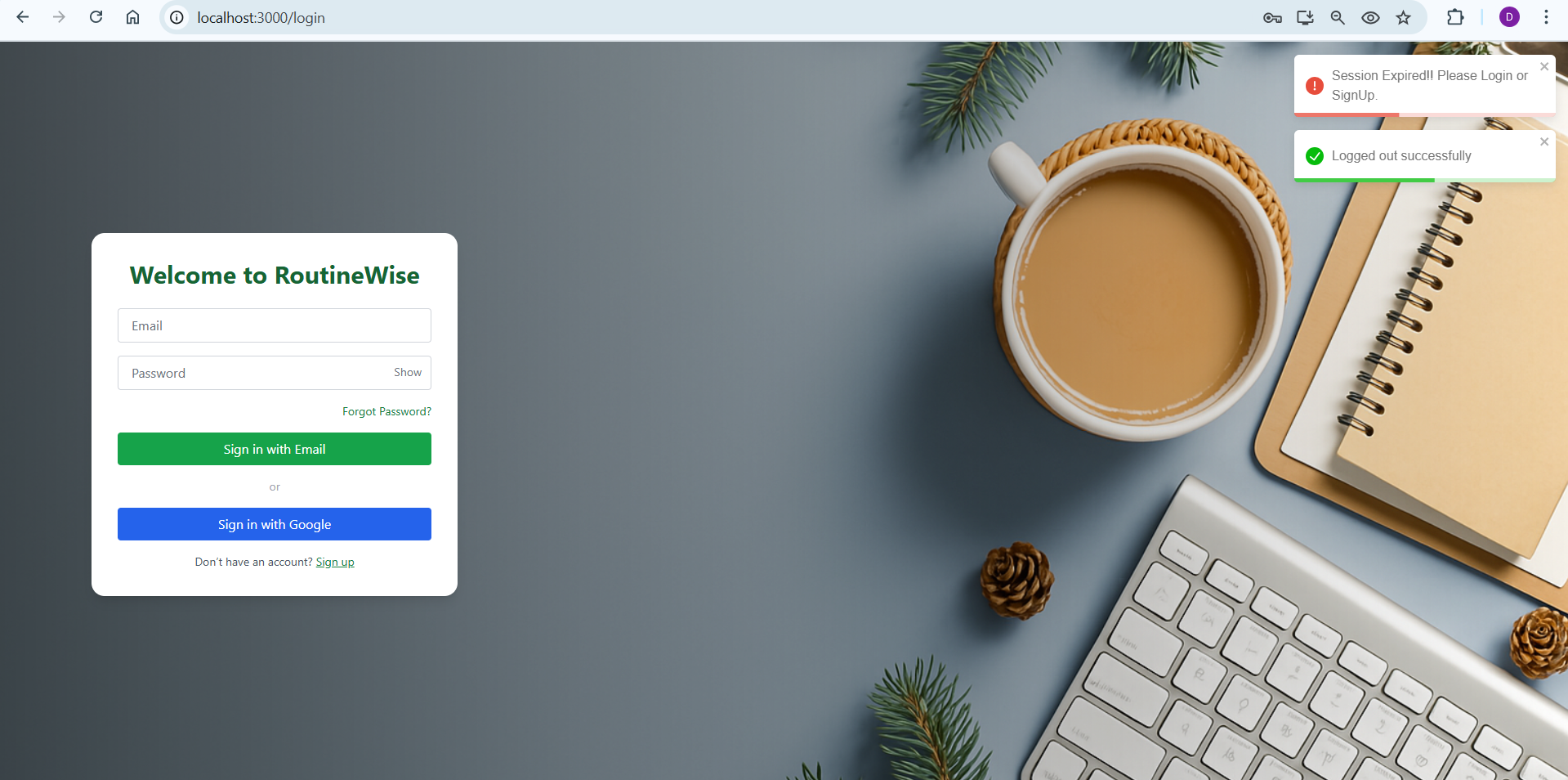
Login/Signup Page
-
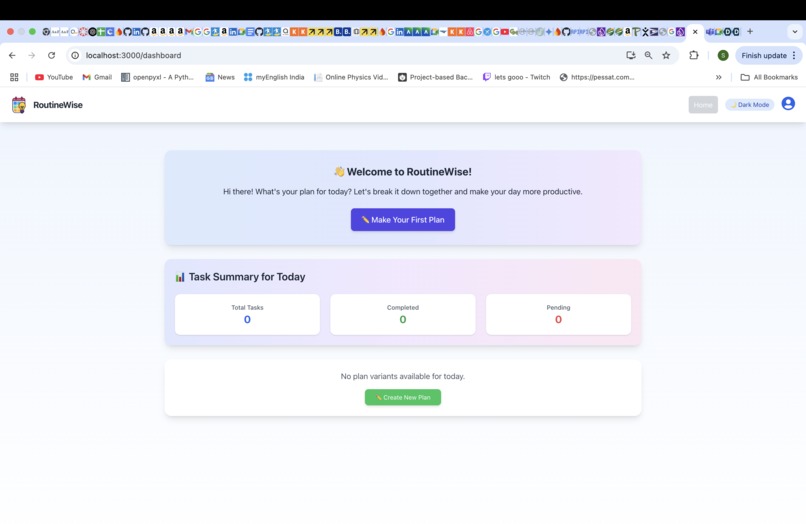
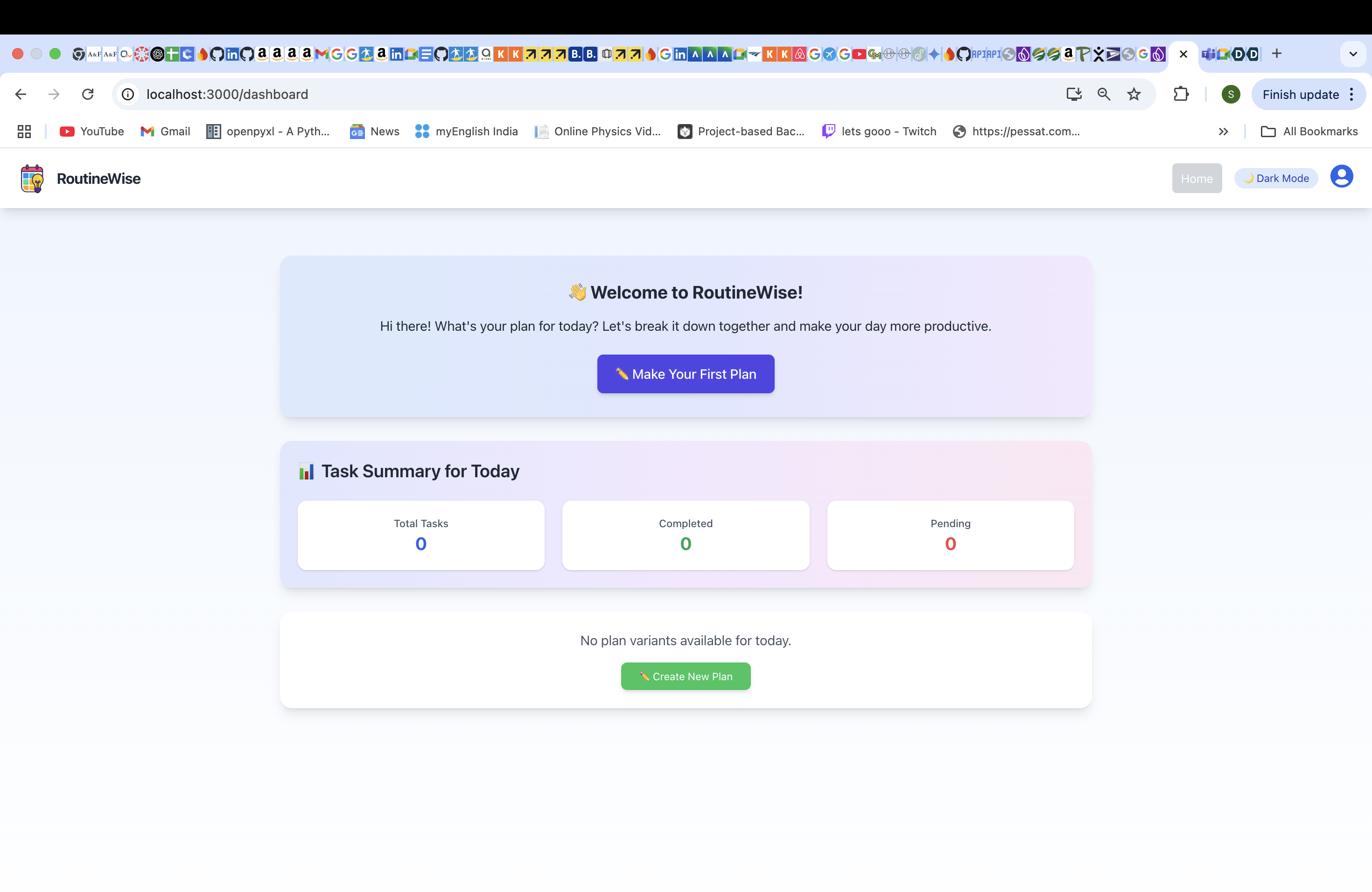
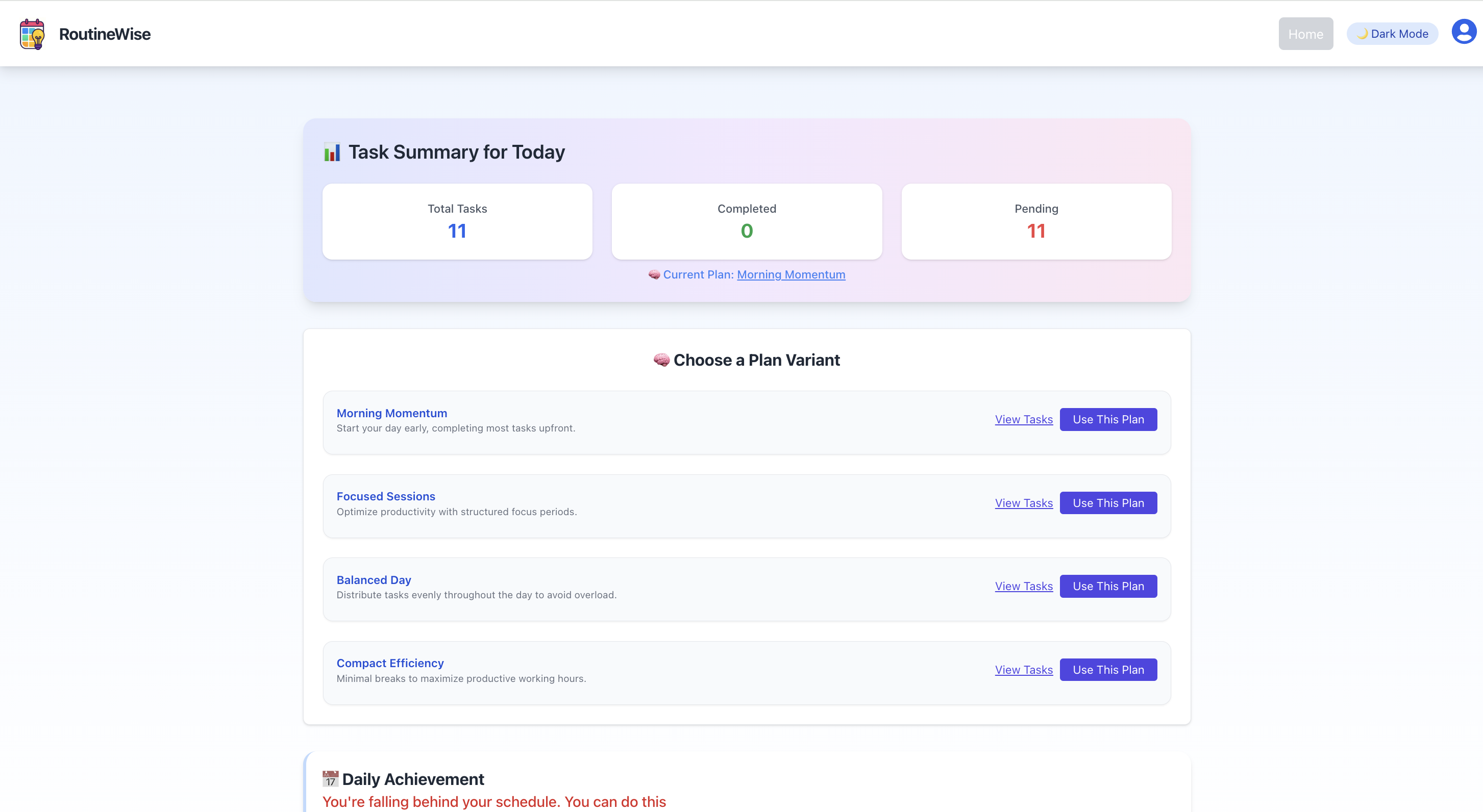
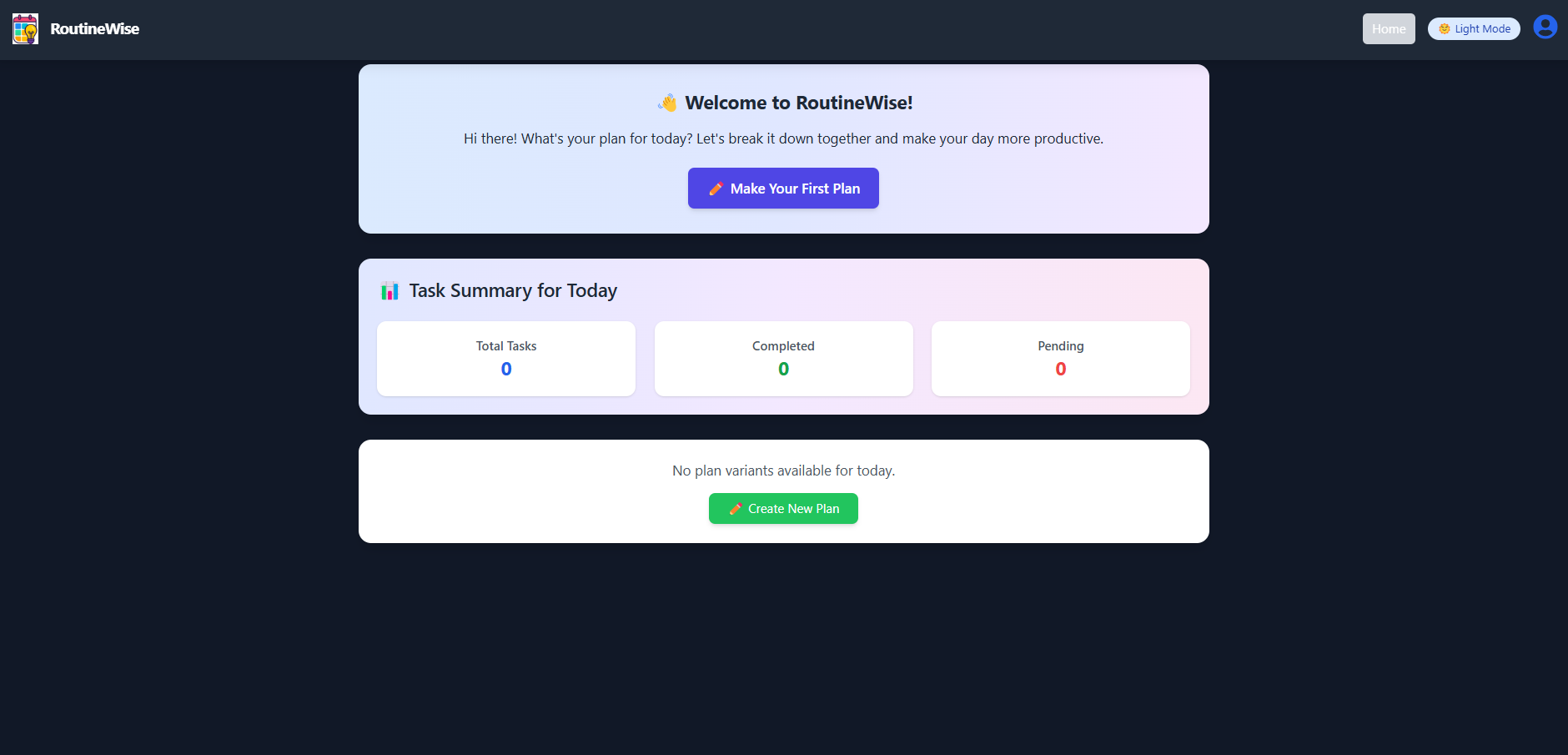
Dashboard
-
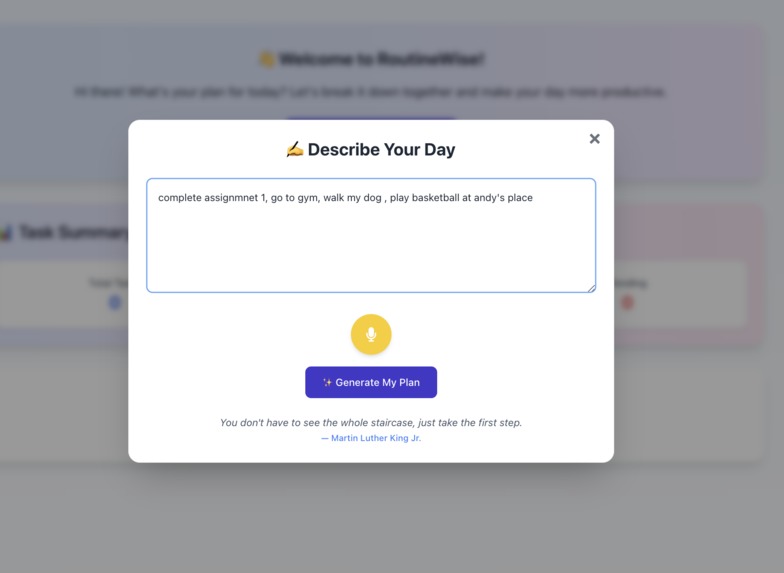
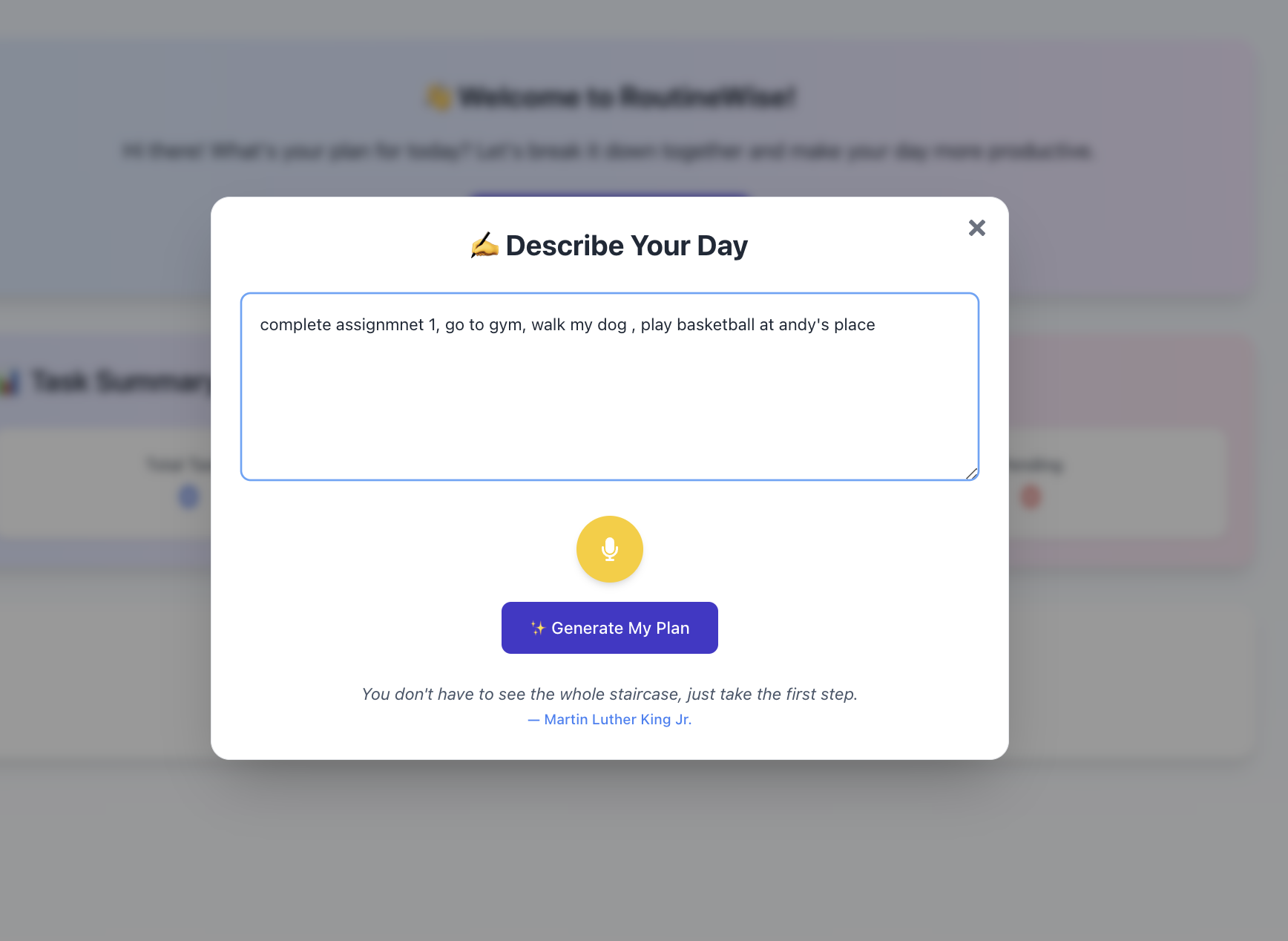
Schedule Creator (You can either type or create it using your voice)
-
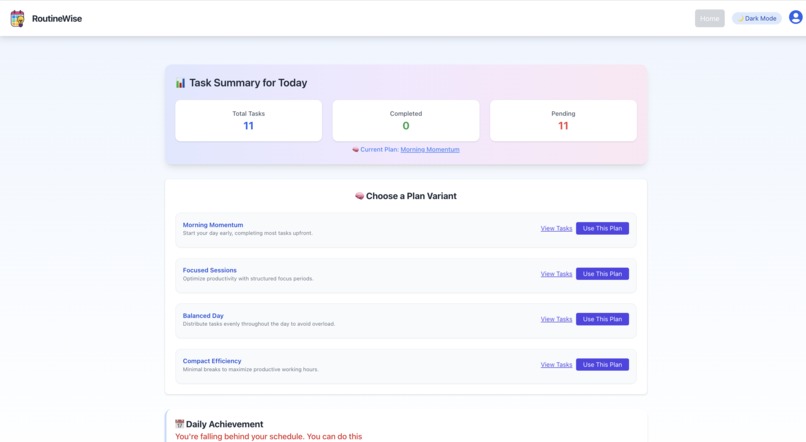
Four Ways to Plan Your Day. Complete All Your Goals. Celebrate with Confetti.
-
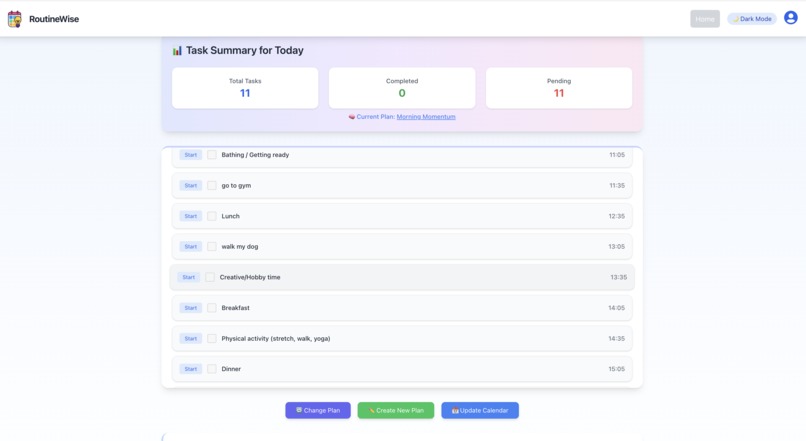
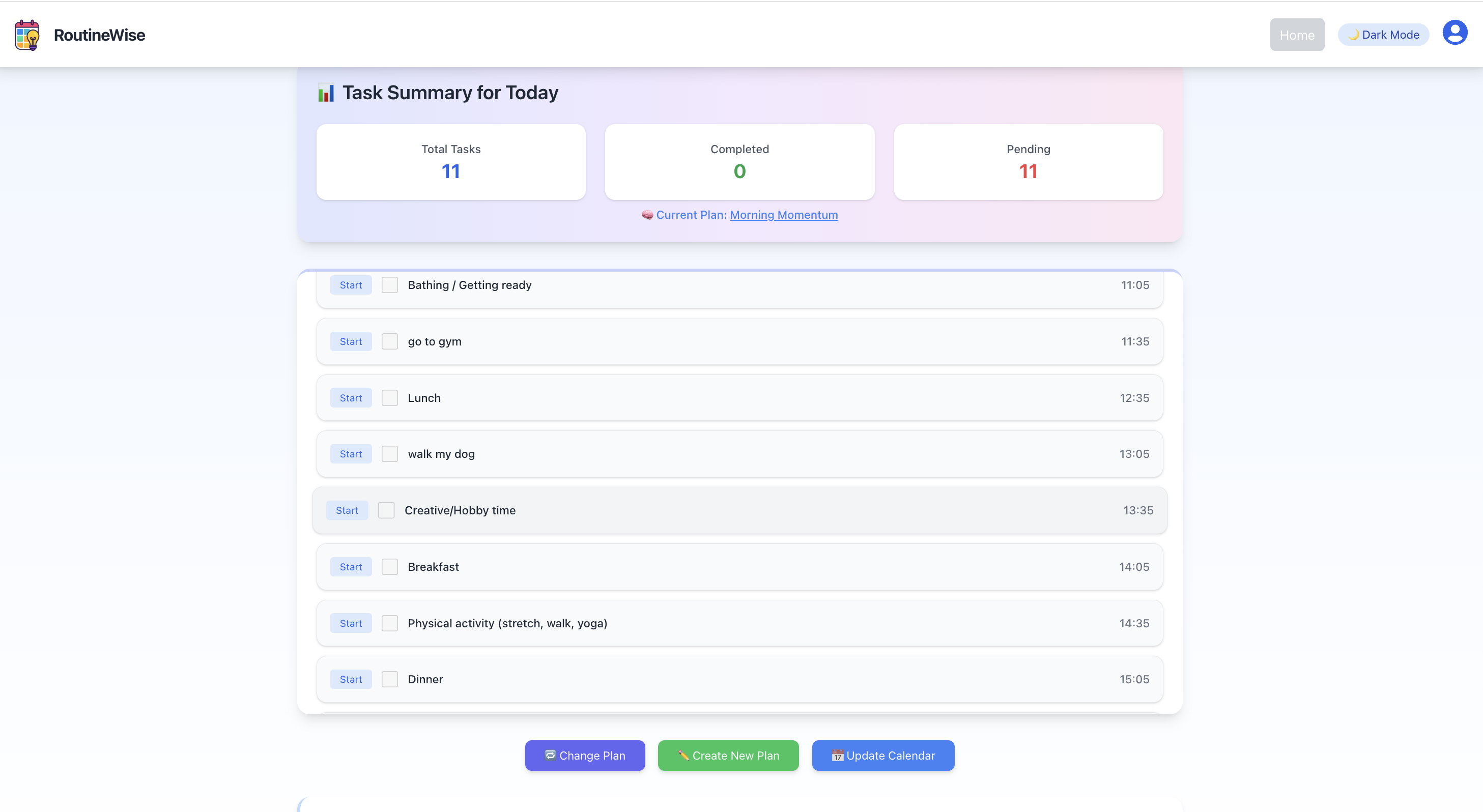
Detailed Task Schedules (Part-1)
-
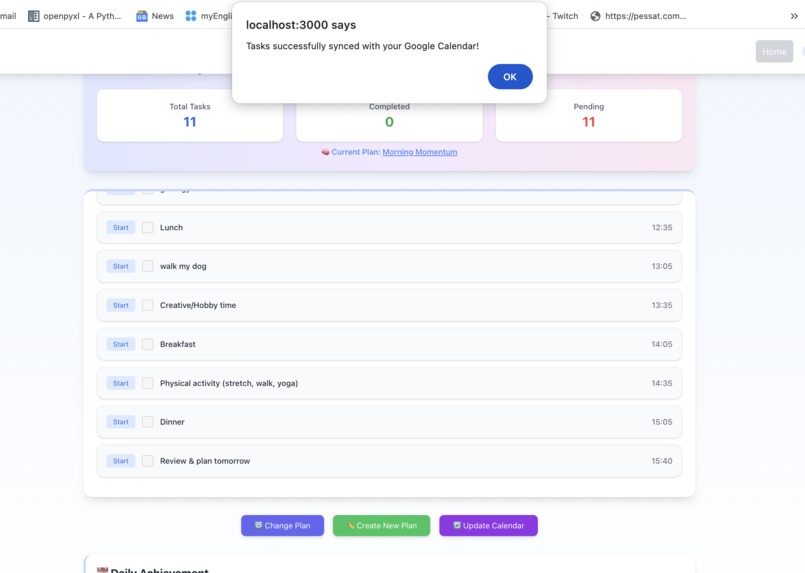
Detailed Task Schedules (Part-2)
-
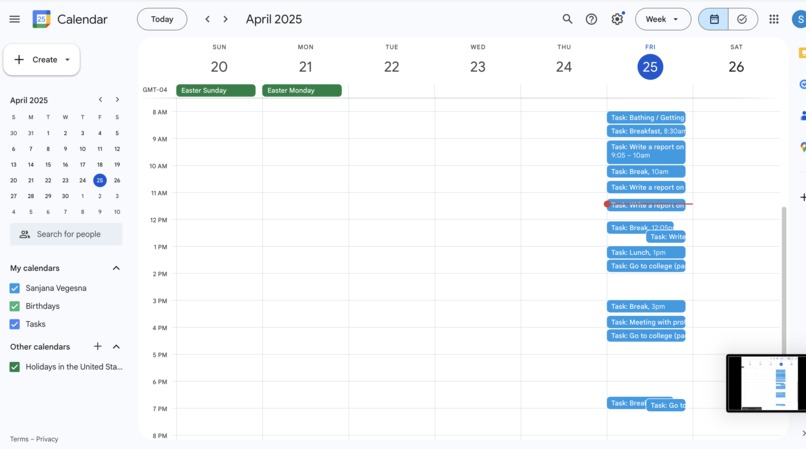
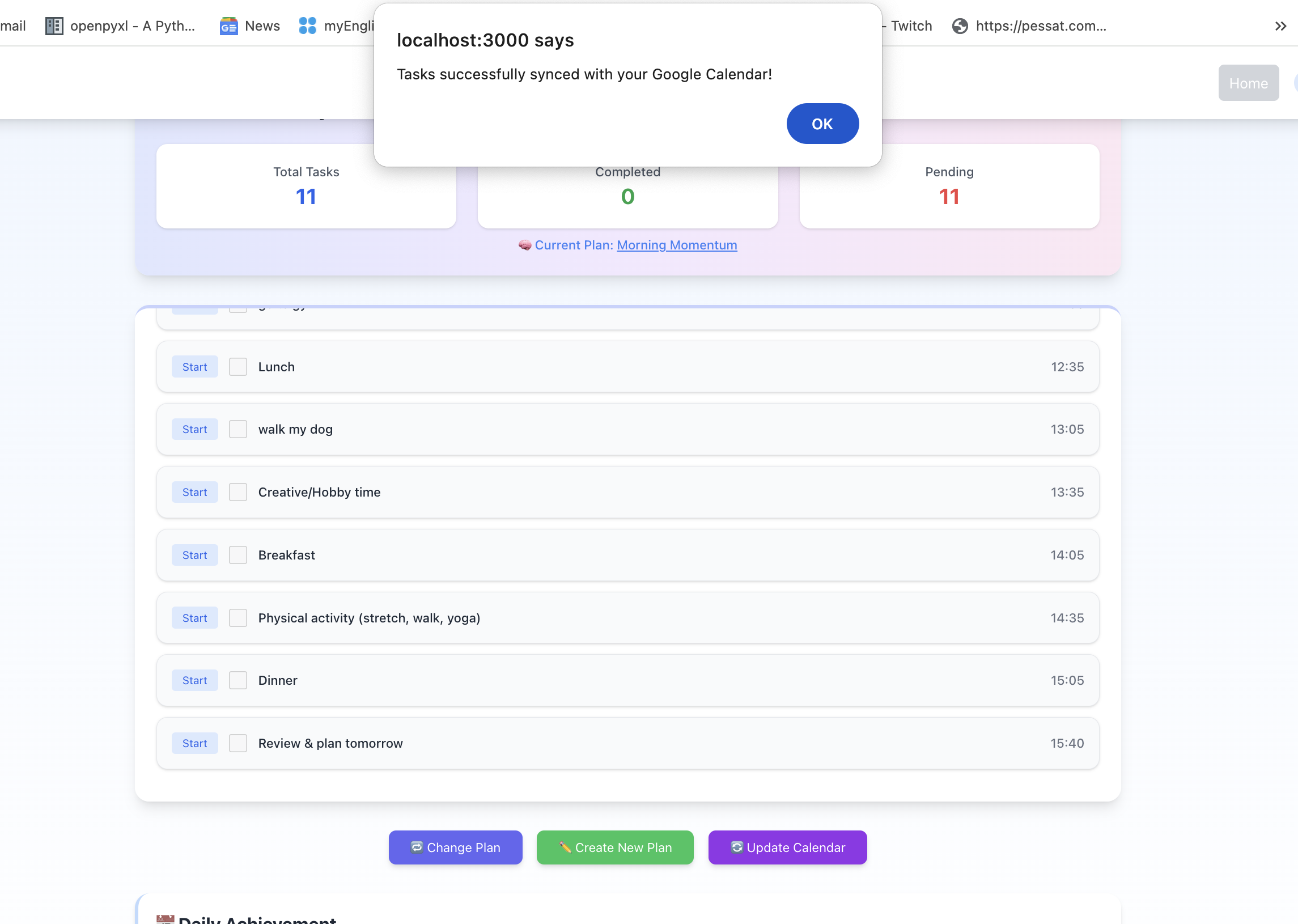
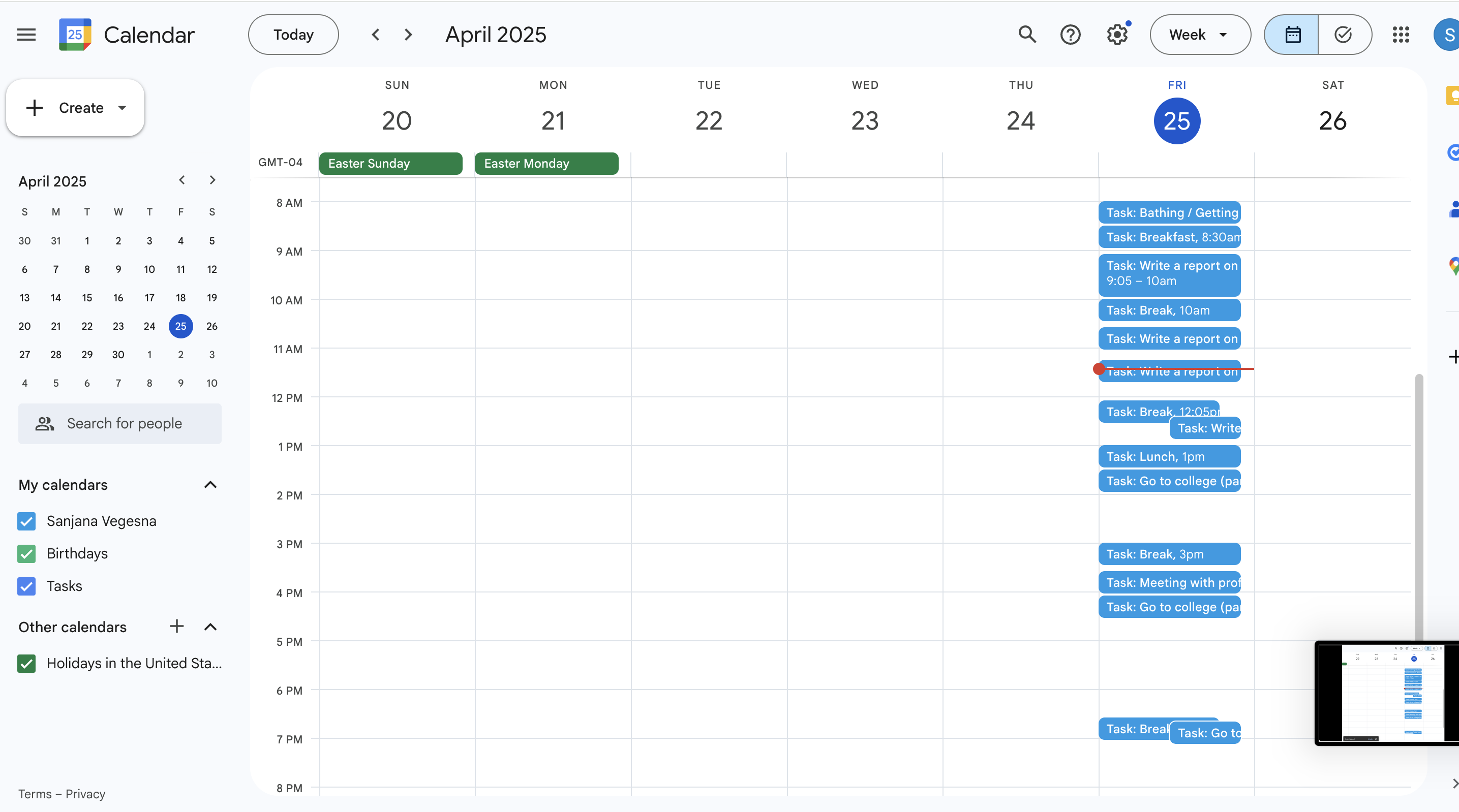
Google Calender Integration
-
-
-
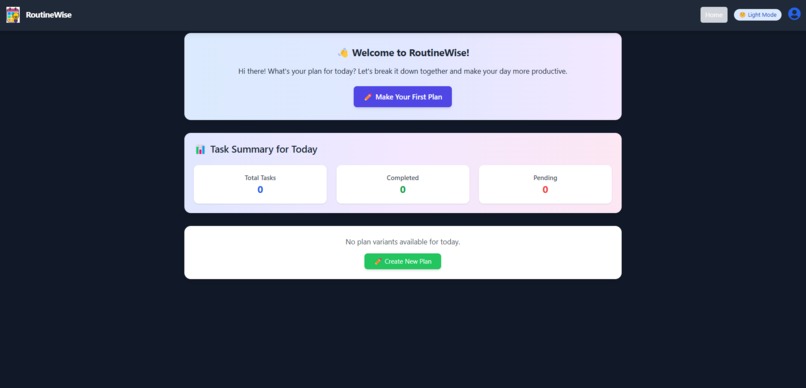
Dark Mode
-
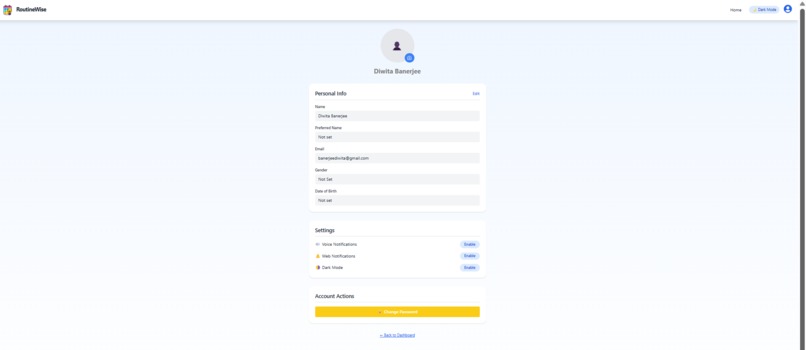
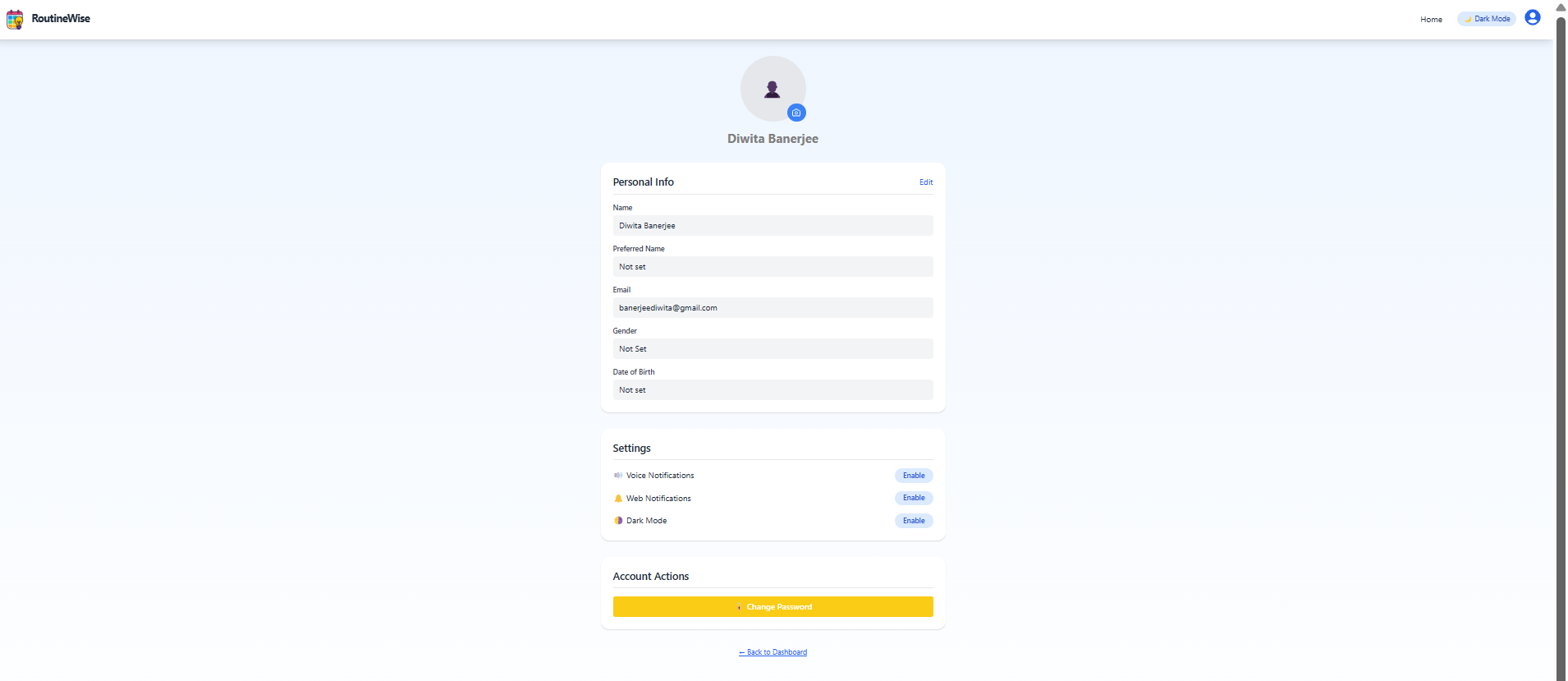
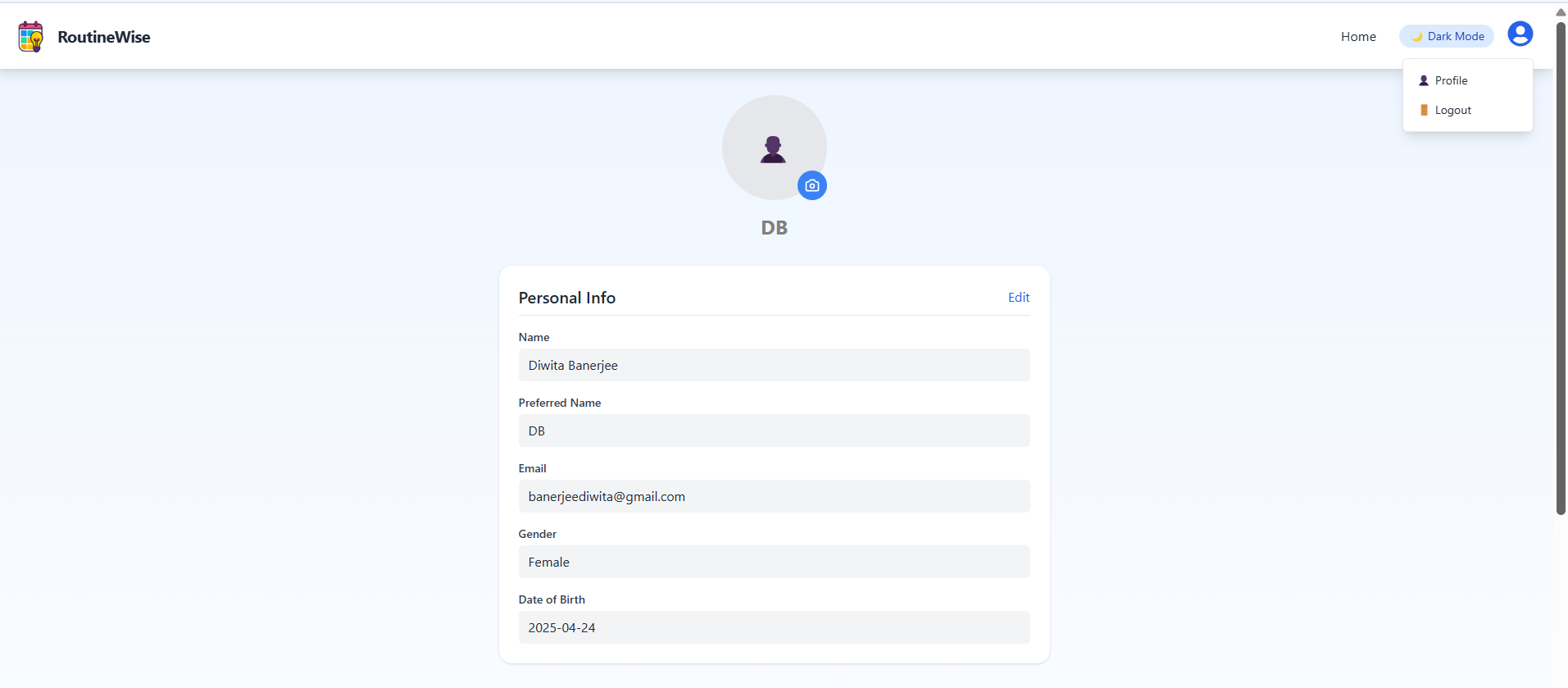
Profile Page with Notification Buttons
-
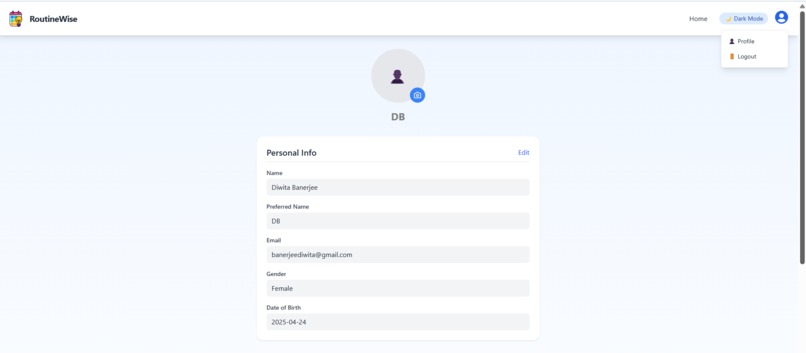
Profile and Logout
-
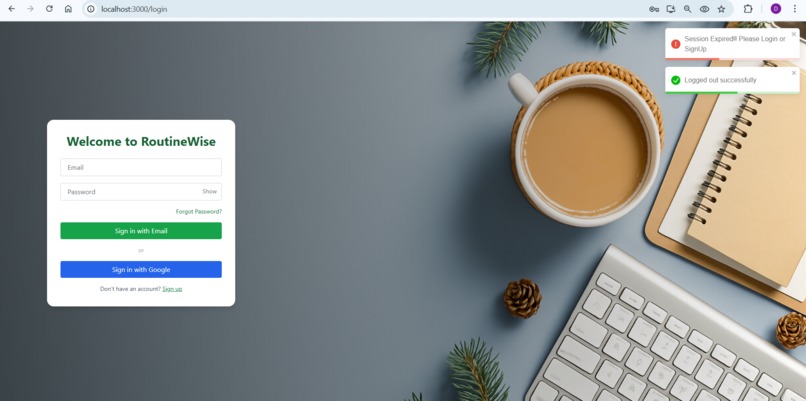
Logged-out Window
RoutineWise
Inspiration
RoutineWise was born out of a shared frustration—one that many of us quietly carry every day. Whether it was forgetting tasks despite to-do lists, feeling overwhelmed by rigid routines, or watching plans fall apart after just one unexpected event, the existing productivity tools always seemed to assume we were machines. But we're not.
This project began as a way to build something for ourselves—for people like us—who often find it hard to stick to fixed plans. As students, professionals, and creatives managing not just workloads but mental health, we needed a planner that didn’t just tell us what to do, but understood how we do it.
While RoutineWise was originally designed with the daily struggles of neurodivergent individuals in mind—those who often face fluctuating focus, cognitive overload, or decision fatigue—it quickly became clear that the need for a flexible, adaptive scheduler extends far beyond that audience. Even neurotypical individuals face unpredictable days, shifting priorities, and mental fatigue. RoutineWise offers structure with compassion, helping anyone navigate their day more intentionally.
We imagined a system that could generate multiple daily plan options based on personal goals, check-in patterns, and natural exceptions—while still feeling lightweight and easy to use. A system that feels less like a productivity drill sergeant and more like a thoughtful assistant who knows when to push and when to pause.
What it does
RoutineWise is a web application that generates intelligent, adaptive daily plans tailored to the user’s behavioral patterns, goals, and constraints. The core features include:
- Natural language input for user goals (e.g., "2 hours of piano practice", "class from 4:30–7:10pm")
- AI-generated plans that include fixed events, flexible routines, and logical ordering
- Multiple variants of the plan—such as front-loaded, evenly spread, or minimal-breaks
- Context-aware adjustments like moving breakfast or breaks
- Fallback rule-based system in case of AI failure
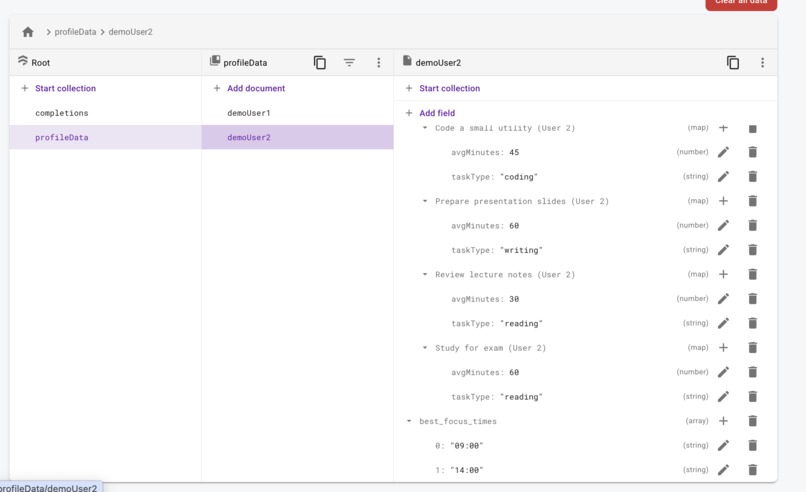
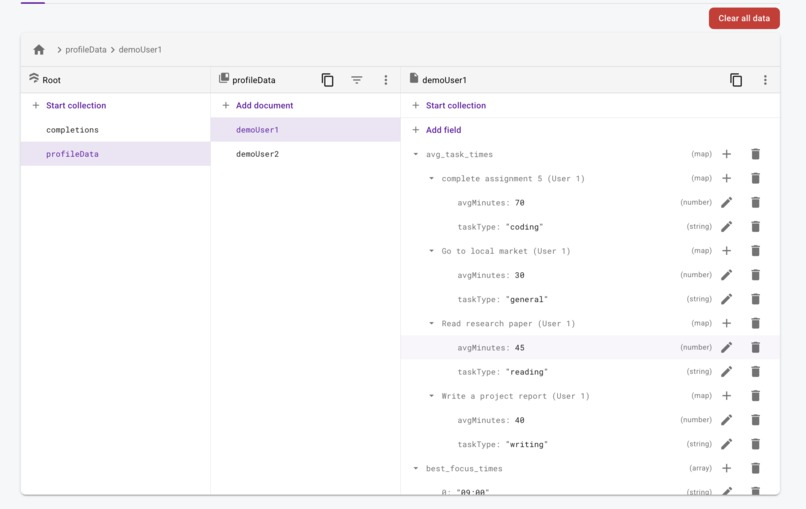
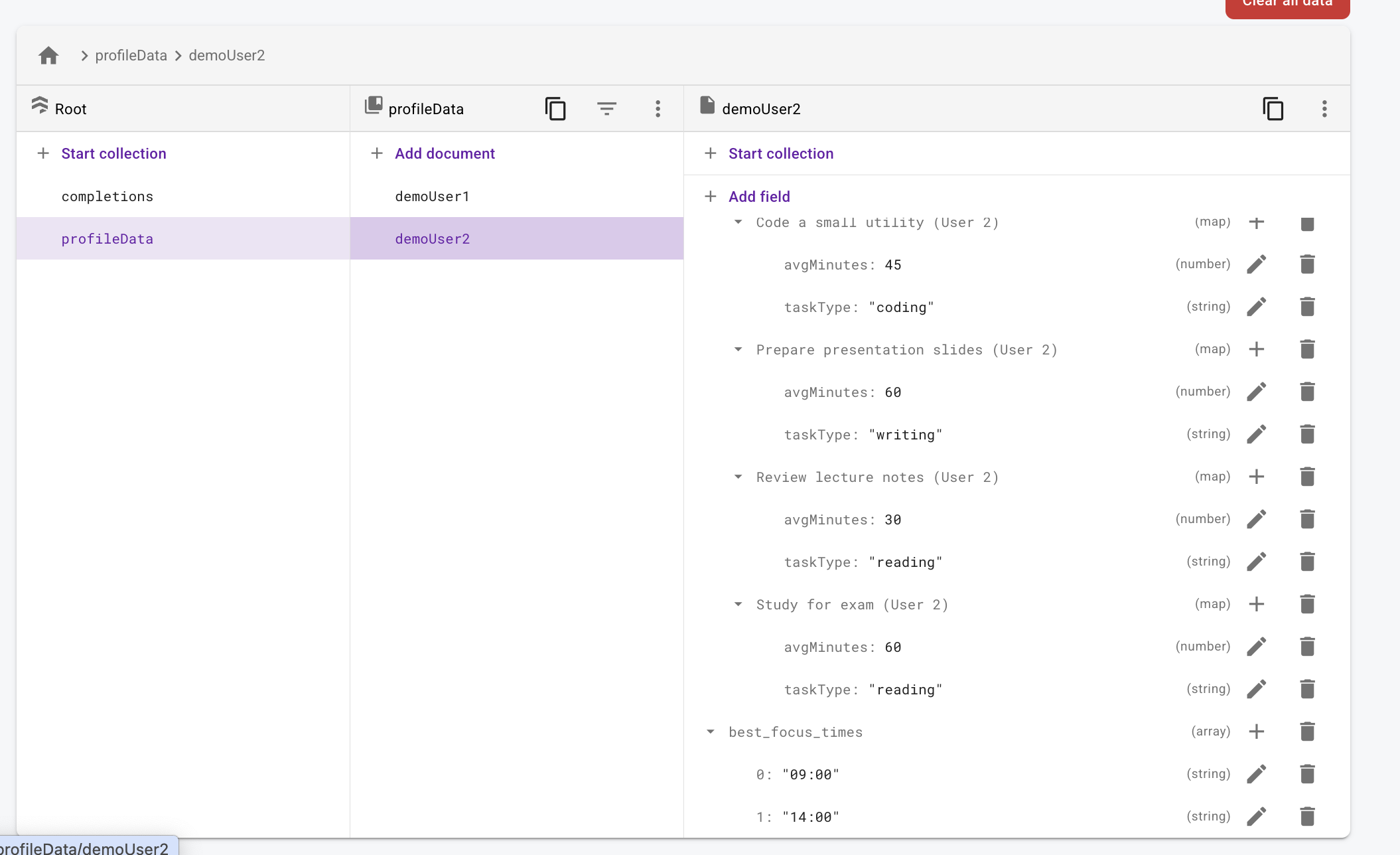
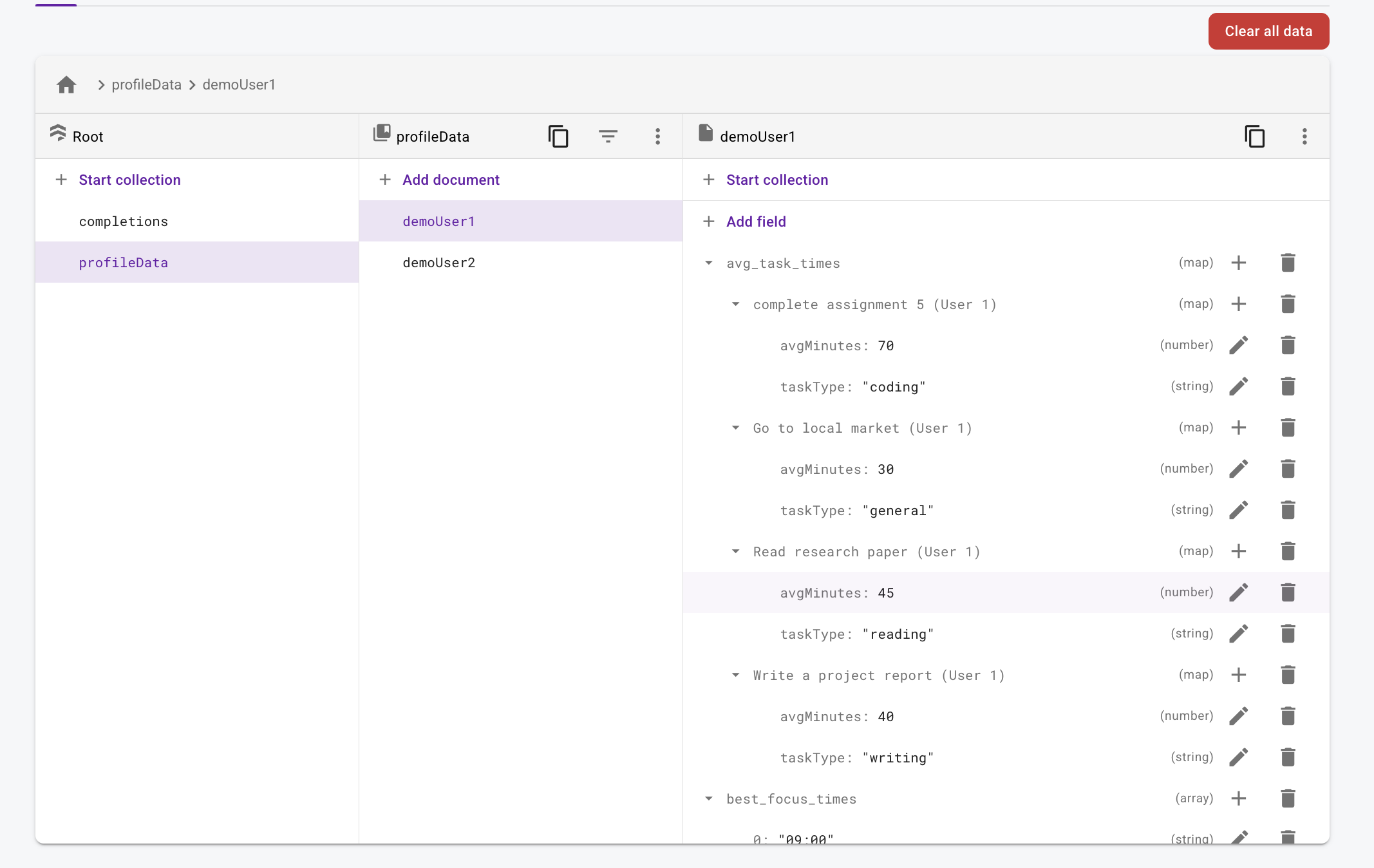
- Task analytics and profile data
How we built it
Parsing Natural Language Goals
To convert messy, natural language input like "Work on ML project and attend class from 2–4pm" into structured data, we use Gemini to extract two arrays:
- Goals: tasks with flexible timing
- Exceptions: events with fixed start times and durations
const prompt = \`
You are an intelligent AI day planner. Your job is to generate a thoughtful, well-structured daily schedule between ${startOfDay} and ${endOfDay}.
User message:
"\${text}"
\`;

const res = await ai.models.generateContent({ model, contents: prompt });
const json = stripFences(res.text);
const parsed = JSON.parse(json);

return {
  goals: parsed.goals || [],
  exceptions: parsed.exceptions || []
};
Duration Estimation
Here, we estimate the time each task might take using either:
- Historical averages from the user's past behavior
- Or LLM-powered semantic similarity (e.g., “Study Python” ≈ “Study Java”)
This helps us generate plans with realistic time blocks.
const prompt = \`
You are an intelligent AI day planner. Your job is to generate a thoughtful, well-structured daily schedule between ${startOfDay} and ${endOfDay}.
New Tasks: \${JSON.stringify(taskNames)}
Historical Task Durations: \${JSON.stringify(avgTaskTimes)}
\`;

const res = await ai.models.generateContent({ model, contents: prompt });
const json = stripFences(res.text);
const parsed = JSON.parse(json);
return parsed;
Prompt Builder for Gemini
This function constructs the master prompt that we send to Gemini to generate a complete day plan.
It includes:
- Strategy (e.g., "Front-loaded", "Even spread")
- Estimated durations
- Time exceptions to avoid
- User-defined goals
- Instructions on structuring the plan
return \`
You are an intelligent AI day planner...
Strategy: \${strategy}

User-defined Goals:
\${goalsStr}

Estimated Durations:
\${JSON.stringify(mergedDurations)}

Time Exceptions:
\${exceptionsStr}
... (truncated for clarity)
\`.trim();
Rule-Based Scheduler
If the AI model fails to generate a response, we fall back to this deterministic scheduler.
It:
- Prioritizes fixed events (like classes or meetings)
- Inserts user goals around those time blocks
- Avoids overlap and creates a sensible flow through the day
function scheduleDay({ goals, exceptions, startOfDay }) {
  const startMinutes = hhmmToMin(startOfDay);
  const fixed = [];

  for (const ex of exceptions) {
    fixed.push({ name: ex.name, start: hhmmToMin(ex.start), duration: ex.duration });
  }

  const remaining = goals.filter(g => !fixed.some(f => f.name === g.name));
  const tasks = [];

  let cursor = startMinutes;
  for (const goal of remaining) {
    tasks.push({ task: goal.name, time: minToHhmm(cursor), duration: goal.duration });
    cursor += goal.duration;
  }

  return tasks;
}
Task Classification with Gemini Flash
For analytics and personalization, we assign each task a high-level category such as:
reading, coding, planning, writing, etc.
This classification is done using Gemini Flash and later used in pattern tracking.
const prompt = \`
Identify a broad task category...
Task: "\${taskName}"
Category:
\`;

const result = await model.generateContent({
  contents: [{ role: "user", parts: [{ text: prompt }] }]
});

const category = result.response?.candidates?.[0]?.content?.parts?.[0]?.text?.trim().toLowerCase();
Challenges we ran into
- Making AI output diverse across strategy variants
- Parsing time ranges and exceptions from user input
- Fixing Firebase and Secret Manager integration locally
- Synchronizing Firestore batch writes and LLM outputs
- Keeping the plan toggle UX smooth
Accomplishments that we're proud of
- Fully working AI planner with Gemini integration
- Rule-based fallback system
- Behavioral tracking and personalized variants
- Clean UI/UX with frontend switching
- Real-time task classification and analytics
What we learned
- Prompt engineering at scale
- Structured reasoning using LLMs
- Mixing rule-based + generative logic for robustness
- Managing secret keys and access with Firebase/GCP
- Empathetic design for planning under uncertainty
What's next for RoutineWise
- Voice check-ins and reminders
- Reinforcement-based learning from user behavior
- Accessibility for neurodivergent workflows
- Google Calendar sync and smart API support
- Real-time LLM plan adjustments with Gemini Flash
Built With
- firebase
- gemini
- javascript
- node.js
- react.js
- tailwind
- vertexai


Log in or sign up for Devpost to join the conversation.