-
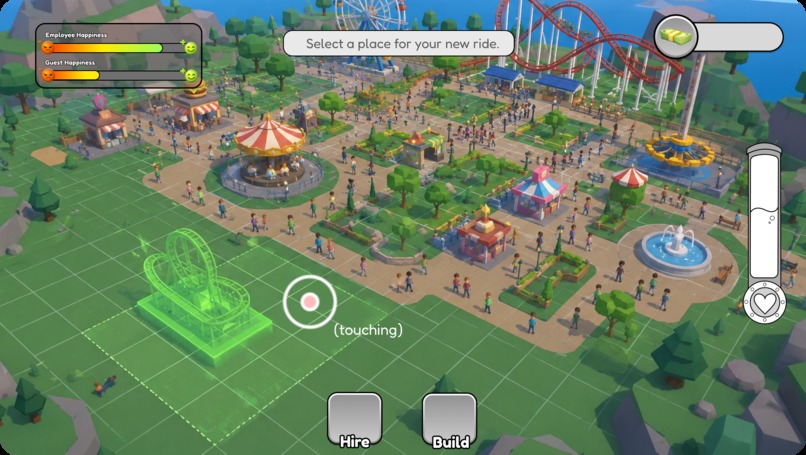
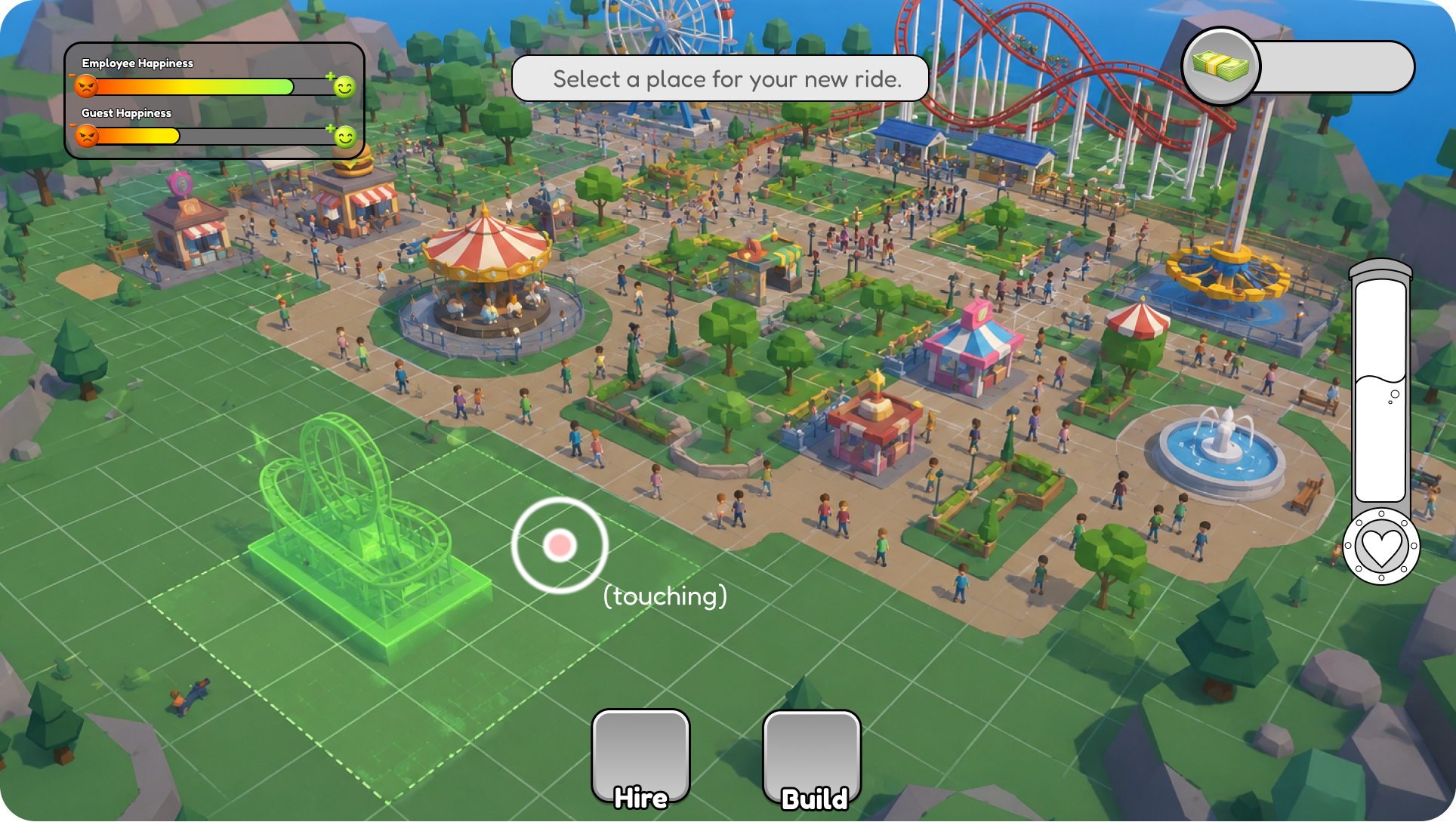
The Fun Business is all about strategy. Design and create parks that attract visitors, keep them happy, and watch your parks come to life.
-
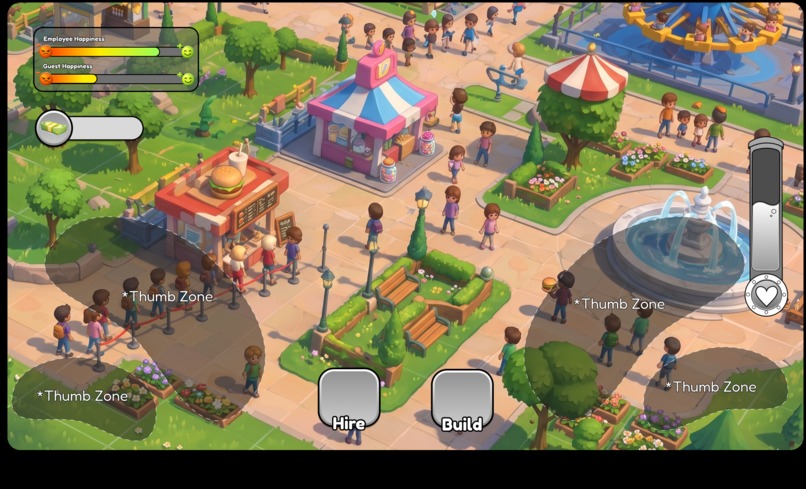
The game is designed with softcore mobile simulation fans in mind.
-
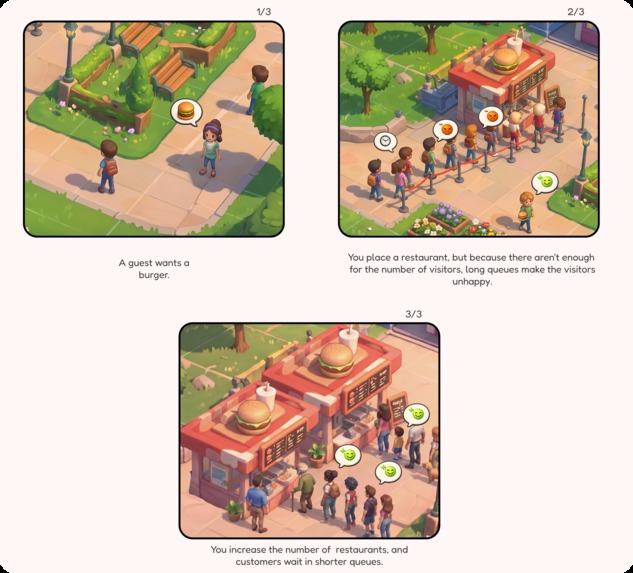
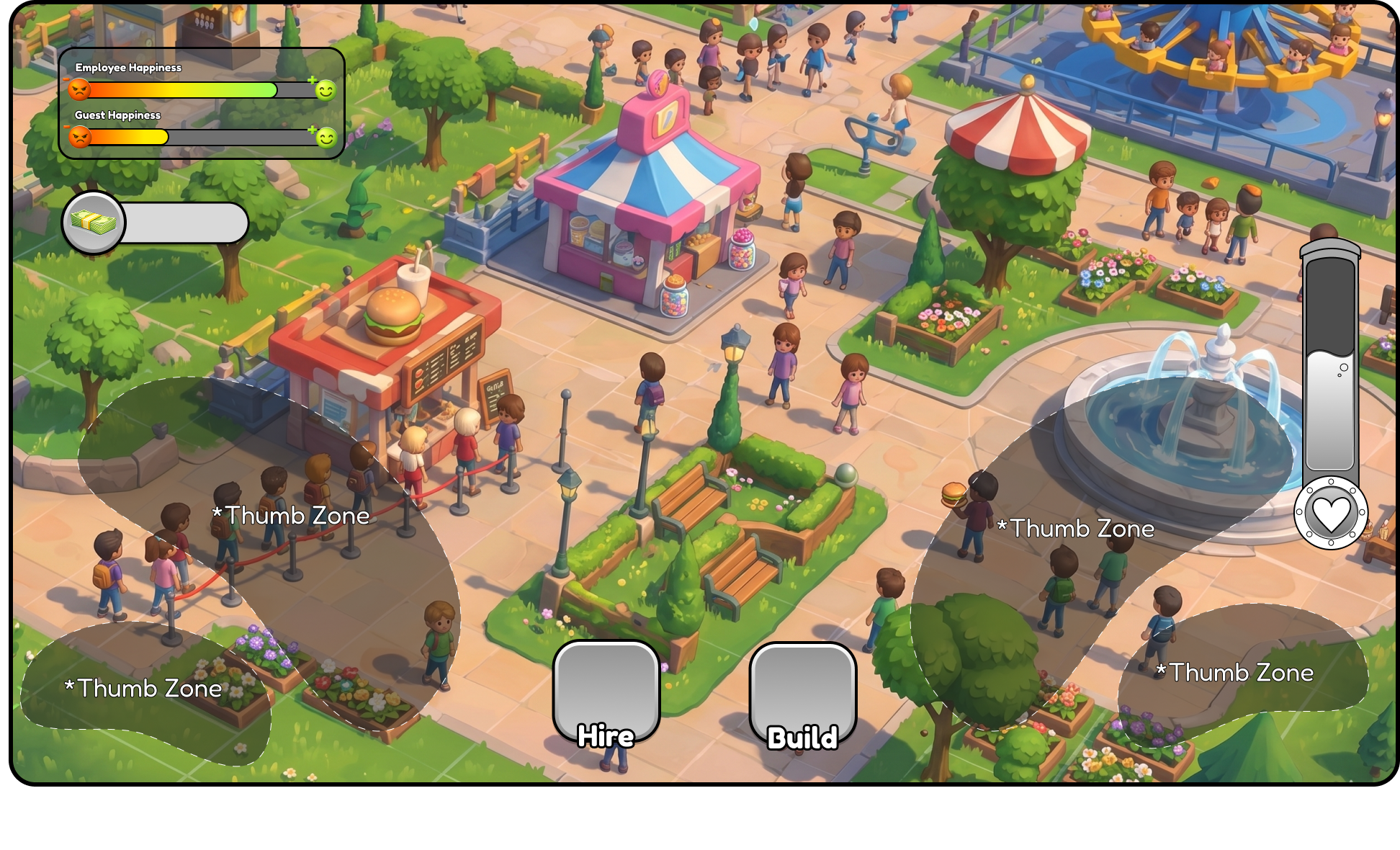
Park data is visually represented and easily digestible.
-
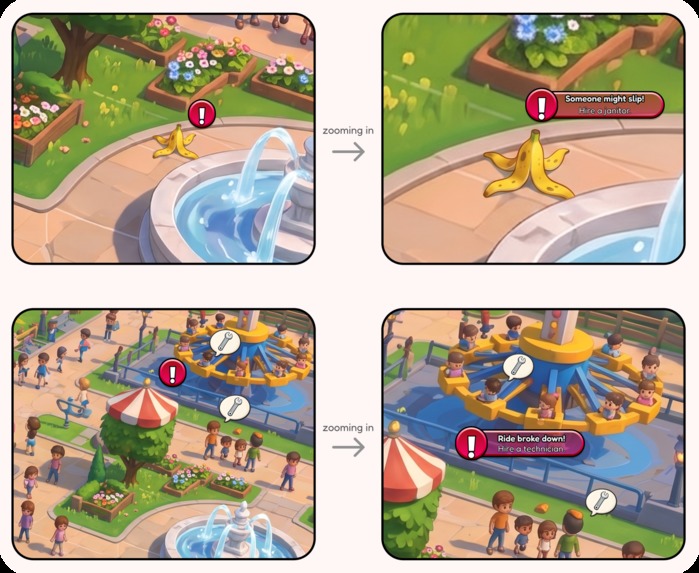
Player actions have immediate effect.
Inspiration
We were inspired by retro simulation and management games we loved as kids, like SimCity and Age of Empires. Those games made tiny systems feel alive through "Meeples" (mini NPCs), and we wanted to bring that feeling into a modern, playful business game - we decided to theme it after places that are naturally fun: theme parks. To support that playful feel we went for a lightweight design that doesn't bury players in spreadsheets and data rooms, but instead is very visually readable and thus accessible to a wide range of audiences from more softcore, young audiences to TAYA and even hardcore simulator fans. This was made possible by uniting that retro simplistic feel with modern mechanics and deep gameplay.
These games are popular off-platform but studios have yet to translate this proven demand into a popular mobile Horizon Worlds game.
What it does
The Fun Business lets players turn empty plots into profitable theme parks that come to life through Meeple systems. Players build rides, food stalls, paths, toilets, decorations, and service buildings, then watch NPC guests enter, queue, spend money, complain, leave reviews, and react in real time.
Every park is judged by three live scores: Profit, Love, and Risk. Profit measures how much money the park makes. Love measures guest happiness, reviews, and visual appeal. Risk measures breakdowns, debt, staff pressure, safety complaints, and bad press. The player controls their scores by taking actions that have immediate and visible impact upon the theme park's guest ecosystem.
A bland mega-corporation called The Leisure Authority also interferes with the player through events like fake inspections, supplier pressure, sabotage, price wars, and hostile offers. So the game becomes a constant push and pull between making something joyful and surviving the forces trying to turn everything into lifeless malls.
How we built it
We designed the game around a simple loop: build, watch, analyze, fix, grow, and eventually sell. The player spends money on attractions and facilities, guests react visibly, and the player uses those reactions to make better decisions.
We built the first 15 minutes around clear, concrete moments. The player starts in their first basic level park (Dino World) with a small budget, builds a path, chooses a first ride, opens the gates, watches guests react, adds food, handles a problem like trash or long queues, and faces their first Leisure Authority event. By the end, the player sees their park’s first valuation milestone and the next big goal: saving toward the next themed plot: Space World.
Challenges we ran into
The biggest challenge was making a management game feel deep without making it feel dense. We wanted real strategic tradeoffs, but we did not want the player to feel like they needed to study a dashboard before having fun.
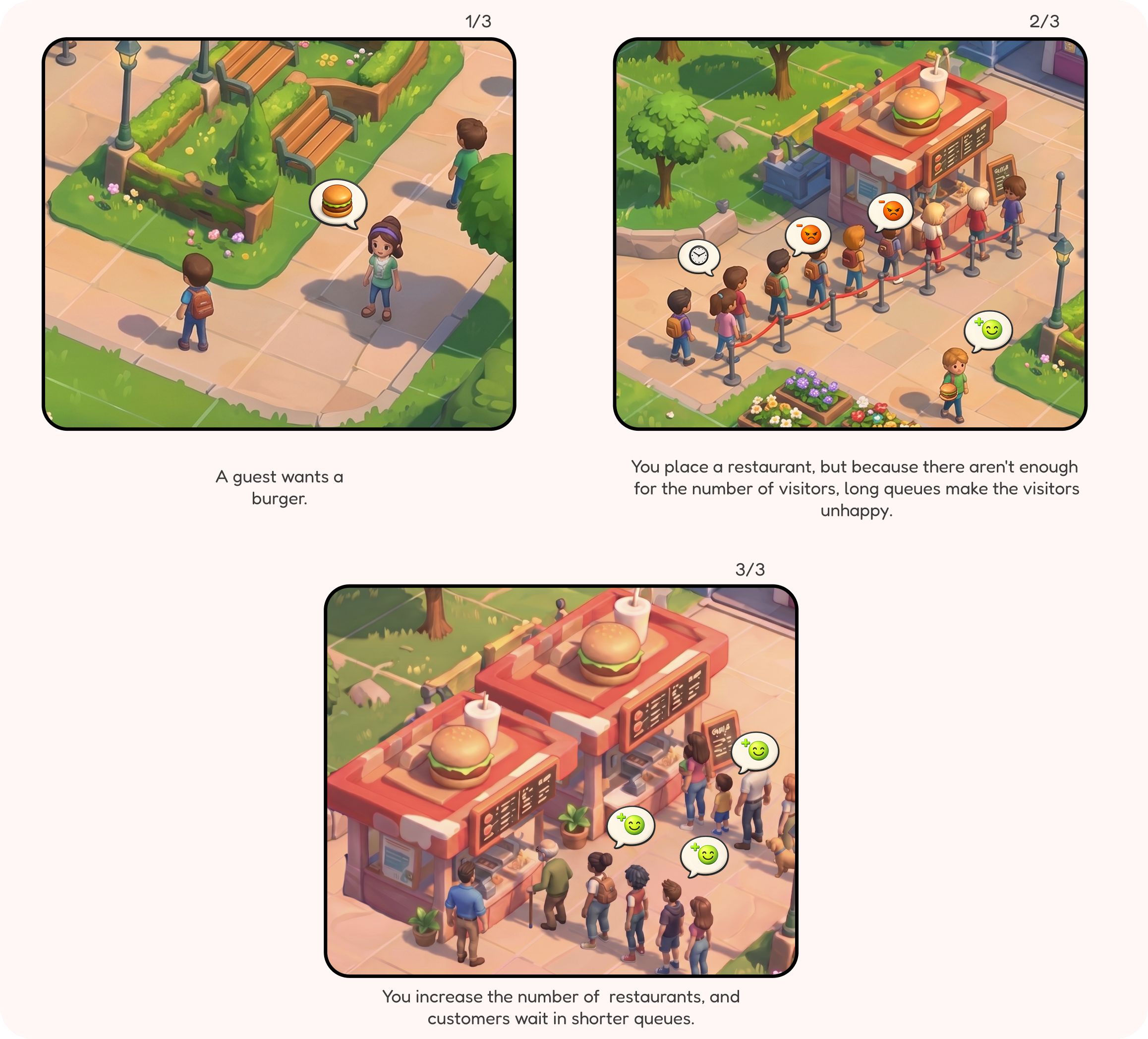
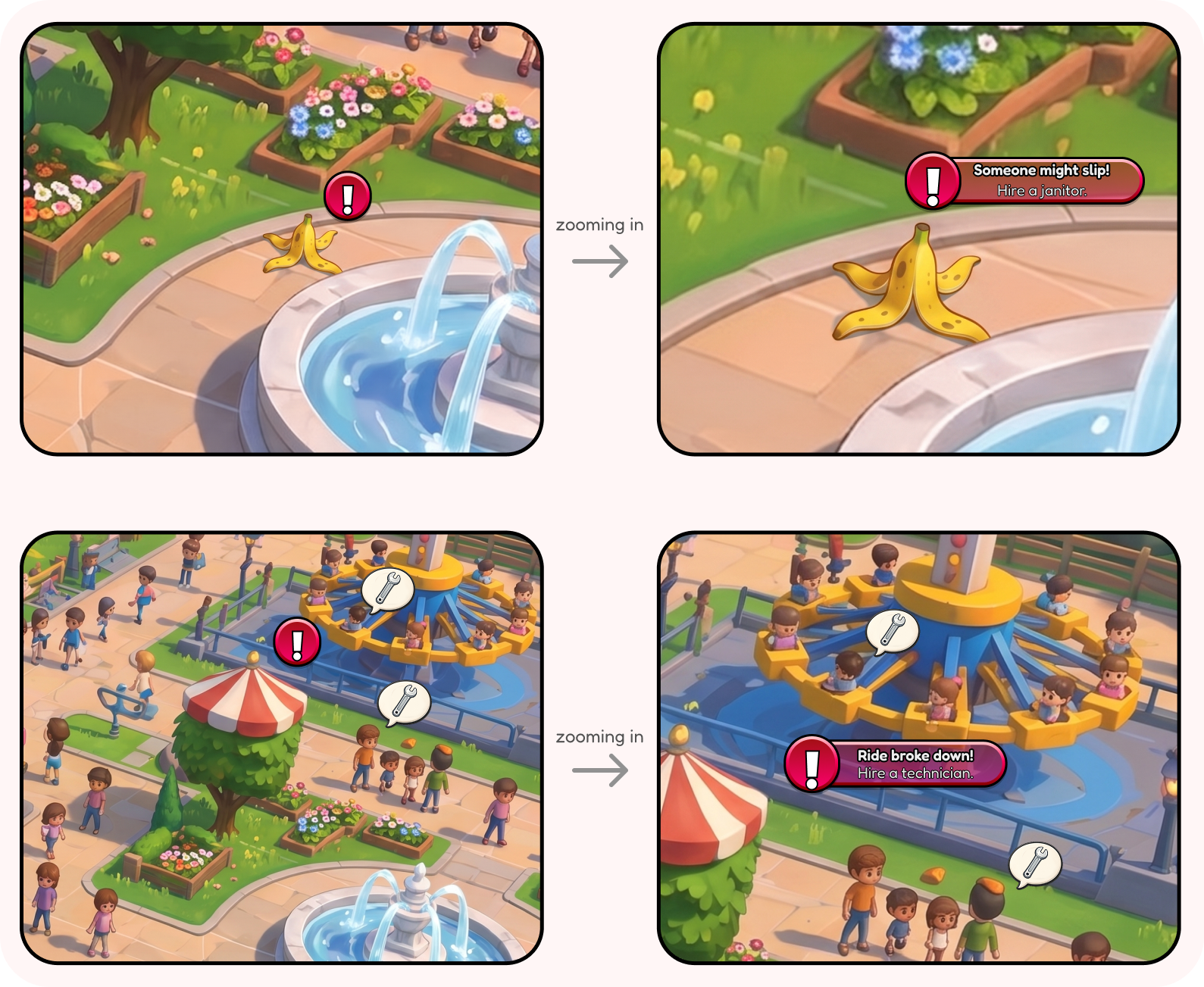
So we pushed as much feedback as possible into the world itself. Long queues create clock bubbles. Dirty areas show trash. Expensive prices create dollar sign complaints. The challenge was turning business logic into visual, immediate, playful feedback.
Another challenge was making the game feel like more than a standard theme park tycoon. We wanted to differentiate over three pillars: Cozy Feel, Visual-First Information, and the union of retro simplicity with modern mechanics. Throughout the documents you will read about this game, you will see how these focuses created unique decisions.
Accomplishments that we're proud of
We are proud that The Fun Business introduces a loved and proven category to Horizon Worlds, while introducing novel ways to play socially, like the shared co-management mode. We're also proud that while doing so, we managed to balance simplicity and a lightweight feel with depth, impact of decisions, strategy, and progression. The player does not need to guess what is wrong. They can look at the park and understand it, and then improve it in any number of ways.
We are especially proud of the Profit, Love, and Risk structure. It gives every decision a tradeoff. A cheap high-volume park can make money fast but become messy and risky. A premium park can earn more slowly but build stronger Love and valuation. A player can chase growth, beauty, efficiency, or stability, and each path feels different but at the same time, not overwhelming.
What we learned
We learned that the first few minutes of a management game matter more than almost anything else. If the player places one thing and immediately sees guests react, the whole game starts to make sense.
We also learned that complexity works best when it appears as a problem the player can see. A long menu saying “guest satisfaction decreased” is boring. A line of angry guests showing clock bubbles beside an overcrowded ride is instantly understandable.
Most importantly, we learned that players care more when the park feels personal. When the park fails, it should feel like something in their design needs fixing. When it succeeds, it should feel like their decisions made the world better.
What's next for The Fun Business
Next, we want to expand the game with more depth to every category of decision the user can make.
We also want to add research trees, seasonal events, a custom coaster builder, and social features that let players visit each other’s parks.
Longer term, we want each player’s park empire to feel even more distinct: some players will build chaotic high-volume fun machines, some will build beautiful premium parks, and some will become ruthless business operators.
Built With
- figma
- miro


Log in or sign up for Devpost to join the conversation.