-
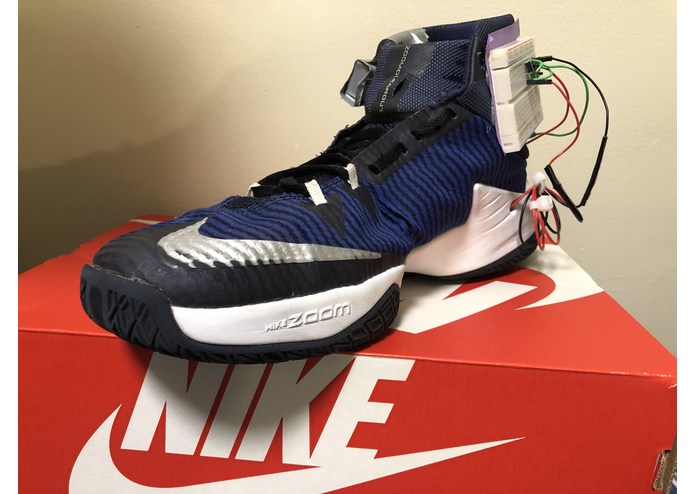
Isometric View
-
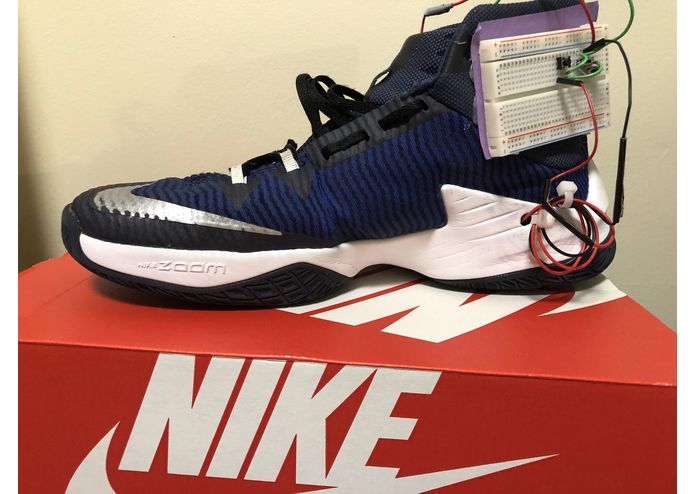
Left View
-
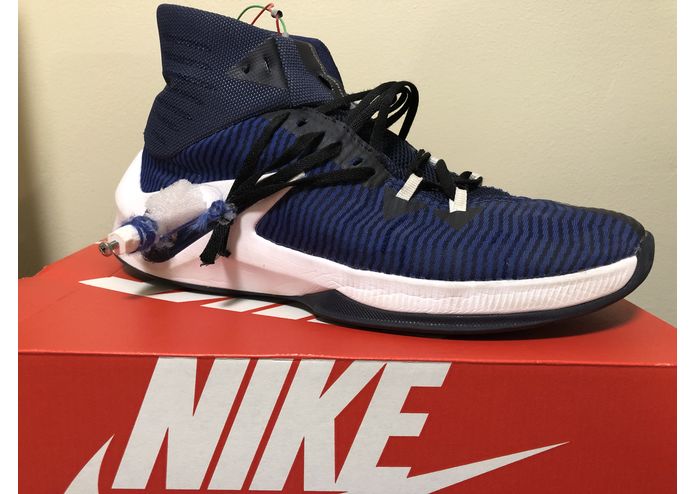
Right View


Inspiration
The inspiration for our project originated from Back to the Future Part 2 when Marty McFly travels to the year 2015 and slips on the Nike Air Mags that auto-lace. In 2011, Nike brought the Air Mags to market and again in 2016, releasing only a total of 85 pairs. This gained the interest of sneaker collectors all over the world, with resale prices spiking to approximately $50,000. The team understood that the concept of self-lacing shoes would not only gain the interest of sneaker collectors, but also can be extended to patients with limited motor control which is what the team set out to accomplish.
What it does
In essence, the concept of The Freelace is designed to assist patients with limited motor control such as those suffering from Parkinson’s disease, ALS, and muscular atrophy, with the additional capacity of remaining as a high-end, fashion statement at an affordable price. While specifically designed for a small niche market, it has wide appeal to everyone. As soon as the user steps into the shoe, with a simple touch of the button, the laces begin to auto-lace to the user’s desired nominal settings (tightness).
How we built it
The shoe actuates using a DC motor that is hardwired in series with three switches, the first is a button that allows for the user to set their lacing settings, and the second and third control the direction of the motor (clockwise or counterclockwise). The laces are set parallel, through the lace holes and are pulled by a singular thread through the motor that is set in the counterclockwise direction as viewed from the right. The circuit is powered by a 9V battery strapped to the outsole of the shoe. The team went through two iterations of the product, with the second focusing on the structural integrity and mechanics of the overall design.
Challenges we ran into
The team was greatly limited by the hardware provided. Many of the parts needed were not readily available. So, we had to think creatively in order to get what we needed. We also took a lot of time physically modifying our demo shoes. The holes on the side of the shoes were initially formed with scissors and by hand, and the second was formed using a drill to create the motor housing within the insole.
Accomplishments that we're proud of
With the number of tools and hardware provided, we were able to fully complete the scope of our product without sacrificing essential components of the initial prototype design. The team was able to complete one iteration of the product and once it was realized that the product would not work on the one sneaker due to structural issues, we were able to make an effective design decision to scrap the old product and create a second version.
What we learned
The team learned how to successfully develop a circuit system with proper wiring technique that would fit the need of running a DC motor in two directions without the need of an H-bridge which was not available for use, or transistors. Additionally, it was a learning experience in which calculations needed to be made in order to focus the torque of the motor to a single angular distance away from the laces to pull the laces tightly.
What's next for The FreeLace
The next steps and future design of the sneaker will consist of applying a force resistive sensor to the heel of the insole, such that when the user steps in, the laces automatically actuate to the user’s comfort setting. An additional modification would be the introduction of a second motor fastened to the back of the shoe in order to mechanically tighten the upper laces of high top (basketball) shoes. This would significantly add more value to the customer in the case where there will be more comfort and security, replacing the need for laces entirely.
Built With
- arduino-uno
- circuit
- computer-aided-design
- rapid-prototyping


Log in or sign up for Devpost to join the conversation.