-
-
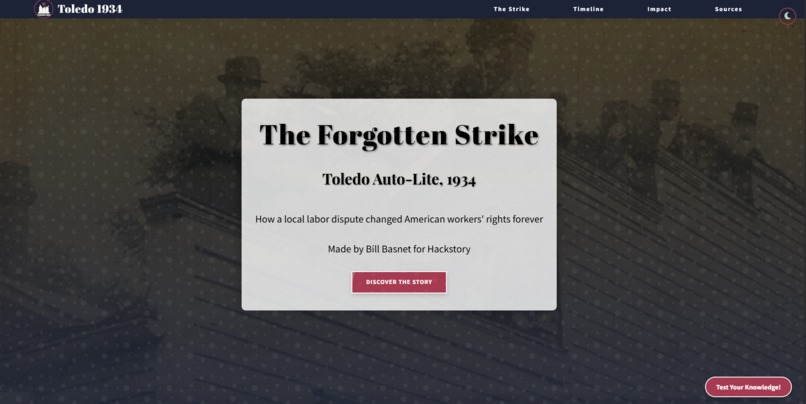
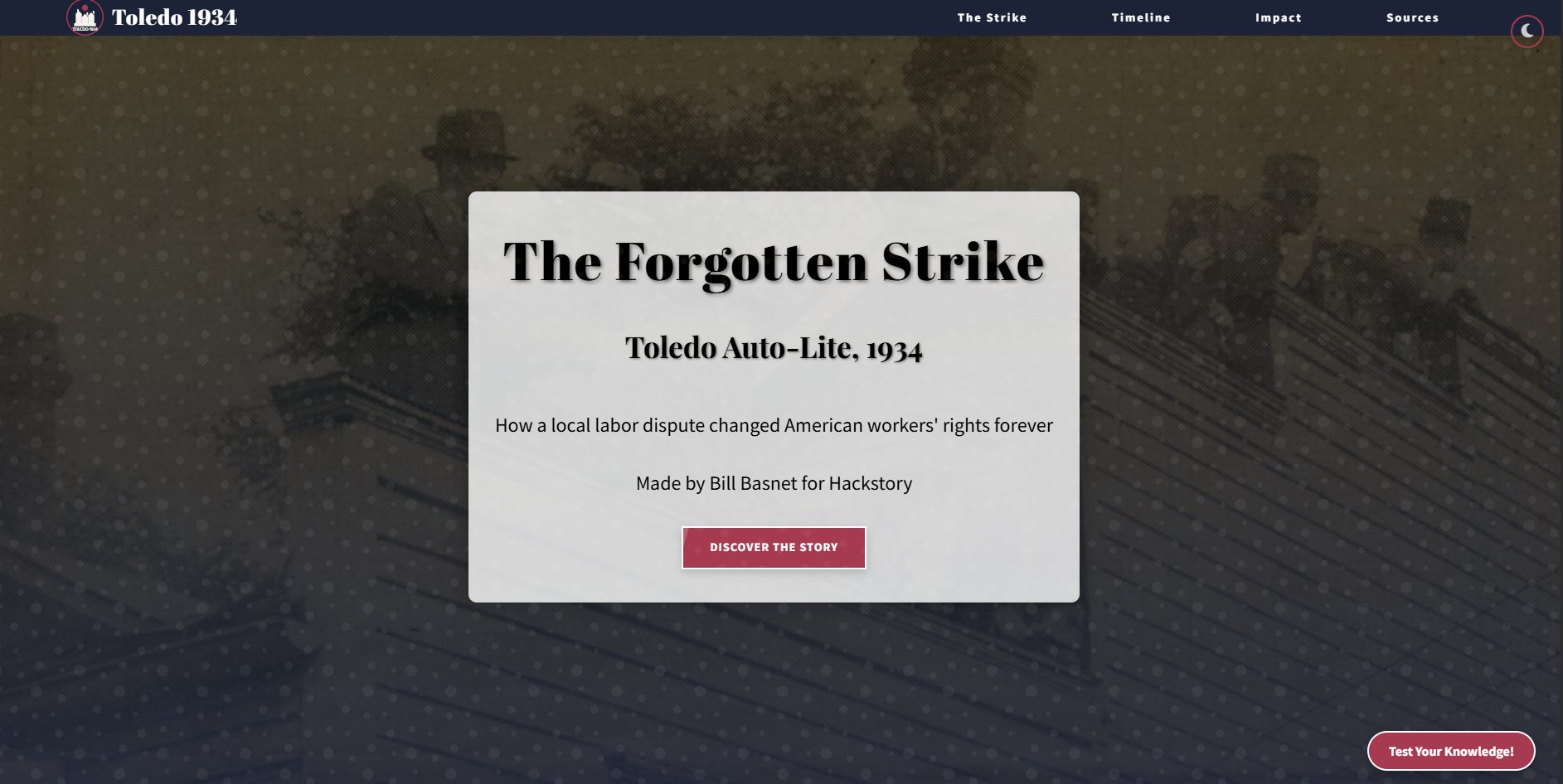
Landing Page of Website
-
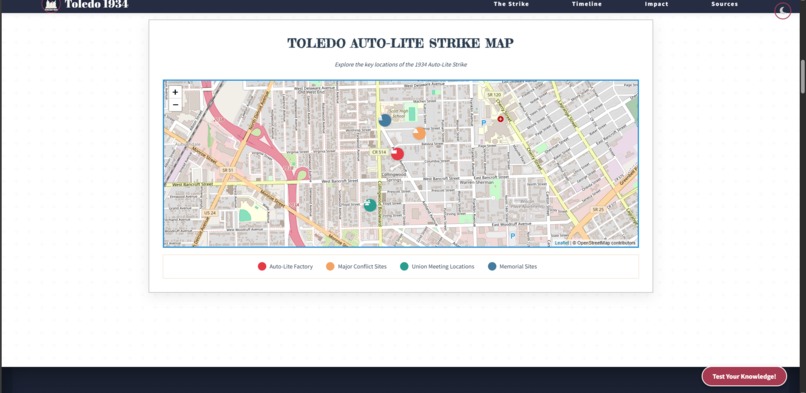
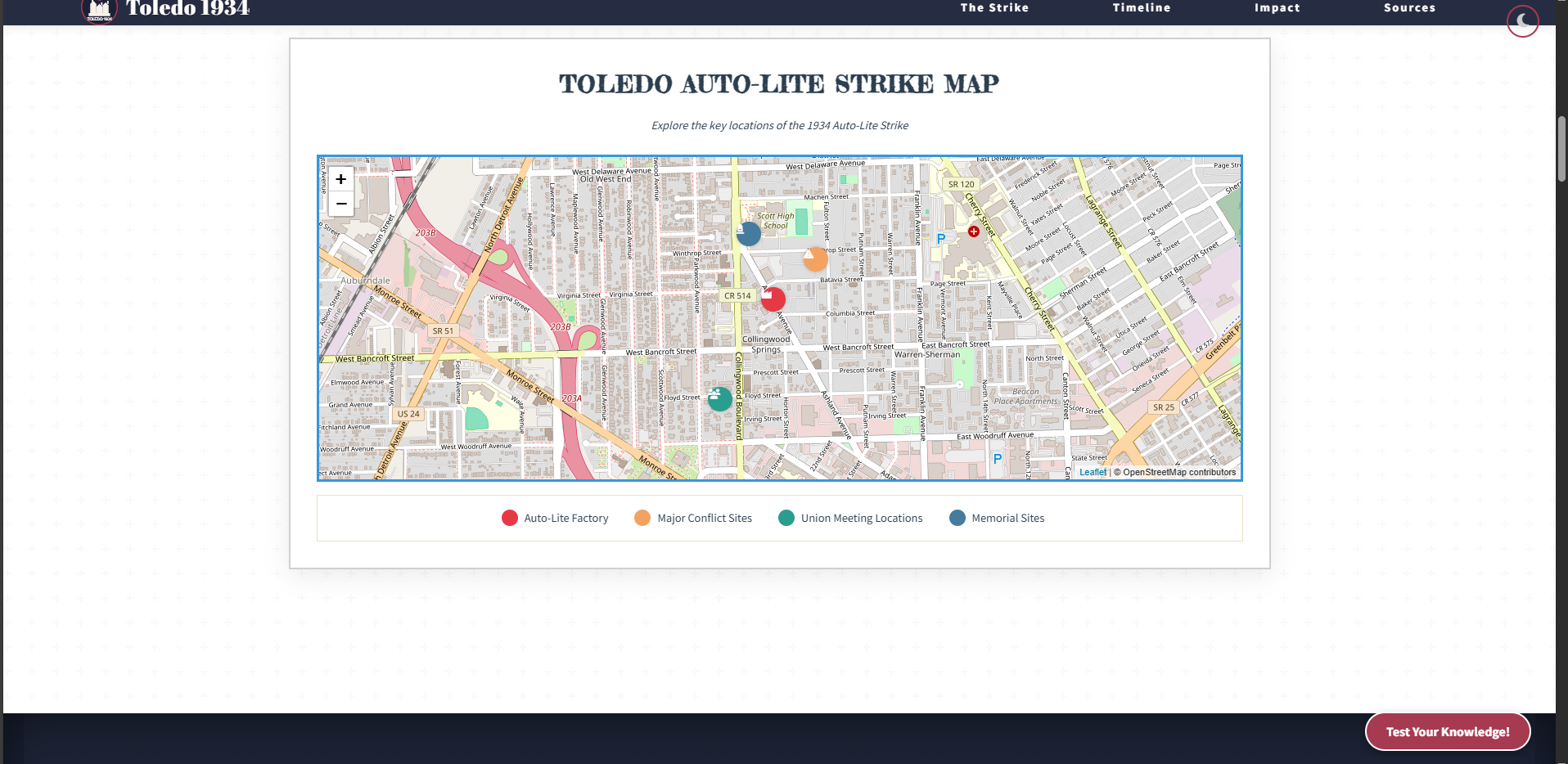
Interactive Map of Key Locations
-
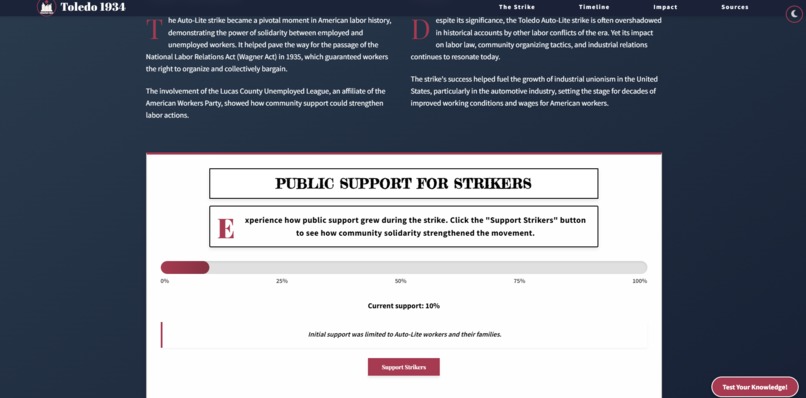
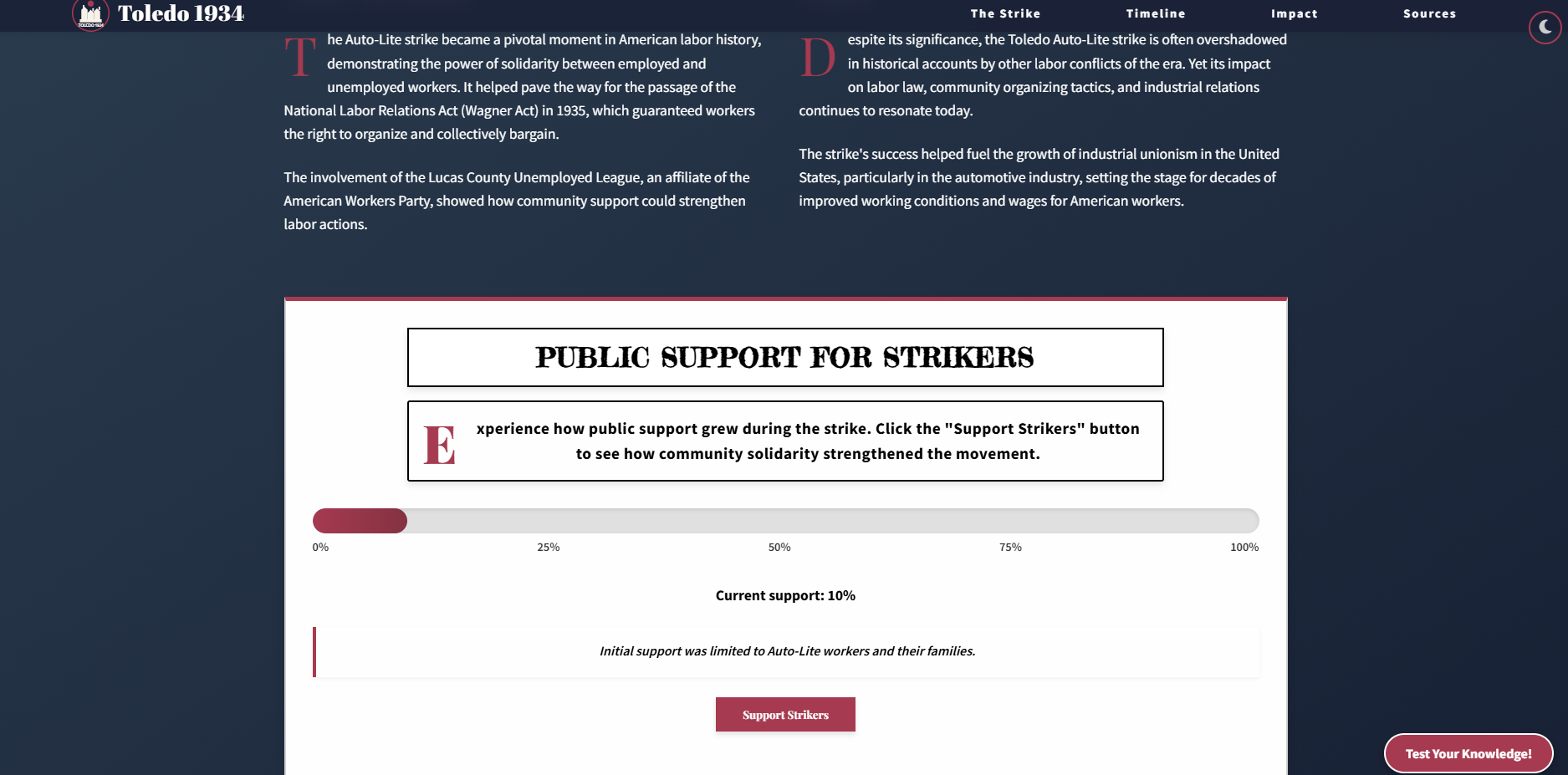
Learn how the Community strengthened the Strike
-
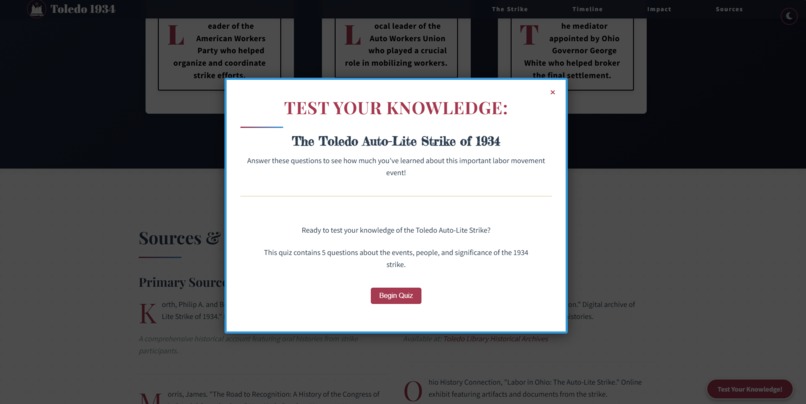
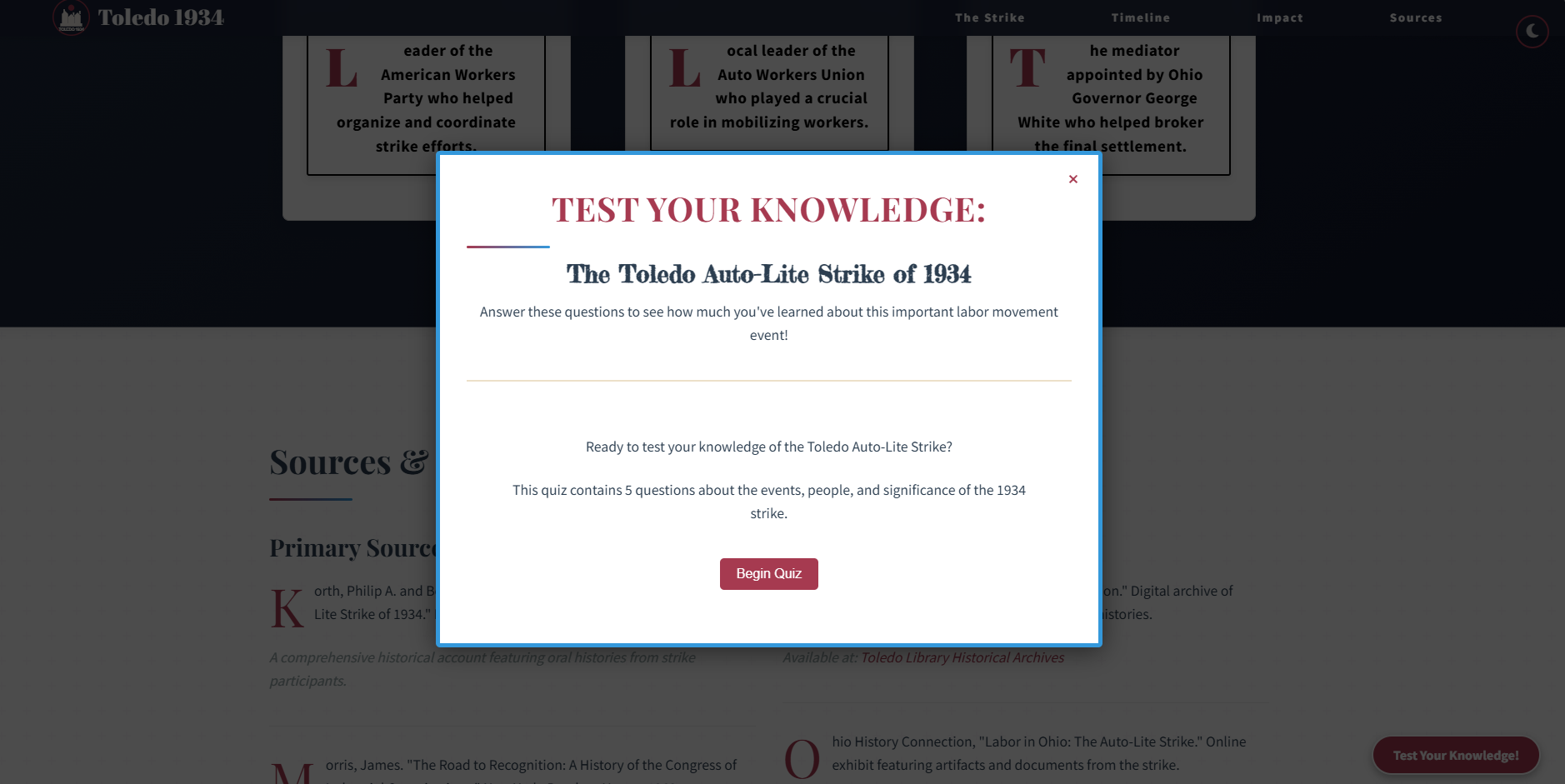
Short Quiz at the End to solidify knowledge
Inspiration
I was inspired to create this project after discovering the Toledo Auto-Lite Strike of 1934 while researching forgotten moments in American labor history. I was struck by how this pivotal event—which helped establish industrial unionism and influenced the National Labor Relations Act—remains relatively unknown compared to other labor movements. As someone passionate about bringing history to life through technology, I wanted to create an immersive digital experience that would make this important historical event accessible and engaging for modern audiences.
What it does
My website tells the story of the 1934 Toledo Auto-Lite Strike through an interactive digital experience. It features a responsive design with an interactive timeline, historical context about the strike, key figure profiles, and analysis of the strike's impact on American labor relations. I've incorporated several interactive elements including theme switching (vintage/dark/light modes), an interactive historical map showing key locations in Toledo, newspaper-style animations, parallax scrolling effects, and a knowledge quiz that tests visitors on what they've learned. The site combines historical accuracy with modern web design techniques to create an engaging educational resource.
How we built it
I built the website using HTML, CSS, and JavaScript without relying on frameworks to ensure fast loading times and accessibility. For the vintage newspaper aesthetic, I created custom CSS styling with Google Fonts that evoke the 1930s era while still being readable on modern devices. The interactive map was implemented using Leaflet.js, while the theme switching, animations, and quiz functionality were built with custom JavaScript. I created SVG graphics for the logo and used CSS for visual effects like the parallax scrolling. All development was done with performance and responsiveness in mind, ensuring the site works well across devices of all sizes.
Challenges we ran into
One of the most technically challenging aspects of this project was implementing the theme switching functionality. I spent hours debugging CSS variable inheritance issues when switching between the vintage, dark, and light themes. The problem was particularly frustrating with nested elements that needed different styling based on their parent theme class. Another significant coding challenge was the interactive map feature. Initially, I tried implementing it with custom JavaScript, but positioning the markers accurately on a responsive layout proved extremely difficult. I eventually incorporated Leaflet.js, but then faced challenges with styling the map to match the vintage aesthetic of the site while keeping the geographic information clear and readable. Getting the custom markers to display properly on both light and dark themes required creating separate SVG icons and writing conditional logic to swap them based on the active theme.
Accomplishments that we're proud of
I'm most proud of creating an educational resource that brings attention to this overlooked historical event while still being engaging and interactive. The theme switching feature allows users to customize their experience, making history more accessible to different preferences. I'm also proud of the interactive quiz which reinforces learning in a fun way, and the interactive map that helps visitors understand the geographical context of the strike. The newspaper animations add a touch of personality to what could have been a static presentation of historical information.
What we learned
This project deepened my understanding of the 1934 Toledo Auto-Lite Strike and its significance in American labor history. From a technical perspective, I learned techniques for creating theme systems in CSS, implementing interactive maps, and building quiz functionality from scratch. I also gained experience in historical UX design—finding ways to evoke a specific time period while still adhering to modern usability standards. The project reinforced my belief that digital tools can make history more accessible and engaging for contemporary audiences.
What's next for Toledo 1934
I plan to expand Toledo 1934 by adding more primary sources like newspaper clippings, photographs, and audio reconstructions of speeches and testimonials. I'd like to develop a more detailed timeline with day-by-day accounts of the strike and create an interactive decision simulator where users can experience the choices faced by workers, company executives, and government officials. I also want to add resources for educators, including downloadable lesson plans and activities for classroom use. Finally, I hope to collaborate with labor historians to ensure the site represents diverse perspectives on this important historical event.
Built With
- aria
- canvasapi
- chromedevtools
- css3
- custom
- flexbox
- git
- googlefonts
- grid
- html5
- http
- javascript
- leaflet.js
- mobile-firstresponsivedesign
- netlify
- python
- server
- svg
- variables

Log in or sign up for Devpost to join the conversation.