-
-
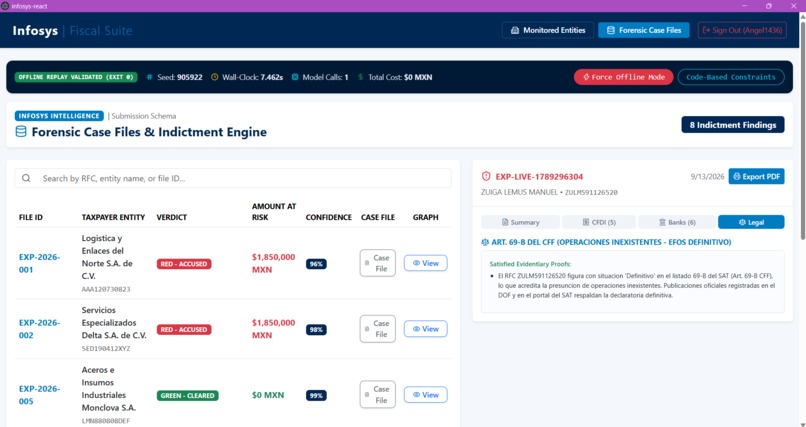
Introduction
-
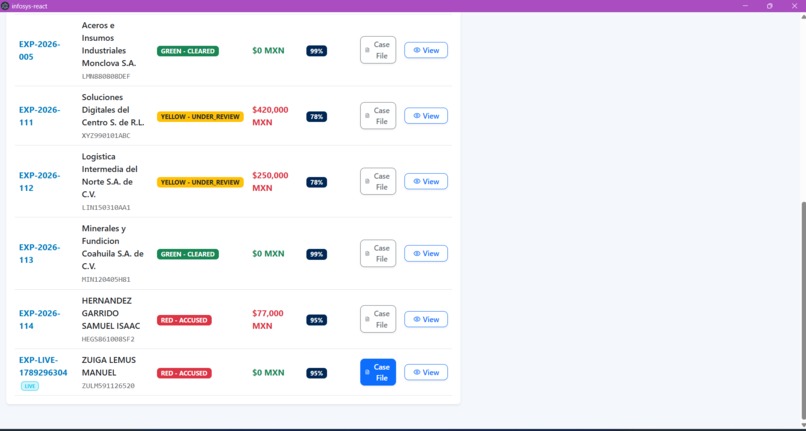
RFC DATA
-
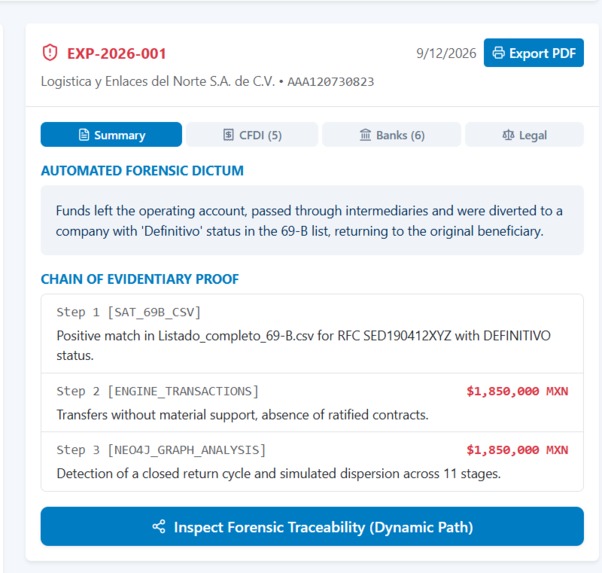
Case information
-
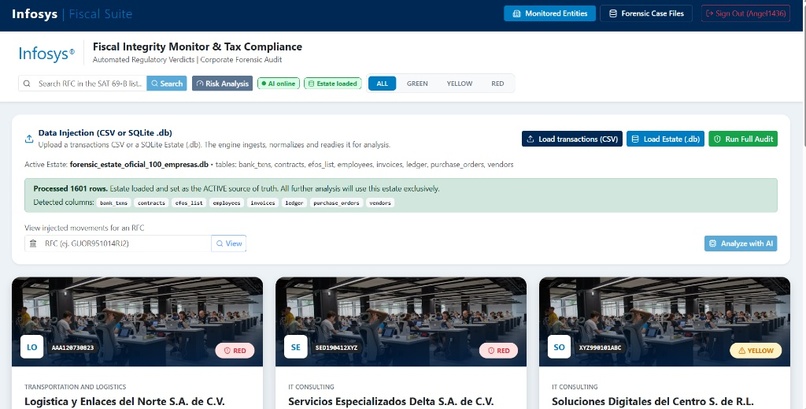
Cards
Inspiration
The inspiration for Sherlock came from the need for zero-trust financial auditing. We wanted to move beyond basic flagged anomalies and build a system that subjects data to rigorous, multi-agent validation. Sherlock was engineered to be a deterministic, offline forensic engine that secures sensitive corporate data while delivering mathematically backed conclusions without ever connecting to the external web.
What it does
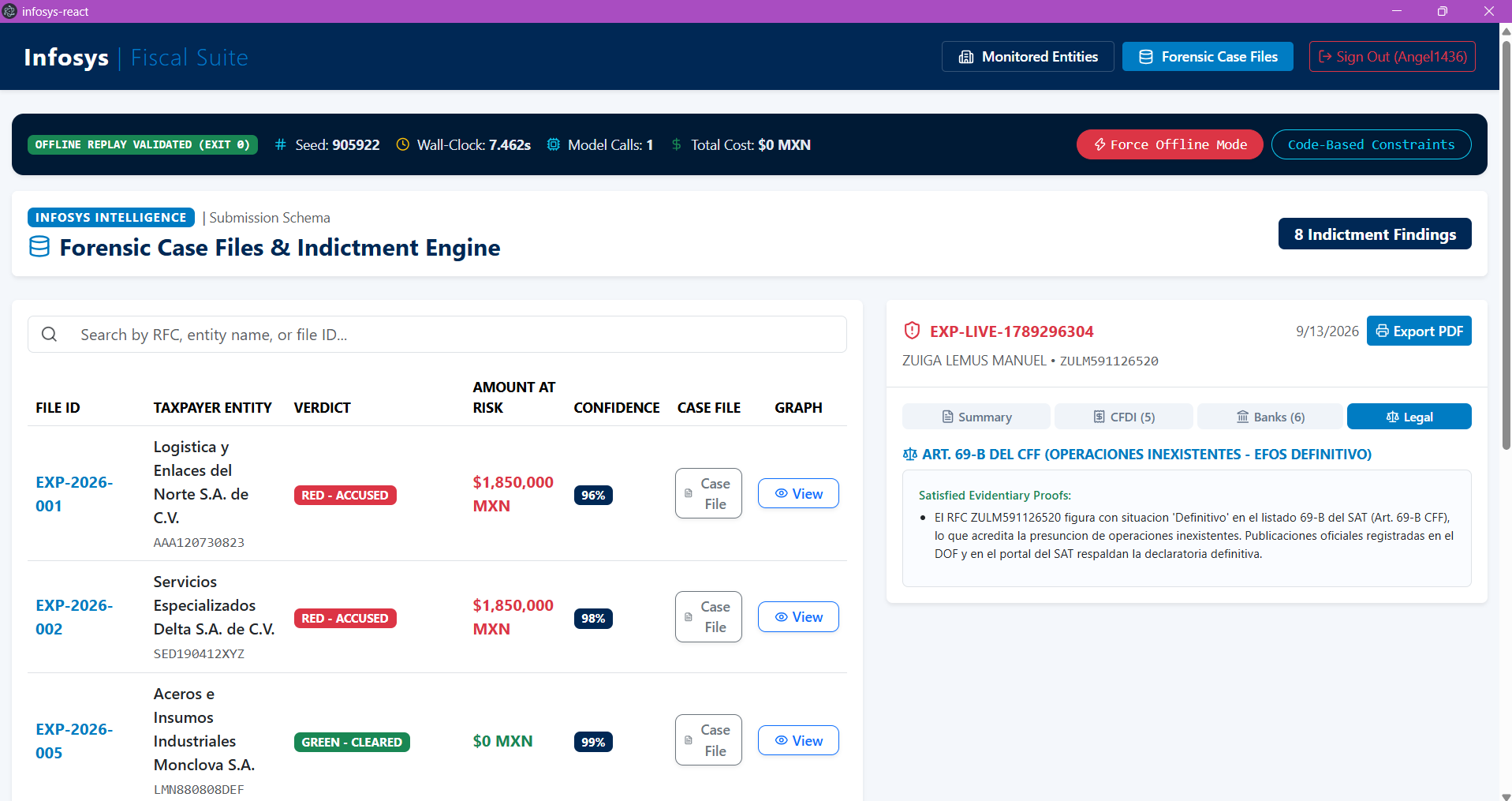
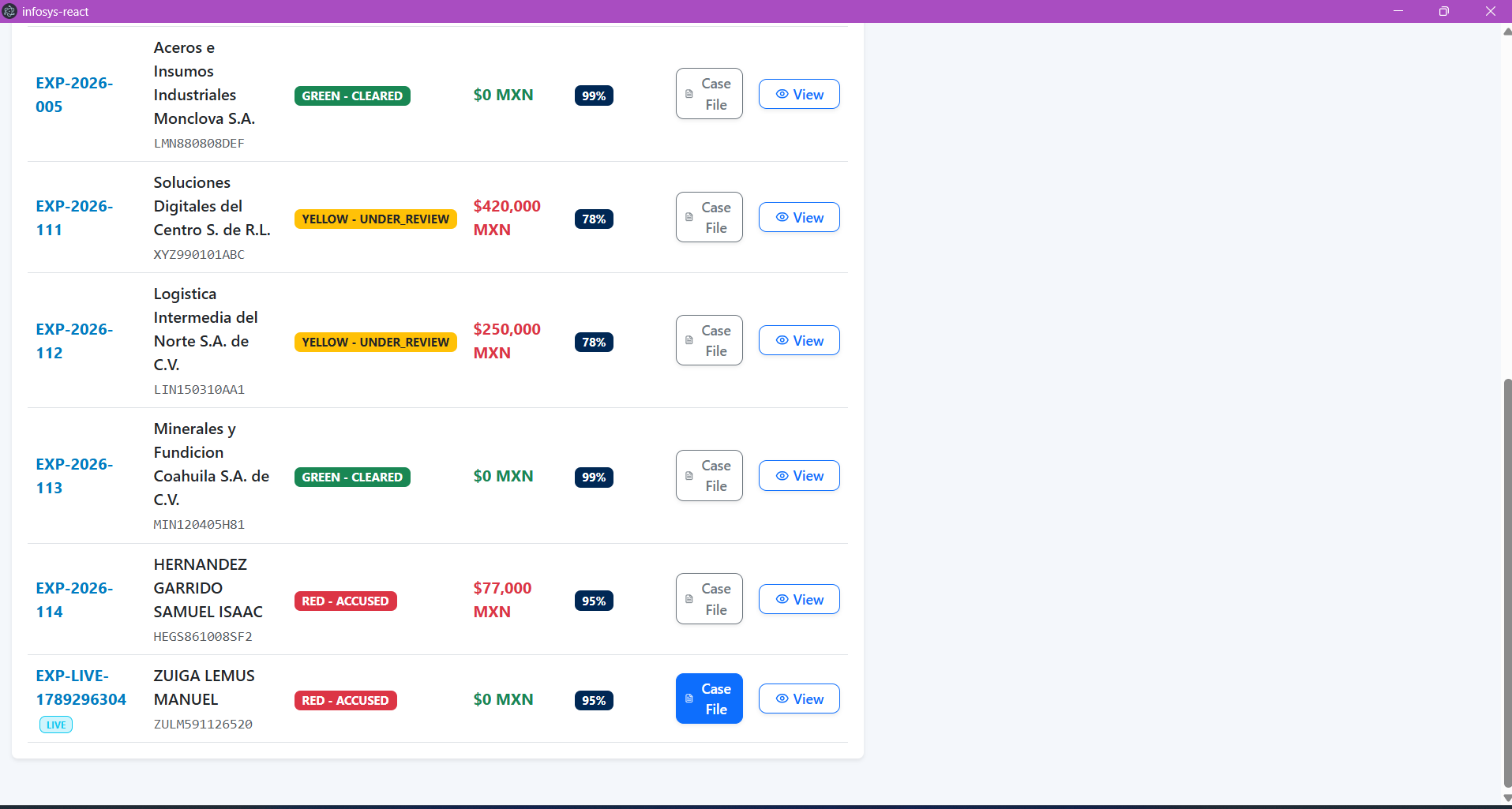
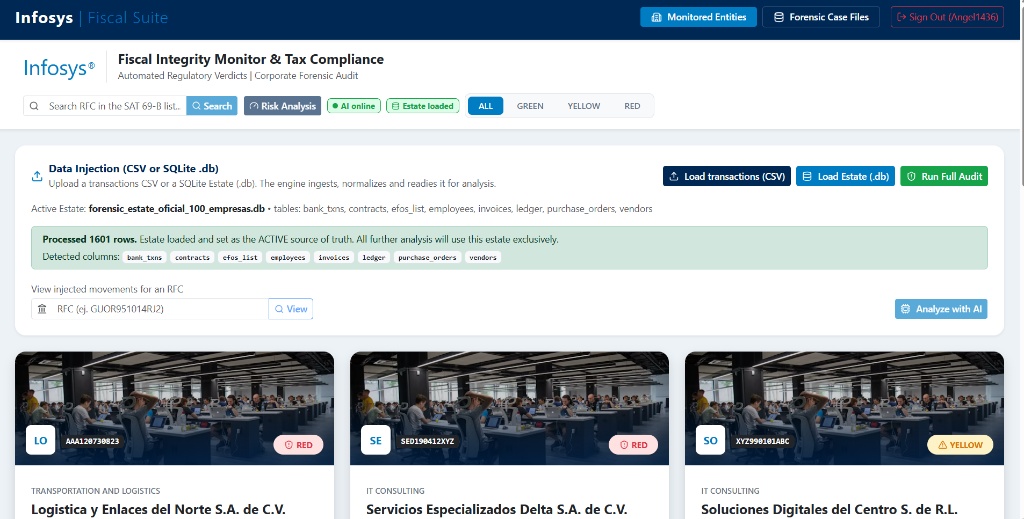
Sherlock is a standalone, air-gapped forensic auditing suite designed to ingest and analyze corporate SQLite databases locally, ensuring zero data leakage to external clouds. It operates as an autonomous financial investigator through three core mechanisms:
Adversarial AI Engine: The system employs a dual-agent architecture. A "Lead" investigator agent scans for structural anomalies and red flags, while a "Challenger" agent is programmed to actively attempt to invalidate those findings. This internal cross-examination ensures that only robust, verified discrepancies are escalated.
Deterministic Reconciliation: Sherlock does not rely on probabilistic guessing or AI hallucinations. It strictly cross-references authorized, official schema tables (bank_txns, contracts, invoices, purchase_orders). If the financial values do not reconcile with absolute mathematical precision—such as suspicious invoices matching exact bank transfers—the system automatically drops the case. This strict determinism guarantees a zero-false-positive rate.
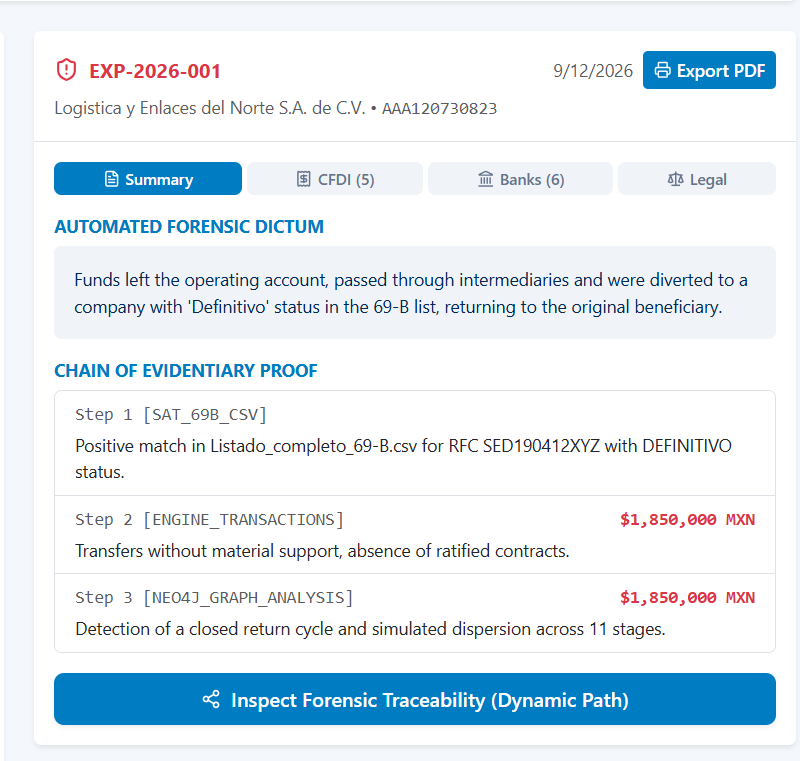
Automated Executive Reporting: Upon confirming a mathematically proven anomaly, such as a phantom entity or unauthorized fund diversion, Sherlock immediately compiles the evidence. It generates a comprehensive, court-ready PDF case file detailing the exact flow of illicit funds for human compliance officers.
How we built it
To satisfy the strict data privacy and air-gapped requirements of the Infosys challenge, we engineered a completely decoupled, locally hosted architecture:
Secure Frontend Framework: We developed the user interface using React and packaged it into a standalone, native Windows executable (.exe) via Electron. This deployment strategy guarantees that the application runs entirely offline, preventing any sensitive financial data from leaving the local machine.
Local Intelligence Backend: The core analytical engine operates on a local Python backend served by Uvicorn. This infrastructure handles the ingestion of the SQLite databases and orchestrates the multi-agent AI logic locally, bypassing the need for third-party cloud APIs.
Deterministic Schema Constraints: To eliminate AI hallucinations, we implemented rigorous prompt engineering and backend validation rules. The LLM is hardcoded to parse and interact exclusively with the official challenge schema (bank_txns, contracts, invoices, purchase_orders). This ensures that every computational conclusion is strictly grounded in verified ledger data. working as a team
Built With
- electron
- javascript
- llm
- ollama
- pandas
- python
- react


Log in or sign up for Devpost to join the conversation.