-
-
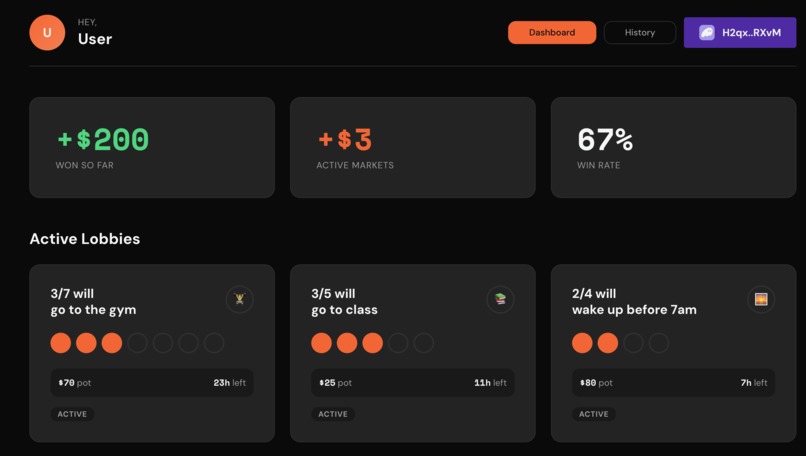
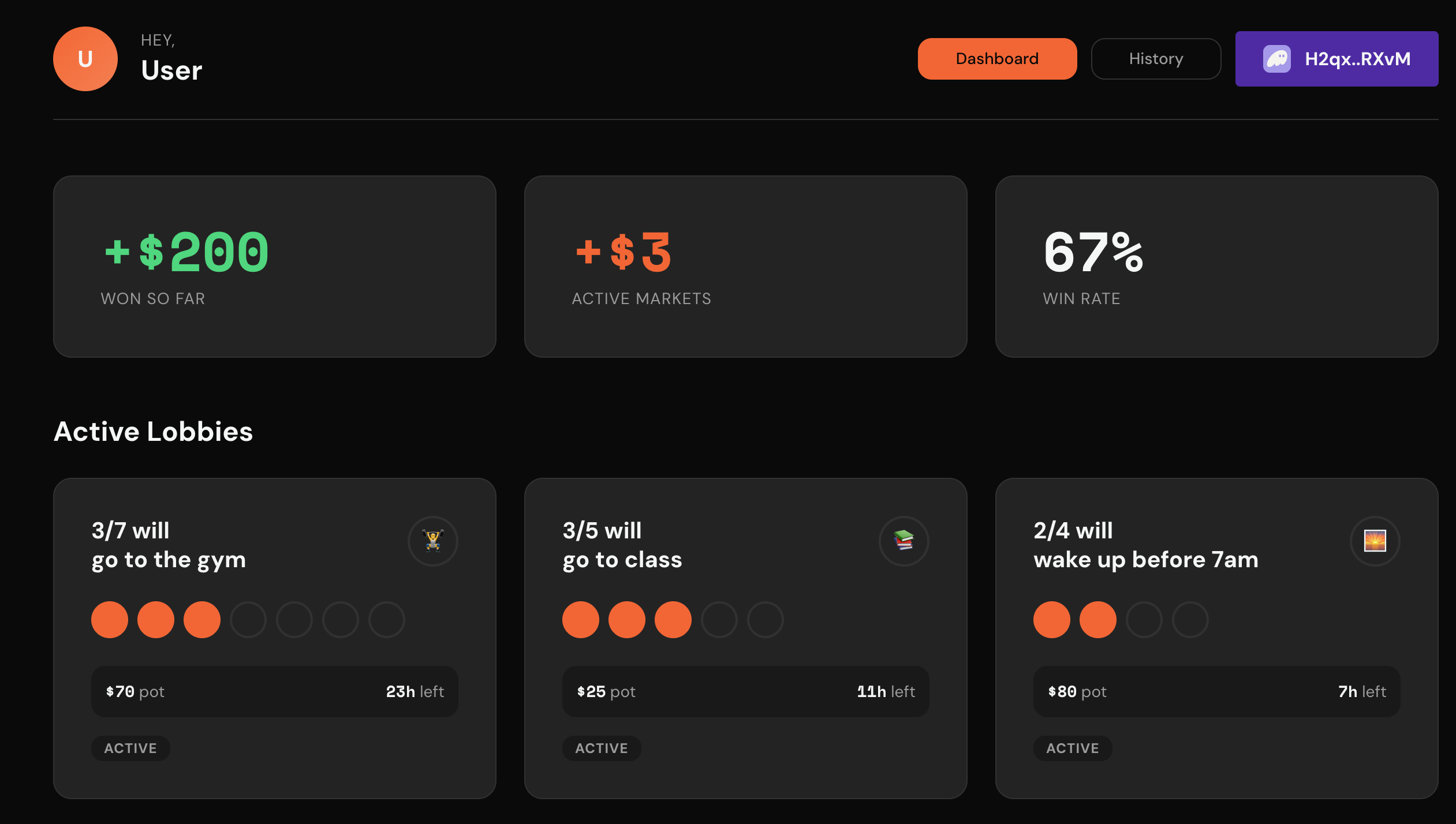
Homepage
-
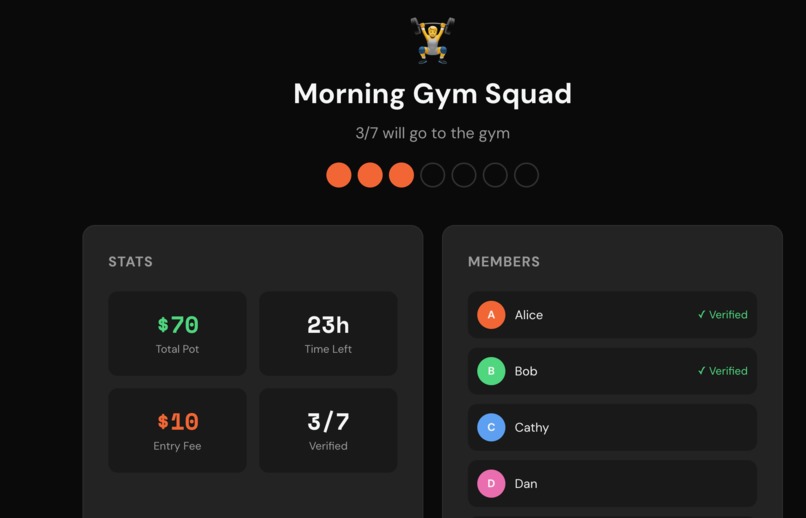
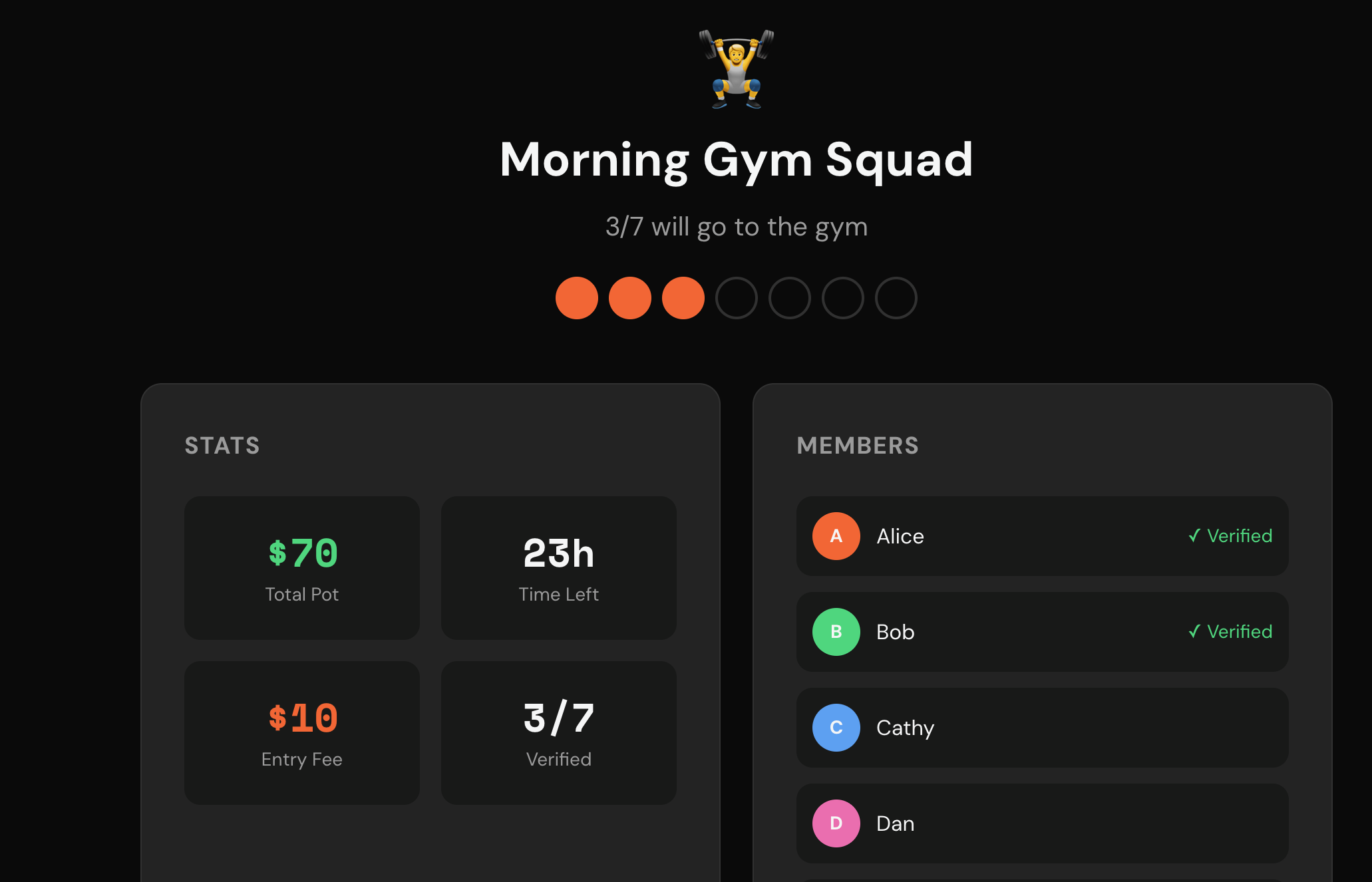
Lobby 1
-
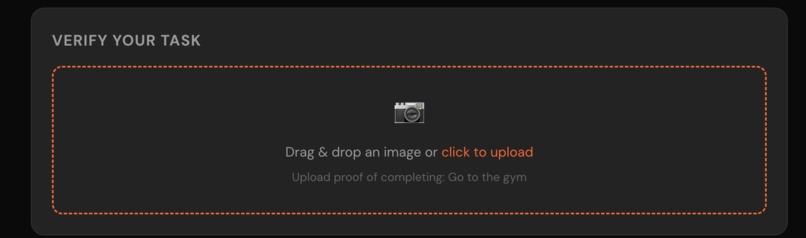
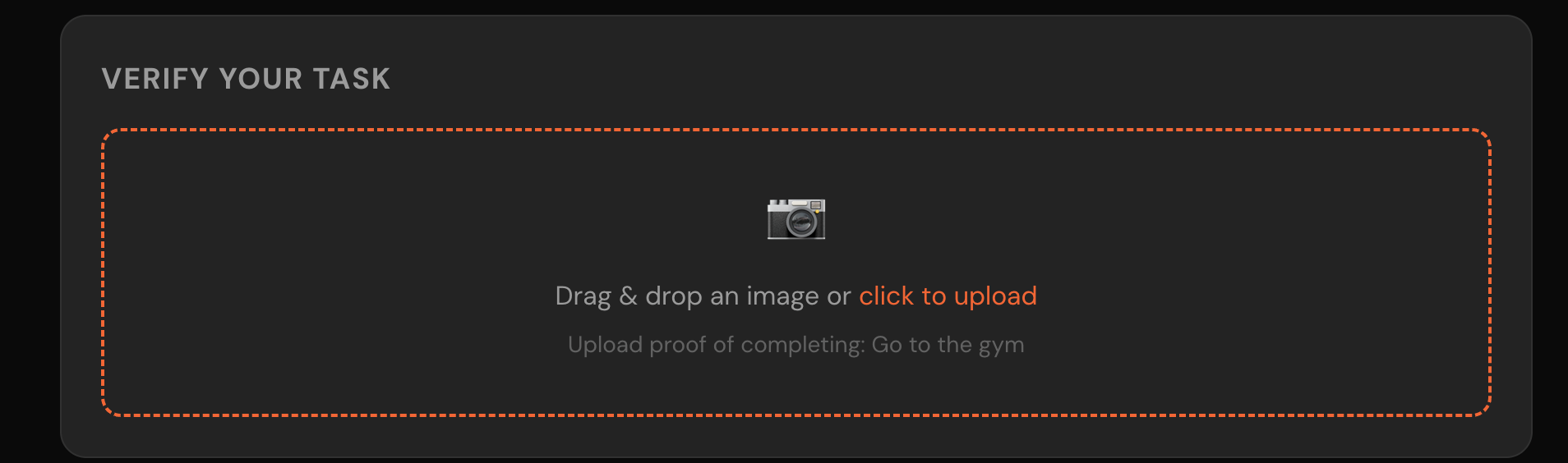
Task Verification
-
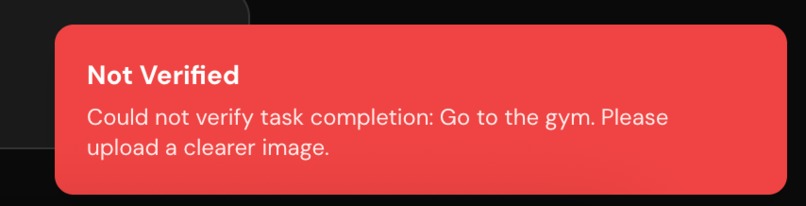
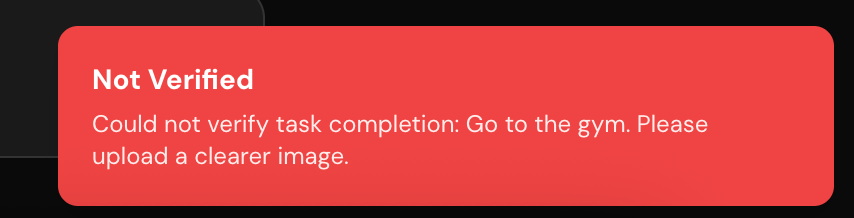
Verification Failed Message
-
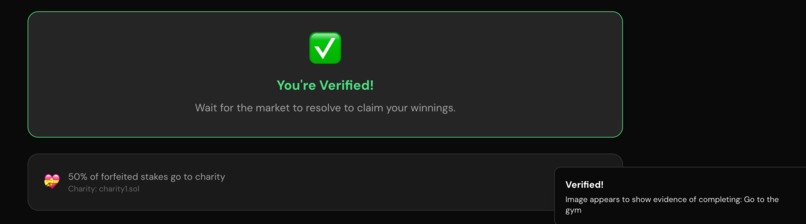
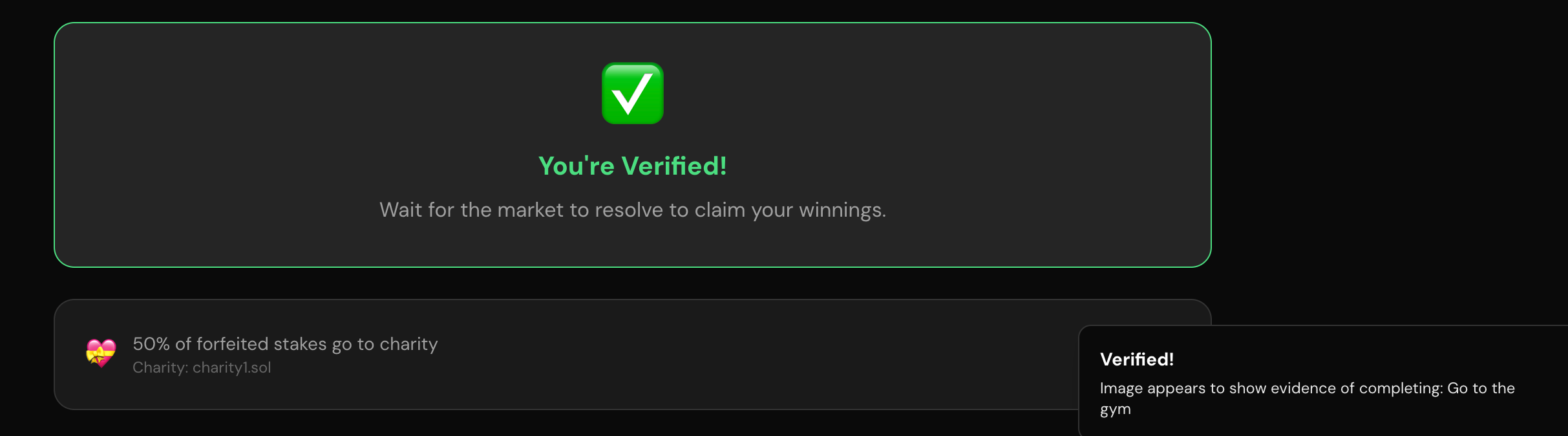
Verification Passed Message
The Flake Fund: Project Story
Inspiration
We've all been there. You download a habit tracker, swear this time will be different, and three days later you're lying to an app about whether you actually went to the gym. The streak breaks, the guilt sets in, and the app gets deleted.
We started asking: what if you couldn't lie?
The insight came from two observations. First, behavioral economics tells us that loss aversion is roughly twice as powerful as the prospect of gain—people will work harder to avoid losing \$10 than to earn \$10. Second, the reason most accountability systems fail is that cheating is trivially easy. Screenshot your old gym selfie, mark the habit complete, move on with your day.
The Flake Fund was born from a simple question: what happens when you combine real financial stakes with challenges that are impossible to fake? The name says it all—flake on your commitments, and you fund the people who didn't.
What We Learned
Building this project forced us to think deeply about the intersection of game theory, computer vision, and human psychology.
On mechanism design: We explored parimutuel betting systems—models where the house doesn't take a cut, and all winnings come from other participants. The math is elegant: if $n$ users each stake $s$ dollars and $k$ users fail the challenge, the payout per successful user is:
$$ \text{payout} = s + \frac{(n - k) \cdot s \cdot r}{k} $$
where $r$ is the redistribution ratio (we settled on $r = 0.5$, with the other half going to charity).
On anti-cheat design: The "camera roll exploit" is the Achilles' heel of every photo-verification app. Our solution was to make tasks contextually specific—not just "prove you exercised" but "prove you exercised today, in this specific way." By introducing controlled randomness (hold up three fingers, include something green in frame, show your shadow), we created proof-of-liveness without invasive permissions.
On AI verification: Training a vision model to verify arbitrary prompts is hard. Training it to verify prompts from a constrained set within known themes is tractable. This constraint—themes like Fitness, Deep Work, Touch Grass—made the MVP feasible.
How We Built It
The architecture has three layers:
Smart Contracts (Solana/Anchor): Handle the escrow logic, stake management, and payout distribution. USDC as the settlement currency keeps things stable and accessible.
The AI Gamemaster (Solana AgentKit + LLM): Every morning at 8:00 AM, the agent generates a fresh challenge within the lobby's theme. The prompt is designed to be specific enough to prevent cheating but general enough that anyone can complete it.
Verification Pipeline (Vision Model): When users upload proof, a vision model analyzes whether the image satisfies the prompt. Confidence scores above a threshold trigger on-chain verification; edge cases get flagged for review.
The user flow is simple: connect wallet → join a themed lobby → stake USDC → wake up to a challenge → prove it or pay the flake tax.
Challenges We Faced
The specificity-accessibility tradeoff. Make challenges too specific ("photo of a red dumbbell") and you exclude people. Make them too vague ("photo of exercise") and cheating becomes trivial. We iterated extensively on prompt templates to find the sweet spot.
Vision model confidence calibration. Early versions were either too strict (rejecting valid proofs) or too lenient (accepting obvious fakes). We learned to decompose verification into component checks—"timer detected," "floor detected," "hand position correct"—rather than relying on a single confidence score.
The cold-start problem. A betting pool needs participants to be interesting. We're exploring solutions: subsidized early pools, guaranteed minimum payouts, and social graph integration to bootstrap lobbies with existing friend groups.
Keeping it fun, not punitive. The line between "motivating accountability" and "anxiety-inducing punishment" is thinner than we expected. We added the charity component (50% of forfeited stakes go to good causes) specifically to reframe flaking as "contributing" rather than just "failing."
The Flake Fund isn't just another habit app. It's a social accountability protocol where your friends bet on you—and you bet on yourself.
Don't flake.
Built With
- anchorage
- circle
- css
- javascript
- rust
- sol
- tailwind
- typescript

Log in or sign up for Devpost to join the conversation.