-
-
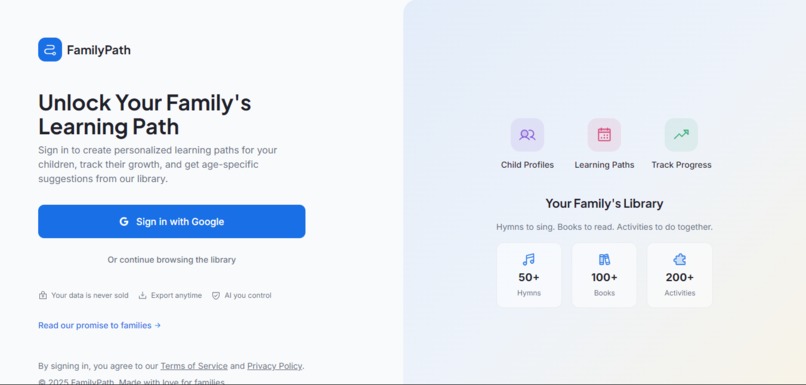
Auth
-
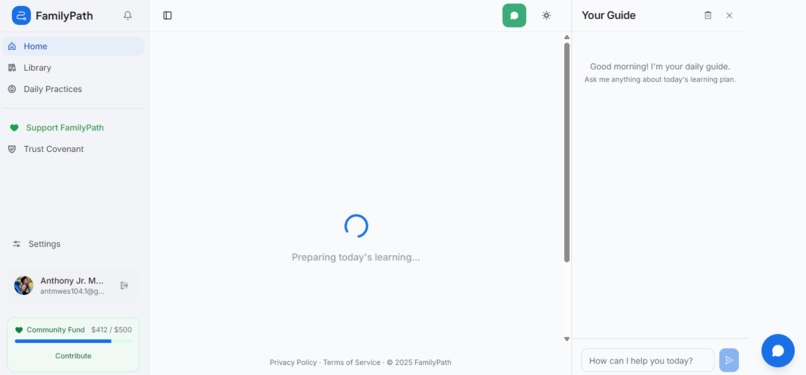
Home
-
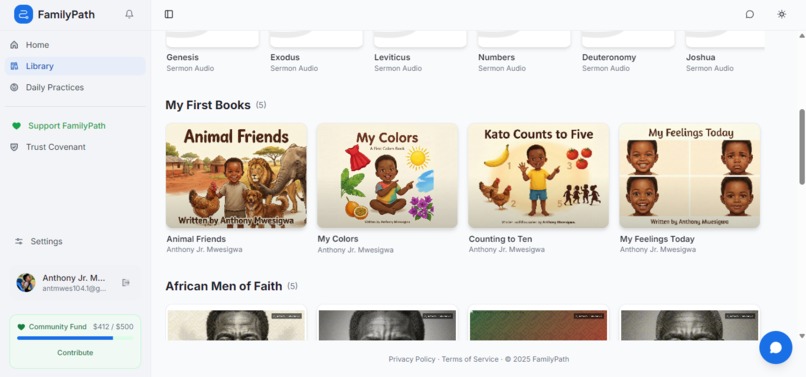
Library
Inspiration
Uganda needs education made available for homeschoolers. I set out to work with homeschooling families. This App will start out by making it possible for ages 0-6. Children's curriculum is expensive, yet book learning has changed because of AI.
What it does
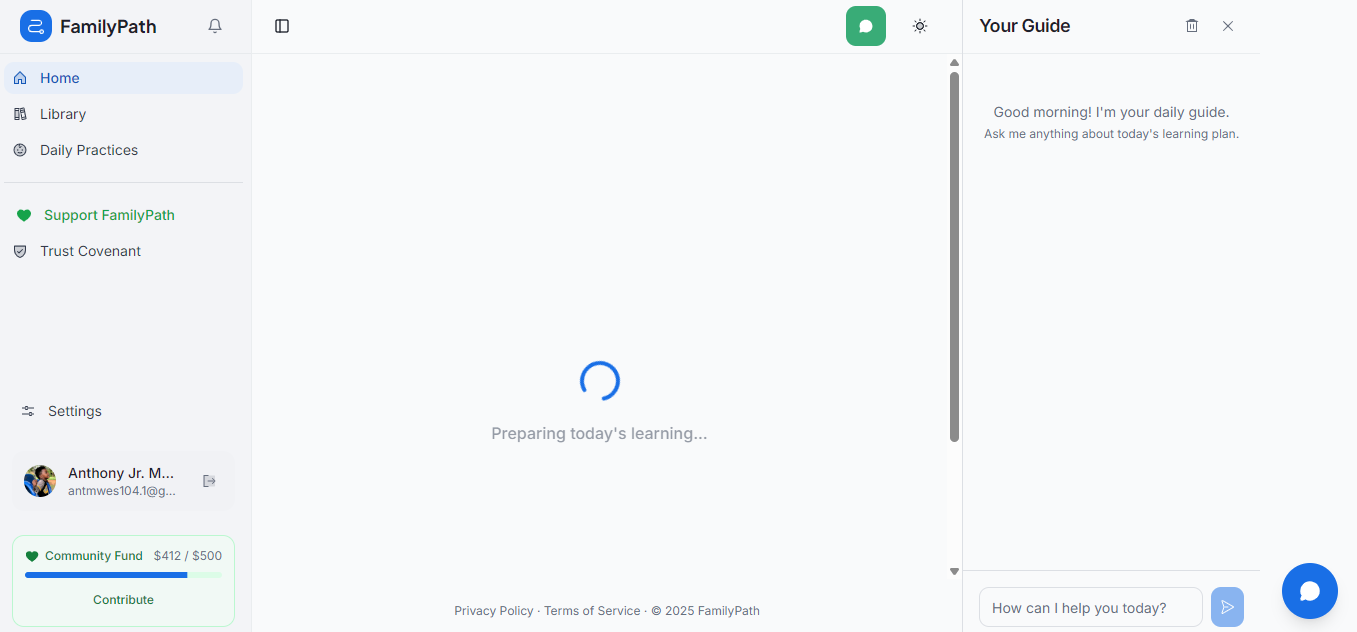
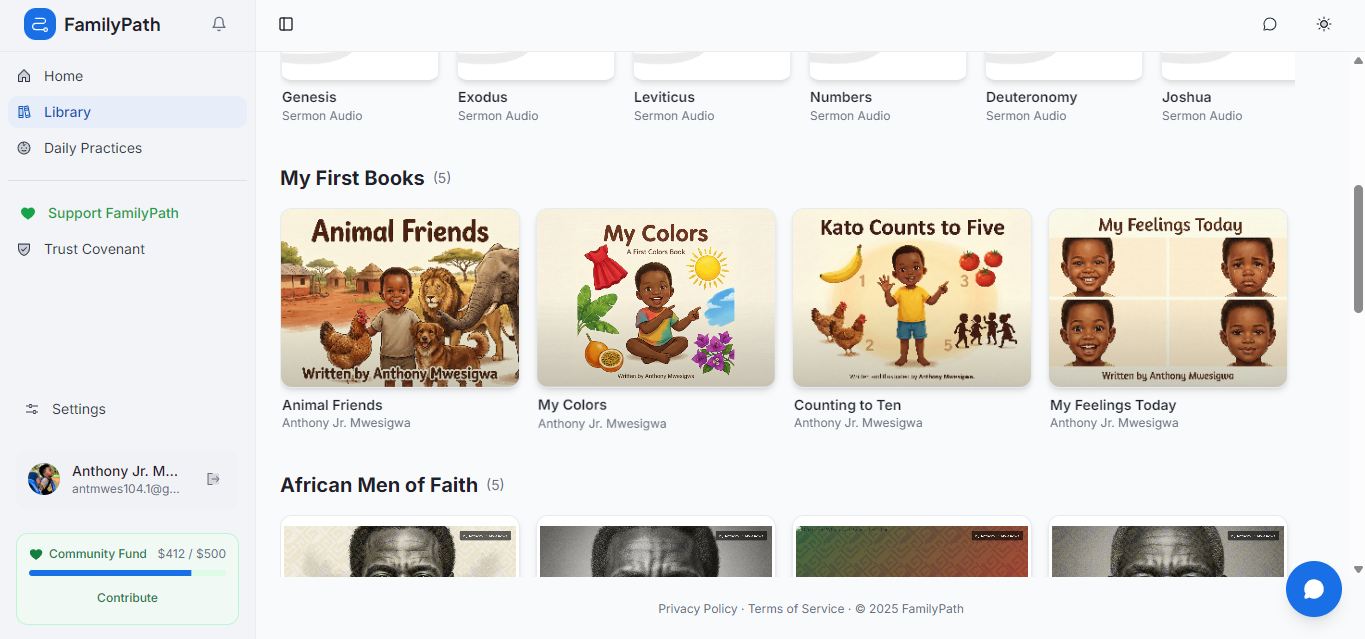
FamilyPath is a Living Curriculum Engine for Christian families. It replaces static PDF lesson plans with an AI-powered system that builds personalized 2-week Formation Arcs and delivers Daily Anchors — age-appropriate activities covering literacy, numeracy, formation, and motor skills — tailored to each child's developmental stage. Parents can chat with the engine to adapt on the fly ("James is sick today" → the plan adjusts instantly). It also serves as a curated library of 100+ hymns, picture books, catechism questions, and developmental activities that families can browse freely without any structure required.
How we built it
- Frontend: React + TypeScript + Tailwind CSS + Phosphor Icons, with Framer Motion for animations and Zustand for state management.
- Backend: Cloudflare Workers using the Hono.js framework, with Cloudflare D1 (SQLite) for the database and R2 for book/media storage.
- AI Engine: Google Gemini (Flash) powers all reasoning — generating Formation Arcs, Daily Anchors, and adaptive chat responses through a unified "One Engine, One Voice" architecture routed via Cloudflare AI Gateway.
- Curriculum Spine: An 832-row structured database covering 4 subjects × 4 developmental stages × 52 weeks, serving as the authoritative roadmap the AI draws from.
Challenges we ran into
- Payload mismatches between frontend and backend (sending
datewhen the API expectedanchorId) caused silent failures that were hard to trace. - Route scoping issues — an admin middleware mounted at the root path accidentally blocked all authenticated API requests with 403 errors.
- Edge infrastructure quirks — relative fetch URLs hit the Pages domain instead of the Worker, causing 405 errors. D1 tables not existing at runtime caused 500s on progress saves.
- Balancing AI sophistication with parent-friendly UX — hiding the "beast engine" behind a warm, calm interface without exposing technical jargon like "anchors" or "arcs" to users.
Accomplishments that we're proud of
- The "Invisible Registrar" — an automated advancement system that silently moves families through the curriculum spine as they complete arcs, including automatic stage transitions (Seedling → Sprout → Sapling → Tree).
- A context-aware AI that incorporates weather, parent mood, and available materials into daily suggestions.
- The dual-mode design — casual users get a beautiful library to browse; active users get a structured daily rhythm — same app, no complexity forced on anyone.
- Keeping the platform completely free, with sign-in framed as an invitation rather than a gate.
What we learned
- Formation before knowledge — the pedagogical research behind building "study readiness" through character and habits before formal academics deeply shaped our architecture.
- Deep reasoning models shine when given structured context (the curriculum spine) rather than open-ended generation — the spine grounds the AI and prevents hallucination.
- Edge-first architecture (Cloudflare Workers + D1) delivers remarkable performance but demands careful attention to deployment sequencing and table migrations.
- The best UX hides complexity — parents don't need to know about formation arcs or anchor generation; they just need today's plan to feel right.
What's next for The FamilyPath App
- Feedback loops — using parent ratings and skip patterns to improve future arc generation automatically.
- Portfolio system — capturing photos, audio, and notes as evidence of growth, mapped to child development milestones rather than grades.
- Multi-child intelligence — better simultaneous activity suggestions for families with children at different developmental stages.
- Expanded curriculum spine — adding African History, science exploration, and language arts as new subject tracks.
- Community library contributions — allowing families to share book recommendations and activity ideas back into the platform.
Built With
- cloudflare
- d1
- hono.js
- r2
- react
- tailwind
- typescript

Log in or sign up for Devpost to join the conversation.