-
the explainer
-
explained
-
-
The Explainer
Ask anything. Learn it from the artists you love.
Inspiration Students often struggle with a topic because the textbook doesn’t sound like anything they care about. Music is what many of us already know by heart. The Explainer uses a student’s own taste to turn a hard topic into a lesson that sounds like it comes from their favorite artists.
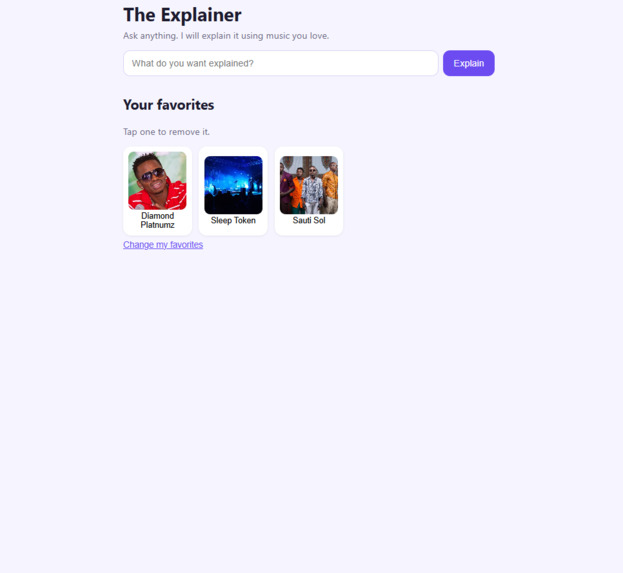
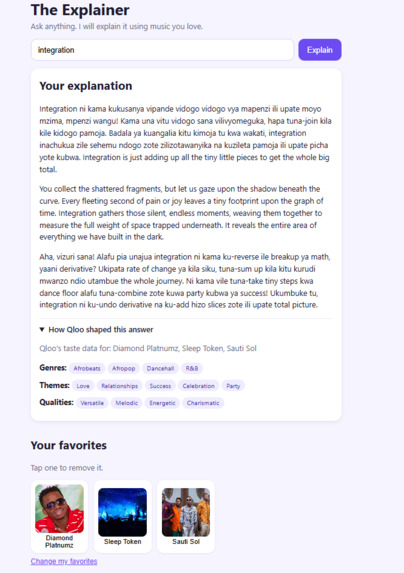
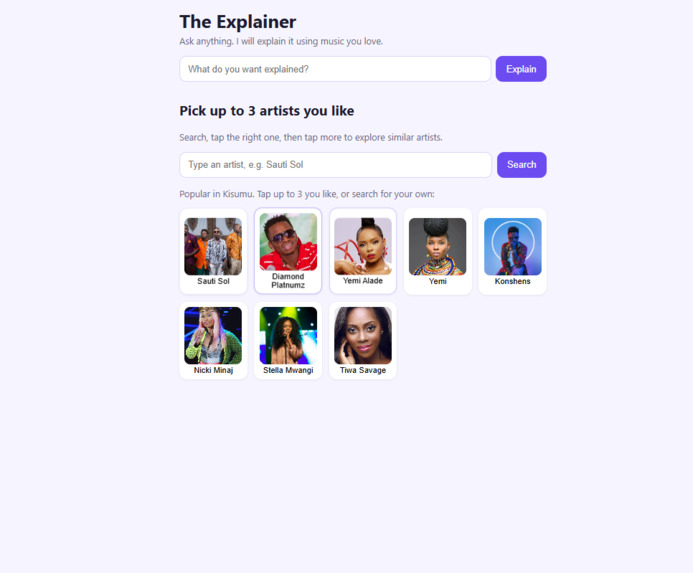
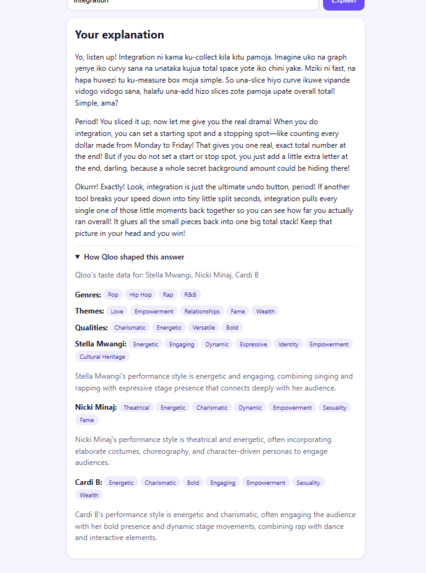
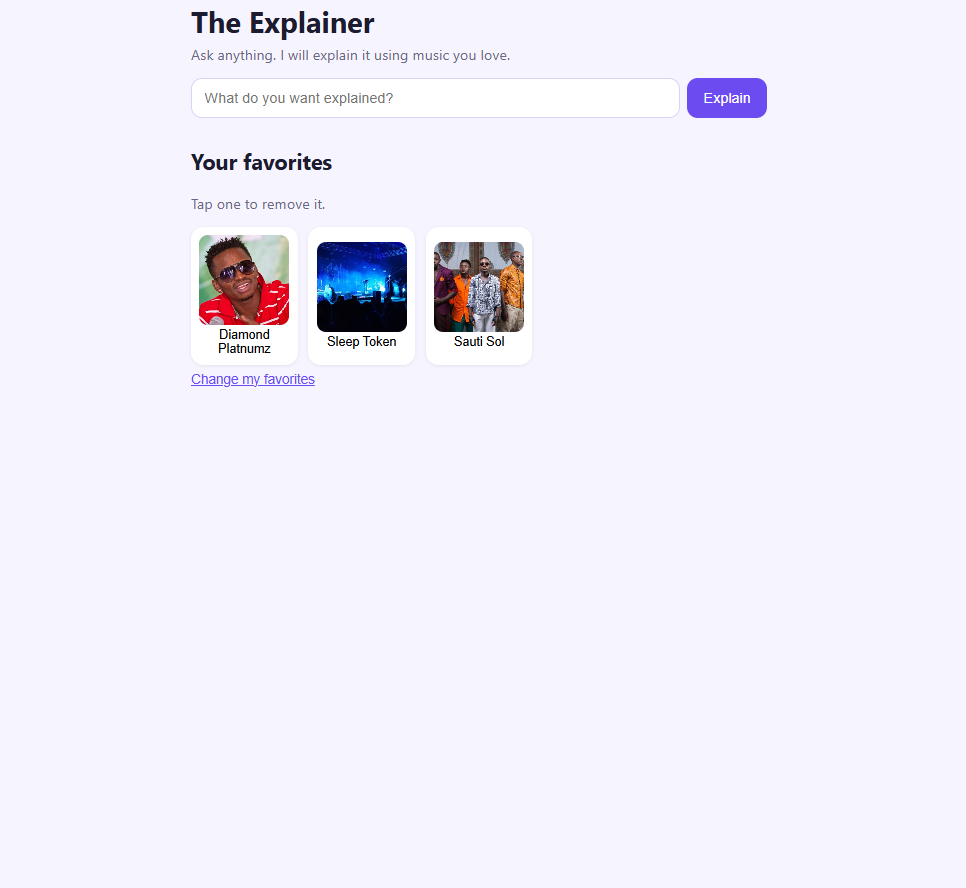
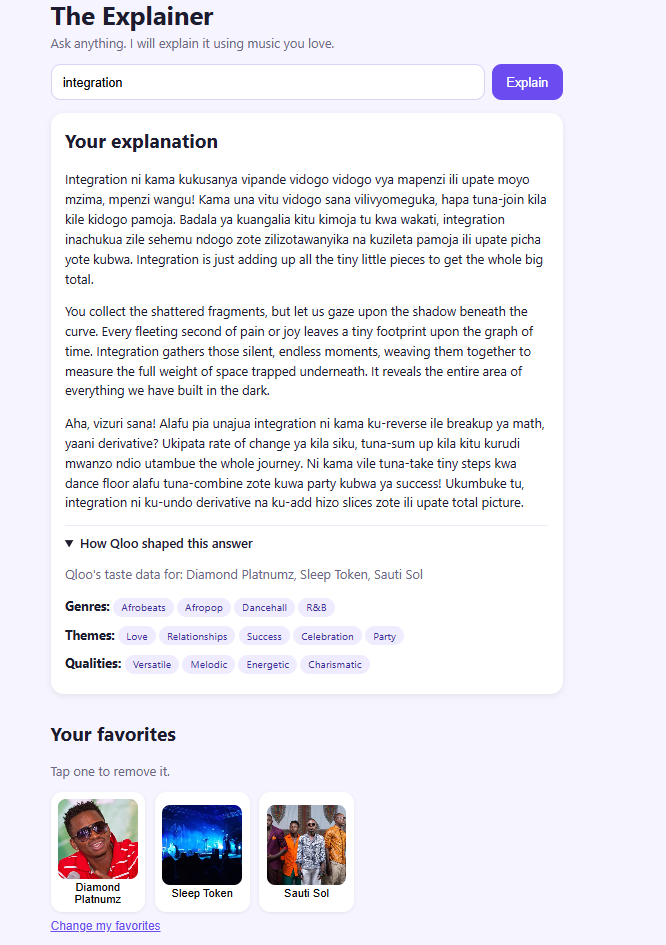
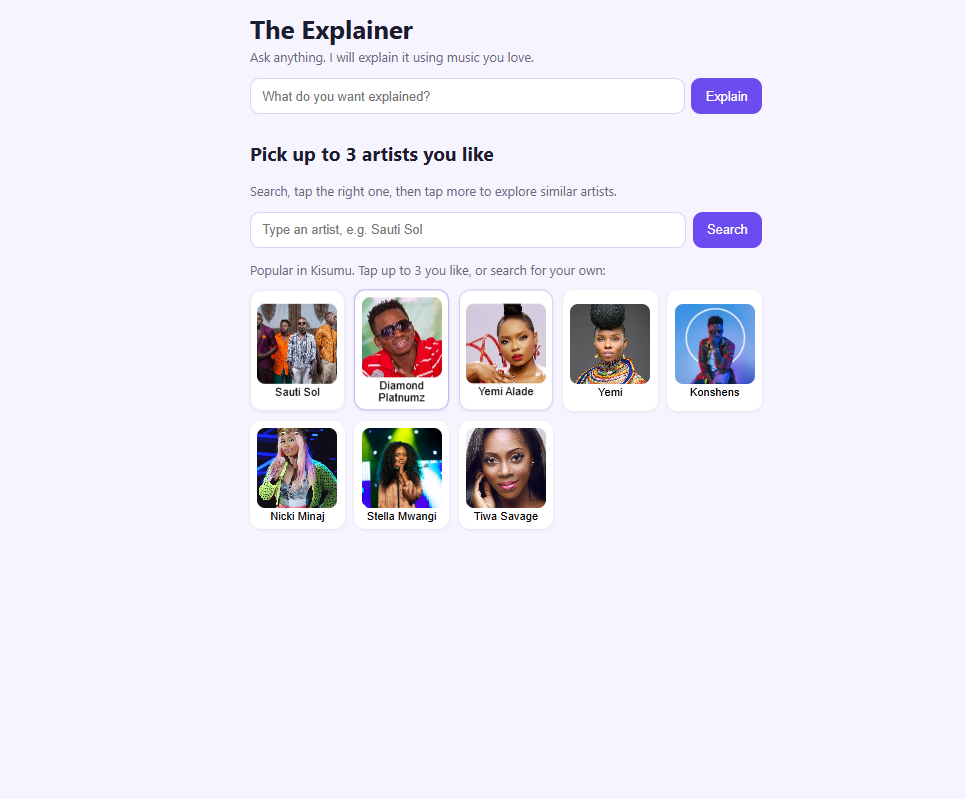
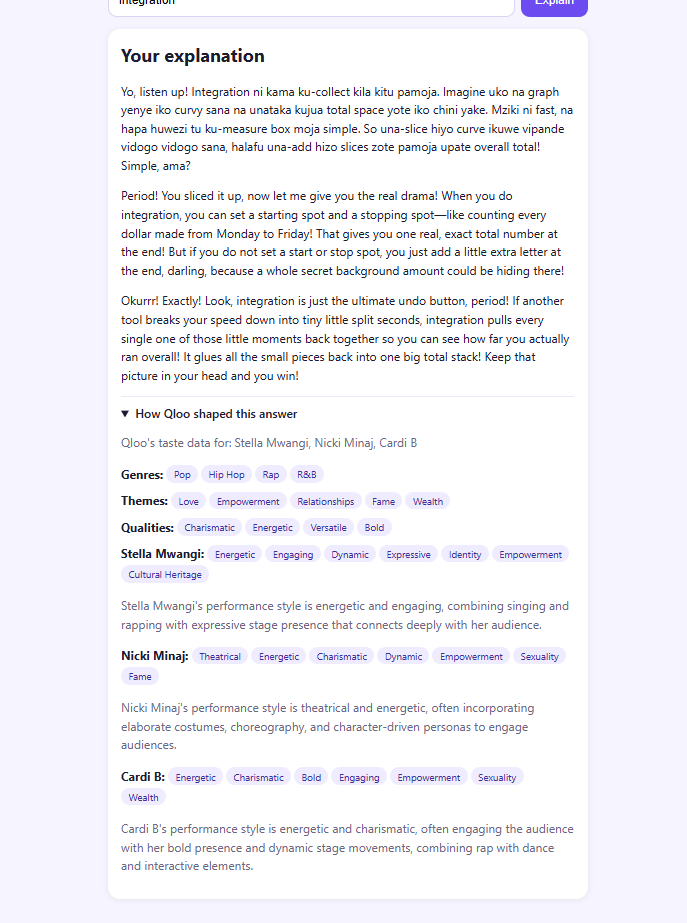
What it does When you open the app, it suggests popular artists near you, using only your country and city, never your exact location. You pick up to three favorites (or search for your own, with results as you type), then ask anything. The artists teach it together in one short scene: the first opens the lesson, each next one reacts and adds something new, and the last wraps it up. Each voice follows that artist’s own style and language mix, from Swahili and Sheng to French rap slang to dark, poetic English, without their name being said, so you recognize them by how they sound. Under every answer, a panel shows what Qloo contributed: the overall genres, themes and qualities, and a block for each artist with the style words and stage-style description Qloo has for them. Favorites are saved in your browser, so you only pick once.
How we built it
Qloo is the data behind every step. Its location-based artist insights suggest popular artists near the visitor. Its search and similar-artist insights power the picker. For each favorite we fetch Qloo’s full artist entry (genres, lyrical themes, stage style, style words and fan words) and keep each artist’s data separate, so one artist’s voice isn’t mixed with another’s. Gemini turns the question and those per-artist profiles into the lesson. The instructions ask for everyday words, the language mix each artist is known for, and a new idea in every turn, and tell Gemini to trust Qloo’s description of each artist’s style. The site is plain HTML with small serverless functions on Vercel. Vercel provides the visitor’s country and city, and the app doesn’t store or use the IP address. API keys stay in Vercel’s environment variables, never in the code.
Challenges Getting AI voices to sound like real people was the hardest part. Early answers read like a translated textbook, with formal vocabulary and too much English. We fixed that with rules for casual speech and natural language mixing, and by feeding Gemini Qloo’s own description of each artist’s style instead of relying on its memory. We also handled slow free-tier responses with timeouts and a backup model, and we tested a read-aloud voice, then dropped it because its Swahili didn’t sound natural.
What we learned Qloo’s data goes beyond “people who like X also like Y”. Each artist’s entry carries stage style and audience words, and location signals change who gets suggested, so a student in Nairobi and one in Chicago start from different artists. That turned the lesson from generic to personal.
What’s next Adding movies and other taste sources, a “same question without Qloo” button so anyone can compare, and a read-aloud voice once speech models handle Swahili and Sheng well.
Notes for judges Open the link and artists popular near you appear, or search for your own. Pick up to 3, then ask anything. On first visit the app reads your country and city from the request (not your IP address or exact location) to suggest artists. Artist images come from Qloo’s API and are shown only for this hackathon. Suggestions come straight from Qloo and can occasionally include entries that aren’t musicians. The writing is AI-generated in the style of each artist, not their real words, and may make language mistakes. Questions are sent to Google’s Gemini free tier, where prompts may be used by Google.
Links: live demo: https://the-explainer-six.vercel.app · repo:https://github.com/warutumomburucyrus-prog/The-Explainer/tree/main
Built With
- geminiapi
- html
- javascript
- qlooapi
- vercel

Log in or sign up for Devpost to join the conversation.