-
-
Cover
Inspiration
THE EXCEPTIONS was inspired by the tension between discipline and rebellion in creative work. In music, rules are not the enemy: rhythm, structure, genre, and theory give a creator a language. But if a system only follows rules perfectly, the result can become correct without having a voice. Our project asks what happens when an AI learns the rules first, then bends one meaningful rule and turns that exception into a new musical identity.
What it does
Our AI band, THE EXCEPTIONS, performs a one-minute anthem called ONE NOTE OUT, built around the theme THE GRAMMAR OF REBELLION. The track begins as a rigid musical grid: muted piano, dry metronomic percussion, and restrained vocals create the feeling of a precise conservatory exercise. Then one rhythmic anomaly enters. Instead of treating it as an error, the arrangement integrates it into a syncopated electronic bass groove, wide cinematic synths, live-style drums, and a final mixed group vocal release.
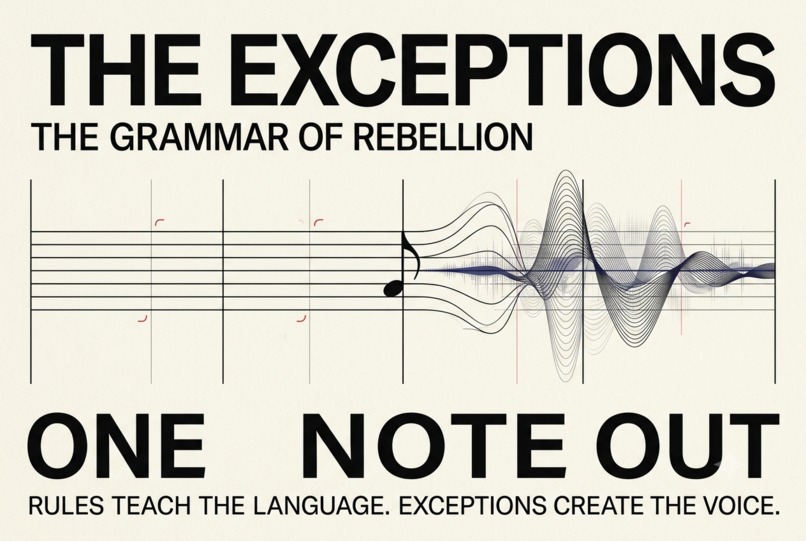
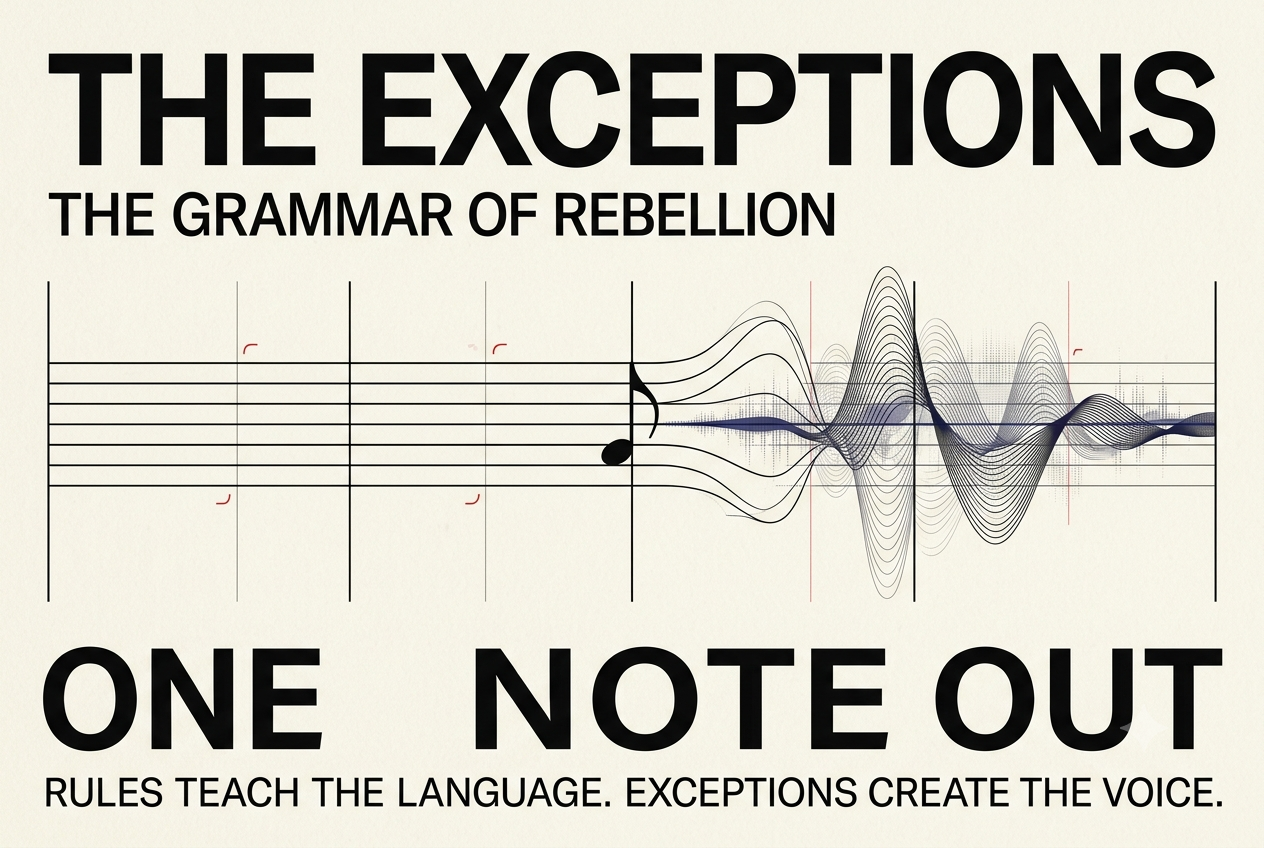
The poster expresses the same idea visually: a strict music-theory score is interrupted by one note crossing the barline, transforming into generative linework and reconnecting as a new musical structure.
How we built it
We used a creation method called LEARN → MAP → BEND → TEST → REWRITE.
First, we used Gemini to define the artistic thesis, band identity, emotional arc, and creative constraints. Then we mapped the theme into specific musical variables: a rigid opening, an intentional rhythmic displacement, a syncopated groove, and a final group-vocal release. We used Lyria to generate and test musical versions, selecting the one where the anomaly felt expressive rather than chaotic. Finally, we used Nano Banana to design a visual identity that connects academic music theory with AI-generated transformation.
Challenges
The biggest challenge was learning how to work within the limits of generative music. If the prompt was too vague, the track became generic. If it was too complex, the model sometimes focused on the wrong details or repeated lyrics too much. We solved this by simplifying the concept into one strong musical event: a single rhythmic exception that becomes the new groove.
For the visual design, the challenge was avoiding a cheap futuristic or neon AI look. We refined the poster toward a more editorial, museum-poster style so the final image felt conceptual, polished, and connected to the band identity.
What we learned
We learned that AI music creation works best when human intention is specific but not overcontrolled. Instead of asking AI to magically create a song from a feeling, we built a workflow that translated theme, emotion, and music theory into a practical creative brief. The result shows our central idea: rules teach the language, but exceptions create the voice.
Built With
- gemini
- lyria
- nanobanana

Log in or sign up for Devpost to join the conversation.