-
-
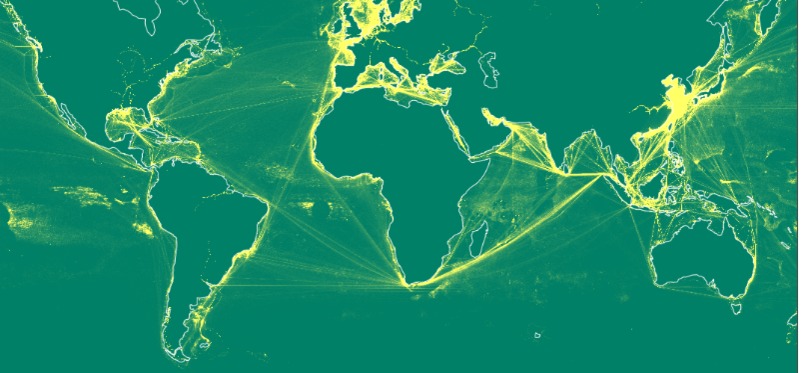
Vessel traffic patterns world wide
-
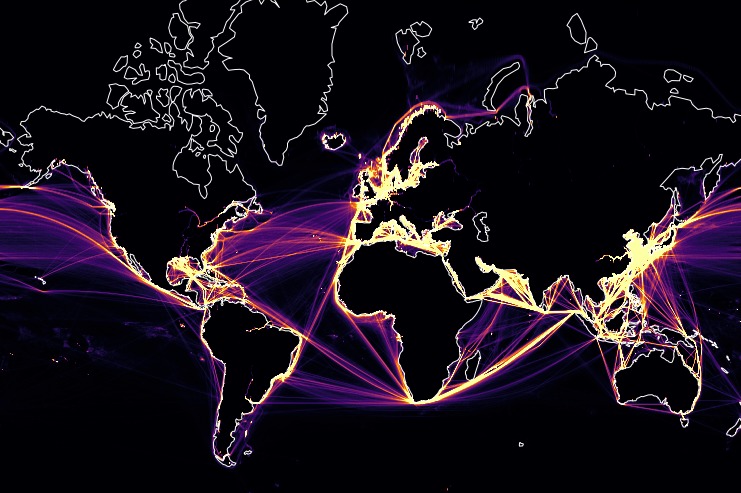
global warming emissions world wide
-
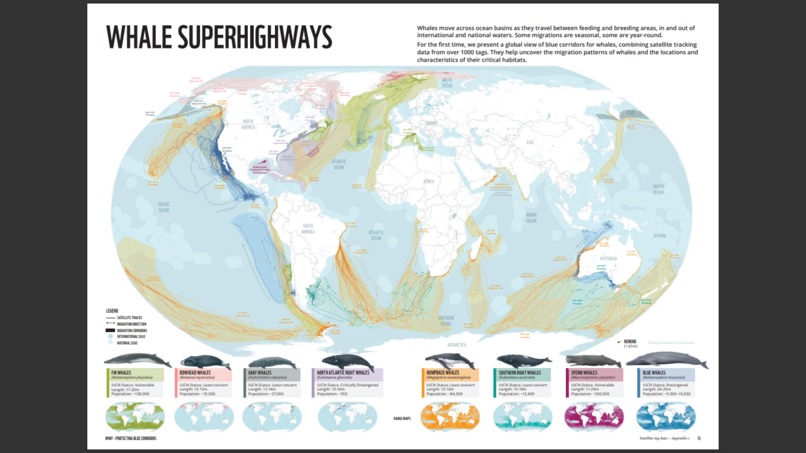
Blue whale super highway data
-
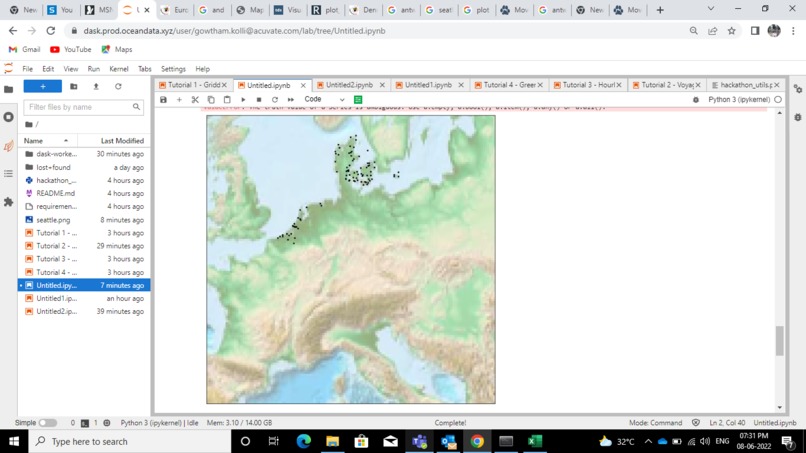
ports plotted on North Europe region


Inspiration We chose to work on the first challenge, which was by Hub Ocean and Cognite. This challenge primarily focuses on Maritime transportation and its impact on marine life. To quote WWF, Whales are at the top of the food chain and have an important role in the overall health of the marine environment. Whales play a significant role in capturing carbon from the atmosphere; each great whale sequesters an estimated 33 tons of CO2 on average, thus playing their part in the fight against climate change.
Unfortunately, their large size and mythical aura does not protect them; six out of the 13 great whale species are classified as endangered or vulnerable, even after decades of protection. An estimated minimum of 300,000 whales and dolphins are killed each year as a result of fisheries bycatch, while others succumb to a myriad of threats including shipping and habitat loss. With whales having such a massive impact on world climate, our team agreed that this challenge was the best to approach, considering the urgency of saving marine life.
Our project plots the major ports where vessel traffic and greenhouse gas emissions are significantly high. We concluded that the regions thus identified were the most probable regions for ship strikes. If routes between such routes are equal or less than 60km, those routes can be electrified. Electrification would be a cheaper alternative which has a much reduced interference with marine life and releases significantly lesser chemical waste into water bodies.
Azure Event bridge, Azure data factory, Azure cognitive services, Azure Dashboard (Power BI) and Azure Data bricks were utilized by our team. We used the Ocean Data Connector for implementing our solution.
Our team was not very familiar with geospatial analysis. Furthermore, we ran into issues trying to analyze ship speeds, and data on marine life was very vast and it took time to narrow it down according to our requirements
We were successful in identifying ports where probability of ship strikes is higher
This challenge taught us the gravity and urgency of this issue and how marine life plays a much more important role in fighting climate change than we could have ever imagined. Team Acuvate only hopes for a significant increase in whale population for a better and brighter future for the world.

Log in or sign up for Devpost to join the conversation.