








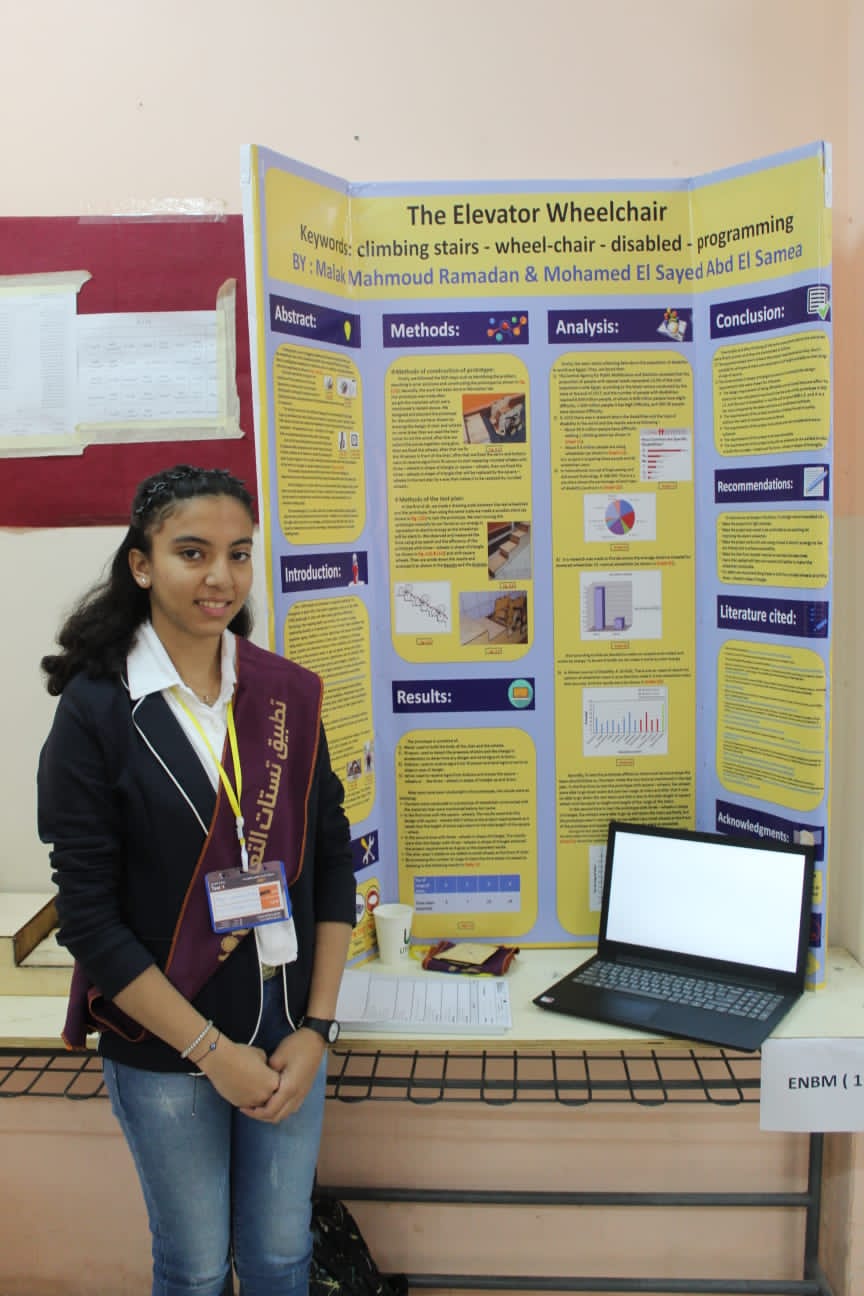


Inspiration
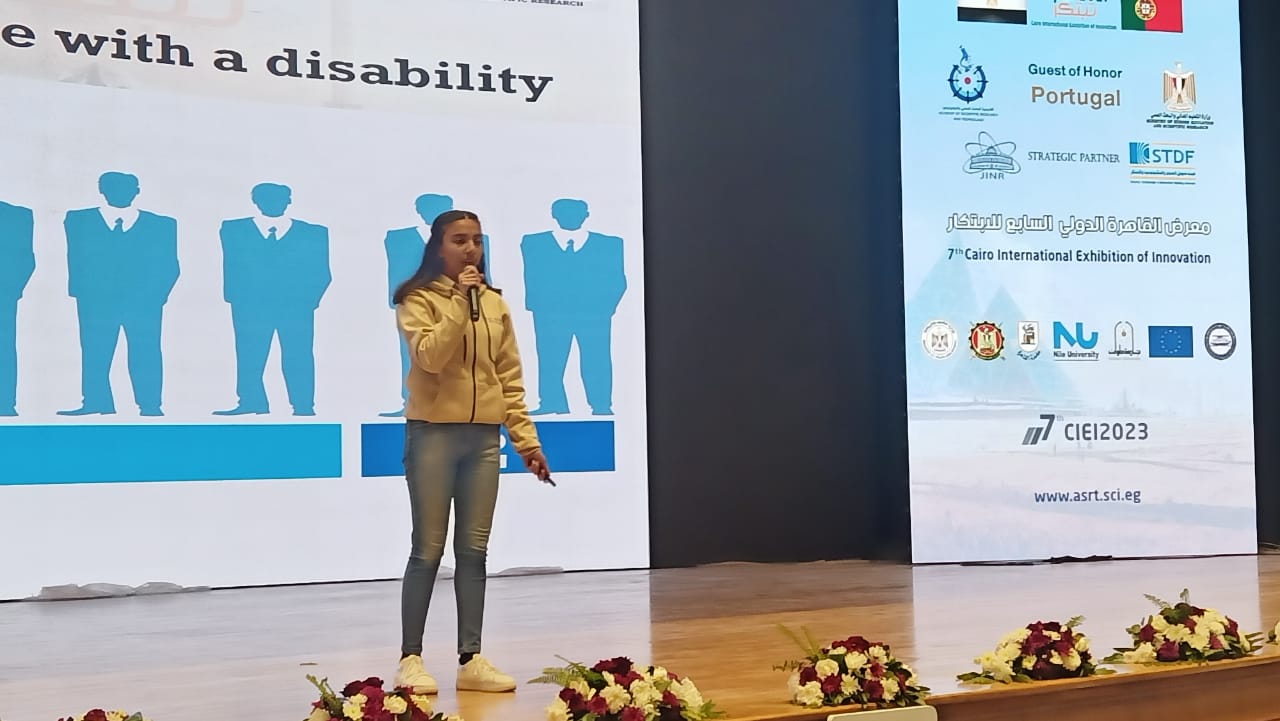
Last year, when I was in the ninth grade, I had participated in one of the competitions. During the competition, my feet swelled for an unknown reason until now. Despite this, I completed the competition to the end and got second place at the level of the Republic. When I returned home, I insisted on traveling to the other competition, even though my feet were still swollen. I got a special award from The Yale Science & Engineering Association, and second place nationwide in both the Young Innovator and Ideal Student competitions. While my feet were swollen, I was transferred to a hospital, and I sat on a wheelchair, and I saw how difficult it is to go up and down stairs using a wheelchair. Therefore, when I returned home, I made a new design for a wheelchair that has the ability to climb and descend stairs without the need for companion, at a low cost, environmentally friendly, sustainable and easy to use. And registered a patent application for it. Over 1 billion people are estimated to experience disability. This corresponds to about 15% of the world's population according to “World Health Organization” (WHO). About 2 of 10 adults live with a disability. Climbing the stairs is one of the biggest problems for wheelchair users, and has a big impact on their mental health, so we decided to solve this problem using scientific research and Engineering Design Processor “EDP” steps.
What it does
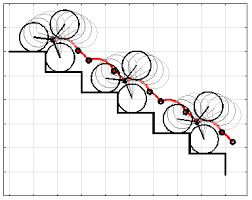
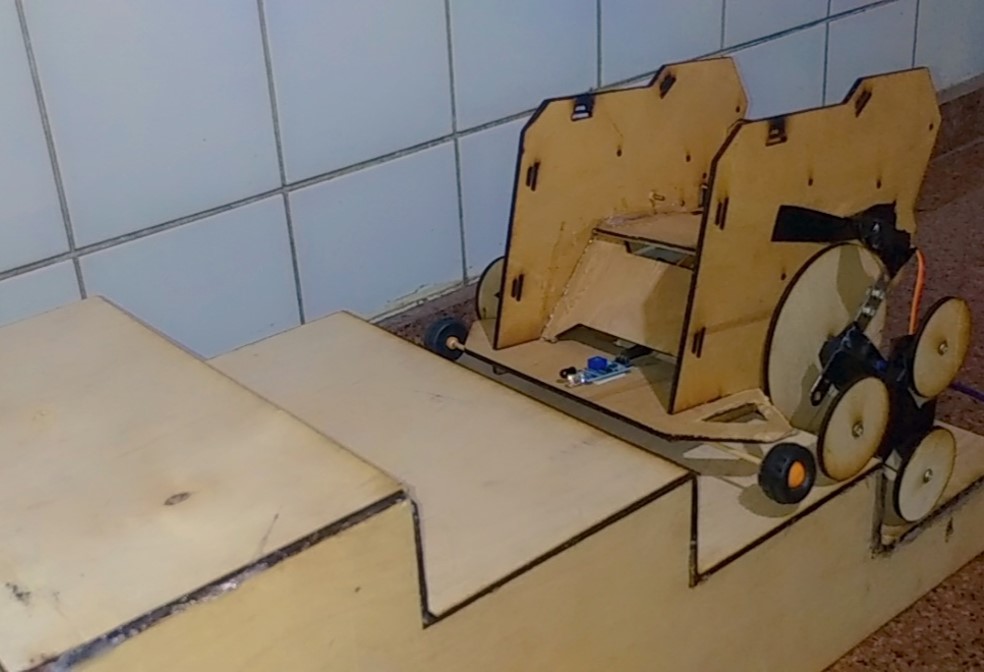
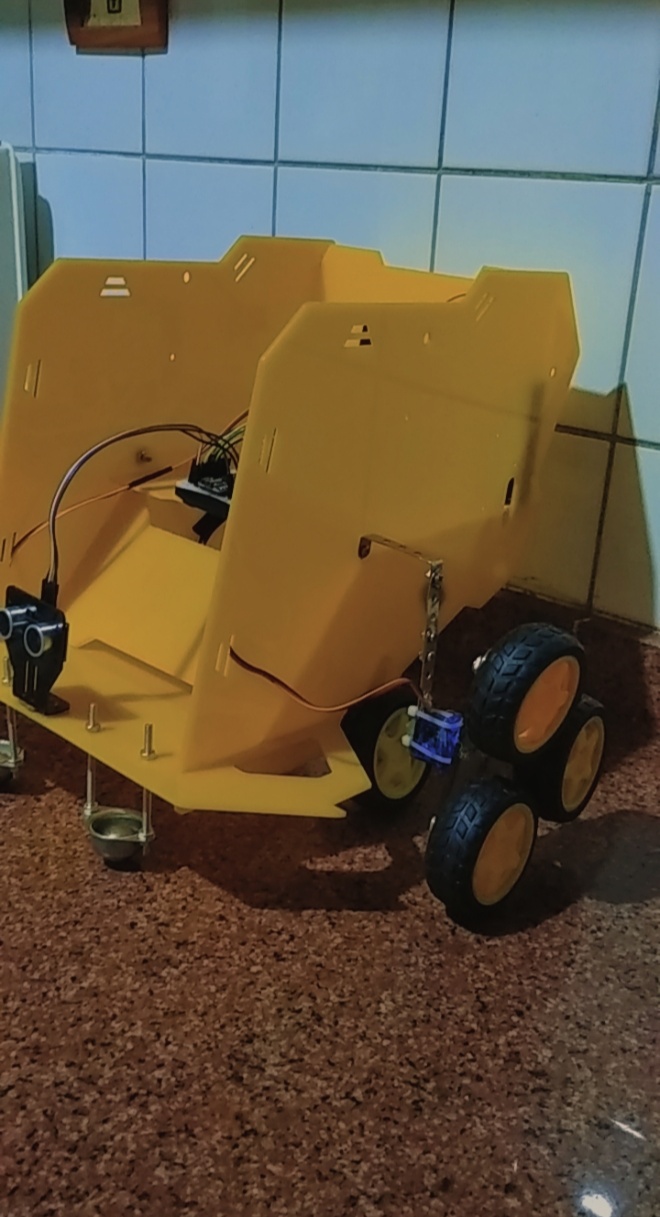
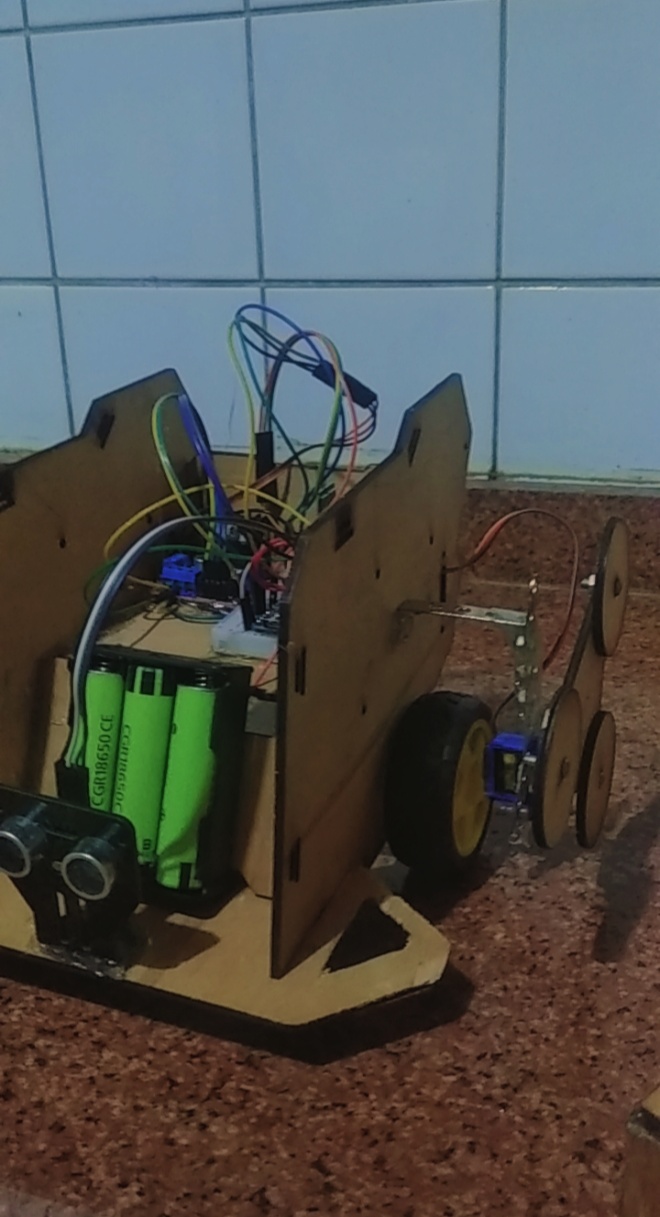
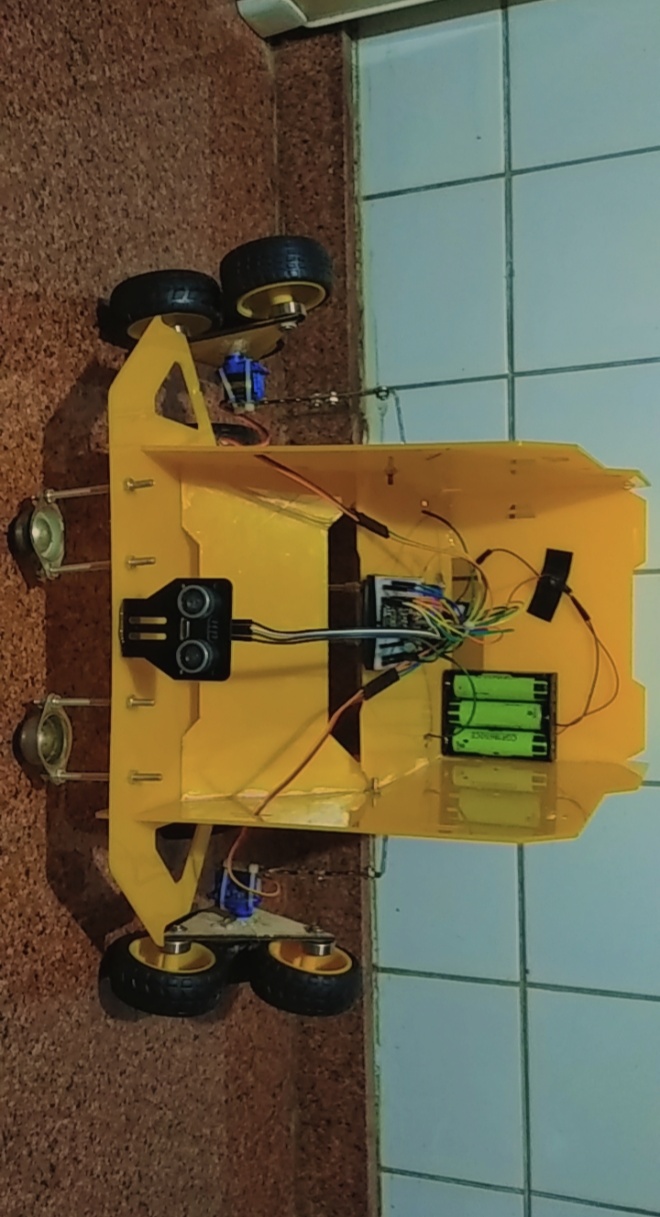
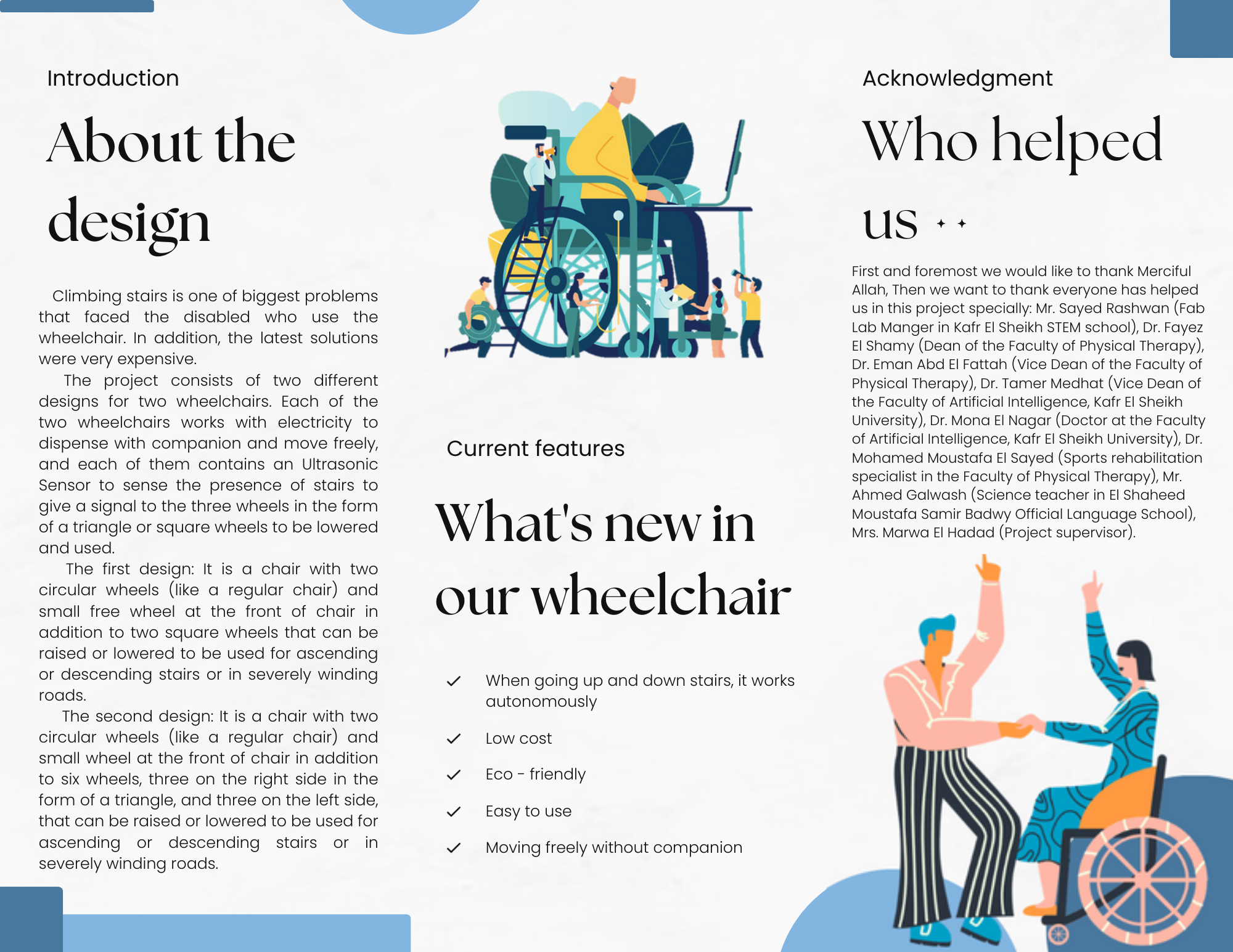
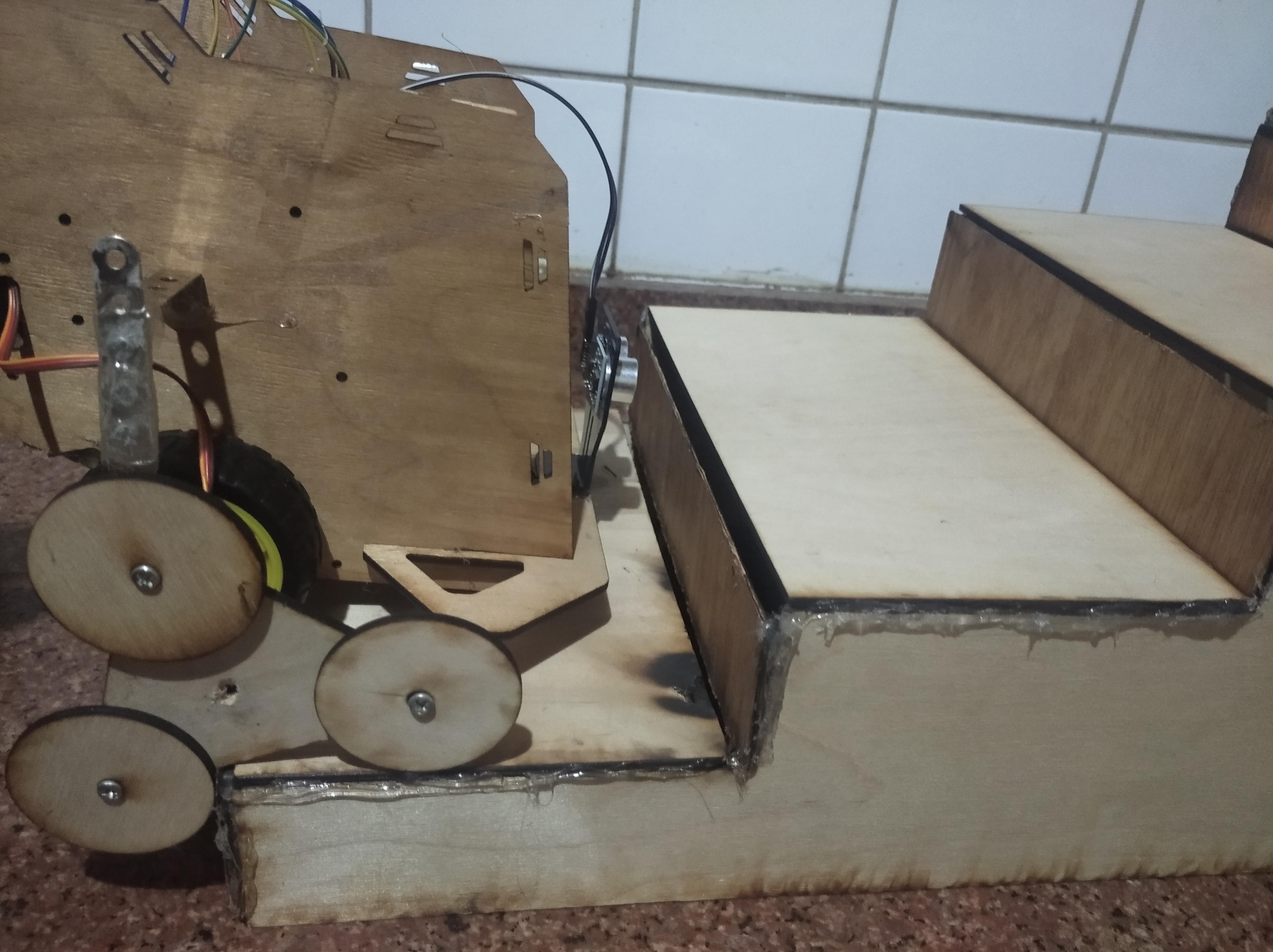
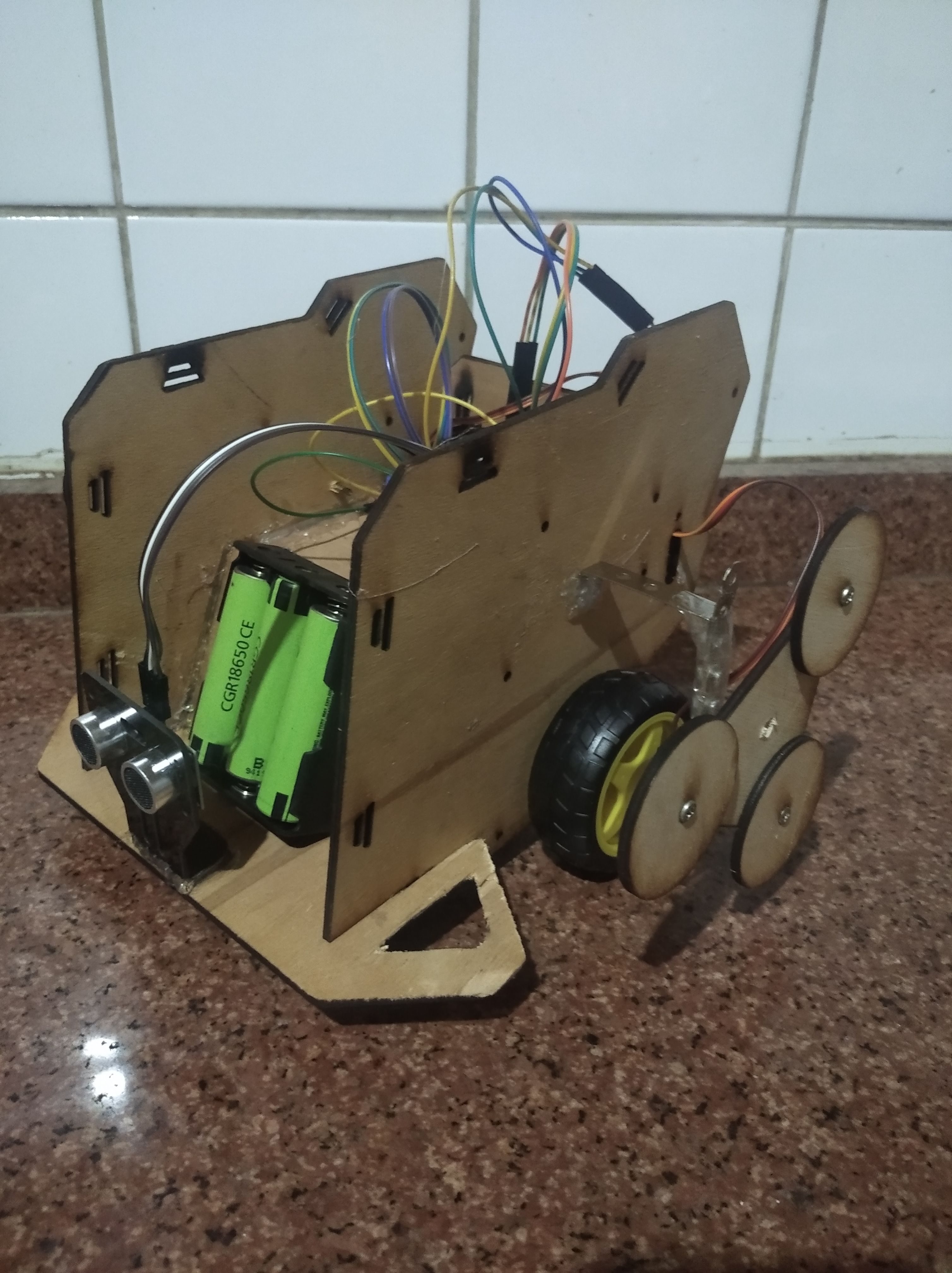
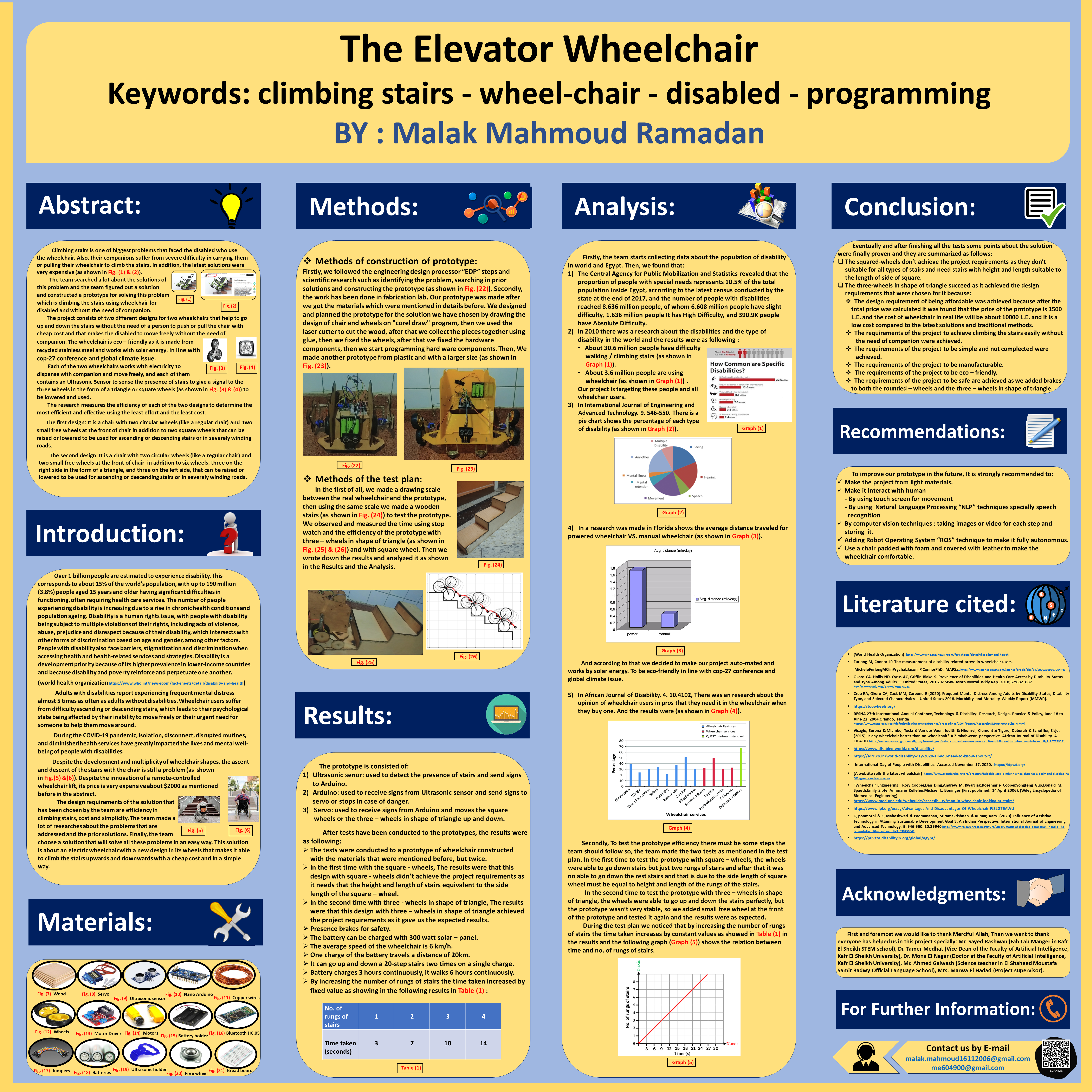
A new design of new wheelchair to go up and down the stairs without the need of companion. It consists of two circular wheels (like a regular chair) and two small free wheels at the front of chair in addition to six wheels ( three on the right side in the form of a triangle, and three on the left side ) that can be raised or lowered to be used for ascending or descending stairs or in severely winding roads. It contains an Ultrasonic Sensor for sensing the presence of stairs and gives a signal to the circular wheels to replace them with the three wheels in the form of a triangle. The project is made of recycled stainless steel and works by solar energy to be eco-friendly and achieving sustainability. In line with the global climate issue and the COP 27 conference.
How we built it
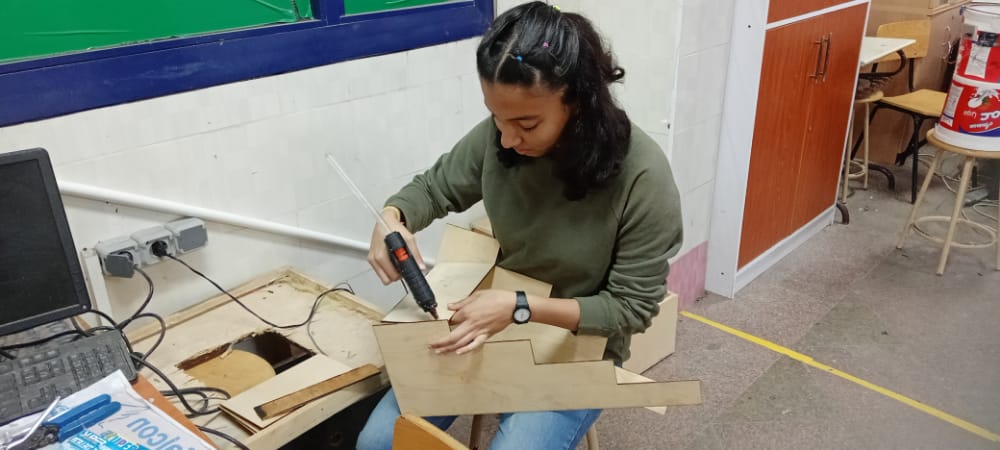
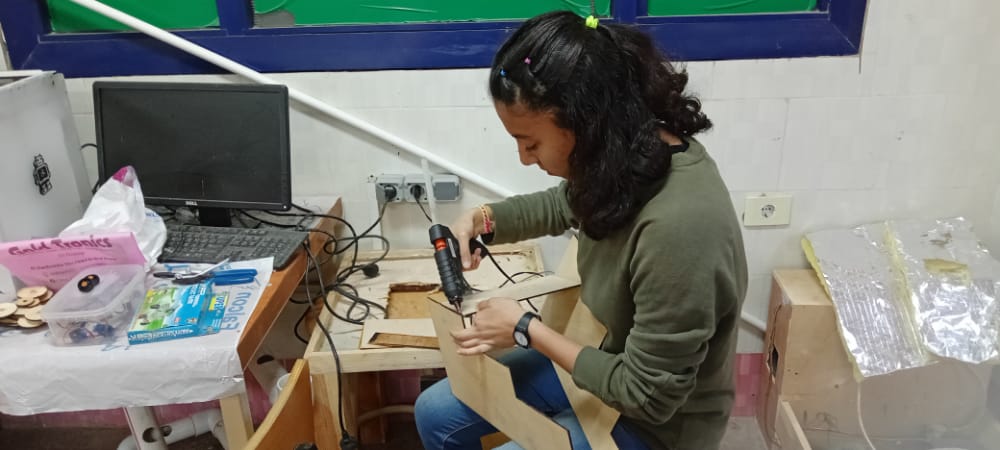
Methods of construction of prototype Firstly, we followed the engineering design processor “EDP” steps and scientific research such as identifying the problem, searching in prior solutions and constructing the prototype. Secondly, the work has been done in fabrication lab. Our prototype was made after we got the materials which were mentioned in details before. We designed and planned the prototype for the solution we have chosen by drawing the design of chair and wheels on "corel draw" program, then we used the laser cutter to cut the wood, after that we collect the pieces together using glue, then we fixed the wheels, after that we fixed the hardware components, then we start programming hard ware components. Then, We made another prototype from plastic and with a larger size.
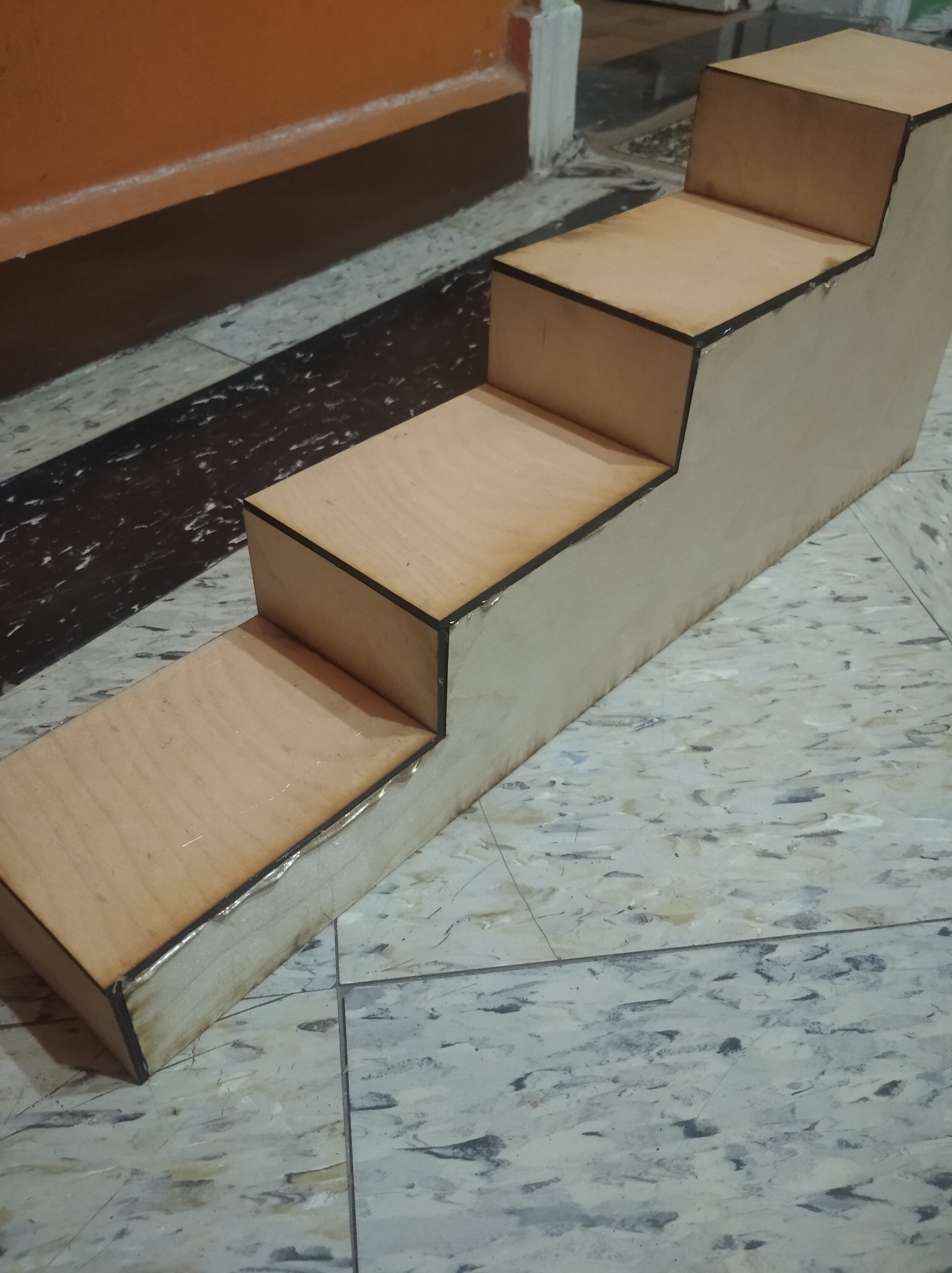
Methods of the test plan In the first of all, we made a drawing scale between the real wheelchair and the prototype, then using the same scale we made a wooden stairs to test the prototype. We observed and measured the time using stop watch and the efficiency of the prototype with three – wheels in shape of triangle and with square wheels. Then we wrote down the results and analyzed it.
Challenges we ran into
1) The inability of wheelchair users to climb the stairs on their own 2) The price of the latest wheelchair that climbs the stairs is 2000 dollars, which is equivalent to about 70000 Egyptian pounds 3) Electric wheelchairs aren't eco-friendly 4) A lot of effort and time is spent when trying to a companion of a wheelchair user to push him to climb the stairs. 5) The poor psychological state of wheelchair users, one of the most important reasons for which is their feeling of disability because they are unable to climb the stairs alone.
Accomplishments that we're proud of
I obtained with it:
- The second place in the world and representing the Arab Republic of Egypt in the final qualifiers at the Opportunity X STEM research conference & science fair 2023.
- Admission to “The Belt and Road Teenager Maker Camp” in partnership with CYSC of the Chinese Academy of Science and Technology, whose activities extend for 3 months in two phases, the first online and the second in a Chinese province in September 2023.
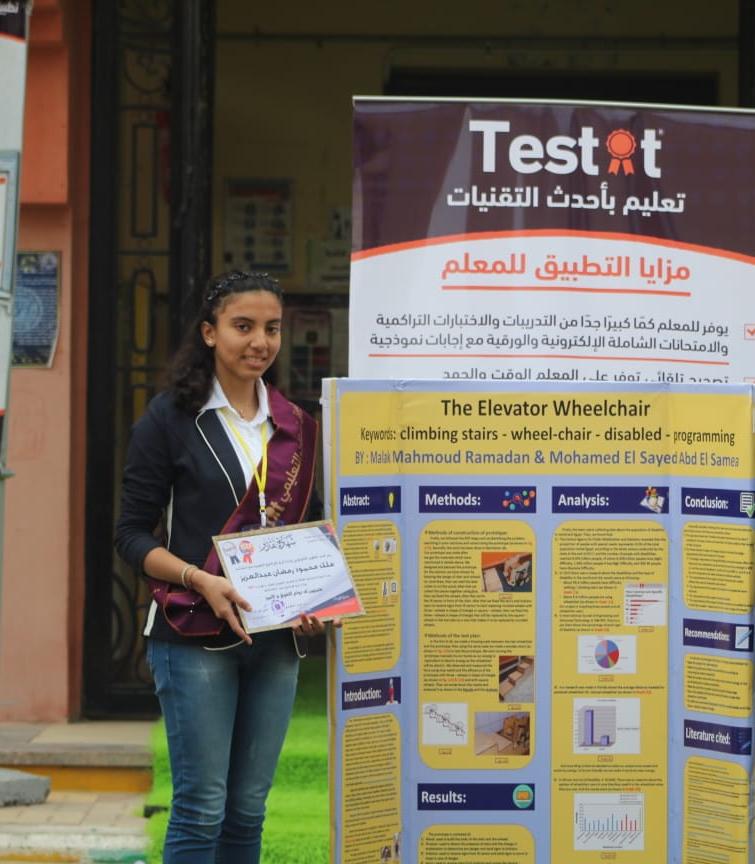
- The second place nationwide in the field of biomedical engineering in the Republican Exhibition of the ISEF competition in the Bibliotheca Alexandrina for the year 2023.
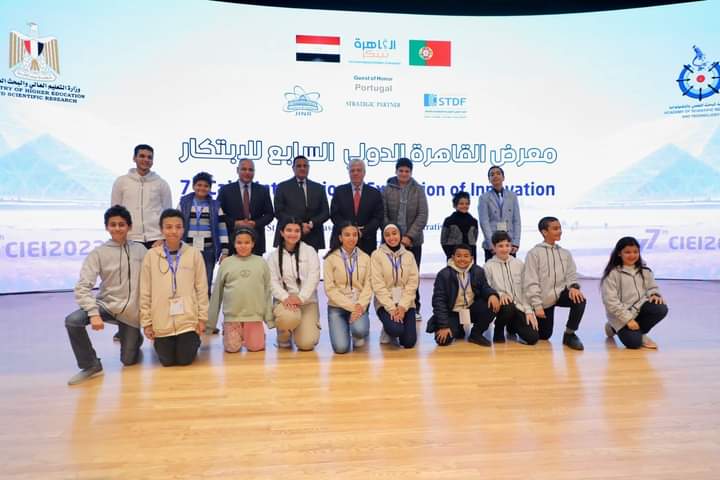
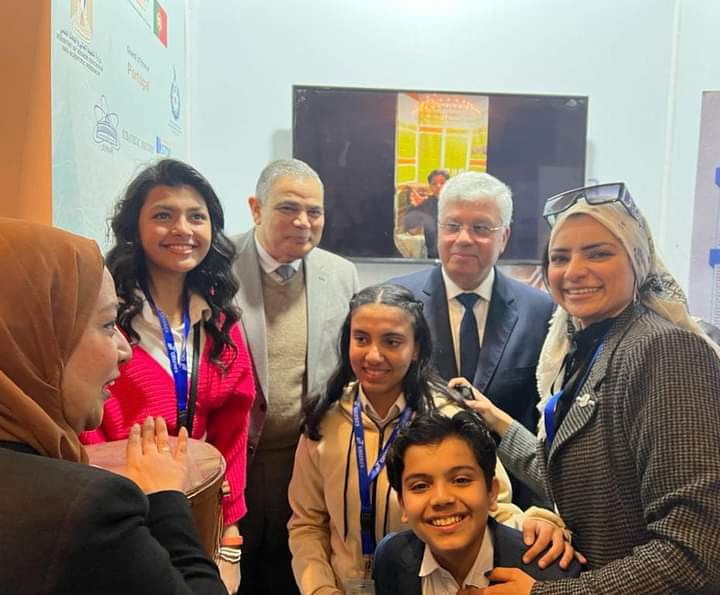
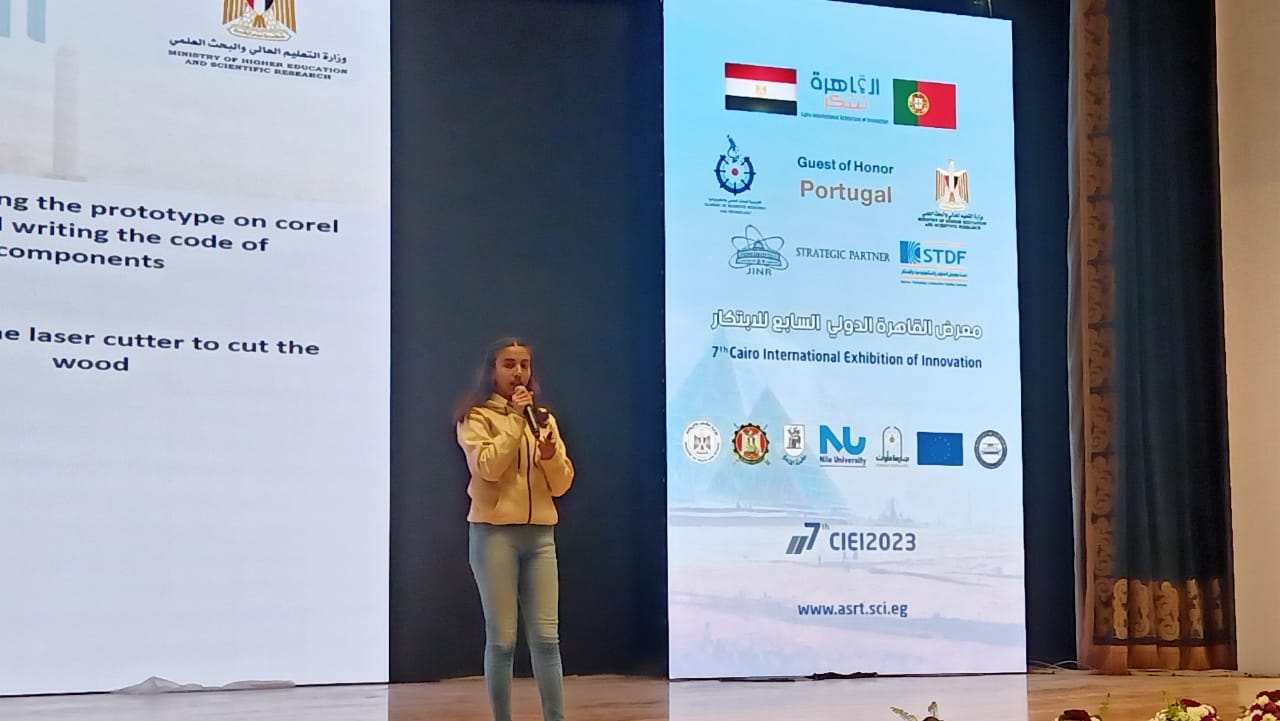
- I participated with it in the second national conference for students of the Children’s University as a presenter on stage in the presence of the President of the Academy of Scientific Research and Technology, the Minister of Higher Education and the Minister of Education in Portugal in 2023.
- The first place at the level of the Republic in children’s innovations at the Seventh Cairo International Exhibition for Innovation in the Administrative Capital in 2023.
- I participated with it in the sixth conference of the Faculty of Medicine at Ain Shams University as a speaker on stage during the conference in 2023.
What we learned
Eventually and after finishing all the tests some points about the solution were finally proven and they are summarized as follows:
- The squared-wheels don’t achieve the project requirements as they don’t suitable for all types of stairs and need stairs with height suitable to the length of side of square.
- The three-wheels in shape of triangle succeed as it achieved the design requirements that were chosen for it because:
- The design requirement of being affordable was achieved because after the total price was calculated it was found that the price of the prototype is 1500 L.E. and the cost of wheelchair in real life will be about 10000 L.E. and it is a low cost compared to the latest solutions and traditional methods.
- The project achieved 3 of sustainable development goals ( Good health and well-being/ Affordable and clean energy/ Industry, Innovation and Infrastructure)
- The requirements of the project to achieve climbing the stairs easily without the need of companion were achieved.
- The requirements of the project to be simple and not complected were achieved.
- The requirements of the project to be manufacturable.
- The requirements of the project to be eco – friendly.
- The requirements of the project to be safe are achieved as we added brakes to both the rounded – wheels and the three – wheels in shape of triangle.
What's next for The Elevator Wheelchair
Make the project from light materials. Make it Interact with human - By using touch screen for movement - By using Natural Language Processing “NLP” techniques specially speech recognition By computer vision techniques: taking images or video for each step and storing it. Adding Robot Operating System “ROS” technique to make it fully autonomous. Use a chair padded with foam and covered with leather to make the wheelchair comfortable. Adding GPS to send a message to the companion in case of emergency. Making an application connected to the wheelchair for doing different functions.


Log in or sign up for Devpost to join the conversation.