-
-
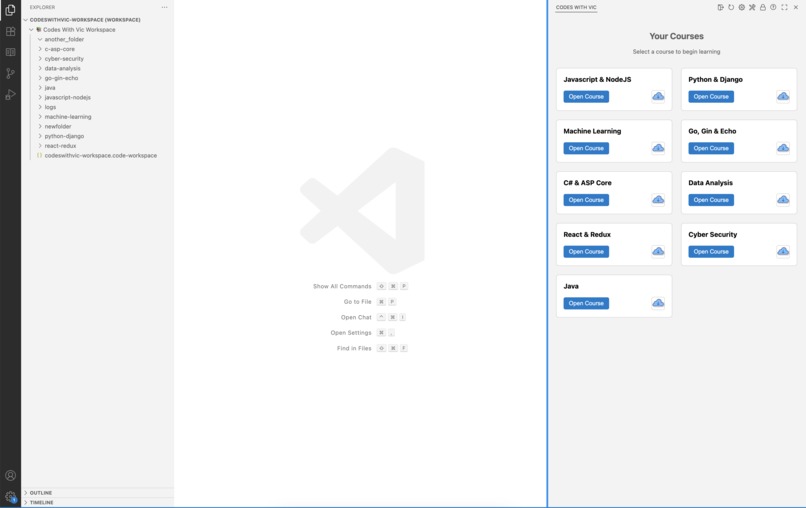
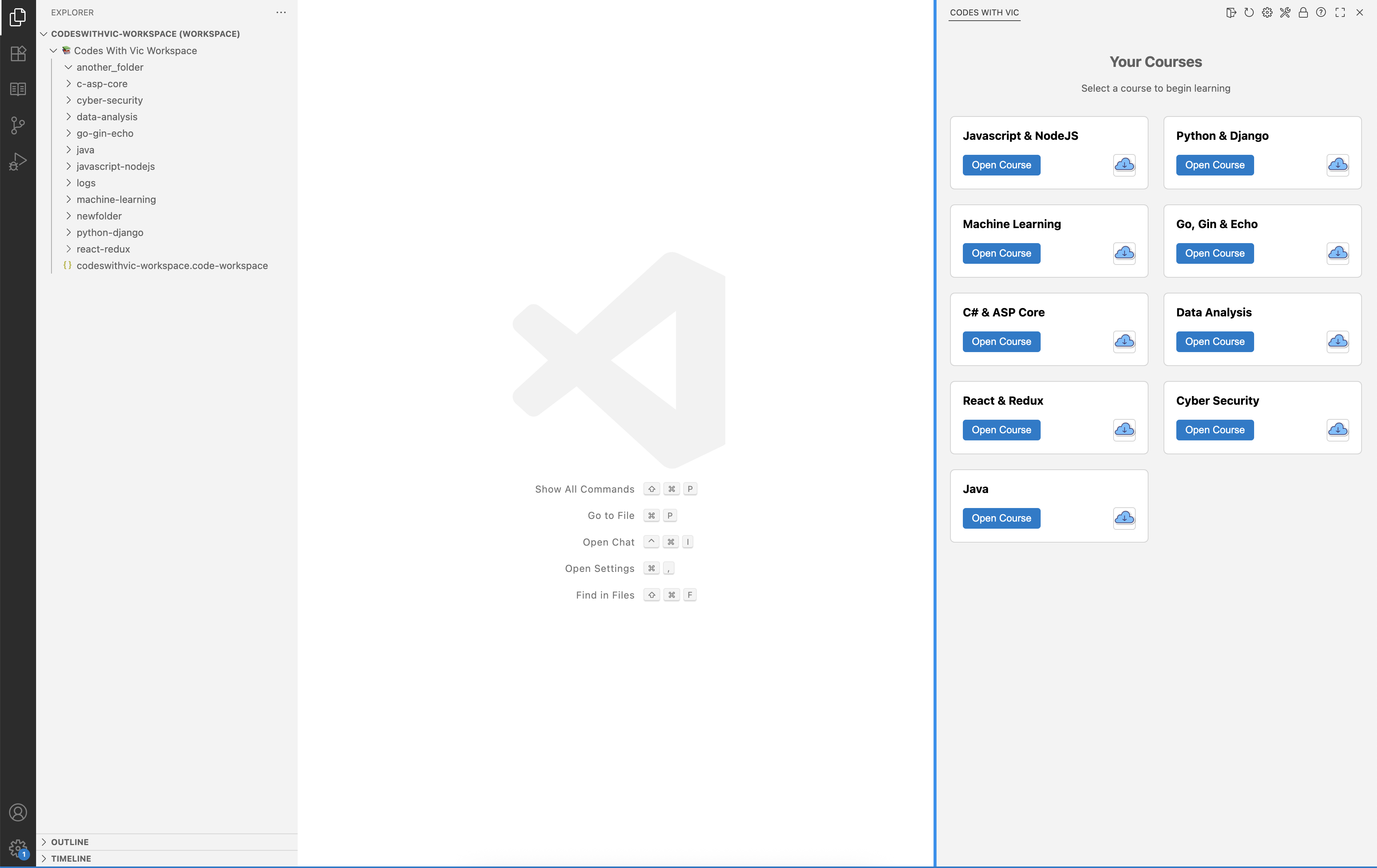
Dashboard showing courses
-
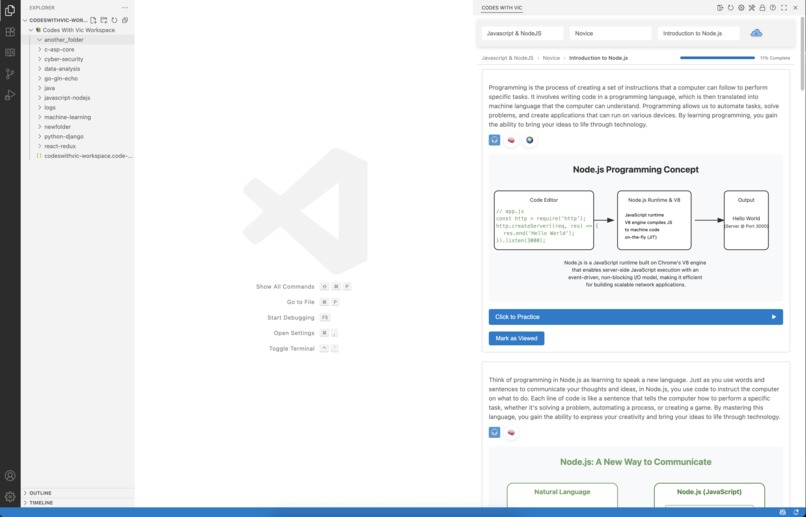
Course view
-
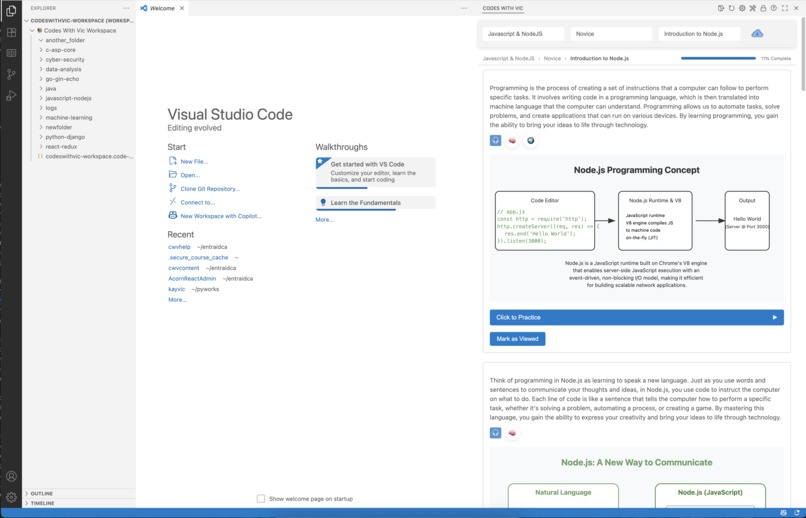
Course view
Inspiration
The inspiration came from witnessing the significant barriers that aspiring tech learners face across Africa - particularly high data costs, unreliable internet connectivity, and limited access to modern learning tools, especially in rural and underserved communities. The team was motivated by seeing millions of young people eager to learn tech skills but unable to participate in the global tech economy due to infrastructure limitations. A specific example mentioned was imagining a student in Nigeria with a basic laptop but no stable electricity or money for daily internet, dreaming of becoming a software developer but unable to access traditional online learning platforms.
What it does
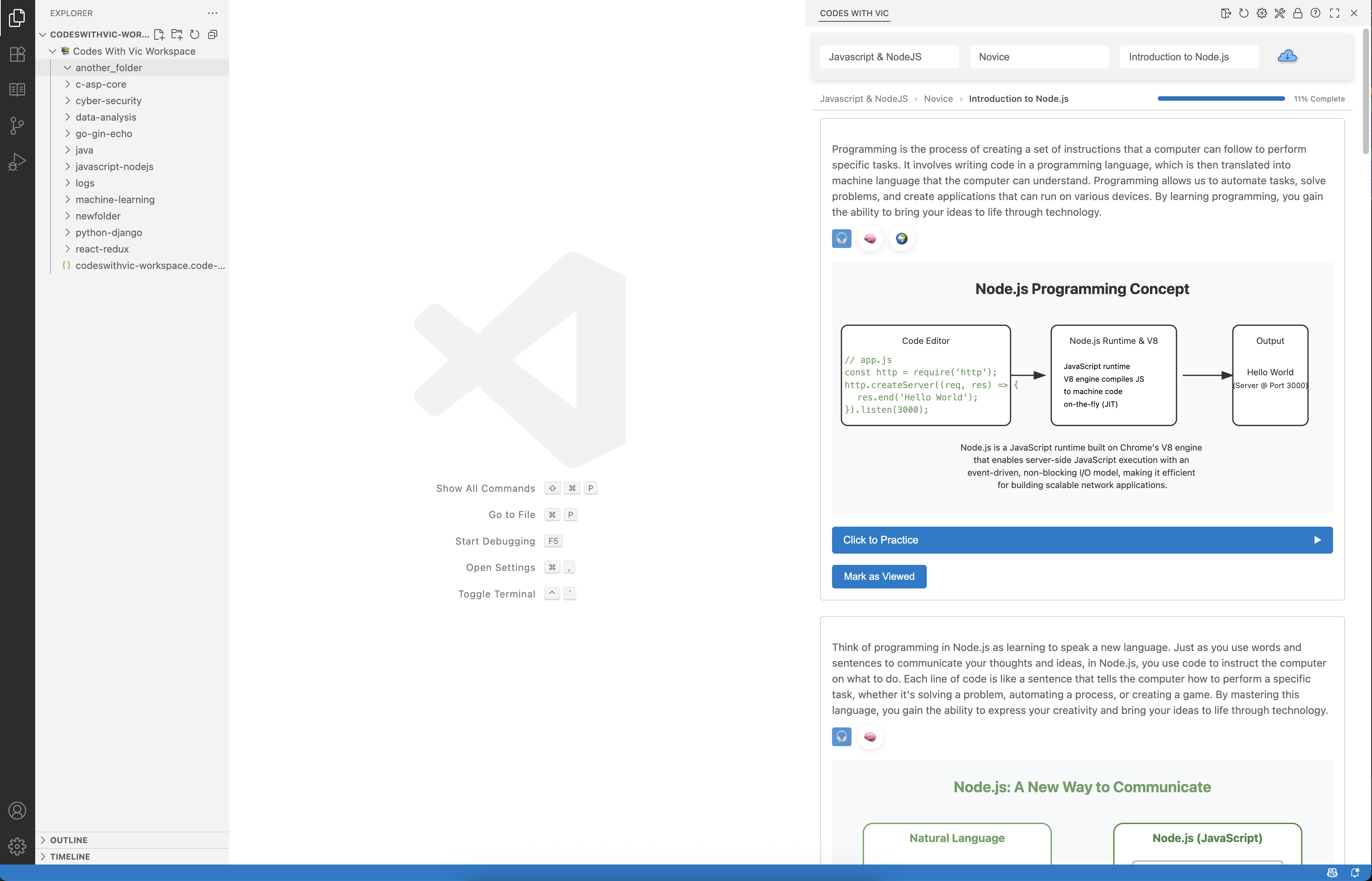
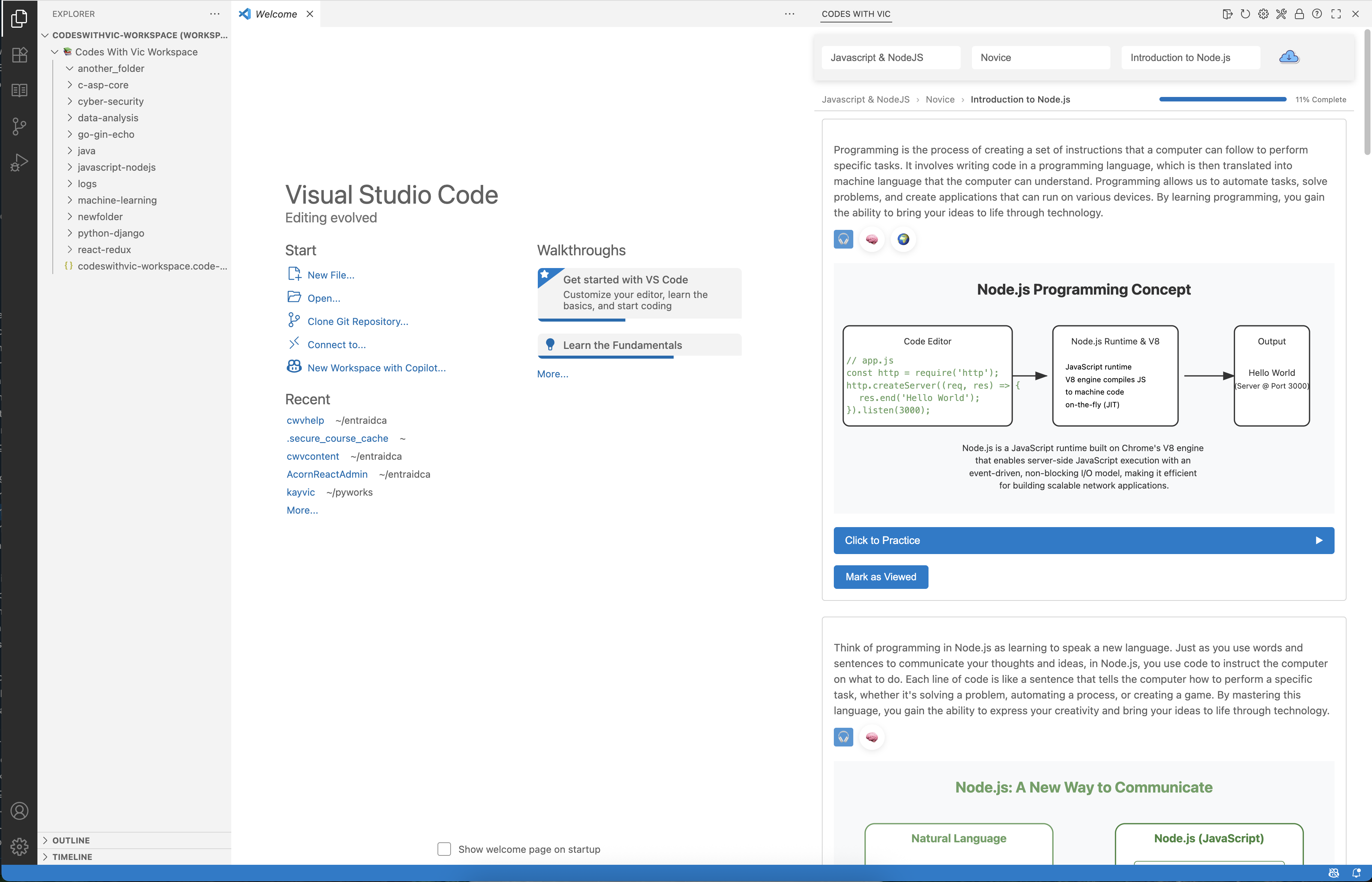
Codes With Vic is a lightweight, offline tech learning platform delivered as a Visual Studio Code extension that transforms the professional development tool into a comprehensive learning environment. It provides:
- Structured programming courses (Python, JavaScript, C#, and more) that run entirely offline after installation
- Interactive coding exercises and assessments without internet dependency
- Progress tracking that works offline with cloud sync when connectivity is available
- A dashboard and editor interface integrated within VS Code
- An extension wizard that sets up users' devices to meet course requirements
- Local content rendering that eliminates the need for power-consuming browsers
How we built it
The development followed a four-phase approach:
Phase 1: Problem Discovery & Planning - Extensive user research surveying learners and educators in low-resource communities to identify key barriers.
Phase 2: Design & Prototyping - Initially explored browser-based solutions before pivoting to Visual Studio Code as the delivery platform.
Phase 3: Development & Iteration - Built from static lessons to interactive features including code runners, offline assessments, and progress tracking, optimized for low-power devices.
Phase 4: Testing & Community Feedback - Conducted trials with learners using basic laptops, incorporating feedback to refine the interface and functionality.
The team strategically combined AI tools (like GPT) for rapid prototyping and content generation with human oversight for quality, local context, and educational clarity.
Challenges we ran into
Key challenges included:
- Ensuring smooth, interactive learning experiences without internet access
- Engineering a fully offline course engine that supports local content rendering and progress tracking
- Optimizing the platform to work seamlessly on low-specification devices common in Africa
- Repurposing VS Code's extension API to simulate a complete Learning Management System (LMS) environment
- Balancing power consumption while maintaining full functionality
- Creating engaging educational content that works entirely offline
Accomplishments that we're proud of
- Successfully reimagining a professional developer tool (VS Code) into a fully functional learning platform
- Creating a solution that works on low-spec devices while eliminating ongoing data costs
- Building a completely offline learning system that includes interactive coding exercises, progress tracking, and assessments
- Developing a scalable platform with modular architecture that can be localized for different regions and languages
- Creating an innovative approach that transforms infrastructure constraints into opportunities for digital inclusion
- Establishing a sustainable model that requires only a one-time low fee rather than recurring subscriptions
What we learned
The team learned that:
- Innovation doesn't always require high bandwidth or large budgets - it requires deep empathy for real-world challenges
- Existing professional tools can be creatively repurposed to solve educational access problems
- Offline-first design is crucial for reaching underserved communities
- Combining AI capabilities with human insight can accelerate development while maintaining quality and local relevance
- User testing on actual low-resource devices is essential for creating truly accessible solutions
- Strategic partnerships with educational institutions and NGOs are critical for sustainable scaling
What's next for The easiest way to learn
Future directions include:
Immediate Goals:
- Rolling out across multiple regions in Nigeria and expanding to other African countries
- Growing the course library and localizing content for different languages and use cases
- Refining user experience based on feedback from early adopters
Strategic Expansion:
- Seeking partnerships with state governments, educational institutions, NGOs, and tech hubs
- Pursuing support for distribution, funding, curriculum development, and device deployment
- Integrating with national education systems across the continent
Long-term Vision:
- Becoming Africa's go-to model for barrier-free tech education
- Delivering digital inclusion at scale where it's needed most
- Empowering millions of Africans to participate in the global digital economy regardless of their connectivity or location
The ultimate goal is to establish Codes With Vic as a sustainable, continent-wide solution that transforms digital education accessibility across Africa.


Log in or sign up for Devpost to join the conversation.