-
-
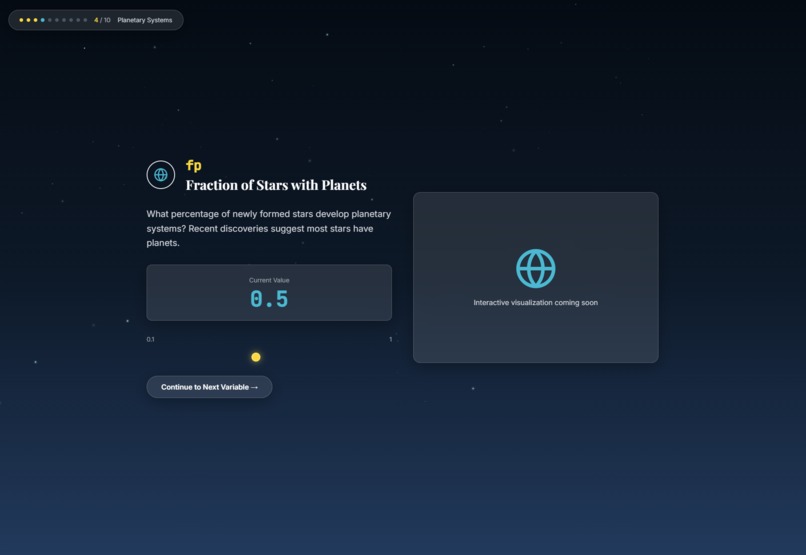
more guessing
-
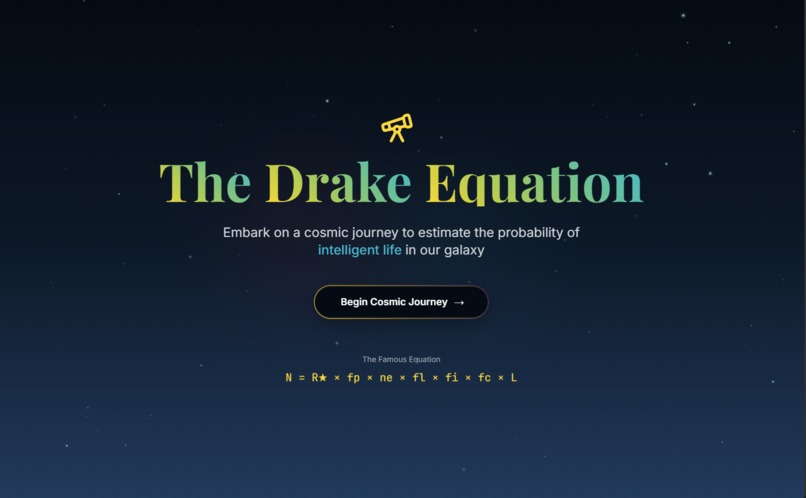
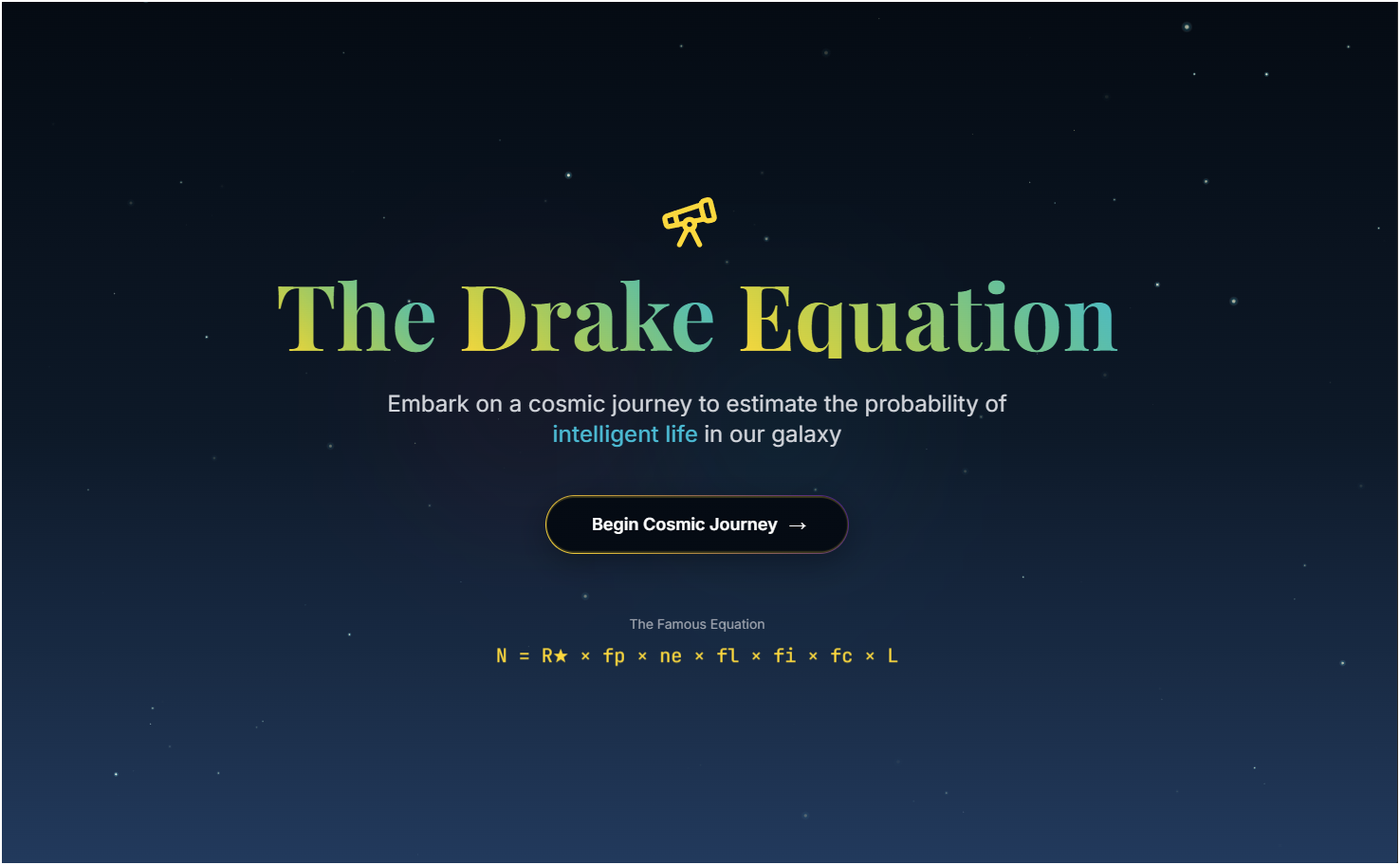
landing page
-
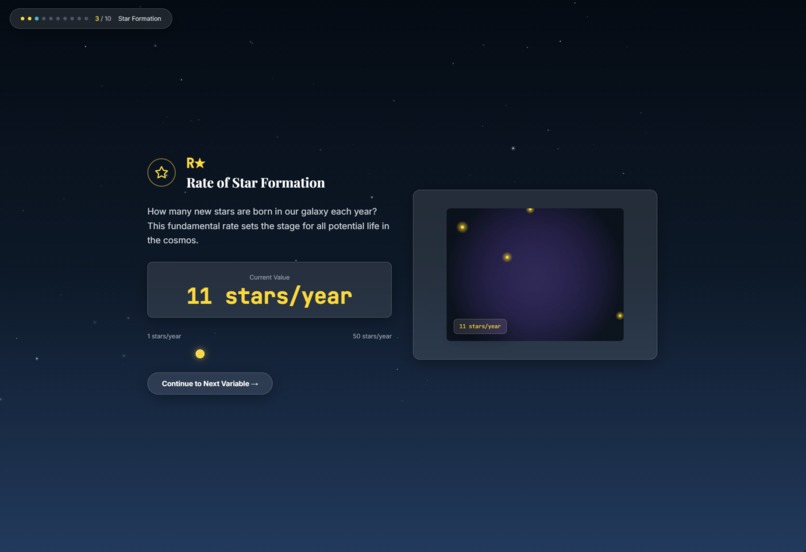
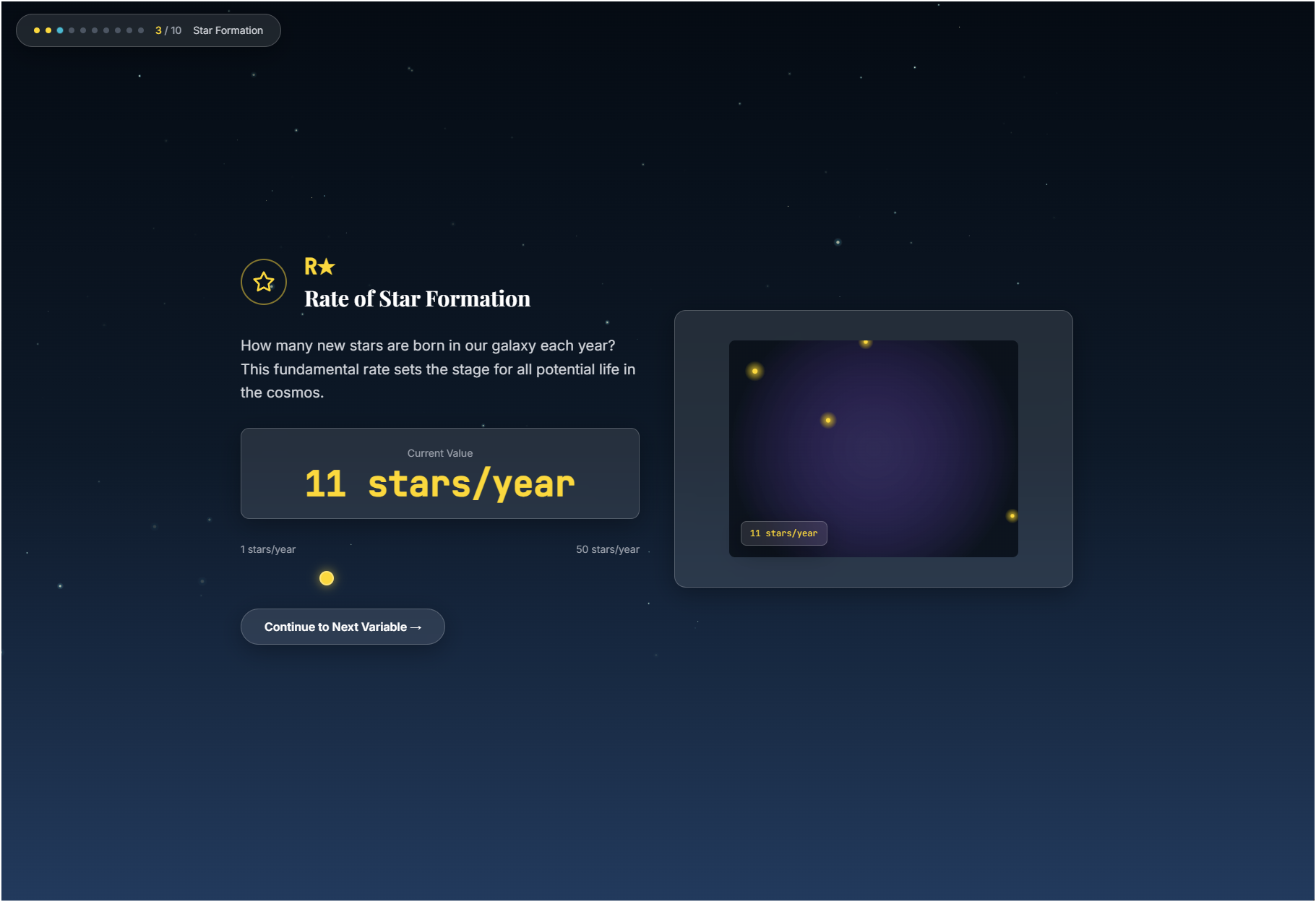
start guessing
-
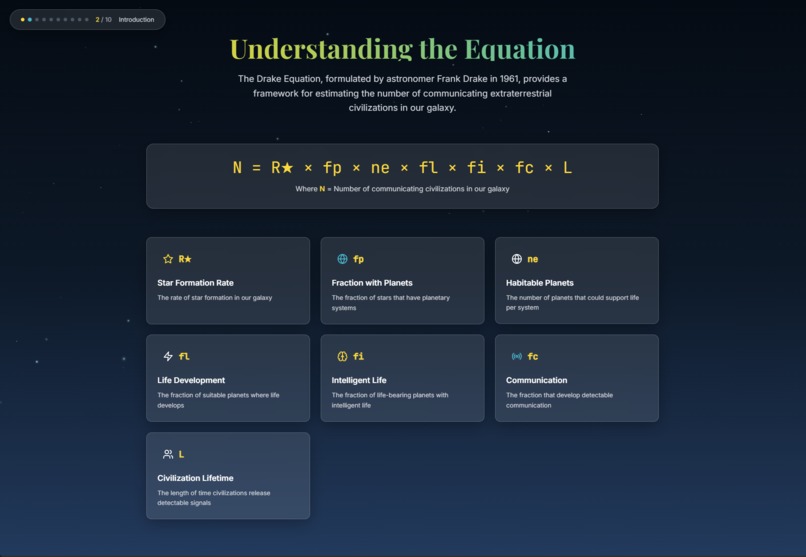
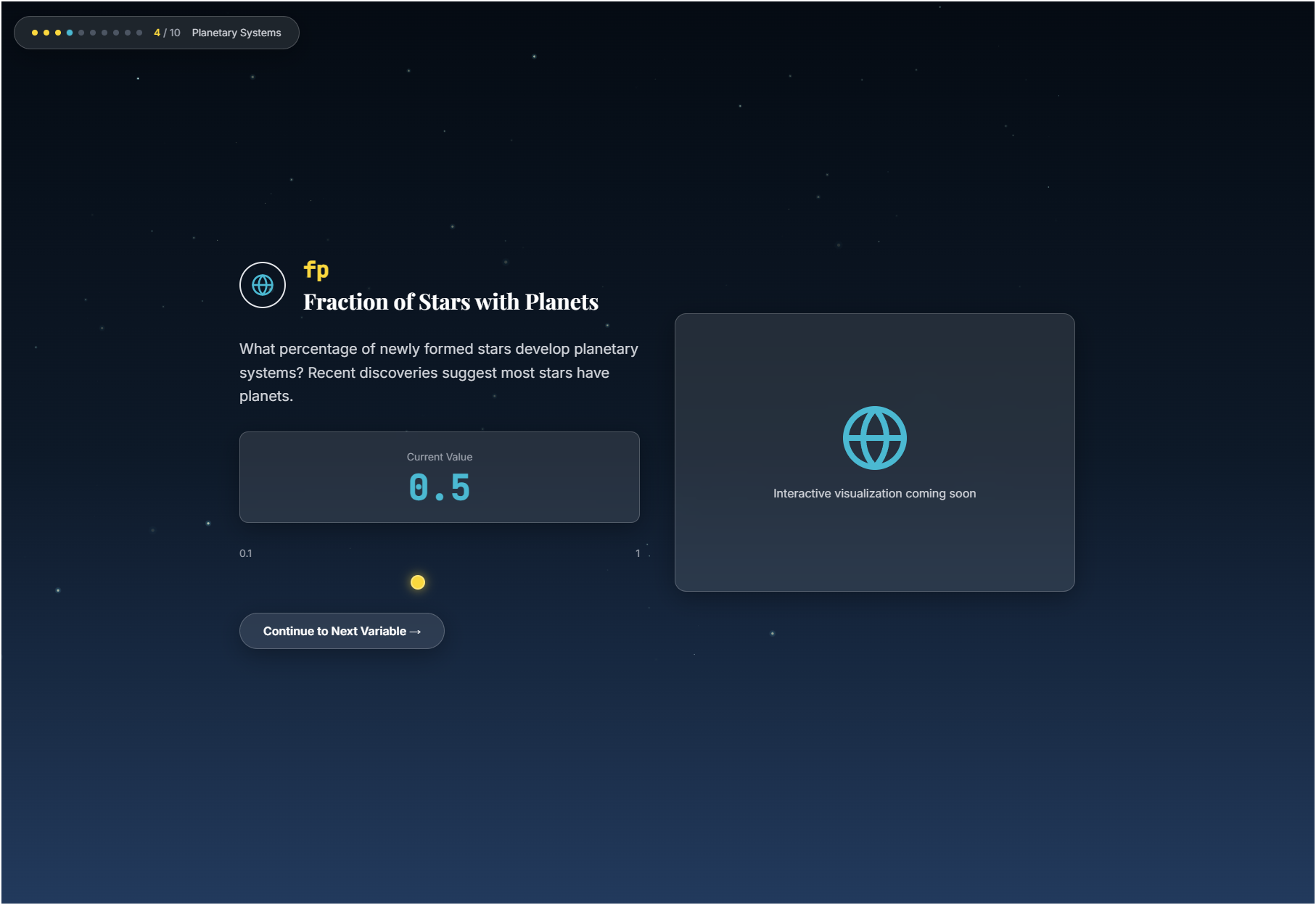
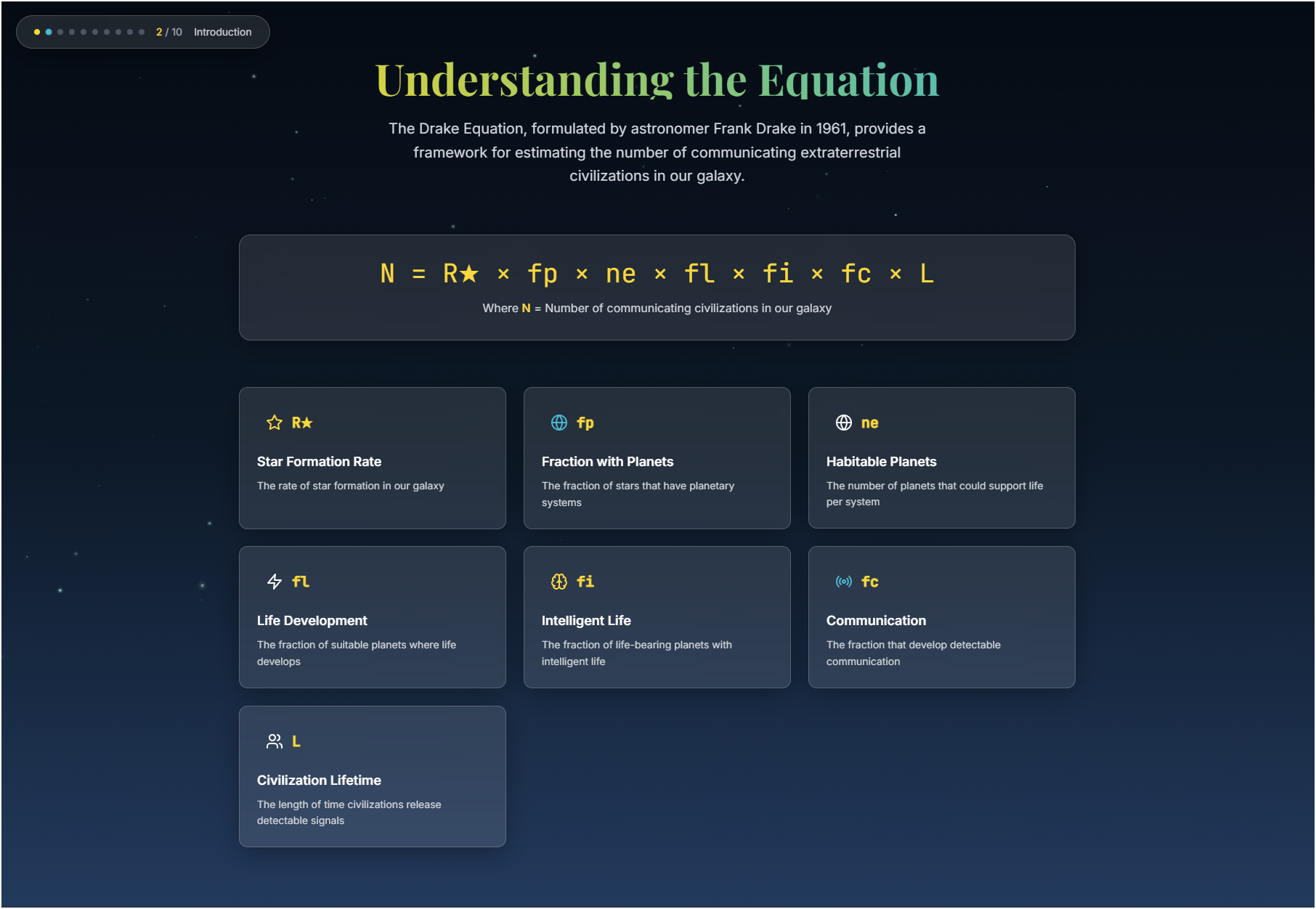
learn about the variables
-
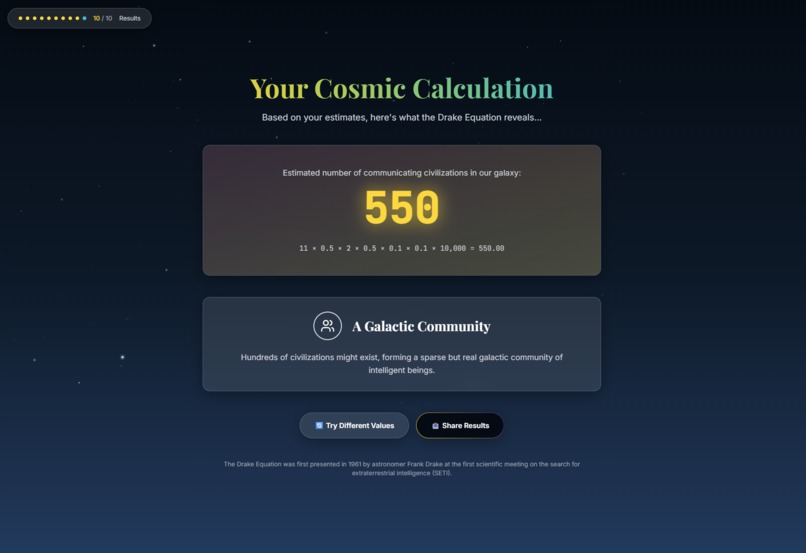
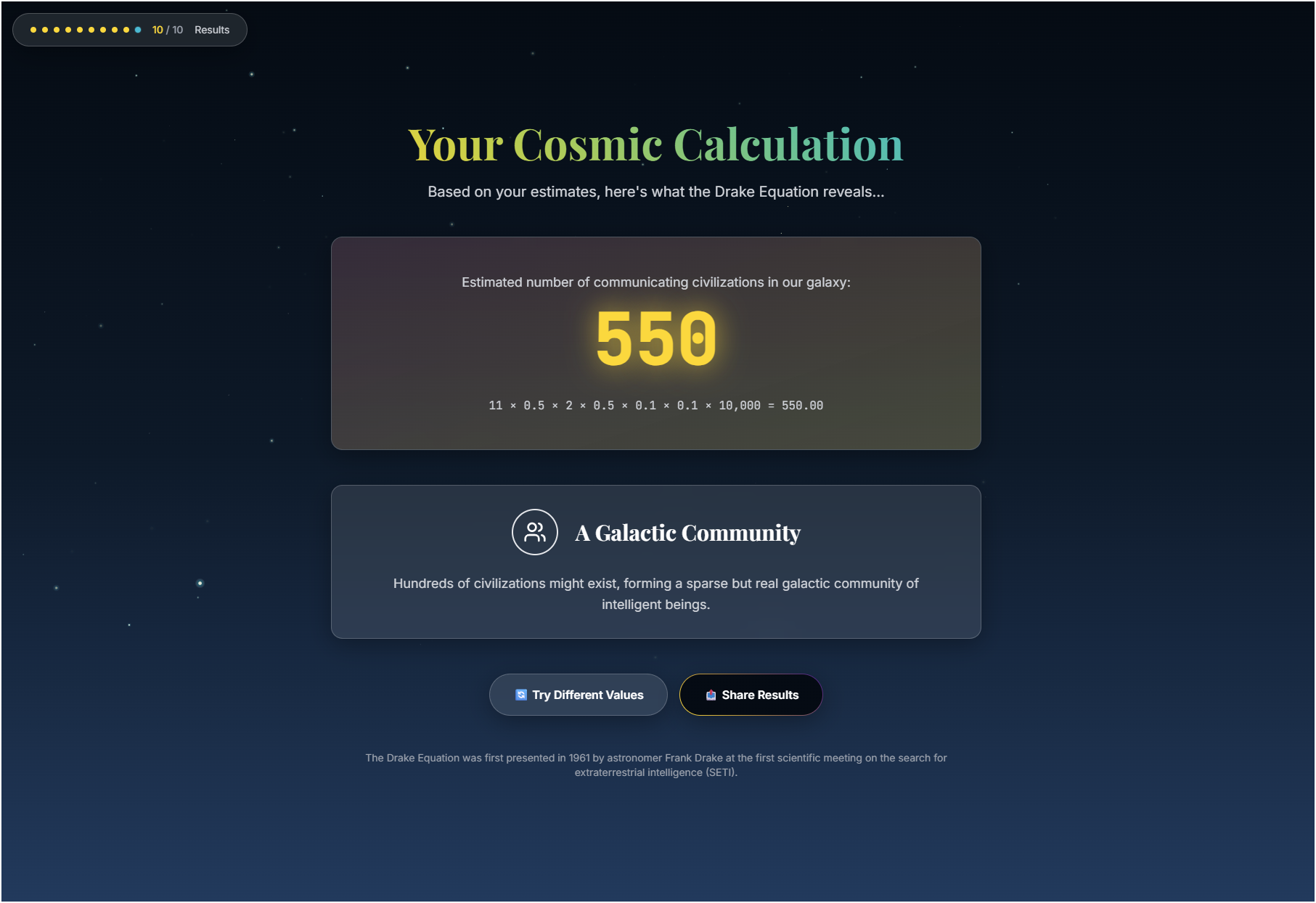
result after all estimates are complete
-
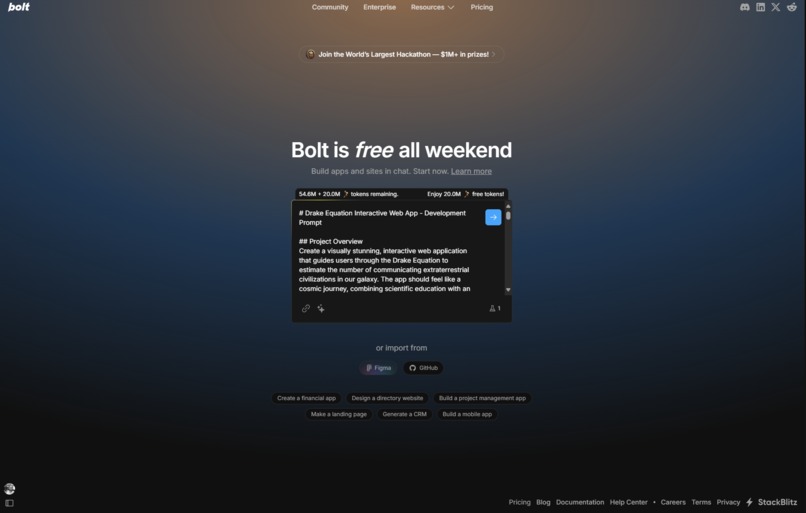
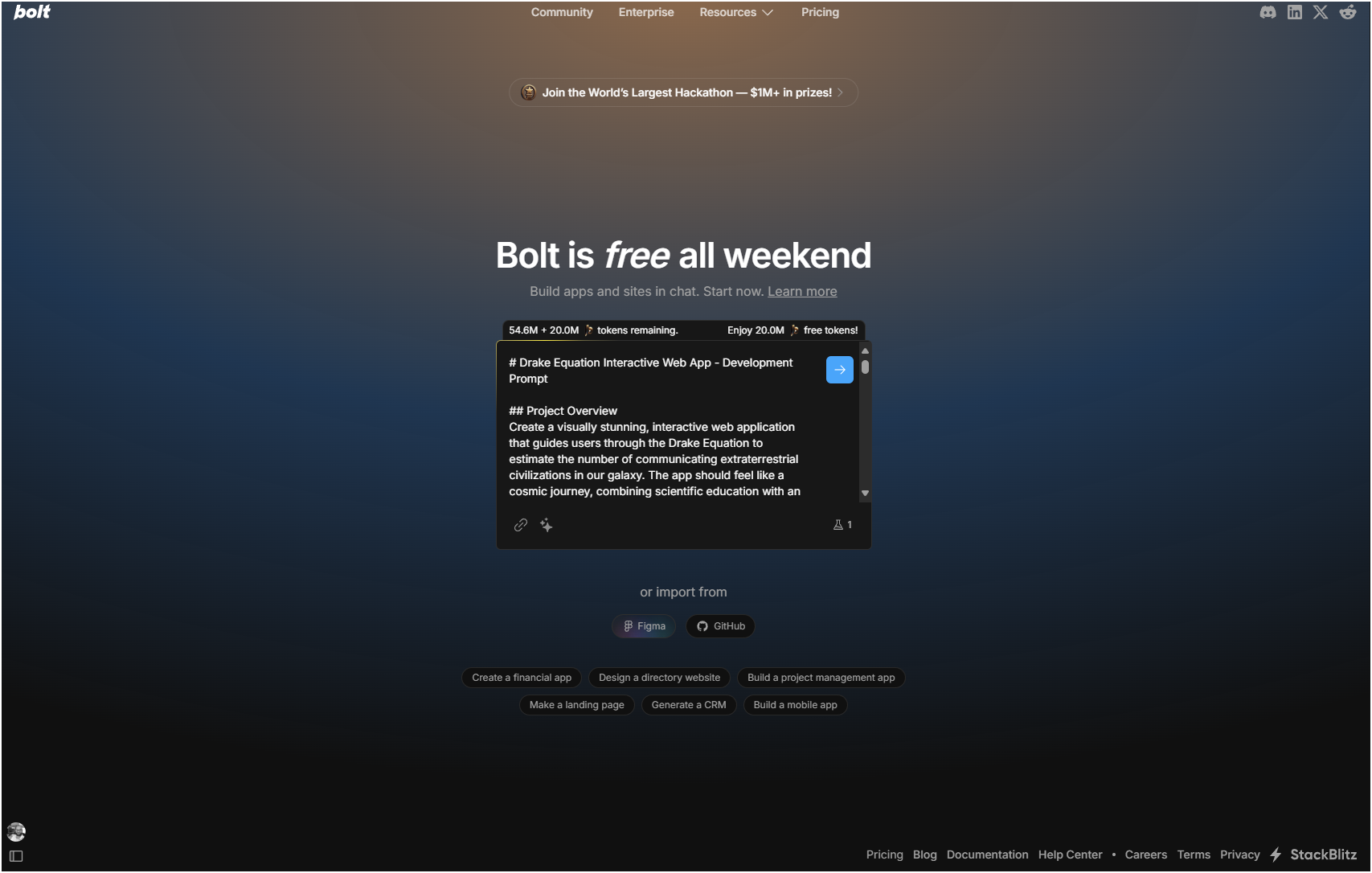
The prompt
Inspiration
I've always been fascinated with the potential of life outside our little blue orb, and thought it would be neat to introduce others to the concept via an engaging tool.
What it does
This interactive web application guides users on a cosmic journey to estimate the number of communicating extraterrestrial civilizations in our galaxy using the famous Drake Equation. It transforms a complex scientific concept into an immersive and visually stunning experience, allowing users to adjust key variables and see the real-time impact on the estimated number of civilizations. The app aims to be both educational and emotionally engaging, fostering a sense of wonder about our place in the universe.
How we (Me and Bolt!) built it
The application was built using a modern web development stack focused on performance and rich user experience. We leveraged React with TypeScript for a robust and scalable frontend. All animations and transitions, which are central to the immersive experience, were meticulously crafted using Framer Motion. Tailwind CSS, augmented with custom CSS for advanced effects, provided a highly customizable and efficient styling solution, enabling the creation of unique visual elements like glassmorphism and animated gradients. Zustand was chosen for state management, providing a lightweight and flexible solution for handling user inputs and calculations. Vite serves as the build tool, ensuring optimal development and production performance.
The design adheres to principles of component granularity, ensuring small, focused, and reusable components, each with a single responsibility. Styling is centralized using CSS variables and Tailwind's configuration, allowing for consistent theming. The visual design system incorporates a deep space color palette, distinct typography for headings, body, and numerical values, and a variety of visual effects including parallax scrolling, glassmorphism, animated gradients, and interactive hover states.
The user flow progresses through a captivating landing screen with animated title reveals, an introduction section explaining the Drake Equation, dedicated interactive sections for each variable with real-time visual feedback, and a dynamic results presentation that includes an animated counter and an interpretation based on the calculated number of civilizations.
Challenges we ran into
Developing an application with such ambitious visual and interactive requirements presented several challenges:
Performance Optimization for Complex Animations: Ensuring smooth performance across various devices while implementing multi-layer parallax, particle systems, and numerous Framer Motion animations required careful optimization and balancing visual fidelity with efficiency.
Achieving Unique Visual Effects: Replicating advanced visual effects like refraction/diffraction for glassmorphism and intricate animated gradients demanded a deep understanding of CSS and creative application of styling techniques.
Synchronizing Visuals with Data: Tying real-time visual feedback (e.g., star birth simulation, solar system formation) directly to user input values for each Drake Equation variable required precise synchronization between the UI and the underlying data.
Responsive Design for Immersive Experience: Maintaining the immersive and cinematic feel across a wide range of screen sizes, from mobile to large desktops, while ensuring all interactive elements remained accessible and intuitive.
Accomplishments that I'm proud of
I are particularly proud of several key accomplishments:
Immersive User Experience: Successfully creating a truly immersive and visually stunning "cosmic journey" that makes a complex scientific topic engaging and accessible.
Seamless Animation Integration: The fluid and responsive animations powered by Framer Motion, which elevate the user experience from a simple calculator to an interactive narrative.
Unique Visual Design: The successful implementation of advanced visual effects like glassmorphism, animated backgrounds, and custom interactive elements that give the application a distinct and polished aesthetic.
Clear and Modular Architecture: The well-structured component architecture and state management, which ensures the application is maintainable, scalable, and easy to understand.
Real-time Interactive Feedback: Providing immediate and intuitive visual feedback as users adjust the Drake Equation variables, enhancing comprehension and engagement.
What I learned
Throughout this project, I gained valuable insights into:
Advanced Framer Motion Techniques: Deepened our expertise in orchestrating complex animation sequences, managing AnimatePresence for smooth component transitions, and optimizing performance for motion-heavy applications.
Creative CSS and Tailwind CSS Application: Explored innovative ways to combine Tailwind's utility-first approach with custom CSS to achieve highly specific and visually rich effects that go beyond standard UI kits.
State Management for Interactive Applications: Reinforced best practices for using Zustand to manage application state efficiently, particularly for real-time updates and calculations driven by user interaction.
Balancing Education and Entertainment: The importance of blending accurate scientific information with engaging and aesthetically pleasing design to create a compelling educational tool.
Performance Considerations in Rich Web Apps: Practical strategies for identifying and mitigating performance bottlenecks in applications with extensive animations and dynamic content.
What's next for The Drake Equation
For the future of The Drake Equation, I plan to (via Supabase and edge functions):
Implement the "Share & Explore" Section: This includes integrating social media sharing, displaying comparisons with other users' estimates, revealing actual scientific estimates with sources, and providing links to further learning resources about SETI and astrobiology.
Add Final Polish Details: Incorporate subtle enhancements such as a custom cursor with a subtle trail, hidden "Easter eggs" for specific number combinations, and refined loading/error states that maintain the cosmic theme.
Expand Interactive Visualizations: Develop more unique and engaging interactive visualizations for the remaining Drake Equation variables to further enhance the educational and immersive experience.
Gather User Feedback: Collect insights from users to identify areas for improvement, new features, and further refine the overall journey.
Built With
- build
- environment:
- framer-motion
- javascript-frameworks/libraries:-react
- node.js
- react
- runtime
- tailwind-css
- typescript
- vite
- zustand

Log in or sign up for Devpost to join the conversation.