-
-
exterior+panel
-
exterior
-
interior


Dust accumulation creates a barrier between sunlight and the PV surface, reducing power output. Traditional water-based cleaning systems require large amounts of clean water and frequent maintenance. In contrast, air-jet cleaning is environmentally friendly, maintenance-free, and suitable for dry climates. Additionally, existing cleaning solutions often lack sufficient protection for outdoor conditions, leading to failures when components are not properly sealed against weather exposure. Many systems also require external power sources rather than drawing energy directly from the host panels, and current industry options often involve complex setups and costly components, making them less accessible and less economically efficient for widespread deployment.
However, what inspired me most is the current situation in Gaza. People there struggle to access even basic electricity, and many cannot reliably charge their phones to speak with their loved ones. Although some have small, elementary solar panels, Gaza’s dry, deserted, and arid climate causes these panels to become dirty very quickly, reducing their already limited power output. I want this project to become a source of hope, something that helps them maintain their panels, stay connected, and see the faces of their families whenever they can.
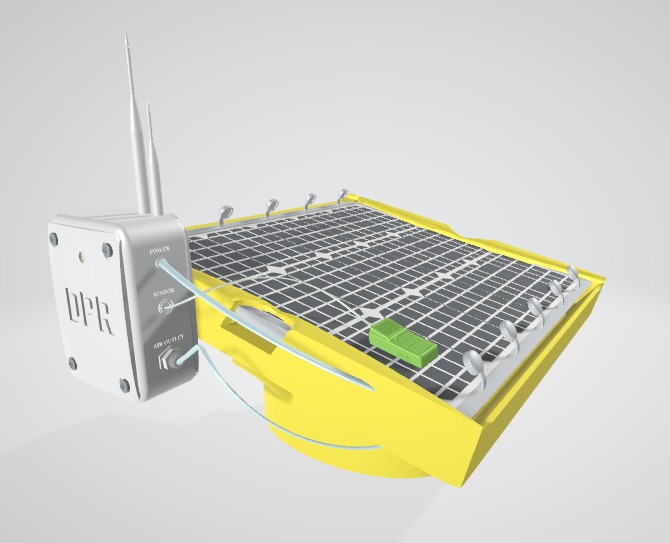
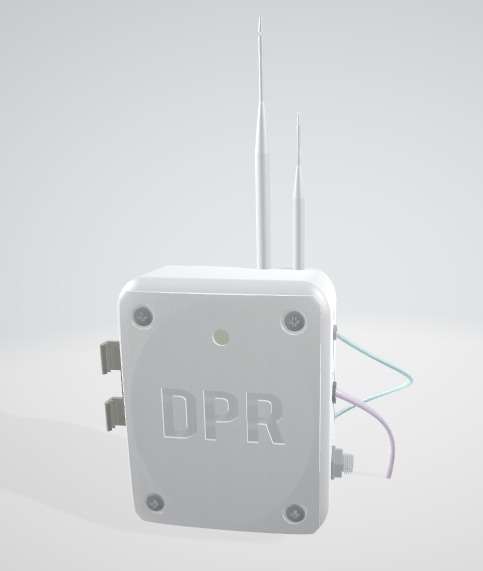
The Distributed Predictive Reflex (DPR) System is a self-operating device that keeps solar panels clean and efficient without human intervention. The DPR system is based on three fundamental principles: • Distributed – Devices can form mesh communication even if the central network fails. • Predictive – The system can anticipate dust storms and environmental risks. • Reflex – A rule‑based 'If–Then' mechanism triggers instant cleaning responses.
I combined sensor technology, predictive algorithms, and automated cleaning mechanisms to develop the DPR System. Using weather data, i trained the system to anticipate conditions that could affect solar performance. Devices were programmed to communicate locally, forming a distributed network that ensures continuous operation even in the event of network interruptions.
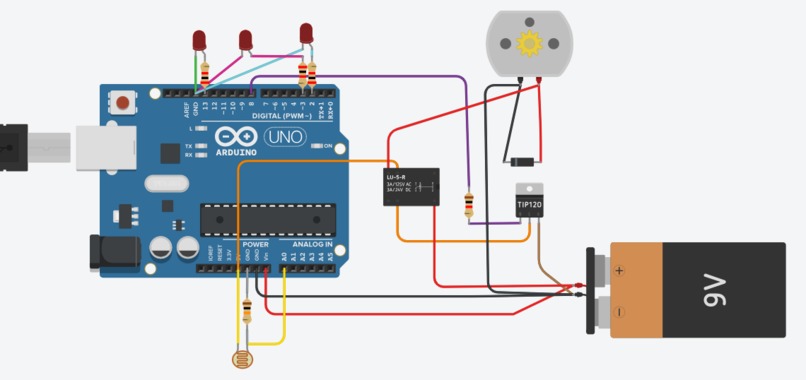
The prototype is built using Arduino Uno, a photoresistor-based dust detection unit, a DC motor for air‑jet cleaning, a relay module, a TIP120 transistor driver, an anti‑back‑EMF diode, LED indicators and a 9V external power supply. Key components: • Arduino UNO R3 • LDR (Photoresistor) + 10 kΩ resistor (voltage divider) • Relay Module • TIP120 Transistor (motor driver) • DC Motor (air pump simulation) • 1 kΩ and 2 kΩ resistors • Red indicator LEDs • Flyback Diode (D1)
The schematic includes an LDR connected to analog pin A0, providing real-time brightness data. A TIP120 transistor is used as a switching element to drive the DC motor. A relay module allows the system to control external high‑power loads. LEDs on digital pins 2, 3, and 13 serve as status, LoRa, and Zigbee communication indicators.
The firmware reads LDR values continuously. If brightness drops below a threshold (DUST_THRESHOLD = 900), the system initiates a verification phase to prevent false alarms. If low light persists for 5 consecutive measurements, the cleaning cycle begins. The motor runs for 3 seconds, and LEDs provide visual feedback. Pseudo‑code of the reflex logic: • IF (LDR_value < DUST_THRESHOLD) • → VERIFY brightness repeatedly • → IF confirmed → Activate motor and relay • → Run cleaning cycle for 3000 ms • → Return to idle mode
The prototype was tested in Tinkercad. The LDR intensity slider was used to simulate dust accumulation. When light decreased, the system detected it, verified the condition, activated the motor, and then returned to idle mode. Serial Monitor output confirmed accurate detection and cleaning behaviour. Example results: • 'System Idle... Panel is clean' when light is normal • 'False alarm… panel still bright enough' when temporary shadows occur • 'Dust confirmed… initiating cleaning' when true dust is detected • Motor speed reached 1600 rpm during cleaning • Relay activated synchronously
Building the DPR System was not without challenges. Integrating sensors with predictive software required precise calibration to avoid false triggers. Creating a distributed network that functions reliably even when central communication fails demanded careful design and rigorous testing.
I'm proud to have developed a system that significantly enhances the reliability of solar energy. The DPR System maintains peak panel efficiency automatically, reduces maintenance concerns for users, and strengthens grid stability.
Through this project, I gained insight into the complexities of decentralized solar management and the importance of predictive, automated systems. I learned how to integrate sensor data, networked communication, and automated mechanisms into a cohesive, self-operating solution.
My next step is to scale the DPR System for widespread deployment, refining its predictive algorithms with real-world data and expanding its network capabilities. Future development may include integrating AI-driven optimization to further enhance energy efficiency and exploring additional automated maintenance features. Ultimately, I aim to make solar energy more reliable, accessible, and effortless for users worldwide.

Log in or sign up for Devpost to join the conversation.