-
-
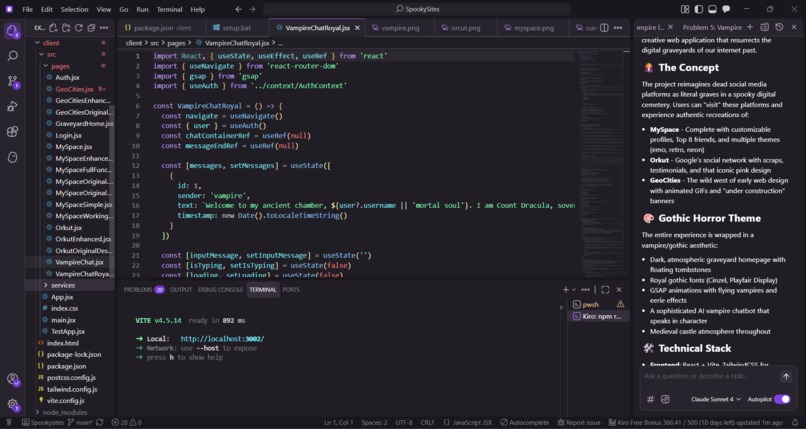
Kiro
-
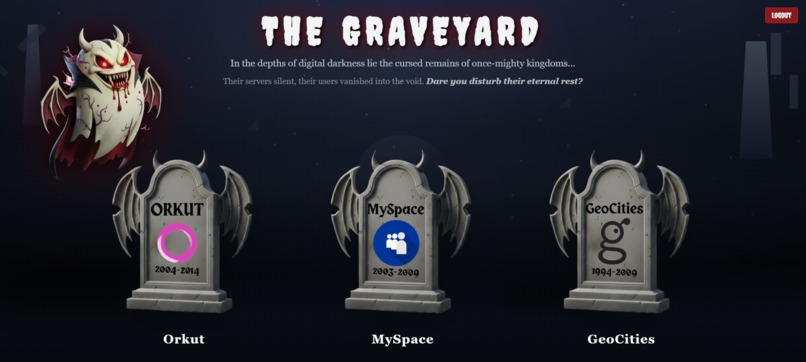
The Graveyard
-
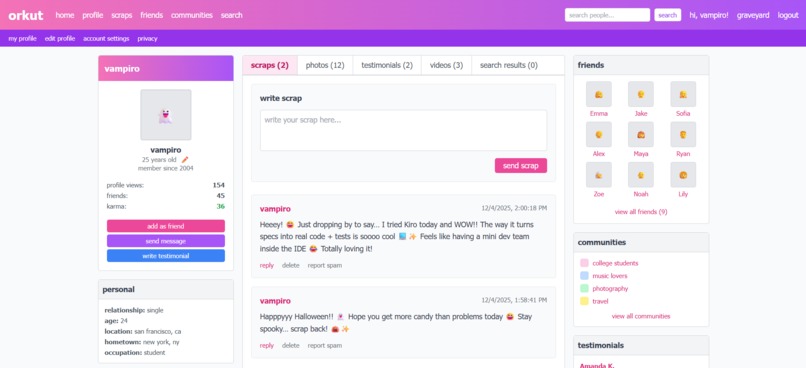
Orkut Resurrected
-
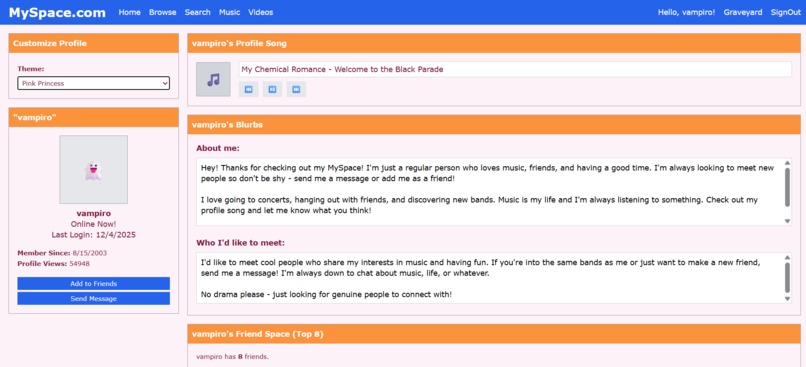
MySpace Resurrected
-
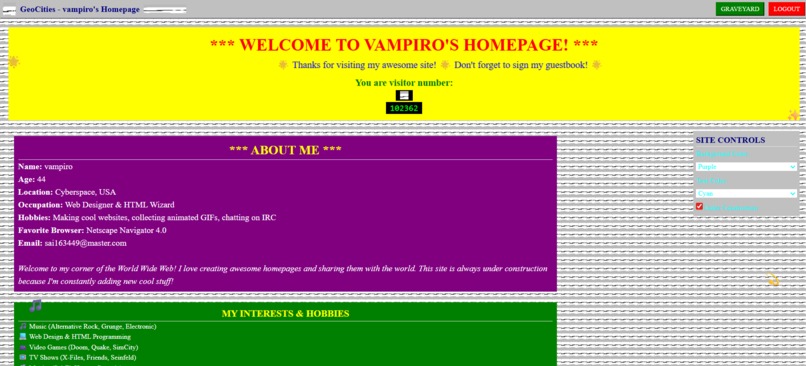
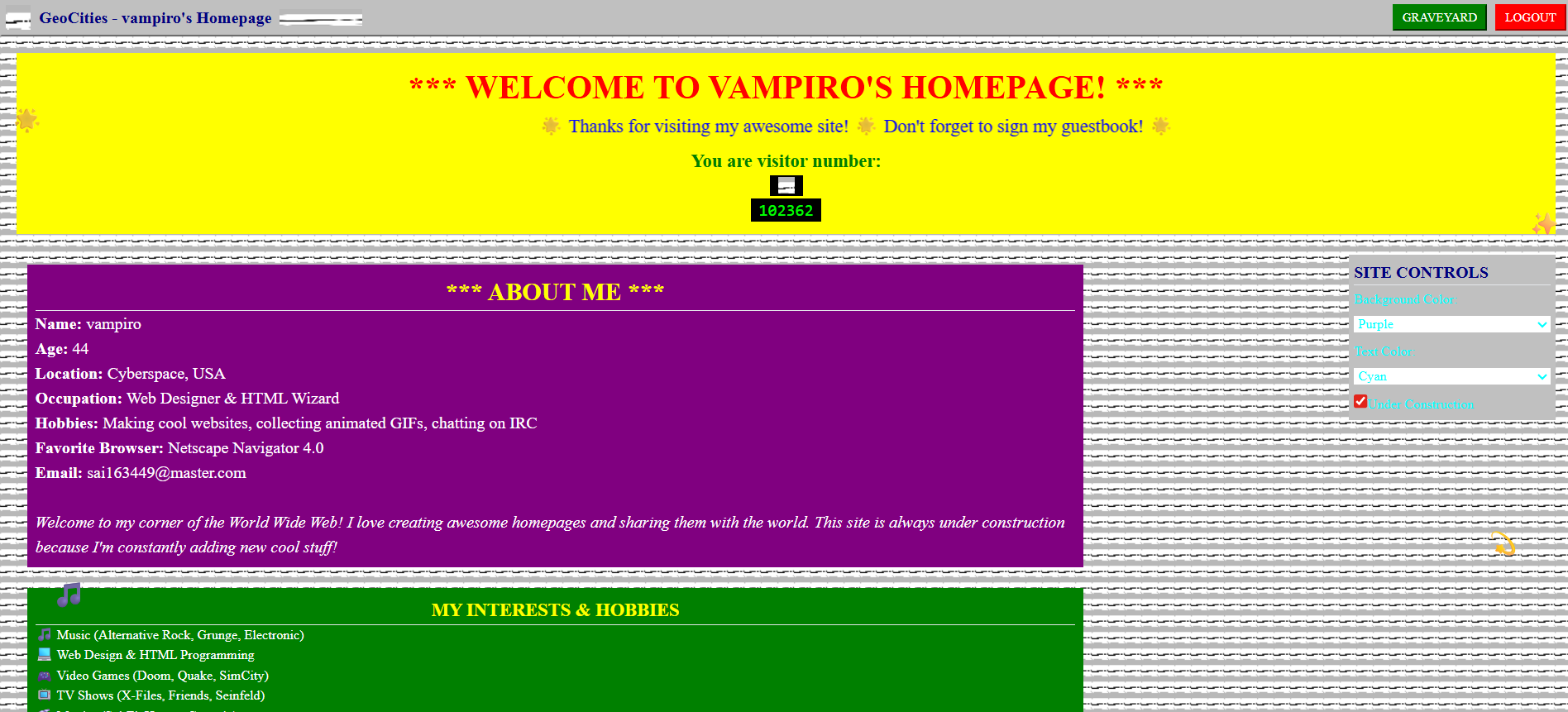
Geocities Resurrected
-
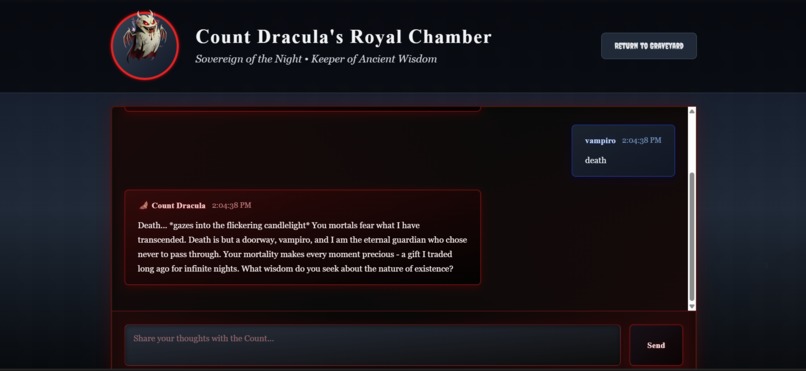
Count Dracula's Royal Chamber (AI Vampire Chatbot)
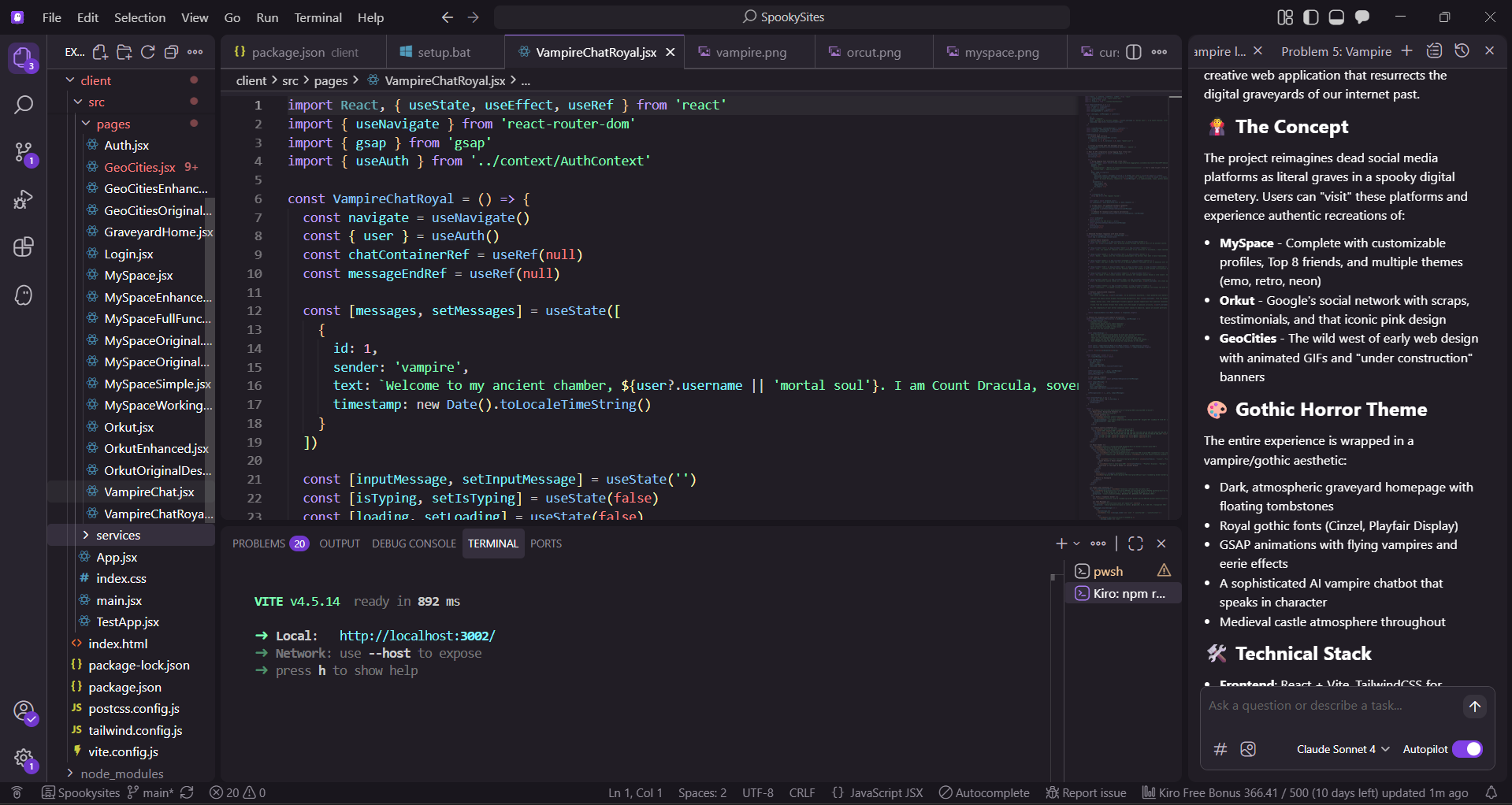
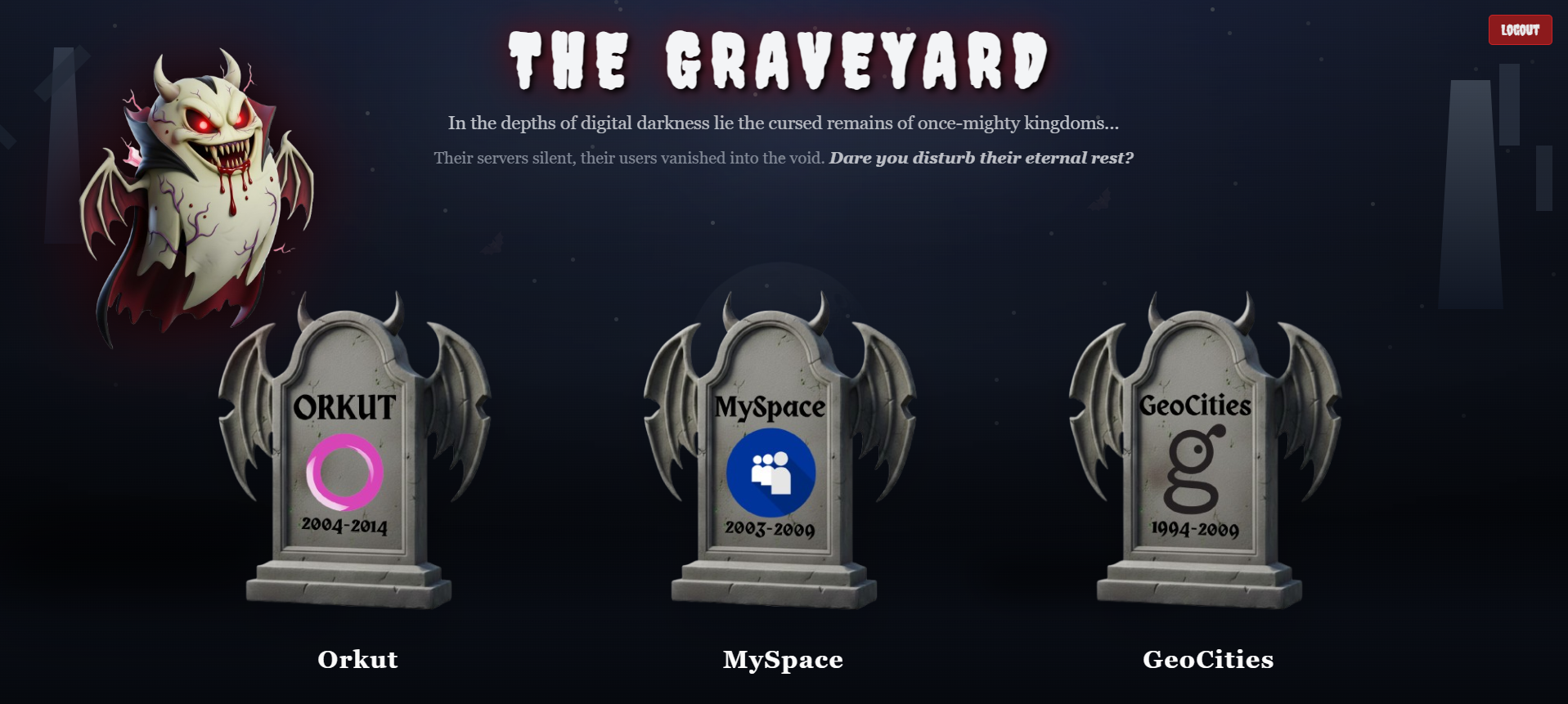

🪦 The Graveyard of the Forgotten Web
The Inspiration
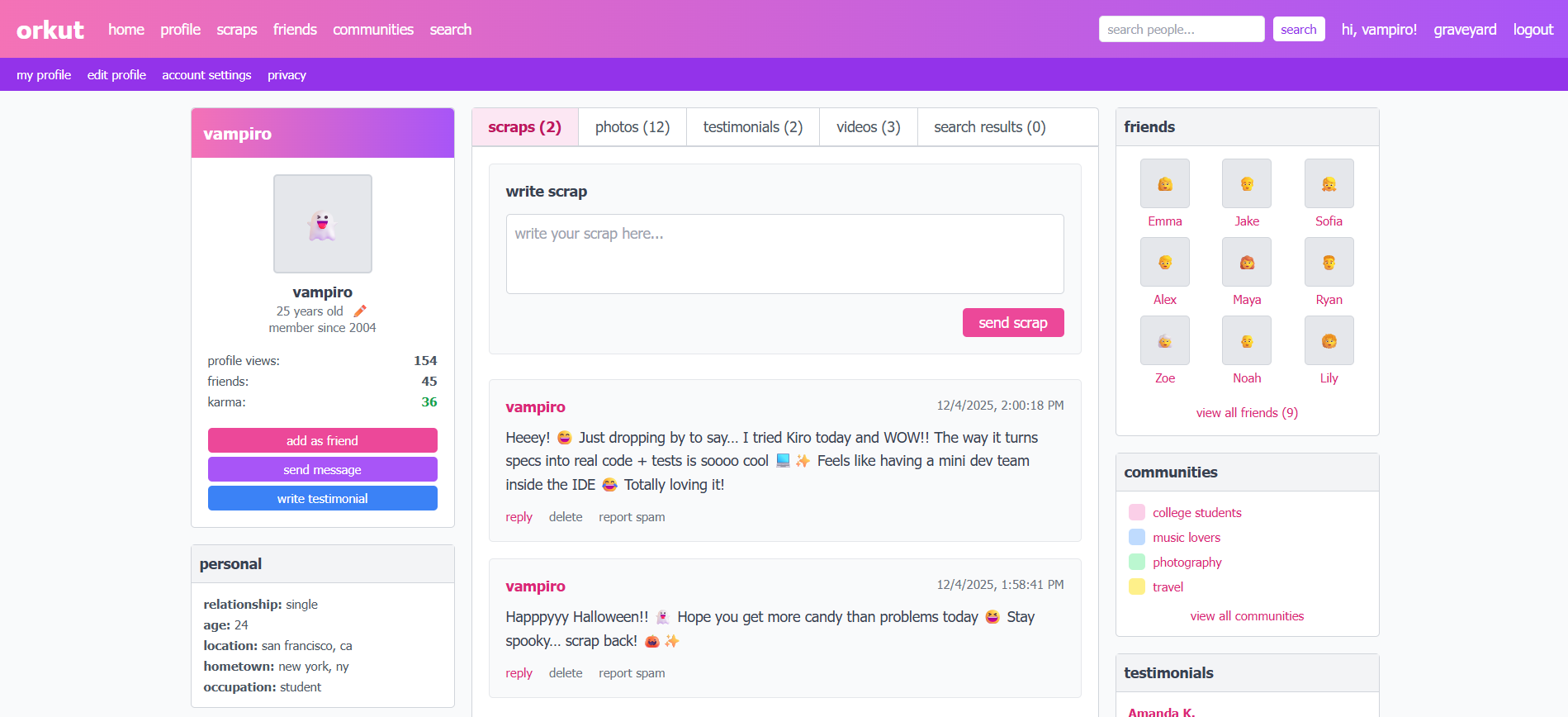
It was just the other day when my parents were reminiscing the good old days of early Internet era. It was the time when MSN nudges, Orkut scraps and grainy webcam chats were all the gag. And when I came across the description for Kiroween hackathon, I instantly knew what to build. I initially started this project as a surprise gift for my parents. But through my research, I realised something. Today we live in an era where social media platforms and trends change just like that, but, in my research on the "dead" websites, I realised that the so-call "dead websites" like MySpace, Orkut, and GeoCities weren't just websites they were entire digital cultures that shaped how we connected online. These platforms pioneered features we take for granted today: customizable profiles, friend networks, and user-generated content. They defined an entire generation. But what those social networks traded their place for a better newer tech, millions of memories, friendships, and creative expressions vanished just like that. And so here's my love letter to those pioneers. I wanted to resurrect these forgotten platforms and give them the tribute they deserved with a supernatural twist of course, keeping true to the spirit of the halloween.
The Vision
I envisioned an interactive museum of social media history, but not a static one. Users could actually experience these platforms as they were, complete with:
- Authentic recreations of original interfaces and functionality
- Gothic horror atmosphere to represent their "haunted" status and keep true to halloween theme.
- AI-powered Count Dracula chatbot serving as the immortal curator of digital memories
- Modern web technologies bringing 2000s nostalgia to life
- Full interactivity - Enabling working social networks
Technical Architecture
Frontend
- React 18 with modern hooks and context for state management
- Vite for lightning-fast development and optimized builds
- TailwindCSS with custom gothic themes and horror animations
- GSAP for cinematic animations (flying vampire, atmospheric effects)
- React Router for seamless navigation between "digital realms"
Design System Innovation
I created a multi-theme architecture that switches between:
- Authentic 2000s styling (pixel-perfect recreations)
- Gothic horror overlays (custom fonts, spooky animations)
- Responsive modern layouts (works on all devices)
Authentication & Data Management
- JWT-based authentication with secure cookie storage
- AI chatbot integration with contextual vampire personality
- Real-time state management for interactive features
- Persistent user sessions across platform switches
The Creative Process
Research Phase
I spent hours studying archived screenshots, Wayback Machine captures, forum discussions and long conversations with my parents to ensure historical accuracy. Every gradient, font choice, and layout decision was intentional.
Design Philosophy
- MySpace: Customizable chaos with theme switching and HTML/CSS freedom
- Orkut: Clean, community-focused with scraps and testimonials
- GeoCities: Retro web aesthetic with animated GIFs and visitor counters
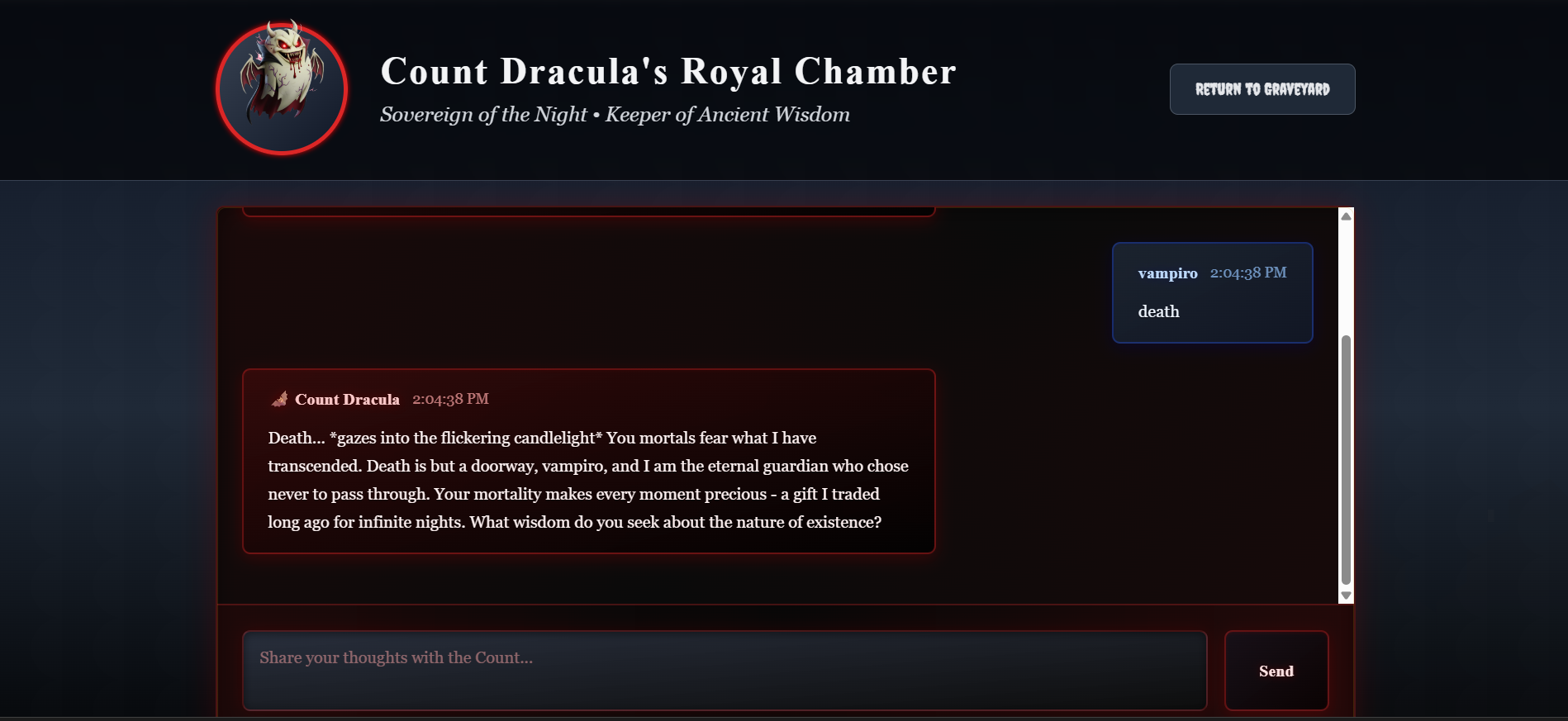
- Vampire Chat: Royal gothic chamber with AI-powered Count Dracula offering centuries of digital wisdom
Horror Integration
The gothic theme isn't just decoration it's a narrative device. These platforms are "dead" but their spirits live on, hence:
- Flying vampire representing the undead nature of forgotten tech
- Graveyard homepage with interactive tombstones
- Spooky fonts and animations creating atmosphere
- AI-powered Count Dracula chatbot - An intelligent conversational AI that serves as the keeper of digital memories, responding in character with centuries of wisdom about technology and social media evolution
Technical Challenges & Solutions
Challenge 1: Authentic Recreation
Problem: How do you recreate 2000s web design with modern tools?
Solution: Built a CSS-in-JS system that generates period-accurate styles while maintaining responsive design and accessibility.
Challenge 2: Multi-Platform Architecture
Problem: Each platform needed distinct functionality while sharing core features.
Solution: Created a modular component system with platform-specific themes and shared authentication/data services.
Challenge 3: Animation Performance
Problem: Complex GSAP animations (flying vampire, atmospheric effects) impacting performance.
Solution: Implemented lazy loading, animation recycling, and GPU acceleration for smooth 60fps experiences.
Challenge 4: Deployment Complexity
Problem: Monorepo structure causing build failures on Vercel.
Solution: Pivoted to Netlify with custom configuration, separating frontend deployment from backend complexity.
Challenge 5: Data Persistence
Problem: Creating realistic social media functionality without a complex backend.
Solution: Built an intelligent mock data system that simulates real database operations with in-memory storage and realistic API delays.
Challenge 6: AI Integration
Problem: Creating an engaging AI chatbot that stays in character while providing meaningful interactions.
Solution: Developed Count Dracula's Royal Chamber - a hybrid AI system using Hugging Face's DialoGPT model with intelligent fallback responses. The system features sophisticated prompt engineering, context-aware conversation memory, and personality enhancement algorithms that transform generic AI responses into authentic vampire dialogue with gothic typography (Cinzel, Playfair Display).
What I Learned
Technical Growth
- Advanced React patterns for complex state management
- CSS architecture for maintainable multi-theme systems
- Animation optimization for performance-critical applications
- Deployment strategies for modern web applications
Design Skills
- Historical web design research and accurate recreation
- User experience design across different eras of web interaction
- Accessibility considerations for nostalgic interfaces
- Responsive design that honors original aesthetics
Problem-Solving
- Creative constraint handling (making old designs work on modern devices)
- Performance optimization for animation-heavy applications
- Deployment troubleshooting and platform migration strategies
The Impact
This project demonstrates several key competencies:
- Full-Stack Development - Complete application architecture
- AI Integration - Sophisticated chatbot with character-consistent responses
- Historical Preservation - Digital archaeology and cultural documentation
- Creative Problem-Solving - Unique approach to nostalgia and technology
- User Experience Design - Intuitive navigation across complex interfaces
- Performance Engineering - Smooth animations and responsive interactions
Future Vision
The Graveyard could evolve into:
- Educational tool for web design history courses
- Template library for developers creating retro interfaces
- Social platform where users share memories of defunct websites
- Open-source project for digital preservation efforts
Development Acceleration with Kiro AI IDE
This project was built using Kiro, an advanced AI-powered IDE that revolutionized the development process:
Kiro's Features:
Vibe Coding
- Context-aware assistance that understood the gothic horror theme
- Intelligent code suggestions that maintained the spooky atmosphere
- Real-time collaboration between human creativity and AI efficiency
Agent Hooks
- Automated workflows triggered by file saves and git commits
- Smart testing integration that ran diagnostics after code changes
- Deployment automation that streamlined the build process
Spec-Driven Development
- Structured feature planning with requirements and design docs
- Incremental development with clear milestones and feedback loops
- Documentation generation that kept project specs up-to-date
Steering Documents
- Project guidelines automatically applied to maintain coding standards
- Gothic theme consistency enforced across all components
- Best practices integration for React, authentication, and deployment
Model Context Protocol (MCP)
- Enhanced AI understanding of project structure and goals
- Cross-file context awareness for better code suggestions
- Intelligent refactoring that maintained architectural integrity
Impact on Development Speed:
- 10x faster prototyping with AI-assisted component generation
- Reduced debugging time through intelligent error detection
- Seamless deployment with automated configuration management
- Consistent code quality through AI-powered best practices enforcement
Kiro transformed this from a months-long project into a rapid development sprint while maintaining professional-grade code quality and architectural soundness.
Why This Matters
In a world obsessed with the latest trends, The Graveyard of the Forgotten Web reminds us that innovation builds on the past. Every modern social media feature has roots in these "dead" platforms. By preserving and celebrating this history with modern technology and creative storytelling, we honor the pioneers who shaped our digital world.
This isn't just a coding project it's digital archaeology, interactive art, and technical innovation rolled into one spooky, nostalgic experience.
🦇 "Where dead social networks come back to haunt you" 🦇
Technical Specifications
Built With
- React 18 + Vite
- TailwindCSS + Custom Themes
- GSAP Animations
- Hugging Face DialoGPT AI Model
- JWT Authentication
- Netlify Deployment
Features
- ✅ Authentic platform recreations
- ✅ Interactive social features
- ✅ Gothic horror atmosphere
- ✅ AI-powered vampire chatbot
- ✅ Responsive design
- ✅ Real-time animations
- ✅ User authentication
- ✅ Photo uploads
- ✅ Search functionality
Built With
- api
- axios
- css3
- express.js
- github
- html5
- huggingface
- javascript
- jwt
- mongodb
- netlify
- node.js
- playfair-display
- react
- tailwindcss
- vite


Log in or sign up for Devpost to join the conversation.